地平线

Search documents
佑驾创新域控制器再获两款车型定点 基于地平线征程6M打造
Zhi Tong Cai Jing· 2025-11-24 09:54
Core Insights - Youjia Innovation (02431) has announced a renewed collaboration with a leading domestic brand to provide high-performance auxiliary driving domain controller iPilot4Plus for two of its main models, marking a significant step in the large-scale implementation of advanced driver assistance systems (ADAS) [1] - The iPilot4Plus will be equipped in the brand's flagship SUV and highway travel SUV, covering both fuel and hybrid models, with mass production and delivery scheduled to begin in 2026 [1] - This partnership reflects the client's high recognition of Youjia Innovation's technology development, product performance, and large-scale delivery capabilities [1] Product Features - The iPilot4Plus is powered by Horizon Journey 6M chip, offering 128 TOPS of efficient computing power and supporting frequently used auxiliary driving functions such as NOA, memory driving, and memory parking [1] - The product boasts core advantages of stability, reliability, and high performance, maintaining precise perception and smooth response even in complex road conditions [1] - It aligns perfectly with automotive companies' needs for intelligent upgrades and provides users with an exceptional driving experience [1] Industry Context - As the smart driving sector progresses towards large-scale implementation, mature engineering capabilities and reliable delivery systems have become key competitive factors in the industry [1] - By mid-2025, Youjia Innovation has already achieved mass production for 42 vehicle manufacturers, establishing an efficient R&D system and large-scale delivery experience, making it a preferred choice for many automotive companies in realizing ADAS system mass production [1] Future Outlook - The company plans to continue collaborating with more industry partners, leveraging iterative technology and an open, win-win philosophy to accelerate the advancement of smart driving from "usable to user-friendly, from high-end to popular" [2] - The goal is to make safe, intelligent, and comfortable auxiliary driving accessible to more users [2]
车百会理事长张永伟:技术引领将成汽车供应链走出内卷的重要战略
Zheng Quan Shi Bao Wang· 2025-11-24 06:53
Core Insights - The rise of China's new energy vehicles has highlighted the importance of the automotive supply chain in the global automotive industry, with a focus on enhancing supply chain security and stability [1] - China's role in the global automotive supply chain is increasingly significant, with a consensus among companies to "go global" [2] - The share of Chinese auto parts in the global supply chain is expected to increase, with projections indicating that by the end of the 14th Five-Year Plan, China will produce approximately 40 million vehicles, with 12 million or more expected for overseas production or sales [3] Supply Chain Dynamics - China's power battery installation share is nearing 70%, maintaining a leading position for several years, while the advantages of Chinese auto parts companies are becoming more apparent amid the trend of vehicle intelligence [2] - The battery supply chain in China is becoming self-sufficient, but upstream resources like lithium, cobalt, and nickel are concentrated in a few countries, making supply chain security critical [3] - The rapid rise of China's automotive chip industry, with companies like Horizon and Huawei providing stable support, is noted, although some chips still face supply security challenges [4] Future Trends - The construction of a secure and stable supply chain is becoming a strategic requirement for companies, necessitating investments in capital and human resources, particularly for vehicle manufacturers [4][5] - The automotive industry is experiencing "involution" competition, which has extended from vehicle manufacturers to the supply chain, pressuring auto parts companies to shift from passive competition to high-quality development [4][5] - Companies are encouraged to enhance their rapid response capabilities and establish localized supply chains to ensure safety and efficiency [5] Technological Innovation - Technological leadership is seen as a crucial strategy for automotive supply chains to overcome involution, with a shift from traditional development and supply models to continuous technological iteration being essential [6][7] - Companies must innovate at least half a step ahead of vehicle manufacturers to escape the cycle of involution and remain competitive [7]
接连斩获数项行业大奖,地平线HSD量产开启智驾新篇章
Cai Fu Zai Xian· 2025-11-24 04:29
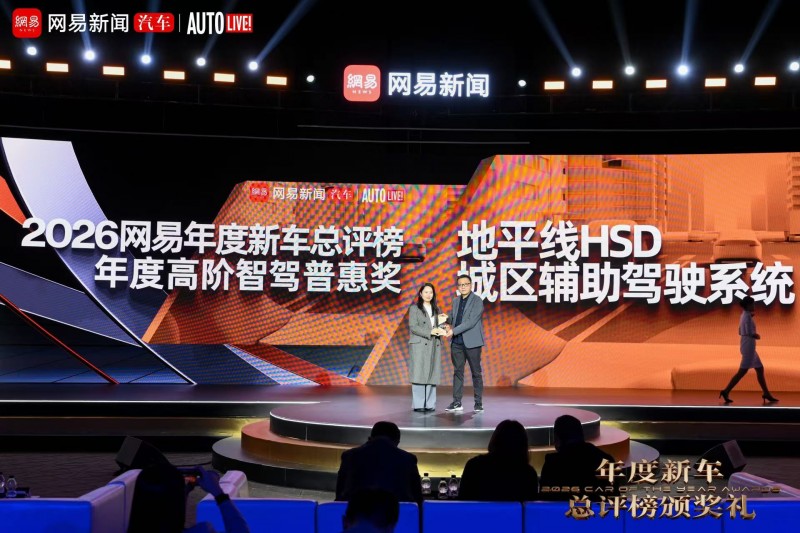
Core Insights - Horizon has recently achieved significant recognition in the industry, with its product HSD (Horizon SuperDrive™) winning multiple prestigious awards, highlighting its leadership in the intelligent driving sector [1][2][6] - The company has established itself as a key enabler in the smart driving industry, focusing on the integration of hardware and software technologies to drive innovation [8] Group 1: Product Recognition - HSD has won the "Annual High-Level Intelligent Driving Popularization Award" at the 2026 NetEase Annual New Car Evaluation Awards and the "Annual Benchmark Level Assisted Driving Solution" at the 2025 Automotive Development Conference hosted by Daily Economic News [2][5] - The HSD system features a one-piece end-to-end architecture with reinforcement learning capabilities, significantly enhancing safety, efficiency, and comfort in assisted driving [5] Group 2: Market Impact - HSD is currently being pre-sold in models like the Chery Xingtu ET5, with strong market performance anticipated as it is showcased in major auto exhibitions [5] - The system has established deep collaborations with over 10 mainstream automakers, with plans to be featured in more than 20 new models [5] Group 3: Company Achievements - Horizon has been awarded the title of "Annual Intelligent Driving Supplier" at the 2025 New Automotive Annual Ceremony, further solidifying its position in the industry [6][8] - The company has partnered with numerous mainstream brands, enabling over 400 models and achieving a chip shipment milestone of over 10 million units [8]

地平线:HSD已获10家车企品牌、超20款车型定点合作
Ju Chao Zi Xun· 2025-11-24 03:38
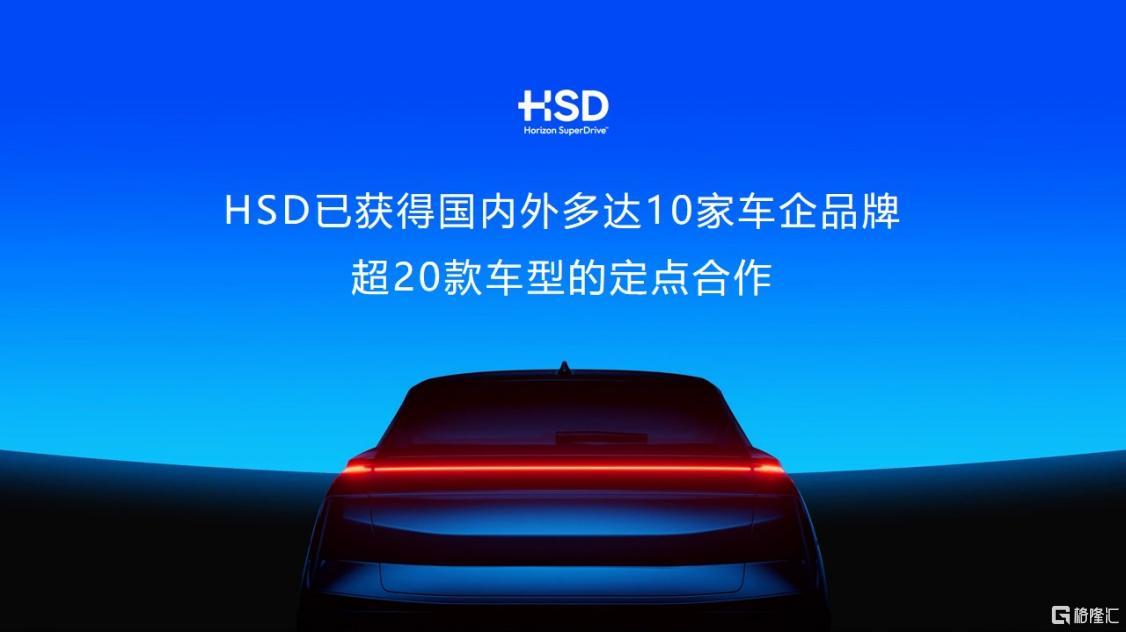
Core Insights - Horizon has secured partnerships with 10 domestic and international automotive brands, collaborating on over 20 vehicle models for its HSD system, marking a significant step towards making urban assisted driving accessible to everyone [2] - The Guangzhou Auto Show showcased new models featuring Horizon's HSD urban assisted driving system, indicating the commencement of large-scale production [2][3] - Horizon's HSD is supported by the powerful "Zhengcheng 6P" computing platform, which boasts 560 TOPS of computing power, enhancing the safety and efficiency of assisted driving [3] Company Developments - Horizon's "Zhengcheng" family has surpassed 10 million units shipped, establishing the company as the first in China to achieve this milestone in intelligent driving technology [2][4] - The company aims to achieve 10 million units of HSD production within the next 3-5 years, leveraging scale effects to accelerate the adoption of advanced assisted driving technologies [4] Market Position - The global first model featuring Horizon's HSD, the Xingtu ET5, has gained significant market attention and is set to officially launch on November 28 [3] - Other models, such as the Deep Blue L06 and the Windyun T9L, also feature Horizon's technology, showcasing the company's growing influence in the automotive sector [3]
西部证券晨会纪要-20251124
Western Securities· 2025-11-24 02:57
Group 1 - The macroeconomic outlook for 2026 emphasizes a shift towards "革故鼎新" (reform and innovation), indicating a notable recovery in nominal economic growth and a rebalancing of the economy towards domestic demand [2][6][8] - The banking sector is expected to see a stabilization in performance with a focus on the differences in asset-liability structures, suggesting a strategy of selecting low-risk quality stocks [3][20][21] - The AI industry is highlighted as a significant macroeconomic influencer, with discussions around its potential bubble and the implications of its financialization [3][13][15] Group 2 - The computer industry report discusses the full-stack AI capability chain established by Alibaba and Google, focusing on their respective strategies in chip development, cloud services, and application integration [4][24][25] - Alibaba's strategy includes a shift towards consumer markets while maintaining a strong enterprise focus, leveraging its cloud infrastructure and self-developed chips [24][26][27] - Google's advancements in AI are driven by its proprietary TPU chips and the Gemini model, which enhance its competitive edge in the AI application space [25][26][27] Group 3 - The banking sector's performance is projected to stabilize with a focus on dividend expansion and the identification of quality banks that align with policy directions [20][21][22] - The report anticipates a steady growth in bank earnings, with a particular emphasis on the recovery of net interest margins and non-interest income [22][23] - The overall banking landscape is expected to benefit from a supportive macroeconomic environment, with government investments and policies aimed at sustaining economic growth [20][21] Group 4 - The report on the electronic sector highlights the growth of companies like Longxin Technology and Zhongrong Electric, focusing on their advancements in AI-related products and market expansion [38][42] - The performance of these companies is driven by increasing demand in data centers and automotive electronics, with significant revenue growth reported [35][42] - Investment recommendations suggest a positive outlook for these companies based on their innovative product offerings and market positioning [40][44]
中国在全球汽车供应链中的地位快速提升
Ke Ji Ri Bao· 2025-11-24 00:40
Core Insights - China's role in the global automotive supply chain is becoming increasingly prominent, particularly in key component areas where it has established itself as a center for incremental supply chain growth [1][3] - The latest data indicates that China's power battery installation accounts for nearly 70% of the global total, maintaining a leading position for several consecutive years [1] - The automotive industry is undergoing unprecedented transformation, with a focus on reconstructing an open, resilient, and sustainable supply chain system [1] Group 1: Key Components and Challenges - Power batteries, chips, and software are becoming focal points of global competition within the automotive supply chain [2] - Despite China's scale advantage in the power battery sector, challenges arise from upstream resource monopolies and rapid technological iterations [2] - The domestic automotive chip industry is rapidly emerging, with companies like Horizon and Huawei becoming significant players in automotive computing chips, although the self-sufficiency of smaller chips needs to accelerate [2] Group 2: Future Projections and Strategies - By the end of the 14th Five-Year Plan, China's annual automotive production is expected to reach 40 million units, with domestic sales around 27 to 28 million units and overseas sales exceeding 12 million units, accounting for approximately 45% of the global total [3] - The proportion of Chinese components used in vehicles, referred to as "Chinese content," is anticipated to continuously increase, regardless of the vehicle's production location [3] - Recommendations for building an open and resilient supply chain ecosystem include promoting vehicle platform and supply chain combinations, creating a flexible supply chain network that supports both global collaboration and regional autonomy, and integrating core technologies through joint ventures [2]
HSD开启规模化量产,地平线实现全阶辅助驾驶量产突破
Ge Long Hui· 2025-11-24 00:32
Core Insights - The Chinese automotive industry is transitioning from electric vehicle leadership to intelligent driving, with Horizon's HSD urban auxiliary driving system entering a new phase of mass production [3][8] - Horizon has achieved partnerships with over 10 automotive brands and more than 20 vehicle models for the HSD system, indicating a significant market presence [3][4] - Horizon has become the first company in the industry to achieve mass production of all levels of auxiliary driving systems, with over 10 million units shipped from its Chengcheng family of intelligent computing solutions [4][6] Group 1 - The HSD system, powered by the "sixth-generation intelligent driving machine" Chengcheng 6P, offers advanced computing capabilities with 560 TOPS, supporting various auxiliary driving models [6][8] - The first models featuring the HSD system, including the Starway ET5 and the new Fengyun T9L and iCAR V27, were showcased at the Guangzhou Auto Show, highlighting the system's market readiness [3][7] - Horizon aims to achieve a target of 10 million units for the HSD system in the next 3-5 years, promoting widespread adoption of high-level auxiliary driving [8][10] Group 2 - The HSD system's competitive pricing and rapid production pace are breaking down barriers to entry for urban auxiliary driving, making it accessible for mainstream vehicle models [8][10] - Horizon's open empowerment model allows partner automotive companies to focus on brand differentiation and user experience innovation, strengthening their market position [10] - The collective advancement of Chinese automotive brands in intelligent driving is expected to shift the industry from technology following to experience leading [10]
专家在智能新能源汽车供应链创新大会上表示:中国在全球汽车供应链中的地位加速提升
Ke Ji Ri Bao· 2025-11-23 12:10
Core Insights - China's role in the global automotive supply chain is becoming increasingly prominent, particularly in key component areas where it has become the center of global incremental automotive supply chains [1] - China's battery installation volume accounts for nearly 70% of the global total, maintaining a leading position for several consecutive years [1] - The automotive industry is undergoing unprecedented transformation, with a focus on reconstructing an open, shared, and resilient supply chain system [1] Group 1: Supply Chain Dynamics - The competition in the automotive industry fundamentally revolves around the supply chain system, with the strength of the industry being dependent on the robustness of components and the industrial ecosystem [1] - NIO emphasizes that technological innovation is essential for building core competitiveness and creating a true moat, collaborating with partners to tackle key technologies [2] - The automotive supply chain is facing challenges from shortened development cycles and demand fluctuations, with NIO having 17 partners in Huainan to reduce overall costs by 20%-30% [2] Group 2: Key Areas of Competition - Key areas of competition in the automotive supply chain include power batteries, chips, and software, which are critical for ensuring supply chain security [2] - Despite China's scale advantage in the power battery sector, challenges arise from upstream resource monopolies and rapid technological iterations [2] - The Chinese automotive chip industry is rapidly emerging, with companies like Horizon and Huawei becoming significant players, although the localization of many small chips needs to accelerate [2] Group 3: Future Outlook - The automotive supply chain is expected to evolve towards high-end, intelligent, green, and integrated directions, referred to as the "new four modernizations" [3] - By the end of the 14th Five-Year Plan, China's annual automotive production is projected to reach 40 million units, with domestic sales around 27-28 million units and overseas sales exceeding 12 million units, accounting for approximately 45% of the global total [3] - The proportion of Chinese components used in vehicles, referred to as "Chinese content," is expected to continuously increase, regardless of the vehicle's production location [3]
地平线吕鹏:端到端用“老司机”数据,用户不会被“点刹”困扰
2 1 Shi Ji Jing Ji Bao Dao· 2025-11-23 10:26
Core Viewpoint - The discussion highlights the advancements in intelligent driving systems, emphasizing the importance of smooth vehicle control and the integration of human driving data to enhance performance [1] Group 1: Intelligent Driving Technology - The current braking systems often face issues like abrupt stops due to rule interventions, leading to a lack of coherence in the system [1] - By utilizing comprehensive end-to-end learning from experienced human drivers, the occurrence of sudden braking can be significantly reduced, resulting in smoother vehicle control [1] - The company has achieved mass production this year, securing partnerships with over 10 automotive manufacturers for more than 20 vehicle models, indicating a strong market presence [1] Group 2: Future Vision - The company aims to lead the future of Full Self-Driving (FSD) technology with scalable mass production [1] - A slogan has been adopted to convey the vision of entrusting intelligent driving to the company, thereby allowing individuals to reclaim their time and focus on other aspects of life [1]
车百会理事长张永伟:全球汽车供应链加速重构,中国角色愈发突出!
第一商用车网· 2025-11-22 13:29
Group 1 - The global automotive supply chain is undergoing profound changes, with China playing an increasingly prominent role in both vehicle manufacturing and component supply [2][3] - China's share in global battery installations is nearing 70%, maintaining a leading position for several years, and the country has transitioned from importing to exporting intelligent automotive components and solutions [3] - The concept of "含中率" (the proportion of Chinese components in global vehicles) is introduced as a critical indicator of China's growing influence in the automotive supply chain [3] Group 2 - The future competition in the automotive supply chain will focus on three key areas: power batteries, chips, and software, which are characterized by their extreme importance and uncertainty [4][5] - Despite being a strong player in the battery sector, China faces challenges from countries building localized battery supply chains, and the supply security of critical resources like lithium, cobalt, and nickel is a concern [5] - The chip industry in China is rapidly developing, but the domestic production ratio of control chips remains low, posing a significant technological bottleneck for the automotive industry [6] Group 3 - China's automotive supply chain is now facing new opportunities and challenges in global development, with a shift from primarily input-based to a more internationalized approach [7][8] - The "双工厂" (dual factory) model is emerging as an innovative strategy for companies to maintain core processes domestically while establishing automated production facilities abroad [8] - Multinational companies are shifting their strategies from "in China, for China" to "in China, for the world," facilitating the global distribution of Chinese components [8] Group 4 - The automotive supply chain is extending into new fields such as robotics, low-altitude economy, and unmanned vessels, providing new growth avenues for automotive companies [9][10] - This cross-industry extension allows automotive companies to leverage existing supply chains to support emerging intelligent industries, enhancing their competitive edge [10] Group 5 - Automotive companies need to rethink their supply chain strategies, moving from a focus on lean production and zero inventory to building secure and stable supply chain systems [11][12] - Many companies have yet to prioritize supply chain security strategically, indicating a need for increased investment in capital, human resources, and regional distribution [12] Group 6 - Component manufacturers are encouraged to adopt proactive strategies such as "fast response and near supply" and continuous technological iteration to adapt to the rapidly changing automotive landscape [13][14] - The automotive industry is experiencing shorter development cycles, necessitating quick response capabilities from component suppliers [13] Group 7 - A new structural contradiction exists in the relationship between vehicle manufacturers and component suppliers, where manufacturers struggle to find reliable new components while tech companies face barriers to entry [15][16] - Establishing a supply-demand platform to facilitate collaboration between vehicle manufacturers and technology providers is recommended to enhance matching efficiency [16] Group 8 - The development of the automotive supply chain should align with the "14th Five-Year Plan" goals of high-end, intelligent, green, and integrated development [16] - Emphasizing integration across various sectors, including cross-industry development and the fusion of hardware and software, is crucial for maintaining a competitive edge in the global market [16]