
小米

Search documents
招银国际每日投资策略-20260119
Zhao Yin Guo Ji· 2026-01-19 03:10
Industry Insights - The Chinese construction machinery industry is experiencing strong sales growth for truck cranes and crawler cranes, with December sales showing a year-on-year increase of 39% and 96% respectively, driven by demand from wind power installation and other energy projects [2] - The export performance of various construction machinery types, excluding tower cranes, was also strong in December, indicating a sustained upward cycle in non-earthmoving machinery demand expected to last until 2026 [2] - Recommended stocks include Zoomlion (1157 HK / 000157 CH, Buy), followed by Hengli Hydraulic (601100 CH, Buy) and Sany Heavy Industry (6031 HK / 600031 CH, Buy) [2] - Caution is advised regarding Zhejiang Dingli (603338 CH, Hold) due to weak sales in the aerial work platform sector, which saw an 8% year-on-year decline in December, despite some improvement [2] Market Performance - The Hang Seng Index closed at 26,845, down 0.29% for the day but up 4.74% year-to-date [3] - The Hang Seng Tech Index closed at 5,822, down 0.11% for the day and up 5.55% year-to-date [3] - The Shanghai Composite Index closed at 4,102, down 0.26% for the day and up 3.35% year-to-date [3] Semiconductor Industry - TSMC reported strong FY25 results with revenue of $122 billion, a year-on-year increase of 35.9%, and a gross profit margin of 59.9% [5] - In Q4 2025, TSMC's revenue reached $33.7 billion, a quarter-on-quarter increase of 1.9%, with a gross profit margin rising to 62.3% due to cost improvements and favorable exchange rates [5] - TSMC's guidance for Q1 2026 revenue is between $34.6 billion and $35.8 billion, with a gross profit margin of 63% to 65%, and the 2026 revenue growth forecast has been raised to approximately 30%, significantly above the industry growth estimate of 14% [5] - The company plans to increase its capital expenditure for 2026 to between $52 billion and $56 billion, indicating proactive capacity expansion to meet AI-driven demand [5]
天工国际20260118
2026-01-19 02:29
Summary of Tian Gong International Conference Call Industry and Company Overview - **Company**: Tian Gong International - **Industry**: High-performance materials, specifically focusing on high-boron steel and titanium alloys for applications in nuclear fusion, consumer electronics, and aerospace Key Points and Arguments High-Boron Steel Development - Tian Gong International has achieved a breakthrough in high-boron steel technology, producing neutron shielding steel plates with over 3.2% boron content using powder metallurgy, surpassing the traditional limit of 2% [2][3] - The company anticipates receiving procurement orders in the first half of 2026, with a unit price of 150,000 yuan per ton and an initial order volume of approximately 400 tons [2][8] - For the CFBD project, expected to be operational by 2030, the demand for high-boron steel is projected to reach 4,000 tons, with a unit price of 250,000 yuan per ton [2][6][7] Titanium Alloy Business - The titanium alloy segment is benefiting from demand for Apple's Air and Fold models, with an estimated market share of 60% for the 18th generation and maintaining the same for the 19th generation [2][11] - The expected delivery volume for titanium alloys is 3,500 tons in 2026, increasing to 5,000-5,500 tons in 2027, with a pre-tax unit price of 250,000 yuan [2][22] - The market for titanium alloy powder is still in its infancy, with no single company in China exceeding annual sales of 300 tons; Tian Gong plans to establish a production capacity of 3,000 tons [2][19] 3D Printing Technology - Tian Gong is expanding the application of 3D printing technology in military and aerospace sectors, focusing on high-nitrogen steel powder to enhance corrosion resistance in marine engineering [2][16][17] - The company is collaborating with domestic universities to research applications in marine engineering and aims to replace bearing materials with domestic alternatives [2][17] Market Outlook and Financial Projections - The mold steel business is expected to recover starting in the first half of 2025, with orders and profit margins increasing year-on-year due to rising raw material prices [2][4][24] - The company anticipates a significant increase in revenue from powder metallurgy applications in the automotive sector, particularly in integrated die-casting for electric vehicles [2][26][27] - Tian Gong expects to achieve a profit of 650-700 million yuan in 2026, driven by traditional business stability and new orders from Apple [2][32] Additional Important Information - Tian Gong has signed a cooperation agreement with the Chinese Academy of Sciences for a high-end metal laboratory, focusing on developing high-quality boron steel for nuclear fusion applications [2][28][29] - The company is confident in its ability to meet future material demands for advanced nuclear fusion reactors, with ongoing research to overcome technical challenges in producing high-boron and low-activation steels [2][30][31]
消费行业2026年春节机会
2026-01-19 02:29
Summary of Conference Call Records Industry Overview - **Consumer Industry**: The consumer industry is expected to see opportunities during the 2026 Spring Festival, particularly in the export chain and food sectors. Key companies like Jiangxin Home, Zhongxin Co., and Gongchuang Turf are projected to maintain steady growth in 2026 [1][2]. - **Agriculture Sector**: The 2026 Central Document No. 1 will focus on food security, poverty alleviation, and agricultural technology. Grain production has exceeded 1.4 trillion jin for two consecutive years, but supply and demand remain tight, necessitating improvements in yield [1][4]. - **Alcohol Industry**: The white liquor market is facing a pessimistic outlook for the Spring Festival, with expected sales declines of nearly double digits due to the impact of alcohol bans and high inventory levels from the previous year [1][7]. Key Companies and Their Performance - **Jiangxin Home**: Transitioning from OEM to OBM, with over 1,000 brand stores established. Stable performance is expected despite short-term stock price fluctuations due to currency changes [3]. - **Zhongxin Co.**: Anticipated profits exceeding 600 million yuan in 2026, with a current PE ratio of about 13 times. The company is performing well in Thailand's pulp molding production [3]. - **Gongchuang Turf**: Expected to maintain a 20% growth rate in 2026, with double-digit revenue growth continuing into the fourth quarter [3]. - **Anjixin Foods**: Projected revenue growth of nearly 20% in December, indicating a rebound in the food supply sector [1][9]. Investment Opportunities - **Export Chain**: Companies in the light industry are expected to perform well, with a positive outlook for Jiangxin Home, Zhongxin Co., and Gongchuang Turf [2]. - **Research Services**: Companies like Haoyuan Pharmaceutical, Baiaosaitu, and Nami Technology are well-positioned to benefit from the overseas expansion of innovative drugs [2][13]. - **AI in Home Appliances**: The potential for AI applications in home appliances is significant, with companies like Ugreen launching AI NAS to integrate localized computing power [2][14]. Agricultural Focus Areas - **High-Standard Farmland Construction**: Aiming to build 1.35 billion mu of high-standard farmland by 2030, with an investment of over 150 billion yuan annually [5]. - **Biotechnology**: Continued emphasis on the commercialization of genetically modified crops, with a focus on increasing planting areas and supporting regulations [5][6]. Consumer Behavior Insights - **White Liquor Sales**: The sales rhythm for white liquor during the Spring Festival is unclear, with expectations of a significant decline in sales due to changing consumer purchasing habits [7]. - **Non-Alcoholic Gifts**: Demand is shifting towards non-alcoholic gifts, including snacks and beverages, as consumers adapt to new purchasing trends [8]. Travel and Dining Sector - **Travel Industry**: Companies like Ctrip are expected to benefit from increased travel flow during the Spring Festival, with significant growth in hotel bookings and dining reservations [10][12]. - **Dining Sector**: Haidilao is highlighted as a key investment opportunity due to its improving turnover rates and potential for rapid expansion under new leadership [10][11]. Challenges and Innovations - **Smart Home Industry**: The smart home sector faces challenges such as high costs and the need for standardization across devices, but it remains a promising area for future growth [17][19]. - **Robotic Innovations**: Companies like Roborock are innovating in the robotic cleaning space, enhancing user interaction through AI capabilities [20]. This summary encapsulates the key insights and opportunities discussed in the conference call, providing a comprehensive overview of the consumer, agriculture, and technology sectors.
信达国际控股港股晨报-20260119
Xin Da Guo Ji Kong Gu· 2026-01-19 02:07
Market Overview - The Hang Seng Index faces short-term resistance at 27,188 points, with expectations of two interest rate cuts in 2026 following the Federal Reserve's December rate cut of 0.25 basis points [1] - The market anticipates policy initiatives in the first quarter of 2026 to boost domestic demand and achieve technological self-reliance, potentially leading to further monetary easing [1] - Recent adjustments in financing margin ratios by the Shanghai and Shenzhen stock exchanges may lead to short-term market corrections, impacting the inflow of foreign capital into Hong Kong stocks [1] Sector Focus - The report highlights a positive outlook for the biopharmaceutical sector, noting that the value of new drug licensing transactions in mainland China reached a record high last year, indicating sustained demand [5] - Defensive sectors are expected to attract capital as market risk appetite decreases, suggesting a shift towards high-yield stocks [5] Economic Indicators - The U.S. Federal Reserve's recent decision to cut rates aligns with market expectations, with GDP growth forecasted to rise by 0.5 percentage points to 2.3% for 2026 [2] - The report notes a significant increase in cross-border transactions using the euro, with payments rising by 22.8% last year, marking the highest growth in 15 years [7] - China's total electricity consumption surpassed 10 trillion kilowatt-hours for the first time, reflecting a 5% year-on-year growth, which is more than double the annual consumption of the U.S. [7] Corporate News - Xiaomi and OPPO have reportedly lowered their annual shipment forecasts by over 20% due to rising upstream storage costs, with Vivo also adjusting its expectations [8] - TCL Electronics anticipates a profit increase of up to 60% for the previous year, while KANAT Optical expects a profit growth of no less than 30% [2] - Yongbai Technology is under investigation by the China Securities Regulatory Commission for its dealings with CATL, involving orders exceeding 100 billion yuan [2] Regulatory Developments - The China Securities Regulatory Commission emphasizes the need for stable market conditions and timely counter-cyclical adjustments to prevent significant market fluctuations [7] - New regulations are being implemented to phase out Chinese suppliers from critical infrastructure, reflecting a shift in the EU's technology policy [6]


2026,车企反攻智能硬件
3 6 Ke· 2026-01-18 23:37
Core Viewpoint - The rise of smart glasses, particularly from automotive companies, signifies a shift in the automotive industry towards integrating AI and smart hardware, transforming traditional business models from one-time vehicle sales to ongoing subscription-based services [1][3][9]. Group 1: Transition from Hardware to Smart Hardware - The transition from hardware to automotive manufacturing began in 2019, driven by a peak in smartphone sales and a surge in electric vehicle sales, leading hardware manufacturers to explore automotive opportunities [3][5]. - Companies like Xiaomi and Huawei have either entered the automotive market directly or partnered with automakers to develop smart driving and vehicle integration solutions [3][5]. - The evolution of smart hardware in vehicles is seen as a natural progression, with the automotive industry now embracing AI to create a unified smart ecosystem [1][3]. Group 2: New Profit Models for Automotive Companies - The introduction of smart glasses, such as Li Auto's Livis, illustrates a shift towards products that enhance brand loyalty and provide continuous data collection, which can improve AI model capabilities [10][11]. - The automotive industry is moving towards a model where vehicle sales become part of a broader consumer lifestyle platform, focusing on software services that offer higher profit margins compared to traditional vehicle manufacturing [13][14]. - The integration of AI into both vehicles and smart hardware allows for shared components and reduced costs, enhancing overall efficiency and profitability [14][16]. Group 3: Challenges in the AI Transition - The transition to AI-driven models presents significant challenges, including high costs associated with data, algorithms, and computational power, which create barriers to entry for new players [17][19]. - Successful companies in this space must have substantial financial resources, technical expertise, and the ability to scale operations to effectively compete [18][19]. - The competitive landscape is likely to solidify around a few leading brands capable of leveraging their existing consumer base and data to enhance their AI capabilities [19].


人形机器人的淘汰赛:“一些公司已经不行了”
第一财经· 2026-01-18 09:44
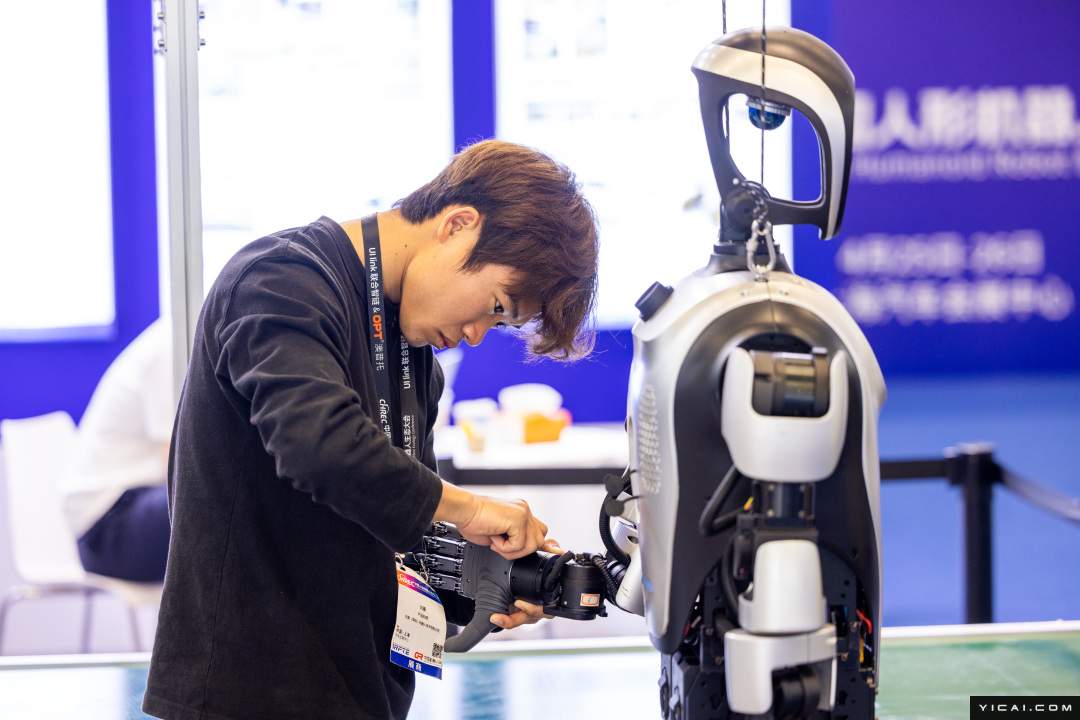
Core Viewpoint - The humanoid robot industry in China is experiencing significant differentiation, with leading companies accumulating more financing and commercial orders, while those lacking commercialization capabilities face potential elimination [3][5][7]. Group 1: Industry Overview - As of now, there are over 100 humanoid robot companies in China, with the market seeing a surge in investment and financing events, totaling 27 billion RMB in 2025 [5]. - The customer base for humanoid robots is shifting from academic institutions to industrial enterprises, indicating a growing acceptance and demand for these robots in practical applications [6][7]. Group 2: Market Dynamics - The first-tier humanoid robot companies, such as Yushun and Zhiyuan, are distinguished by their significant order volumes, with some nearing unicorn status, while second-tier companies face challenges in securing financing and commercial orders [7][9]. - The competition among humanoid robot companies is likened to the "battle of a hundred groups" in the food delivery market, suggesting that many companies may not survive due to high investment requirements and technological barriers [8]. Group 3: Technological Challenges - The primary bottleneck for humanoid robots is the development of their "brain," which is crucial for their functionality and intelligence [12][14]. - Current humanoid robots rely on general AI models that are not specifically designed for their needs, limiting their development potential [13]. Group 4: Future Projections - UBS estimates that global humanoid robot shipments will reach approximately 30,000 units in 2026, with a more conservative outlook compared to other institutions [11]. - The potential market for humanoid robots could reach between 1.4 trillion to 1.7 trillion USD by 2050, encompassing various components and services [11].

智谱1000亿 , 清华赚翻了
3 6 Ke· 2026-01-18 09:22
Group 1 - The core point of the article highlights the remarkable market performance of Zhipu, which has seen its market value increase by over 500 billion HKD within a week of its listing on the Hong Kong Stock Exchange, reaching a total market value of 1.1 trillion HKD [1][2] - Zhipu was established in 2019, leveraging the technological foundation laid by Tsinghua University's KEG laboratory, which developed the AMiner product in 2006, focusing on AI-driven research insights [2][3] - The initial shareholding structure of Zhipu included significant stakeholders such as Huakong Technology, which held 11.99% of shares at the time of establishment, and has since seen its stake value rise to approximately 38.83 billion HKD [2][3] Group 2 - The company has completed at least 8 rounds of financing, raising over 8.3 billion CNY, and has attracted more than 50 institutional investors, indicating strong backing from the investment community [4][5] - Following its IPO, Zhipu's stock price surged by over 126% within the first seven trading days, driven by strategic partnerships and technological advancements, including a collaboration with Didi and the launch of a new image generation model with Huawei [5][6] - The success of Zhipu is part of a broader trend in China where university-led technology transfer initiatives are yielding significant financial returns, with Tsinghua University leading in technology commercialization efforts [7][9]
人形机器人的2026:落地和出清会同时到来 | 海斌访谈
Di Yi Cai Jing· 2026-01-18 06:40
Core Insights - The main bottleneck for humanoid robots is their "brain," and breakthroughs in this area are necessary for the industry to reach its "electric vehicle moment" [1][10] - By 2026, it is anticipated that some humanoid robot companies will be eliminated due to a lack of commercialization capabilities and financing [1][5] Industry Overview - China currently has over 100 humanoid robot companies, with significant differentiation emerging among them over the past three years [1][3] - The market for humanoid robots has been buoyed by the enthusiasm for multimodal large model technologies, with a total of 190 financing events and a scale of 27 billion RMB in 2025 [3] - The customer base for humanoid robots is shifting from academic institutions to industrial enterprises, indicating a move from laboratory settings to practical applications [3][4] Market Dynamics - In 2025, the global shipment of humanoid robots is expected to reach approximately 13,000 units, with a conservative estimate of 30,000 units by 2026 [9][8] - The first-tier companies in the humanoid robot sector are seeing significant orders, with some nearing unicorn status, while second-tier companies face more challenges [5][6] - The competition landscape is compared to the "battle of the hundred groups" in the food delivery market, suggesting that only a few companies will survive in the humanoid robot sector [6] Technological Challenges - The development of humanoid robots is hindered by the immaturity of hardware components and the lack of suitable AI large models [10] - The "brain" of humanoid robots requires high-quality data for training, which is currently limited [10] - Companies are focusing on developing the "small brain" for motion control, as they lack the resources to develop large models independently [10] Future Projections - The humanoid robot market is expected to grow significantly, with potential market sizes reaching between 1.4 trillion to 1.7 trillion USD by 2050 [9] - The industry is still in its early stages, and a breakthrough in the "brain" technology is essential for the market to mature [10][11] - By 2035, global shipments of humanoid robots could reach 1 million units, primarily in industrial and service sectors, with challenges remaining for household applications [11]

2025年Q3中国移动互联网流量季度报告
艾瑞咨询· 2026-01-18 00:06
Core Insights - The report indicates a slight growth in mobile internet traffic in Q3 2025, with user behavior shifting towards low-frequency deep usage. Monthly active devices reached 1.452 billion, a 0.83% increase from Q2 2025. Daily usage frequency decreased by 2.9% to 59.8 times, while usage duration increased by 2.3% to 282.9 minutes, indicating deeper user engagement [1][2][6]. User Changes - The proportion of unmarried users increased to 32.7%, up 1.39% year-on-year, with growth driven by the unmarried demographic in mid-to-high tier cities. Users aged 35 and below accounted for 49.1% of the total, with a 4.2% increase in users from second-tier cities and above [2][8]. - User preferences vary significantly by age, with younger users (post-2000s) favoring gaming and entertainment, while those aged 25-30 lean towards parenting and family content [2][16]. Industry Changes - The food delivery sector saw a temporary surge in traffic due to intense competition among major players, but growth momentum has weakened post-surge. The travel sector continues to show strong demand, with a 15% year-on-year increase in usage duration [3][61]. - Artificial intelligence applications are experiencing rapid growth, with monthly active users reaching 470 million and a year-on-year increase of 321% in user scale, reflecting high market demand and acceptance [3][37]. - The gaming service sector is facing overall decline, with intensified competition among existing players, although MOBA and shooting games are experiencing growth [4][76]. APP Changes - In September 2025, the top three apps with over 100 million monthly active users were Railway 12306, Doubao, and Quanmin K Ge, while the top three apps with over 50 million monthly active users included Tencent Yuanbao, Soda Music, and Zhuanzhuan [5][81][82].

特朗普就格陵兰岛问题发关税威胁;白银一度跌超6%;税务部门:自查近三年境外所得;13类食品在直播间禁售;罗永浩、贾国龙被微博禁言丨每经早参
Mei Ri Jing Ji Xin Wen· 2026-01-16 23:01
Group 1 - The State Council, led by Premier Li Qiang, is focusing on measures to boost consumption and support service consumption growth, including clearing overdue payments to enterprises and ensuring wage payments to migrant workers [3] - The U.S. stock market saw a collective decline, with the Nasdaq down 0.06%, the Dow Jones down 0.17%, and the S&P 500 down 0.06%. However, semiconductor stocks rose, with the Philadelphia Semiconductor Index up 1.15% [3] - International oil prices experienced slight increases, with WTI crude oil rising by 0.24% to $59.22 per barrel and Brent crude oil increasing by 0.41% to $64.02 per barrel [3] Group 2 - European stock indices closed lower, with Germany's DAX down 0.22%, France's CAC40 down 0.65%, and the UK's FTSE 100 down 0.04% [4] - The tax authority in China is urging taxpayers to self-check their overseas income for the past three years, emphasizing compliance with tax regulations to prevent tax evasion [5] - The Ministry of Finance and the State Taxation Administration announced the continuation of tax incentives for public rental housing to support its construction and operation [6] Group 3 - Eight departments in China released the "Anti-Money Laundering Special Preventive Measures Management Measures," effective from February 16, 2026, to enhance anti-money laundering efforts [7] - The State Administration for Market Regulation published regulations for live-streaming e-commerce operators to ensure food safety and prevent misleading advertising, effective from March 20, 2026 [8] - The China Securities Regulatory Commission is soliciting opinions on the "Derivatives Trading Supervision Management Measures (Trial) (Draft for Comments)" to improve the regulatory framework for derivatives trading [9] Group 4 - The China Securities Regulatory Commission announced the initiation of reforms for the Growth Enterprise Market and continued reforms for the Science and Technology Innovation Board to enhance financing flexibility [9] - The Shanghai Futures Exchange announced adjustments to trading limits for silver and nickel futures contracts, effective January 20, 2026 [10] - The U.S. President Trump indicated a temporary halt to military action against Iran, influenced by discussions with Middle Eastern leaders [11] Group 5 - The market regulator in China approved the acquisition of Delphi Technologies by American Axle Manufacturing under certain conditions to ensure fair competition in the automotive parts market [16] - Apple has included brands like Huawei and Xiaomi in its trade-in program, allowing customers to exchange old devices for discounts on new iPhones [17] - Huawei reported a cumulative R&D investment of 50 billion yuan in its autonomous driving solutions, with plans to equip 1.4 million vehicles by the end of 2025 [19] Group 6 - Companies under the State Grid saw stock price increases following the announcement of a 4 trillion yuan investment plan over the next five years, indicating positive industry sentiment [20] - Tencent Cloud has reportedly become the only major public cloud provider in China to achieve profitability, marking a significant milestone in the cloud computing market [21] - Kweichow Moutai clarified that its recent sales of premium liquor are limited to existing group purchase clients, not open to new customers [22]

