海底捞

Search documents
贾国龙二战罗永浩!谁才是压垮西贝的真凶?
商业洞察· 2026-01-18 09:23
Core Viewpoint - The article discusses the recent challenges faced by Xibei, particularly the closure of 102 stores, which represents about 30% of its total outlets, due to a significant decline in business attributed to public backlash over pre-prepared food accusations [5][11]. Group 1: Store Closures and Employee Impact - Xibei will close 102 stores in the first quarter, affecting approximately 4,000 employees, citing "overwhelming slander" as the main reason for the business downturn [5]. - The company has committed to ensuring that departing employees receive their full wages and that customer prepaid cards can be used at other locations or refunded immediately [5]. Group 2: Denial of Pre-prepared Food Accusations - Xibei's management strongly denies the accusations of using pre-prepared food, clarifying the difference between "central kitchen preparation" and "pre-packaged meals," asserting that their practices comply with national definitions [6][5]. - The article highlights that while Xibei's technical definition of pre-prepared food may be correct, public perception differs, leading to a disconnect between compliance and consumer trust [7]. Group 3: Business Viability and Market Dynamics - The closure of these stores is seen as a necessary move due to low profitability, with Xibei's average store net profit margin at only about 5%, and some loss-making stores facing fixed monthly costs nearing 500,000 [11]. - The article suggests that the pre-prepared food controversy was not the sole cause of Xibei's struggles but rather the tipping point in a broader context of changing market conditions and consumer expectations [12][14]. - Competitors like Mixue Ice City are expanding aggressively, while other high-end brands are scaling back, indicating a shift in market dynamics where value perception is increasingly critical [14].


服务消费政策加码,关注结构性投资机会:消费者服务行业周报(20260112-20260116)-20260118
Huachuang Securities· 2026-01-18 09:06
Investment Rating - The report maintains a "Recommendation" rating for the consumer services industry, indicating an expectation that the industry index will exceed the benchmark index by more than 5% in the next 3-6 months [45]. Core Insights - The State Council's recent meeting emphasized the implementation of consumption-boosting policies, which are expected to enhance the strategic position of service consumption as a key driver of domestic demand and economic growth [4][5]. - The report highlights the government's support for new business models and quality service supply, particularly in sectors like culture, tourism, and sports, which are seen as areas with significant growth potential [4]. - The anticipated policies are expected to release consumer spending potential in leisure and tourism, providing substantial benefits to the industry [4]. - The consumer services sector showed a weekly increase of 1.53%, outperforming the overall market indices, with notable performances from companies like Haidilao and Alibaba [7][19]. Industry Data - The consumer services industry consists of 55 listed companies with a total market capitalization of approximately 498.8 billion yuan and a circulating market value of about 457.1 billion yuan [1]. - The absolute performance of the industry over the past month was -7.7%, while the relative performance was -6.9% compared to the benchmark [2]. Market Performance - The consumer services sector's weekly performance was 1.53%, compared to a decline of 0.57% for the CSI 300 index and a 0.51% increase for the overall A-share market [7]. - The report notes that the sector's stocks, such as Haidilao and Alibaba, have shown significant gains, indicating a positive market sentiment towards the consumer services industry [4][19]. Upcoming Events - Several companies in the consumer services sector are scheduled to hold shareholder meetings in the coming month, including Dalian Shengya on February 2, Qujiang Cultural Tourism on January 22, and Chuangye Heima on January 21 [26].
餐饮业绝境求生丨晚点周末
晚点LatePost· 2026-01-18 07:05
Core Viewpoint - The restaurant industry is facing a severe crisis, with high closure rates and changing consumer expectations, leading to a survival game for many businesses [4][6][12]. Industry Overview - The restaurant industry in China has seen a significant increase in new openings, with 3.15 million new restaurants in 2023 and 3.7 million expected in 2024, but closures are also high, with 3 million and 3.35 million respectively, resulting in an average of nearly 10,000 closures per day [6][12]. - Major brands like Haidilao and Xibei are struggling, with Haidilao experiencing declines in customer spending and turnover rates [7][15]. Consumer Behavior Changes - Consumers are now expecting lower prices and higher quality, with average spending dropping from 120-180 RMB to 80-100 RMB, and even as low as 60-80 RMB in some cases [13][14]. - The demand for fresh ingredients and a better dining experience is increasing, leading to a shift in menu offerings and pricing strategies [13][16]. Business Model Challenges - Xibei's business model is under scrutiny due to its high operational costs, including a significant portion of revenue spent on non-food-related expenses [8][10]. - The reliance on delivery services has increased, with Xibei reportedly generating about 40% of its revenue from takeout, which is above the industry norm of 20% [11][12]. Competitive Landscape - The competition in the restaurant sector is intensifying, with many brands reducing prices and focusing on core menu items to maintain profitability [14][21]. - Successful brands are adopting efficient supply chain practices, with companies like Sallya leading the way in cost control and operational efficiency [22][27]. Marketing and Customer Engagement - New marketing strategies are essential, with many brands investing heavily in social media and promotional activities to attract customers [17][18]. - The importance of creating a unique dining experience and maintaining customer loyalty is emphasized, with some businesses focusing on building strong relationships with repeat customers [20][21]. Future Outlook - The industry is expected to continue evolving, with a focus on efficiency and cost management becoming critical for survival [29][30]. - Brands that can adapt to changing consumer preferences and streamline operations are likely to thrive in the current challenging environment [28][29].

海底捞(06862):创始人接任CEO,新执董多具一线经验
GOLDEN SUN SECURITIES· 2026-01-18 06:44
Investment Rating - The report maintains a "Buy" rating for Haidilao, indicating a positive outlook for the company's stock performance in the near term [5]. Core Insights - The founder, Zhang Yong, has resumed the role of CEO, bringing back leadership with extensive experience, which is expected to enhance operational efficiency and strategic direction [1][2]. - The company is implementing the "Red Pomegranate Plan," focusing on multi-brand and multi-category development to adapt to the challenging hot pot industry environment, where the number of hot pot restaurants has decreased significantly [2][3]. - Financial projections estimate revenues of 438 billion, 464 billion, and 508 billion yuan for the years 2025, 2026, and 2027 respectively, with net profits expected to be 42.3 billion, 47.4 billion, and 53.9 billion yuan for the same years [3][4]. Financial Summary - Revenue for 2023 is reported at 41,453 million yuan, with a year-on-year growth rate of 33.6%. The projected revenue for 2024 is 42,755 million yuan, showing a modest growth of 3.1% [4]. - The net profit attributable to the parent company for 2023 is 4,499 million yuan, with a significant year-on-year increase of 174.6%. However, a decline is projected for 2025, with net profit expected to drop to 4,231 million yuan [4]. - The earnings per share (EPS) for 2023 is 0.81 yuan, with projections of 0.84 yuan for 2024 and a slight decrease to 0.76 yuan for 2025 [4]. Management Changes - The recent changes in the executive team are expected to bring new perspectives and efficiencies, with the new directors having substantial frontline operational experience [2]. - The board's diversity in age and experience is anticipated to contribute positively to the company's strategic initiatives [2].

创始人张勇重掌将印,海底捞高层“换血”迎挑战
Xi Niu Cai Jing· 2026-01-18 06:06
Core Viewpoint - The hot pot industry is experiencing intensified competition, prompting Haidilao to undergo significant personnel and strategic adjustments, including the return of founder Zhang Yong as CEO and the resignation of former CEO Gou Yiqun [2][4]. Management Changes - Zhang Yong will take on the role of CEO while Gou Yiqun will continue to oversee the automation and intelligent management processes within the group [4]. - This marks the second CEO change for Haidilao in three years, with Zhang Yong previously stepping down in March 2022 [4]. - The board of directors has also undergone a renewal, with new female executives appointed from core operational roles to support innovation and develop a younger management team [5]. Business Performance - Haidilao reported a revenue of 20.703 billion yuan for the first half of 2025, a year-on-year decrease of 3.7%, and a net profit of 1.755 billion yuan, down 13.7% [7]. - The core operational metric, table turnover rate, has also declined, indicating challenges in the main business despite previous management efforts through the "Pomegranate Plan" [7]. - The hot pot sector is undergoing a significant shakeout, with the total number of industry stores decreasing by approximately 13.7% from January 2025 to January 2026 [7]. Market Outlook - Zhang Yong's return is seen as a strategic move to leverage his experience and authority to stabilize the core hot pot business and efficiently manage resources to drive innovation and growth [6][7]. - Market analysts suggest that the overall restaurant sector is beginning to improve, with expectations that most leading brands will achieve stable or positive same-store sales starting in the second half of 2025 [7]. - Following the announcement of the management changes, Haidilao's stock price surged over 10%, reflecting investor optimism about the company's transformation [7].
机器人租赁风口下,保险能否筑牢安全防线?
Cai Jing Wang· 2026-01-18 05:14
Core Insights - The article emphasizes that robot insurance is not only a risk transfer tool but also a "connector" and "stabilizer" for the robot industry ecosystem, supporting China's ambition to become a global leader in robotics through financial and technological innovation [1] Group 1: Market Dynamics - The rapid growth of the robot leasing market is driven by technological advancements and market demand, with the domestic robot leasing market expected to exceed 1 billion yuan by 2025 [2] - Shanghai has launched the first national robot leasing open platform, aiming to have over 10 manufacturers and 200 service providers by 2026, serving over 400,000 leasing customers [2] - The rental prices for robots have decreased significantly, making them more accessible to small and medium-sized enterprises [2] Group 2: Insurance Demand - The risks associated with robot operations, such as damage and third-party injuries, have led to a strong demand for insurance, with platforms requiring every robot to be insured [3][5] - Major insurance companies are actively developing robot insurance products, including comprehensive coverage for damage and third-party liability [4][5] Group 3: Industry Challenges - The robot insurance market faces challenges such as data barriers, difficulty in risk assessment, and complex liability definitions [7] - The unpredictable nature of robot behavior complicates traditional actuarial models, necessitating the development of dynamic pricing models using real-time data [7][8] Group 4: Future Outlook - The insurance industry is expected to evolve from simple risk compensation to comprehensive risk management, becoming a key infrastructure for connecting technological innovation with commercial applications [8] - Policy guidance and industry collaboration are crucial for addressing existing challenges, with suggestions for modular insurance policies and collaborative data collection to enhance risk assessment [8]



中金《秒懂研报》 | 何以胖东来:当一家超市开始“输出幸福”,我们该学什么?
中金点睛· 2026-01-18 01:07
Core Viewpoint - The article discusses the unique business model of "胖东来" (Pang Donglai), a regional supermarket in China, which has achieved significant success without relying on capital infusion or aggressive pricing strategies. It emphasizes the concept of "幸福生产力" (happiness productivity) and how it can be understood and replicated in other businesses [2]. Group 1: Business Performance - Pang Donglai operates 13 stores in two cities, generating sales of 16.96 billion yuan in 2024, with over 3 million visitors during the National Day holiday, surpassing the top five tourist attractions in Henan province [5]. - By October 6, 2025, the total sales reached 18 billion yuan, with the supermarket segment contributing over half of this amount [5]. - The company has integrated deeply into the local economy, employing approximately 18,000 people and accounting for about 6% of the retail sales in the cities of Xuchang and Xinxiang [5]. Group 2: Employee-Centric Management - Pang Donglai's success is attributed to its employee-centric approach, offering salaries up to 110,000 yuan per year, a 7-hour workday, and various benefits such as paid vacations and health insurance for employees' parents [7]. - The company has a low employee turnover rate of 1.2% in the first three quarters of 2025, compared to industry averages of 100% [7]. - Employees are encouraged to engage with customers genuinely, contributing to a positive shopping experience and customer loyalty [8]. Group 3: Product and Service Strategy - The supermarket focuses on high-quality products and has stopped promotional activities, instead investing in product quality and supplier management [9]. - Pang Donglai has developed its own brand products, with expected sales exceeding 1 billion yuan in 2025, and has implemented customer-friendly store designs and services [12]. - A rapid response mechanism for customer complaints and a transparent approach to product quality issues have fostered trust and positive word-of-mouth [12]. Group 4: Broader Implications and Methodology - The business model of Pang Donglai has evolved into a "人本经营" (human-centered management) methodology that is being shared with other retailers, demonstrating adaptability across different regions and contexts [13]. - The successful transformation of a competitor's store in Urumqi, guided by Pang Donglai, resulted in a 286% increase in sales on opening day, showcasing the effectiveness of this methodology [14]. - The article highlights that the principles of treating employees well and focusing on genuine customer interactions can lead to sustainable business success, even in a competitive environment [16].

总规模超3500亿,成都最大产业基金集群来了
Sou Hu Cai Jing· 2026-01-17 14:30
Core Viewpoint - Sichuan is leveraging institutional innovation and capital aggregation to enhance its venture capital landscape, positioning itself as a significant player in the mid-western investment market [1][10]. Group 1: Fund Development - As of January 14, 2026, Sichuan has signed 174 funds with a total scale of 355.3 billion yuan, focusing on key industries such as electronic information, healthcare, and artificial intelligence [2][3]. - The "Chengdu High-tech Zone Industry Fund Investment List" and "Chengdu High-tech Zone Industry Financing Demand List" have been released, detailing 100 financing projects that align with the region's industrial strategy [3]. - By the end of 2025, Sichuan aims to have 500 private equity and venture capital management institutions and over 2,000 funds, with a total management scale exceeding 400 billion yuan [4][5]. Group 2: Policy Support - The provincial government has introduced measures to encourage venture capital, including a loss tolerance mechanism for state-owned funds, allowing up to 60% loss tolerance and up to 100% for individual projects [4]. - Incentives for fund managers include tax benefits, housing support, and cash rewards of up to 2 million yuan for outstanding contributions [4]. Group 3: Ecosystem Growth - The venture capital ecosystem in Sichuan is expanding beyond Chengdu, with a focus on hard technology, advanced manufacturing, and low-altitude economy [6][7]. - A 50 billion yuan social security technology innovation fund has been established to support strategic emerging industries [7]. - Various funds have been launched in niche sectors, such as a 2 billion yuan gas industry fund focusing on hydrogen energy and LNG [8]. Group 4: National Context - The national venture capital guidance fund has completed strategic deployments in key regions, emphasizing early-stage investments [9]. - The trend of capital flowing towards technology innovation and advanced manufacturing is evident across the country, indicating a broader investment wave [9][10].
颐海国际(01579):颐海国际跟踪报告:关联方企稳,2B、海外延续较快成长
GUOTAI HAITONG SECURITIES· 2026-01-17 11:20
Investment Rating - The investment rating for the company is "Accumulate" [2][6]. Core Insights - The report highlights the return of the founder of Haidilao, which is expected to stabilize the related party business and continue rapid growth in the third-party business [3]. - The company anticipates that the related party business will recover in the second half of 2025, driven by improvements in Haidilao's operations and pricing adjustments [10]. - The overseas and B2B businesses are projected to drive the third-party business's growth, with overseas revenue expected to reach 266 million RMB in the first half of 2025, reflecting a year-on-year increase of 34.43% [10]. Financial Summary - Total revenue is projected to grow from 6,147.57 million RMB in 2023 to 8,118.23 million RMB by 2027, with a compound annual growth rate (CAGR) of approximately 8.99% [4]. - Net profit is expected to decrease from 852.70 million RMB in 2023 to 739.43 million RMB in 2024, before recovering to 962.06 million RMB by 2027 [4]. - The company’s price-to-earnings (PE) ratio is projected to decrease from 13.04 in 2023 to 14.60 in 2027, indicating a potential increase in valuation [4]. Business Performance - The related party business is expected to stabilize, with a low profit margin of around 13% in the first half of 2025, suggesting limited room for further decline [10]. - The overseas business is anticipated to maintain rapid growth, supported by the ramp-up of production capacity in Thailand and enhanced local supply chain capabilities [10]. - The B2B segment is expected to continue its rapid growth due to brand and cost advantages, as well as the establishment of a professional B2B team [10].
中资离岸债风控周报(1月12日至16日 ):一级市场发行平稳 二级市场全线上涨
Xin Hua Cai Jing· 2026-01-17 09:45
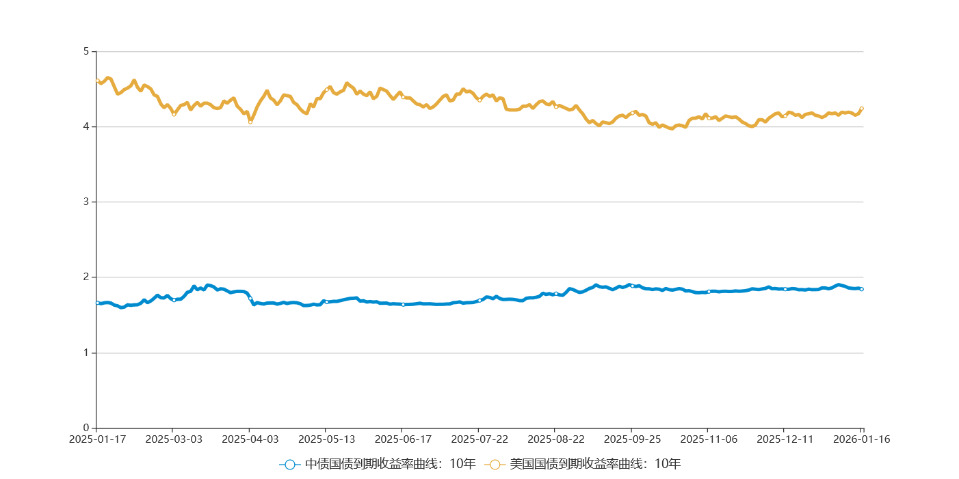
Primary Market - A total of 14 offshore bonds were issued this week (January 12-16, 2026), including 4 RMB bonds, 6 USD bonds, 3 HKD bonds, and 1 EUR bond, amounting to approximately $3.855 billion in total issuance [1] - The largest single issuance in the offshore RMB bond market was 3.5 billion RMB by Kuaishou Technology, with the highest coupon rate of 6.95% issued by Tai'an Guotai Min'an Investment Group [1] - In the USD bond market, the largest single issuance was $900 million by Kuaishou Technology, with the highest coupon rate of 6.75% issued by Sun Hung Kai Properties [1] Secondary Market - The yield on Chinese USD bonds rose across the board this week, with the Markit iBoxx Chinese USD Bond Index increasing by 0.05% to 251.79 [2] - The investment-grade USD bond index rose by 0.03% to 244.71, while the high-yield USD bond index increased by 0.23% to 243.28 [2] - The real estate USD bond index rose by 0.34% to 180.33, and the city investment USD bond index increased by 0.14% to 154.63 [2] Benchmark Spread - As of January 16, the spread between the 10-year benchmark government bonds of China and the U.S. widened to 238.8 basis points, narrowing by 8.5 basis points from the previous week [3] Rating Changes - On January 14, Moody's withdrew the issuer rating of "Baal" for Hangzhou Water at the issuer's request [5] - On January 16, Fitch downgraded the long-term foreign currency issuer ratings of Wanda Commercial and Wanda Hong Kong to "RD" [5] Domestic News - The Ministry of Finance announced the extension of tax exemption policies for foreign institutions investing in the domestic bond market, effective from January 1, 2026, to December 31, 2027 [6] - China Securities Depository and Clearing Corporation is seeking opinions on the essential clauses for the general pledge-style repurchase transaction settlement agreement [7] - Industrial Bank successfully issued the first "Yulan Bond" from a free trade zone entity, with a scale of 3 billion RMB and a coupon rate of 1.95% [8] Overseas News - Federal Reserve's Philadelphia President Anna Paulson reiterated that if inflation continues to cool, further rate cuts may occur later this year [9] Default and Extension - Jingrui Holdings announced that the Hong Kong High Court ordered the company to be liquidated, with trading of its shares suspended [10] - Oceanwide Group reported a cumulative contract sales of 26.31 billion RMB in 2025, a year-on-year decrease of 25.2% [11] - Haidilao redeemed a $600 million note with a coupon rate of 2.150% that matured on January 14 [12] - Ruimaotong reported overdue debts totaling approximately 856 million RMB, accounting for 10.85% of the company's latest audited net assets [13]