三星

Search documents
OpenAI第一款硬件要来了,但可能“没那么AI”?
硬AI· 2026-02-08 06:18
编辑 | 硬 AI 在生成式AI软件领域确立统治地位后,OpenAI正试图将其影响力延伸至硬件终端。然而,这家AI巨头的 首款消费级设备正面临的"规格降级"的调整。 受制于全球存储芯片危机带来的BOM(物料清单)成本飙升,这款承载着OpenAI"端侧智能"野心的设 备,极可能在首发时降级为一款依赖云端的"基础耳机"。 受制于全球存储芯片危机带来的BOM(物料清单)成本飙升,OpenAI的首款消费级设备,极可能在首发时降级为一款依 赖云端的"基础耳机"。 硬·AI 作者 | Kozmon 01 从"独立终端"降级为"基础耳机" 据知名科技爆料源Smart Pikachu透露,OpenAI内部代号为"Sweetpea"的首款硬件,已确立消费端命名 为"Dime"。 该产品原本的技术蓝图极具颠覆性:计划搭载三星2nm制程的Exynos芯片,赋予耳机媲美智能手机的独立 计算能力,以实现复杂的端侧AI处理。然而,这一构想正在撞上供应链的"成本墙"。由于存储组件价格持 续高企,导致高规格芯片方案的BOM成本失控。 出于商业理性,OpenAI被迫调整策略。Smart Pikachu透露,Dime的第一代产品或将剥离"类手机 ...


美光科技:乘AI之东风,存储龙头高速增长
Changjiang Securities· 2026-02-08 05:46
行业研究丨深度报告丨电子设备、仪器和元件 [Table_Title] 美光科技:乘 AI 之东风,存储龙头高速增长 %% %% %% %% research.95579.com 1 丨证券研究报告丨 报告要点 [Table_Summary] 美光科技是全球存储的龙头企业,以 2025 年统计口径看,公司 DRAM、NAND Flash 全球市 占率分别为 23%、13%。在 45 年的发展史中始终保持产品的推出处于业内领先水平;公司以 IDM 的模式围绕核心存储持续展开产品布局,现拥有 DDR、LPDDR、GDDR、HBM、NAND Flash 等主要存储产品矩阵。近年来,AI 对于存储需求的持续拉动,助力公司 Cloud Memory 营收呈高速增长之势。就新产能规划而言,公司现已启动系列晶圆厂的建设工作,我们认为伴 随着公司新产能的逐步建成落地,美光有望长期在存储行业处于领先地位。 分析师及联系人 [Table_Author] 杨洋 张梦杰 SAC:S0490517070012 SAC:S0490523120002 SFC:BUW100 请阅读最后评级说明和重要声明 2 / 24 %% %% %% %% ...

OpenAI第一款硬件要来了,但可能“没那么AI”?
Hua Er Jie Jian Wen· 2026-02-08 03:30
出于商业理性,OpenAI被迫调整策略。Smart Pikachu透露,Dime的第一代产品或将剥离"类手机"的高 算力属性,退回至"简单耳机"的产品形态。 在生成式AI软件领域确立统治地位后,OpenAI正试图将其影响力延伸至硬件终端。然而,这家AI巨头 的首款消费级设备正面临的"规格降级"的调整。 受制于全球存储芯片危机带来的BOM(物料清单)成本飙升,这款承载着OpenAI"端侧智能"野心的设 备,极可能在首发时降级为一款依赖云端的"基础耳机"。 从"独立终端"退为"基础耳机" 据知名科技爆料源Smart Pikachu透露,OpenAI内部代号为"Sweetpea"的首款硬件,已确立消费端命名 为"Dime"。 这意味着,用户期待的"随身AI计算中心"将被推迟,首发产品很有可能仅仅扮演云端大模型传声筒的角 色。 越南制造与5000万台目标 该产品原本的技术蓝图极具颠覆性:计划搭载三星2nm制程的Exynos芯片,赋予耳机媲美智能手机的独 立计算能力,以实现复杂的端侧AI处理。然而,这一构想正在撞上供应链的"成本墙"。由于存储组件价 格持续高企,导致高规格芯片方案的BOM成本失控。 第二款消费级设备 除 ...
家电行业周报20260207:25年全球TV出货面积略增,26年初面板价格小幅上行
SINOLINK SECURITIES· 2026-02-08 02:45
Investment Rating - The report suggests a "Buy" rating for the industry, anticipating a price increase exceeding 15% over the next 3-6 months [55]. Core Insights - The global TV market is expected to experience a slight decline in total shipments by 0.5% in 2026, despite a 1.6% increase in shipment area in 2025, driven by structural improvements and a shift from scale-driven to value-driven growth [11][15]. - The average TV size has increased to 53.6 inches, with OLED TV shipments growing by 6.9% year-on-year, indicating a trend towards higher-end products [11][12]. - The market is seeing a significant regional disparity, with emerging markets like Latin America, Middle East & Africa, and Asia-Pacific showing growth rates of 5.8%, 3.0%, and 2.3% respectively, while the Chinese market has declined by 8.8% [15]. - TV panel prices have seen a slight increase in early 2026, with demand from top brands rising by 5% in January, although a 7% decline was noted in February due to seasonal factors [17][18]. Market and Sector Performance - The Shanghai and Shenzhen 300 Index increased by 1.98%, while the home appliance index rose by 2.11% during the week [22]. - Notable stock performances included Sichuan Changhong (+22.33%), Skyworth Digital (+17.52%), and Ecovacs (+17.40%), while Galaxy Electronics (-6.73%) and *ST Tongzhou (-5.18%) saw declines [22]. Raw Material Prices - Copper prices decreased by 1.13%, while aluminum prices increased by 0.10% during the week of February 2-6, 2026 [28]. - Year-to-date, copper prices have risen by 2.14%, and aluminum prices by 1.98%, indicating fluctuating raw material costs that could impact the industry [28]. Real Estate Data - In December 2025, new residential construction, construction in progress, completions, and sales all showed significant year-on-year declines of -19.9%, -10.4%, -20.3%, and -10.0% respectively, indicating ongoing pressure on the home appliance sector [37][43]. Investment Recommendations - Leading brands are expected to achieve stable growth due to their integrated advantages and strong pricing power. The report recommends TCL Electronics, Hisense Visual, Midea Group, and Haier Smart Home as key investment opportunities [53].



微醺的马斯克聊嗨了:盛赞中国、预言天上的 AI
程序员的那些事· 2026-02-08 01:36
Core Viewpoint - The discussion highlights Elon Musk's vision for space as the future hub for AI infrastructure, predicting that within 30 to 36 months, space will become the most economically attractive location for deploying artificial intelligence capabilities [4][17]. Group 1: Space as AI Infrastructure - Musk argues that the primary reason for establishing data centers in space is the efficiency of solar energy generation, which can be five times more effective in space compared to Earth [13][29]. - He predicts that in five years, the annual AI computing power launched and operated in space will exceed the cumulative total on Earth, potentially reaching 1 terawatt of power generation [37][59]. - The challenges of energy supply on Earth, including the slow pace of utility companies and the difficulties in scaling up power generation, make space a more viable option for large-scale AI operations [7][18]. Group 2: Energy and Chip Production - Musk emphasizes that the current bottleneck for AI deployment is energy supply, which is stagnant outside of China, while chip production is rapidly increasing [8][57]. - He notes that the average power consumption in the U.S. is about 500 gigawatts, and achieving 1 terawatt of power generation in space would require significant advancements in energy production and chip manufacturing [18][59]. - The manufacturing of solar panels for space is expected to be cheaper and easier due to the absence of weather-related constraints, which would reduce costs significantly [31][63]. Group 3: Challenges in Scaling Production - Musk highlights the difficulties in building power plants and the long lead times for turbine manufacturing, which can take years due to high demand and limited suppliers [25][34]. - He mentions that the production of chips is also constrained by existing semiconductor manufacturing capabilities, which are insufficient to meet future demands [49][56]. - The need for a new approach to chip manufacturing, potentially through unconventional methods, is crucial for achieving the required scale for AI operations [50][52]. Group 4: Competitive Landscape and Future Outlook - Musk warns that without breakthrough innovations in the U.S., China is poised to dominate the AI and manufacturing sectors due to its advanced capabilities and larger workforce [96][97]. - He believes that the future of companies will be dominated by those fully utilizing AI and robotics, which will outperform any human-involved enterprises [81][82]. - The discussion also touches on the potential for SpaceX to become a super-scale cloud service provider, with AI computing power surpassing all terrestrial capabilities [41][42].


走出屏幕,多模态智能硬件如何承载最新的 AI?
机器之心· 2026-02-08 01:30
Group 1 - The advancement of multimodal models is accelerating the penetration of artificial intelligence into real-world scenarios, with multimodal smart hardware evolving to adapt to a wider range of applications [1][4] - The global multimodal AI market is expected to reach $10.89 billion by 2030, with a compound annual growth rate of 36.8%, driven primarily by hardware devices [1][4] - AI smartphones are currently one of the most focused areas in smart hardware, with companies aiming to integrate AI deeply into operating systems to enhance new interaction methods [1][4][5] Group 2 - The humanoid robot market is projected to exceed 1 billion units by 2050, with an estimated market size of $5 trillion, primarily serving industrial and commercial applications [1][5] - Tesla plans to mass-produce its Optimus Gen 3 humanoid robot by 2026, targeting a production goal of 1 million units by 2030 [1][5] - Smart glasses are becoming a key medium for different manufacturers to compete for interaction sovereignty, with significant funding flowing into the sector [1][5][6] Group 3 - Recent innovations in smart hardware include lightweight wearable devices like rings and pins, as well as card recording devices aimed at office scenarios, enhancing user experience in personal life and workplace collaboration [1][6]

周末总结篇:AI叙事分化、AI Agent和Memory超级周期
傅里叶的猫· 2026-02-07 15:46
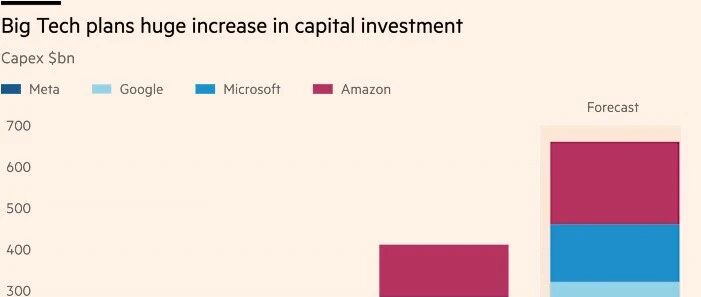
Core Insights - The article discusses the evolving landscape of AI investments and the implications for major tech companies, highlighting a shift in market evaluation criteria from mere technological advancement to actual revenue contributions and profitability [4] - It emphasizes the transformative impact of AI on traditional software models and the competitive dynamics within the industry, particularly focusing on the challenges faced by companies like Microsoft [11][8] Group 1: AI Investment Trends - Major North American tech companies, including Amazon, Google, Meta, and Microsoft, plan to invest approximately $660 billion in capital expenditures by 2026 [1] - The market's response to aggressive capital spending has changed, with a focus on companies that can demonstrate sustainable profitability from AI investments [4] Group 2: AI Model Development - Claude Code represents a pivotal shift in AI development, moving from passive response models to proactive execution, fundamentally altering human-computer interaction [7] - The widespread adoption of AI agents is expected to disrupt traditional software industries, reducing marginal costs and undermining existing business models [8] Group 3: Storage Industry Dynamics - The storage industry is characterized by cyclical supply-demand mismatches, with significant capital investments required for chip manufacturing leading to low supply elasticity [12] - The current AI-driven storage supercycle is unprecedented, with structural demand surges and supply constraints leading to significant shortages in both HBM and general DRAM [14][15] Group 4: Future Projections - The AI-driven supercycle is anticipated to last until 2027, with ongoing supply shortages and high prices expected to persist in the short term [20] - Long-term changes in the industry may include a shift towards long-term supply contracts with cloud providers, reducing inherent cyclical volatility [21]

马斯克重磅发声:三年内部署AI成本最低的地方在太空,Optimus是“无限印钞机”
华尔街见闻· 2026-02-07 12:35
Core Insights - Elon Musk predicts that within 30 to 36 months, space will become the most cost-effective location for deploying AI due to Earth's electrical power constraints [6][30][17] - Musk envisions launching 100 gigawatts (GW) of AI computing power annually into space, aiming to exceed the total AI computing power on Earth within five years [9][50][55] - The xAI business model targets a trillion-dollar market by creating "digital humans" capable of performing various tasks, which Musk believes could generate significant revenue [11][18] - The Optimus robot is described as an "infinite money printer," with its production expected to scale significantly, enhancing the competitiveness of U.S. manufacturing [14][18] Group 1: Space AI Computing - Musk emphasizes that the efficiency of solar panels in space is five times greater than on Earth, eliminating the need for expensive battery storage systems [8][27] - He warns of an impending surplus of chips that cannot be powered due to stagnant electrical output outside of China [7][82] - The plan involves launching approximately 10,000 Starship missions annually to achieve the necessary power and computing capacity in orbit [9][52] Group 2: xAI and Digital Humans - Musk's xAI aims to emulate human tasks digitally, potentially unlocking trillions in revenue as it competes with existing tech giants [11][18] - He anticipates that by the end of the year, significant advancements in digital human simulation will be achieved [12] - The strategy relies on rapid hardware iteration and vertical integration capabilities from Tesla and SpaceX [12] Group 3: Optimus and Manufacturing - The Optimus robot is positioned as a critical factor for U.S. manufacturing competitiveness, with Musk highlighting the need for innovation to counter China's manufacturing dominance [14][15] - Musk proposes building a "TeraFab" chip factory to overcome current supply chain limitations and meet the growing demand for chips [15][69] Group 4: Energy and Supply Chain - Musk discusses the necessity of self-manufacturing energy equipment to support the ambitious AI and robotics plans [15][46] - He notes that the current supply chain for energy components is insufficient to meet the rapid expansion required for his projects [15][46] - The company aims to produce solar panels domestically, targeting an annual output of 100 GW [38][50]

全球SiC核心客户的“中国选择”:为什么是天域半导体(02658)?
智通财经网· 2026-02-07 11:23
Core Viewpoint - The announcement reveals that Tianyu Semiconductor has entered a strategic cooperation agreement with South Korea's EYEQ Lab Inc. in the silicon carbide (SiC) epitaxial wafer sector, marking a significant transition from a domestic-focused company to a key player in the global high-end supply chain [1][5]. Company Summary - Tianyu Semiconductor is a leading player in the SiC epitaxial wafer market in China, focusing on the production and sales of 4/6/8-inch SiC epitaxial wafers, with applications in sectors such as new energy vehicles, photovoltaics, and rail transportation [2][4]. - The company has achieved mass production of 8-inch SiC epitaxial wafers, which are becoming a new growth engine, and plans to enhance its production capacity at its new base in Dongguan by the end of 2025 [3][4]. Industry Summary - EYEQ Lab is recognized as a leading enterprise in the third-generation semiconductor SiC power semiconductor sector, possessing comprehensive technical capabilities from device design to manufacturing [2][3]. - The collaboration between Tianyu Semiconductor and EYEQ Lab is expected to create a stable supply-demand cooperation system, enhancing both companies' capabilities in the SiC supply chain [3][4]. - The strategic partnership aligns with national strategies to develop the SiC industry, which is crucial for emerging industries such as new energy vehicles and photovoltaic power generation [5][6].
微醺的马斯克聊嗨了:盛赞中国、预言天上的 AI
Sou Hu Cai Jing· 2026-02-07 10:29
Core Insights - Elon Musk discussed the future of AI infrastructure in space, emphasizing that within 30 to 36 months, space will become the preferred location for AI data centers due to energy efficiency and scalability [4][10][27] - Musk highlighted the challenges of energy supply on Earth, stating that the growth of chip production is outpacing energy production, which could hinder AI development [4][45] - He predicted that in five years, the annual AI computing power launched and operated in space will exceed the cumulative total on Earth, potentially reaching 1 terawatt of power [4][27][74] Group 1: Space as AI Infrastructure - Musk believes that space will be the most economically attractive place for deploying AI due to the efficiency of solar panels in space, which can generate five times the power compared to Earth [8][21] - The construction of data centers in space is seen as a solution to the energy supply issues faced on Earth, where building new power plants is slow and complicated [11][24] - Musk stated that the average power consumption in the U.S. is currently 0.5 terawatts, and achieving 1 terawatt for data centers would require significant infrastructure [11][27] Group 2: Challenges and Innovations - The manufacturing of solar panels for space is expected to be cheaper and easier due to the lack of weather-related constraints, which eliminates the need for robust structures [21][23] - Musk pointed out that the bottleneck in scaling AI infrastructure will shift from energy to chip production once space operations begin [45][46] - He mentioned that the current global chip production capacity is insufficient to meet future demands, necessitating the establishment of large-scale chip manufacturing facilities [38][39] Group 3: Competitive Landscape - Musk warned that without breakthrough innovations in the U.S., China could dominate the AI and manufacturing sectors due to its advanced capabilities and larger workforce [74][75] - He emphasized the importance of addressing energy constraints to maintain competitiveness in the global market [66][67] - The discussion highlighted the need for the U.S. to innovate rapidly to avoid falling behind in AI and robotics, particularly in the context of manufacturing and energy production [75][70]