
吉利

Search documents
张国富再讲脱口秀,T1预售6.88万元起、极狐冲击A0级纯电市场
Zhong Guo Jing Ji Wang· 2025-08-25 09:05
Core Viewpoint - The launch of the Extreme Fox T1, an A0-level pure electric SUV, aims to penetrate the competitive A0 electric vehicle market with a pre-sale price range of 68,800 to 93,800 yuan, while raising concerns about maintaining the brand's high-end positioning [1][2][3] Group 1: Product Launch and Market Strategy - The Extreme Fox T1 has received significant interest, with 11,000 orders placed within two hours of its pre-sale announcement [1] - The vehicle is part of a broader strategy to achieve record sales in the second half of the year and is positioned as a competitive entry into the A0 electric vehicle market, which accounted for 22% of the pure electric market in May 2023 [2] - The introduction of the "North Star Digital Intelligent Architecture" represents a significant investment by the company, aimed at enhancing vehicle safety and performance [2] Group 2: Competitive Landscape - The A0 electric vehicle market is highly competitive, with established players like Geely and BYD dominating sales, making it challenging for the Extreme Fox T1 to gain market share [2][3] - The T1's pricing strategy may attract consumers focused on cost-effectiveness, but it poses risks to the brand's previously established high-end image [3][4] Group 3: Brand Positioning Challenges - Extreme Fox has shifted its pricing strategy significantly, moving from high-end models priced around 300,000 yuan to the current entry-level T1, raising questions about how to maintain its premium brand identity [3][4] - The company faces the challenge of balancing the need for competitive pricing with the desire to uphold a high-end brand perception, which may complicate operational strategies [4][5]

速腾聚创(2498.HK):Q2毛利率继续提升 EMX有望快速放量
Ge Long Hui· 2025-08-25 03:11
Core Viewpoint - The company, SUTENG JUCHUANG, reported a revenue of 783 million yuan for the first half of the year, marking a year-on-year growth of 7.72% with significant improvements in Q2 performance [1] Group 1: Financial Performance - In Q2, the company achieved a revenue of 460 million yuan, with a year-on-year growth rate of 24.4%, indicating a recovery from previous customer transitions [1] - The gross margin for Q2 reached 27.7%, the highest in three years, with the ADAS segment gross margin at 19.4% [1] - The company expects to achieve breakeven in Q4, driven by increased demand for lidar in intelligent driving and robotics [1] Group 2: ADAS Business - The EMX product has secured more market orders, with expectations for large-scale deliveries by the end of Q3 [2] - The company delivered 124,000 lidar units in Q2, a slight increase from 118,000 units in the same period last year, with reduced negative impacts from customer transitions [2] - The EM platform has gained traction, with 30 OEMs and Tier 1 suppliers securing 119 model designations [2] Group 3: Robotics Business - The company experienced a peak in robot lidar shipments, delivering 34,400 units in Q2 compared to 5,000 units in the same period last year, driven by price reductions and increased applications [3] - The company has received orders from eight major Robotaxi and Robobus clients, including leading firms in the industry [3] - The AC series of active cameras has received positive market feedback, with plans for a launch in the second half of 2025 [3] Group 4: Profit Forecast and Valuation - Revenue projections for 2025, 2026, and 2027 are estimated at 2.4 billion, 3.73 billion, and 5.14 billion yuan respectively, reflecting a slight adjustment due to customer transitions [3] - The company anticipates continued improvement in gross margins, with net profit estimates for 2025, 2026, and 2027 adjusted to -150 million, 190 million, and 510 million yuan respectively [3] - A target price of 48.17 HKD is set based on a comparable company average of 8.9X 2025 PS, maintaining a "buy" rating [3]
智驾免费背后车企的经济账
Zhong Guo Qi Che Bao Wang· 2025-08-25 02:30
Core Viewpoint - The automotive industry is experiencing a shift towards "intelligent driving equality," leading to discussions on whether advanced driving assistance systems should be charged or offered for free [2][6]. Group 1: Industry Trends - The transition from 2G to 5G has made mobile data services a basic consumer good, influencing the automotive sector to consider similar models for intelligent driving features [2]. - Companies like BYD are advocating for "intelligent driving equality," aiming to make advanced driving technologies accessible to a broader consumer base [3][4]. - The introduction of various intelligent driving solutions, such as BYD's "Tian Shen Zhi Yan" and XPeng's AI driving features, reflects a trend towards standardizing these technologies across all vehicle models [3][4]. Group 2: Business Models - The industry is divided into two main camps regarding the commercialization of intelligent driving: those advocating for free access and those supporting a paid model [6][7]. - Tesla and Huawei represent the "charging camp," focusing on monetizing software services through one-time purchases or subscriptions, which has proven to be a lucrative model [6][7]. - A middle-ground approach is emerging, where companies embed hardware and offer software on a subscription basis, balancing hardware sales with potential software revenue [7][8]. Group 3: Cost Considerations - The cost of hardware for advanced driving systems is significant, with estimates ranging from 15,000 to 30,000 yuan per vehicle, impacting the profitability of companies adopting free models [9][10]. - R&D costs for advanced driving technologies are substantial, with leading companies investing billions annually, necessitating a sustainable business model to recoup these investments [9][10]. - The pressure to offer free intelligent driving features is leading to cost-cutting measures within the supply chain, affecting suppliers' margins [10][11]. Group 4: Future Outlook - The sustainability of the "intelligent driving free" model is under scrutiny, as companies must find a balance between cost absorption and future revenue generation [11][12]. - Some companies are beginning to see success through cost reduction strategies and scaling, indicating a potential path to profitability [12]. - The industry is expected to evolve towards a model where user experience and real value become the primary competitive factors, rather than just pricing strategies [13].



万马科技:公司暂无脑机接口相关技术
Mei Ri Jing Ji Xin Wen· 2025-08-25 01:44
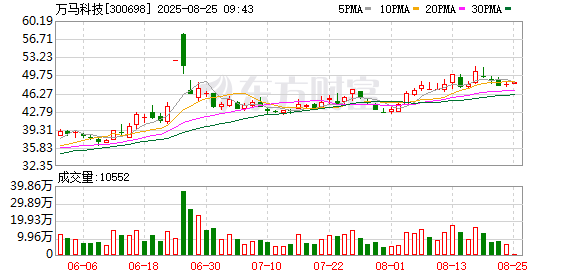
每经AI快讯,有投资者在投资者互动平台提问:请问贵司的产品,无线网络"邀云"网路数据产品理论上 能不能用于脑机接口和人行机器人的大模型训练和网络上的互联互通。贵司和国内哪些车企有合作呢? 万马科技(300698.SZ)8月25日在投资者互动平台表示,公司暂无脑机接口相关技术,希望可以将在汽 车行业的技术积累迁移至具身智能领域。目前公司已经成功与吉利、理想、上汽、东风、岚图、智己等 10多个知名汽车厂商建立紧密的合作关系。 (文章来源:每日经济新闻) ...

零跑、小鹏、小米公布财报!特斯拉Model Y L上市!全新蔚来ES8、吉利银河M9、享界S9T开启预售!丨一周大事件
电动车公社· 2025-08-24 16:00
Core Viewpoint - The article highlights the recent developments in the electric vehicle (EV) market, focusing on new car launches, company performance, and strategic moves by various manufacturers in the industry. New Car Launches - Dongfeng Mengshi M817 launched with a price range of 319,900 to 349,900 yuan, featuring a robust design and advanced technology [4][5][19] - Tesla Model Y L launched with a starting price of 339,000 yuan, offering a six-seat layout and enhanced aerodynamics [20][21][27] - GAC's Haobo HL extended-range version launched with a price range of 269,800 to 299,800 yuan, showcasing advanced battery technology [28][34][36] - New Haval Menglong launched with a price range of 173,800 to 208,800 yuan, featuring updated technology and design [37][39][44] - Dongfeng Fengxing Xinghai V9 launched with a price range of 179,900 to 199,900 yuan, designed as a mid-to-large plug-in hybrid MPV [45][48][53] - Xiangjie S9T opened for pre-sale at a starting price of 328,000 yuan, available in both extended-range and pure electric versions [57][61][65] - All-new NIO ES8 opened for pre-sale with a price range of 416,800 to 456,800 yuan, featuring advanced technology and design [69][72][77] - Geely Galaxy M9 opened for pre-sale with a price range of 193,800 to 258,800 yuan, showcasing innovative design and technology [78][81][88] Company Dynamics - Leap Motor reported its 2025 H1 financial results, achieving a net profit of 33 million yuan for the first time, with a delivery volume of 221,664 units, up 155.7% year-on-year [89][91] - XPeng Motors announced its Q2 2025 financial results, with a delivery volume of 103,181 units, a 241.6% increase year-on-year, and a gross margin of 17.3% [92][94][97] - Xiaomi Group reported its Q2 2025 financial results, with 81,302 vehicle deliveries and a gross margin of 26.4% [98][99][110] - NIO reduced the price of its 100kWh battery pack by 20,000 yuan, reflecting a strategy to enhance competitiveness [111][112] - NIO's G318 route for battery swapping was officially completed, enhancing its charging infrastructure [115][119] - The "Starry Sky Plan" aims to enter the automotive sector through an ecological cooperation model, focusing on global expansion [122][126] - Great Wall Motors initiated a tender for its ultra-luxury brand BG, indicating a strategic move into the high-end market [127][131] - Geely announced the launch of the world's first AI cockpit, focusing on advanced AI capabilities in vehicles [132][137] - He Xiaopeng increased his stake in XPeng Motors, reflecting confidence in the company's growth potential [138][140] - Lantu Motors is set to list on the Hong Kong Stock Exchange, aiming to enhance its market presence [141][144] International News - A class-action lawsuit was filed against Tesla in California, alleging misleading claims about its Full Self-Driving (FSD) capabilities [149][151] - Tesla launched a zero-down payment leasing service for certified used Model 3 and Model Y vehicles in California and Texas [152][155]



禾赛25Q2跟踪报告:GAAP盈利超预期,国内外客户拓展顺利
CMS· 2025-08-24 09:33
Investment Rating - The report maintains a "Recommended" rating for the industry, indicating a positive outlook for the sector's fundamentals and expectations for the industry index to outperform the benchmark index [5]. Core Insights - The report highlights that the company achieved a revenue of 706 million yuan in Q2 2025, representing a year-over-year increase of 53.9%, and a significant turnaround in GAAP net profit to 44 million yuan, exceeding expectations [1][2]. - The laser radar delivery volume exceeded expectations, with a total of 352,100 units delivered in Q2 2025, marking a year-over-year increase of 306.9%, driven primarily by the ADAS segment [3][4]. - The company has deepened collaborations with leading domestic clients and is steadily advancing its global expansion efforts, including partnerships with major automotive manufacturers [4]. Revenue Performance - In Q2 2025, the company reported a revenue of 706 million yuan, which aligns with the guidance provided for Q1 2025 [2]. - For the first half of 2025, the company achieved a total revenue of 1.232 billion yuan, reflecting a year-over-year growth of 50.6% [2]. Profitability Metrics - The gross margin for Q2 2025 was reported at 42.5%, with a slight year-over-year decrease of 2.6 percentage points, but an increase of 0.8 percentage points quarter-over-quarter [2]. - The GAAP net profit margin for Q2 2025 was 6.23%, significantly surpassing the breakeven guidance for Q1 2025 [2]. Delivery Volume and Market Share - The company delivered 54,790 units of laser radar in the first half of 2025, achieving a year-over-year increase of 276.2% [3]. - The company holds the leading market share in both the ADAS and robotics sectors, with the highest installation volume of laser radar in the ADAS field for the first half of 2025 [3]. Client Collaborations - The company has established partnerships with 24 automotive manufacturers, with recent agreements for 20 new models from major brands such as Geely and Great Wall [4]. - Internationally, the company is progressing with projects involving top European automotive manufacturers, laying the groundwork for mass production in 2026 [4].
极狐T1享界S9T双车亮相,北汽蓝谷销量营收猛增 亏损收窄
Mei Ri Jing Ji Xin Wen· 2025-08-24 02:23
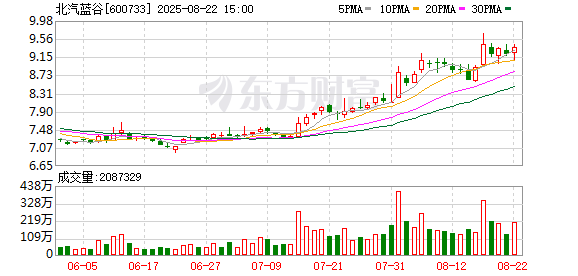
Group 1 - The core point of the article is the launch of the new electric vehicle "Extreme Fox T1" by BAIC Blue Valley, which is positioned in the A0-level electric vehicle market with a pre-sale price range of 68,800 to 93,800 yuan [2] - The A0-level electric vehicle market is becoming a significant battleground in the new energy sector, with sales of this segment expected to reach 170,000 units by 2025, accounting for 22% of the pure electric market [2] - Extreme Fox T1 aims to differentiate itself with a competitive wheelbase of 2770mm and two battery range options of 320km and 425km, with the latter having a clear advantage over competitors [2] Group 2 - Extreme Fox has become a crucial sales pillar for BAIC Blue Valley, with cumulative sales of 55,500 units in the first half of the year, representing 82.59% of the company's total sales [3] - The company achieved a significant year-on-year sales increase of 139.73% in the first half of the year, with total sales reaching 67,200 units [3] - Despite the increase in sales and revenue, BAIC Blue Valley still faces profitability challenges, with a net loss of 2.33 billion yuan in the first half of the year [6] Group 3 - The company reported a revenue of 9.517 billion yuan in the first half of the year, a 154.38% increase compared to the same period last year [6] - The gross margin improved to -5.47%, up from -7.04% year-on-year, indicating a narrowing of losses [6] - The company has set ambitious sales targets, aiming for 3 million units by 2027, with over 50% being new energy vehicles [8] Group 4 - The company is focusing on five core initiatives to turn around its current situation, including marketing innovation, brand and user operation enhancement, quality improvement, diversified financing, and efficient organizational structure [8] - The dual-brand strategy of "Extreme Fox + Enjoy" is seen as a potential pathway for the company to enter a new growth cycle [9] - Analysts remain optimistic about BAIC Blue Valley's prospects, with some institutions giving positive ratings and price targets for the company's stock [9]
2.0T 3电机4驱、5激光雷达、6C超充、48V主动防倾杆!极氪9X真能叫板库里南?
电动车公社· 2025-08-23 15:39
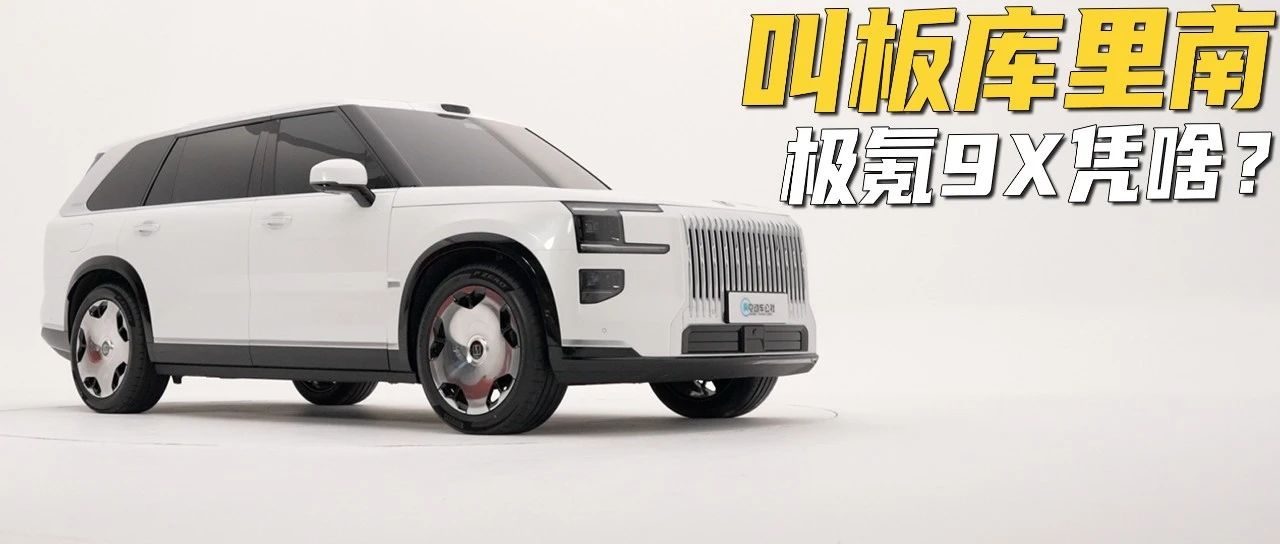
Group 1 - The automotive industry is experiencing a surge in the launch of large three-row SUVs in the second half of the year, with notable models including the Leidao L90, NIO ES8, and the newly pre-sold Geely Galaxy M9, among others [1] - Upcoming models such as the Zeekr 9X, Zhiji LS9, Chery Fengyun T11, and Jietu Zongheng G700 are all around 5.2 meters in length, emphasizing spaciousness as a competitive feature [1] - These vehicles are equipped with advanced technologies, exemplified by the Zeekr 9X, which features a 48V active stabilizer, the world's first five-laser radar-assisted driving, hybrid megawatt electric drive, and 6C ultra-fast charging battery [2] Group 2 - The performance of the new flagship model from Zeekr is under scrutiny, particularly in a competitive market filled with various alternatives [4] - The introduction of cutting-edge technology in these vehicles aims to challenge established luxury models like the Cullinan [5]
中国品牌掘金超跑市场
Zhong Guo Qi Che Bao Wang· 2025-08-22 11:18
Core Viewpoint - The supercar market is undergoing a significant transformation, with Chinese brands emerging as challengers against the long-standing dominance of European brands in the high-end automotive sector [2][3][11] Market Landscape - The global supercar market has been historically centered around European brands like Ferrari, Lamborghini, and Porsche, which have established strong market barriers through technology, brand recognition, and supply chain control [3][4] - In 2024, the top 10 supercars in China priced over 1 million yuan sold a total of 4,219 units, with European brands accounting for over 90% of both brand and sales statistics [3] Technological Advancements - Chinese brands are exploring diverse paths in the supercar sector, achieving breakthroughs in both electric and fuel-powered vehicles [3][4] - NIO's EP9 set a record at the Nürburgring with a time of 6 minutes and 45.90 seconds, while BYD's Yangwang U9 has begun mass production, showcasing the feasibility of "overtaking" in the high-end electric supercar market [3][4] - Great Wall Motors is developing a hybrid supercar with a 4.0T V8 engine and electric motor, achieving a combined power of 1,000 horsepower and a 0-100 km/h acceleration time of under 2.5 seconds [4] Industrial Foundation - Chinese brands have made significant advancements in core technology, enabling self-research and development of key components, which supports the industrialization of supercars [5][6] - Great Wall's 4.0T V8 engine boasts a thermal efficiency of 38.5%, while BYD's blade battery achieves an energy density of 180 Wh/kg, enhancing safety and charging capabilities [5][6] Cost and Supply Chain Advantages - Chinese brands benefit from a complete electric vehicle supply chain, with core components costing 30%-40% less than those of European brands, allowing for lower production costs for electric supercars [7] - The upcoming luxury car tax adjustment in China may initially pressure high-end markets but could ultimately foster technological upgrades and enhance brand recognition for domestic brands [8] Marketing and Brand Strategy - Chinese brands are investing in marketing innovations and global positioning to build a unique brand ecosystem, with NIO and Great Wall Motors focusing on experiential marketing to enhance brand perception [9][10] - The strategic value of supercars extends beyond direct sales, as they serve as brand symbols that elevate overall brand equity and profitability [8][10] Challenges and Future Outlook - Despite advancements, Chinese brands face challenges in brand recognition, cost control, and service systems, which require long-term efforts to transition from technical advantages to ecological advantages [10] - The future of the global supercar market is expected to integrate electrification, intelligence, and sustainability, providing greater opportunities for Chinese brands to redefine their roles and establish new market standards [11]

激光雷达VS纯视觉 两年后迎来终极对决?
Zhong Guo Qi Che Bao Wang· 2025-08-22 10:32
Core Viewpoint - The debate between pure vision and LiDAR technology for autonomous driving continues, with no clear resolution expected by 2027, as both technologies gain supporters and evolve in capabilities and costs [2][5][10] Group 1: Technology Adoption - Both pure vision and LiDAR technologies have gained significant traction, with various automakers adopting either approach. New entrants and established companies are increasingly choosing sides, with some switching from LiDAR to pure vision [2][3] - Recent models like the Tank 500 and Li Auto i8 have adopted LiDAR, while companies like Xiaomi and Audi are also integrating LiDAR into their vehicles [2][3] - Conversely, companies like Xiaopeng and NIO are firmly committed to pure vision technology, with Xiaopeng's models like the MONA M03 and the new P7 exclusively using this approach [4][5] Group 2: Market Trends - The market for LiDAR-equipped vehicles is expanding, with significant growth in the number of LiDAR units delivered in China, reaching 1.0439 million units in the first half of the year, a year-on-year increase of 83.14% [3] - LiDAR is no longer limited to high-end models, as companies like Leap Motor and Changan are introducing LiDAR-equipped versions in the lower price segments [3] Group 3: Cost and Safety Debate - The ongoing debate between the two technologies centers on cost and safety. Pure vision systems are seen as more cost-effective and easier to scale, while LiDAR is favored for its superior performance in extreme conditions [5][6] - The cost of LiDAR has significantly decreased, with prices for L2-level LiDAR now around $200, down from previous prices of $20,000 to $30,000, representing a reduction of over 99.5% [5][9] Group 4: Future Outlook - Experts suggest that both technologies will likely coexist, with pure vision being sufficient for urban commuting and LiDAR providing safety redundancy in complex scenarios [10] - The advancement of computing power and algorithms is expected to enhance the capabilities of pure vision systems, potentially making them the preferred choice for many automakers [8][9]
