小米

Search documents
手机业务如何应对内存风险、AIot、电车、研发布局.....一文读懂小米高管在高盛电话会发言
Hua Er Jie Jian Wen· 2026-01-07 08:54
Core Viewpoint - Xiaomi is focusing on increasing the average selling price of smartphones as a primary operational goal for 2026, while significantly boosting investments in artificial intelligence to transform its entire business line and setting an annual delivery target of 550,000 electric vehicles [1][2]. Group 1: Smartphone Business - Xiaomi's strategy to counter the rising costs of storage chips involves increasing the average selling price (ASP) of smartphones, with a clear focus on high-end models [3][4]. - The upcoming Xiaomi 17 Ultra will be priced 500-700 RMB higher than the Xiaomi 15 Ultra, reflecting this strategy [3]. - The company aims to increase its market share in China by 1 percentage point annually, emphasizing the strategic importance of the Chinese market for its high-end strategy [4]. Group 2: AIoT Business - The AIoT segment is positioned as a profit stabilizer for Xiaomi, with expectations of approximately 20% year-on-year revenue growth in 2025 and a margin expansion of 2-2.5 percentage points [5]. - Xiaomi plans to increase the number of its retail stores from about 500 in 2025 to over 1,000 in 2026, while expanding product categories and exploring partnerships with cross-border e-commerce platforms [5]. - Currently, overseas AIoT revenue accounts for about 30%, with overseas smartphone revenue at 60%, indicating potential for future growth in AIoT [5]. Group 3: Electric Vehicle Business - Xiaomi has raised its delivery target for electric vehicles to 550,000 units for 2026, significantly up from the previous target of 410,000 units for 2025 [6][7]. - The growth is driven by increased manufacturing capacity and consumer confidence in new models, including the SU7 facelift and a third model set for release in the second half of 2026 [6]. - The company aims for a healthy gross margin of over 20% in the electric vehicle segment, although margins may be lower in 2026 due to tax incentives and changes in product mix [6][7]. Group 4: R&D Investments - Xiaomi plans to invest 200 billion RMB in R&D from 2026 to 2030, focusing on AI, autonomous driving, and chip development [8][9]. - AI investments are expected to account for 25% of the 320-330 billion RMB R&D budget in 2025, with a commitment to maintaining reasonable levels of investment [9]. - The company has a strong focus on developing its own chips, with significant investments already made in the XRING O1 chip, which is expected to enhance its capabilities in the electric vehicle sector [11].

港股收评:全天低迷!恒指跌0.94%,科技股、金融股弱势,多只铝业股创新高
Ge Long Hui· 2026-01-07 08:17
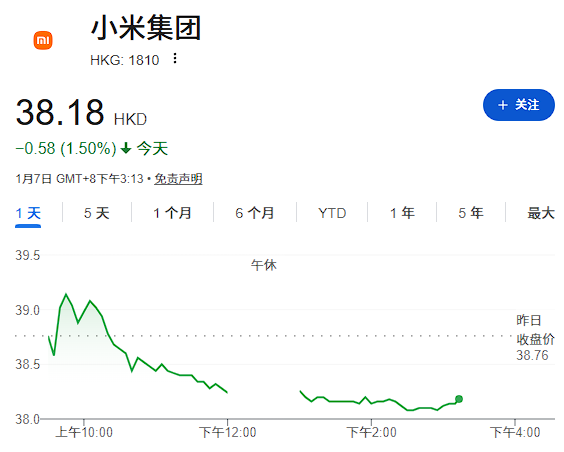
港股三大指数全天疲弱,市场连续反弹后做多情绪表现谨慎。恒生科技指数午后一度大跌至2.4%,最 终收跌1.49%,恒生指数、国企指数分别下跌0.94%及1.14%。 盘面上,大型科技股集体下跌拖累市场走低,其中,阿里巴巴跌超3%,网易、快手跌超2%,美团、小 米、腾讯、京东均跌超1%;昨日领衔大市上涨的中资券商股、保险股承压明显;机构预计2026年车市 销量下滑+车圈开年狂打价格战,汽车股板块跌幅居前,比亚迪股份、蔚来汽车、小鹏汽车跌幅明显; 国际原油短线走低,特朗普称委内瑞拉将向美国交付3000-5000万桶石油,石油股下跌,其中中海油跌 3%;脑机接口概念股继续昨日回调,军工股、锂电池股、内房股、银行股、苹果概念股、濠赌股纷纷 下跌。 另一方面,近期玖龙、五洲特纸、山鹰纸业等多家纸企调价信息,纸业板块领涨,其中玖龙纸业一度大 涨12%刷新阶段新高,生物医药股、光伏股、煤炭股、餐饮股齐涨,其中铝业股中国宏桥、创新实业、 南山铝业国际盘中均创新高。(格隆汇) ...
A股新年“第一战”,沿着三个确定性出击
Ge Long Hui· 2026-01-07 04:59
Group 1 - The core viewpoint emphasizes that 2026 presents three major certainties for investment opportunities, particularly in the Hong Kong internet sector, driven by AI's resurgence, continued liquidity from the Federal Reserve, and a return of southbound capital [1][2]. Group 2 - Certainty One: AI is expected to return to the market's core narrative in 2026, moving away from the "AI bubble" concerns, with Hong Kong internet companies playing a crucial role in AI infrastructure and applications [3]. Group 3 - Certainty Two: The Federal Reserve's continued easing, following three rate cuts in 2025 totaling 75 basis points, is anticipated to release significant liquidity into the market, benefiting growth sectors like Hong Kong internet [4]. Group 4 - Certainty Three: Historical patterns suggest that southbound capital will shift from a defensive retreat at the end of 2025 to aggressive accumulation in early 2026, favoring technology assets such as Hong Kong internet [4]. Group 5 - The Hong Kong Internet ETF, which tracks the Hong Kong Internet Index, is highlighted as a strategic investment tool, offering exposure to leading internet companies without QDII quota restrictions [5][6]. Group 6 - The Hong Kong Internet Index has shown high elasticity, outperforming the Hang Seng Index during previous market rallies, indicating potential for high returns [7]. Group 7 - The index is distinctly positioned, focusing on companies with internet platform ecosystems and technological innovation, while excluding non-internet sectors, thus providing a clear investment focus [9][10]. Group 8 - The index emphasizes leading companies with substantial market capitalization and liquidity, capturing long-term growth opportunities in the AI and internet sectors [10]. Group 9 - The current price-to-earnings ratio of the Hong Kong Internet Index stands at 22.08, which is lower than that of A-share and US tech indices, presenting a favorable investment opportunity [11][12].

全线飙涨!美联储突发大消息!
天天基金网· 2026-01-07 01:09
Market Overview - The U.S. stock market saw all three major indices close higher, with the Dow Jones and S&P 500 reaching all-time highs [2] - The semiconductor sector showed strong performance, while Tesla's stock fell over 4% [6][7] Federal Reserve Insights - Federal Reserve Governor Milan stated that a rate cut of over 100 basis points is appropriate this year, supported by economic data [4] - He emphasized that core inflation is nearing the Fed's target, and current policies are restrictive, potentially dragging down the economy [5] Semiconductor Sector - The Philadelphia Semiconductor Index rose by 2.75%, with significant gains in companies like Microchip Technology, Micron Technology, and NXP Semiconductors [10][12] - Market expectations indicate that DRAM prices may rise by 60% to 70% in Q1 2026 due to increased demand from AI and data center investments [11] Precious Metals - Gold and silver prices increased, with COMEX gold futures surpassing $4500 per ounce and silver futures breaking $81 per ounce [13][14] - Morgan Stanley predicts gold prices could reach $4800 per ounce by Q4 2026, driven by declining interest rates and continued buying from central banks [14] Chinese Internet Stocks - The Nasdaq Golden Dragon China Index fell by 0.78%, with notable declines in Alibaba, Xiaomi, and Baidu, while Pinduoduo and BYD saw slight increases [17]

早报|美政府讨论获取格陵兰岛方案,包括军事选项;小米公布处罚结果;霸王茶姬回应“徒手打奶茶”;三星掌门人李在镕在北京买Labubu
虎嗅APP· 2026-01-07 00:56
大家早上好!这里是今天的早报,每天早上,我都会在这里跟你聊聊昨夜今晨发生了哪些大事儿。 昨夜今晨 【小米发布处罚声明】 小米公司发言人1月6日发文表示,昨天关于团队与相关KOL接触一事,公司立刻启动了专项调查,有了初步 结论,公关部总经理徐洁云当晚就向大家同步决定:相关接触已立即终止,且承诺未来不会合作。 今天,正式调查结果出来,经过管理层讨论,认为该事件严重违背公司原则,也严重伤害米粉朋友们的感情, 属于严重违规,按公司制度做出如下处罚: 一、涉事负责经办人员,做辞退处罚。 二、集团副总裁兼CMO许斐和集团公关部总经理徐洁云承担管理失职责任,予以通报批评,扣除2025年相关 绩效成绩,并取消2025年度奖金。 据此前报道,小米投放KOL"万能的大熊"的消息在米粉中引发巨大争议,在徐洁云和雷军的微博下,众多网友 留言抵制,"支持小米和其他博主投放商单合作,但不能投放给每天都抹黑小米的大V。" 【马斯克旗下 xAI 公司完成 200 亿美元融资,英伟达参与投资】 马斯克旗下人工智能初创企业 xAI 公司宣布,已完成一轮规模达 200 亿美元的融资,投资方包括英伟达公 司、思科投资以及卡塔尔投资局。据悉,这笔融资 ...



8点1氪:机长、副机长被传驾驶舱内打架,长荣航空回应;小米正式回应米黑KOL合作事件;霸王茶姬通报“徒手搅拌奶茶”事件
36氪· 2026-01-07 00:33
Group 1 - EVA Air has suspended the flight duties of the involved captain following an incident where the captain and co-pilot reportedly had a physical altercation in the cockpit during taxiing at Los Angeles Airport. The airline stated that the aircraft's taxi speed was within operational norms and regulations [2] - Xiaomi has responded to a controversy involving a collaboration with a KOL, stating that the engagement has been terminated and that the responsible personnel will face dismissal. The company emphasized that the incident violated its principles and harmed its relationship with fans [2] Group 2 - xAI announced the completion of its Series E funding round, raising $20 billion, exceeding its initial target of $15 billion. Notable investors include Valor Equity Partners and Qatar Investment Authority, with strategic support from Nvidia and Cisco [4] - Tesla has introduced a 5-year interest-free car purchase plan for its Model 3 and Model Y vehicles, with down payments starting at 79,900 yuan and monthly payments as low as 1,918 yuan [7] Group 3 - The Chinese tax law will exclude profit-making medical beauty institutions from VAT exemptions starting January 1, 2026, marking a significant change in the tax landscape for the industry [6] - NIO's CEO Li Bin highlighted that the biggest cost pressure in the automotive industry for 2026 will be the rising prices of memory chips, as the automotive sector competes with the AI industry for resources [9] Group 4 - The first commercial rocket company in China is set to change ownership, with a 29.5904% stake being offered for approximately 3.299 billion yuan, valuing the company at around 11.2 billion yuan [14] - CATL and NIO have signed a five-year strategic cooperation agreement focusing on battery technology and battery swap systems, aiming to enhance collaboration in the electric vehicle market [14]





最高直降30万元?宝马领衔,2026开年车市上演“花式”调价
Hua Xia Shi Bao· 2026-01-07 00:26
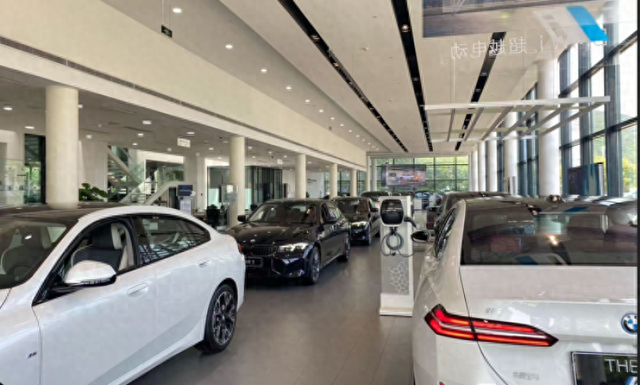
Core Insights - BMW China has officially adjusted the prices of over 30 models, with reductions generally exceeding 10%, and the iX1 eDrive25L seeing a significant drop of 24% [2][3] - This price adjustment is part of a broader trend in the automotive market, with multiple brands like Volvo, NIO, Xiaomi, and Wuling also offering limited-time purchase incentives, contributing to a "price reduction wave" at the start of the year [2][6] Group 1: Price Adjustments and Market Reactions - The price adjustments by BMW include flagship and entry-level models, with the iX1 eDrive25L's price dropping from 299,900 yuan to 228,000 yuan, and the 735Li from 919,000 yuan to 808,000 yuan, a reduction of 12% [3] - Following the announcement, foot traffic in many dealerships increased by over two times, with significant rises in phone inquiries and test drive appointments [3] - Despite the increase in customer visits, actual purchase intentions varied, with some consumers expressing concerns about the value proposition compared to domestic electric vehicles, while others were attracted by BMW's brand value and driving experience [3] Group 2: Dealer Challenges and Market Dynamics - Although the official prices have been lowered, terminal prices have not shown significant relaxation, as dealers are facing ongoing operational pressures due to a "price inversion" situation where actual selling prices are lower than manufacturer suggested retail prices [3] - BMW's sales in China have faced challenges, with cumulative sales of 465,000 units in the first three quarters of 2025, a year-on-year decline of 11.2%, making it the only major market for BMW to experience a double-digit drop [4] Group 3: Competitive Landscape and Strategic Adjustments - BMW's proactive price cuts may trigger a chain reaction in the luxury car market, with brands like Mercedes-Benz and Audi reportedly considering price reductions or enhancements to their main models [5] - The rise of domestic brands has significantly altered the market landscape, with Chinese brands capturing nearly 70% of passenger car sales and over 80% in the high-end electric vehicle segment priced above 300,000 yuan [5] - Analysts suggest that BMW's price adjustments may lower the purchase threshold and increase attention, but long-term brand premium and identity recognition could be diluted [5] Group 4: Broader Market Trends and Consumer Behavior - The automotive market in early 2026 is characterized by various brands and forms of price adjustments, with companies like Volvo and NIO offering tax rebates and attractive financial plans to stimulate sales [6][9] - Despite the increase in costs due to tax policy changes, consumer demand has shown resilience, with many dealerships reporting high foot traffic and interest in trade-in subsidies [6][9] - The current promotional wave in the automotive market reflects a complex interplay of traditional luxury brands' aggressive pricing strategies and the industry's rapid response to policy changes, indicating a shift towards a more mature competitive landscape [9]
财经早报:降准降息可期!央行2026年政策定调,A股新开户数创近三年新高丨2026年1月7日
Xin Lang Cai Jing· 2026-01-06 23:39
Group 1 - The Ministry of Commerce of China has decided to strengthen export controls on dual-use items to Japan, prohibiting all dual-use items from being exported to military users and any end-users that could enhance Japan's military capabilities [2][45][46] - China is considering tightening the export license review for medium and heavy rare earth items to Japan, which will be implemented starting April 4, 2025, under the Export Control Law [3][47] - China's Foreign Ministry has warned that Japan's recent moves towards militarization, including revising security documents to increase defense spending and develop offensive military capabilities, pose a danger to regional peace [4][48] Group 2 - The People's Bank of China has outlined seven key priorities for 2026, emphasizing the importance of monetary policy in promoting high-quality economic development and price stability, with a flexible approach to using tools like interest rate cuts [8][51] - A significant increase in new A-share accounts was reported, with 2.74369 million new accounts opened in 2025, marking a 9.75% year-on-year growth and the highest annual figure since 2022 [9][52][53] - The Shanghai Composite Index achieved a record 13 consecutive positive trading days, marking the longest streak in its history, with a 1.5% increase on January 6 [9][53] Group 3 - Financial regulators are conducting research to address barriers to long-term capital entering the market, focusing on enhancing the investment scale and proportion of bank wealth management products in A-shares [10][54] - The commercial aerospace sector continues to show strong growth potential, with expectations of a turning point in the industry [16][60] - The lithium carbonate market is experiencing a significant price increase at the start of the year due to tight supply and demand conditions [16][60]


史上销量最好?!这家“佛系”的豪华品牌,也要卷起来了?
电动车公社· 2026-01-06 16:39
Core Viewpoint - The article discusses the unique positioning and potential of the Volvo XC70, highlighting its unexpected success in the luxury plug-in hybrid (PHEV) market, particularly in China, where it has achieved significant monthly sales figures [1][4]. Group 1: Market Positioning and Sales - The XC70 has managed to break into the top 5 in its segment, a feat previously unachieved by any luxury brand's PHEV in China, with monthly sales surpassing 5000 units [1][4]. - Traditional luxury brands have struggled with pricing strategies for PHEVs, often relying on policy advantages in major cities to maintain sales, which has become less effective as regulations change [13][15]. - The XC70's sales success is attributed to its innovative SMA hybrid architecture, which allows for a more competitive pricing strategy compared to traditional PHEVs [15][18]. Group 2: Technological Innovations - The XC70 utilizes a new SMA architecture that supports various configurations, including a large 39.6 kWh battery, enabling a pure electric range of 212 km [18][21]. - This architecture allows for a more efficient design, reducing costs and improving performance, including the use of a 1.5T engine instead of a 2.0T engine, which lowers the overall vehicle cost [21][24]. - The XC70 features advanced technology such as a centralized electronic architecture and improved user interface, enhancing the overall driving experience and usability [33][39]. Group 3: Design and User Experience - The XC70 is described as a "Nordic-inspired Chinese car," designed to meet the specific needs of Chinese consumers while maintaining Volvo's Scandinavian design ethos [30][31]. - The vehicle's interior and exterior design emphasize simplicity and functionality, aligning with the Scandinavian principle of human-centered design [54][59]. - The XC70 incorporates advanced safety features and materials that prioritize user comfort and environmental considerations, such as low-VOC materials and recyclable components [51][52]. Group 4: Future Outlook - Volvo's commitment to electrification is evident in its investment of over €2 billion and the development of the SMA architecture, indicating a strong future direction for the brand [75][76]. - The XC70 represents a significant step in Volvo's electrification strategy, with the potential to maintain a competitive edge in the evolving automotive market [77][78].

新思考电机闯关港交所 光学防抖占比下降下的转型困境与突围方向
Zhi Tong Cai Jing· 2026-01-06 14:55
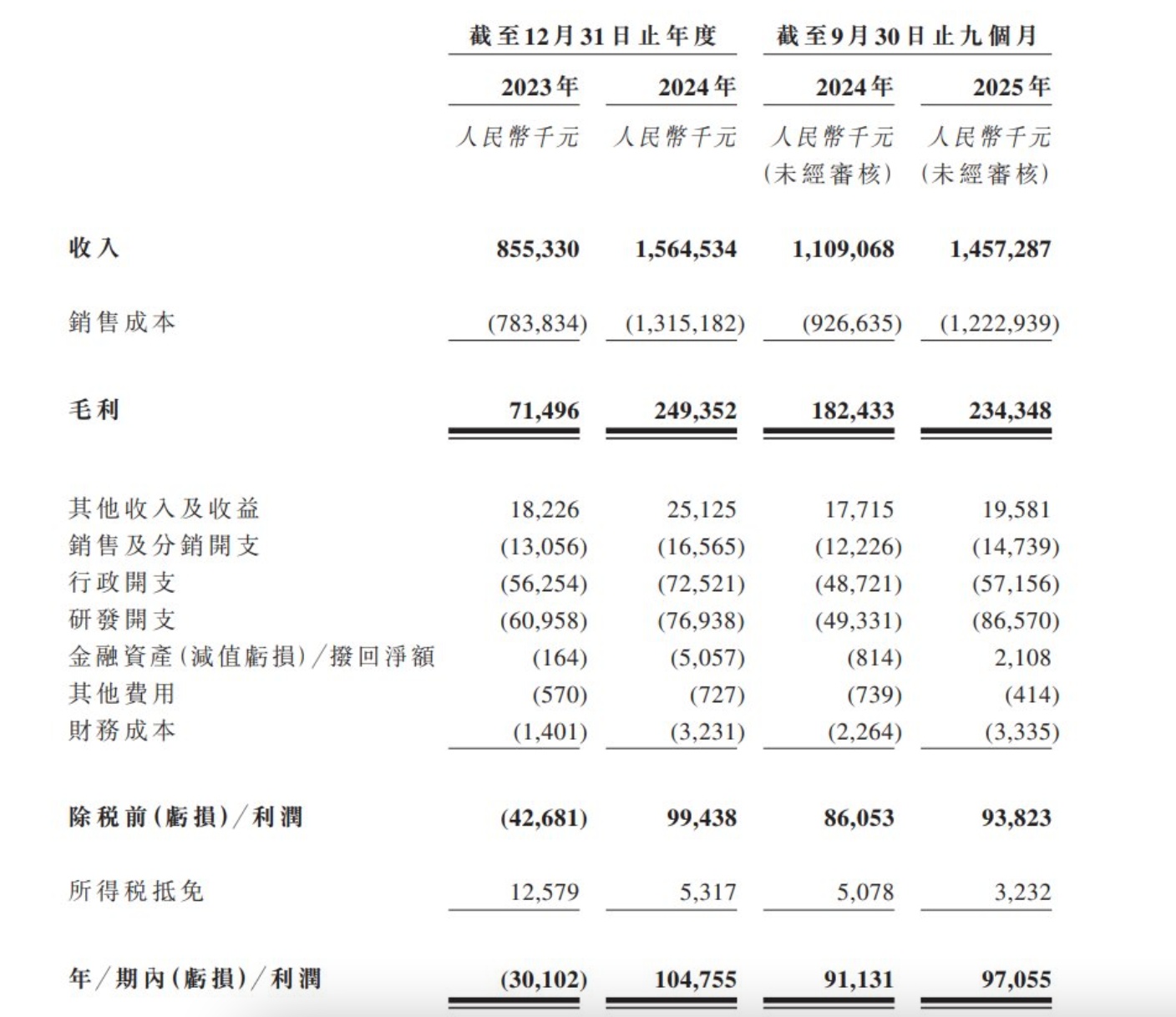
Core Viewpoint - New Thinking Motor Co., Ltd. has submitted its listing application to the Hong Kong Stock Exchange, indicating its growth and expansion in the micro precision motor manufacturing industry [1]. Financial Performance - The company reported revenues of approximately 855 million RMB in 2023, which increased to 1.566 billion RMB in 2024, reflecting an 82.9% growth [3][5]. - The net profit transitioned from a loss of 30.1 million RMB in 2023 to a profit of 105 million RMB in 2024, indicating a successful turnaround [3][5]. - Gross profit margins improved from 8.36% in 2023 to 15.93% in 2024, showcasing enhanced operational efficiency [5]. Market Position - As of 2024, New Thinking Motor ranks sixth globally and third in China in the imaging motor market, holding a 9.1% market share in China [2]. - In the optical image stabilization (OIS) imaging motor sector, the company is the leading player in China with a 20.1% market share, ranking fourth globally [2]. Product Segmentation - The company's revenue is primarily derived from three product categories: optical stabilization and periscope motors, open-loop motors, and closed-loop motors [5][8]. - The share of revenue from optical stabilization and periscope motors increased from 72.1% in 2023 to 81.5% in 2024, although it decreased to 67.7% in the first nine months of 2025 [5][8]. Strategic Expansion - New Thinking Motor is constructing new production bases in Nanchang and Dongguan, expected to be operational by 2026, which will enhance its production capacity [6][9]. - The company aims to diversify its product offerings and expand into emerging fields such as robotics and low-altitude economy, indicating a strategic shift beyond traditional smartphone applications [7][9]. Industry Trends - The micro precision motor industry is undergoing structural changes, with growth expected to shift from reliance on smartphone optical modules to multi-terminal and multi-scenario applications [7]. - The global non-smartphone micro motor market is projected to grow at a compound annual growth rate of over 20% by 2028, highlighting the need for companies to adapt to new market demands [7].