iRobot

Search documents
内销大盘符合预期,两轮车补库在即
Orient Securities· 2025-12-23 08:16
Investment Rating - The report maintains a "Positive" outlook for the home appliance industry, indicating a relative strength of over 5% compared to the market benchmark index [5]. Core Insights - The domestic sales performance aligns with expectations, with a gradual transition into a post-subsidy era in 2026. In November 2025, home appliance sales reached 10.49 million units, down 31.8%, with domestic sales at 4.05 million units, down 39.8%, and exports at 6.44 million units, down 25.6% [7]. - The new national standard for electric two-wheelers is being implemented, with a significant inventory replenishment expected in the first half of 2026. The new models are being introduced, and a concentrated restocking period is anticipated [7]. - Key players in the cleaning appliance sector are undergoing ownership changes, which may impact market dynamics. iRobot is undergoing bankruptcy restructuring, while the founder of追觅科技 is acquiring a controlling stake in 嘉美包装 [7]. Summary by Sections Domestic Market Performance - The domestic market is experiencing a decline, which was anticipated. The central economic work conference confirmed the continuation of national subsidy policies into 2026, with adjustments expected to enhance service consumption [3][7]. Electric Two-Wheelers - The implementation of the new national standard for electric two-wheelers began on September 1, 2025, leading to the cessation of production and sales of old standard models. A significant inventory depletion is expected by the end of December 2025, with new models set to launch soon [7]. Key Players and Market Changes - iRobot's bankruptcy restructuring is expected to maintain brand operations but may not significantly alter market dynamics. The acquisition of 嘉美包装 by 追觅科技's founder could lead to strategic shifts in the cleaning appliance sector [7].





X @TechCrunch
TechCrunch· 2025-12-22 23:00
iRobot joins the latest string of hardware companies filing for bankruptcy, exposing an impossible problem: build overseas to survive, but risk getting copied.The new episode of @EquityPod breaks it down 🎙️https://t.co/qqMrnyUN4D https://t.co/QgSwtIEW1b ...
‘It’s a cage match’: Beleaguered iRobot founder says the biggest reason why the Roomba-maker failed was because of growing Chinese competition
Yahoo Finance· 2025-12-22 16:59
Core Insights - iRobot, the maker of Roomba, filed for Chapter 11 bankruptcy due to increasing competition from Chinese companies, particularly in the robotic vacuum market [1][2] - The company reached its peak revenue of nearly $1.6 billion in 2021 but has since lost market share to rivals like Roborock, which has become the world's largest robot vacuum brand [2][3] - iRobot's cofounder Colin Angle highlighted that the Chinese market was not a level playing field, with local companies receiving government support and incentives that disadvantaged foreign competitors [2][3] Company Overview - iRobot was co-founded in 1990 and became a pioneer in household robotics with the launch of Roomba in 2002 [1][2] - The company introduced advanced models like the self-emptying Roomba i7+ in 2018, which utilized mapping technology [2] - Following its bankruptcy, iRobot will be acquired by Picea Robotics, a China-based company that has been a significant player in the robotic vacuum market [2][4] Market Dynamics - The competitive landscape has shifted significantly, with Chinese companies like Roborock benefiting from a protected market and government incentives, including discounts for consumers on domestic products [3] - The Chinese government has renewed its focus on boosting domestic consumption, further supporting local businesses in the tech sector [3] - Picea Robotics has established partnerships with other brands like Shark and Anker, indicating a consolidation trend in the robotic vacuum space [4]
对话追觅扫地机总裁孟佳:明年要继续以100%增速为目标
Hua Er Jie Jian Wen· 2025-12-22 14:35
Core Insights - The article highlights the significant global expansion of the company, with the opening of its first physical store in Hong Kong marking a key milestone in its globalization strategy [2][6]. - The company has achieved a compound annual growth rate (CAGR) of over 100% for six consecutive years and aims to maintain this growth trajectory, particularly focusing on North America and emerging markets [2][4][14]. - The competitive landscape in the robotic vacuum industry is intensifying, with the company positioning itself to leverage technological innovation and local market adaptation as key strategies for future growth [3][8][10]. Global Expansion - The company has surpassed 6,500 overseas stores and aims to increase its flagship store presence in key global markets, including North America, Europe, and South Korea [2][7]. - The opening of the Hong Kong store is seen as a strategic move to enhance brand visibility in the Asia-Pacific region, serving as a critical showcase for its high-end brand image [2][11]. Market Position and Competition - The company currently holds a 12.4% market share in global shipments, ranking third overall and first in the European market [3]. - The competitive environment is becoming increasingly crowded, with new entrants in both domestic and international markets, which the company views positively as it encourages technological advancement [3][8]. Technological Innovation - The company emphasizes continuous investment in research and development, allocating over 7% of its revenue annually to R&D, with more than 70% of its workforce dedicated to this area [4][10]. - The focus on technological innovation is seen as essential to avoid price wars and to enhance product experience and iteration speed [4][10]. Future Growth Strategy - The company aims to achieve 100% growth in the coming year, with a strong emphasis on localizing its offerings in North America and other emerging markets [14]. - The strategy includes a commitment to product innovation and enhancing user experience, which are critical for maintaining competitive advantage in a rapidly evolving market [10][13]. Brand Localization - The company is adopting a "globalization + localization" strategy to better cater to local markets, ensuring that products and services are tailored to meet regional preferences [8][10]. - This approach is crucial for transitioning from merely exporting products to establishing a strong brand presence in international markets [3][8]. Industry Outlook - The robotic vacuum industry is undergoing a significant transformation, with the company positioned to capitalize on the shift from traditional players to emerging Chinese brands [5]. - The ability to maintain a high-end market position while appealing to the mass market will be pivotal for the company's future success [5].


iRobot founder says company's bankruptcy revealed a new kind of competitor: 'The Chinese fast follower'
Business Insider· 2025-12-21 23:17
Core Insights - iRobot, known for its Roomba vacuum, filed for Chapter 11 bankruptcy and will be acquired by Picea Robotics, highlighting the importance of recognizing competition, especially from Chinese firms [1][7]. Company Overview - iRobot was founded in 1990 by roboticists from MIT and launched the Roomba in 2002, which established the consumer robotics category [2]. - The company reached its peak revenue of $1.56 billion in 2021 but faced increasing competition from Chinese companies like Roborock, Dreame, and Ecovacs starting in 2018 [7]. Competitive Landscape - Chinese competitors benefited from a "protected market" and government subsidies averaging 17.5% of equipment costs, which provided them with a competitive edge over iRobot [8][10]. - iRobot's product features, such as its mopping robot Scuba, lagged behind competitors, contributing to its decline [10]. Strategic Moves - iRobot attempted to innovate through a deal with Amazon valued at $1.4 billion, which was ultimately blocked due to antitrust concerns from the FTC and European regulators [10][11]. - The lengthy investigation by regulatory bodies had a detrimental impact on iRobot's operations and contributed to its challenges in the market [12][13].


人形机器人周报20251221:Tesla发布人形机器人年度报告,美国创世纪计划正式启动-20251221
CMS· 2025-12-21 14:32
Investment Rating - The report maintains a recommendation for the industry, indicating a positive outlook for investment opportunities in the humanoid robotics sector [5]. Core Insights - The humanoid robotics sector has shown a slight adjustment, with the index underperforming the broader market. The humanoid robotics index fell by 1.54% during the week, while the CSI 300 index decreased by 0.28% [10][12]. - Key developments include Tesla's release of its annual humanoid robot report, showcasing significant technological advancements in its Optimus robot, and the launch of the U.S. national AI "Genesis Project," which aims to accelerate scientific discovery through AI [16][18]. - The report highlights the importance of monitoring supply chain orders related to the T-chain and emphasizes the need to focus on suppliers with strong certainty [16]. Industry Overview - The humanoid robotics sector is characterized by a total of 474 listed companies with a total market capitalization of approximately 4,799.3 billion [5]. - The sector's performance over the past month shows a 1.0% increase over one month, a 27.1% increase over six months, and a 37.5% increase over twelve months [7]. - The report identifies several key companies and their respective sectors, including Tier 1 suppliers like Changying Precision, Sanhua Intelligent Control, and Top Group, as well as other relevant companies in the robotics supply chain [4][9]. Recent Developments - Tesla's Optimus robot has made significant progress in its capabilities, including basic movements and complex interactions, with plans for mass production starting in late 2026 [16][17]. - The U.S. "Genesis Project" involves major tech companies like OpenAI and Google, aiming to create a national AI-driven research platform [18]. - Domestic developments include partnerships between companies like Unibot and Texas Instruments, as well as the deployment of humanoid robots in various production lines [20][21][22]. Market Performance - The liquidity in the humanoid robotics sector has been declining, with core stocks accounting for 5.10% of total A-share trading volume, indicating a decrease in market activity [12]. - The report lists the top-performing stocks in the humanoid robotics sector, with notable gains from companies like Zhongyou Technology and Junsheng Electronics, while others like Zhongjian Technology and Zhejiang Haideman faced significant declines [14][15].

家电周报:iRobot破产重组,追觅科技实控人收购嘉美包装-20251221
Shenwan Hongyuan Securities· 2025-12-21 13:15
Investment Rating - The report maintains a positive outlook on the home appliance sector, indicating that the sector has outperformed the CSI 300 index, with a 0.2% increase in the home appliance index compared to a 0.3% decrease in the CSI 300 index [4][5]. Core Insights - The home appliance sector is experiencing a mixed performance, with leading companies like Zhejiang Meida, Aojiahua, and Biyi Co. showing significant gains, while companies like Lek Electric and Huaxiang Co. are facing declines [4][7]. - The acquisition of Jiamei Packaging by the actual controller of Chasing Technology for 2.282 billion yuan is a notable industry development, with commitments for stable profit growth [10]. - iRobot, a leading global brand in robotic vacuum cleaners, has filed for bankruptcy protection and is expected to be acquired by Shenzhen Shanjun Company, highlighting competitive pressures from Chinese firms [11]. - November sales data for major appliances show significant declines in both volume and revenue, with air conditioners, refrigerators, and washing machines all experiencing substantial drops [35][37][40]. Summary by Sections Industry Performance - The home appliance sector has outperformed the broader market, with a 0.2% increase in the sector index against a 0.3% decline in the CSI 300 index [4][5]. - Key companies leading the gains include Zhejiang Meida (up 12.2%), Aojiahua (up 8.1%), and Biyi Co. (up 4.1%), while Lek Electric (-10.9%), Huaxiang Co. (-4.7%), and Sanhua Intelligent Control (-3.5%) faced declines [4][7]. Industry Dynamics - Jiamei Packaging was acquired for 2.282 billion yuan, with commitments for a minimum net profit of 1.2 billion yuan from 2026 to 2030 [10]. - iRobot's bankruptcy highlights the competitive landscape, with its revenue of $146 million in Q3 2025 and a loss of $22 million, alongside a cash reserve of only $25 million [11]. Sales Data Observations - November data shows a significant decline in sales for major appliances: air conditioners down 47.4% in volume and 55.7% in revenue, refrigerators down 44.6% in volume and 51.7% in revenue, and washing machines down 42.0% in volume and 50.0% in revenue [35][37][40]. - The average prices for air conditioners, refrigerators, and washing machines have also decreased, indicating a challenging market environment [35][37][40].
家电行业2025W50周报:家空内外销均有所承压,iRobot官宣破产重组-20251221
GUOTAI HAITONG SECURITIES· 2025-12-21 11:36
Investment Rating - The industry investment rating is "Overweight" [5] Core Insights - The home appliance industry is experiencing pressure in both domestic and international sales, with iRobot announcing bankruptcy restructuring, which will be acquired by Chinese manufacturer Shanjun Robotics [2][5] - In November, the retail sales of home appliances and audio-visual equipment reached 100 billion yuan, a year-on-year decline of 19.4%, while the cumulative annual sales reached 1,074.9 billion yuan, with a year-on-year increase of 14.8% [5] - The production and sales data for home air conditioners in November showed a production of 10.577 million units, a year-on-year decrease of 36.7%, and sales of 10.492 million units, a year-on-year decrease of 31.8% [5] Summary by Sections Investment Recommendations - Key drivers for investment include overseas expansion and smart home technology, recommending leading companies in the robotic vacuum sector: Roborock (21.1X 2025 PE) and Ecovacs (21.5X) [5] - Companies with stable performance and upward potential include Ninebot (20.6X), Anfu Technology (41.7X), Hailong Cold Chain (14.6X), and Beiding Co. (30.4X) [5] - For companies with robust operations and high dividends, recommendations include TCL Electronics (12.2X), Hisense Visual (12.9X), Midea Group (13.5X), and Haier Smart Home (12.2X) [5] - Companies diversifying into new sectors include Rongtai Health (18.7X) and Wanlong Magnetic Plastic (18.9X) [5] Market Performance - The retail sales growth rate further narrowed in November, with the total retail sales of consumer goods reaching 43,898 billion yuan, a year-on-year increase of 1.3% [5] - The domestic market faces pressure from the decline in national subsidies and high base effects, while the export market is constrained by high base effects and inventory reduction in some overseas markets [5] Company Developments - iRobot has announced its bankruptcy and will be acquired by Shanjun Robotics, with the restructuring process expected to be completed by February 2026 [5] - The founder of Chasing Technology, Yu Hao, plans to acquire 54.90% of Jiamei Packaging, with a total transaction value of approximately 2.282 billion yuan [5]


280亿,扫地机器人鼻祖宣布破产
虎嗅APP· 2025-12-21 10:08
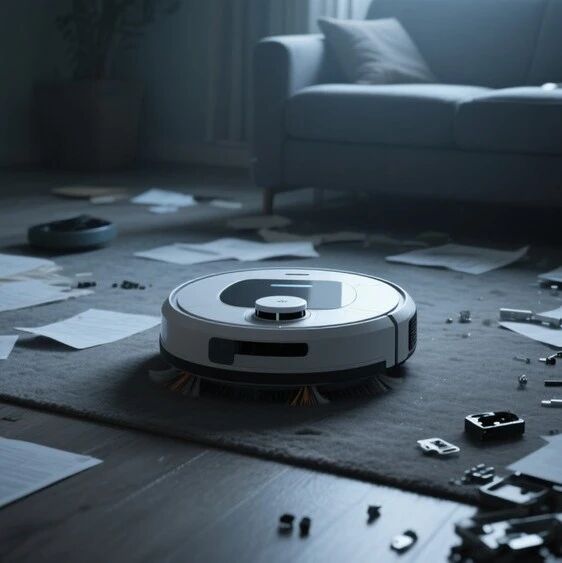
Core Viewpoint - The collapse of iRobot, a pioneer in the robotic vacuum industry, highlights the consequences of regulatory paradoxes, trade policy conflicts, and competition from Chinese firms, ultimately leading to its bankruptcy and acquisition by a Chinese supplier [4][9]. Group 1: Company Background and Market Position - iRobot was founded in 1990 by MIT roboticists and initially focused on defense and space applications, but gained fame with the launch of the Roomba vacuum in 2002, which became a household name in the U.S. [6][7]. - By 2021, iRobot's valuation peaked at $35.6 billion, with Roomba capturing 42% of the U.S. market and 65% in Japan, selling over 50 million units [7][8]. Group 2: Competitive Landscape and Challenges - The pandemic-induced boom masked structural issues, as competitors like Ecovacs and Roborock emerged with significantly higher R&D investments and aggressive pricing strategies, leading to a loss of market share for iRobot [7][8]. - iRobot's reliance on manufacturing in Vietnam became a liability when punitive tariffs were imposed, increasing costs by $23 million and squeezing profit margins [8][9]. Group 3: Acquisition Attempt and Regulatory Impact - In August 2022, Amazon proposed a $17 billion acquisition of iRobot, which was seen as a lifeline for the struggling company, but regulatory bodies in the U.S. and EU blocked the deal, citing antitrust concerns [8][12]. - Following the failed acquisition, iRobot's stock plummeted by 80%, leading to significant layoffs and a halt in non-core R&D projects, marking the beginning of its decline [9][12]. Group 4: Bankruptcy and Acquisition by Chinese Supplier - iRobot filed for Chapter 11 bankruptcy and sold its assets to Shenzhen Picea Robotics for $190 million, a move that ironically resulted in the foreign control that regulators sought to prevent [9][10]. - The failure of iRobot serves as a cautionary tale about the consequences of regulatory overreach and the need for a more nuanced understanding of global competition [12][14]. Group 5: Industry Implications and Future Trends - The bankruptcy of iRobot signals a significant shift in the smart home industry, moving from single-product successes to a focus on integrated smart home ecosystems [18][19]. - Companies must adapt to the new reality where ecosystem integration and technological innovation are crucial for survival, as evidenced by the struggles of other smart home brands facing similar growth challenges [19][23].

科技周报 | “游戏沪十条”即将出台;TikTok美国方案签约
Di Yi Cai Jing· 2025-12-21 07:06
Group 1: Industry Developments - Shanghai is set to introduce ten measures to support the gaming and esports industry, aiming to enhance resource allocation and international cooperation, with an expected revenue of 170.7 billion yuan in 2025, reflecting a 9.6% year-on-year growth [2] - The Chinese gaming industry is projected to reach approximately 350.8 billion yuan in revenue by 2025, with a user base exceeding 680 million, marking a 7.7% increase [11] - The gaming industry's overseas revenue is expected to reach about 204.6 billion yuan in 2025, showing a 10.2% growth, driven by strong performance in mobile games and policy support [12] Group 2: Corporate Actions - Alibaba has reduced its stakes in three listed companies, indicating a strategic shift towards focusing on core business areas and increasing investments in AI [3] - iRobot has filed for bankruptcy and will be acquired by Shenzhen Sijuan Robotics, marking a significant shift in the robotics market as iRobot was once a leader in the sector [6][7] - Galaxy General has completed a financing round exceeding 3 billion USD, achieving a valuation of over 20 billion yuan, indicating strong investor confidence in its humanoid robotics and general intelligence path [8] Group 3: Technological Innovations - TikTok has established a new joint venture in the U.S. for data security and algorithm management, while ByteDance retains ownership of TikTok's algorithm intellectual property [4] - UTree Robotics showcased its capabilities at a concert, gaining attention from Elon Musk, highlighting the potential for robotics in entertainment and the need for reliable engineering in commercial applications [5] Group 4: Market Trends - The gaming industry in China is experiencing a boom, with a strong focus on mobile games and the integration of generative AI applications, leading to a favorable supply-demand cycle [12] - The robotics sector is witnessing a shift towards AI integration, with companies like UTree and Sijuan Robotics actively pursuing new growth avenues and market positioning [10]