
宝马

Search documents
铝价飙升浅析:绿色革命驱动下的全球供应链重构与投资机遇
Xin Lang Cai Jing· 2025-11-22 00:52
Core Insights - The aluminum market is undergoing a fundamental restructuring due to the acceleration of global energy transition, with aluminum becoming a strategic resource, leading to a new price paradigm characterized by high prices and limited supply [1][2][3] Global Aluminum Supply Chain Restructuring - Resource nationalism and capacity transfer are reshaping the global aluminum supply chain, with Guinea holding 26% of global bauxite reserves and Australia 12%, while China only holds 2% [1][2] - The concentration of bauxite resources leads to a significant disparity in production, with Guinea accounting for 29% of global output [2] - By 2025, China's electrolytic aluminum capacity is nearing its ceiling at 4,445 million tons, while overseas projects are expected to add over 1 million tons of capacity from 2026 to 2028 [3][4] Global Aluminum Consumption Structure Analysis - Traditional sectors like construction are declining, while new sectors such as electric vehicles (EVs) and photovoltaics are experiencing explosive growth, with EV aluminum consumption increasing by 30% [5][6] - The average aluminum usage in pure electric vehicles is 283 kg per vehicle, significantly higher than traditional vehicles [6] - By 2040, global aluminum demand is projected to reach 163.7 million tons, a 67.3% increase from 2018 levels [7] Trade Policies and Market Dynamics - The U.S. has significantly increased aluminum import tariffs to 50%, leading to a sharp decline in imports, particularly from Canada, which previously supplied 58% of U.S. aluminum [8][9] - China is adapting by increasing exports through third countries to circumvent tariffs, with exports of unwrought aluminum and aluminum products rising by 19.7% year-on-year [10] Price Trends and Future Predictions - Aluminum prices have shown a strong upward trend, with LME prices reaching $2,880 per ton, driven by tight supply and robust demand from sectors like EVs and solar energy [11][12] - Various institutions predict continued price increases, with estimates for 2025 ranging from $2,850 to $3,500 per ton, reflecting a tightening market [12][13] Future Trends and Strategic Recommendations - The aluminum industry is shifting towards a green transition, with a focus on recycled aluminum, which has a recovery rate of over 95% and significantly lower production emissions [14][15] - Companies are encouraged to invest in green technologies and diversify markets to mitigate risks associated with trade barriers and supply chain vulnerabilities [16]
从油电博弈到生态竞争智能化进一步“破圈”
Zhong Guo Zheng Quan Bao· 2025-11-21 20:09
Core Insights - The 23rd Guangzhou International Auto Show showcases 93 global debut vehicles and a total of 1,085 vehicles, with 58% being new energy models, indicating a shift towards comprehensive electrification and intelligent competition in the automotive industry [1][2] - From next year, the purchase tax for new energy vehicles will be halved, prompting consumers to accelerate purchases before year-end, further strengthening the dual-driven market of new energy and exports [1][2] - The penetration rate of new energy vehicles in the domestic passenger car market has reached 57.8%, with various brands focusing on niche markets to alleviate range anxiety through technological innovation [2][3] Industry Trends - The competition has evolved from focusing on single functionalities to a system-level competition involving "chips + software + ecosystem," reflecting a trend towards integrated smart mobility solutions [5][6] - Traditional luxury brands like Mercedes-Benz and BMW are enhancing their electric vehicle offerings, while domestic brands leverage their full industry chain advantages to push for both technological accessibility and high-end breakthroughs [3][4] - Core supply chain companies, including those in battery and intelligent solutions, are becoming significant players in the industry, with a notable increase in exhibitors at the auto show [4][5] Market Dynamics - The auto show serves as a critical platform for companies to showcase their achievements and strategize for the upcoming year, potentially boosting year-end sales [6][7] - The event is expected to set the tone for the automotive market trends in the following year, emphasizing efficiency, intelligence, and alignment with consumer needs [7]
采用4695大圆柱电池 宝马新世代iX3续航将突破900公里
Feng Huang Wang· 2025-11-21 11:01
Group 1 - The core point of the article is that BMW is set to launch the new generation iX3, featuring a proprietary 4695 large cylindrical battery that offers over 900 kilometers of CLTC range and can recharge over 400 kilometers in just 10 minutes [1] - The new 46mm diameter cylindrical battery utilizes a high-nickel ternary positive electrode and a cylindrical steel shell, enhancing energy while stabilizing nickel elements [1] - The negative electrode employs silicon-carbon technology and a customized electrolyte to extend battery life, with energy density improved by 20% compared to the previous prismatic battery [1] Group 2 - The new generation iX3 will highlight four key features: spacious interior, long range, enhanced safety, and ultra-fast charging [1] - The vehicle's design incorporates a module-free and integrated battery structure, resulting in increased longitudinal space within the cabin [1] - The 4695 large cylindrical battery's steel shell design, combined with a bottom-mounted explosion-proof valve, enhances safety [1] - Charging capabilities allow for 400 kilometers of range in 10 minutes and 80% charge in 21 minutes [1] Group 3 - BMW also showcased advancements in cockpit interaction and driving control technologies, including a collaboration with Momenta for developing driver assistance technologies [2] - The cockpit features a 4K projection area with a nano-coated glass that remains functional even when wearing polarized sunglasses [2] - The driver assistance technology is being developed and tested in collaboration with Momenta across four major cities: Beijing, Shanghai, Shenyang, and Nanjing [2] - This technology will be applied to multiple models, including the domestically produced new generation BMW iX3 [2]
同质化与差异化,面向全球市场的汽车设计如何破局?
Zhong Guo Qi Che Bao Wang· 2025-11-21 06:53
Core Insights - The automotive design landscape is evolving, with a focus on innovation and differentiation as key factors for success in a competitive global market [4][5][10] - The 2025 Guangzhou Auto Show serves as a significant platform for showcasing diverse automotive designs and addressing industry challenges [3][11] Group 1: Historical Context and Current Trends - Global automotive sales are increasing, leading to a diverse array of vehicle designs, marking a "feast" for automotive design [4] - Historically, countries like Japan and South Korea initially relied on reverse engineering of Western vehicles to gain market share [4][5] - The shift to electric vehicles has rendered previous design strategies less effective, highlighting the need for deeper innovation in automotive design [5][6] Group 2: Design Philosophy and Innovation - Automotive design is transitioning from imitation to cultural translation and paradigm innovation, with a focus on unique design languages that enhance brand identity [5][10] - Some companies are adopting a formula of 80% brand classic elements and 20% innovation to balance recognition and market trends [5][10] - The introduction of innovative design cases, such as Tesla's Cybertruck, exemplifies a shift towards bold, unconventional designs that capture global attention [6] Group 3: Technological Advancements in Design - Traditional design processes focused on mechanical engineering are being challenged by new paradigms that prioritize user experience and aesthetic appeal [7][8] - Digital tools like virtual wind tunnels and collaborative platforms are enhancing design efficiency and quality, significantly reducing design cycles [8][9] - The rise of user co-creation models allows consumers to personalize vehicle designs, pushing companies to rethink their design processes [8] Group 4: Future Directions and Cultural Integration - The automotive design industry is at a crossroads, with electric and intelligent technologies reshaping design rules and user interactions [10] - The core competitive advantage in automotive design is shifting towards the integration of cultural recognition and technological visualization [10][11] - Successful global design requires a deep understanding of consumer needs and a balance between tradition and innovation, fostering emotional connections across cultures [11]


机器人产业指数跌幅收窄,盘中一度翻红,机器人ETF易方达(159530)获资金大幅净申购
Mei Ri Jing Ji Xin Wen· 2025-11-21 06:32
Core Viewpoint - The A-share technology sector experienced a collective decline, while the robotics industry index showed signs of recovery, indicating a potential shift in investor sentiment towards the robotics sector [1]. Group 1: Market Performance - The National Robotics Industry Index fell by 0.8% as of 13:57, but the decline was significantly narrowed compared to earlier in the day, suggesting a clear attitude of capital accumulation [1]. - The E Fund Robotics ETF (159530) saw a net subscription of approximately 150 million units during the trading session, reflecting strong investor interest [1]. Group 2: Company Developments - Figure announced the retirement of its F.02 robot, which had been deployed for 11 months, including 6 months on BMW's production line, where it handled over 90,000 parts and operated for more than 1,250 hours, producing over 30,000 X3 vehicles [1]. - Figure also introduced a new generation hardware update, the F.03, which aims to enhance the reliability of the robotic system, supporting the long-term development of humanoid robots in industrial applications [1]. Group 3: Industry Trends - The National Robotics Industry Index has a significant focus on humanoid robots, with nearly 80% of its component stocks related to humanoid robots and core components, positioning it to benefit more from the trends in the humanoid robotics industry [1]. - The E Fund Robotics ETF (159530) has a current scale exceeding 11 billion yuan, making it the largest ETF tracking this index, providing good liquidity and a convenient tool for investors to access the humanoid robotics industry chain [1].

汽车早报|新问界M7累计交付突破3万台 宝马X5官宣将全系标配智能驾驶辅助系统Pro
Xin Lang Cai Jing· 2025-11-21 00:40
Group 1: Second-Hand Car Export Policy - The Ministry of Commerce aims to enhance the management of second-hand car exports, transitioning from "scale growth" to "value growth" [1] - A notification was issued detailing six specific measures to strengthen export management, compliance review, and promote sustainable development [1] - The notification has received positive feedback from various sectors, emphasizing the importance of quality and service in the second-hand car export industry [1] Group 2: SUV Sales Data - In the first ten months of 2025, the top ten SUV manufacturers sold 8.532 million units, accounting for 66.2% of total SUV sales [2] - Among these manufacturers, sales for FAW-Volkswagen and Tesla saw a slight decline compared to the same period last year, while other companies experienced varying degrees of growth [2] Group 3: New Energy Vehicle Production - In the first ten months of 2025, China's new energy vehicle production reached 12.672 million units, marking a year-on-year increase of 28.1% [3] - The cumulative penetration rate of new energy vehicles in China has reached 46.4%, indicating a strong growth trend in the market [3] Group 4: BYD Legal Case - BYD announced a court ruling requiring the defendant to publicly apologize and pay 313,800 yuan for defamatory statements against its brand [4] - The court found that the defendant's comments harmed the reputation of BYD's Fangchengbao brand [4] Group 5: Vehicle Delivery Milestones - The new Wanjie M7 has surpassed 30,000 deliveries within 57 days of its launch, offering both extended-range and pure electric versions [5] - Huawei's Yu Chengdong announced that the Zun Jie S800 has received 18,000 pre-orders within 175 days of its launch [6] Group 6: BMW X5 Launch - BMW China announced the launch of the new BMW X5, which will feature standard intelligent driving assistance systems across all models starting from January 2026 [8] - The new models are priced between 598,000 and 748,000 yuan, with additional features like front seat ventilation and heating [8] Group 7: GAC Toyota Response - GAC Toyota's sales vice president denied rumors regarding the discontinuation of several key fuel vehicle models, labeling the information as false [9] Group 8: Kia Recall - Kia is recalling over 250,000 vehicles in the U.S. due to potential fuel tank leaks in certain 2021-2024 K5 models [10]
霸王茶姬CEO将与“光伏女神”结婚;俞敏洪称明年将选10个员工去南极;何同学称公司今年亏了一两百万;魅族回应出售总部大楼丨邦早报
创业邦· 2025-11-21 00:08
Group 1 - Yu Minhong responded to New Oriental employees' complaints, emphasizing that allowing employees to voice their dissatisfaction is a tradition of the company, and he encourages it as a means to correct issues [4] - Xiaomi announced the allocation of 29,366,734 shares to 3,334 selected participants, including employees and service suppliers, with a total value of approximately HKD 1.14 billion (around CNY 1.041 billion) [5] - The recent changes in the management of Pang Donglai Group were confirmed by internal sources, indicating that Yu Donglai will not be heavily involved in daily operations but will focus on empowering his team [5] Group 2 - ByteDance's valuation surged to USD 480 billion during a recent equity auction, with the price of shares rising from an initial USD 200 million to nearly USD 300 million due to competitive bidding [5] - The founder of Bawang Tea Ji, Zhang Junjie, is set to marry Gao Haichun, a prominent figure in the solar energy sector, indicating potential synergies between the two industries [5] - He Tongxue, a notable figure in the tech industry, reported a loss of CNY 1-2 million for his company this year, attributing it to a significant impact from a social media post [5] Group 3 - KargoBot appointed a new CFO, Zhan Ruinan, to accelerate its development in the autonomous driving sector, signaling a strategic move towards internationalization and capital expansion [5] - The first MPV from Hongmeng Zhixing is set to launch, featuring advanced technology and multiple powertrain options, showcasing the company's commitment to innovation in the automotive sector [5] - Meizu denied rumors of relocating its headquarters, affirming that its current building will continue to serve the company for a long time [7] Group 4 - GAC Toyota's sales vice president refuted claims that the company would cease production of several key gasoline vehicles, clarifying that such information is false [8] - Nvidia's recent earnings report highlighted significant contributions from various clients, including a lesser-known Saudi startup, Humain, which aims to supply a substantial portion of global AI computing power by 2034 [8] - Ant Group's CTO discussed the relationship between its Lingguang App and Alibaba's Qianwen App, emphasizing collaboration in the pursuit of AGI [8] Group 5 - The humanoid robot A2 completed a 100-kilometer cross-province walk, earning a Guinness World Record for the longest distance walked by a humanoid robot [10] - Meta's chief scientist, Yann LeCun, announced his departure to start a new venture focused on advanced machine intelligence, aiming to revolutionize AI capabilities [11] - WeRide's Robotaxi received a pure unmanned license in Switzerland, marking a significant milestone in the deployment of autonomous vehicles [11] Group 6 - Physical Intelligence, a robotics startup, raised USD 600 million in funding, achieving a valuation of USD 5.6 billion, indicating strong investor confidence in AI-driven robotics [12] - Star Motion Era completed nearly CNY 1 billion in A+ round financing, led by Geely Capital, to support its technology iterations and applications [12] - SoftBank plans to invest up to USD 3 billion in a factory to produce equipment for OpenAI's data center, reinforcing its commitment to AI development [12] Group 7 - IDC forecasts that the smart glasses market in China will reach a significant turning point by 2026, with expected shipments surpassing 4.915 million units [17] - The sales of pure electric large three-row SUVs have outperformed other powertrain types for two consecutive months, indicating a strong market trend towards electric vehicles [17]

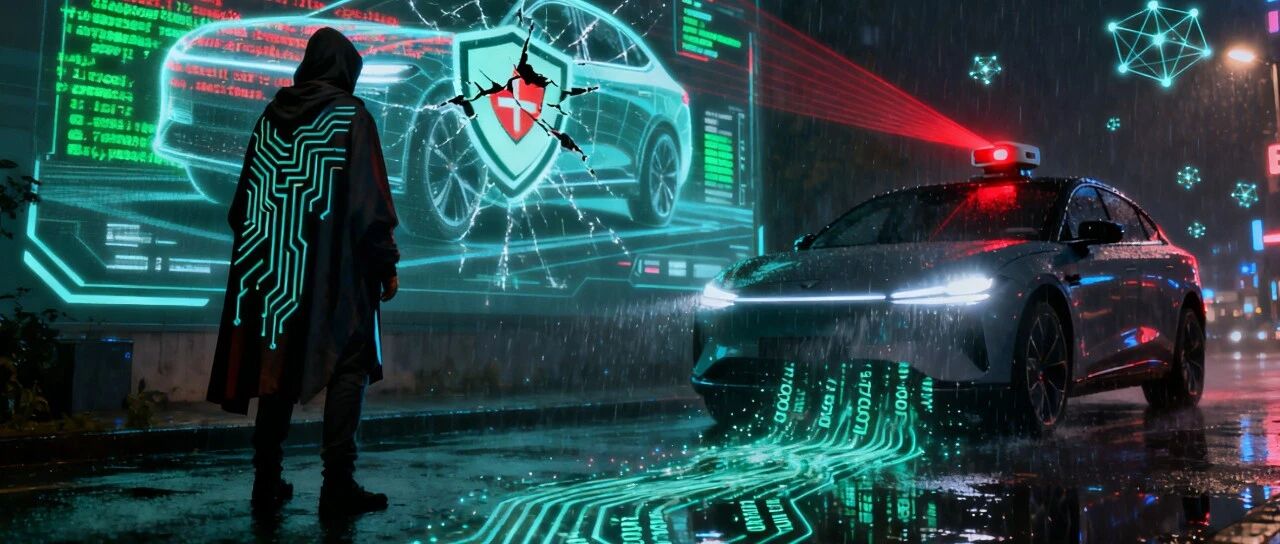
黑客大会上,汽车厂商被群嘲
汽车商业评论· 2025-11-20 23:07
Core Viewpoint - The article highlights the increasing cybersecurity risks faced by the automotive industry, particularly with the rise of "software-defined vehicles" and the vulnerabilities that come with advanced technologies like autonomous driving and connected car systems [8][24][30]. Group 1: Cybersecurity Challenges - The automotive industry is experiencing a surge in cybersecurity threats, with approximately 3 million attacks on smart driving privacy data reported in China since 2020 [8]. - High-profile data breaches have occurred, such as the leak of 22,800 internal employee records and 399,000 user ID card data from NIO, leading to a ransom demand of $2.25 million in Bitcoin [9]. - In 2024, a configuration error in BMW's cloud storage exposed sensitive internal data, highlighting the industry's vulnerabilities [12]. Group 2: Vulnerabilities in Smart Vehicles - Remote attacks pose significant risks, as hackers can potentially take control of vehicles through vulnerabilities in onboard networks and communication systems [15][20]. - A notable incident involved hackers attempting to exploit a vulnerability in Tesla's OTA system to interfere with vehicle operation, which was fortunately intercepted by Tesla's security team [16]. - The automotive industry is criticized for its slow response to cybersecurity threats, with many companies prioritizing speed to market over thorough security testing [28]. Group 3: Industry Response and Collaboration - Despite the challenges, automotive companies are beginning to recognize the importance of cybersecurity and are collaborating with ethical hackers to identify and fix vulnerabilities [30][32]. - Tesla has been proactive in engaging with white hat hackers through bounty programs and competitions, offering substantial rewards for discovering security flaws [33][35]. - Regulatory frameworks are being established globally, such as the EU's Automotive Cybersecurity Law and various regulations in China, to enforce stringent cybersecurity standards throughout the vehicle lifecycle [37].

金杯汽车拟取得中拓科技控股权
Zheng Quan Ri Bao· 2025-11-20 15:57
Core Viewpoint - Jinbei Automotive is accelerating its investment pace, with a recent announcement of a 158 million yuan investment to acquire a 52% stake in Changchun Zhongtuo Molding Technology Co., Ltd, marking a strategic move towards high-value sectors [1][2]. Group 1: Investment Strategy - The investment strategy includes both fund investments and direct acquisitions, reflecting a systematic approach to penetrate high-value areas [1]. - The acquisition of Zhongtuo Technology will be executed in two steps: first, a cash subscription of 89.58 million yuan for new registered capital, followed by a cash transfer of 68.80 million yuan for existing shares [1]. Group 2: Company Profile and Financials - Zhongtuo Technology is the largest Tier 2 supplier in Northeast China's automotive industry, serving major clients including Ideal Auto, BMW, and Xiaomi [2]. - In 2024 and the first five months of this year, Zhongtuo Technology reported revenues of 251 million yuan and 123 million yuan, with net profits of 4.26 million yuan and 11.40 million yuan respectively [2]. Group 3: Strategic Implications - The acquisition allows Jinbei Automotive to quickly enter the lightweight automotive parts sector, enhancing its technical reserves and product diversification [2]. - The integration with Zhongtuo Technology is expected to reduce procurement costs and improve quality control, facilitating a transition from traditional parts supplier to a comprehensive provider of electrified and intelligent systems [2][3]. Group 4: Financial Health and Future Plans - As of September, Jinbei Automotive's cash reserves reached 1.951 billion yuan, providing a solid foundation for business development and external investments [3]. - The company aims to enhance value scale through internal and external market projects, focusing on new strategic projects while also seeking external growth opportunities [3].

“得用户者得天下”
Mei Ri Jing Ji Xin Wen· 2025-11-20 13:04
Core Insights - In 2025, China's new energy vehicle (NEV) ownership is expected to exceed 38 million, accounting for over 10% of total vehicle ownership, with a market penetration rate projected to surpass 60% [1] - The shift in consumer purchasing motivations indicates a transition from reliance on policies and technology to a focus on user experience and comprehensive product value [1][4] User Decision-Making Changes - The core purchasing motivation has shifted from "policy" to "product," with driving experience, comfort, and smart features becoming the primary drivers [2] - The average number of factors considered by consumers during the purchasing process has increased from 4.2 to 5.9, with a heightened focus on vehicle safety and smart configurations [2] Competitive Landscape - The competitive landscape is evolving, with consumers comparing models like the Li Auto L6 against a range of pure electric and smart vehicles, indicating a shift to "cross-brand electric comparisons" [3] - The average range of pure electric vehicles has improved from 450 km in 2022 to 530 km in 2025, alleviating previous concerns about range anxiety [3] Industry Transformation - The industry is moving away from a policy-driven phase to a user-value-driven phase, as financial subsidies decline and market competition intensifies [4] - Key consumer demands include high cost-performance ratio, absolute safety, and advanced smart features, which are essential for purchasing decisions [5][6] Smart Features as a Market Differentiator - Smart features are becoming critical for high-end models, with excellent smart experiences helping products stand out, while mid-range models are rapidly evolving in this area [7] - The evolution of smart features is now a significant factor influencing user experience and attracting traditional fuel vehicle users to NEVs [7] Future Market Outlook - The automotive market is expected to become more competitive by 2026, facing challenges such as reduced subsidies and increased product homogeneity [8] - The implementation of new safety standards for electric vehicle batteries will raise safety benchmarks, while ongoing technological advancements will drive the industry towards a healthier value return phase [8]