奔驰

Search documents
华为L3开启内测!史诗级革命即将来临?
电动车公社· 2025-11-26 16:45
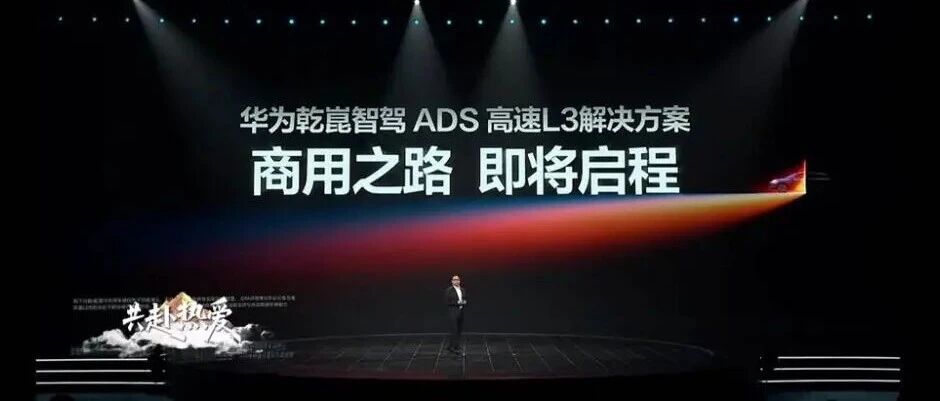
Core Viewpoint - Huawei's L3 autonomous driving solution is set to commercially launch by 2026, marking a potential revolutionary change in the automotive industry [2][9][69]. Group 1: L3 Autonomous Driving Overview - The L3 level of autonomous driving represents a shift from "assisted driving" to "automated driving," with responsibility for accidents potentially shared between the driver and the vehicle manufacturer [20][21]. - L3 systems will only operate under specific conditions, such as on highways, and the responsibility for accidents will depend on whether the vehicle is in a defined operational area [22][23]. - Huawei has introduced a dual compensation model for L3, partnering with insurance companies to provide coverage for accidents during L3 operation [27][28]. Group 2: Technological Enhancements - Huawei has upgraded its eAES (Enhanced Automatic Emergency Steering) system from version 1.0 to 2.0, improving its ability to handle extreme scenarios and enhance safety [32][48]. - The new eAES 2.0 can now recognize various obstacles, including animals and unusual objects, and can perform evasive maneuvers in critical situations [36][39][42]. - The introduction of a "Driver Disability Assistance" feature allows the vehicle to monitor the driver's state and take action if the driver becomes incapacitated [49][54]. Group 3: Future Prospects and Ecosystem - Huawei is developing an "Intelligent Driving Ecosystem" that includes partnerships with various service providers to enhance the overall driving experience [56][60]. - The envisioned capabilities include autonomous parking, smart charging, and maintenance, which are all based on L3 technology but aim to approach L4 levels of autonomy [63][66]. - The successful implementation of L3 could lead to rapid adoption across the industry, similar to the previous surge in L2 technology [72][74].

《洞见ESG》11月刊:COP30落幕:适应资金增两倍
21世纪经济报道· 2025-11-26 16:01
Core Insights - The COP30 conference concluded with an agreement to double climate adaptation funding from developed countries to developing countries to $120 billion annually by 2035, but failed to reach consensus on a fossil fuel exit roadmap [4][5] - The focus of global climate governance is shifting from rule-making to commitment fulfillment, emphasizing the need for countries to submit more ambitious climate action plans and ensure funding commitments are met [5][6] Regulatory Voices - China will adhere to true multilateralism and assist developing countries in addressing climate change through material aid, low-carbon demonstration zones, and capacity training [3] - Technological innovation is driving industrial practices in China, promoting the development of green new productive forces tailored to local conditions [3] - Countries face a shared fate regarding climate change, necessitating a commitment to green transformation, practical actions, equitable pathways, and technological innovation [3] Policy Updates - The National Carbon Market expansion roadmap has been announced, aiming to include the chemical, petrochemical, civil aviation, and paper industries by 2027 [4] - New guidelines from the National Energy Administration emphasize integrated development of renewable energy and the creation of new industrial opportunities [4] - The National Energy Administration has set a baseline for renewable energy consumption, requiring an annual addition of at least 200 million kilowatts [4] Industry Insights - The new power system is creating opportunities for new business models, with the virtual power plant market expected to reach a scale of hundreds of billions, although challenges such as aggregation difficulties and imperfect revenue mechanisms remain [6] - Wuhan is actively implementing its green low-carbon transition, signing 14 green low-carbon technology agreements and promoting carbon-inclusive mechanisms [6] - Mercedes-Benz's new electric CLA model utilizes recycled materials and operates on green electricity, systematically advancing its carbon reduction process [6] COP30 Highlights - China, the EU, and Brazil initiated the establishment of a Carbon Market Open Alliance during COP30 to create a framework for international cooperation on carbon pricing mechanisms [7] - China reported a cumulative reduction of over 26% in energy intensity at COP30, showcasing its progress in green transformation and the establishment of the world's largest carbon market [7] - COP30 featured interactive elements to engage younger generations in climate action, transforming climate initiatives into tangible, participatory experiences [7] ESG Insights - Multilateral development institutions play a crucial role in climate financing by leveraging innovative financial tools to mobilize private capital and bridge significant funding gaps [8] - The textile industry must innovate water-intensive washing processes and promote energy structure transformation to achieve zero-carbon parks [8] - Sustainable aviation fuel development requires multiple technological pathways and urgent policy incentives to support large-scale industry growth [8]

2025广州车展:智驾成展示重点
Mei Ri Jing Ji Xin Wen· 2025-11-26 13:57
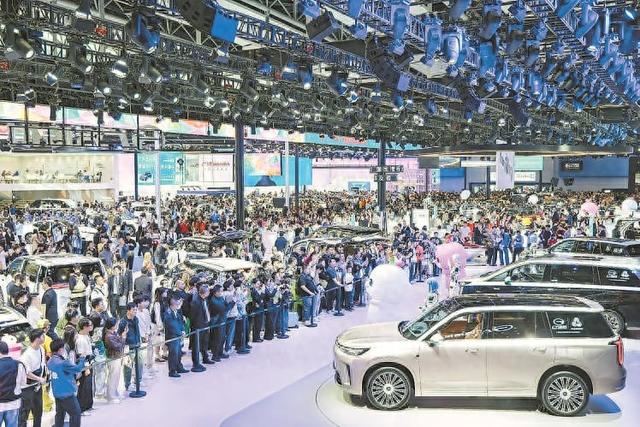
Core Insights - The 2025 Guangzhou International Auto Show, known as a barometer for the automotive industry, commenced on November 21, 2023, with a theme of "New Technology, New Life" [1] - The exhibition covers an area of 220,000 square meters, featuring 1,085 vehicles, including 93 global debuts and 629 new energy vehicles, accounting for nearly 58% of the total [1] - The trends of "differentiated competition" and "ecological integration" are prominent, with domestic brands showcasing their strength through dedicated exhibition spaces [1][3] Domestic Brands - BYD showcased its flagship models, including the Han L and Tang L, with prices starting at 194,800 yuan after subsidies, and the global debut of the Yangwang U9 Xtreme [3] - GAC Group highlighted its achievements over the past year, unveiling the A800, a flagship sedan developed in collaboration with Huawei, featuring advanced driving and cockpit systems [3][4] - Chery presented 34 models, focusing on new energy vehicles, with the Wind Cloud T9L set to launch in Q2 2026 [4] Joint Ventures and Foreign Brands - Joint ventures are intensifying their focus on local market demands, with brands like Mercedes-Benz and Volkswagen introducing new plug-in hybrid models [5][6] - Mercedes-Benz showcased 29 models, including the AMG GT XX concept and new electric vehicles, while Volkswagen plans to launch 21 new energy models by 2027 [6] - GAC Toyota aims to return to a production and sales scale of one million vehicles by 2028, with a target of over 800,000 units in 2026 [6] Industry Trends - The collaboration between automotive companies and technology firms is becoming a trend, with Huawei independently exhibiting its smart automotive solutions [2][8] - The automotive industry is shifting towards a model where vehicles are seen as intelligent mobile spaces, emphasizing the integration of chips, software, and ecosystems [9] - The next three years are expected to see diverse development trends in the domestic car market, with a focus on large family SUVs and personalized vehicles [9]


陆盛赟:广州车展释放四大信号 车 + 生活从概念照进现实
Zhong Guo Jing Ying Bao· 2025-11-26 12:21
Core Insights - The 2024 Guangzhou International Auto Show highlights significant trends in the automotive industry, showcasing 29 standout new models from over 100 launches, indicating a shift towards integrating vehicles into daily life rather than merely serving as transportation tools [1][2]. Group 1: Key Trends in the Automotive Industry - The trend of increasing penetration of new energy vehicles (NEVs) continues, with a clear commitment to advancing NEV development in China [2]. - Traditional foreign automakers are intensifying their investments in the Chinese market despite facing challenges, with brands like Mercedes-Benz and Audi developing models specifically for this market [2]. - The concept of "car + life" has transitioned from theory to practice, with vehicles increasingly becoming integrated into consumers' lifestyles through advancements in technology [2]. Group 2: International Perspectives on Chinese Automotive Brands - There is a notable increase in acceptance of Chinese electric vehicles (EVs) in overseas markets, particularly in emerging markets like Brazil, where local brands have established a presence [3]. - Competition in different markets varies, with Brazil still focused on traditional vehicles due to inadequate infrastructure for EVs, highlighting a need for performance and range as key competitive factors [3][4]. Group 3: Technological Advancements and Ecosystem Development - The importance of ecological and open-source standardization is emphasized, with a focus on creating a collaborative environment among automakers to enhance innovation [5]. - The potential for integrating various applications into vehicles is significant, as cars evolve into living spaces that can accommodate diverse functionalities [5]. - The rollout of Level 3 autonomous driving technology is progressing, with a focus on how it will transform user experiences and the implications for safety and insurance [6]. Group 4: Future Outlook for the Automotive Industry - The future of the automotive industry is expected to center around smart technology as a core competitive element, with a strong emphasis on self-sufficiency in the supply chain, particularly regarding chips and operating systems [7]. - There is an anticipation for joint ventures and partnerships to continue strengthening the Chinese market, with hopes for a diverse and competitive landscape among brands [7].
两年内放弃中国零件,特斯拉做得到吗?
创业邦· 2025-11-26 03:34
Core Viewpoint - The article discusses the ongoing trend of American automotive companies, including Tesla and General Motors, moving away from Chinese supply chains due to U.S. government policies aimed at boosting domestic manufacturing and reducing reliance on foreign components, particularly from China [6][10][21]. Group 1: U.S. Policy and Automotive Industry Response - The U.S. government has implemented policies, such as the Inflation Reduction Act, which restricts the use of Chinese components in electric vehicle batteries, pushing American automakers to seek alternatives [13][15]. - Tesla is reportedly planning to stop using Chinese-made parts in its U.S. vehicles within the next one to two years, reflecting a broader trend among U.S. automakers to "de-China" their supply chains [6][10]. - General Motors has also indicated plans to shift away from Chinese suppliers, with requirements for suppliers to comply starting in 2024 [13][21]. Group 2: Impact on Global Supply Chains - The U.S. has proposed significant tariffs on imported vehicles and parts, which could increase production costs for American-made cars, potentially leading to higher prices for consumers [15][16]. - European automakers are also feeling the pressure, with companies like Ferrari announcing price increases due to U.S. tariffs affecting their imports [15][16]. - The article highlights that while U.S. automakers are attempting to sever ties with Chinese suppliers, the complexity and reliance on Chinese components make complete detachment challenging [23]. Group 3: Future Outlook and Market Dynamics - Despite the push for "decoupling," the article suggests that the actual impact on the automotive industry may be less severe than anticipated, as many domestic suppliers still play a crucial role in the supply chain [21][23]. - The article emphasizes that the transition away from Chinese suppliers will not happen overnight, as many components, such as thermal management systems and glass products, are difficult to replace due to their competitive pricing and quality [23]. - The potential for increased vehicle prices in the U.S. market could lead to a shift in consumer behavior, possibly benefiting Chinese exports if American manufacturers cannot meet demand at competitive prices [23].


请“谐音梗”明星、玩抽象风,这届车企也是拼了
Xin Jing Bao· 2025-11-26 00:13
Core Insights - The automotive industry is increasingly targeting young consumers through unconventional marketing strategies, including puns and abstract advertising [1][2][3] Group 1: Marketing Strategies - Car manufacturers are utilizing puns and humor in their advertising, such as NIO's "Mo Wenwei Lai" and Leida's "Gu Tianle Dao" to engage younger audiences [2] - Abstract advertising is exemplified by Shangjie Auto's campaign featuring comedian Zhang Xingchao, which aims to resonate with the youth's sense of humor [2] - The shift in marketing reflects a broader trend where traditional methods are deemed ineffective, prompting companies to explore new ways to connect with young consumers [3] Group 2: Targeting Young Consumers - Several car brands have enlisted young celebrities as brand ambassadors, such as Lynk & Co with Hani Kzi, Chery with Yang Zi, and Li Auto with Yi Yangqianxi, all born in the 1990s and 2000s [3] - The automotive industry recognizes that young consumers view cars as large electronic devices, prioritizing user experience and brand identity over technical specifications [3] Group 3: Engaging with Sports Personalities - The trend of involving sports figures in marketing is gaining traction, with athletes like Sun Yingsha and Wang Chuqin representing various car brands to enhance brand image [5][6] - Kia's choice to feature tennis champion Li Na at the auto show emphasizes the brand's desire to align with the values of challenge and progress [7] - The presence of sports personalities is intended to transfer attributes like health and strength to the brands they represent, appealing to a broader consumer base [8][9] Group 4: Industry Adaptation - The automotive sector is undergoing a transformation, with companies like Kia acknowledging past strategic misjudgments in the Chinese market and adapting to local consumer preferences [8] - The overall approach of car manufacturers is to create relatable and engaging content that resonates with younger audiences, aiming to stand out in a competitive market [9]
车展观察丨请“谐音梗”明星、玩抽象风,这届车企也是拼了
Bei Ke Cai Jing· 2025-11-26 00:12
Core Insights - The automotive industry is increasingly targeting young consumers through unconventional marketing strategies, including puns and abstract advertising [2][3][18] - The Guangzhou Auto Show showcases a trend where car companies are shifting their focus from traditional marketing to more relatable and humorous approaches to engage younger audiences [6][9][18] Marketing Strategies - Car manufacturers are utilizing puns and humor in their campaigns, such as NIO's "Mo Wenwei" and LEAD's "Gu Tianle Dao," to resonate with younger consumers [3][4] - The use of comedic actors in advertisements, like Zhang Xingchao for Shangjie, aims to connect with the youth demographic, leveraging the actors' relatability and lower endorsement costs compared to top-tier celebrities [5][12] Target Audience - The marketing efforts are specifically aimed at younger consumers, as evidenced by brands like Lynk & Co and Chery choosing young celebrities as brand ambassadors [6][12] - The perception of cars among young people has shifted, viewing them as large electronic devices rather than traditional vehicles, leading to a change in purchasing logic [7][8] Brand Positioning - Car companies are aware of the need to adapt to the changing preferences of young consumers, who are less loyal to foreign brands and more inclined towards local trends [16] - The involvement of sports celebrities, such as Sun Yingsha and Li Na, is part of a strategy to enhance brand image by associating with values like health and strength [12][17] Industry Challenges - The automotive sector faces challenges such as price wars and the need to capture the attention of fickle young consumers, prompting companies to experiment with bold marketing tactics [9][10] - The shift in marketing strategies reflects a broader trend of car companies treating their marketing efforts as social experiments to engage with consumers [11][18]
对话段建军:139年的“价值马拉松”与奔驰的松弛感
2 1 Shi Ji Jing Ji Bao Dao· 2025-11-25 23:45
Core Insights - The core strategy of Mercedes-Benz in the electric vehicle market is to maintain its brand standards while adapting to the changing landscape of consumer expectations and technological advancements [2][8] - The company emphasizes a "relaxed" approach to pricing and product presentation, aiming to build consumer confidence and focus on product quality rather than price speculation [1][3] Group 1: Electric Vehicle Strategy - Mercedes-Benz has introduced the all-new electric CLA with a focus on safety, conducting extensive testing including 15,000 simulation tests and over 180 real vehicle crash tests [3][4] - The company maintains its commitment to safety and quality, asserting that regardless of the drive type, the standards of safety, quality, and luxury experience remain unchanged [2][3] - The electric CLA achieves a low energy consumption of 10.9 kWh/100 km and a range of 866 km under CLTC conditions, showcasing the integration of advanced technologies [4][5] Group 2: Technological Innovations - The Mercedes-AMG GT XX concept car has set 25 world records, including a new record for the longest distance traveled by an electric vehicle in 24 hours, covering 5,479 km, which is an increase of 1,518 km over the previous record [4][5] - The concept car features innovative axial flux motors that are lighter and more powerful than traditional motors, enabling peak power output exceeding 1,000 kW (approximately 1,360 horsepower) [5][6] - The company is collaborating with local partners to enhance its autonomous driving systems, ensuring thorough testing in specific cities before broader deployment [6][7] Group 3: Market Positioning and Brand Philosophy - Mercedes-Benz is positioning itself as a long-term player in the automotive industry, focusing on value rather than short-term trends, which is reflected in its commitment to safety and quality [3][8] - The company is undergoing a network optimization to enhance dealer efficiency and adapt to the digital shift in consumer behavior, emphasizing the importance of sustainable profitability [6][7] - The brand aims to leverage its historical legacy and established standards to navigate the competitive landscape of the electric vehicle market, asserting that value will ultimately prevail over fleeting market trends [8]
从广州车展看2026年车市动向:合资车用上“中国脑”
Bei Jing Ri Bao Ke Hu Duan· 2025-11-25 22:45
Core Insights - The 2025 Guangzhou International Auto Show showcases 93 new car models and 629 new energy vehicles, highlighting the industry's shift towards electrification and intelligence [1][3] - In October, new energy vehicles accounted for over 50% of total car sales for the first time, indicating a significant market trend [3] - The event emphasizes advancements in L3-level autonomous driving and next-generation battery technologies, which are seen as key areas for technological breakthroughs [4][5] New Energy Vehicles - Out of 1,085 vehicles displayed, 629 are new energy models, making up 58% of the total [3] - Notable new energy models include Xiaopeng's X9 Super Extended Range version priced at 309,800 yuan and Leap Motor's D19 Extended Range version with a 500 km pure electric range [3] - The market is witnessing a diversification in demand, with extended range vehicles addressing range anxiety while pure electric vehicles offer lower operating costs [3] Technological Advancements - Huawei's booth was one of the most popular, showcasing its smart driving solutions, including L3-level autonomous driving tests in seven major cities [4] - GAC Group's flagship model, the A800, has begun L3-level highway testing at speeds of 120 km/h, marking a significant milestone in autonomous vehicle testing [4] Battery Technology - SAIC MG introduced the MG4 model featuring semi-solid-state batteries, set for delivery in December [5] - GAC Group announced the production of a pilot line for solid-state batteries, aiming for small-scale trials by 2026 and mass production by 2027-2030 [5] Market Dynamics - Several luxury brands, including Beijing Hyundai and Lamborghini, were absent from the show, indicating a potential decline in competitiveness in the Chinese market [5] - Joint ventures between foreign brands and Chinese tech companies are emerging, with Volkswagen and Xiaopeng collaborating on a new electric SUV featuring L2-level assisted driving [5][6] Collaborations and Innovations - Audi launched the A5L with Huawei's smart driving technology, while BMW and Mercedes are partnering with Chinese tech firms to enhance their models with localized smart features [6] - These collaborations aim to shorten development cycles and quickly adapt to market changes, reflecting a strategic shift among joint venture brands [6]
为什么网红发财后,都想买迈巴赫?
36氪· 2025-11-25 11:10
Core Viewpoint - The rise of Maybach as a luxury car brand reflects societal emotions related to identity anxiety, wealth desire, and vanity, making it a symbol of success and status in contemporary culture [4][70]. Group 1: Brand History and Revival - Maybach is a relatively new brand, with its modern recognition only spanning about 20 years despite its historical roots dating back over a century [8]. - The brand was originally established in 1909 by Wilhelm Maybach and his son, producing high-performance cars until World War II halted production [9][11]. - In 2002, Mercedes-Benz revived the Maybach brand to compete with Rolls-Royce and Bentley, launching the Maybach 57 and 62 models, which catered to the Chinese market's preference for long-wheelbase vehicles [14][15][19]. Group 2: Market Positioning and Sales - The initial pricing of Maybach vehicles positioned them as symbols of extreme wealth, with prices ranging from 5.5 million to 6.1 million RMB, often exceeding 10 million RMB with options [19][35]. - Despite the brand's luxury image, Maybach struggled with sales, selling significantly fewer units than its competitors, Rolls-Royce and Bentley, leading to its discontinuation in 2013 after substantial financial losses [23][25]. - However, the brand's image remained strong in China, where it became associated with top-tier wealth, with half of the Maybachs sold before discontinuation being purchased by Chinese billionaires [26][21]. Group 3: Rebranding and Market Success - Mercedes-Benz successfully rebranded Maybach as a sub-brand, "Mercedes-Maybach," positioning it as a high-end version of the S-Class, which allowed for a more accessible price point starting at 1.438 million RMB [29][35]. - The new Maybach S-Class has seen significant success, with sales reaching 60,000 units from 2015 to 2021, two-thirds of which were sold in China [45][46]. - The brand's revival was strategically aimed at the Chinese market, with the global launch of the Maybach S600 taking place at the Guangzhou International Auto Show [46]. Group 4: Cultural Impact and Symbolism - Maybach has transcended its identity as merely a luxury vehicle, becoming a cultural symbol of success and wealth, often featured in social media and popular culture [56][60]. - The vehicle's association with influencers and celebrities has further solidified its status as a marker of success, leading to a unique cultural phenomenon where owning a Maybach is seen as a validation of one's achievements [64][66]. - The brand's appeal continues to grow, even amidst a downturn in the luxury car market, indicating that Maybach is experiencing a renaissance in its popularity [67].