新城控股

Search documents
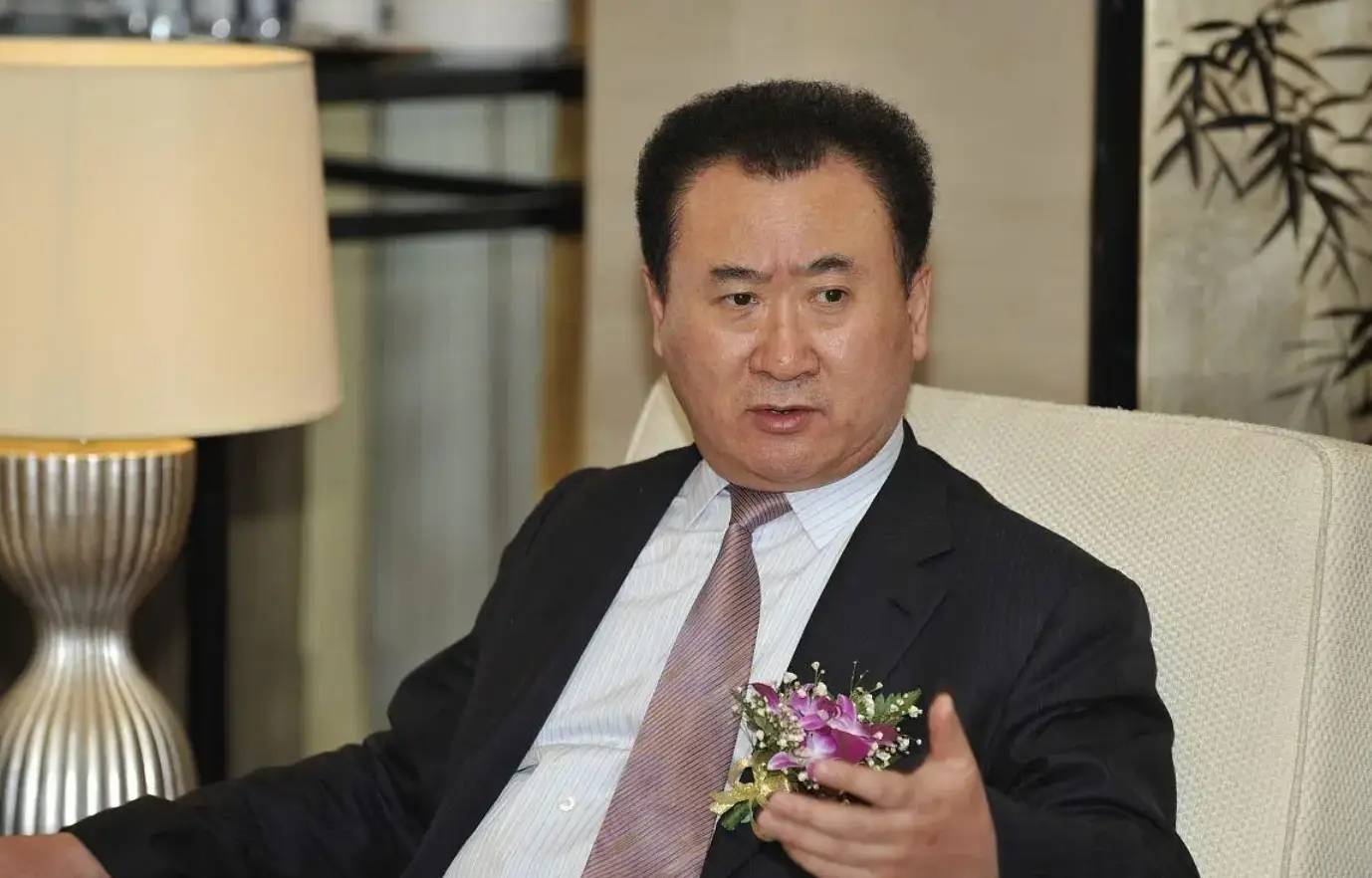
王健林跌落神坛,人越来越少逛的高档商场,还有没有未来呢?
Sou Hu Cai Jing· 2025-09-30 13:43
Core Insights - The decline of Wang Jianlin symbolizes a potential end to the era of commercial real estate in China, raising questions about the future of high-end shopping malls as foot traffic decreases [1] - The rapid expansion of commercial centers in China over the past decade has led to saturation, particularly in lower-tier cities, with a significant increase in the number of shopping centers and commercial space [3][5] Industry Development - From 2011 to 2024, the number of commercial centers surged from 816 to approximately 6,700, with total commercial building area expanding from under 100 million square meters to 630 million square meters, resulting in per capita commercial space growth from 0.03 square meters to 0.55 square meters [3] - The commercial real estate sector saw explosive growth due to rising consumer spending and economic development, with GDP increasing from 6.19 trillion to 15 trillion yuan between 2010 and 2020 [5][8] Market Saturation - By 2020, the market became oversaturated, particularly in lower-tier cities, leading to a significant drop in rental yields from an average of 8% to -10% as many projects were completed [8] - The average vacancy rate for shopping centers in key cities reached a four-year high, with cities like Fuzhou experiencing vacancy rates as high as 15.03% due to intense competition and market saturation [8][12] Impact of E-commerce - The rise of e-commerce, particularly mobile and online retail, has drastically changed the retail landscape, with online retail growth averaging 17.4% annually, while offline retail growth slowed to 3.5% [11] - The shift in consumer behavior has led to a decline in foot traffic in shopping malls, with many struggling to maintain high rental prices as online platforms dominate marketing and customer engagement [11][12] Future Outlook - The future of shopping malls in China appears bleak, with predictions that many will fail unless they are strategically located, can attract population inflow, effectively integrate online and offline marketing, and offer unique brands rather than homogeneous chain stores [12]




新城控股(601155) - 新城控股关于2024年年度报告的更正公告
2025-09-30 13:22
证券代码:601155 证券简称:新城控股 编号:2025-045 新城控股集团股份有限公司 关于 2024 年年度报告的更正公告 单位:元 币种:人民币 | 关联方 | 本期发生额 | 本期期末余额 | 上期发生额 | 上期期末余额 | | --- | --- | --- | --- | --- | | 新城悦服务集团有限公司 | 5,170,000,000 | 0 | 1,800,000,000 | 0 | 本公司董事会及全体董事保证本公告内容不存在任何虚假记载、误导性陈述 或者重大遗漏,并对其内容的真实性、准确性和完整性承担法律责任。 新城控股集团股份有限公司(以下简称"公司"、"新城控股")于 2025 年 3 月 29 日在上海证券交易所网站(www.sse.com.cn)披露了《新城控股 2024 年年度报 告》,因工作人员疏忽,导致原披露的报告中部分内容错误,现予以更正。具体内 容如下: 一、《新城控股 2024 年年度报告》的更正情况 (一)"第十节 财务报告"之"十一、关联方及关联交易" 之 "5、关联交易 情况"之"(13)关联方资金拆借" 更正前: 不适用 更正后: 从关联方资金借入: ...
新城控股(601155) - 2024 Q4 - 年度财报(更正)
2025-09-30 13:20
新城控股集团股份有限公司2024 年年度报告 公司代码:601155 公司简称:新城控股 新城控股集团股份有限公司 2024 年年度报告 1 / 295 新城控股集团股份有限公司2024 年年度报告 重要提示 一、本公司董事会、监事会及董事、监事、高级管理人员保证年度报告内容的真实性、准确性、完整 性,不存在虚假记载、误导性陈述或重大遗漏,并承担个别和连带的法律责任。 二、公司全体董事出席董事会会议。 三、致同会计师事务所(特殊普通合伙)为本公司出具了带有强调事项段、持续经营重大不确定性段 落、其他信息段落中包含其他信息未更正重大错报说明的无保留意见的审计报告,本公司董事会、 监事会对相关事项已有详细说明,请投资者注意阅读。 致同会计师事务所(特殊普通合伙)对本公司 2024 年度财务报表出具了带有持续经营重大不确定 性段落的无保留意见的审计报告,公司董事会、监事会对 2024 年度财务报表非标准审计意见涉及事项 进行了专项说明,详见公司同日在上海证券交易所网站(www.sse.com.cn)披露的专项说明全文。 四、公司负责人王晓松、主管会计工作负责人王晓松及会计机构负责人(会计主管人员)管有冬声明: 保证 ...
新城悦服务(01755) - 有关復牌进展之季度更新及继续暂停买卖
2025-09-30 12:21
香港交易及結算所有限公司及香港聯合交易所有限公司對本公告的內容概不負責,對其準確 性或完整性亦不發表任何聲明,並明確表示,概不對因本公告全部或任何部份內容而產生或 因倚賴該等內容而引致的任何損失承擔任何責任。 S-Enjoy Service Group Co., Limited 新城悅服務集團有限公司 ( 於 開 曼 群 島 註 冊 成 立 的 有 限 公 司 ) 根據上市規則第13.24A條,董事會謹此向本公司股東及潛在投資者提供最新資 料,於本公告日期,本公司的最新發展及履行復牌指引的進展情況如下: (股份代號:1755) 有關復牌進展之季度更新 及 繼續暫停買賣 本公告乃由新城悅服務集團有限公司(「本公司」,連同其附屬公司統稱「本集團」) 根據香港聯合交易所有限公司證券上市規則(「上市規則」)第13.09條及第13.24A 條以及香港法例第571章證券及期貨條例第XIVA部項下的內幕消息條文(定義 見上市規則)作出。 茲提述本公司日期為2025年3月31日、2025年5月13日、2025年5月27日、2025年 6月23日、2025年6月30日、2025年7月14日、2025年8月29日及2025年9月 ...
大A的荣耀不再属于“性价比”投资者
Hu Xiu· 2025-09-30 10:32
Core Insights - Deep value fund managers, who performed well during the bear market, are underperforming in the current bull market, primarily due to the significant rise in technology stocks and growth-oriented funds [1][2][10] - The average annual return of deep value fund managers is below the industry average, with many products yielding less than 20% year-to-date, while the CSI Active Equity Fund Index has achieved a return of 34.11% [3][9] - The investment philosophy of deep value managers focuses on long-term intrinsic value, safety margins, and stable business models, which contrasts sharply with the growth-oriented approach that prioritizes high growth potential and current market trends [10][11][12] Performance Comparison - As of September 24, 2023, prominent deep value fund managers like Xu Yan and Jiang Cheng have seen their flagship products yield less than 20%, with only a few exceeding 30% [3][9] - The performance of deep value funds is generally in line with the CSI 300 Index, which has a year-to-date return of 15.63% [10] - In contrast, growth-oriented funds have seen returns exceeding 200% in some cases, highlighting the stark difference in performance between the two styles [5][10] Market Trends - The current market environment favors growth-oriented strategies, particularly in sectors like technology and innovation, while deep value strategies are struggling due to their focus on low-valuation sectors such as finance and real estate [10][12][26] - The number of deep value fund managers is relatively small compared to growth-oriented managers, and many notable deep value figures have left the industry, further limiting the available options for investors [25][29] Investment Strategy - Deep value funds are recommended for conservative investors as a core holding, while growth funds may be allocated for those seeking higher returns [16][17] - A balanced approach that includes both deep value and growth strategies may provide better risk management and potential returns [18][19] - Investors should be cautious of deep value funds that show unusually high performance in a bull market, as this may indicate a shift in investment style [16]
纯债基金9月业绩遇冷 “固收 +” 产品逆势领跑 四季度债市增量资金成关键
Mei Ri Jing Ji Xin Wen· 2025-09-29 16:20
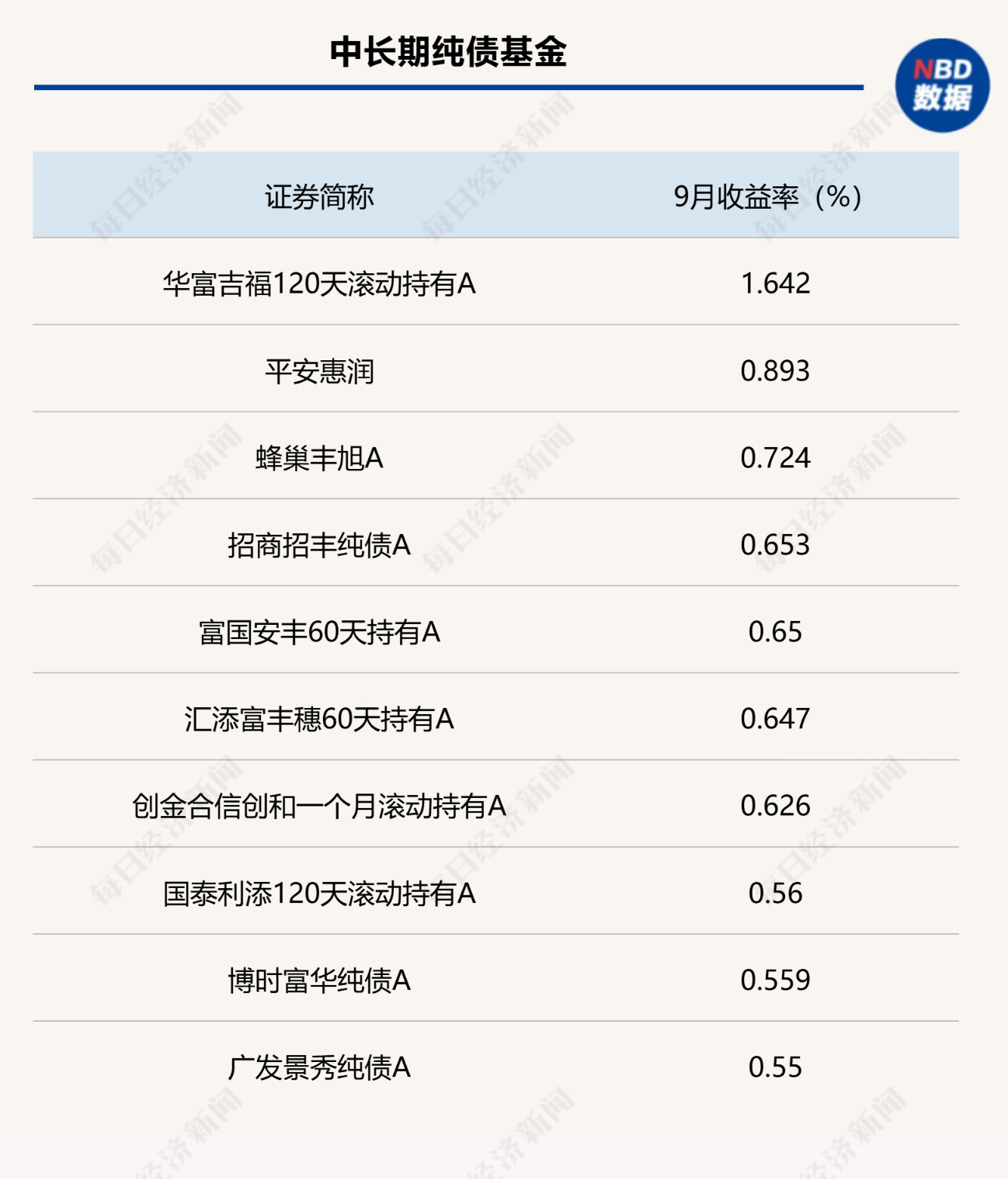
Group 1 - The core viewpoint indicates that the bond market continues to experience a weak and volatile trend, with pure bond funds underperforming, as evidenced by the average monthly return of medium to long-term pure bond funds being negative as of September 28 [1][2] - The highest yield for bond funds in September reached 5.57%, with "fixed income +" funds outperforming pure bond funds significantly, highlighting a growing disparity in performance [2][10] - Despite the overall weak performance of pure bond funds, "fixed income +" products have shown resilience, with some top-performing products achieving returns exceeding 5% in September [2][3] Group 2 - The bond market sentiment remains cautious as the end of the quarter approaches, with credit bond rates rising and credit spreads widening, raising concerns about the lack of incremental funds in the market [4][5] - Analysts express that the impact of new regulations on bond funds is likely to be temporary and not indicative of a long-term decline in demand, as there remains strong allocation demand from wealth management and insurance funds [5] - The performance of pure bond funds has been lackluster, with the total index for bond funds rising by only 1.5% this year compared to a mere 0.39% increase for pure bond funds, indicating a shift in investor preference towards more flexible and risk-controlled strategies [3][4] Group 3 - The average monthly return for medium to long-term pure bond funds was reported at -0.18%, while short-term bond funds had a marginally positive return of 0.004% as of September 28 [2] - The top-performing pure bond funds in September had yields ranging from 0.559% to 1.642%, indicating a significant underperformance compared to "fixed income +" funds [7] - The top short-term bond funds yielded between 0.214% and 0.499%, further illustrating the challenges faced by pure bond funds in the current market environment [9]
房地产周报:专项债拟收储逾6100亿,实发节奏近期提速-20250929
NORTHEAST SECURITIES· 2025-09-29 14:43
Investment Rating - The report maintains an "Outperform" rating for the real estate sector [7] Core Views - The report highlights the acceleration of special bond issuance for the recovery of idle land, with a total proposed amount exceeding 610 billion yuan and a land area of nearly 2.4 million square meters [15][16] - The real estate market is showing signs of stabilization, with policies aimed at boosting confidence and addressing inventory pressures [18] - The report suggests focusing on three areas within the real estate sector: second-hand intermediaries, commercial real estate, and property services [18] Summary by Sections Special Bonds and Land Recovery - As of September 17, 2025, the total proposed amount for special bonds to recover idle land is over 610 billion yuan, covering nearly 2.4 million square meters [15] - Guangdong province leads in the proposed bond scale, with first and second-tier cities accounting for only about 34% of the total proposed amount [16] - Residential land constitutes nearly 70% of the proposed recovery, with local state-owned enterprises holding over 80% of the land [16][17] Market Performance - The A-share real estate sector underperformed the market, with a weekly decline of 0.16%, trailing the broader market by 1.22 percentage points [20][21] - The report notes a significant drop in new housing transactions, with a year-on-year decrease of 53.79%, while second-hand housing transactions increased by 14.80% [5][18] REITs Market - The REITs index experienced a decline of 0.71%, with the total transaction volume for REITs at 974 million yuan, down 18.23% from the previous week [39][54] - The report indicates that the REITs index has underperformed the CSI 300 index by 5.35 percentage points over the past month [50] Credit Bonds - The issuance of real estate credit bonds totaled 14.781 billion yuan this week, with a net financing amount of -368 million yuan [20][38] - Cumulative issuance of real estate credit bonds reached 334 billion yuan, with a net financing amount of -30.275 billion yuan year-on-year [20][38]
美债收益率连续两周上行
工银国际· 2025-09-29 11:55
Report Industry Investment Rating No relevant information provided. Core Viewpoints - After the Fed cut interest rates in September, the U.S. Treasury yields have risen for two consecutive weeks. The better - than - expected economic growth and employment data have reduced the need for the Fed to cut interest rates significantly and decreased market expectations for subsequent rate cuts, pushing up the U.S. Treasury yields [1][2]. - The negotiation deadlock between the Republican and Democratic parties over the government financing legislation draft may lead to a U.S. government shutdown in October. However, the market has largely priced in this situation, and the impact on the bond market is expected to be minor [1][3]. - Although the U.S. dollar risk - free rate continued to rise last week, Chinese - funded U.S. dollar bonds were still supported by the narrowing spread and showed general stability. In the on - shore market, due to the approaching National Day holiday and the end of the quarter, the pressure on inter - bank liquidity increased, pushing up short - term interest rates. After the National Day holiday, the pressure on inter - bank funds is expected to ease, which will drive down short - term Treasury yields [1][3][4]. Summary by Related Catalogs Offshore Market - Last week, there were 6 new issuances of Chinese - funded U.S. dollar bonds exceeding $100 million, totaling approximately $1.4 billion, mainly financial bonds and urban investment bonds. Offshore RMB bonds had new issuances of about RMB 61 billion, mainly driven by the issuance of RMB 60 billion central bank bills by the People's Bank of China [2]. - The 10 - year and 2 - year U.S. Treasury yields rose 5 and 7 basis points respectively to 4.18% and 3.64% last week. The U.S. second - quarter real GDP annualized quarterly - on - quarter final value increased by 3.8%, the fastest growth rate in nearly two years. As of the week ending September 20, the number of initial jobless claims in the U.S. decreased by 14,000 to 218,000, the lowest level since July [2]. - The Bloomberg Barclays Chinese - funded U.S. dollar bond total return index fell slightly by 0.1% last week, with the spread narrowing by 2 basis points. Among them, the high - rating index fell 0.1%, and the spread narrowed by 3 basis points; the high - yield index remained flat, and the spread was basically unchanged [3]. On - shore Market - Last week, the People's Bank of China net - withdrew short - term liquidity of RMB 822.3 billion through reverse repurchase maturities and net - injected long - term funds of RMB 30 billion through MLF renewals. The 7 - day deposit - type institutional pledged repurchase weighted average rate and the 7 - day inter - bank pledged repurchase weighted average rate rose 5 and 12 basis points respectively to 1.56% and 1.64%. The 3 - year and 10 - year Treasury yields rose 2 basis points and remained flat respectively at 1.54% and 1.88% [4]. Recent New Issuances of Chinese - funded U.S. dollar Bonds - Newly issued bonds include those from companies such as New Metro Global Limited, Longkou Urban Construction Investment and Development Co., Ltd., and Ping An Insurance Overseas (Holding) Company Limited, with different coupon rates, issuance amounts, and ratings [6]. Appendix: List of Chinese - funded U.S. dollar Bonds - The appendix provides detailed information on a large number of Chinese - funded U.S. dollar bonds, including issuers, guarantors, coupon rates, issuance amounts, prices, ratings, etc. The issuers cover banks, state - owned enterprises, and urban investment companies [18][20].
房地产行业第39周周报:本周新房二手房成交同比成交均转弱,上海“好房子”标准细则正式落地-20250929
Bank of China Securities· 2025-09-29 07:55
Investment Rating - The report rates the real estate industry as "Outperform" [1] Core Viewpoints - The new housing transaction volume has shown a mixed trend, with new housing sales area increasing month-on-month but declining year-on-year, while second-hand housing transactions have improved slightly [3][6] - The Shanghai "Good House" standard has been implemented, which is expected to enhance the quality of new housing products and improve living experiences for buyers [3] - The overall market remains under pressure due to declining prices, rising inventory, and weak consumer confidence, despite some signs of recovery in transaction volumes [7] Summary by Sections 1. Key City New Housing Market, Second-hand Housing Market, and Inventory Tracking - In the week of September 20-26, new housing transaction volume in 40 cities was 21,000 units, a month-on-month increase of 11.6% but a year-on-year decrease of 9.0% [16][18] - The new housing sales area was 2.299 million square meters, with a month-on-month increase of 23.0% and a year-on-year decrease of 7.7% [25][17] - The inventory of new housing in 12 cities was 11,434 million square meters, with a month-on-month increase of 0.7% and a year-on-year decrease of 12.7% [41][47] 2. Land Market Tracking - The total land transaction area across 100 cities was 1,761.6 million square meters, with a month-on-month increase of 57.2% and a year-on-year increase of 41.8% [61][67] - The total land transaction price was 44.71 billion yuan, with a month-on-month increase of 210.7% and a year-on-year increase of 43.5% [63][67] - The average land price was 2,538.2 yuan per square meter, with a month-on-month increase of 97.6% and a year-on-year increase of 1.2% [62][67] 3. Policy Overview - The report highlights the implementation of new policies aimed at improving housing quality and stabilizing the real estate market, particularly in major cities like Shanghai [3][4] 4. Company Performance Review - The report suggests focusing on companies with stable fundamentals and high market share in core cities, as well as those that have shown significant breakthroughs in sales and land acquisition since 2024 [7]
“老登”起舞,“小登”回调!节前资金调仓忙,金融科技、人工智能、创新药等ETF被逢跌抢筹
Xin Lang Ji Jin· 2025-09-28 11:57
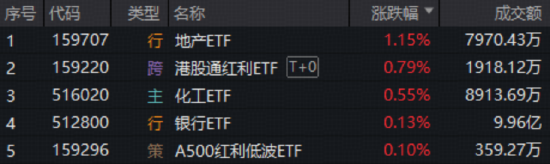
Market Overview - A-shares experienced fluctuations with the Shanghai Composite Index down 0.65%, Shenzhen Component Index down 1.76%, and ChiNext Index down 2.60, with a total market turnover of 2.15 trillion yuan [1][2] - Over 3,400 stocks in the market declined, while traditional sectors like real estate, liquor, and banking showed resilience [1][2] Real Estate Sector - The real estate sector outperformed, with the real estate ETF (159707) rising over 1%, reaching a new high for the year, and seeing a net purchase of 23.5 million shares [1][3][5] - The implementation of new housing policies in Shanghai led to a significant increase in new home transactions, with a 30% month-on-month increase in the first week and a 19% increase overall for the month [5][6] - Analysts suggest that the easing of policies in major cities may lead to a short-term recovery in the housing market, with a focus on high-quality developers and those benefiting from debt relief and improved sales [5][6] Food and Beverage Sector - The food and beverage sector, represented by the food ETF (515710), showed a slight decline of 0.16%, with the overall performance of liquor stocks being weak [8][9] - Moutai's sales volume reportedly doubled, with significant growth observed in September, indicating a potential recovery in the liquor market [11][12] - The food ETF's underlying index is at a low valuation, suggesting a good opportunity for long-term investment [12][13] Hong Kong Market - The Hong Kong stock market faced declines, particularly in the internet and innovative drug sectors, with the Hong Kong Internet ETF (513770) down 2.6% and the Hong Kong Innovative Drug ETF (520880) down 1.44% [2][15] - Despite the downturn, there were signs of active buying in the innovative drug sector, indicating potential opportunities for investors [15][19] - Analysts maintain a positive long-term outlook for the Hong Kong market, suggesting that the technology sector may recover as it shifts focus from competition to AI-driven growth [18][19]