阿里

Search documents
巴菲特的经验主义传统,芒格的理性主义残存!
私募排排网· 2025-05-30 07:39
Core Viewpoint - The article discusses the philosophical underpinnings of investment strategies, contrasting rationalism and empiricism, and highlights the importance of skepticism in value investing, particularly as exemplified by Warren Buffett and David Dodd's approaches [4][25][36]. Group 1: Rationalism vs. Empiricism - Rationalism emphasizes knowledge derived from reason and logical deduction, often leading to the creation of comprehensive frameworks to explain market behavior [10][16]. - Empiricism focuses on knowledge gained through experience and observation, suggesting that practical experience is more valuable than theoretical constructs in investment [20][21]. - The article suggests that while rationalism can create robust investment theories, it often fails to predict future market behavior accurately, which is a critical aspect of successful investing [17][22]. Group 2: Skepticism in Value Investing - Skepticism, as articulated by philosopher David Hume, posits that causal relationships are often illusory, which aligns with the investment philosophy of Buffett, who emphasizes understanding businesses within one's "circle of competence" [25][34]. - Buffett's investment strategy is characterized by a focus on observable business fundamentals rather than complex financial models, reflecting a skeptical approach to predictions based on theoretical frameworks [36][37]. - The principle of "margin of safety" in value investing is rooted in the acknowledgment that investors can be wrong, thus advocating for buying undervalued assets to mitigate potential losses [36]. Group 3: Investment Methodologies - The article outlines that rationalist methodologies dominate technical analysis and macroeconomic modeling, while empirical approaches are more prevalent in value investing [14][15]. - It highlights that many successful investors, including Buffett, rely on empirical observations and historical performance rather than solely on theoretical models [34][41]. - The discussion includes the evolution of investment thought from classical rationalism to a more nuanced understanding that incorporates elements of Bayesian reasoning, which aligns with empirical evidence [42].


三部门印发《电子信息制造业数字化转型实施方案》,科创板人工智能ETF(588930)涨超0.6%,中邮科技涨超5%
2 1 Shi Ji Jing Ji Bao Dao· 2025-05-28 01:58
科创板人工智能ETF(588930)紧密跟踪上证科创板人工智能指数(950180.CSI)。该指数从科创板市 场中选取30只市值较大且业务涉及为人工智能提供基础资源、技术以及应用支持的上市公司证券作为指 数样本,以反映科创板市场代表性人工智能产业上市公司证券的整体表现。 5月28日,A股三大指数集体高开,截至发稿,科创AI指数涨0.42%。相关ETF中,科创板人工智能ETF (588930)截至发稿涨0.63%,溢折率0.17%,盘中现溢价交易;成分股中,中邮科技涨超5%,天准科 技、恒玄科技涨超2%。 山西证券指出,AI对腾讯广告、游戏业务有所提振,腾讯加大元宝等AI应用投入,阿里AI相关产品收 入连续七个季度实现三位数增长,未来三年3800亿元资本开支,国内外科技巨头在AI资本开支上的持 续加码,验证了宏观关税等扰动不改算力需求的长期景气,建议关注AI产业链相关机会。 (本文机构观点来自持牌证券机构,不构成任何投资建议,亦不代表平台观点,请投资人独立判断和决 策。) 消息面上,工业和信息化部、国家发展改革委、国家数据局印发《电子信息制造业数字化转型实施方 案》,到2027年,电子信息制造业数字化转型、智能 ...

重走扩张路线:阿里“复兴”进展到哪了?
3 6 Ke· 2025-05-27 09:30
Core Viewpoint - The narrative surrounding Alibaba in 2023 has shifted towards "revival," focusing on a transition from "quantity" to "quality" in operations, alongside significant investments in AI, which have restored market confidence [2] Group 1: Financial Performance and Strategy - After entering a series of efficiency optimization reforms post-2022, Alibaba's primary financial metric, ROIC (Return on Invested Capital), is now targeted to return to double digits [3][9] - In Q1 of 2025, Alibaba's capital expenditure reached 86 billion yuan, more than double the previous year's 32.1 billion yuan, indicating a shift back to aggressive investment strategies [9] - The company has announced plans to invest 380 billion yuan over the next three years in cloud and AI infrastructure, marking a return to a more proactive operational stance [9] Group 2: Operational Improvements - Alibaba's operational focus has shifted from expansion to efficiency improvement, including asset disposals and optimizing core business models [6][9] - The launch of the "full-site promotion" product has significantly improved the monetization rate of Taobao, which had been lagging behind competitors like Pinduoduo [10][15] - In Q1 of 2025, Taobao's customer management revenue grew by 12% year-on-year, reaching 71.1 billion yuan, driven by the success of the full-site promotion [15] Group 3: Future Outlook - The revival path for Alibaba can be segmented into three phases: 2023-2024 focused on efficiency improvement, mid-2024 to Q1 2025 preparing for renewed expansion, and post-Q2 2025 balancing expansion with efficiency [17]
突然火了!3家明星公司,H股股价超A股!
证券时报· 2025-05-24 14:09
Core Viewpoint - The recent surge in A-share companies pursuing H-share listings has drawn significant market attention, particularly with companies like CATL and BYD seeing their H-share prices exceed A-share prices, highlighting a potential trend of H-share price appreciation relative to A-shares [1][3][5]. Group 1: H-share Performance - CATL's H-share price reached 322.40 HKD, surpassing its A-share price of 266.99 CNY, resulting in an AH share premium rate of -9.85% as of May 23 [5][7]. - Other companies such as BYD and China Merchants Bank also reported H-share prices exceeding A-share prices, with AH premium rates of -5.23% and -3.51% respectively [7]. - The overall trend indicates a potential resurgence of the AH premium phenomenon, with several companies showing narrowing price gaps between their A and H shares [10][11]. Group 2: Market Trends and Indices - The Hang Seng AH Premium Index has shown a decline from a high of 161.36 points in February 2024 to 131.88 points by May 23, indicating stronger performance of H-shares compared to A-shares [12]. - The Hang Seng Index for H-shares has increased by 7.04% this year, driven by factors such as global economic recovery and increased liquidity in the Hong Kong market [13]. Group 3: Institutional Insights - UBS's research suggests that the AH premium, currently around 30%, has room for narrowing due to factors like improved liquidity in Hong Kong and increased foreign investment [16]. - The report indicates that while the overall AH premium may stabilize, certain stocks could experience an AH discount due to heightened interest from foreign investors [17]. - Open-source securities predict that the AH premium could return to lower levels seen between 2016 and 2019, influenced by the "AI+" narrative and regulatory improvements in the internet sector [18].

恒瑞医药引爆港股!上周7只基金扎堆申报,瞄准科技医药汽车
Hua Xia Shi Bao· 2025-05-23 22:11
Group 1: Market Performance and Trends - Heng Rui Pharmaceutical, a leading innovative drug company, debuted on the Hong Kong Stock Exchange with an opening day increase of over 30%, reflecting strong market interest in the innovative drug sector [2] - The Hang Seng Healthcare Index has shown a cumulative increase of 31.8% as of May 23, 2025, significantly outperforming the Hang Seng Index during the same period, indicating the attractiveness of the healthcare sector in the Hong Kong market [4] Group 2: Institutional Investment Activity - Seven new Hong Kong Stock Connect thematic funds were submitted for approval, focusing on popular sectors such as innovative drugs, technology, and automobiles, demonstrating institutional investors' ongoing interest in structural opportunities in the Hong Kong market [3] - Eight additional funds, including ETFs focused on consumption and dividends, have been accepted, reflecting a broad interest in various themes within the Hong Kong market [3] Group 3: Innovation and Technology - The upcoming ASCO annual meeting is expected to catalyze the innovative drug sector, with many companies revealing significant clinical and research data [5] - The emergence of the open-source large model DeepSeek-R1 is anticipated to lower training costs in AI, potentially reshaping the value distribution within the AI industry [6] Group 4: Automotive Sector Developments - The penetration rate of domestic brands in the passenger car market has increased from over 30% to over 60% since 2020, indicating a rapid enhancement in the competitiveness of Chinese car manufacturers [7] - Over 20 domestic and international car manufacturers are entering the humanoid robot field, suggesting a trend of cross-industry innovation between automotive and robotics [7] Group 5: Consumer Market Dynamics - The Hong Kong consumer market is characterized by service and emotional consumption, contrasting with the traditional essential consumption focus seen in the A-share market [8] - The Z generation is driving emotional consumption and the "self-pleasing economy," supporting the growth of high-end brands that cater to emotional needs [8]

中原证券晨会聚焦-20250521
Zhongyuan Securities· 2025-05-21 08:09
Core Insights - The report highlights a stable growth trend in the automotive industry, driven by policies promoting vehicle replacement and technological advancements in smart driving [14][16] - The semiconductor industry shows robust growth, with significant revenue increases for System on Chip (SoC) manufacturers, aided by advancements in AI technology [38] - The agricultural sector, particularly in animal husbandry and pet food exports, is experiencing strong performance, with notable increases in export volumes [17][18] Domestic Market Performance - The Shanghai Composite Index closed at 3,380.48, with a slight increase of 0.38%, while the Shenzhen Component Index rose by 0.77% to 10,249.17 [3] - The automotive sector index increased by 4.21%, outperforming the CSI 300 index by 1.38 percentage points, ranking 12th among 30 sectors [13] - The food and beverage sector showed resilience, with the index slightly declining but still outperforming the broader market [34] International Market Performance - The Dow Jones Industrial Average closed at 30,772.79, down by 0.67%, while the Nasdaq Composite fell by 0.15% to 11,247.58 [4] - The Hang Seng Index increased by 1.49%, indicating a positive trend in the Hong Kong market [4] Industry Analysis - The automotive industry reported production and sales figures of 2.6188 million and 2.5896 million vehicles in April, respectively, with year-on-year growth of 8.86% and 9.78% [14] - The semiconductor industry recorded a revenue of 143.656 billion yuan in Q1 2025, marking a year-on-year growth of 12.99% [38] - The agricultural sector's pig farming prices showed a slight increase, with the average price at 14.84 yuan per kilogram, reflecting a recovery trend [17] Investment Recommendations - The report maintains a "stronger than market" rating for the automotive sector, emphasizing the potential benefits from new vehicle releases and replacement policies [16] - The semiconductor sector is also rated "stronger than market," with a focus on AI applications driving growth [38] - The agricultural sector, particularly in pet food exports, is expected to benefit from ongoing industry expansion [18]
港股医药+科技走强,为什么这个指数表现最好?
Jin Rong Jie· 2025-05-20 05:34
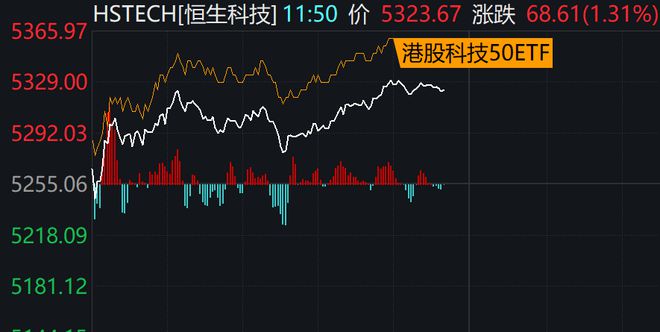
Group 1 - Hong Kong stocks showed strong performance today, particularly in the pharmaceutical sector, with 3SBio rising by 36%, leading the sector's gains [1] - Other pharmaceutical stocks such as Innovent Biologics and JD Health increased by over 4%, while WuXi AppTec and BeiGene rose by over 2% [1] - Technology stocks also performed well, with Xiaomi up nearly 4%, and other companies like Alibaba, BYD, and JD following suit [1] Group 2 - The Hong Kong Technology Index outperformed the Hang Seng Technology Index due to a more comprehensive exposure to innovative drugs and new energy vehicles [2][3] - The Hong Kong Technology Index has a 10% higher allocation in pharmaceutical and 4% in automotive sectors compared to the Hang Seng Technology Index, contributing to its superior performance [2] - Since the beginning of 2025, the Hong Kong Technology Index has shown significant rebounds, particularly in innovative drugs and new energy vehicles, leading to a better year-to-date performance compared to the Hang Seng Technology Index [3] Group 3 - The Chinese government has prioritized "innovative drugs" as a key development direction, benefiting sectors covered by the Hong Kong Technology Index, including pharmaceuticals, new energy vehicles, and semiconductors [5] - The commercialization of domestic AI models is accelerating growth in the internet and smart automotive sectors, with Xiaomi's SU7 Ultra model expected to exceed delivery expectations in 2025 [5] - The Hong Kong Technology 50 ETF has seen a 283% increase in shares this year, reflecting strong capital inflow and interest in leading Hong Kong stocks [5][6] Group 4 - The current liquidity environment is favorable, with the Federal Reserve entering a rate-cutting phase, making Hong Kong stocks particularly sensitive to these changes [6] - The valuation of the Hong Kong Technology Index is low, at a historical percentile of 24%, attracting continuous net inflows from southbound funds [6]
中泰国际:受到中美贸易摩擦风险舒缓、叠加科网股业绩超预期的提振
ZHONGTAI INTERNATIONAL SECURITIES· 2025-05-20 02:50
Market Overview - The Hang Seng Index rose 2.1% last week, closing at 23,345 points, marking the fifth consecutive week of gains[1] - The Hang Seng Tech Index increased by 2.0%, closing at 5,281 points[1] - Average daily trading volume increased by 16.1% week-on-week to over HKD 232.5 billion[1] - Net outflow from the Hong Kong Stock Connect was approximately HKD 8.7 billion for the week, with a significant reduction in cumulative net inflow to HKD 16.8 billion over the past 20 days[1] Sector Performance - The financial sector surged by 3.8%, driven mainly by domestic banks and insurers[1] - Industrial, energy, and telecommunications sectors also saw gains of 2% or more over the week[1] Investment Sentiment - Since mid-April, the flow of funds through the Hong Kong Stock Connect has been volatile, with a record net outflow of HKD 18.5 billion on May 12, indicating a cautious stance from southbound investors[2] - The current AH premium index has dropped to the 16.0 percentile since 2020, suggesting insufficient value for aggressive buying[2] - The Hang Seng Index faces significant resistance in the 23,500-24,000 point range, with potential for continued volatility if southbound fund support diminishes[2] Macro Dynamics - Moody's downgraded the U.S. long-term sovereign credit rating from Aaa to Aa1, citing structural debt imbalance and increasing fiscal deficit pressures[3] - The U.S. federal debt-to-GDP ratio is projected to rise from 98% in 2024 to 134% by 2035, raising concerns about long-term repayment capacity[3] - Despite the downgrade, Moody's maintains that systemic risk has not reached a critical point, and market reactions will depend more on policy responses and economic data than on the rating change itself[3] Industry Developments - The Hang Seng Healthcare Index rose by 0.6%, with notable gains from companies like CSPC Pharmaceutical (3.1% to 3.9% increase)[4] - CSPC signed an exclusive licensing agreement for a cancer treatment in the U.S., receiving an upfront payment of USD 15 million and potential milestone payments of up to USD 25 million[4] - The IPO of Heng Rui Medicine received a "subscribe" rating, with projected revenue growth of 7.3% and net profit growth of 10.1% for 2023-24[4][7] New Drug Approvals - Rongchang Biotech's new indication for its drug has been approved, expected to boost sales significantly[11] - The company reported a 59.1% year-on-year increase in revenue to RMB 530 million for Q1 2025, with a reduction in net loss by 27.2%[13] - Target price for Rongchang Biotech has been raised to HKD 45.00, reflecting positive adjustments in revenue and profit forecasts[14]
5月20日早餐 | 大行下调存款利率
Xuan Gu Bao· 2025-05-20 00:02
大家早上壕! 先看海外要闻: 穆迪降级冲击昙花一现,美股低开高走,标普惊险六连涨,标普和纳指抹平盘初超1%的跌幅转涨,收盘道指涨0.32%,标普500指数涨0.09%,纳 斯达克涨0.02%。 披露CEO等内部人买入后,UnitedHealth涨超8%领涨道指;英伟达盘初跌超2%后收涨,特斯拉盘初跌近5%后收窄过半跌幅。中概指数回落、但 盘中抹平多数跌幅;阿里盘初跌超2%后收跌0.4%。 美债价格V形反转,十年期美债收益率盘中创五周新高,后跳水超10个基点。 美元指数盘中跌1%、逼近100关口,创逾一周新低。 黄金走出五周低谷,期金一度反弹超2%。原油险些回落,盘中跌超1%后转涨。 黄仁勋Computex演讲:三季度将推出下一代GB300系统,个人AI计算机DGX Spark已全面投产。 微软Build大会宣告进入AI智能体时代,Microsoft 365 Copilot、GitHub编码升级,马斯克xAI模型纳入微软云。 国内重大事件汇总: 1、工信部、发改委等9部门联合印发《关于加快推进科技服务业高质量发展的实施意见》,要推动科技服务业全面发展,围绕研究开发、技术转 移转化、企业孵化等重点领域进行全面部署 ...
为什么这几年业绩好的主观多头都主做港股?
雪球· 2025-05-18 04:33
Core Viewpoint - The article discusses the shift of subjective long-biased private equity funds towards Hong Kong stocks due to the significant valuation gap and improved market conditions compared to A-shares, highlighting the potential investment opportunities in the Hong Kong market [3][9][10]. Group 1: Market Performance and Trends - From 2021 to 2023, the Hang Seng Index fell by 37.39%, while the Shanghai Composite Index only dropped by 12.78%, indicating a more severe decline in Hong Kong stocks [9]. - The valuation of the Hang Seng Index is at the 36.85% percentile over the past decade, making it one of the cheapest major markets globally [9]. - The price-to-earnings (PE) ratio of CNOOC in A-shares is 8.81, while in Hong Kong it is only 5.48, showcasing the valuation disparity [9]. Group 2: Investment Opportunities - The influx of southbound capital has been significant, with over 600 billion yuan bought by southbound funds by the end of April 2023, indicating a strong demand for Hong Kong stocks [12][24]. - New economy companies in Hong Kong, such as Pop Mart and Xiaomi, are showing improved fundamentals and performance, which enhances the attractiveness of the market [13]. - The potential return of Chinese concept stocks to Hong Kong could further invigorate the market [13]. Group 3: Private Equity Strategies - ZY, a value-oriented fund, achieved a 42% return this year, outperforming the Hang Seng Index by 32 percentage points [15]. - DS employs a balanced strategy with a diversified portfolio across various sectors, aiming for long-term compounding returns [17]. - HA HX focuses on concentrated positions in underappreciated sectors, achieving a 56% return over 24 months, significantly outperforming the Hang Seng Index [21]. Group 4: Current Market Conditions - As of April 30, the PE ratio of the Hang Seng Index was 9.94, placing it at the 39.67% percentile over the last decade, indicating continued valuation attractiveness [22]. - The number of quality companies in Hong Kong is increasing, supported by improving fundamentals and the potential return of Chinese concept stocks [23]. - The process of market revaluation is ongoing, with southbound capital continuing to flow into Hong Kong stocks [24].