
九毛九

Search documents
老牌火锅品牌一哥澳门豆捞高德置地店结业!多方回应
Nan Fang Du Shi Bao· 2025-05-09 10:13
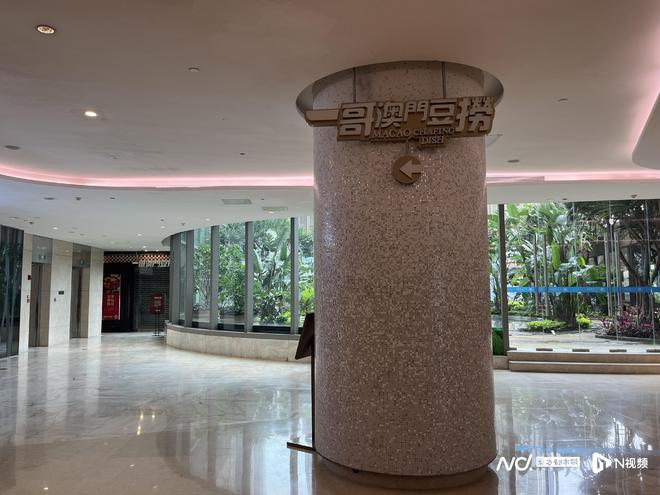
Core Insights - The closure of "Yige Doulao" at the Gaode Zhi Di Winter Plaza has raised concerns about the brand's viability, with only one store remaining after 18 years of operation [1][2][5] - The brand has faced significant business decline due to changing market conditions and consumer preferences in Guangdong [1][5] Company Overview - "Yige Doulao" was established in 2007 and has been a well-known hot pot brand in Guangzhou [5] - The Gaode Zhi Di store, which operated for 11 years, officially closed on April 30, 2023, with monthly rent reported at 200,000 yuan [2][5] - Since 2021, "Yige Doulao" has closed five stores, leaving only one operational location in Guangzhou [5] Market Conditions - The hot pot industry is experiencing challenges, particularly for mid-to-high-end brands, as consumer spending becomes more cautious [6][8] - Competitors like Jiumaojiu and Haidilao have reported revenue growth, while other brands like Longhui International and Xiaobai Hot Pot are facing losses [6][8] - The seasonal nature of hot pot consumption in Guangdong, where it is less popular in summer compared to regions like Chongqing, has also impacted sales [5][6] Future Outlook - The management of Gaode Zhi Di Winter Plaza plans to upgrade the plaza and attract new dining brands, focusing on a high-end positioning [9] - The success of restaurants in the plaza will depend on both foot traffic and the quality of offerings, with a need for effective marketing strategies to draw consumers [9][10]

大行中国消费洞察:劳动节假期消费超预期, 零售销售增长且加速
Zhi Tong Cai Jing· 2025-05-08 01:16
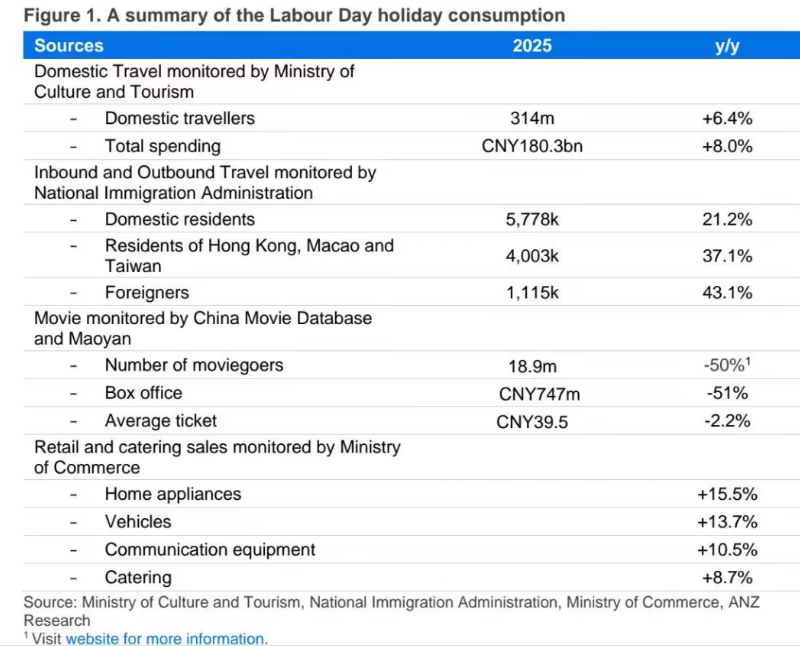
Core Insights - The Labor Day holiday consumption showed robust growth despite high base effects, indicating a recovery in consumer spending, particularly in the retail and tourism sectors [1][10] - Key retail and catering enterprises reported a year-on-year sales increase of 6.3%, up from 4.1% during the Spring Festival holiday, with tourism revenue also exceeding pre-pandemic levels [1][4] Consumption Trends by Category - Home appliances, automobiles, and communication equipment saw significant sales growth of 15.5%, 13.7%, and 10.5% respectively, driven by the "old for new" policy [2][11] - The catering sector experienced an 8.7% increase, benefiting from high consumer willingness to spend on experiential dining [2] - Jewelry sales improved due to lower base effects and fluctuating gold prices, with some brands reporting a shift from negative to positive growth [8] Regional Consumption Insights - Consumption growth was balanced across different city tiers, with key tourist cities performing strongly and lower-tier cities benefiting from increased foot traffic [3][9] - Major cities like Beijing and Shanghai outperformed the national average in consumption growth, supported by domestic tourism and favorable visa policies for inbound travelers [3][9] Tourism and Travel Data - Domestic tourism revenue grew by 8%, with total visitor numbers increasing by 6.4%, indicating a recovery to 123% of pre-pandemic levels [4][11] - Outbound travel saw a robust year-on-year growth of 21%, with Hong Kong and Macau leading the increase in inbound tourism [4] Industry Performance Highlights - The sports and leisure retail sector reported a 15% increase in sales, attributed to rising outdoor activities and favorable weather conditions [5] - The high-end liquor market faced challenges, with increased discounting in the mid-to-high price segments due to cautious consumer spending [6] - The restaurant sector showed varied performance, with some brands like Nayuki's Tea achieving significant growth in both dine-in and delivery sales [7] Box Office and Entertainment - The box office revenue during the holiday period fell sharply by 51% to CNY 747 million, primarily due to a lack of blockbuster films [8][11]
社会服务5月投资策略暨五一假期总结:旅游量增价稳半径延长,板块关注政策发力与AI+进展
Guoxin Securities· 2025-05-07 08:45
Investment Rating - The investment rating for the industry is "Outperform the Market" (maintained) [2] Core Viewpoints - The tourism volume is increasing while prices remain stable, with an extended travel radius. The focus is on policy support and advancements in AI applications [3] Summary by Sections Market Review - In April, the social service sector outperformed the benchmark by 1.42 percentage points, with strong performance from tourism and education stocks. The A-share scenic spots and leading education stocks led the gains, while Hong Kong stocks in the supply chain and tea beverage sectors also performed well [3][4][6] May Day Holiday Summary - Domestic spending during the holiday increased by 8.0%, with travel willingness remaining high and an extended travel radius. A total of 314 million domestic trips were made, a year-on-year increase of 6.4%. The average spending per person increased by 1.5%, recovering to 90% of the 2019 level [3][9] Sub-Industries - **Inbound and Outbound Travel**: Inbound travel increased by 28.7% during the holiday, with significant growth in travelers from Hong Kong, Macau, Taiwan, and foreign visitors. The number of inbound foreign visitors under visa-free policies grew by 72.7% [3][21] - **Hotel Industry**: The hotel industry saw a REVPAR of 192 yuan, up 11.5% year-on-year, with occupancy rates and average daily rates also increasing. High-star hotels in county areas outperformed the overall industry [24][22] - **Scenic Spots**: Many scenic spots experienced significant visitor growth, aided by favorable weather and local government promotional activities. For example, Xiangyuan Cultural Tourism received 51.79% more visitors compared to last year [25][28] - **Dining**: Key monitored dining enterprises saw sales increase by 8.7% year-on-year, indicating a recovery in consumer spending [29][30] - **Duty-Free Sales**: Duty-free shopping during the holiday saw a decline of 7% in sales, but the average spending per person remained stable [41][35] Investment Recommendations - The report suggests focusing on leading companies benefiting from policy support and marginal improvements, including Tongcheng Travel, Xueda Education, Jiuhua Tourism, and others. Mid-term recommendations include China Duty Free, Meituan, Huazhu Group, and others [3][42]



5月投资策略暨五一假期总结:旅游量增价稳半径延长,板块关注政策发力与AI+进展
Guoxin Securities· 2025-05-07 05:30
Core Insights - The report highlights that tourism volume is increasing while prices remain stable, with a focus on policy support and advancements in AI applications within the sector [3][9] - The domestic travel market saw 314 million trips during the May Day holiday, a year-on-year increase of 6.4%, with total spending reaching 180.27 billion yuan, up 8.0% [9][21] - The report suggests that the tourism trend will continue to improve due to consumer experience demands and favorable industry policies, recommending investments in leading companies benefiting from these trends [3][42] Market Review - In April, the consumer services sector outperformed the benchmark by 1.42 percentage points, with strong performances from tourism and education stocks [4][6] - The May Day holiday saw significant gains in the education sector and travel-related stocks, with notable performances from companies involved in AI-enhanced education [4][6] Sub-industry Analysis - **Inbound and Outbound Travel**: Inbound travel saw a 28.7% increase in visitor numbers during the May Day holiday, with significant growth in travelers from Hong Kong, Macau, and Taiwan [16][21] - **Hotel Industry**: The hotel sector experienced a 11.5% increase in revenue per available room (RevPAR) during the holiday, with occupancy rates and average daily rates also rising [24][22] - **Scenic Areas**: Major scenic spots reported strong visitor numbers, with some locations seeing over 50% growth compared to the previous year, aided by favorable weather and local government initiatives [25][28] - **Dining Sector**: Key monitored dining enterprises reported an 8.7% increase in sales during the holiday, reflecting a recovery in consumer spending [29][30] - **Duty-Free Sales**: Duty-free shopping during the holiday saw a decline of 7% in sales, although the average transaction value remained stable [35][41] Investment Recommendations - The report recommends focusing on leading companies that are expected to benefit from policy support and improving consumer sentiment, including Tongcheng Travel, Xueda Education, Jiuhua Tourism, and others [3][42]
五一消费延续回暖态势!恒生消费ETF(159699)昨日重拾升势,规模创近1月新高
Sou Hu Cai Jing· 2025-05-07 01:37
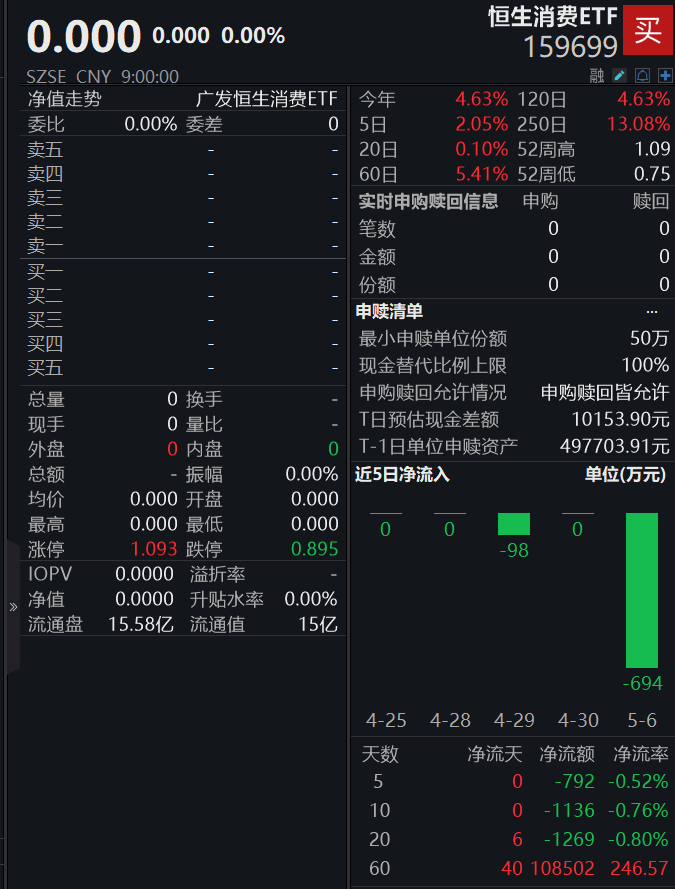
Group 1 - The core viewpoint of the article highlights a significant increase in consumer spending during the May Day holiday, with total expenditure reaching 180.27 billion yuan, a year-on-year growth of 8.0% [1] - The number of cross-regional travelers exceeded 1.465 billion, marking a 7.9% increase compared to the previous year, indicating a robust recovery in domestic tourism [1] - Key retail and catering enterprises reported a sales increase of 6.3% year-on-year during the holiday period, reflecting strong consumer demand [1] Group 2 - The Hang Seng Consumption ETF (159699) saw a rise of 1.33% as of May 6, 2025, with a cumulative increase of 3.65% over the past two weeks, indicating positive market sentiment towards consumer stocks [1] - The ETF's latest scale reached 1.544 billion yuan, a new high in the past month, with significant leverage funds continuing to invest [1] - The financing buy-in amount for the ETF was 5.3328 million yuan, with a financing balance of 4.4631 million yuan, showcasing strong investor interest [1] Group 3 - Huatai Securities reports that the hotel industry is experiencing a recovery with both volume and price increasing, driven by the demand from the lower-tier markets and improved quality-price ratios [3] - The report anticipates a narrowing decline in duty-free sales due to promotional activities and tax rebate policies in Hainan, suggesting a positive outlook for the consumption sector [3] - The firm maintains a favorable view on the consumer sector's fundamentals improving throughout 2025, driven by various consumption stimulus policies [3][4] Group 4 - Shenwan Hongyuan Securities emphasizes the importance of consumption promotion policies in stabilizing growth amid external pressures, categorizing these policies into direct and indirect support measures [5] - Direct measures include subsidies and consumption vouchers, while indirect measures involve tax reductions and fee exemptions, particularly targeting large consumer goods [5] Group 5 - The Hang Seng Consumption ETF (159699) is positioned to benefit from new consumption stimulus policies and supports T+0 trading, focusing on four major sectors: food and beverages, textiles and apparel, home appliances, and tourism [6][8] - The ETF includes leading consumer companies with strong domestic recognition, such as Li Ning, Anta, and Haidilao, providing a diversified investment opportunity [7] - The ETF is noted for its significant scale and flexibility, making it a prominent choice in the Hong Kong market for investors looking to capitalize on consumer trends [8][9]
餐饮IPO热潮下,半数上市餐企利润下滑,增长难题待解!
Sou Hu Cai Jing· 2025-05-06 09:35
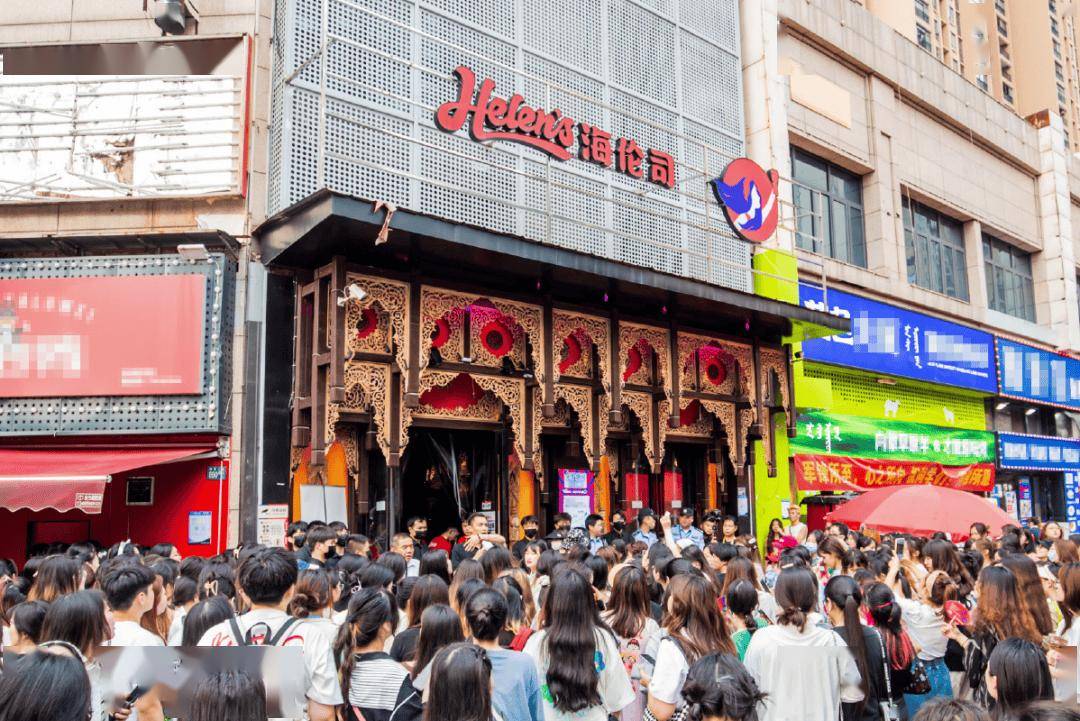
Core Insights - The recent developments in the restaurant industry indicate a potential increase in IPO activity, with companies like Hu Shang A Yi and Green Tea Group moving towards public listings, suggesting a competitive landscape ahead for 2025 [1] - Despite the IPO enthusiasm, the financial performance of many listed restaurant companies has been disappointing, with over half reporting a decline in net profits for 2024 [1][2] - Notably, companies like Nayuki and Xiaobawang have faced significant losses, with Nayuki's net profit plummeting from a profit of 0.21 billion in 2023 to a loss of 9.19 billion in 2024, marking its largest loss since going public [1][2] Industry Performance - The restaurant IPO market has seen a surge, with brands like Lao Xiang Ji and Yu Jian Xiao Mian also preparing for listings, indicating a robust interest in capital markets [1] - However, the overall financial health of the industry is concerning, as a report on 20 listed restaurant companies revealed that more than half experienced a decline in net profits, with six companies reporting losses exceeding 100% [1] - Specific companies like Wei Qian (China) and Helen's have also reported significant losses, with Wei Qian's net loss reaching 0.2 billion, a 111.17% decline year-on-year [2] Company Strategies - In response to the challenging market conditions, many restaurant companies are adjusting their expansion strategies, slowing down new store openings, and closing underperforming locations [6] - For instance, Jiao Bu Jiao has reduced its new store openings to 150 in 2024, closing 69 stores, resulting in a net increase of only 81 stores, significantly lower than the previous year's 170 [6] - Similarly, Jiao Bu Jiao closed 138 stores while opening only 65, leading to a reduction in total stores from 833 to 760 [6] Market Challenges - The restaurant industry is facing challenges such as shrinking consumer demand and oversupply, leading to increased competition and price wars [4] - Companies like Jiao Bu Jiao have attempted to adjust their pricing strategies, but these efforts have not resulted in sustained growth, as evidenced by a 23.3% decline in same-store sales despite a reduction in menu prices [4] - The tea beverage segment is also experiencing difficulties, with brands like Gu Ming and Cha Bai Dao seeing significant reductions in new store openings and increased closures, indicating a cautious approach from franchisees [7]

龙头业绩韧性凸显,餐饮板块何时等来估值拐点?
智通财经网· 2025-05-06 03:02
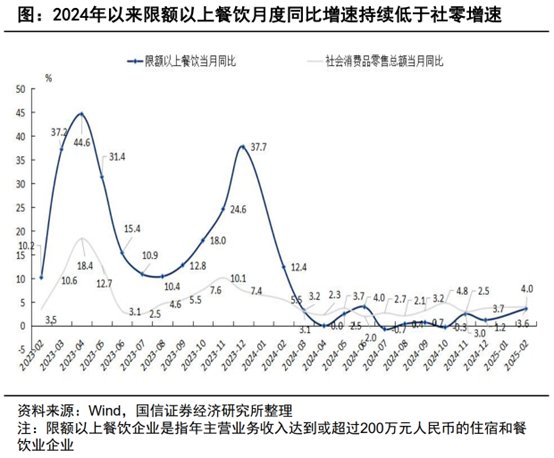
Core Viewpoint - The Chinese restaurant industry is experiencing a notable recovery driven by a shift in policy focus towards expanding domestic demand, with significant growth in consumer confidence and spending observed in the first quarter of 2024 [1][2]. Group 1: Market Performance - The Hong Kong restaurant index has rebounded over 20% since April 22, reaching around 787 points, with several restaurant companies like Xiaobai Xiaobai and Jiumaojiu showing positive performance [1]. - In Q1 2024, the offline consumption heat index increased by 14.2% year-on-year, with the dining sector growing by 14.5% [1]. - The overall revenue of the domestic restaurant industry in 2024 is projected to reach 55,718 billion yuan, marking a 5.3% increase compared to the previous year [2]. Group 2: Revenue and Profit Growth - The restaurant sector has shown double-digit growth in both revenue and profit, with 17 listed restaurant companies reporting an 11% increase in revenue and a 10% increase in profit for 2024 [5][6]. - The coffee and tea segment leads in revenue growth at 22.5%, while traditional Chinese dining (excluding hot pot) and fast food show growth rates of 6.3% and 5.6%, respectively [7]. Group 3: Store Expansion and Market Dynamics - The total number of restaurant stores increased by 20% in 2024, reaching 133,549, with coffee and tea stores growing by 24% [9][11]. - The closure rate of restaurants has risen to 61.2%, indicating a significant industry reshuffle [5]. - The trend of down-market expansion is evident, with 52% of restaurant stores located in third-tier cities and below [13]. Group 4: Strategic Adjustments and Innovations - Companies like Haidilao are adopting franchise models to penetrate lower-tier markets, with over 70% of franchise applications coming from these areas [14]. - New business models are being explored, such as Kudi Coffee's convenience store concept and Guoquan's community kitchen strategy [15]. - The restaurant sector is expected to stabilize in Q2 2025, with a potential recovery in valuation and fundamentals as seasonal demand increases [16].

安徽前首富,又要收获一个IPO
投中网· 2025-05-03 03:48
Core Viewpoint - Three Squirrels is preparing for a listing in Hong Kong after its successful IPO in A-shares in July 2019, driven by its strong brand presence and significant revenue from snack sales exceeding 10 billion yuan annually [1][4]. Group 1: Company Overview - Founded by Zhang Liaoyuan, Three Squirrels capitalized on the e-commerce boom starting in 2012, focusing on leisure snacks and leveraging platforms like Taobao and JD.com for rapid growth [4]. - The company has expanded its product offerings beyond nuts to include baked goods, meat products, and various snack combinations, with over 1,000 SKUs under brands like "Three Squirrels" and "Little Deer Blue" [8]. Group 2: Financial Performance - After experiencing a revenue decline for three consecutive years starting in 2020, the company has rebounded, achieving revenue and net profit growth for five consecutive quarters as of Q3 2023 [5]. - Revenue increased from 7.293 billion yuan and net profit of 129 million yuan in 2022 to 10.622 billion yuan and 407 million yuan in 2024, marking a significant recovery [9]. Group 3: Market Position and Strategy - Three Squirrels aims to enhance its market position by adopting a "high-end cost performance" strategy and restructuring its entire value chain to optimize costs [5]. - The company is also pursuing acquisitions to strengthen its supply chain and expand its offline retail presence, with plans to invest up to 360 million yuan in acquiring control of several food companies [8][9]. Group 4: Industry Context - The snack food market in China is poised for growth, with Zhang predicting that a Chinese company could emerge as a global leader in the snack industry [10]. - A wave of consumer companies, including Three Squirrels, is heading to the Hong Kong stock market, indicating a favorable environment for listings and capital raising in the sector [12][14].


餐饮行业继续探底:价格战与成本绞杀下的生存困局
Sou Hu Cai Jing· 2025-05-02 12:38
Core Viewpoint - The restaurant industry is facing unprecedented challenges, with mixed results from recently released annual reports of listed companies, indicating a complex and divided market landscape [2][3]. Group 1: Company Performance - Yum China achieved a revenue of $11.3 billion (approximately 80 billion RMB) in 2024, a year-on-year increase of 3%, with a net profit of $911 million (approximately 6.5 billion RMB), up 10.2% [4][5]. - Haidilao reported a revenue of 42.755 billion RMB in 2024, a 3.14% increase, and a net profit of 4.708 billion RMB, up 4.65% [4][5]. - Baba Food's revenue for 2024 was 1.671 billion RMB, with a year-on-year growth of 2.53%, and a net profit of 277 million RMB, up 29.42% [4][5]. - In contrast, Jiumaojiu's revenue was 6.074 billion RMB, a 1.5% increase, but its net profit plummeted by 87.69% to 55.807 million RMB [6][9]. - Ajisen (China) reported a revenue of 1.717 billion RMB, a decrease of 5.4%, resulting in a loss of 20.224 million RMB [7][9]. - Guangzhou Restaurant's revenue was 5.124 billion RMB, a 4.55% increase, but its net profit fell by 10.29% to 494 million RMB [8][9]. - Tai Hing Group's revenue grew by 2.5% to approximately 3.292 billion HKD (about 2.9 billion RMB), but its net profit dropped by 33.1% to 62.749 million HKD (about 55 million RMB) [8][9]. Group 2: Industry Challenges - The macroeconomic environment is challenging, with slow economic growth affecting consumer spending in the restaurant sector, leading to more cautious and price-sensitive dining choices [11]. - The oversupply of restaurants, with over 9 million establishments in China, has resulted in a market decline of 30%-35% in the first half of 2024, forcing many new openings to engage in price wars [13]. - Consumer demand is evolving, with a greater emphasis on health, quality, and dining experience, pushing traditional restaurants to adapt or risk losing market share [15]. - Rising costs in raw materials, labor, and rent are squeezing profit margins, leading to closures of smaller establishments unable to cope with these pressures [16]. Group 3: Future Trends - The industry is expected to see accelerated consolidation, with stronger brands gaining market share while weaker players are eliminated, leading to a higher market concentration [18]. - Digital transformation is becoming essential for restaurants to enhance customer engagement and operational efficiency, with those embracing technology likely to gain a competitive edge [21]. - Diversification and innovation in menu offerings and service models are crucial for attracting consumers and standing out in a crowded market [22]. - Affordable and high-value dining options are anticipated to dominate the market as consumers become more budget-conscious [23].

一个80后东北人,要IPO了
3 6 Ke· 2025-05-02 01:59
Core Viewpoint - Guangzhou Yujian Xiaomian Catering Co., Ltd. is preparing for an IPO on the Hong Kong Stock Exchange, aiming to become the first publicly listed Chinese noodle restaurant, reflecting the transformation of the Chinese fast-food industry and the modernization of traditional snacks [1][2][5]. Company Overview - Founded in 2014 by Song Qi, Yujian Xiaomian started as a small street shop in Guangzhou, combining the flavors of Chongqing noodles with fast-food efficiency [3][5]. - The company has successfully completed five rounds of financing, with a valuation reaching 3 billion yuan, supported by investments from various groups [4][5]. Market Position and Strategy - Yujian Xiaomian has differentiated itself in a competitive market by expanding its product line to include various Sichuan and Chongqing snacks, and by implementing a 24-hour service model in some locations [4][6]. - The company has adopted a "flavor modularization" strategy to cater to regional tastes while maintaining standardization, enhancing its market adaptability [7]. Industry Trends - The Chinese fast-food industry is experiencing a shift from rapid expansion to a focus on efficiency and value, with a chain restaurant penetration rate of 19% in 2023, compared to 54% in the U.S. [5][6]. - The market for noodle restaurants is projected to grow, with over 660,000 noodle shops expected by March 2025, and a market size surpassing 160 billion yuan [9][10]. Digital Transformation and Marketing - Yujian Xiaomian is leveraging digital systems for operational efficiency, including a membership program to enhance customer retention and a smart supply chain for inventory management [7][8]. - The company is also exploring new sales channels, such as group meal services for offices and retail products for home cooking [7][8]. Future Outlook - The company’s IPO is seen as a significant opportunity for brand enhancement and capital support, which is crucial for its long-term growth and operational efficiency [5][8]. - As the industry evolves towards quality competition, Yujian Xiaomian's focus on supply chain optimization and diverse service offerings positions it well for future challenges and opportunities [8][12].