
中央汇金

Search documents
喜娜AI速递:昨夜今晨财经热点要闻|2025年9月2日
Sou Hu Cai Jing· 2025-09-01 22:16
Group 1 - Tesla China has reduced the price of the Model 3 Long Range Rear-Wheel Drive version from 269,500 yuan to 259,500 yuan, which may stimulate sales and impact the competitive landscape of the electric vehicle market [2] - Chengdu Huamei has announced the release of a 4-channel 12-bit 40G high-speed high-precision RF direct sampling ADC chip, filling a gap in both domestic and international markets, and achieving international leading standards [2] - Silver prices have surpassed $40 per ounce for the first time since 2011, with a year-to-date increase of over 40%, driven by strong demand in the photovoltaic sector and supply constraints [2] Group 2 - Central Huijin has significantly increased its holdings in ETFs, with a total market value of 1.28 trillion yuan, representing an increase of nearly 23% from the end of last year, signaling optimism about the capital market outlook [5] - The recent inflow of foreign capital into the A-share market has strengthened the renminbi, with the onshore dollar-to-renminbi exchange rate dropping below 7.15, indicating a bullish sentiment [5] - The implementation of a fiscal subsidy policy for personal consumption loans allows consumers to apply for loans with a 1% annual interest subsidy, with various banks launching service portals [3]
重磅!证监会监管最新表态定调A股!
摩尔投研精选· 2025-09-01 10:17
Core Viewpoint - The A-share market has shown signs of recovery with a strong performance in the ChiNext index, while the large financial sector has negatively impacted the Shanghai Composite Index, indicating a structural divergence within the market [1][2]. Group 1: Regulatory Insights - The China Securities Regulatory Commission (CSRC) has emphasized the importance of the "14th Five-Year Plan" and the implementation of various policies that have positively influenced market stability and investor confidence [3][5]. - Suggestions for the "15th Five-Year Plan" include enhancing the multi-tiered capital market system, improving the quality of listed companies, and promoting long-term capital inflows [4][6]. Group 2: Market Dynamics - Central Huijin has significantly increased its holdings in stock ETFs, reaching a market value of 1.28 trillion yuan, which has bolstered market confidence [7][8]. - The trend of passive investment through index funds and ETFs is becoming mainstream, leading to a concentration of capital in companies included in major indices, while those not included may face marginalization [11]. Group 3: Investment Opportunities - The upcoming market focus is expected to shift towards policy-driven and event-driven opportunities, with three main themes identified: 1. Consumer recovery, particularly in tourism and home appliances, driven by upcoming holidays and supportive policies [12]. 2. Technological innovation, especially in semiconductor domestic substitution and AI applications [13]. 3. Beneficiaries of policy support and industry recovery, such as infrastructure and hydrogen energy sectors [13]. - Companies demonstrating genuine technological breakthroughs and performance delivery should be prioritized for investment, rather than speculative plays [14].



宏观:人民币汇率何时破7?
2025-09-01 02:01
Summary of Key Points from Conference Call Industry Overview - The discussion primarily revolves around the **Chinese currency (RMB) exchange rate** and its implications for the **Chinese asset market**. The analysis includes macroeconomic factors, particularly the influence of the **US dollar index** and **Producer Price Index (PPI)** on the RMB's performance. Core Insights and Arguments 1. **RMB Exchange Rate Trends**: The RMB exchange rate exhibits both **trend and cyclical characteristics**. Long-term depreciation is influenced by the US dollar index, while short-term fluctuations align with it. The RMB's actual effective exchange rate is expected to strengthen if the PPI rebounds significantly, which is anticipated in Q2 2026 [1][3][7]. 2. **Impact of PPI on RMB**: A significant rebound in China's PPI is crucial for enhancing market interest in Chinese assets and providing a basis for the RMB's appreciation. The PPI is expected to turn positive in 2026, which will improve the competitive landscape for Chinese enterprises [7][9][10]. 3. **Potential for RMB Appreciation**: The RMB is projected to appreciate significantly against a basket of currencies in 2026, with a potential entry into the "6 era" (6.1 to 6.9 range) depending on the US dollar's performance and PPI trends [11][14][15]. 4. **Foreign Investment and RMB**: The RMB's exchange rate against the USD is a critical observation point, as foreign capital inflows are necessary for the revaluation of Chinese assets. The lack of foreign investment in recent years has hindered this process [2][19]. 5. **Market Style Shift**: The asset style in China is expected to shift from long-duration assets to short-duration assets, focusing more on profitability rather than valuation. Growth sectors such as technology, consumer demand, and cyclical assets are likely to perform well [16][18]. 6. **Federal Reserve's Role**: The anticipated interest rate cuts by the Federal Reserve could catalyze RMB appreciation. The divergence in monetary policies between China and the US may alleviate the interest rate spread, supporting the RMB's strength [12][13][17]. 7. **Current Market Dynamics**: The A-share market has been buoyed by liquidity rather than earnings, with significant support from the central bank. The market is expected to continue its upward trajectory, driven by sectors aligned with the five-year planning cycle, particularly in technology and consumption [19][20][21]. Other Important but Overlooked Content 1. **Liquidity and Market Support**: The central bank's support through increased debt to financial companies has been crucial in stabilizing the market. However, the actual inflow of funds from residents into the stock market remains limited [20][24]. 2. **Investor Behavior**: Historical trends indicate that even in favorable conditions (low interest rates and high returns), significant capital inflows into the stock market have not materialized, suggesting a cautious investor sentiment [27][34]. 3. **Economic Indicators**: The relationship between savings rates and deposit growth is critical. A potential increase in the savings rate could signal a shift in risk appetite among investors, which may influence market dynamics [33][34]. This summary encapsulates the key points discussed in the conference call, focusing on the implications of the RMB exchange rate and the broader economic context affecting Chinese assets.
四大证券报精华摘要:9月1日
Xin Hua Cai Jing· 2025-09-01 00:01
Group 1: Technology Sector Performance - The technology sector in the A-share market has shown significant performance, with Industrial Fulian's market value surpassing 1 trillion yuan and the communication and electronics industries experiencing a monthly increase of over 20% [1] - Many technology companies reported impressive earnings in their semi-annual reports, reflecting the effectiveness of increased R&D investments [1][5] - The overall trend indicates that Chinese technology enterprises are solidifying their technological foundations, contributing to the economic transformation [1] Group 2: Overall Market Recovery - As of August 31, 5424 A-share companies disclosed their semi-annual reports, achieving a total revenue of approximately 34.9 trillion yuan, a year-on-year increase of 0.03% [2] - The net profit attributable to shareholders reached about 2.99 trillion yuan, marking a year-on-year growth of 2.45% [2] - A significant portion of companies, 2908, reported a year-on-year increase in net profit, indicating a recovery across various industries, including agriculture, steel, and electronics [2][3] Group 3: Mid-Year Dividend Trends - A record high of 810 companies announced mid-year cash dividend plans, with a total proposed payout of 6428.08 billion yuan, reflecting a year-on-year increase of 9.56% in dividend amounts [6] - Among companies with dividends exceeding 1 billion yuan, state-owned enterprises account for about 30% [6] - The banking sector has also seen a notable increase in mid-year dividends, with 17 banks disclosing dividend plans, including seven banks that are implementing dividends for the first time since their listings [7] Group 4: R&D Investment - A-share companies reported over 810 billion yuan in R&D investments in the first half of 2025, with several industries, including software development and biopharmaceuticals, showing high R&D intensity [12] - Six companies, including BYD and China Mobile, each invested over 10 billion yuan in R&D [12] Group 5: Mergers and Acquisitions Trends - The A-share market is witnessing a shift in mergers and acquisitions from "buying scale" to "acquiring technology," with a notable increase in transactions involving core technologies [11] - In 2025, there have been 21 merger and acquisition projects focused on core technologies, totaling 2.569 billion yuan [11]
股市周评:8月完美收官,9月迎来政策和事件双轮驱动
Sou Hu Cai Jing· 2025-08-31 17:51
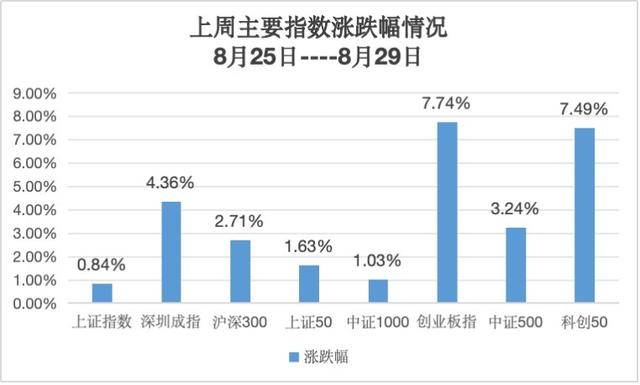
Market Performance - The A-share market experienced an upward trend last week, with major indices rising, particularly the ChiNext Index and the Sci-Tech Innovation 50, which increased by 7.74% and 7.49% respectively, indicating a strong focus on the technology sector [1] - The CSI 500 outperformed the CSI 1000 and the Shanghai and Shenzhen 300, suggesting that mid-cap stocks performed better than large-cap and small-cap stocks [1] Sector Analysis - In terms of sector performance, semiconductors, hardware equipment, non-ferrous metals, software services, and military industry saw significant gains, while coal, banking, and transportation sectors experienced declines [3] - The non-ferrous metals sector is expected to continue its strong performance, with 72 out of 116 listed companies reporting year-on-year profit growth in the first half of 2025, and 18 companies seeing profit growth exceeding 100% [4] - The average domestic copper price was 77,600 yuan/ton, up 4.2% year-on-year, while aluminum and gold prices also saw increases of 2.6% and 46.8% respectively [4] Future Outlook - The market is expected to maintain a volatile upward trend, with the Shanghai Composite Index recently closing at a 10-year high of around 3,888 points, and potential movement towards the 4,000-point mark if trading volume remains around 3 trillion yuan [5] - Economic indicators show a slight recovery in manufacturing and non-manufacturing sectors, with the manufacturing PMI at 49.4% and the non-manufacturing PMI at 50.3% for August [5] - Central Huijin's significant increase in ETF holdings, reaching a market value of 1.28 trillion yuan, has bolstered market confidence [8] Investment Opportunities - Focus on technology sectors such as robotics, semiconductors, and AI applications, which are becoming more cost-effective [8] - Consider cyclical industries like non-ferrous metals, which are showing signs of profit improvement [8]
上涨就是上涨的理由!
Sou Hu Cai Jing· 2025-08-30 16:11
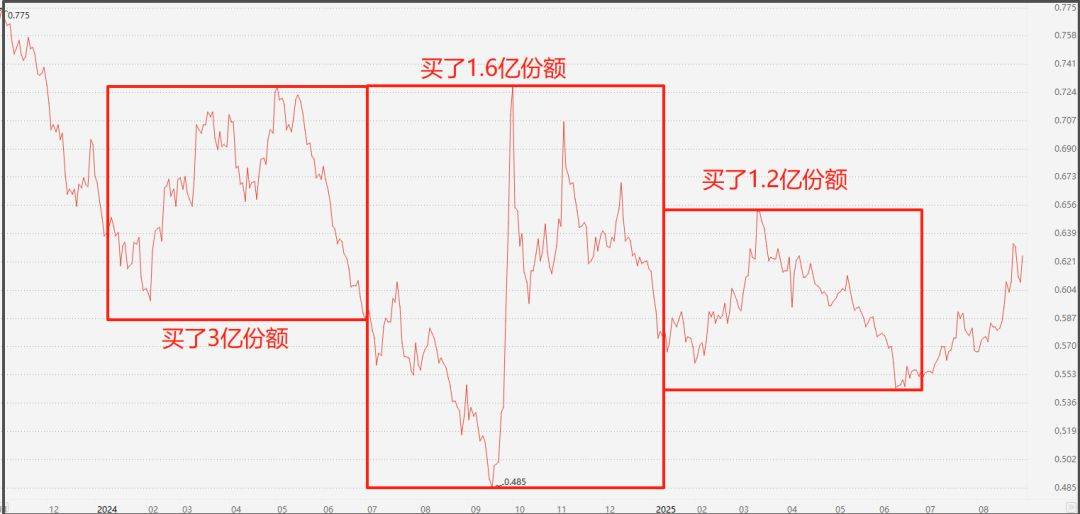
Group 1 - The core viewpoint is that the current bull market in A-shares is strong, with sectors like new energy and consumer goods driving the market despite a decline in chip stocks [1][14] - The state-owned investment team (referred to as "国家队") has made limited purchases in the liquor ETF, totaling only 3 billion, indicating that their involvement may not be as significant as perceived [3][6] - The state-owned investment team has historically been a major buyer during market downturns, with clear signals of buying activity in 2023 and 2024, including public announcements and bond issuances for financing [9][12] Group 2 - The ETF in question has shown a pattern of net buying during significant market drops, with the state-owned investment team increasing its holdings from 2.4 billion to 62 billion shares from 2023 to mid-2025 [6][9] - In 2024, the state-owned investment team issued seven bonds for financing, indicating a strategy to increase their market presence [8] - However, after reaching 3,500 points, there has been a noticeable lack of buying signals from the state-owned investment team, suggesting that the recent market rally is driven by other market forces rather than state intervention [12][14]
白酒强势反攻涨超2%,形势看似一片大好,背后真相真有这么简单?
Sou Hu Cai Jing· 2025-08-30 02:06
Core Viewpoint - The white liquor sector has shown a remarkable upward trend, with the index rising over 2%, driven by significant stock performances from companies like Jinhui Liquor and Shede Liquor, despite underlying inventory pressures that equate to 3 to 6 months of sales [1][2][4]. Market Performance - On August 29, the white liquor stocks surged, with the Tonghuashun white liquor index surpassing a 2% increase. Jinhui Liquor led with over a 6% rise, while Shede Liquor and Gujing Gongjiu followed with increases of over 4% [2]. - Major brands like Guizhou Moutai also demonstrated resilience, with a 1.36% increase, maintaining a strong position above the 1,000 yuan mark [2]. Fund Movements - Central Huijin, representing the "national team," significantly increased its holdings in the white liquor ETF by 121 million shares in the first half of the year, raising its total to 581 million shares, making it the third-largest holder of this ETF [4]. - The overall market performance in August saw the Tonghuashun white liquor index accumulate a rise of over 13% [4]. Valuation and Policy Support - The current price-to-earnings (PE) ratio for the white liquor sector stands at 19.83, marking a near ten-year low, with individual companies like Guizhou Moutai at a dynamic PE of 24 and Wuliangye at 17, both below historical averages, indicating significant valuation appeal [6]. - Recent government policies aimed at stimulating consumption and addressing unreasonable restrictions on the liquor industry have provided positive signals for the market [6]. Fundamental Improvements and Seasonal Recovery - There are signs of marginal improvement in the fundamentals, particularly with the recovery of banquet and gift consumption since late July, especially in the sub-300 yuan price range [7]. - The upcoming Mid-Autumn Festival and National Day are expected to catalyze demand, enhancing sales momentum [7]. Changing Fund Preferences and Shareholder Returns - Fund preferences are shifting as leading liquor companies increase dividend rates and implement stock buybacks, with dividend yields for major firms exceeding 3.5%, appealing to long-term investors seeking stable returns [10]. Ongoing Challenges - Despite positive market signals, underlying issues such as weak consumer spending persist, with a reported 2.1% year-on-year growth in per capita consumption expenditure in Q1 2025, impacting sales, particularly in high-end products [11]. - Inventory levels remain a significant challenge, with some mainstream brands holding stock equivalent to 3 to 6 months of normal sales, and production figures showing a 5.8% decline year-on-year [11]. - Price discrepancies continue, with major products like Wuliangye's mainstream offerings trading at 12.5% below factory prices, affecting profit margins for distributors [12]. Institutional Perspectives and Future Outlook - Market consensus among institutions shows a belief in a gradual recovery for the white liquor industry, with improved sales and pricing indicators suggesting potential for recovery [13]. - If sales data during the Mid-Autumn Festival exceeds expectations, the mid-range liquor segment may experience a rebound [15]. - Long-term prospects remain strong due to the robust business models of leading companies, although economic stabilization and inventory reduction will take time to materialize [15].



中央汇金实控的上市券商整合预期明显,券商航母呼之欲出!
Sou Hu Cai Jing· 2025-08-29 10:58
Core Viewpoint - Central Huijin, as a state-owned financial capital management institution, is likely to restructure and integrate its six controlled listed securities firms to create a more competitive brokerage powerhouse [1][13][18] Group 1: Company Overview - China International Capital Corporation (CICC) is known for its strong investment banking capabilities and has a registered capital of 4.827 billion yuan, with Central Huijin holding 40.11% of its circulating shares [3] - Shenwan Hongyuan, established with a registered capital of 25.04 billion yuan, is recognized for its research capabilities and has a controlling stake of 48.93% held by Central Huijin [5] - China Galaxy Securities, with a registered capital of 10.934 billion yuan, is known for its extensive retail network [7] - Cinda Securities, with a registered capital of 3.243 billion yuan, has a unique advantage in asset disposal and M&A due to its backing from China Cinda [8] - Dongxing Securities, established with a registered capital of 3.232 billion yuan, has strong resources in special opportunity investments [10] - Everbright Securities, with a registered capital of 4.611 billion yuan, benefits from strong business synergy due to its affiliation with Everbright Group [11] Group 2: Industry Dynamics - The current Chinese securities industry faces issues of fragmentation and homogeneous competition, with a need for increased industry concentration to compete internationally [13] - A potential merger between CICC and China Galaxy Securities could create a comprehensive investment banking group, enhancing competitiveness across various business sectors [13] - The integration of Dongxing Securities and Cinda Securities could optimize resource allocation in asset securitization and comprehensive financial services [14] - A merger between Everbright Securities and Shenwan Hongyuan could leverage their respective strengths in research and comprehensive services, promoting regional resource sharing and collaboration [16]





汇金增持白酒了,寒武纪提示风险,到底应该怎么看?
Sou Hu Cai Jing· 2025-08-29 02:25
Group 1 - Central Huijin has increased its holdings in multiple industry ETFs, including 121 million shares of the Penghua Liquor ETF, during the second quarter's volatile market, indicating a strategic move to support the liquor sector [1] - The market has shown a concentrated trend towards technology stocks, leading to irrational upward movements, which contrasts with the previously advocated slow bull market by regulators [2] - The current market sentiment is overly focused on short-term gains, which could hinder sustainable growth in the stock market, as emphasized by Wu Xiaoqiu [4] Group 2 - Cambrian Technology issued a risk warning, stating that its stock price may be detached from its current fundamentals, with projected revenues of 5 billion to 7 billion yuan by 2025 and no new product launches planned [5] - The market's reaction to risk warnings from companies has historically been mixed, with stocks continuing to rise despite such announcements, indicating a potential disconnect between market behavior and fundamental signals [5] - The current investment climate suggests avoiding overheated sectors until market sentiment stabilizes, prompting a reevaluation of investment strategies [5]
行业首个百亿产品化工ETF(159870)净申购3.5亿份!
Sou Hu Cai Jing· 2025-08-29 02:17
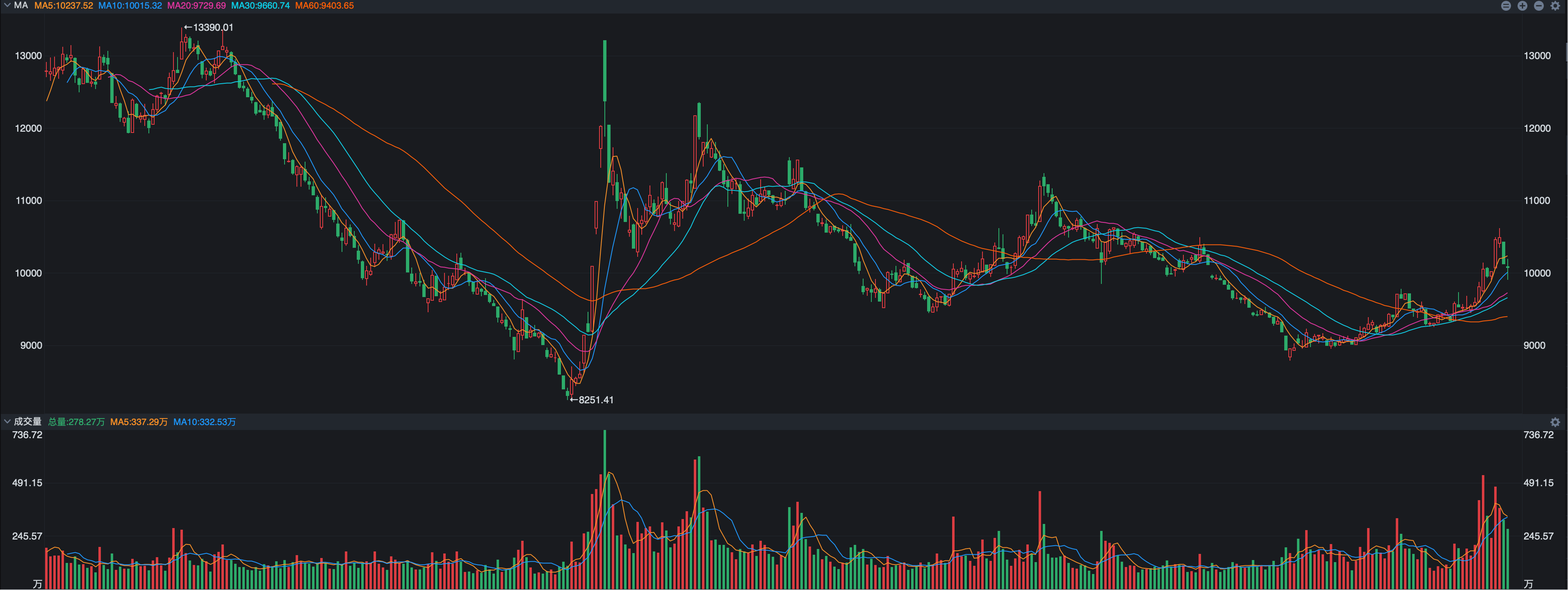
Group 1 - The core viewpoint emphasizes the importance of fluorinated chemicals in the context of liquid cooling technology, which is expected to become a key solution for data centers as chip and cabinet power consumption continues to rise [1] - NVIDIA has clearly stated its intention to adopt liquid cooling this year, while domestic manufacturers are currently in the initial development phase [1] - The chemical ETF (159870) has seen significant gains, with leading stocks being fluorinated chemical companies, indicating strong market interest in this sector [1] Group 2 - Central Huijin holds 248 million shares of the chemical ETF, making it the largest shareholder, accounting for 10.02% of the ETF's total shares [1] - The social security fund's second-quarter report shows it holds over 6 billion in the chemical sector, ranking first among industries, with a total market value of 33.2 billion across 129 stocks [1] - The top ten holdings include companies from banking, PCB, agriculture, and leading chemical firm Wanhua Chemical, reflecting strong confidence in the chemical sector from both Central Huijin and the social security fund [1] Group 3 - Tianfeng Strategy notes that the chemical sector is driven by both a shift from the bond market to equities and macroeconomic factors, suggesting an improvement in fundamentals next year [1] - The Producer Price Index (PPI) is likely to return to positive territory, and the current relative valuation of the chemical sector is low, making it an attractive investment opportunity [1] - The K-line chart of the chemical ETF shows relatively modest gains, indicating a good entry point for investors [1]
