
宝钢股份

Search documents
小鹏女性人形机器人里藏真人?何小鹏“扒皮”回应,公司股价亮了……
Mei Ri Jing Ji Xin Wen· 2025-11-06 04:30
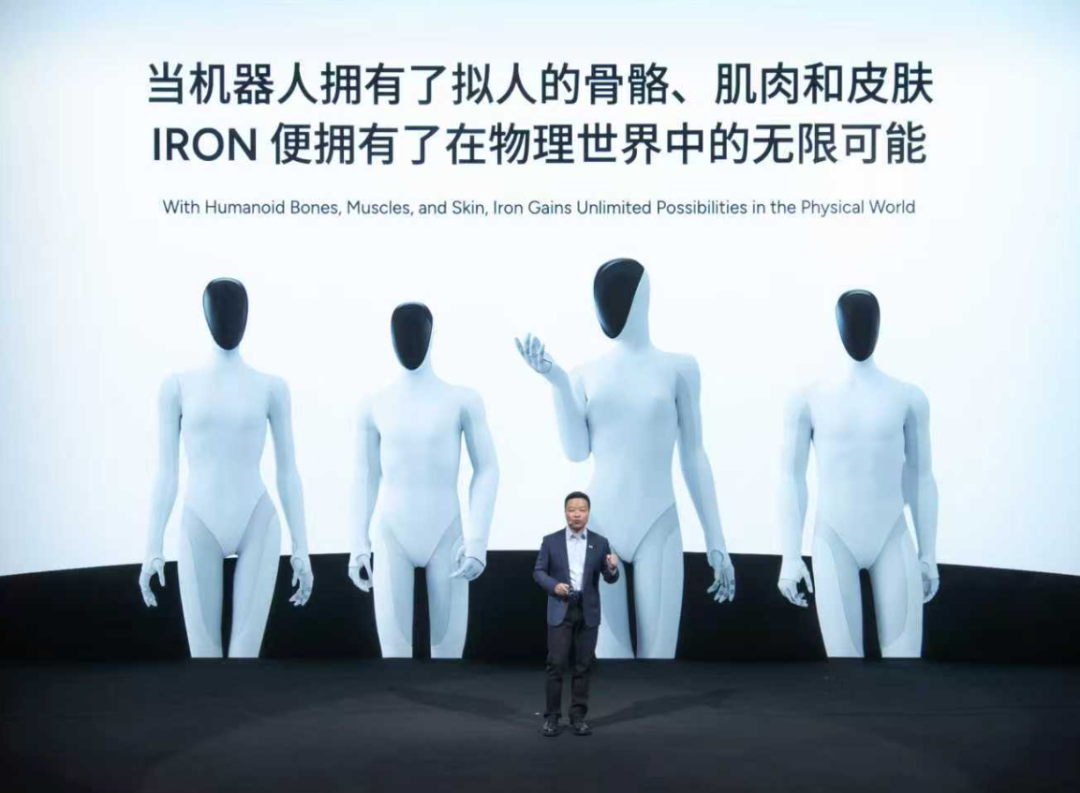
Group 1 - The core event of the news is the official opening of XPeng's AI Day on November 5, where the new humanoid robot IRON was unveiled, with a goal to achieve mass production by the end of 2026 [1] - XPeng plans to open the SDK of the IRON robot to global developers to build an application ecosystem for humanoid robots, with Baosteel as a partner exploring industrial applications [1] - The new generation of the IRON robot features a solid-state battery, three Turing chips, and a physical world model, showcasing fluid movements and human-like postures [3] Group 2 - The IRON robot is the final version before mass production, with a height not exceeding 170 cm, and it demonstrated a "catwalk" with enhanced foot flexibility for a smooth walking experience [3] - Following the AI Day, there were online speculations about whether the robot contained a real person, which prompted the CEO to release a video to clarify the situation, leading to a significant fluctuation in XPeng's stock price [6]


第二代VLA上车大众、高德助力Robotaxi、IRON入驻宝钢,小鹏创新有强援
Zhong Guo Jing Ji Wang· 2025-11-06 03:47
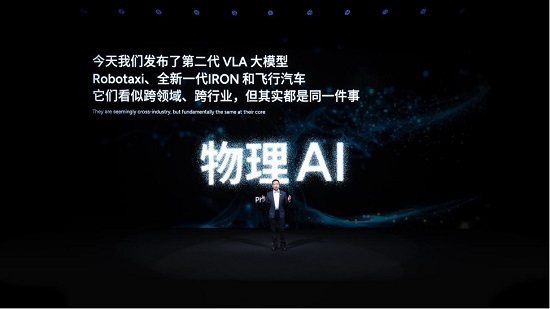
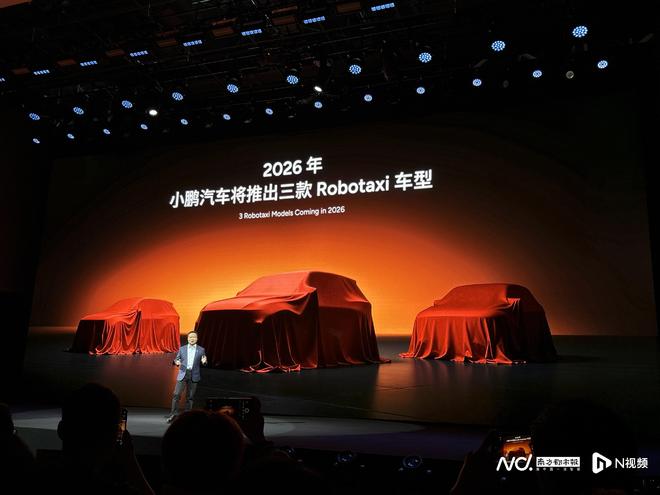
Core Insights - Xiaopeng Motors showcased significant advancements in AI technology at the 2025 Xiaopeng Technology Day, emphasizing its commitment to becoming a leader in the "physical AI" sector [3][5][6] Group 1: Event Overview - The 2025 Xiaopeng Technology Day, themed "Emergence," was held in Guangzhou, highlighting four major applications of "physical AI" [3] - Xiaopeng Motors announced its repositioning as a "global embodied intelligence company" focused on exploring transportation in the physical AI realm [5] Group 2: Key Innovations - The second-generation VLA was introduced, eliminating the "language translation" step and enabling direct generation of action commands from visual signals, applicable across various vehicles [6] - The upcoming "Xiaolu NGP" feature will enhance intelligent driving performance on complex roads, with a 13-fold increase in average takeover mileage [8] - Xiaopeng will launch three Robotaxi models in 2026, featuring 4 Turing AI chips with a total computing power of 3,000 TOPS, utilizing a pure vision approach without relying on LiDAR [12] Group 3: Strategic Partnerships - Volkswagen has become the first customer for Xiaopeng's second-generation VLA, and the Turing AI chip has been designated for Volkswagen [10] - Gaode has been announced as the first global ecological partner for Xiaopeng's Robotaxi service [14] Group 4: Robotics Development - The new generation of the IRON robot features a highly humanoid design with 82 degrees of freedom and is powered by three Turing AI chips, achieving a computing power of 2,250 TOPS [16] - The IRON robot will initially serve in commercial scenarios such as guiding and inspecting, with Baosteel as a key ecological partner for industrial applications [17] Group 5: Aviation Innovations - Xiaopeng is developing two flight systems for low-altitude travel, including the A868, which is designed for efficient multi-passenger travel and is currently in the flight verification phase [19] - The land carrier has surpassed 7,000 global orders and is on the verge of mass production, with an initial capacity of 5,000 units per year [20]

全网都吵疯了!小鹏的人形机器人,是不是真人
机器之心· 2025-11-06 03:28
Core Viewpoint - Xpeng Motors has transitioned from being solely an automotive company to an AI company, showcasing its humanoid robot IRON, which has sparked significant discussion globally [8][9]. Group 1: Robot Development and Features - Xpeng has been developing humanoid robots for 7 years, evolving from quadrupedal forms to a fully humanoid design [10]. - The new IRON features a human-like skeletal structure, bionic muscle system, and fully flexible skin, significantly reducing its mechanical appearance [11]. - Standing at approximately 1.78 meters and weighing 70 kg, IRON is taller than robots from competitors like NEO [12]. - IRON has 22 degrees of freedom in its hands and a total of 65 degrees of freedom, allowing it to perform complex tasks such as folding clothes and cleaning [15][16]. - The robot's advanced movement capabilities are supported by a sophisticated control system, although specific details have not been disclosed [18]. Group 2: AI and Interaction - The core of IRON is powered by Xpeng's self-developed AI brain, utilizing three Turing AI chips with a total computing power of 2,250 TOPS [26]. - It integrates three cognitive models (VLT, VLA, VLM) for visual perception, language understanding, and action decision-making, enabling seamless interaction [27]. - The head of IRON features a 3D curved display that serves as both a face and an interactive interface for more natural human-robot communication [28]. Group 3: Market Strategy and Future Plans - Xpeng plans to mass-produce IRON by 2026, primarily for use in its own commercial scenarios, such as showroom guides and sales assistants [35][37]. - The company has acknowledged the limitations of using robots in manufacturing, citing inefficiencies compared to human workers [35]. - Xpeng's CEO, He Xiaopeng, anticipates that humanoid robots will enter factories and homes, but the pace of adoption will be gradual, estimating 3-5 years for industrial applications and 5-10 years for household use [36]. - Xpeng will also launch the IRON SDK to invite third-party developers to create additional applications, with initial partnerships including major companies like Baosteel [38].

小鹏汽车的AI野心:明年量产无人出租、机器人和飞行汽车
Nan Fang Du Shi Bao· 2025-11-06 02:22
Core Insights - Xiaopeng Motors plans to achieve mass production of three major product lines: Robotaxi, humanoid robots, and the split flying car "Land Aircraft Carrier" by next year [1][10] - The upgraded second-generation VLA (Vision-Language-Action) intelligent driving model will also be implemented next year, enhancing efficiency by directly converting visual signals into motion instructions without language translation [1] - Xiaopeng has partnered with Volkswagen as the first strategic partner for the second-generation VLA model, with its self-developed Turing AI driving chip selected as a supplier [1] Robotaxi Development - Xiaopeng Motors aims to launch three Robotaxi models next year and initiate trial operations in cities like Guangzhou [2] - The company has been exploring the Robotaxi business since 2021, with its G9 model obtaining road testing licenses in Guangzhou [4] - Xiaopeng's Robotaxi will not rely on high-precision maps or LiDAR, instead using a pure vision-based approach to navigate various road types and traffic environments [5] Humanoid Robot Insights - The new IRON humanoid robot will be launched in November 2024, featuring a more human-like appearance and advanced capabilities [7] - The IRON robot will utilize solid-state batteries, which offer higher energy density and safety compared to traditional lithium-ion batteries [8] - The initial application scenarios for the IRON robot are limited to guiding, shopping, and inspection, with challenges in manufacturing and home environments [9] Flying Car Developments - The "Land Aircraft Carrier" flying car has successfully completed its first production run, with a planned annual production capacity of 5,000 units initially, scaling up to 10,000 [10] - The flying car can carry two passengers and has received over 7,000 global orders, with plans for commercial operations in the Middle East [10][11] - A new hybrid electric flying car capable of carrying six passengers and achieving a range of 500 kilometers is set to enter trial flights in 2025 [11] Competitive Landscape - The flying car sector may see increased competition as Tesla's CEO Elon Musk hinted at the potential release of a flying car by the end of 2025, which could position Xiaopeng Motors against Tesla in this emerging market [13]
国运来了挡不住!30亿吨铁矿重见天日,美媒:中国将改写全球格局
Sou Hu Cai Jing· 2025-11-06 02:09
Core Viewpoint - The opening of the Simandou iron ore railway in Guinea marks a significant shift in the global iron ore supply chain, allowing China to establish a dominant position in high-grade iron ore sourcing and pricing, challenging the long-standing monopoly of Australia and Brazil [1][10][21]. Group 1: Project Development and Impact - The Simandou project, which has been dormant for nearly 30 years, is now operational, with the first shipment of iron ore set to depart soon [1][3]. - The total resource of the Simandou mine exceeds 3 billion tons, with an iron content of over 65%, making it one of the highest-grade "green mines" globally [3][4]. - The project involves a total investment of $23 billion and includes the construction of a dedicated railway to connect the mine to the port on Guinea's west coast [4][17]. Group 2: Strategic Shift in Pricing Power - China's involvement in the Simandou project allows it to transition from being a mere buyer to a resource owner and logistics builder, fundamentally altering the pricing dynamics in the iron ore market [10][12][19]. - The introduction of a "point-to-point pricing" model by Chinese companies is bypassing traditional pricing platforms, allowing for direct pricing based on source, tonnage, and port costs [13][15]. - The shift in pricing power is expected to provide Chinese steel companies with cost advantages, as higher-grade iron ore can reduce smelting costs significantly [15][19]. Group 3: Economic and Geopolitical Implications - The Simandou project is anticipated to contribute over 25% to Guinea's GDP growth in the next decade, creating new towns and improving local infrastructure and services [17][21]. - This initiative aligns with China's Belt and Road Initiative, emphasizing mutual benefits and industrial cooperation rather than mere resource extraction [17][21]. - The success of the Simandou project is seen as a model for China's broader strategy in global resource acquisition, moving from a "predatory" approach to one that emphasizes investment, infrastructure, and collaboration [19][23].


ETF日报-A股三大股指小幅上涨,科创新能源ETF(588830)收涨5.18%,单日净申购达3500亿元(1105)
Sou Hu Cai Jing· 2025-11-06 01:27
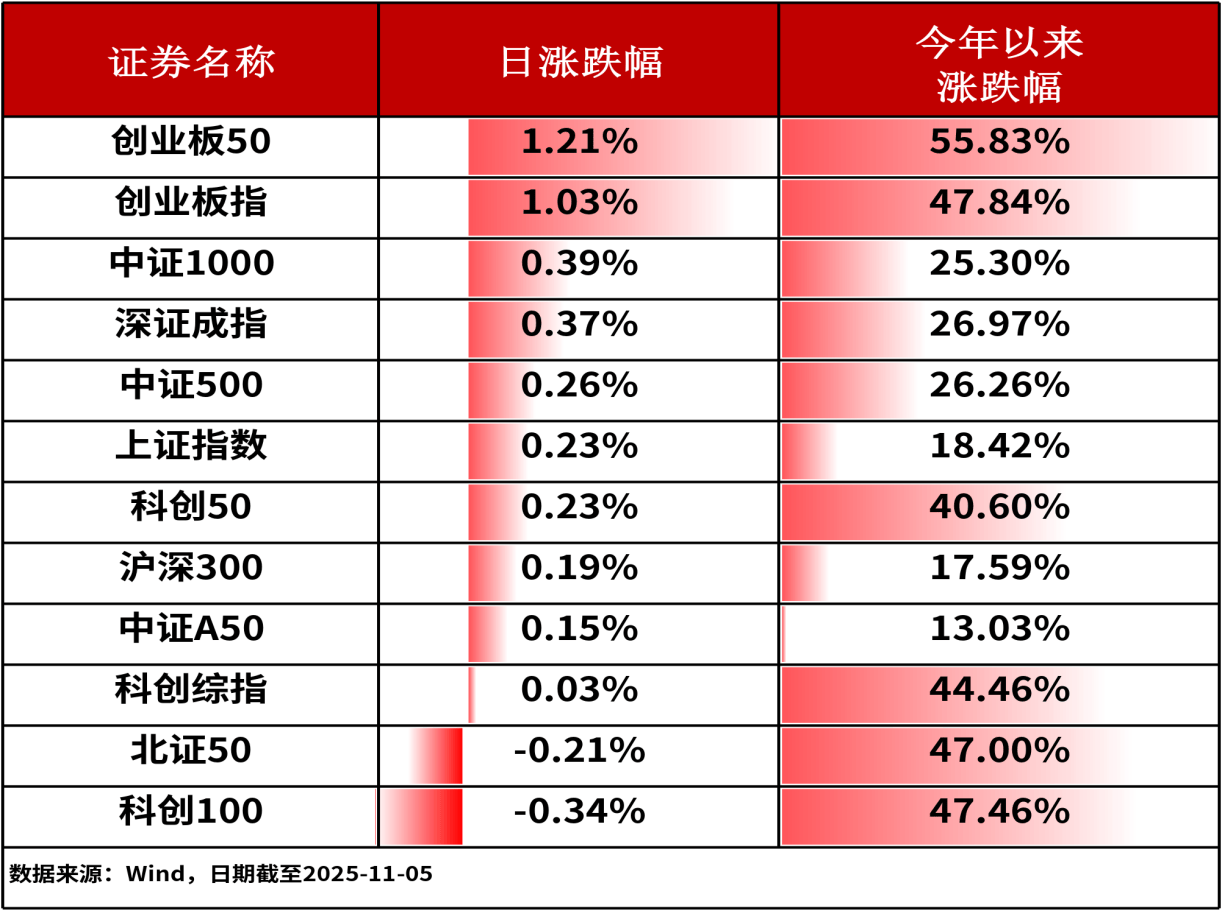
Market Overview - On November 5, A-shares saw a slight increase with the Shanghai Composite Index rising by 0.23%, the Shenzhen Component Index by 0.37%, and the ChiNext Index by 1.03%, with the ChiNext Index showing the most significant gain [1] - Over 3,380 stocks in the market experienced an increase, indicating high market activity [1] - The total trading volume in the Shanghai and Shenzhen markets was 1,872.3 billion RMB, slightly down from the previous trading day [1] Index Performance - The following indices showed daily and year-to-date performance: - ChiNext 50: +1.21% (YTD: +55.83%) - ChiNext Index: +1.03% (YTD: +47.84%) - CSI 1000: +0.39% (YTD: +25.30%) - Shenzhen Component Index: +0.37% (YTD: +26.97%) - Shanghai Composite Index: +0.23% (YTD: +18.42%) [2] Sector Performance - The leading sectors in terms of daily gains included: - Electrical Equipment: +3.40% - Coal: +1.39% - Retail: +1.22% - The sectors with the largest declines were: - Computer: -0.97% - Non-bank Financials: -0.49% - Telecommunications: -0.43% [5] Fund Flow - In terms of fund flow, the following ETFs saw significant net inflows: - Hong Kong Technology: +3.624 billion RMB - CSI A500: +1.878 billion RMB - Securities: +1.379 billion RMB - Conversely, the following sectors experienced net outflows: - CSI 300: -0.795 billion RMB - Food and Beverage: -0.283 billion RMB - Computer: -0.190 billion RMB [6][7] Macro Insights - The Central Financial Office emphasized the importance of enhancing the central bank system as part of the "14th Five-Year Plan" to promote the healthy and stable development of the capital market [8] - The focus is on comprehensive regulatory measures across all financial activities to strengthen oversight [8] Industry Developments - As of the end of September, China's new energy storage installations exceeded 100 million kilowatts, marking a growth of over 30 times compared to the end of the 13th Five-Year Plan, with a global market share exceeding 40% [9] - In the robotics sector, XPeng Motors aims to achieve mass production of humanoid robots by the end of 2026, collaborating with Baosteel for industrial applications [10] - In the semiconductor industry, Tesla's CEO announced plans for AI chip samples to be released in 2026, with mass production expected in 2027 [11]
10月美国ADP就业数据超预期
Dong Zheng Qi Huo· 2025-11-06 00:50
1. Report Industry Investment Ratings - Gold: Short - term price in a callback trend [16] - US Dollar: Short - term oscillation [20] - Chinese Stock Index Futures: Long - position balanced allocation for each index [23] - US Stock Index Futures: Short - term high - level shock adjustment, with a bullish view considering profit support [27] - Treasury Bond Futures: Recently, the bond market is slightly bullish with limited upside, and long - positions should consider rhythm and odds [29] - Sugar: Chinese sugar market to oscillate, strict control on syrup and powder imports and reduced Q4 imports [34] - Steel: Adopt an oscillating approach to steel prices [41] - Live Pigs: Short - sell 03 contract after a sharp rebound, and keep an eye on long - positions in far - month contracts [44] - Red Dates: Wait and see, focus on price negotiation and acquisition progress in production areas [47] - Oils: If no major negative news, consider long - positions; wait for market sentiment to stabilize if negative [48] - Corn Starch: Band - trading [51] - Corn: 01 contract to oscillate weakly in the short - term and rebound in the long - term; be cautious about far - month contracts [53] - Thermal Coal: Price to remain strong in the short - term, watch policy changes after breaking through $800 [55] - Iron Ore: Downside space limited, consider negotiation and coking coal valuation [56] - Coking Coal/Coke: Short - term oscillation, watch for risks from declining hot metal production [57] - Copper: Oscillation, consider buying on dips [60] - Polysilicon: If the contract price corrects to par or discount to spot, consider long - positions; beware of options risks this weekend [63] - Industrial Silicon: Buying on dips may be more cost - effective [65] - Lead: Short - term strength, be cautious about chasing long; positive spread arbitrage available; be cautious in external trading [69] - Zinc: Speculative long - positions take profit on rallies; observe positive spread arbitrage opportunities; wait and see for external trading [74] - Lithium Carbonate: Short - term wide - range oscillation; consider short - selling on rallies in the medium - term [79] - Nickel: Wait and see for speculative single - side trading; bet on valuation recovery after risk release [81] - Crude Oil: Price to oscillate [85] - Asphalt: Short - term weak oscillation [87] - Methanol: Holders of short - positions add short after the rebound ends; conservative investors take profit [89] - Pulp: Limited upside space [90] - Urea: Oscillation due to sentiment support [92] - Caustic Soda: Short - term weak oscillation [94] - Soda Ash: Downside space depends on coal price and new capacity; bearish in the medium - term [95] - Float Glass: Wait and see due to intense market game [97] - Container Freight Rates: Short - sell after the rally [99] 2. Core Views of the Report - The US ADP employment data in October exceeded expectations, indicating a short - term recovery in the labor market, but the economic downward pressure persists, and the US dollar maintains an oscillating trend [2][19] - In the context of a global stock market correction, the A - share market showed unexpected resilience, and the stock index is expected to oscillate at a high level [3][22] - The prices of steel, copper, and other commodities are affected by factors such as macro - expectations, fundamentals, and supply - demand relationships, showing different trends [5][6] 3. Summaries by Relevant Catalogs 3.1 Financial News and Reviews 3.1.1 Macro Strategy (Gold) - The US ADP employment in October increased by 42,000, and the ISM non - manufacturing PMI was 52.4, both better than expected [14][15] - Gold prices rebounded slightly, and the market is waiting for the end of the US government shutdown. Gold is expected to consolidate and approach the 60 - day moving average [15] 3.1.2 Macro Strategy (Foreign Exchange Futures - US Dollar Index) - Trump blamed the government shutdown for the Democratic victory in local elections [17] - The US Supreme Court questioned the legality of Trump's tariff policy [18] - The ADP employment data exceeded expectations, but the economic downward pressure continues, and the US dollar maintains an oscillating trend [19] 3.1.3 Macro Strategy (Stock Index Futures) - China will firmly promote high - level opening - up [21] - The A - share market showed resilience, and the stock index is expected to oscillate at a high level [22] 3.1.4 Macro Strategy (US Stock Index Futures) - The US ADP employment in October increased by 42,000, and the ISM services PMI reached a new high [25][26] - The US economic data remained resilient, and the stock market's risk appetite recovered [26] 3.1.5 Macro Strategy (Treasury Bond Futures) - The central bank conducted 65.5 billion yuan of 7 - day reverse repurchase operations, with a net withdrawal of 492.2 billion yuan [28] - The bond market's upward space is limited, and it is expected to oscillate. Long - positions should consider rhythm and odds [29] 3.2 Commodity News and Reviews 3.2.1 Agricultural Products (Sugar) - India's 2025/26 sugar production season has started, and Brazil's sugar production estimate has been raised [30][31] - The expected high - yield of the two major producers has increased concerns about global supply surplus, which is negative for the market [34] 3.2.2 Black Metals (Rebar/Hot - Rolled Coil) - The retail sales of passenger cars in October increased year - on - year and month - on - month [35] - Steel prices continued to be weak, and the supply pressure is expected to ease in November - December [40] 3.2.3 Agricultural Products (Live Pigs) - The project of Wens Co., Ltd.'s subsidiary passed the environmental assessment, and Dabeinong signed a regulatory agreement [42][43] - The short - term spot market is bullish, but the medium - term supply is expected to be loose [43] 3.2.4 Agricultural Products (Red Dates) - The acquisition of red dates in Xinjiang is progressing, and the futures price declined [45][46] - The supply is increasing, and the demand is weak. It is recommended to wait and see [47] 3.2.5 Agricultural Products (Soybean Oil/Rapeseed Oil/Palm Oil) - Malaysia's palm oil production in October increased by 12.31% month - on - month [48] - The market expects inventory accumulation in October. Pay attention to actual data and November's high - frequency supply - demand data [48] 3.2.6 Agricultural Products (Corn Starch) - The开机率 of corn starch enterprises increased, and the inventory slightly rose [49][51] - The inventory pressure is expected to be acceptable in January, and enterprises may maintain profitability [51] 3.2.7 Agricultural Products (Corn) - The spot price of corn is generally stable, with some regional differences [51] - Substitute supply is expected to increase, and the 01 contract may oscillate weakly in the short - term and rebound in the long - term [52][53] 3.2.8 Black Metals (Thermal Coal) - The international thermal coal price was strong on November 5, and the domestic price has risen recently [54][55] - The price is expected to remain strong in the short - term, and watch policy changes after breaking through $800 [55] 3.2.9 Black Metals (Iron Ore) - The demand for concrete weakened slightly, and iron ore prices oscillated weakly [56] - The downside space is limited, considering negotiation and coking coal valuation [56] 3.2.10 Black Metals (Coking Coal/Coke) - The price of coking coal in Linfen Anze was strong [57] - The short - term market is tight, but the hot metal production has peaked, and it may oscillate [57] 3.2.11 Non - ferrous Metals (Copper) - Chile's Codelco's copper production in the first nine months increased by 2.1% year - on - year [58] - The short - term macro - expectations are volatile, and copper prices are expected to oscillate [60] 3.2.12 Non - ferrous Metals (Polysilicon) - The number of photovoltaic component project bids decreased last week, and the price of polysilicon was under pressure [61][62] - November is a critical point of policy and fundamental game. Consider long - positions on dips if the contract price corrects [63] 3.2.13 Non - ferrous Metals (Industrial Silicon) - The production of industrial silicon in Sichuan and Yunnan decreased, and the inventory is expected to be difficult to reduce in November [64] - Buying on dips may be more cost - effective [65] 3.2.14 Non - ferrous Metals (Lead) - The LME lead inventory decreased, and the domestic lead price trended upward [69] - The short - term supply is slowly recovering, and pay attention to delivery risks; consider short - selling at high levels in the long - term [69] 3.2.15 Non - ferrous Metals (Zinc) - The LME zinc showed a premium, and the domestic zinc production is expected to decline in November - December [73] - Zinc prices may oscillate at a high level in the short - term, and need demand improvement for further rise [73] 3.2.16 Non - ferrous Metals (Lithium Carbonate) - Hainan Mining's lithium concentrate has been shipped, and EVE Energy signed a cooperation agreement [75][76] - The short - term price may oscillate widely, and consider short - selling on rallies in the medium - term [79] 3.2.17 Non - ferrous Metals (Nickel) - Minmetals' acquisition of a nickel business entered the second - stage review [80] - The short - term price may be under pressure, and bet on valuation recovery after risk release [81] 3.2.18 Energy Chemicals (Crude Oil) - Kazakhstan's oil field production decreased due to maintenance, and the EIA crude oil inventory increased [82][84] - Oil prices are expected to oscillate [85] 3.2.19 Energy Chemicals (Asphalt) - The capacity utilization rate of domestic heavy - traffic asphalt decreased [86] - The asphalt price may oscillate weakly in the short - term [87] 3.2.20 Energy Chemicals (Methanol) - The Chinese methanol port inventory increased slightly [88] - The rebound does not indicate a fundamental reversal. Holders of short - positions add short after the rebound ends [89] 3.2.21 Energy Chemicals (Pulp) - The import pulp price was stable, and the futures price rose [90] - The upward space of the pulp price is limited [90] 3.2.22 Energy Chemicals (Urea) - The urea enterprise inventory increased, and the price oscillated upward due to export quota rumors [91] - The urea price may oscillate due to sentiment support [92] 3.2.23 Energy Chemicals (Caustic Soda) - The caustic soda price in Shandong decreased locally, and the inventory decreased [93][94] - The caustic soda price may oscillate weakly in the short - term [94] 3.2.24 Energy Chemicals (Soda Ash) - The soda ash price in Shahe oscillated, and the demand may be affected in the short - term [95] - The soda ash price may decline in the medium - term, and the short - term downside space depends on coal price and new capacity [95] 3.2.25 Energy Chemicals (Float Glass) - The float glass price in Shahe increased slightly, and the market game is intense [96][97] - It is recommended to wait and see due to intense market game [97] 3.2.26 Shipping Index (Container Freight Rates) - Shipping companies adjusted European - route freight rates [98] - The container freight rate may rise in the short - term, and consider short - selling after the rally [99]


“十五五”加快建设金融强国有哪些主要任务和重要举措?中央金融办王江回应丨盘前情报
2 1 Shi Ji Jing Ji Bao Dao· 2025-11-06 00:50
Market Overview - On November 5, the A-share market experienced a rebound, with all three major indices closing in the green. The Shanghai Composite Index rose by 0.23% to 3969.25 points, the Shenzhen Component Index increased by 0.37% to 13223.56 points, and the ChiNext Index gained 1.03% to 3166.23 points. The total trading volume in the Shanghai and Shenzhen markets was 1.87 trillion yuan, a decrease of 45.3 billion yuan from the previous trading day [2][3]. Sector Performance - The market saw active rotation of hotspots, with nearly 3400 stocks rising. Key sectors that performed well included: - Power grid equipment, which saw a significant increase of 4.99% [16] - Hainan and battery sectors also showed strong performance [2] - The energy storage sector was among the first to strengthen [2] - Conversely, the quantum technology sector experienced a correction, along with declines in gaming stocks [2]. International Market - The U.S. stock market indices also rose on November 5, with the Dow Jones Industrial Average up by 0.48% to 47311 points, the S&P 500 up by 0.37% to 6796.29 points, and the Nasdaq Composite up by 0.65% to 23499.80 points [4][5]. - European markets followed suit, with the average price index rising by 0.64% to 9777.08 points, the CAC40 index in France up by 0.08%, and the DAX index in Germany up by 0.42% [4]. Commodity Prices - International oil prices fell on November 5, with light crude oil futures for December delivery down by 1.59% to $59.60 per barrel, and Brent crude oil futures for January delivery down by 1.43% to $63.52 per barrel [4][5]. Financial Sector Developments - The Central Financial Office outlined major tasks and initiatives for accelerating the construction of a financial powerhouse during the 15th Five-Year Plan period. Key points include: - Improving the central bank system and enhancing macro-prudential management [6] - Supporting high-level technological self-reliance and green transformation [6] - Promoting the healthy development of capital markets [6] - Strengthening financial regulation and legal frameworks [6]. Industry Insights - The copper mining sector is expected to see a decline in production, with a nearly 5% year-on-year decrease in Q3 2025. This trend is anticipated to continue into Q4, leading to a significant supply gap in the global refined copper market [13]. - The Beidou navigation application industry is projected to grow rapidly, driven by demand from smartphones and special industries, with a target of achieving a scale of 500 million applications by 2027 [11]. - Xiaopeng Motors aims to achieve mass production of advanced humanoid robots by the end of 2026, collaborating with Baosteel for industrial applications [12].


构建深度脱碳体系,破解钢铁行业转型困境
Zhong Guo Huan Jing Bao· 2025-11-05 23:23
Core Viewpoint - The steel industry in China faces significant challenges in achieving a green and low-carbon transformation, with carbon emissions accounting for approximately 15% of the national total, necessitating a comprehensive approach to overcome resource constraints, technological bottlenecks, and rising cost pressures [1][2]. Group 1: Current Status and Challenges - The steel industry has made progress in green low-carbon transformation through digitalization and ultra-low emission projects, with around 600 million tons of crude steel capacity undergoing ultra-low emission upgrades by July this year [2]. - Despite these efforts, the carbon emissions per ton of steel in China remain higher than international advanced levels, and the existing reduction potential is diminishing, requiring fundamental technological breakthroughs for deep decarbonization [2][3]. - The implementation of the EU's Carbon Border Adjustment Mechanism (CBAM) in 2026 may increase export costs for Chinese steel products, impacting the competitiveness of certain enterprises [2]. Group 2: Technological and Policy Bottlenecks - Low-carbon technologies such as hydrogen metallurgy and electric furnace processes are still in the early stages of commercialization, with high production costs and challenges in market promotion [3]. - The regulatory framework supporting deep decarbonization in the steel industry is not yet fully developed, with issues in quota allocation, market activity, and carbon pricing mechanisms that hinder effective incentives for low-carbon technology adoption [3]. - There are structural challenges in resource allocation, including difficulties in green electricity consumption and the large-scale application of carbon capture, utilization, and storage (CCUS) technologies [3][5]. Group 3: Recommendations for Acceleration - Strengthening technological innovation and industry-wide collaboration is essential, focusing on key technologies like hydrogen metallurgy and efficient electric furnace processes, while promoting the establishment of near-zero carbon emission demonstration plants [4]. - Innovating market mechanisms and stimulating demand for green products by integrating low-carbon steel procurement into green certification systems and reforming the carbon market to support companies adopting deep decarbonization technologies [4][5]. - Optimizing policy coordination and institutional support by implementing differentiated policies for long and short process steel mills, enhancing financing mechanisms for hydrogen metallurgy projects, and establishing cross-departmental coordination [4][5].
高校专业齐上新 开山弟子忙进阶
Bei Jing Qing Nian Bao· 2025-11-05 22:49
Core Insights - The article discusses the significant restructuring of undergraduate programs in Chinese universities, driven by the need to align educational offerings with market demands and national strategies [1][2][3]. Group 1: New Programs and Trends - A total of 6,638 undergraduate programs have been canceled or suspended, while 3,715 new programs have been introduced in the past two years [1]. - New programs are primarily focused on three areas: aligning with national strategies, promoting emerging industries, and serving regional development needs [2][3]. Group 2: Low Altitude Technology and Engineering - The "Low Altitude Technology and Engineering" program is designed to support the development of the low-altitude economy, responding to national policies that emphasize the growth of general aviation [3][4]. - Six universities, including Beijing University of Aeronautics and Astronautics and Beijing University of Posts and Telecommunications, have launched this program, which aims to produce skilled professionals across various sectors of the low-altitude economy [3][5]. Group 3: Interdisciplinary and Emerging Fields - New interdisciplinary programs, such as "Carbon Neutrality Science and Engineering" and "New Energy Materials and Devices," are being established to address complex challenges in emerging industries [7][9]. - These programs emphasize the integration of multiple disciplines, including engineering, social sciences, and information technology, to cultivate versatile talent capable of tackling modern industry demands [7][8]. Group 4: Regional Development and Institutional Adaptation - Some universities are restructuring existing programs and establishing new colleges to better align with national and regional strategic needs, such as the establishment of new colleges focused on renewable energy and artificial intelligence [10][11]. - The Tian Shu Academy, launched by Beijing Information Science and Technology University, aims to optimize educational resources and support regional industrial development through a flexible curriculum and strong industry partnerships [12]. Group 5: Student Experience and Practical Training - New students in these programs are engaging in hands-on projects and interdisciplinary courses, enhancing their practical skills and readiness for real-world challenges [13][14]. - Institutions are implementing innovative teaching methods, such as project-based learning and industry collaboration, to foster a deeper understanding of complex subjects and improve students' problem-solving abilities [14][15].