零跑汽车

Search documents
全球棋盘上的中国车:不只卖车,更要“造局”
3 6 Ke· 2026-01-04 11:54
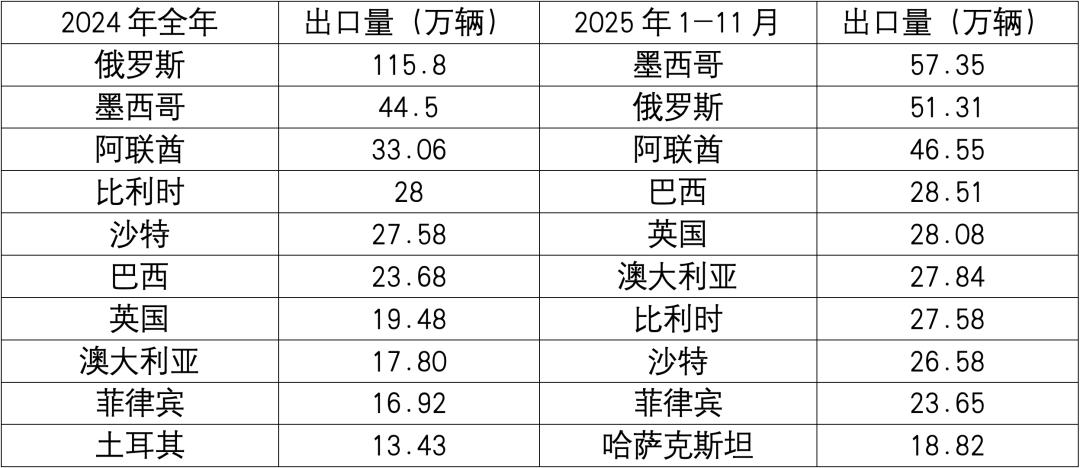
Core Insights - In 2025, China's automobile exports demonstrated resilience and vitality amidst challenges, with total exports reaching 7.33 million units from January to November, a year-on-year increase of 25%, and an expectation to exceed 8 million units for the entire year [1] Group 1: Market Dynamics - The Russian market, previously the largest for Chinese automobile exports, saw a dramatic decline, with exports dropping to 513,000 units from January to November 2025, a 50% year-on-year decrease, causing it to fall to the second position [2][3] - In contrast, the European market experienced significant growth, with Chinese brand car sales in Europe reaching 78,358 units in November 2025, a 108% increase year-on-year, resulting in a market share of 7.4% [3] - Mexico emerged as the largest single market for Chinese automobile exports, with 573,500 units exported, while the UAE ranked third with 465,500 units [4] Group 2: Structural Changes in Exports - The export structure is shifting, with a notable increase in the export of new energy vehicles (NEVs), which reached 3.01 million units from January to November 2025, a 62% increase year-on-year, and plug-in hybrid electric vehicles (PHEVs) accounting for 13% of total exports, up 8 percentage points [6] - The growth of PHEVs is attributed to their suitability for diverse markets, particularly in regions where charging infrastructure is still developing [6] Group 3: Localization and Ecosystem Development - Chinese automakers are transitioning from merely exporting vehicles to establishing local manufacturing and supply chains, with companies like BYD investing in local production facilities in Europe and Southeast Asia [9][10] - The number of Chinese automotive parts companies in Thailand has surged from approximately 48 in 2017 to 165 by March 2025, indicating a growing industrial cluster [9] Group 4: Challenges Ahead - Despite strong export figures, Chinese automakers face significant challenges in brand recognition and service networks in established markets like Europe, where consumer preference remains heavily skewed towards local brands [11][12] - In Southeast Asia, entrenched Japanese brands dominate the market, making it difficult for Chinese brands to gain a foothold despite rapid growth in electric vehicle sales [12][14] - The reliance on imported components for local production in markets like Thailand poses risks to customer satisfaction and operational efficiency [14]


零跑汽车丨下一个十年目标年销400万辆
Cai Jing Wang· 2026-01-04 09:11
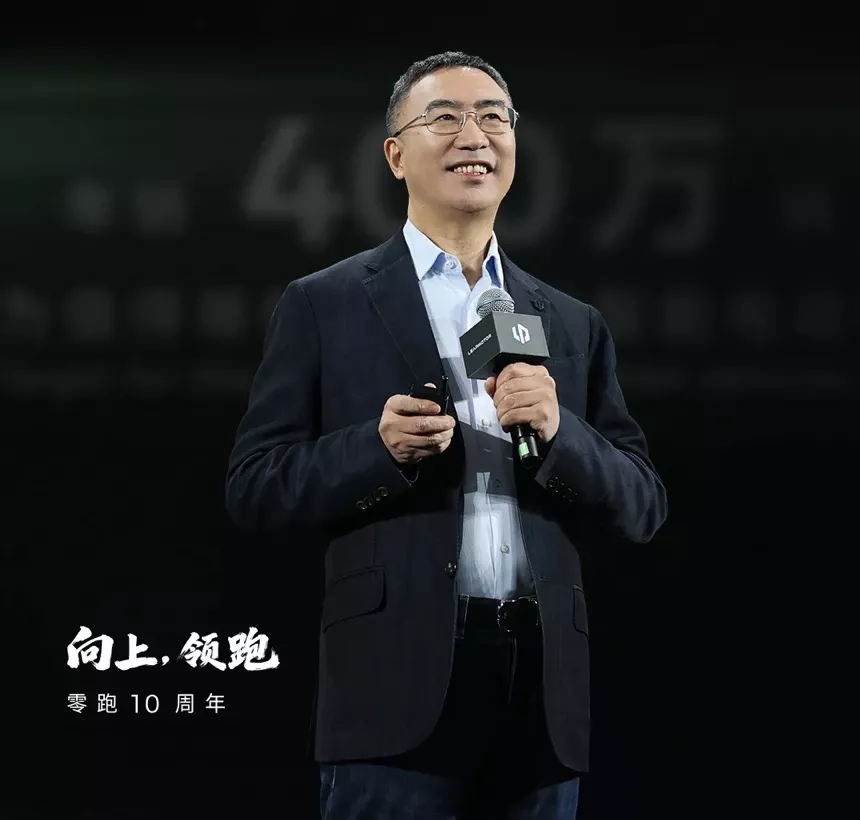
Core Viewpoint - The company aims to become a world-class smart electric vehicle manufacturer in the next decade, driven by technological innovation and global expansion [1][9]. Group 1: Company Overview - The founder and CEO, Zhu Jiangming, reflected on the company's ten-year journey in the automotive industry, emphasizing the importance of maintaining control by the founding team despite new investments [2]. - As of now, the company has delivered over 1.2 million vehicles, with an expected annual sales volume of nearly 600,000 units in 2025, positioning it as a leader among new automotive manufacturers [2]. Group 2: Historical Challenges - The company faced significant challenges in its early years, describing the past decade as "nine lives," indicating the difficulties encountered in achieving profitability and market acceptance [3]. - The initial market response to the first model, S01, was lukewarm, leading to financial and market pressures until the successful launch of the T03 model in 2020, which validated the company's strategy of offering high-value products [5]. Group 3: Product Development and Financial Milestones - The launch of the C11 model in September 2021 marked a significant turning point, offering strong product capabilities and achieving a notable market presence [6]. - In 2023, the company achieved a milestone by reaching a positive gross margin of 0.5%, indicating its first profitable year in vehicle manufacturing [6]. Group 4: Future Goals and Strategies - The company has set an ambitious target of achieving annual sales of 4 million vehicles in the next decade, supported by a clear strategy that includes expanding its product line and accelerating global operations [9][12]. - Plans include launching a full range of vehicles from A0 to D class over the next three years and establishing a presence in key international markets through partnerships and local operations [12]. Group 5: Challenges Ahead - The company will face intense competition in the mainstream market segment priced between 150,000 to 250,000 yuan, with new entrants like Huawei and Xiaomi [14]. - Global expansion will require adaptation to local regulations, consumer habits, and infrastructure, alongside the need to build multiple factories to support the production of 4 million vehicles [14].

西班牙12月电动车市场:特斯拉大跌44%,被比亚迪反超
Guan Cha Zhe Wang· 2026-01-04 08:29
Core Insights - The Spanish electric vehicle market is witnessing a significant shift, with BYD surpassing Tesla in December sales for the first time, indicating a potential change in market leadership by 2026 [2][6]. Group 1: Sales Performance - Tesla's new car sales in Spain dropped by 44.2% year-on-year in December, totaling 1,794 units [2]. - BYD achieved impressive sales in December, selling 2,143 units, thus overtaking Tesla [2]. - The Tesla Model 3 and Model Y remained the top-selling electric vehicles in Spain, with sales of 963 and 830 units respectively, although the Model 3 saw a significant decline of 60.5% year-on-year [2]. Group 2: Yearly Trends - For the entire year of 2025, Tesla's Model 3 sales decreased by 9.6%, while Model Y sales increased by 9.4% [3]. - Overall, Spain's pure electric vehicle sales surged by 77% year-on-year, exceeding 100,000 units for the first time, reaching 104,262 units [5]. Group 3: Market Dynamics - More cost-effective electric vehicles are emerging in the Spanish market, with models like BYD Dolphin Surf and Atto 2 gaining traction [4]. - Chinese automakers, particularly BYD, are becoming key players in the Spanish electric vehicle market, with Tesla and BYD's market shares being very close at 14.3% and 14.2% respectively [6]. - The competition is intensifying with other manufacturers like Volkswagen, Toyota, and Xpeng preparing to enter the electric vehicle market, which is expected to benefit Spanish consumers through improved pricing and range options [6].

一周概念股:半导体企业IPO热情高涨,美国叫停“中资控制公司”收购交易
Ju Chao Zi Xun· 2026-01-04 07:53
Group 1: Semiconductor IPO Activity - The enthusiasm for IPOs among semiconductor companies in A-shares and Hong Kong stocks is rising, with leading firms like Changxin Technology and others accelerating their IPO processes [2][3] - Changxin Technology aims to raise 29.5 billion yuan through its IPO, focusing on upgrading DRAM manufacturing technology and research [3] - Shenzhen Cloud Leopard Intelligent Technology has signed an IPO guidance agreement, targeting a potential market entry by April 2026 [3][4] - Suiruan Technology has completed its IPO guidance, marking a significant step towards its A-share listing [4] - Tenshu Zhixin has initiated its IPO process in Hong Kong, with a projected revenue of 539 million yuan in 2024, reflecting a compound annual growth rate of 68.8% from 2022 to 2024 [4] Group 2: Market Performance and Records - Biran Technology's stock surged by 82.14% on its debut in Hong Kong, setting records for public subscription and total fundraising [5] - The IPO of Biran Technology raised approximately 5.583 billion HKD, marking it as the largest IPO under Hong Kong's Chapter 18C rules [5] Group 3: Geopolitical Concerns and Market Impact - The U.S. government has halted a $3 million acquisition by HieFo Corp due to national security concerns, reflecting a trend of increased scrutiny on Chinese investments [6][7] - Similar incidents, such as the forced sale of FTDI by the UK government, highlight the growing geopolitical tensions affecting the semiconductor industry [7] - The broadening definition of national security by Western countries is disrupting the global semiconductor supply chain and investment landscape [7]
2026年首批新股,来了
Zhong Guo Ji Jin Bao· 2026-01-04 07:29
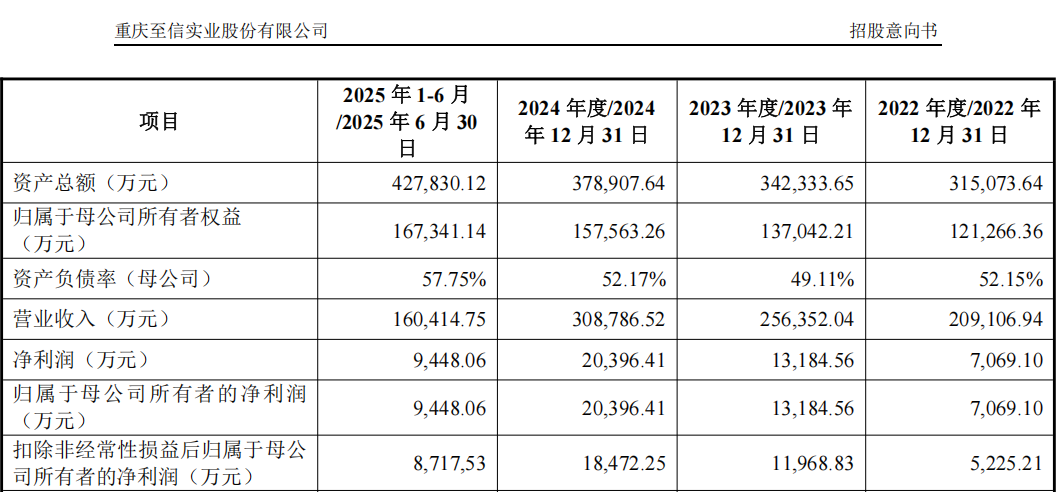
Group 1: New Stock Offerings - Two new stocks available for subscription on January 6, 2026, are automotive parts manufacturers Zhixin Co. and Kema Materials [1][2] Group 2: Zhixin Co. - Zhixin Co. specializes in automotive welding parts and has expanded into mold development, processing, and automation solutions [4] - The company is a primary supplier for major automotive manufacturers including Changan, Geely, NIO, and BYD [4] - For the years 2022 to 2025, Zhixin's projected revenues are 2.09 billion, 2.56 billion, 3.09 billion, and 1.60 billion CNY respectively, with net profits of 70.69 million, 132 million, 204 million, and 94.48 million CNY [4] - The company expects 2025 revenues to be between 3.90 billion and 4.05 billion CNY, representing a year-on-year growth of 26.30% to 31.16% [7] Group 3: Kema Materials - Kema Materials focuses on the research, production, and sales of dry and wet friction materials, primarily for commercial vehicles [8][10] - The company has a total issuance of 20.92 million shares, with a subscription price of 11.66 CNY per share and a P/E ratio of 14.20 [9] - Kema's projected revenues for 2025 are between 250 million and 280 million CNY, with a year-on-year growth of 0.39% to 12.44% [12]
12月国内销量跟踪
数说新能源· 2026-01-04 03:59
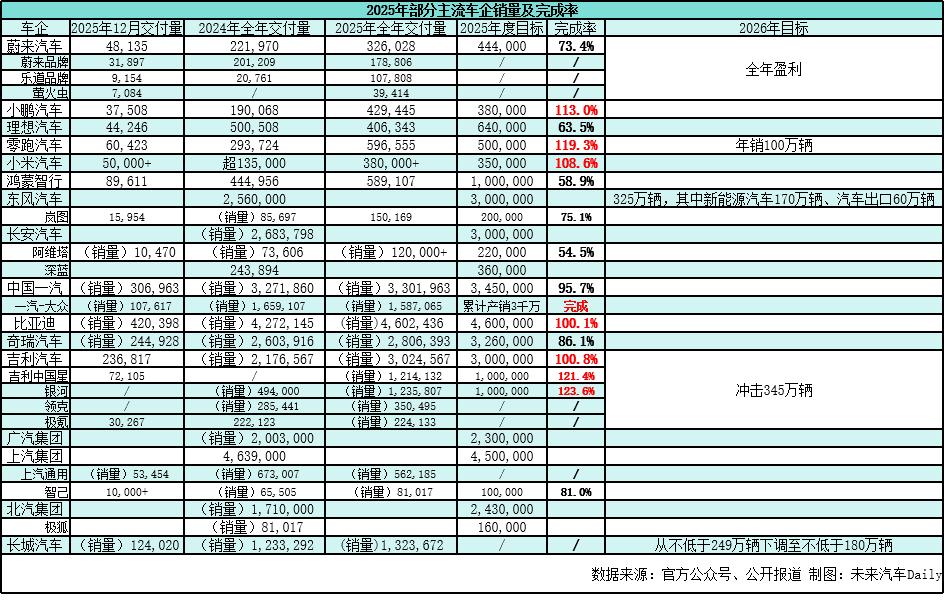
Sales Performance - BYD sold 420,398 vehicles, a year-on-year decrease of 18.3% and a month-on-month decrease of 11.5% [1] - NIO delivered 48,135 vehicles, a year-on-year increase of 54.6% and a month-on-month increase of 32.7% [1] - Li Auto delivered 44,246 vehicles, a year-on-year decrease of 24.4% but a month-on-month increase of 33.3% [1] - Xpeng delivered 37,508 vehicles, a year-on-year increase of 2.2% and a month-on-month increase of 2.1% [1] - Leap Motor delivered 60,423 vehicles, a year-on-year increase of 42.1% but a month-on-month decrease of 14.1% [1] - Lantu delivered 15,954 vehicles, a year-on-year increase of 31.5% but a month-on-month decrease of 20.2% [1] - Seres sold 57,000 vehicles, a year-on-year increase of 88.7% and a month-on-month increase of 4.9% [1] - Avita delivered 10,470 vehicles, a year-on-year decrease of 5.4% and a month-on-month decrease of 25.5% [1] - Geely sold 154,264 vehicles, a year-on-year increase of 38.7% but a month-on-month decrease of 17.9% [1] - SAIC-GM sold 11,307 vehicles, a year-on-year increase of 89.9% and a month-on-month increase of 6% [1] - Wuling sold 122,838 vehicles, a year-on-year increase of 31.2% and a month-on-month increase of 11.2% [1] - It is expected that 1.92 million electric vehicles (including commercial vehicles) will be sold in December in China, a year-on-year increase of 20.3% and a month-on-month increase of 5.32% [1] Industry Trends - The procurement of battery cells by manufacturers is focusing on balancing performance and cost [5] - BYD is expanding its presence in Southeast Asia [5] - CATL indicates that the growth in the energy storage market is outpacing that of the power market [9]




2025成绩单出炉:14家车企5家达成年度目标!多品牌单月创新高 | 12月新能源销量快报
Zhong Guo Qi Che Bao Wang· 2026-01-04 02:58
Group 1 - The overall retail and wholesale data for passenger cars in December 2025 showed a decline, with retail down 19% year-on-year and wholesale down 23% year-on-year, but this did not affect the steady growth of new energy vehicle (NEV) sales [2] - BYD achieved a December sales figure of 420,398 units and a total annual sales of 4,602,436 units, maintaining its position as the global leader in NEV sales [7] - SAIC-GM-Wuling's annual NEV sales exceeded 1 million units, with a year-on-year growth of 31.9%, and its NEV penetration rate increased from 50% to 61% [10] Group 2 - Leap Motor delivered 60,423 vehicles in December 2025, achieving a total annual delivery of 596,555 units, representing a year-on-year growth of 103% [13] - Xiaomi's December sales exceeded 50,000 units, contributing to an annual total of over 400,000 units, successfully meeting its sales target [14] - NIO delivered 48,135 vehicles in December, marking a historical high with a year-on-year growth of 54.6%, and an annual total of 326,028 vehicles [17] Group 3 - Li Auto delivered 44,246 vehicles in December, bringing its total annual sales to 406,343 units [20] - Xpeng Motors achieved a record annual delivery of 429,445 vehicles, exceeding its revised target of 380,000 units, with December sales of 37,508 units [22] - Deep Blue's December sales reached 30,999 units, contributing to an annual total of over 330,000 units [26] Group 4 - Zeekr delivered 30,267 vehicles in December, achieving a total annual sales of over 224,000 units, with a year-on-year growth [28] - Lantu's December sales exceeded 15,900 units, with an annual total of 150,169 units, reflecting a year-on-year growth of 87% [30] - IM Motors achieved an annual sales figure of 81,017 units, with December sales of 11,818 units [35] Group 5 - Avita's annual sales surpassed 120,000 units, with December sales of 10,470 units, marking ten consecutive months of sales exceeding 10,000 units [37] - Extreme Stone's December sales reached 2,528 units, with an annual total of 15,318 units, nearly tripling from the previous year [40] - Hongmeng Zhixing delivered 589,107 vehicles in 2025, with December sales of 89,611 units, marking a historical high for three consecutive months [42]

在一片销量创新高的欢呼声中,车企们将迎战更惨烈的2026年
3 6 Ke· 2026-01-04 02:11
Core Viewpoint - The Chinese automotive market is experiencing a downturn in December, with a significant year-on-year decline in retail sales, prompting companies to seek growth opportunities amidst challenging conditions [1][10]. Market Performance - From December 1 to 28, retail sales of passenger vehicles in China reached 1.928 million units, a 17% decrease compared to the same period last year and a 3% decline from the previous month [1]. - Traditional automakers like BYD reported a sales drop of 12% month-on-month and 18% year-on-year, despite achieving a total of 4.273 million units sold in 2023, marking a 144% increase in exports [6][7]. Company Highlights - NIO achieved a record delivery of 48,000 units in December, with 46% of this volume coming from the new ES8 model [3]. - Xpeng and Xiaomi also saw increases in deliveries, with Xpeng delivering 37,000 units and Xiaomi exceeding 50,000 units [3]. - Li Auto's monthly deliveries rose from 30,000 in November to 40,000 in December, aided by adjustments in production capacity [3][17]. - Homologous Intelligent achieved nearly 90,000 deliveries in December, becoming the top performer among new energy vehicle brands [4][13]. Future Outlook - Industry experts anticipate a rebound in January 2026 due to the timing of the Spring Festival and the implementation of new subsidy policies [8]. - However, the overall automotive industry is expected to remain under pressure throughout 2026 [9]. Competitive Landscape - The competition among automakers is intensifying, with companies like BYD, Li Auto, and others adjusting their sales targets and strategies in response to market conditions [20][23]. - New models and technological advancements are being prioritized, with companies focusing on high-value offerings to navigate the changing market dynamics [30][31].
这个级别价格得下探,全新国产插混SUV,纯电185公里,这是要搅比亚迪和零跑的低价局?
Xin Lang Cai Jing· 2026-01-04 01:29
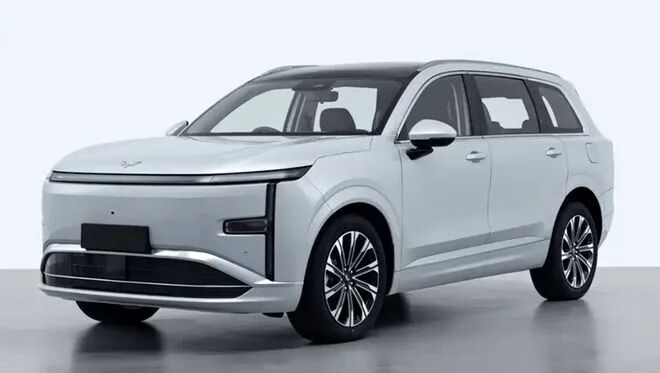
Core Viewpoint - The article discusses the unveiling of the new SAIC-GM Wuling Star L PHEV, highlighting its battery capacity and electric range options, which are 150 km and 185 km for pure electric driving [1][16]. Group 1: Product Specifications - The new SUV will offer two different capacities of lithium iron phosphate batteries, with pure electric ranges of 150 km and 185 km [1][16]. - The vehicle will feature two powertrain options: a 1.5T hybrid engine with a maximum power of 105 kW and a 1.5L naturally aspirated engine with a maximum power of 78 kW [15][30]. - The battery capacities available are 31 kWh and 37.9 kWh, with both powertrain options having a top speed of 190 km/h [15][30]. Group 2: Design and Dimensions - The exterior design incorporates a closed front face, a continuous light strip, and a more mainstream aesthetic compared to previous Wuling models [6][21]. - The vehicle dimensions are 4980 mm in length, 1930 mm in width, 1760 mm in height, and a wheelbase of 2950 mm, with options for 5-seat and 6-seat configurations [12][27]. - The rear design is characterized by a square shape with a continuous taillight group and a roof-mounted spoiler, contributing to a stylish appearance [14][29]. Group 3: Market Competition - The new model is expected to compete with other plug-in hybrid vehicles from brands like Leap Motor and BYD, indicating a more competitive market landscape in the plug-in hybrid segment, especially in the 150,000 RMB price range [16][31].
2025年杀青汽车渠道瘦身进行时
Xin Lang Cai Jing· 2026-01-04 01:19
Core Viewpoint - In 2025, the Chinese automotive industry is at a historic turning point, with the penetration rate of new energy vehicles exceeding 50%, marking a shift towards a high-quality development phase characterized by a balance between traditional and electric vehicles [2][16]. Group 1: Industry Transformation - The automotive channel system is undergoing unprecedented restructuring, shifting from scale expansion to integration optimization, model innovation, and deepening market penetration [2][16]. - The era of merely pursuing the number of outlets has ended, with a focus on quality improvement and efficiency optimization becoming the core issues [2][3]. - The automotive channel transformation is clearly presenting three major trends: lightweight, hybrid, and downward expansion, aimed at addressing high costs and low efficiency in the industry [2][3][11]. Group 2: Lightweight Trend - The traditional heavy asset 4S stores are facing high rent and inventory pressures, prompting automakers to explore lightweight outlet models [4][19]. - Lincoln China's "Spark Plan" serves as a benchmark for lightweight transformation, significantly reducing single-store investment from 20-30 million yuan to 4 million yuan, leading to a 40% decrease in dealer operating costs [4][18]. - The optimization of profit structure in lightweight stores allows after-sales profits to fully cover operating costs, enhancing profitability [4][18]. Group 3: Hybrid Trend - The trend of channel hybridization, which began in 2024, continues to deepen in 2025, with brands exploring flexible combinations of direct sales, agency, and authorization models [7][21]. - NIO is cautiously adopting a hybrid approach, allowing local agents to manage market operations while maintaining brand control [7][21]. - BYD's Tengshi and Fangchengbao brands are implementing a dual-track system of direct sales and authorization to enhance channel efficiency [8][22]. Group 4: Downward Expansion Trend - The trend of channel downward expansion is accelerating, with significant sales growth in lower-tier cities, reflecting a clear shift in the automotive consumption market [11][25]. - Leap Motor's strategy of lowering the price of main models to the 150,000 yuan range has led to a 113.42% year-on-year increase in deliveries, with over 60% of sales coming from lower-tier markets [11][25]. - Third-party involvement, such as JD Auto's collaboration with GAC and CATL, is creating new models for the lower-tier market, significantly reducing the purchase threshold [12][26]. Group 5: Efficiency Revolution - The core of channel transformation is an efficiency revolution, focusing on serving more users at lower costs [12][26]. - The automotive channel is undergoing structural reshaping through lightweight, hybrid, and downward expansion trends, but the evolution of channels is far from over [12][26].