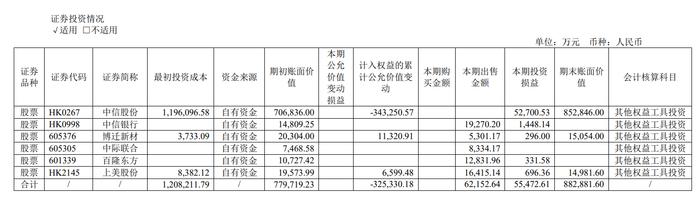
上美股份

Search documents
财报面面观|旧胄溃退,新贵登场:美妆行业内卷重构
Zhong Guo Ji Jin Bao· 2025-04-29 03:29
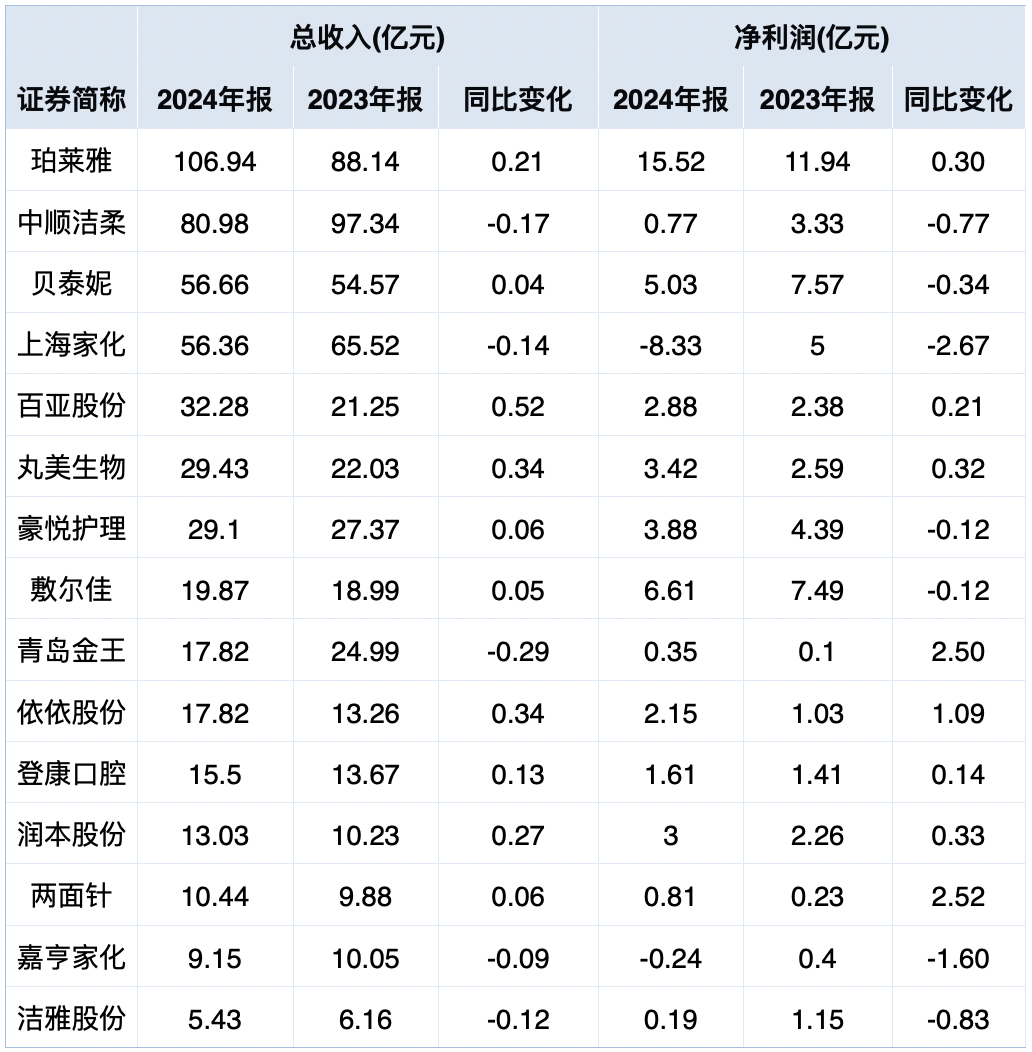
Core Viewpoint - The performance of beauty companies listed in 2024 reflects a challenging environment, with many traditional giants facing significant losses while some emerging brands show strong growth [1][2]. Industry Overview - In 2024, China's total retail sales of consumer goods grew by 3.5%, but the retail sales of cosmetics declined by 1.1%, amounting to 435.65 billion yuan [2]. - The overall industry is experiencing a downturn, leading to price cuts and store closures by several foreign brands [2]. - Major companies like Shanghai Jahwa reported a loss of 833 million yuan, highlighting the struggles of established players [2][4]. Company Performance - As of April 27, 2024, 15 A-share cosmetic companies reported a total revenue of 50.081 billion yuan, a year-on-year increase of 3.59%, but net profit fell to 3.765 billion yuan, down from 5.127 billion yuan [4]. - Notable performances include: - Proya achieved revenue of 10.778 billion yuan, becoming the first domestic beauty brand to surpass 10 billion yuan [2][11]. - Shanghai Jahwa's revenue decreased by 13.93% to 5.679 billion yuan, with a net profit loss of 833 million yuan [6]. - Betaini reported revenue of 5.736 billion yuan, up 3.87%, but net profit fell by 33.53% to 503 million yuan [8]. - Huaxi Biological's revenue dropped by 11.61% to 5.371 billion yuan, with net profit down 70.59% to 174 million yuan [8]. Emerging Brands - New entrants like Gu Yu Biotechnology are preparing to enter the capital market, showcasing strong growth with a revenue of 4 billion yuan and GMV exceeding 5 billion yuan [14][15]. - Gu Yu's success is attributed to its focus on a unique ingredient and effective online marketing strategies, although its reliance on a single product category may pose future challenges [15]. Market Trends - The market is witnessing a shift where traditional giants are retracting while new players are emerging, indicating a potential reshaping of the industry landscape [10][14]. - The global beauty market is expected to see a coexistence of domestic brands leading in niche segments while foreign brands focus on high-end markets [16].


社会服务行业周报:扩大服务消费,新消费持续受资金青睐
Ping An Securities· 2025-04-29 03:05
Investment Rating - The report maintains an "Outperform" rating for the social services industry [1][27]. Core Insights - The report emphasizes the importance of expanding service consumption and highlights that new consumption continues to attract funding [1][3]. - The macroeconomic environment is supportive of service consumption growth, with government policies aimed at increasing income for low- and middle-income groups and enhancing consumption's role in economic growth [4][5]. - The report notes that service consumption has a high frequency of transactions, strong multiplier effects, and sustainable growth potential, with significant contributions to overall consumer spending [5]. Summary by Sections Macroeconomic and Industry Dynamics - The Politburo meeting on April 25 discussed the current economic situation, emphasizing support for technology innovation, consumption expansion, and stable foreign trade [3][4]. - The State Taxation Administration revised the management measures for tax refunds for overseas travelers, facilitating easier tax refund processes [4]. - Recent reports highlight the importance of service consumption as a key driver for domestic demand, with a projected 6.2% growth in service retail sales in 2024, outpacing goods retail sales [5]. Company Dynamics - Traditional retail continues to optimize, with companies like Yonghui Supermarket successfully launching products through green channels for foreign trade [6][7]. - Beauty industry companies reported strong financial performances, with Jinbo Bio achieving a 62.51% year-on-year revenue increase in Q1 2025 [3][13]. - The report highlights the performance of various companies, including a significant turnaround for Bubugao, which reported a 164.16% increase in net profit in 2024 [7][14]. Investment Recommendations - The report notes that the social services sector has seen a rotation in performance, with key companies trading at a PE ratio of 20-40 times for 2025, indicating stable operations and solid growth potential [3][27]. - The report suggests that the market is favoring high-growth companies within the social services sector, with significant year-to-date increases in stock prices for companies like Shangmei and Maogeping [24][27].
中泰国际每日策略-20250429
ZHONGTAI INTERNATIONAL SECURITIES· 2025-04-29 02:35
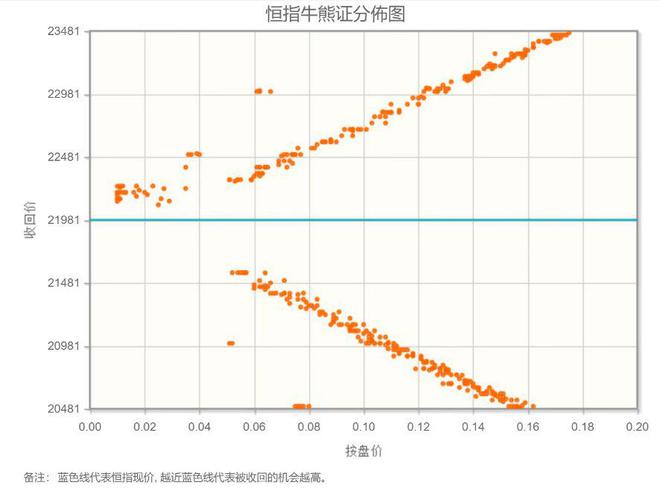
Market Overview - The Hang Seng Index closed at 21,973 points, down 7 points, with a trading range of only 255 points, indicating a lack of direction in the market[1] - The market turnover was approximately HKD 163.8 billion, the lowest since February 4[1] - Net inflow from the Hong Kong Stock Connect was HKD 2.12 billion[1] Sector Performance - Major banks and some consumer brands showed strong performance, with four major banks rising between 0.7% and 2.8%[1] - Stocks like Mixue Group and Pop Mart surged between 4.1% and 12.0%, reaching new highs since their listings[1] - Yao Cai Securities saw a significant increase of 81.9% to HKD 5.55, following Ant Group's acquisition[1] Economic Indicators - The upcoming release of China's PMI data and the U.S. GDP for Q1 is expected to increase market volatility[1] - New home sales in 30 major cities fell by 23.3% year-on-year, indicating a continued decline in the real estate market[3] Valuation and Strategy - The current PE ratio of the Hang Seng Index is approximately 9.7 times, suggesting limited downside but requiring effective internal policies for upward movement[2] - Key focus areas for investment include AI infrastructure, consumer demand, and high-dividend state-owned enterprises[2] Coal Market Insights - Yancoal Australia reported a 12.8% year-on-year decline in average coal prices to AUD 157 per ton, influenced by strong market supply[7] - The company’s coal production increased by 8.0% to 9.5 million tons, but sales only rose by 1.2% due to inventory rebuilding[6] Risk Factors - Potential risks include production delays, fluctuations in electricity and steel market demand, and geopolitical uncertainties[11]
新消费赛道第一期:美妆、潮玩
2025-04-28 15:33
Summary of Key Points from Conference Call Records Industry Overview - The conference call discusses the new consumption sectors, specifically focusing on the beauty and trendy toy industries, highlighting the impact of Generation Z on consumer behavior and market dynamics [1][2][3]. Core Insights and Arguments Beauty Industry - The beauty industry is benefiting from the logic of domestic product substitution, with domestic brands continuously increasing their market share, particularly in the mid-to-high-end market [1][2][5]. - The market for skincare products, especially eye and facial care, is growing significantly faster than the overall market, driven by emerging functional ingredients like recombinant collagen and signaling molecules [1][15]. - The beauty sector is experiencing a shift from traditional e-commerce to content-driven e-commerce, necessitating changes in marketing strategies and organizational structures to adapt to a "product finds people" model [1][3][4]. - The impact of the US-China tariff war has made domestic beauty products more attractive, with over 10 billion yuan worth of beauty products imported from the US facing tariffs, enhancing the competitiveness of local brands [2][5]. - Companies like Proya, Betaini, and Perfect Diary are expected to show strong performance despite facing profit pressures, indicating overall strengthening competitiveness in the sector [2][5]. Trendy Toy Industry - The trendy toy industry is heavily reliant on IP (intellectual property) comprehensive operation capabilities rather than manufacturing, with leading companies maintaining competitive advantages through design and supply chain innovations [1][30][31]. - The market for trendy toys is rapidly growing, with a 30% year-on-year increase in the domestic pan-entertainment toy market, expected to maintain a compound annual growth rate of 14% over the next five years [31]. - Companies like Pop Mart are expanding their market presence in Southeast Asia and the US, with revenue growth expected to exceed market expectations [1][30][40]. Additional Important Insights - The beauty industry is transitioning from an incremental market logic to a stock market logic, with new business models and companies emerging [5][6]. - The rise of Generation Z as a primary consumer group is driving demand for products that emphasize emotional and personal expression, leading to structural opportunities in niche markets like trendy toys and beauty care [1][3][8]. - The beauty sector is seeing a shift towards personalized marketing and decentralized promotion strategies, reflecting changes in consumer preferences and shopping behaviors [4][11]. - The competitive landscape in the trendy toy sector is evolving, with leading brands like Pop Mart and others leveraging their IP capabilities to capture market share from smaller players [30][35][36]. Conclusion - The beauty and trendy toy industries are undergoing significant transformations driven by changing consumer preferences, competitive dynamics, and macroeconomic factors. The focus on domestic brands, innovative marketing strategies, and IP management will be crucial for companies looking to capitalize on these trends in the coming years [1][5][30][31].
财报解读|美妆企业去年业绩冷热不一,本土公司首现百亿公司
Di Yi Cai Jing· 2025-04-28 12:53
Core Viewpoint - Domestic beauty brands are gaining competitive advantages in the market through high cost-performance ratios and refined operations [1][7]. Group 1: Market Performance - In early 2024, the retail sales of cosmetics in China are projected to be 435.7 billion yuan, a year-on-year decline of 1.1% [2]. - Despite the overall market stagnation, several domestic beauty companies have reported impressive performance, with Proya (603605.SH) achieving a revenue of 10.778 billion yuan, a year-on-year increase of 21.04% [2][3]. - Other established beauty companies such as Shiseido (02145.HK), Maogeping (01318.HK), and Marubi (603983.SH) also reported revenue growth exceeding 20% [2]. Group 2: Online Sales Strategy - Leading beauty companies are increasingly focusing on online sales, with Proya's online sales ratio exceeding 95% and sales surpassing 10 billion yuan [4]. - Shiseido's online sales ratio is over 90%, with sales exceeding 6 billion yuan, while Marubi's online sales ratio is above 85% [4]. - In the e-commerce landscape, Douyin has emerged as a significant player, with total beauty sales reaching between 2.5 billion to 5 billion units and total sales exceeding 100 billion yuan [4]. Group 3: Quarterly Performance - In Q1 2025, the retail sales of cosmetics reached 114.9 billion yuan, a year-on-year increase of 3.2% [6]. - Proya reported a Q1 2025 revenue of 2.359 billion yuan, up 8.13% year-on-year, and a net profit of 390 million yuan, up 28.87% [6]. - Marubi achieved a Q1 2025 revenue of 847 million yuan, a year-on-year increase of 28.01%, with a net profit of 135 million yuan, up 22.07% [6]. Group 4: Future Outlook - The management of Juzhi Biological aims for a revenue growth of 25% to 28% and a net profit growth of 21% to 24% for the 2025 fiscal year [7]. - The cosmetics and medical beauty industry is expected to show stable growth driven by policy support and consumer recovery [7]. - Domestic beauty brands are focusing on reducing traffic costs and enhancing digital marketing strategies to ensure measurable business growth [7].


智通决策参考︱科技和刺激内需或成为主要方向
Zhi Tong Cai Jing· 2025-04-28 00:05
Group 1 - The Hong Kong stock market rebounded last week amid the easing of tensions from the Trump tariff war, but market sentiment remains cautious due to numerous uncertainties [1] - Major tech companies in the US, including Apple, Microsoft, Amazon, and Meta, are set to release their earnings reports this week, with a focus on performance and supply chain conditions [2] - The upcoming May Day holiday may set the tone for market trends, with technology and domestic demand stimulation expected to be key focus areas [3] Group 2 - The Chinese government has approved nuclear power projects, including the Zhejiang Sanmen Phase III project, indicating ongoing investment in nuclear energy [4] - The surgical robot company MicroPort has seen significant growth potential, with domestic installations expected to accelerate due to regulatory changes and increased clinical recognition [5] - The collaboration between Honghu and MicroPort in overseas markets is anticipated to enhance growth, with a notable increase in their transaction limits for related business [6] Group 3 - The personal care sector is experiencing significant growth driven by product innovation and new distribution channels, with companies like Ruyuchen and Dengkang Oral achieving substantial revenue increases [7] - The beauty sector is also thriving, with companies like Jizi Biotechnology and Marumi Biotech reporting impressive revenue growth, indicating a shift in consumer preferences towards innovative products [7] - The medical aesthetics market is witnessing new opportunities with the approval of new products, suggesting a robust growth trajectory for companies in this space [7] Group 4 - The Hong Kong stock market is advised to focus on companies like Maogeping and Juzibio, which are positioned for growth in their respective sectors [8] - The Hang Seng Index is currently stable, with a significant number of open contracts indicating a cautious outlook amid external uncertainties [9] - Analysts remain optimistic about the relative performance of Hong Kong stocks, particularly in sectors sensitive to tariffs and those benefiting from domestic demand policies [12]
政治局会议后的市场展望
2025-04-27 15:11
Summary of Key Points from the Conference Call Industry or Company Involved - The conference call primarily discusses the Chinese economy, focusing on various sectors including real estate, infrastructure, consumer services, and the impact of external trade policies. Core Insights and Arguments 1. **Economic Growth and Risk Management**: The Political Bureau meeting emphasized the dual focus on stabilizing growth and managing risks, indicating a stronger policy response to economic challenges, particularly in service consumption and support for foreign trade enterprises [1][2][3]. 2. **Real Estate Strategy**: The meeting highlighted the importance of real estate, proposing a new development model that includes increasing the supply of high-quality housing and optimizing land acquisition policies to stabilize the market [1][19][20]. 3. **Infrastructure Investment**: Government investment is seen as a key driver, with a focus on major projects in economically advantageous regions like the Yangtze River Delta and Greater Bay Area, as well as significant projects in western regions [1][28][29]. 4. **Service Consumption Growth**: There is a strong signal to boost income for low- and middle-income groups and develop service consumption, with expectations that service retail will account for over 40% of total retail sales by 2027 [1][37][41]. 5. **Impact of Tariffs on Textile and Apparel**: Chinese textile and apparel companies are adapting to U.S. tariff policies by relocating production to Southeast Asia, while maintaining competitiveness through price adjustments [1][42][44]. 6. **Cross-Border E-commerce**: The cross-border e-commerce market is thriving despite tariff challenges, with companies like Dunhuang.com performing well in the U.S. market [1][43]. 7. **AI and Technology in Retail**: The integration of AI technology is transforming the retail landscape, with major Chinese internet companies investing heavily in AI infrastructure and applications [1][50][51]. Other Important but Potentially Overlooked Content 1. **Challenges in Land Acquisition**: The government faces challenges in land acquisition policies, including pricing and funding issues, which may hinder the execution of real estate strategies [1][22][23]. 2. **Slow Progress in Urban Village Renovation**: Urban village renovation has been slow, with various obstacles such as funding models and compensation mechanisms affecting progress [1][24]. 3. **Consumer Behavior Trends**: New consumption trends are emerging, with a focus on personalized and unique experiences driving growth in sectors like beauty care and personal grooming [1][48][49]. 4. **Investment Opportunities in Infrastructure**: The emphasis on urban renewal and infrastructure investment presents significant opportunities for growth in the construction and related sectors [1][31][32]. 5. **Potential for High-Quality Housing**: The trend towards high-quality housing is gaining momentum, with local governments implementing new standards to enhance living conditions [1][21][25]. This summary encapsulates the key points discussed in the conference call, providing insights into the current economic landscape and potential investment opportunities within various sectors.
行业周报:年报一季报陆续披露,关注高景气板块优质公司-20250427
KAIYUAN SECURITIES· 2025-04-27 08:43
Investment Rating - The industry investment rating is "Positive" (maintained) [1] Core Viewpoints - The retail sector is experiencing a rise in emotional consumption trends, with leading retail companies actively transforming through quality retail, cross-border trendy play, and co-branding with fashion IPs, which is expected to lead to performance recovery and valuation revaluation in the long term [4][30] - The report highlights the ongoing disclosure of annual and quarterly reports, indicating that high-quality companies in high-prosperity sectors are worth monitoring [4][27] - The retail index has shown a slight increase of 0.07% recently, but has decreased by 5.00% since the beginning of 2025, underperforming the broader market [6][15] Summary by Sections Retail Market Review - The retail index closed at 2127.02 points, with a weekly increase of 0.07%, ranking 24th among 31 primary industries [6][15] - The supermarket sector showed the largest increase this week, while the watch and jewelry sector has led the gains since the beginning of 2025 [18][21] Retail Insights: Focus on Beauty Care, Gold Jewelry, and Traditional Retail - The report emphasizes the performance divergence among companies in the cosmetics, medical beauty, gold jewelry, and traditional retail sectors, with a positive outlook for quality companies in the retail sector due to the recovery of consumer demand [27][30] - Key companies such as Yonghui Supermarket and Aiying Room are highlighted for their proactive transformation and potential for performance recovery [41][42] Key Company Performances - Proya achieved a 28.9% increase in net profit in Q1 2025, supported by a series of new product launches [47] - Yonghui Supermarket reported a revenue of 174.79 billion yuan in Q1 2025, down 19.3% year-on-year, but is undergoing significant store renovations [30][46] - The report suggests focusing on companies with strong growth potential in high-prosperity segments, including Proya, Aiying Room, and gold jewelry brands like Laopu Gold and Chaohongji [44][42]


丸美的喜报与隐忧
3 6 Ke· 2025-04-27 04:35
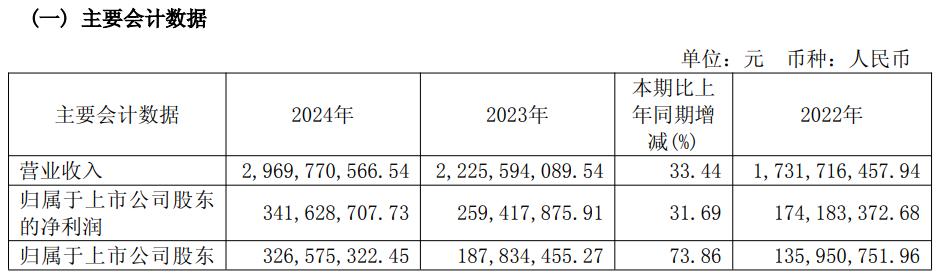
Core Viewpoint - Guangdong Marubi Biotechnology Co., Ltd. reported a strong performance for 2024, with revenue reaching 2.97 billion RMB, a year-on-year increase of 33.44%, and net profit attributable to shareholders rising by 31.69% to 341.63 million RMB [1][3]. Financial Performance - Revenue for 2024 was 2,969,770,566.54 RMB, up from 2,225,594,089.54 RMB in 2023, marking a 33.44% increase [3]. - Net profit attributable to shareholders was 341,628,707.73 RMB, compared to 259,417,875.91 RMB in 2023, reflecting a 31.69% growth [3]. - The main brand, Marubi, achieved over 2 billion RMB in revenue, while the PL Lover brand approached 1 billion RMB [6][8]. Business Segments - Skincare remains the top revenue category, generating 2.4 billion RMB, while the eye care segment has dropped to the third position [18]. - The PL Lover brand saw a revenue increase of 40.72%, reaching 905 million RMB, marking a staggering growth of approximately 1271 times since 2019 [11][12]. Market Position and Strategy - Marubi has successfully transitioned from a three-year growth stagnation post-IPO to a robust growth phase, driven by the restructuring of collagen technology and dual-brand development [6][7]. - The company has focused on a big product strategy, with significant sales from key products like the peptide eye cream and collagen essence [17][20]. Sales Channels and Regional Performance - Online sales accounted for 2.54 billion RMB, a 35.77% increase, while offline sales rose by 20.79% to 427 million RMB [20]. - The South China region generated 2.16 billion RMB in revenue, a 41.06% increase, while the Northeast region experienced the fastest growth at 63.30% [21][22]. Competitive Landscape - Despite the positive financial results, Marubi lags behind competitors like Proya and Up Beauty in terms of revenue and brand scale, with a significant gap to close [24][25]. - The company's R&D investment was 74 million RMB, ranking second to last among the top 10 beauty companies, raising concerns about its long-term competitiveness [25][27].
高喊“去地产” 服装收入却下滑,雅戈尔的“时尚”梦还有多远?
Xin Lang Cai Jing· 2025-04-25 06:36
Core Viewpoint - YOUNGOR is undergoing a painful transformation, with a decline in net profit for the fourth consecutive year despite a slight increase in revenue [1][3]. Financial Performance - In 2024, YOUNGOR reported revenue of 14.188 billion yuan, a year-on-year increase of 3.19%, while net profit attributable to shareholders was 2.767 billion yuan, a decline of 19.41% [1]. - The company has experienced a continuous decline in net profit from 2021 to 2023, with decreases of 29.15%, 1.05%, and 32.31% respectively [1]. Business Segments - The real estate sector remains a significant contributor to YOUNGOR's revenue, despite the company's announcement to exit this business. In 2024, real estate revenue accounted for a substantial portion of the company's income, with a reported 7.471 billion yuan, a year-on-year increase of 16.20% [12]. - The fashion segment, which was expected to drive growth, faced challenges with revenue and profit declines. In 2024, the fashion segment generated revenue of 6.799 billion yuan, down 6.94%, and net profit of 431 million yuan, down 43.90% [4][5]. Market Conditions - The overall retail market is under pressure, with a consumer confidence index at a low level and a significant drop in retail growth rates. The retail sales growth for clothing, shoes, and textiles was only 0.3% in 2024, a decrease of 12.60 percentage points from 2023 [4]. - The decline in the business apparel market is attributed to changing consumer preferences towards casual and outdoor wear, impacting YOUNGOR's traditional business model [7]. Strategic Adjustments - YOUNGOR plans to focus on product upgrades and iterations, aiming to reposition itself as a brand that caters to business professionals in various settings [7][8]. - The company is investing in channel development, with plans to open large "Business Pavilions" in key cities to enhance customer experience [7][8]. Investment and Real Estate Strategy - YOUNGOR is gradually exiting its real estate business, with no new projects launched in 2024 and a focus on clearing existing inventory [10][12]. - The investment segment remains crucial for maintaining stable net profits, with YOUNGOR recovering 1.796 billion yuan from financial investments in 2024 [12][15]. Future Outlook - The company is expected to continue its transformation and may consider external acquisitions to expand its business footprint, especially in the fashion sector [15].