华为

Search documents
新股前瞻|AI存储成市场风口,巨头环伺下的星辰天合能否突围?
Zhi Tong Cai Jing· 2026-02-04 08:13
Core Viewpoint - The global storage chip market is experiencing a bull market driven by a supply-demand imbalance, with significant growth in high-end storage chip demand due to the explosion of AI computing power. Companies in the storage industry, including Beijing Starry Sky Technology Co., Ltd. (Starry Sky), are leveraging capital markets for growth opportunities amid this favorable industry environment [1][10]. Company Overview - Starry Sky has submitted its IPO application to the Hong Kong Stock Exchange, focusing on enterprise-level AI storage solutions. It holds a 10.4% market share in China's distributed AI storage solutions market, making it the second-largest provider in this sector [1][2]. - The company has undergone three developmental phases since its establishment in 2015, evolving from a storage technology provider to a leader in the distributed AI storage solutions market [3][4]. Financial Performance - Starry Sky's revenue for 2023 and 2024 is projected to be 167 million and 172 million RMB, respectively, with losses of 181 million and 84.18 million RMB. However, in the first three quarters of 2025, the company reported revenue of 195 million RMB, a 65.4% year-on-year increase, and a net profit of 8.11 million RMB, marking a turnaround from a loss of 65.51 million RMB in the previous year [2][7]. - The company's revenue growth is attributed to increased demand for AI storage solutions, with significant order increases for both AI data lake storage and AI training and inference storage solutions [8][9]. Market Position and Competition - Starry Sky ranks second in the Chinese distributed AI storage solutions market, with a market share of 10.4%, trailing behind Huawei, which holds 14.7%. The company faces competition from major tech giants like Huawei, Inspur, and H3C, which offer comprehensive hardware and software solutions [10][12]. - The ongoing bull market for storage chips is expected to benefit Starry Sky, as its software-defined solutions help clients optimize existing storage infrastructure amid rising hardware costs [11]. Shareholder Structure - Starry Sky has completed eight rounds of financing since its inception, with the latest round in December 2022 valuing the company at 4.58 billion RMB. The shareholder structure includes a mix of founders, professional investment institutions, and state-owned enterprises, reflecting strong confidence in the company's future [4][5]. Revenue Model - The company primarily generates revenue from two core services: AI storage solutions and associated AI storage services, with the former contributing 80% of total revenue in 2024. The AI data lake storage and AI training and inference storage segments are crucial components of this revenue model [6][9].


汽车行业2月投资策略:智能驾驶加速推进,建议关注业绩期行情【国信汽车】
车中旭霞· 2026-02-04 08:08
Core Viewpoint - The article discusses the current state and future outlook of the automotive industry, focusing on sales data, market trends, and technological advancements in smart driving and electric vehicles [26]. Monthly Production and Sales - In January, the retail market for narrow-sense passenger vehicles was approximately 1.8 million units, a month-on-month decrease of 20.4% but a year-on-year increase of 0.3%. The estimated retail volume for new energy vehicles was around 800,000 units, with a penetration rate of about 44.4% [26]. - In December, the national retail of passenger vehicles was 2.261 million units, a year-on-year decrease of 14.0% but a month-on-month increase of 1.6%. Cumulative retail for 2025 is projected to reach 23.744 million units, a year-on-year growth of 3.8% [26]. - The wholesale of passenger vehicles in December was 2.789 million units, down 9.0% year-on-year and 7.0% month-on-month. Cumulative wholesale for 2025 is expected to be 29.554 million units, a year-on-year increase of 8.8% [26]. - The automotive production and sales in December were 3.296 million and 3.272 million units, respectively, with month-on-month decreases of 6.7% and 4.6%, and year-on-year decreases of 2.1% and 6.2% [26]. Market Performance - The CS automotive sector rose by 0.33% in January, with the CS passenger vehicle index falling by 5.41%. The CS commercial vehicle index increased by 15.59%, while the CS automotive parts index rose by 0.78% [2]. - The automotive sector underperformed compared to the CSI 300 index, lagging by 1.32 percentage points, and also underperformed the Shanghai Composite Index by 3.43 percentage points [2]. Cost Tracking - As of January 20, 2026, prices for float glass, aluminum ingots, and zinc ingots changed by -17.2%, +22.6%, and -2.1% year-on-year, respectively. Month-on-month changes were -1.2%, +10.8%, and +5.6% [2]. Industry Dynamics - Waymo completed a $16 billion financing round, with a post-money valuation of $126 billion, marking one of the largest single financings in the autonomous driving sector in recent years [4]. - Tesla plans to launch a major upgrade of its Optimus robot in Q1 2026, which will enhance its capabilities significantly [5]. - Li Xiang, CEO of Li Auto, stated that Level 4 autonomous driving will be realized by 2028 at the latest, emphasizing the importance of AI in the automotive sector [6]. Government News - A meeting was held by three departments to address the need for order in the new energy vehicle market, emphasizing the importance of innovation and quality while resisting chaotic price wars [16]. - The Shanghai municipal government released a proposal to accelerate the development of smart connected new energy vehicles through collaborative efforts and digital intelligence [17]. Upcoming Models - Several new models are set to launch in February 2026, including the Chery QQ3EV and various models from BMW and Jianghuai Automobile, indicating ongoing innovation and competition in the market [24].



AI算力行业周报:Meta与康宁签订60亿美元光纤大单,英伟达即将举办CPO网络研讨会-20260204
Huaxin Securities· 2026-02-04 07:53
Investment Rating - The report maintains a "Buy" rating for companies such as沃尔核材 (Worley), 天孚通信 (Tianfu Communication), and 长飞光纤 (Changfei Fiber) while recommending "Accumulate" for 立讯精密 (Luxshare Precision) [7] Core Insights - Meta has signed a long-term supply agreement with Corning for fiber optic cables worth up to $6 billion to accelerate AI data center construction, highlighting the strong demand for fiber optics in the AI infrastructure [3] - Nvidia is hosting a webinar focused on co-packaged silicon photonics (CPO) switches, emphasizing their strategic value in scaling AI computing power [4] - The report suggests focusing on companies like 天孚通信, 立讯精密, 长飞光纤, and 沃尔核材 due to their potential in the AI computing sector [5] Weekly Market Analysis - From January 26 to January 30, the communication sector saw a significant increase of 5.83%, ranking second among all sectors, while the electronics sector decreased by 2.51% [12][19] - The AI computing-related sub-sectors mostly showed an upward trend, with the communication network equipment and devices sector leading with an increase of 8.56% [19] - The report indicates a divergence in capital flow, with the communication sector experiencing a net inflow of 11.53 billion yuan, while the electronics sector faced a net outflow of 55.83 billion yuan [23][25] Company Announcements - Lotus Holdings announced progress in its transition to computing power business, including various contracts for GPU servers and cloud services [49] - Tongfu Microelectronics reported a reduction in shareholding by its major shareholder, which will not affect the company's governance structure [51] - Tianfu Communication completed a share reduction plan by a board member, which was executed in accordance with regulations and did not impact company control [52]
光大证券:1月新能源车表现疲软 各车企购车优惠加码
智通财经网· 2026-02-04 07:41
Core Viewpoint - The report from Everbright Securities highlights the focus on AI transformation in the automotive industry and the pressure from rising upstream raw material prices, particularly for new energy vehicles [1]. Group 1: AI Transformation in Automotive Industry - New energy vehicle companies are actively transitioning towards AI, especially in humanoid robotics. Tesla plans to gradually convert its Model S/X production line for humanoid robots, while Xpeng Motors will start mass production of humanoid robots in 2026. Li Auto has also established a humanoid robot team [1]. Group 2: Raw Material Price Pressure - From the end of 2025, prices for upstream raw materials such as copper, aluminum, and lithium carbonate have been rising, which is expected to pressure the gross profit margins of complete vehicles. The industry is advised to monitor the progress of price pressure digestion along the supply chain [1]. Group 3: January Performance of New Energy Vehicles - In January, the performance of new energy vehicles was weak: - Li Auto's delivery volume decreased by 7.5% year-on-year and 37.5% month-on-month to 27,668 units - NIO's delivery volume increased by 96.1% year-on-year but decreased by 43.5% month-on-month to 27,182 units - Xpeng's delivery volume fell by 34.1% year-on-year and 46.6% month-on-month to 20,011 units [1]. Group 4: New Model Launches - Various automakers launched updated models in January to meet tax requirements and enhance product competitiveness. BYD introduced long-range versions of its models, while Xpeng released several new models with improved cost-performance and intelligence levels [2]. Group 5: Increased Purchase Incentives - Tesla is offering significant purchase incentives, including insurance subsidies and low-interest financing options across its Model 3 and Model Y ranges. Other new energy vehicle companies like Li Auto, NIO, and Xpeng are also providing various financing options and maintaining competitive delivery timelines for their models [3][4]. Group 6: Delivery Performance - In January, Xiaomi delivered over 39,000 vehicles, while Huawei's delivery volume for its smart vehicle line increased by 65.5% year-on-year but decreased by 35.4% month-on-month to 58,000 units [4].

汽车行业 2026 年 2 月投资策略:智能驾驶加速推进,建议关注业绩期行情
Guoxin Securities· 2026-02-04 07:19
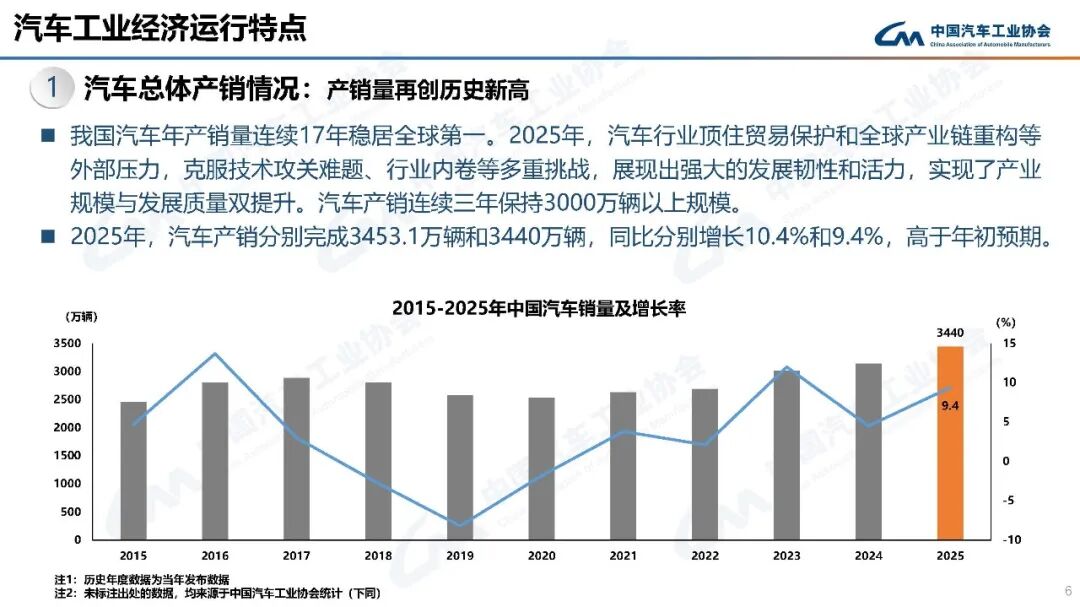
证券研究报告 | 2026年02月04日 汽车行业 2026 年 2 月投资策略 优于大市 智能驾驶加速推进,建议关注业绩期行情 月度产销:根据乘联会数据,1 月狭义乘用车零售市场规模约为 180 万辆, 环比下降 20.4%,同比增长 0.3%。其中新能源零售量预计为 80 万左右,渗 透率约 44.4%。12 月全国乘用车市场零售 226.1 万辆,同比下降 14.0%,环 比增长 1.6%。2025 年累计零售 2,374.4 万辆,同比增长 3.8%。12 月全国乘 用车厂商批发 278.9 万辆,同比下降 9.0%,环比下降 7.0%;2025 年累计批 发 2,955.4 万辆,同比增长 8.8%。根据中汽协数据,12 月汽车产销分别完 成 329.6 万辆和 327.2 万辆,环比分别下降 6.7%和 4.6%,同比分别下降 2.1% 和 6.2%。2025 年,汽车产销分别完成 3453.1 万辆和 3440 万辆,同比分别 增长 10.4%和 9.4%。2025 年 12 月,乘用车产销分别完成 287.9 万辆和 284.7 万辆,环比分别下降 8.4%和 6.3%,同比分别下降 4.2% ...



九源智能计算系统生态联合体2026年度第一次会议圆满召开
Yang Guang Wang· 2026-02-04 07:05
央广网北京2月4日消息(记者 殷雨婷)1月31日,九源智能计算系统生态联合体2026年度第一次会议在国家会议中心隆重召开。 本次会议以"协同创新·共赢未来"为核心导向,汇聚生态伙伴智慧,共同绘制国产智能计算系统从技术突破到产业落地的跨越式发展蓝图。 聚焦三大核心议题,破解产业协同难题 会议紧扣国产智能计算系统生态建设的关键挑战,设置三大核心研讨方向。 "下一代算力架构专家委员会"聘书颁发。(主办方供图,央广网发) 授聘仪式后,上海人工智能实验室乔宇教授作为专家委员会代表发表了致辞。 议题一:基础软硬件协同创新:围绕芯片、操作系统、中间件及超节点架构的适配优化展开深度探讨,旨在打通软硬件协同调度链路,夯实自主计算生 态根基。 议题二:大规模智能算力调度与集群效能优化:研讨算力资源高效分配、集群协同管理技术方案,助力提升算力利用率与应用落地能力。 议题三:开放创新体系共建:通过开源项目、比赛及课程活动,搭建开放共享的技术平台,推动创新资源整合与产业生态扩容,加速技术成果转化。 权威嘉宾云集,共话产业未来 中国工程院院士、清华大学教授郑纬民出席大会并致开幕辞,随后作题为《"九源"智能计算系统生态联合体2025年工作 ...
得物App发布“年度好生意榜”,千万级商品数同比增157%
Xin Lang Cai Jing· 2026-02-04 07:05
Core Insights - The article discusses the release of the "2025 Annual Good Business List" by the Dewu App, highlighting over 2000 brands and 1200 popular products based on various indices such as growth speed and consumer characteristics [1][3] Group 1: Brand Performance - Numerous brands experienced significant growth on the Dewu App over the past year, with Pop Mart selling over 1.5 million Labubu toys, achieving a GMV increase of over 500% [1][3] - Kailas targeted the core outdoor demographic aged 19-35, launching a custom FUGA model, resulting in an annual GMV growth of over 500% [1][3] - DJI's collaboration with Dewu for a special gift box during the 520 event led to a GMV increase of over 600% [1][3] - Brands like Decathlon, Descente, Huazhi, and Hailan Home saw their annual growth double, while 227 brands, including Descente, COACH, and Huawei, were recognized as "Most Popular Brands" [1][3] Group 2: Market Insights - The Dewu App has evolved into a comprehensive quality lifestyle shopping community, maintaining a double-digit annual growth rate, with a user base exceeding 600 million and a penetration rate of 50% among individuals under 30 in China [1][3] - Brands are leveraging insights into young consumer preferences by launching exclusive and scarce products on the Dewu platform, with data showing that four popular items sell out daily, and the number of million-level products has increased by 157% year-on-year [2][4] Group 3: Business Philosophy - Dewu's trading business leader, Wendy, emphasized the platform's commitment to being a "long-term business platform," promoting stable sales and longer product lifecycles to encourage brands to provide quality service to users [2][4] - The release of the annual list reflects the platform's and merchants' shared commitment to long-termism, providing a reference for brands looking to engage with the young consumer market [2][4]
中美AI竞赛进入下半场,决胜点在哪?
Guan Cha Zhe Wang· 2026-02-04 06:59
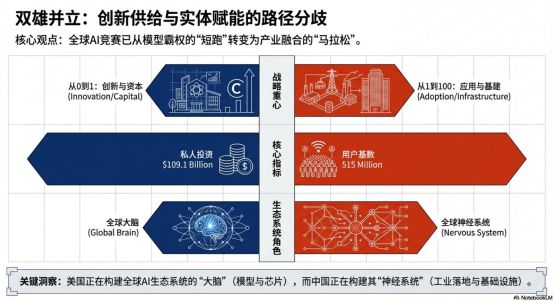
Core Insights - The current phase of the AI industry is shifting from a "technology parameter competition" to a focus on "application landing," emphasizing the creation of real value in sectors like healthcare, education, and government efficiency [1][2] - A "dual oligopoly" is emerging in the AI landscape, with the U.S. leading in foundational models and high-value software services, while China is advancing in large-scale applications and industrial empowerment [2][3] Group 1: U.S. and China's Competitive Landscape - The U.S. maintains an advantage in original innovation and high-value software services, while China is establishing barriers in large-scale applications and industrial empowerment [2][3] - Despite the U.S. leading in foundational model capabilities, China's models are proving to be cost-effective and competitive, closing the gap significantly in performance metrics [3][7] - The RAND Corporation's report indicates that the U.S. cannot solely rely on chip superiority to prevent Chinese models from reaching Tier-1 levels [3][6] Group 2: AI Application and Industrial Integration - China's AI applications are deeply integrated into core production processes, with a high adoption rate of 67% in manufacturing compared to the U.S.'s 34% [9][10] - Chinese companies are focusing on embedding cost-effective models into various smart hardware and industrial software, moving away from merely benchmarking against models like GPT-5 [9][10] - The integration of AI into industries such as steel and mining is transforming operational efficiency and safety, showcasing AI's role as a productivity tool rather than just a technological novelty [14][18] Group 3: Challenges and Opportunities - The transition of AI from theoretical applications to practical tools faces challenges, including unique industry scenarios, data accessibility, and the long value chain from technology validation to economic benefits [13] - Each industry challenge overcome can create unique competitive barriers, providing opportunities for China to build a robust AI ecosystem [13] - The development of domestic AI infrastructure, such as Huawei's CloudMatrix, is crucial for supporting complex AI applications and ensuring long-term operational stability [14][20]
阿维塔旅行车定名为阿维塔06T 搭载华为最新激光雷达
Zhong Guo Zhi Liang Xin Wen Wang· 2026-02-04 06:55
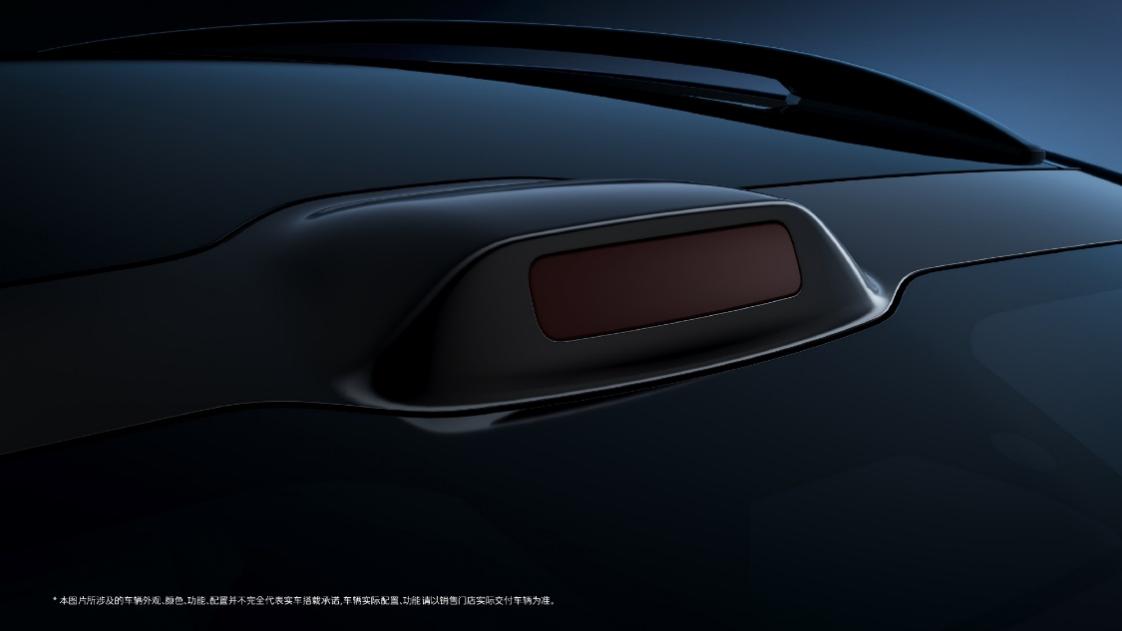
Group 1 - The new travel version model named "Avita 06T" was announced by Avita, featuring Huawei's latest generation laser radar [1] - Avita 06T is a product of the strategic cooperation 2.0 between Huawei and Avita, maintaining design elements such as the family-style front face and through-type taillights [1] - The vehicle's side adopts a shooting brake design, providing a longer and more elegant line, with a roof rack for user convenience [1] Group 2 - The rear of the vehicle is designed to offer greater trunk space, with an expected increase in headroom for the second row [1] - While powertrain information has not been disclosed, it is anticipated that the Avita 06T will offer both pure electric and range-extended versions, similar to the Avita 06 [3] - The model is expected to feature the HarmonySpace 5 smart cabin configuration [3]
2025年度中国汽车产业盘点——销量篇 车企竞争进入深水区
Zhong Guo Zhi Liang Xin Wen Wang· 2026-02-04 06:51
Overall Market - In 2025, China's automotive industry achieved record production and sales, with 34.53 million vehicles produced and 34.40 million sold, marking year-on-year growth of 10.4% and 9.4% respectively, driven by policy support and market dynamics [1][5] - The market demonstrated strong resilience against global trade protectionism, supply chain restructuring, and intensified competition [1] Market Dynamics - The "Two New" policy expanded consumer goods categories and support for equipment upgrades, stimulating vehicle replacement demand, particularly in lower-tier cities [5] - The transition to electric vehicles (EVs) was facilitated by stable tax policies and improved charging infrastructure, lowering barriers for potential EV buyers [5] - Consumer preferences are shifting towards intelligent features and green travel, pushing the market towards higher quality development [5] Segmented Market - In 2025, new energy vehicles (NEVs) became the dominant growth segment, with production and sales reaching 16.63 million and 16.49 million respectively, reflecting year-on-year growth of 29% and 28.2% [6] - NEVs accounted for 47.9% of total new vehicle sales, a 7 percentage point increase from the previous year [6] - The traditional fuel vehicle market is undergoing structural adjustments, with demand for high-displacement, high-fuel-consumption models declining, while smaller, hybrid models remain popular [10] Market Structure - Domestic brands solidified their leading position, with their market share exceeding 60% for the first time, driven by strong performances from companies like BYD, Geely, and Changan [13][15] - BYD led the market with over 4.6 million units sold, benefiting from its technological advancements in NEVs [15] - Joint venture brands faced significant pressure, with declining market shares due to slow adaptation to the NEV market and product homogenization [16] Export Market - In 2025, China's automotive exports exceeded 7 million units, achieving a year-on-year growth of 21.1%, maintaining its position as the world's largest automotive exporter for three consecutive years [18] - Emerging markets in Southeast Asia, the Middle East, and South America remain key destinations for Chinese automotive exports, with NEVs becoming a significant export category [18] Sales Rankings - The top ten automotive brands in 2025 showcased a strong performance from domestic brands, with five spots occupied by them, and a combined market share of 37.3% [21] - BYD, Geely, and Changan maintained their positions through a dual strategy of fuel and NEV offerings [21] - Traditional joint venture brands like FAW-Volkswagen and SAIC Volkswagen continued to experience declines, unable to offset losses from fuel vehicle sales with NEV growth [21] Emerging Brands - New entrants like Leap Motor and Hongmeng Zhixing showed remarkable growth, with Leap Motor doubling its sales through self-developed technology and competitive pricing [23] - Traditional automakers' NEV sub-brands also performed well, rapidly capturing market share through targeted strategies [23] Consumer Trends - Successful models in 2025 aligned with market trends, focusing on price adaptability, user needs, and technological highlights [24] - Family and young consumers emerged as core target groups, with vehicles designed for spaciousness and smart features gaining popularity [26] - The integration of new energy and intelligent technologies became essential for popular models, addressing consumer concerns about range and charging [26] Future Outlook - The strong rise of NEVs indicates China's automotive industry is positioned advantageously in the global transformation of the sector [28] - Continued policy support for NEVs and smart vehicles is expected, alongside growing consumer demand for high-quality, intelligent products [28] - The industry is likely to see further integration across the supply chain, enhancing competitiveness [28]