
美元流动性

Search documents
11月转债策略:转债估值高位,风格均衡为宜
KAIYUAN SECURITIES· 2025-11-07 09:12
Group 1 - The report identifies three main factors influencing convertible bond performance: equity-debt price ratio, dollar liquidity, and large-small cap style [2][11][20] - The current economic environment is characterized by a recovery phase, but limited incremental benefits due to insufficient momentum from households and enterprises [2][12][39] - The dollar is expected to remain in a loose monetary environment, which historically supports equity markets [2][16][19] Group 2 - Convertible bonds are currently in a trading phase that follows the performance of underlying stocks, having experienced three cycles since 2018 [3][27][28] - The median price of convertible bonds as of November 3, 2025, is 132.72 yuan, placing it at the 99.3% historical percentile, indicating a high valuation level [4][34][35] - The median conversion premium is 27%, which is at the 55.3% historical percentile, suggesting a relatively high valuation in the current market [4][34][35] Group 3 - The report recommends a balanced investment strategy for convertible bonds, focusing on equity-like convertible bonds priced above 120 yuan, with specific recommendations for various sectors [5][39][41] - Recommended convertible bonds include those from financial consumption, public utilities, AI and robotics, as well as semiconductor and manufacturing sectors [5][39][41] Group 4 - The investor behavior analysis shows that the total outstanding convertible bond scale has decreased from 844.7 billion yuan in January 2025 to 759.5 billion yuan in October 2025, with funds increasing their holdings [29][31] - The report highlights a shift in investor composition, with funds increasing their share from 34.3% to 39.8% during the same period, while insurance institutions have reduced their holdings significantly [29][32]
日度策略参考-20251106
Guo Mao Qi Huo· 2025-11-06 05:28
Report Summary 1. Industry Investment Ratings The report does not provide an overall industry investment rating. It offers trend judgments for various commodities within different sectors, including "oscillating", "bullish", and "bearish". 2. Core Views - The current macro - level is in a relatively vacuous period, with A - shares lacking a clear upward mainline. The market trading volume remains low, and the stock index continues to oscillate while accumulating momentum for the next upward movement. There is strong support below the stock index due to policy protection and abundant macro - liquidity [1]. - Different commodities in various sectors are affected by a combination of macroeconomic factors, supply - demand fundamentals, and geopolitical events, resulting in different price trends and investment outlooks. 3. Summary by Commodity Sectors Macro - Financial - **Stock Index**: Oscillating. A - shares lack an upward mainline, trading volume is low, but there is strong support below due to policy and liquidity [1]. - **Treasury Bonds**: Oscillating. Asset shortage and weak economy are favorable for bond futures, but the central bank's short - term interest rate risk warning suppresses the upward space [1]. - **Gold and Silver**: Oscillating. The tightness of the US dollar liquidity has eased, and precious metals are stabilizing and oscillating [1]. Non - Ferrous Metals - **Copper**: Oscillating. The tightness of the US dollar liquidity has eased, market risk appetite has recovered, and copper prices have stopped falling. Limited industrial drivers and digested macro - benefits lead to an oscillating trend [1]. - **Aluminum**: Oscillating. With small production profits, domestic alumina production capacity is continuously released, and production and inventory are both increasing, pressuring the spot price. Attention should be paid to cost support [1]. - **Zinc**: Oscillating. The US government shutdown has increased market risk aversion. LME zinc inventory is continuously decreasing, and the risk of a short squeeze remains, but domestic fundamentals are still in surplus, so be cautious when chasing high prices [1]. - **Nickel**: Oscillating. US economic data and Fed policy expectations affect market risk appetite. The RKAB policy in Indonesia has been implemented, and nickel prices are mainly affected by macro factors in the short term, with high inventory pressure [1]. - **Stainless Steel**: Oscillating. Macro - sentiment is volatile, and stainless steel futures are oscillating at the bottom. Pay attention to the actual production of steel mills [1]. - **Tin**: Oscillating. Macro - benefits have been digested, and considering the raw material shortage and good new - quality demand expectations, it is recommended to pay attention to buying at low prices in the long - term [1]. - **Industrial Silicon**: Oscillating. Northwest production capacity is resuming, and southwest production is weak. The impact of the dry season is weakening [1]. - **Polysilicon**: Oscillating. There is an expectation of production capacity reduction in the long - term, and terminal installation is expected to increase in the fourth quarter [1]. - **Lithium Carbonate**: Oscillating. The traditional peak season for new - energy vehicles is approaching, and energy - storage demand is strong, but there is hedging pressure [1]. Black Metals - **Rebar**: Oscillating. There are concerns about weakening industrial demand in the off - season, and attention should be paid to upward pressure after the realization of macro - sentiment [1]. - **Hot - Rolled Coil**: Oscillating. The off - season effect is not obvious, but the industrial structure is loose, and attention should be paid to upward price pressure [1]. - **Iron Ore**: Oscillating. Near - month contracts are restricted by production cuts, but there is an upward opportunity for far - month contracts due to good commodity sentiment [1]. - **Coke**: Oscillating. There is cost support and direct demand, but high supply and inventory accumulation put pressure on the sector, and the price rebound space is limited [1]. - **Silicon Iron**: Oscillating. Short - term production profit is poor, cost support is strong, but high supply and downstream pressure limit price rebound [1]. - **Coking Coal and Coke**: Oscillating. Coal and coke are strong due to tight supply, but downstream steel prices have weakened first, and there is a risk of the price returning to the oscillating range. It is recommended to wait and see in the short - term and go long at low prices in the long - term [1]. Agricultural Products - **Palm Oil**: Oscillating. It is currently under the pressure of seasonal production increase and weak exports, but may rebound if export data improves in the traditional production - reduction cycle starting in November [1]. - **Soybean Oil**: Oscillating. China's purchase of US soybeans may bring a loose supply expectation, and the rebound momentum is insufficient [1]. - **Rapeseed Oil**: Oscillating. The meeting between Chinese and Canadian leaders and Canadian rapeseed harvest put pressure on the market [1]. - **Cotton**: Oscillating. Uncertainty in cotton demand exists due to the contradiction between Xinjiang's production capacity expansion and reduced spinning profit. The downside space is limited, but the new - crop basis and futures price may be under pressure [1]. - **Sugar**: Oscillating. Typhoons have affected sugarcane production, and there is seasonal upward pressure, but the rebound space is limited after new - sugar listing [1]. - **Corn**: Oscillating. There is selling pressure in the short - term, and the market is expected to oscillate and bottom out. Attention should be paid to traders' inventory - building rhythm and policy changes [1]. - **Soybean Meal**: Oscillating. Domestic soybean purchase and processing margins are poor, and the market may rebound to repair margins, but the supply is expected to be loose in the near and far terms, limiting the rebound height [1]. Energy and Chemicals - **Crude Oil**: Oscillating. OPEC+ plans to maintain a small increase in production in December, geopolitical speculation has cooled, and trade policies have eased market sentiment [1]. - **Fuel Oil**: Oscillating. Similar to crude oil, affected by OPEC+ production policy, geopolitics, and trade policies [1]. - **Asphalt**: Bearish. Short - term supply - demand contradiction is not prominent, following crude oil. The "14th Five - Year Plan" construction demand is likely to be false, and supply is sufficient with high profits [1]. - **Natural Rubber**: Oscillating. Supported by raw material cost, with decreasing intermediate inventory and a positive commodity market atmosphere [1]. - **Synthetic Rubber**: Oscillating. Crude oil price decline weakens the cost support of butadiene, and synthetic rubber supply is loose with high inventory [1]. - **PTA**: Oscillating. The news of the "anti - involution" policy, overseas and domestic device failures, and maintenance have affected production and prices [1]. - **Ethylene Glycol**: Oscillating. It follows the decline of crude oil prices, but coal price increase strengthens cost support. The polyester peak season is ending without obvious decline [1]. - **Short - Fiber**: Oscillating. It is affected by the PTA price and cost, with a strengthening basis [1]. - **Styrene**: Oscillating. Weak Asian benzene prices, low device operating rates, and closed arbitrage windows have affected the market [1]. - **Urea**: Oscillating. Export sentiment has eased, and domestic demand is insufficient, but there is support from the "anti - involution" policy and cost [1]. - **PE**: Oscillating. High supply leads to large inventory pressure, weakening maintenance, and slow - growing demand [1]. - **PP**: Oscillating. Insufficient maintenance support and new device production increase supply pressure, and demand improvement is less than expected [1]. - **PVC**: Oscillating. New device production and reduced maintenance increase supply pressure, and coal price increase strengthens cost support [1]. - **Caustic Soda**: Oscillating. Planned production expansion in Guangxi, reduced maintenance concentration, and potential short - squeeze risk [1]. - **LPG**: Oscillating. International oil and gas fundamentals are loose, and domestic spot fundamentals are stable [1].
发车!一场小型的流动性危机
Sou Hu Cai Jing· 2025-11-05 18:10
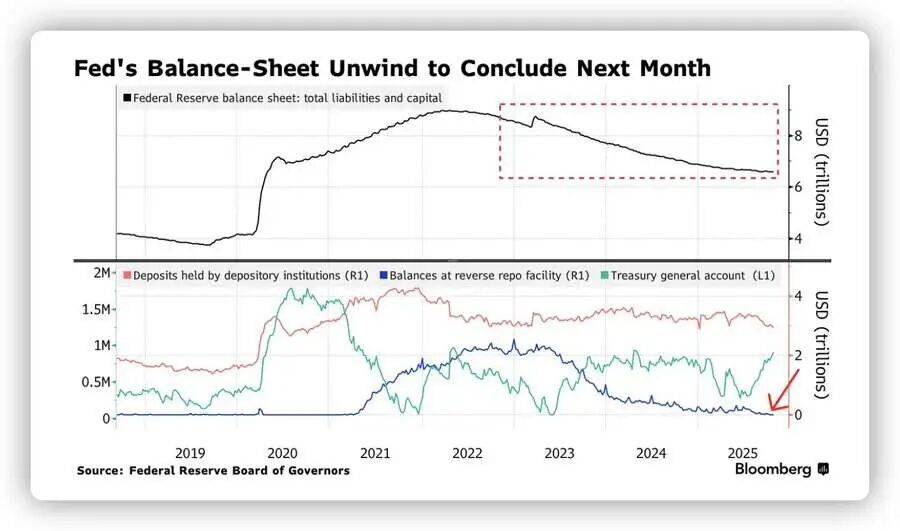
本期发车,懒猫全球配置组合重点买入A股、美股和黄金。 最近,全球市场陷入集体下跌,美股遭遇了"黑色星期二",日韩股市今天也重挫。 风险资产大跌有几个方面的原因。 首先是情绪上,高盛和大摩CEO这两位大佬几乎是在同一时间发出预警,称美股估值太高,未来12至24个月内可能出现10%-20%的回调。 另外,知名的大空头、对冲基金经理Michael Burry在三季度已经开始做空英伟达和人工智能热门股票Palantir。 还有,华尔街知名多头Yardeni也怀疑美股逼近回调边缘,警告年底涨势存在不确定性。 其次是流动性上。 本轮美国政府关门时间超过35天,已经正式成为历史上持续时间最长的政府停摆期。因为政府停摆财政开支减少,而美债发行继续,这导致美国财政部一 般账户(TGA)余额急剧膨胀。 我们都知道,流动性对金融市场至关重要,美元流动性可以理解为全球金融体系的"水位"。 当美联储释放流动性时,资产价格上涨、风险偏好提升;当流动性收紧时,融资成本上升、资产重估压力加大。 如何观察美元流动性呢? 可以套用一个公式:金融市场净流动性=美联储资产负债表规模-TGA-逆回购(RRP),该指标也大致等同于银行的准备金规模。 过 ...

全球股市突然大跌!背后到底发生了什么?
大胡子说房· 2025-11-05 10:46
Core Viewpoint - The global stock markets have experienced significant declines, with various indices across regions showing negative performance, indicating a widespread market correction [1][3][4]. Market Performance Summary - Major indices in the Asia-Pacific region, Europe, and the Americas have all reported losses, with the Hang Seng Index down by 1.03%, the S&P 500 down by 1.17%, and the Nasdaq down by 2.04% [2][3]. - The U.S. stock market saw the Dow Jones drop by 0.53%, while the European Stoxx 50 index fell by 0.27% [3]. Asset Class Declines - Not only equities but also commodities such as gold, oil, and cryptocurrencies have faced substantial declines, with gold futures down by 1.81% and Bitcoin dropping over 7% [4][5]. - The decline in AI-related technology stocks, which had previously driven market gains, has contributed to the overall downturn, with companies like Intel and Tesla experiencing significant losses [4][5]. Market Sentiment and Concerns - There is growing skepticism regarding the sustainability of high valuations in AI-related stocks, as many of these companies are currently unprofitable [5]. - Concerns about a potential liquidity crisis in the U.S. dollar market have emerged, with indicators such as the SOFR rate and the TGA account balance signaling tight liquidity conditions [7][10]. Unique Market Behavior - The Chinese A-share market exhibited resilience, with the Shanghai Composite Index closing up by 0.23%, attributed to government support during market pressure [11][12][13]. - The influence of government intervention in stabilizing the A-share market is noted as unprecedented, although long-term sustainability remains uncertain due to external liquidity issues [13]. Future Outlook - The article suggests that while the long-term outlook for the A-share market remains positive, short-term volatility is expected, and investors should focus on defensive strategies [13]. - Upcoming educational resources are mentioned, aimed at helping investors navigate current market conditions and identify potential opportunities [14][15][16].



全球暴跌,A股独涨,这是什么逻辑?
Sou Hu Cai Jing· 2025-11-05 09:55
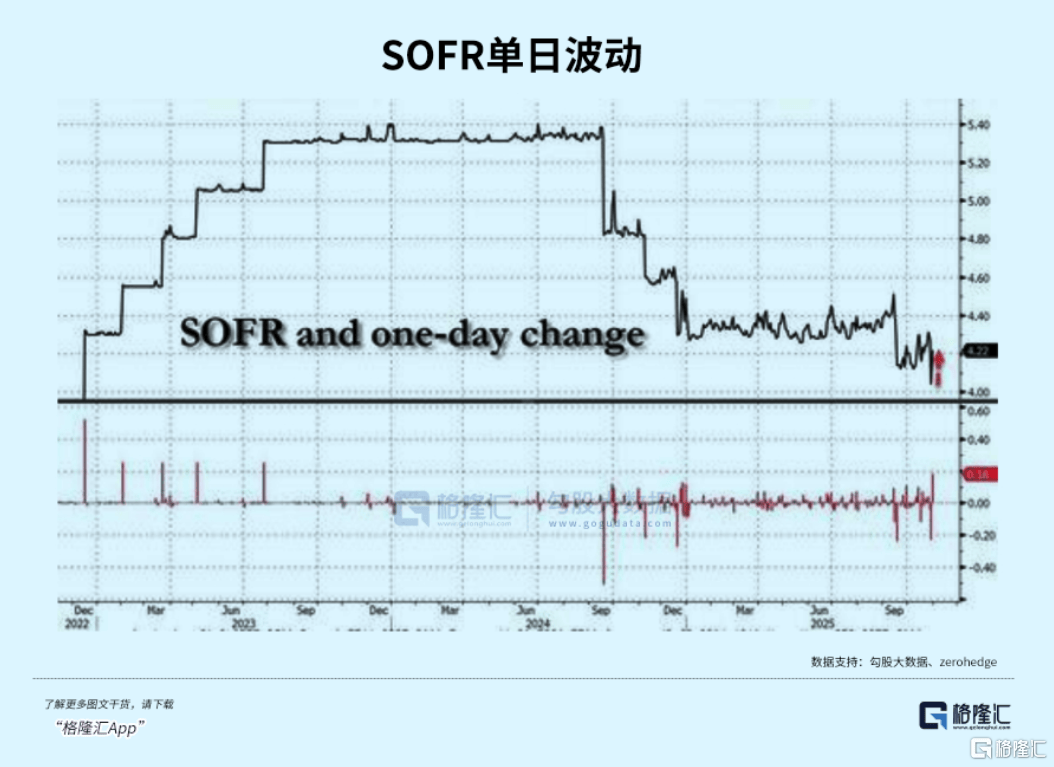
Group 1 - Global markets experienced a significant downturn, with the U.S. market liquidity tightening, as indicated by the surge in the SOFR rate, which rose by 22 basis points to 4.22%, marking the largest increase in a year [2][4] - The spread between SOFR and the federal funds rate increased by 32 basis points, the highest level since March 2020, indicating severe liquidity issues [4] - The U.S. Treasury's cash balance exceeded $1 trillion for the first time in five years, leading to a drop in the Federal Reserve's reserves to $2.85 trillion, the lowest since early 2021 [7][8] Group 2 - The failure of the Senate's funding proposal coincided with the market's accelerated decline, as optimism about a resolution diminished [11] - The A-share market showed resilience, traditionally rebounding after global downturns, with expectations of a low open followed by a recovery [2][15] - The photovoltaic sector led the rebound, supported by underlying trends and a bottoming out, while consumer sectors remained weak [15] Group 3 - The U.S. economy's reliance on the AI industry is a growing concern, with overall economic growth being minimal outside of AI-related spending [16] - Oracle's rising credit default swaps and increasing debt levels highlight the fragility of the current economic situation, with total debt exceeding $100 billion [17] - The potential for an economic downturn similar to the 2000 internet bubble burst is a risk if the AI sector falters, emphasizing the need for vigilance regarding economic dependencies [17]
全球暴跌,A股独涨,这是什么逻辑?
格隆汇APP· 2025-11-05 09:37
Market Overview - Global markets experienced a significant downturn, with not only stock markets but also commodities like gold and sugar oranges plummeting [2] - Despite the global decline, the A-share market showed resilience, often rising after global downturns, with a success probability of around 90% based on historical trends [2] Causes of Market Turbulence - The recent instability in global markets is attributed to tightening liquidity in the U.S. market, as evidenced by the surge in the SOFR (Secured Overnight Financing Rate) by 22 basis points to 4.22%, marking the largest increase in a year [4] - The spread between SOFR and the federal funds rate reached its highest level since March 2020, indicating severe liquidity issues [6] - The rise in rates is compounded by a significant increase in the three-month general collateral rate spread, which rose by 25 basis points, the highest since the COVID-19 pandemic [8] - The tightening liquidity is primarily due to the U.S. government shutdown, which has led to a lack of spending by the Treasury, resulting in a cash balance exceeding $1 trillion for the first time in five years [11] - The Federal Reserve's reserves have dropped to $2.85 trillion, the lowest since early 2021, due to the Treasury absorbing excess cash [13] Market Reactions - The market's accelerated decline coincided with the failure of the Senate's funding proposal, which shifted market sentiment from cautious optimism to panic [16] - The downturn affected various assets, including U.S. stocks, gold, and other commodities [17] Investment Insights - The A-share market is expected to rebound, particularly in sectors like photovoltaic energy, which is seen as a strong performer due to its positioning at the bottom of the market cycle and potential for growth [20] - The consumer sector is currently underperforming, with investors facing challenges in realizing gains [20] - The reliance of the U.S. economy on the AI sector raises concerns about sustainability, as economic growth outside of AI-related spending has been minimal [22] - Oracle's rising credit default swaps and increasing debt levels signal potential vulnerabilities in the AI sector, which could lead to broader economic repercussions if the AI bubble bursts [23] Future Considerations - The market's response to the U.S. government shutdown and the potential for resolution could create opportunities for investors [19] - Continuous monitoring of macroeconomic factors, policy changes, and industry developments is essential for identifying investment opportunities and risks [24]

观点:比特币下跌可能由于暂时的流动性紧缩
Sou Hu Cai Jing· 2025-11-05 07:59
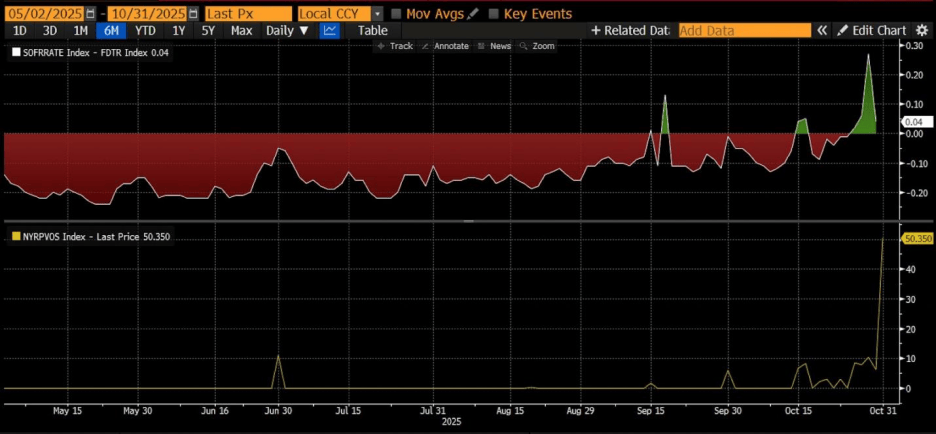
Group 1 - The core issue affecting Bitcoin (BTC) is a structural tightening of USD liquidity, primarily due to the U.S. Treasury General Account (TGA) balance nearing $1 trillion, which is absorbing market liquidity [2][3] - The Federal Reserve has been compelled to restart temporary repurchase operations, injecting nearly $30 billion into the market, marking the first such action since the 2019 repo crisis [2][7][30] - Historical patterns suggest that periods of extreme liquidity tightening often precede market reversals, indicating that BTC may be nearing a bottom as government spending is expected to resume [3][4][29] Group 2 - BTC is particularly sensitive to liquidity conditions, and the recent tightening has contributed to its price weakness, especially against a backdrop of rising tech stock indices [4][5] - The SOFR-FDTR spread has reached +30 basis points, indicating that banks are borrowing at higher costs due to liquidity pressures [5][8] - The TGA's increase reflects the Treasury's strategy to prepare for potential government shutdowns, which has led to a reduction in available market dollars [12][23] Group 3 - The relationship between TGA and ON RRP is crucial for understanding liquidity dynamics; an increase in TGA typically signals a withdrawal of liquidity from the market [12][19] - The current liquidity situation is characterized by a significant drop in bank reserves, which is being monitored closely as it directly impacts BTC price movements [9][18] - Predictions suggest that the government may reach a compromise by mid-November, which could lead to a decrease in TGA and a restoration of liquidity, potentially supporting BTC prices [3][34]
招银国际每日投资策略-20251105
Zhao Yin Guo Ji· 2025-11-05 03:59
Market Overview - Global markets experienced a decline, with the Hang Seng Index falling by 0.79% and the S&P 500 down by 1.17% [1][3] - The A-share market is in a correction phase since October 2, with a potential drop of 15%-20% expected [3] - Defensive sectors are seeing capital inflows, while materials, healthcare, and consumer discretionary sectors are leading declines in Hong Kong stocks [3] Sector Performance - The Hang Seng Financial Index rose by 0.26%, while the Hang Seng Industrial and Commercial Index fell by 1.44% [2] - High-dividend sectors such as telecommunications and utilities are performing well amidst market volatility [3] Company Insights - Luxshare Precision (002475 CH) has its target price raised to 75.55 RMB, reflecting strong synergy from the Apple upgrade cycle and ODM integration [5] - The expected compound annual growth rate for Luxshare's earnings from FY25-27 is projected at 27%, driven by growth in consumer electronics, automotive, and communication sectors [5] Economic Indicators - The UK government is focusing on reducing inflation and managing national debt, hinting at potential tax increases in the upcoming budget [3] - The U.S. job vacancies have dropped to the lowest level since April 2021, indicating a tightening labor market [4]

日度策略参考-20251105
Guo Mao Qi Huo· 2025-11-05 03:21
Report Industry Investment Ratings - **Bullish**: None - **Bearish**: Palm oil, Rapeseed oil, Soybean meal, Paper pulp - **Neutral (Oscillating)**: Stock index, Treasury bond, Gold, Copper, Aluminum, Alumina, Zinc, Nickel, Stainless steel, Tin, Polysilicon, Lithium carbonate, Iron ore, Manganese silicon, Soda ash, Coking coal, Coke, Cotton, Sugar, Corn, Crude oil, Fuel oil, Asphalt, Natural rubber, Synthetic rubber, PTA, Ethylene glycol, Short - fiber, Styrene, Urea, PE, PP, PVC, Caustic soda, PG, Container shipping European line Core Views - Short - term, market sentiment may shift from optimism to caution, and the stock index may enter an oscillating phase to accumulate momentum for the next upward movement, with strong support below due to policy and liquidity [1]. - Asset shortage and weak economy are favorable for bond futures, but short - term central bank interest - rate risk warnings suppress the upside [1]. - Precious metals are under short - term pressure due to tight dollar liquidity [1]. - Copper price is expected to have limited downside, while aluminum price oscillates, and alumina has a weak fundamental situation [1]. - Zinc price is expected to stay high, but chasing high should be cautious; nickel and stainless - steel prices are affected by macro factors and have different trends [1]. - Tin has long - term buying opportunities at low prices; polysilicon, lithium carbonate, and other commodities have their own oscillating or directional trends based on supply - demand and macro factors [1]. - Some agricultural products like palm oil, rapeseed oil, etc. face bearish factors, while others like sugar and cotton have complex supply - demand situations [1]. - Energy - chemical products' prices are affected by factors such as supply - demand, policies, and cost, showing various trends [1]. Summary by Related Catalogs Stock Index - Short - term, with the release of positive factors, the stock index may oscillate to accumulate momentum for the next upward movement, and there is strong support below due to policy and liquidity [1]. Treasury Bond - Asset shortage and weak economy are favorable for bond futures, but short - term central bank interest - rate risk warnings suppress the upside [1]. Gold - Precious metals are under short - term pressure due to tight dollar liquidity [1]. Copper - Macro - positive sentiment is digested, and copper price may decline, but the downside is limited [1]. Aluminum - Recent industrial drivers are limited, and with the digestion of macro - positives, aluminum price oscillates [1]. Alumina - Domestic alumina production capacity is continuously released, with both production and inventory increasing, and the fundamental situation is weak, putting pressure on the spot price [1]. Zinc - Market risk aversion rises, LME zinc inventory is decreasing, and zinc price is strong, but domestic over - supply requires caution when chasing high [1]. Nickel - Short - term, nickel price may be dominated by macro factors and oscillate weakly, with high inventory pressure; long - term, primary nickel over - supply persists [1]. Stainless Steel - Macro sentiment weakens, and stainless - steel futures are under pressure; short - term operations are recommended, and opportunities for selling hedges at high prices should be noted [1]. Tin - Long - term, there are opportunities to go long at low prices due to the unrepaired raw - material end and good new - quality demand expectations [1]. Polysilicon - Northwest production capacity is recovering, production in November is decreasing, and there are expectations of capacity reduction and increased terminal installation [1]. Lithium Carbonate - There are concerns about potential weakening of industrial demand in the off - season, and attention should be paid to upward pressure after the realization of macro sentiment [1]. Iron Ore - Near - month production is restricted, and far - month has upward potential [1]. Manganese Silicon - Direct demand is good, but high supply and inventory pressure limit price rebound [1]. Soda Ash - It follows glass, but supply - demand is average, and there is strong upward resistance [1]. Coking Coal and Coke - Coking coal is testing support, and coke has a complex situation; short - term, single - side operations should be observed, and long - term, low - buying is recommended [1]. Palm Oil - Short - term, it faces seasonal production increase and weak exports; from November, there may be a phased rebound if exports improve [1]. Rapeseed Oil - Sino - Canadian relations and Canadian harvest put pressure on the price [1]. Cotton - Uncertainty in cotton demand exists due to the contradiction between Xinjiang's capacity expansion and reduced spinning profit; the downside is limited, but new - crop base and price may be under pressure [1]. Sugar - Short - term, there is seasonal upward momentum, but new - sugar listing may limit the rebound space [1]. Corn - Futures and spot face selling pressure, and the price may oscillate and bottom out [1]. Soybean Meal - Domestic soybean purchase and processing profit is poor, and the price may rebound to repair the profit, but supply expectations limit the rebound height [1]. Paper Pulp - The 11 - contract has pressure, and an 11 - 1 reverse spread is recommended [1]. Log - The fundamental situation has declined, and it is recommended to wait and see [1]. Live Pig - Short - term, futures follow the spot and turn weak [1]. Crude Oil and Fuel Oil - OPEC+ continues to increase production slightly, geopolitical hype cools down, and market sentiment eases [1]. Asphalt - Short - term supply - demand is not prominent, and the "14th Five - Year Plan" demand may be false; supply is sufficient, and profit is high [1]. Natural Rubber - Supported by raw - material cost, mid - stream inventory decreases, and the market atmosphere is positive [1]. Synthetic Rubber - Cost support weakens, supply is loose, and the price is adjusted downwards [1]. PTA and Short - fiber - The "anti - involution" policy drives the price up, and short - fiber follows the cost [1]. Ethylene Glycol - It follows the decline of crude oil, but cost support strengthens, and polyester demand is stable [1]. Styrene - Asian benzene price is weak, and styrene profit declines, with more device overhauls [1]. Urea - Export is weak, and there is cost support [1]. PE and PP - Supply pressure is high, and downstream improvement is less than expected [1]. PVC - Supply pressure is large, and cost support strengthens [1]. Caustic Soda - Production plans increase, over - concentration of overhauls decreases, and there is a risk of short - squeeze [1]. PG - International oil and gas supply is loose, and domestic spot is stable [1]. Container Shipping European Line - Macro - positive sentiment is digested, and November's shipping capacity supply is relatively loose [1].
铜冠金源期货商品日报-20251105
Tong Guan Jin Yuan Qi Huo· 2025-11-05 02:45
1. Report Industry Investment Rating There is no information provided in the report regarding the industry investment rating. 2. Core View of the Report - The US government shutdown has reached a record length, causing significant concerns about liquidity and a notable decline in market risk appetite. This has led to a correction in risk assets. The market is closely watching the US government's reopening and key economic data such as the ADP employment and non - manufacturing PMI for October [2]. - In the domestic market, the A - share market is expected to be weak in the short - term and has long - term investment value. The bond market is expected to maintain a relatively strong and volatile pattern in November [3]. - Precious metals, copper, aluminum, and other commodities are under pressure due to factors such as the US government shutdown, rising dollar index, and changes in supply - demand fundamentals. Different commodities have different trends based on their own supply - demand and cost factors [4][6][8]. 3. Summary by Relevant Catalogs 3.1 Macro - Overseas: The US government shutdown has reached a record length, causing a significant decline in market risk appetite. The Nasdaq fell by more than 2%, and prices of gold, copper, and oil all declined. The dollar index returned above 100, and the 10Y US Treasury yield decreased. The SOFR rate increased significantly at the end of October, affected by both structural and seasonal factors. The correction of risk assets is mainly due to profit - taking after reaching high levels. The market is waiting for the US government to reopen to relieve liquidity in the repo market [2]. - Domestic: The A - share market weakened on Tuesday, with over 3,600 stocks closing lower and trading volume shrinking to 1.94 trillion. The dividend and micro - cap styles continued to dominate, while the ChiNext and STAR Market adjusted. In November, the market lacks new macro and event catalysts, and the fundamentals will remain moderately volatile. In the short - term, it is expected to be weak, but in the long - term, it is still cost - effective to buy on dips. The bond market continued to diverge, with long - term interest rates falling and short - term rates rising. The central bank's net purchase of national debt in October was 20 billion yuan. In November, the bond market may benefit from the decline in risk appetite and refocus on fundamentals, maintaining a relatively strong and volatile pattern [3]. 3.2 Precious Metals - On Tuesday, international precious metal futures prices both declined. COMEX gold futures fell 1.81% to $3,941.30 per ounce, and COMEX silver futures fell 2.40% to $46.90 per ounce. This was mainly due to the rise in the dollar index and the decrease in the market's expectation of the Fed's rate cut in December. The US government shutdown has led to a shortage of official economic data, and investors are more reliant on private indicators. The report maintains the view that precious metal prices are in a phased adjustment [4][5]. 3.3 Copper - On Tuesday, the main contract of Shanghai copper continued to correct, and LME copper fell below $10,600 at night. The domestic near - month structure remained at par. The spot market trading of electrolytic copper became more active, and downstream buyers actively replenished stocks at low prices. The LME inventory rose to 134,000 tons. The US government shutdown has lasted for 35 days, which may drag down the US economic growth in the fourth quarter. Fed officials have different views on the rate cut in December. Glencore plans to close its copper smelter in Canada due to environmental and cost issues. Considering the macro and fundamental factors, copper prices are expected to continue to adjust as the expectation of a rate cut in December fades [6][7]. 3.4 Aluminum - On Tuesday, the main contract of Shanghai aluminum closed flat at 21,500 yuan/ton, and LME aluminum fell 1.48% to $2,865.5 per ton. The spot price was stable, and the inventory of electrolytic aluminum ingots increased slightly. The US government shutdown, the Fed's cautious stance, and the continuous rebound of the dollar index have put pressure on the metal market. Domestically, the start - up of electrolytic aluminum is stable, and the supply of aluminum ingots may increase in November. The high price of aluminum has made downstream buyers cautious, and the supply - demand drive is not strong. Aluminum prices are adjusting following the macro sentiment [8]. 3.5 Alumina - On Tuesday, the main contract of alumina futures fell 0.4% to 2,764 yuan/ton, and the spot price also declined. The inventory of the Shanghai Futures Exchange increased. The alumina project of State Power Investment Corporation in Guinea has started construction. The high - start situation of alumina enterprises remains unchanged, the supply is generally loose, the social inventory is accumulating, and the cost support is slightly weakening. Alumina prices are expected to remain weak [9][10]. 3.6 Zinc - On Tuesday, the main contract of Shanghai zinc showed a volatile trend. The spot market supply was tight, and traders supported prices, but downstream buyers were cautious. Glencore's zinc production increased in the third quarter, while South32 and Penoles' production decreased. Affected by the decline in the US stock market and the continuous rise of the dollar index, zinc prices were slightly pressured. The consumption is gradually weakening, but the reduction in supply and exports may support zinc prices. In the short - term, zinc prices are expected to be volatile [11][12]. 3.7 Lead - On Tuesday, the main contract of Shanghai lead first rose and then fell. The inventory of deliverable warrants was limited, and the supply of recycled lead increased after enterprises resumed production. Due to environmental control in Henan, the transportation of lead ingots was affected, increasing the delivery cycle and intensifying the regional supply shortage. In the future, the supply is expected to increase, and lead prices are expected to be volatile at high levels [13]. 3.8 Tin - On Tuesday, the main contract of Shanghai tin showed a weak and volatile trend. The continuous rise of the dollar index has put pressure on commodities. The contradiction in the raw material end has been slightly alleviated, and the processing fees are stable at a low level. The consumption in the traditional electronic sector is weak, and downstream buyers are cautious at high prices. In the short - term, tin prices are expected to continue to adjust weakly following the sector [15]. 3.9 Industrial Silicon - On Tuesday, industrial silicon showed a narrow - range volatile trend. The inventory of the Guangzhou Futures Exchange decreased. The production in Xinjiang remained at a high level, while the production in Yunnan and Sichuan decreased due to the approaching dry season. The demand in the polysilicon industry has different trends, and the social inventory decreased slightly last week. Affected by the weakening sentiment in the industrial product market, industrial silicon futures prices are expected to adjust in the short - term [16][17]. 3.10 Lithium Carbonate - On Tuesday, the price of lithium carbonate was weak, but the spot price rose. The market has expectations for the resumption of production of Ningde's mine, which has led to a significant reduction in long - position holdings. The total inventory has decreased, but the market inventory has only slightly decreased, and the downstream's willingness to accumulate inventory at high prices is not strong. In the short - term, the price is expected to fluctuate widely due to the complex market information and changing sentiment [18]. 3.11 Nickel - On Tuesday, nickel prices were weak. The inventory decreased. The nickel - iron production of Eramet increased in the third quarter. The continuous rise of the dollar index has put pressure on nickel prices, but the potential supply disruption in the Philippines and the cost support may limit the decline. In the short - term, nickel prices have reached the bottom of the range, and there may be opportunities for long - position entry [19][20]. 3.12 Soda Ash and Glass - On Tuesday, the main contract of soda ash showed a volatile trend, and the glass contract showed a slightly stronger trend. Ningxia Risheng and Jiangsu Debang plan to reduce the production load of soda ash. Hubei Yijun plans to cold - repair a photovoltaic glass production line. The supply of soda ash is expected to face pressure, and the demand for glass has no obvious improvement. The prices of soda ash and glass are expected to be volatile, and attention should be paid to the convergence opportunity of the cross - variety price difference [21]. 3.13 Steel and Iron Ore - On Tuesday, steel futures were weak. The spot trading volume was low, and the production of steel enterprises decreased in October. As the weather gets colder, the demand for steel will further weaken, and the supply - demand situation remains weak. Iron ore futures prices fell. The port inventory increased significantly due to the increase in arrivals and the decrease in demand. The iron ore market is expected to be weak [22][24]. 3.14 Bean and Rapeseed Meal - On Tuesday, the bean meal contract fell 0.69%, and the rapeseed meal contract rose 1.55%. StoneX lowered the forecast of US soybean yield in 2025, and the soybean planting progress in Brazil is normal. The recent increase in the purchase of soybeans for the 12 - 1 ship period in China will supplement the supply. Bean meal prices are expected to enter a volatile adjustment phase in the short - term [25][26]. 3.15 Palm Oil - On Tuesday, the palm oil contract fell 0.85%. The inventory of Malaysian palm oil in October is expected to reach 2.44 million tons, a two - year high, due to the increase in production. The export also increased, but the supply is still relatively loose. Considering the macro and fundamental factors, palm oil prices are expected to be weak and volatile in the short - term [27][28].