美国就业市场

Search documents
美国经济专题深度研究:美国就业情况到底如何?
Donghai Securities· 2025-11-11 08:20
Group 1: Employment Data Analysis - The U.S. non-farm payroll data may be overestimated, with a significant downward revision of 344,000 jobs in Q1 2024 due to the Birth-Death Model's lagging indicators[10] - The CES (Current Employment Statistics) data may have overestimated non-farm employment by approximately 635,000 jobs from January to August 2025, influenced by an increase in multiple jobholders and a decrease in unpaid leave[15] - The CES survey response rate has declined from 60% in January 2020 to 42.6% in March 2025, indicating a potential increase in statistical errors[13] Group 2: Labor Market Dynamics - Since March 2025, the U.S. has seen a net loss of 1.48 million immigrant workers, while native labor supply has increased by 1.861 million[23] - The "native substitution" effect is unlikely to be sustainable due to the aging population and the inability of native workers to fill the gaps left by departing immigrants[33] - The labor market is experiencing a trend of declining hiring rates and slightly increasing layoff rates, with a pessimistic outlook on job switching due to low wage growth[20] Group 3: Sector-Specific Insights - The cyclical industries, such as leisure and hospitality, construction, and manufacturing, are showing significant employment slowdowns, with the construction sector particularly affected by a cooling housing market[40] - The leisure and hospitality sector has a high turnover rate, with a youth participation rate of 34.48% and a part-time rate of 44.1%, leading to a unique "high demand, high supply" balance[47] - Non-cyclical sectors like education and healthcare are facing downward risks, with the healthcare sector experiencing job losses of at least 70,000 in the past year due to policy changes and layoffs[29]
Is the U.S. jobs market tanking? Here's what the latest clues say.
MarketWatch· 2025-11-08 14:00
Core Insights - The U.S. jobs market is stable but not improving, indicating a stagnation that may persist in the near future [1] Employment Trends - Job growth has slowed down, with recent reports showing minimal changes in employment figures [1] - The unemployment rate remains steady, suggesting that while the market is not deteriorating, it is also not experiencing significant growth [1] Economic Implications - The stagnation in the jobs market could have broader implications for consumer spending and economic growth [1] - Analysts suggest that without substantial job creation, the overall economic recovery may face challenges [1]


数据真空期下,民间数据与市场评论勾勒出美国就业市场的何种脉络?
Sou Hu Cai Jing· 2025-11-07 08:47
Core Insights - The job market in the U.S. shows signs of weakness, with a decline in job postings and mixed employment data indicating a cooling labor market [1][1][1] Employment Data - The number of job postings on Indeed has dropped to the lowest level since 2021 [1] - The ADP employment report for October shows an increase of 42,000 jobs, marking the largest gain since July 2025 and exceeding market expectations [1] - Revelio Labs estimates a reduction of 9,100 jobs in October, primarily due to layoffs in government sectors [1] - Challenger's report indicates that the number of layoffs in October reached 153,074, a year-on-year increase of 175%, the largest in seven months; year-to-date layoffs are up 65% [1] Market Commentary - UBS Group notes that ADP and Challenger data suggest a persistently weak labor market [1] - TS Lombard indicates that recent data does not show further deterioration in the employment market [1] - Inflation Insights highlights that despite net job growth reported by ADP, the increase remains weak, reflecting a struggling labor market [1] - Oxford Economics states that ADP data lacks national representativeness and should complement, not replace, the Bureau of Labor Statistics' employment surveys [1] - Bank of America observes that while the U.S. job market continues to slow, there has not been a substantial change compared to the already turbulent September [1] - EY emphasizes that either due to weak hiring demand or the emergence of new technologies like AI, business leaders perceive a reduced need for talent, which will be a future reality [1] Federal Reserve Officials' Remarks - Federal Reserve Governor Barr emphasizes the need to ensure a robust job market [1] - Fed official Hamak acknowledges the cooling job market but notes that recent data remains healthy [1] - Fed official Mousalem mentions a slowdown in the job market, yet it remains close to full employment [1] - Fed Governor Milan describes the ADP data as a pleasant surprise, suggesting that pre-government shutdown employment trends persist [1] - Fed official Goolsbee points out that the Chicago Fed's new biweekly unemployment rate estimate indicates a potential rise in the unemployment rate to 4.4% in October, with most labor market indicators showing that the job market remains relatively stable [1]
富格林:可信探测欺诈计略得以实现
Sou Hu Cai Jing· 2025-11-06 04:05
Group 1 - The core viewpoint of the article highlights that despite stronger-than-expected U.S. employment data, investors are seeking safe-haven assets, leading to a rise in gold prices [1] - Gold prices increased by over 1% during the day, briefly surpassing the $3990 mark, but ultimately closed at $3979.05 per ounce, up 1.19% [1] - Concerns over oversupply in the oil market led to a decline in crude oil prices, with WTI crude falling 1.28% to $59.48 per barrel and Brent crude down 1.27% to $63.32 per barrel [1] Group 2 - The U.S. ADP employment report for October showed an increase of 42,000 jobs, marking the largest gain since July 2025 and exceeding market expectations of 28,000 jobs [1] - The ISM non-manufacturing PMI for October recorded a value of 52.4, the highest since February 2025 [1] - Federal Reserve Governor Milan stated that continuing interest rate cuts remain a reasonable approach, indicating ongoing trends in the employment market prior to the government shutdown [1]
“小非农”超预期反弹,美国就业市场回暖?
Jin Shi Shu Ju· 2025-11-05 13:45
Core Insights - The ADP report indicates a stronger-than-expected growth in private sector wages for October, suggesting that the labor market is not in imminent danger of collapse [1] - October saw an increase of 42,000 jobs, the largest gain since July 2025, surpassing the expected increase of 28,000 jobs [1] - The report highlights a mixed employment landscape, with certain sectors showing growth while others continue to experience job losses [4] Employment Changes by Sector - In October, the construction sector added 5,000 jobs, recovering from a loss of 5,000 jobs in September, with wage growth remaining steady at an annual rate of 4.5% [2] - The manufacturing sector saw a decrease of 3,000 jobs in October, following a loss of 2,000 jobs in September, with wage growth slightly increasing to 4.8% from 4.7% [2] - The trade, transportation, and utilities sector experienced a significant increase of 47,000 jobs in October, rebounding from a loss of 7,000 jobs in September, with wage growth stable at 4.3% [2] Financial Services and Professional Services - The financial services sector added 11,000 jobs in October, recovering from a loss of 9,000 jobs in September, with wage growth remaining at 5.2% [3] - Conversely, the professional and business services sector lost 15,000 jobs in October, following a loss of 13,000 jobs in September, with wage growth unchanged at 4.2% [4] Economic Context and Future Outlook - The ADP report is seen as a critical indicator of the U.S. labor market, especially amid ongoing government shutdowns affecting the release of official employment data [4] - Economists advise caution in interpreting the ADP data due to its reliance on private sector payrolls, which may not fully represent the national employment landscape [5] - The Federal Reserve is increasingly concerned about the labor market's weakening, with recent interest rate cuts reflecting this sentiment, although future rate cuts remain uncertain [5]

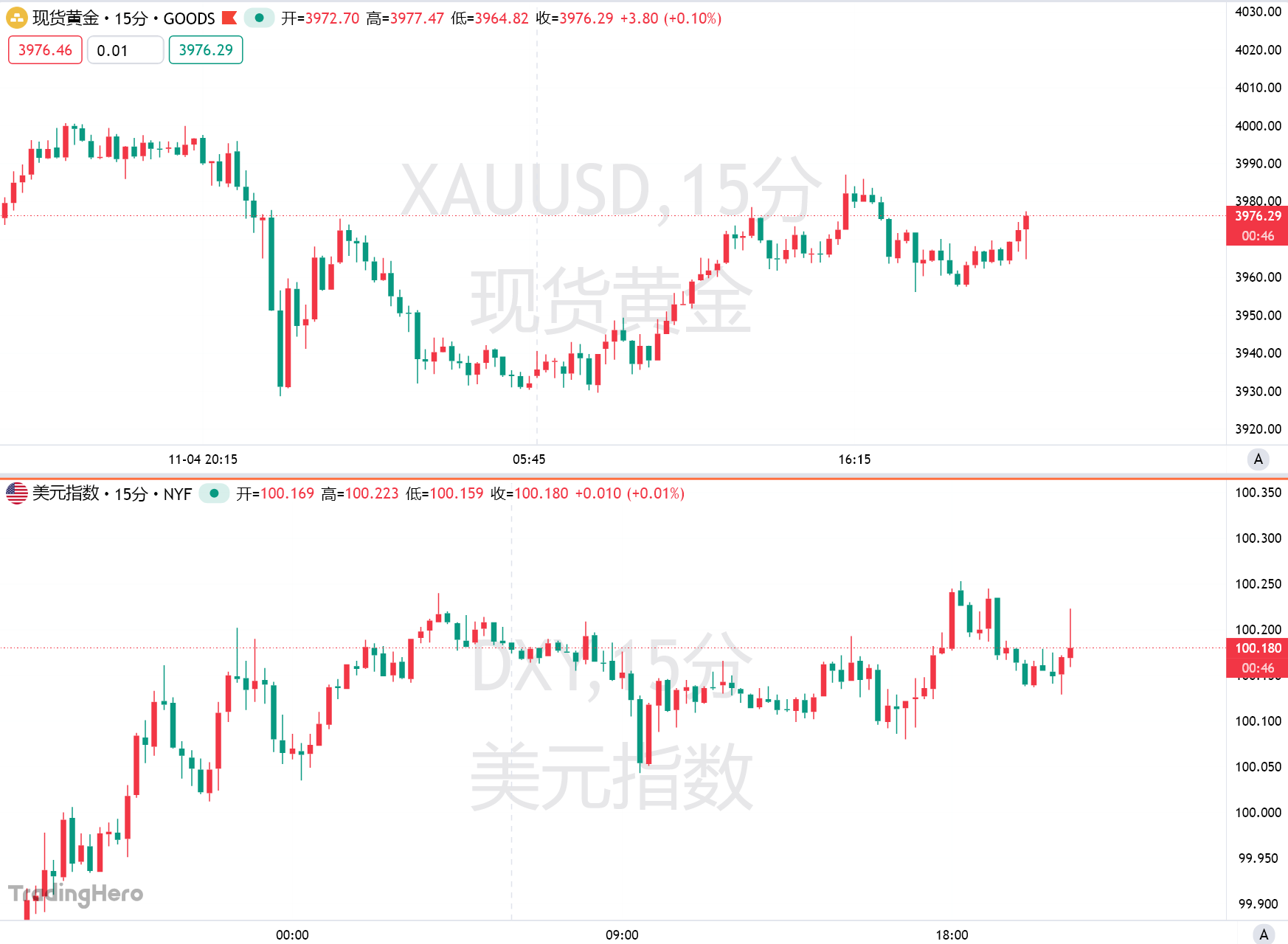
铝:偏强震荡,氧化铝:下方有支撑铸造,铝合金:偏强震荡氧化铝
Guo Tai Jun An Qi Huo· 2025-11-04 05:27
Report Industry Investment Ratings - Aluminum: Bullish and volatile [1] - Alumina: Supported at the bottom [1] - Cast aluminum alloy: Bullish and volatile [1] Core Viewpoints of the Report - The report updates the fundamental data of aluminum, alumina, and cast aluminum alloy, including prices, trading volumes, open interests, spreads, premiums, processing fees, and corporate profits and losses [1]. Summary by Related Catalogs Futures Market - **Aluminum Futures**: The closing price of the SHFE aluminum main contract was 21,600 yuan, up 300 yuan from the previous trading day; the LME aluminum 3M closing price was 2,909 US dollars, up 21 US dollars [1]. - **Alumina Futures**: The closing price of the SHFE alumina main contract was 2,789 yuan, down 4 yuan from the previous trading day [1]. - **Aluminum Alloy Futures**: The closing price of the aluminum alloy main contract was 21,065 yuan, up 260 yuan from the previous trading day [1]. Spot Market - **Aluminum Spot**: The domestic aluminum ingot social inventory was 614,000 tons, up 9,000 tons from the previous trading day; the aluminum ingot import loss was -2,331.90 yuan [1]. - **Alumina Spot**: The domestic average alumina price was 2,900 yuan, down 6 yuan from the previous trading day; the alumina import price in Lianyungang was 342 US dollars/ton [1]. - **Aluminum Alloy Spot**: The theoretical profit of ADC12 was -25 yuan; the price of Baotai ADC12 was 20,900 yuan, up 100 yuan from the previous trading day [1]. Other Data - **Policy News**: The Minister of Finance, Lan Foan, stated that not adding new implicit debts will be regarded as an "iron - clad discipline" and will promote the establishment of a unified long - term regulatory system for local government debts [3]. - **US Employment Market**: As of September, the number of corporate layoffs in the US was nearly 950,000, the highest since 2020 [3]. - **Trend Intensity**: Aluminum trend intensity is 1; alumina trend intensity is 0; aluminum alloy trend intensity is 1 [3].
美联储的暗示与基本面的趋势
Bank of China Securities· 2025-11-03 01:54
Report Industry Investment Rating - No industry investment rating is provided in the report [1][2] Core Viewpoints - The Fed cut interest rates by 25BP in October but gave a hawkish hint, with uncertainty about December rate - cut and the Fed's access to official data due to government shutdown and the expected announcement of the next Fed chair by Trump [2] - The 10 - year US Treasury yield rebounded after breaking below 4%, and caution is needed when it breaks below this level due to uncertainty in US tariff policy and fiscal balance [2] - The cooling trend in the US employment market is difficult to change, and high - interest rates may suppress the employment market and macro - economy, especially if it impacts the real estate market [2] - The US government shutdown may end in November. After that, the rate - cut process can continue, and November's consumption and inflation data may clarify the trend of the US Treasury market [2] - The producer price index has rebounded, with various commodity prices showing different trends in the week of November 1, 2025 [2] Summary by Directory High - Frequency Data Scanning - **Sino - US Leaders' Meeting**: On October 30, Sino - US leaders agreed to strengthen cooperation in economy, trade, energy and promote cultural exchanges [2] - **Fed's Interest - Rate Cut and Hints**: The Fed cut rates by 25BP in October. Powell said December rate - cut is not certain, and there is strong internal disagreement. Uncertainty exists in the amount of official data the Fed can receive due to government shutdown, and the market may have concerns about Powell's conservatism at the end of his term [2] - **US Treasury Yield Movement**: The 10 - year US Treasury yield rebounded after breaking below 4% following the Fed's hawkish rate - cut. Caution is needed when it breaks below 4% due to uncertainties in tariff policy and fiscal balance [2] - **US Employment Market Situation**: The cooling trend in the US employment market is difficult to change. The 9 - month non - farm employment data is not released, and the ADP private non - farm employment growth rate declined with a net loss of 32,000 jobs in September. The government shutdown impacts federal government employment, and it's hard to change the overall non - farm employment situation [2] - **US Government Shutdown Outlook**: The shutdown may end in November. After that, the rate - cut process can continue. November's consumption and inflation data may clarify the US Treasury market trend [2] - **Price Index Changes**: In the week of November 1, 2025, the average wholesale price of pork increased 1.46% week - on - week and decreased 27.10% year - on - year; the average wholesale price of 28 key monitored vegetables increased 8.09% week - on - week and 3.83% year - on - year. The producer price index increased 0.40% week - on - week and decreased 4.27% year - on - year [2] High - Frequency Data Panoramic Scanning - **High - Frequency Data and Key Macro - Indicator Trends Comparison**: Multiple charts show the relationship between high - frequency data such as copper prices, steel production, and key macro - indicators like industrial added value, PPI, and export volume [18][20][29] - **Important High - Frequency Indicators in the US and Europe**: Charts display the relationship between US weekly economic indicators, initial jobless claims, same - store sales growth, and economic growth, inflation, and financial conditions, as well as the implied interest - rate adjustment prospects of the US and the Eurozone [86][88][97] - **Seasonal Trends of High - Frequency Data**: Charts show the seasonal trends of high - frequency data such as steel production, producer price index, and real estate - related data [99][103][109] - **High - Frequency Traffic Data in Beijing, Shanghai, Guangzhou, and Shenzhen**: Charts present the year - on - year changes in subway passenger volume in these four cities [153][156]
10月美联储议息会议点评:降息如期落地,美联储“放鹰”后宽松路径存疑
Dongguan Securities· 2025-10-30 09:29
Monetary Policy Changes - The Federal Reserve lowered the federal funds rate target range by 25 basis points to 3.75% to 4.00%, marking the fifth rate cut since September 2024[3] - The decision to cut rates was influenced by moderate economic expansion, a slight increase in unemployment, and rising inflation rates[3] - The FOMC plans to end its balance sheet reduction on December 1, 2025[3] Internal Disagreements - There were dissenting votes from two committee members: Stephen Milan advocated for a 50 basis point cut, while Jeffrey Smith preferred to maintain the current rate[3] - Chairman Powell indicated significant internal disagreement regarding future rate cuts, stating that December's decision is not guaranteed[3] Economic Outlook - Recent CPI data showed lower-than-expected inflation, which may facilitate further rate cuts[3] - The focus remains on employment data, with expectations that the Fed may continue to cut rates if the job market continues to weaken[3] Market Reactions - Following Powell's comments, market expectations for a December rate cut dropped from 90% to around 60%[3] - Short-term impacts on asset performance are anticipated, with potential negative effects on gold and U.S. equities due to reduced rate cut expectations[3] Risks and Considerations - Risks include global economic uncertainties, trade tensions, and the potential for inflationary pressures to re-emerge in 2026[4] - The domestic market may face challenges from the Fed's hawkish stance, affecting equity market performance[4]
宽松还有空间——10月美联储议息会议解读
CAITONG SECURITIES· 2025-10-30 02:39
Group 1: Monetary Policy Decisions - The Federal Reserve lowered the interest rate by 25 basis points to a target range of 3.75%-4%[4] - The Fed will stop balance sheet reduction on December 1, gradually replacing MBS with short-term Treasury bonds[4] - There is internal disagreement within the Fed regarding rate cuts, with one member advocating for a 50 basis point cut[4] Group 2: Economic Indicators - Employment risks are rising, with the unemployment rate increasing to 4.3% in August, the highest since late 2021[8] - Inflation remains elevated, with the core CPI falling by 0.1 percentage points to 3% in September[8] - Economic growth is described as expanding at a moderate pace, a revision from previous assessments of slowing growth[13] Group 3: Market Reactions and Expectations - Market expectations for a December rate cut have dropped significantly from over 90% to below 60%[14] - The lack of recent economic data due to government shutdowns is causing uncertainty in Fed decision-making[14] - The stock market indices fell, while bond yields rose and the dollar index increased following the Fed's announcements[14] Group 4: Risks and Outlook - Risks include potential unexpected increases in inflation and tighter monetary policy from the Fed[14] - The overall economic outlook suggests a continued weakening in the labor market and consumer spending due to tariffs and economic uncertainty[13]
宽松还有空间——10月美联储议息会议解读【陈兴团队•财通宏观】
陈兴宏观研究· 2025-10-30 00:44
Group 1 - The Federal Reserve decided to lower the interest rate by 25 basis points to a target range of 3.75%-4% and will stop balance sheet reduction on December 1, gradually replacing MBS with short-term government bonds [2] - There is a division among Federal Reserve officials regarding the interest rate cut, with some advocating for a 50 basis points cut while others oppose any reduction [2] - The labor market is showing signs of weakness, with the unemployment rate rising to 4.3% in August, indicating a shift towards an oversupply of labor [3][6] Group 2 - Inflation lacks sustained upward momentum, with the core CPI falling by 0.1 percentage points to 3% in September, suggesting that tariff costs are taking time to be passed on to consumers [3][5] - The Federal Reserve's assessment of employment and inflation is based on available data due to the lack of recent economic data caused by the government shutdown [5] - Economic growth is described as expanding at a moderate pace, although consumer spending has weakened, particularly in retail [8] Group 3 - The outlook for the U.S. economy remains cautious, with the Beige Book indicating a decline in consumer spending and a preference for discounts among lower-income groups [8] - The market's expectation for a rate cut in December has decreased significantly, reflecting uncertainty in the labor market and inflation dynamics [9] - The Federal Reserve's decision-making may be delayed due to the absence of economic data, which complicates the assessment of labor market risks [9]