
新消费

Search documents
数字+非遗+潮玩,探访新消费浪潮下的北京样本
Xin Jing Bao· 2025-07-31 01:13
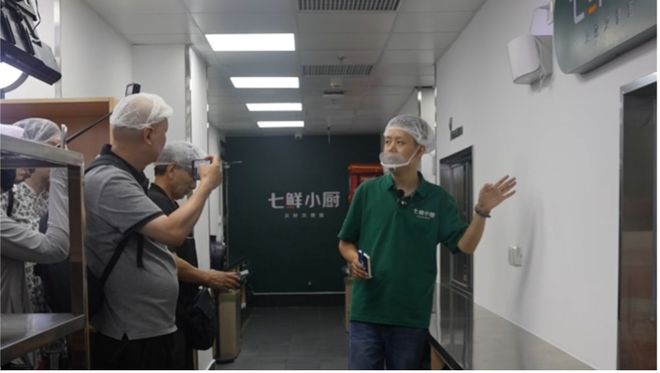
Group 1 - The event "京彩不设限·经济热力站" focused on new consumption enterprises and aimed to enhance consumer confidence and market vitality in Beijing [1] - The event involved a collective interview with 14 media representatives, highlighting the importance of cultural empowerment, digital transformation, and the cultivation of new business formats [1] - The three featured companies demonstrated innovative practices in new retail, traditional textile industry rejuvenation, and immersive cultural tourism experiences [2][3] Group 2 - JD's "七鲜小厨" utilizes a transparent kitchen model to enhance customer experience and showcases a digital integration of supply chain and retail [2] - Beijing Tongniu Group, a 71-year-old traditional enterprise, is leveraging technology and cross-industry collaboration to modernize its textile business and promote cultural heritage [2] - Bubble Mart's city theme park is expanding its IP commercialization through various formats, including theme parks and animation development, contributing to the global spread of Chinese pop culture [3]


经济热力站|数字+非遗+潮玩,探访新消费浪潮下的北京样本
Xin Jing Bao· 2025-07-31 00:55
Core Insights - The event "京彩不设限·经济热力站" focused on new consumption enterprises and aimed to explore innovative practices in the context of Beijing's push for an international consumption center [1][7] - The event highlighted the importance of cultural empowerment, digital transformation, and the cultivation of new business formats to stimulate market vitality and consumer confidence [1][7] Group 1: Company Innovations - 京东七鲜小厨 utilizes a transparent kitchen model to enhance customer experience and relies on 京东's supply chain for its innovative operational approach [3] - 京东MALL integrates technology with consumer experiences through a "home scene" layout, introducing diverse brands to invigorate offline commerce in Beijing [3] - 北京铜牛集团 combines traditional textile practices with modern technology, showcasing innovations like "AI digital human brocade" and collaborations with global supply chains [5] - 泡泡玛特城市乐园 offers a unique cultural consumption experience, expanding its IP commercialization through theme parks and cross-border collaborations [5][7] Group 2: Economic Development - The event serves to promote the achievements of high-quality economic development in Beijing, with plans for ongoing monthly themes focusing on advanced manufacturing, biomedicine, artificial intelligence, and finance [7] - The exploration of new consumption models reflects the dynamic economic growth and innovation potential within the capital [7]

数说港股基金25年二季报:加仓医药非银,减持零售社服,“抱团度”下降
SINOLINK SECURITIES· 2025-07-30 13:13
1. Report Industry Investment Rating No relevant content provided. 2. Core Viewpoints of the Report No explicit core viewpoints are presented in the given text. The report mainly focuses on analyzing the performance, scale,持仓 characteristics, and fund companies of Hong Kong stock funds. 3. Summaries Based on Related Catalogs 3.1 Hong Kong Stock Fund Performance and Scale Development - **Risk - Return Indicators**: Different types of Hong Kong stock funds, including Hong Kong Stock Connect - ETF & Passive Index, Hong Kong QDII - ETF & Passive Index, Hong Kong Stock Connect - Active, and Hong Kong QDII - Active, have varying returns, maximum drawdowns, and annualized Sharpe ratios over different time periods (1 quarter, 1 year, 3 years, and 5 years). For example, the Hong Kong QDII - Active fund had a 10.22% return in the recent quarter [13]. - **Scale and Share Changes**: There are data on the scale development and share changes of different types of Hong Kong stock funds, as well as the new issuance situation of Hong Kong stock funds in each quarter [17][22]. 3.2 Hong Kong Stock Fund Holding Characteristics - **Stock and Hong Kong Stock Positions**: Information on the stock positions and Hong Kong stock positions of different types of Hong Kong stock funds over the past five years is provided, along with the distribution of stock and Hong Kong stock positions [24][27]. - **Sector Allocation**: The sector allocation of Hong Kong stock funds shows that industries such as media, commerce and retail, and electronics are among the top - allocated sectors. There are also changes in the proportion of different sectors over time [31][35]. - **Heavy - Holding Stocks**: The heavy - holding stocks of Hong Kong stock funds include companies like Tencent Holdings, Xiaomi Group - W, and Alibaba - W. There are also data on the top 10 stocks by market value ratio, the top 10 stocks with increased or decreased allocation, and the top 10 stocks by the number of heavy - holding funds [37][39]. 3.3 Hong Kong Stock Fund Company Analysis - **Fund Company Scale**: The top 20 fund companies in terms of Hong Kong stock fund scale in 2025Q2 are listed, along with their scale in 2025Q1, scale changes, and ranking changes. For example, China Asset Management had a scale of 1009.3 billion yuan in 2025Q2, with a 9.61% increase from 2025Q1 [47]. - **Heavy - Holding Industries and Stocks**: The heavy - holding industries (at the Shenwan primary level) and heavy - holding stocks of the top 20 fund companies in terms of Hong Kong stock fund scale are presented, along with the proportion of heavy - holding stocks and their changes [50][51]. 3.4 Performance - Outstanding Hong Kong Stock Fund Holding Display and Quarterly Report Views - **Funds Holding "Top 50 Rising Stocks"**: Some actively managed Hong Kong stock funds that held "top 50 rising stocks" in 2025Q2 are listed, including their fund codes, names, types, 2025Q2 returns, fund managers, total scale, and the stocks they held, along with the stocks' 2025Q2 rising percentages and the proportion of the stocks' market value in the fund's net value [54][55]. - **Quarterly Report Excerpts**: Excerpts from the 2025 second - quarter reports of some performance - outstanding actively managed Hong Kong stock funds are provided, including their performance, fund managers, total scale, and investment strategies. For example, the Huatai - PineBridge Hong Kong Stock Connect Advantage Select A fund plans to invest in innovative drug companies and excellent equipment and consumable leading companies with high barriers [57][58].




新消费乘“热”而起 电力保障夏日经济“不断电”
Xin Hua Cai Jing· 2025-07-30 07:45
Group 1: Summer Economic Activities - The demand for cooling solutions is rising during the summer heat, leading to new consumption trends that invigorate the summer economy [1] - Indoor ski resorts, such as the one in Dujiangyan, Sichuan, attract nearly 5,000 visitors daily, highlighting the popularity of summer leisure activities [2] - Water parks in Gaoqing County, Shandong, are experiencing increased electricity loads due to high-capacity amusement equipment, necessitating proactive electrical safety measures [2] Group 2: Beverage Production Expansion - Tianjin Wahaha Hongzhen Beverage Co. is expanding its production capacity by adding two production lines and 60 electrical devices, increasing its electricity demand [3] - In Chengdu, breweries like Jin Xing Beer and Qingdao Beer are operating at full capacity, with measures in place to ensure uninterrupted power supply during peak production [3] Group 3: Night Economy Initiatives - Various regions are promoting night tourism activities, such as immersive night tours in Shanxi, which require reliable electricity supply for successful execution [4] - The State Grid in Yuncheng has formed teams to ensure electrical safety for night events, deploying emergency power vehicles and conducting inspections [4] Group 4: Electric Vehicle Charging Infrastructure - The usage frequency and charging volume at the Yujia Fortress dual-carbon innovation charging station in Tianjin have significantly increased due to higher air conditioning usage [5] - The rise of electric vehicles is influencing tourists' choices of accommodations, with charging station availability becoming a key consideration [5][6]
新消费势能向好,关注美护、黄金、潮玩及现制茶饮赛道
Hua Yuan Zheng Quan· 2025-07-30 05:42
Investment Rating - The report maintains a "Positive" investment rating, highlighting the favorable momentum in new consumption sectors, particularly in beauty care, gold, trendy toys, and freshly brewed tea drinks [4]. Core Insights - The new consumption landscape reflects the evolving consumer preferences of the younger generation, emphasizing the importance of understanding these narratives for capturing growth opportunities in new consumption companies [80]. Beauty Care Sector - The high-end beauty segment is expected to grow faster than the mass market, with projected CAGR for high-end skincare and makeup at 9.6% and 10.8% respectively from 2023 to 2028, compared to 8.2% and 6.7% for mass-market products [5][9]. - Domestic brands are gaining market share, with the national beauty market share reaching 50.4% in 2023, surpassing foreign brands [15][18]. Gold Jewelry Sector - The gold jewelry market in China is projected to grow from 820 billion yuan in 2023 to 1,140 billion yuan by 2028, with a CAGR of 6.8% [19]. - The ancient gold segment shows strong growth potential, with a CAGR of 21.8% expected from 2023 to 2028, despite a slowdown in growth rates [24][25]. Trendy Toys Sector - The trendy toy market in China reached 626 billion yuan in 2023, with a CAGR of 31.24% from 2019 to 2023, indicating rapid growth [40]. - The market concentration is increasing, with the top five companies' market share rising from 22.8% in 2019 to 26.4% in 2021 [46]. Freshly Brewed Tea Drinks Sector - The freshly brewed tea drink market in China was valued at 517.5 billion yuan in 2023, accounting for 36.3% of the beverage market, with expectations to reach 1,163.4 billion yuan by 2028 [67]. - The market for freshly brewed tea drinks is anticipated to maintain its position as the largest segment within the freshly brewed beverage category, with a projected CAGR of 17.3% from 2023 to 2028 [71][75].


沪指创新高!低估值蓝筹接力,资金抢筹方向曝光
Sou Hu Cai Jing· 2025-07-30 04:58
Market Overview - The market continues to show a volatile and differentiated pattern, with the Hang Seng Tech Index recording five consecutive declines while the Shanghai Composite Index rose against the trend [1] - As of midday, the Shanghai Composite Index increased by 0.52% to 3628.53 points, reaching a new high for the period, while the Shenzhen Component Index slightly fell by 0.06% and the ChiNext Index declined by 0.71% [1] - The trading volume in both Shanghai and Shenzhen markets reached 1.1 trillion yuan, maintaining an active level despite a decrease of approximately 43 billion yuan from the previous day [1] Sector Performance - Traditional cyclical industries supported the Shanghai Index, with steel (up 1.91%) and oil & petrochemicals (up 1.79%) leading the gains, while defensive sectors like food & beverage (up 1.02%) and pharmaceuticals (up 0.99%) showed resilience [1] - Conversely, technology manufacturing sectors such as electric equipment (-1.42%), computers (-0.66%), and communications (-0.69%) faced pressure, indicating a shift of funds from high-valuation growth sectors to undervalued blue-chip stocks [1][2] Industry Trends - The healthcare sector rose by 1.92%, and the energy sector increased by 1.65%, following international oil price fluctuations [2] - The information technology sector (-0.89%) and consumer discretionary sector (-1.37%) faced challenges, with automotive and components (-4.03%) and semiconductors (-3.79%) leading the declines [2] - The Hang Seng and Shanghai-Hong Kong Smart and Electric Vehicle Index fell by 2.61%, indicating a temporary slowdown in the growth momentum of the new energy industry chain [2] Investment Strategy - The current market shows characteristics of "strong Shanghai, weak Shenzhen, weight-based support, and thematic rotation," with clear signs of fund switching between high and low valuations [3] - Short-term operations should closely track fund flows and focus on sectors with clear policy guidance, such as infrastructure and energy, which benefit from increased fiscal policies [3] - In the medium term, while the technology sector may experience fluctuations, it remains a significant growth driver, particularly in areas like artificial intelligence infrastructure and robotics [3]
港股领涨全球主要股市
Shen Zhen Shang Bao· 2025-07-29 17:23
从港股行业表现来看,今年1月1日至7月29日,申万31个一级行业全部上涨,其中涨幅超过20%的行业 24个,涨幅超过40%的行业15个,涨幅超过60%的行业6个,涨幅前三大行业分别为农林牧渔、轻工制 造、医药生物,涨幅分别达174.98%、147.57%、103.13%;涨幅居后三大行业分别为家用电器、建筑装 饰,煤炭,涨幅分别为7.53%、9.52%、10.58%。 【深圳商报讯】(记者钟国斌)今年以来,港股领涨全球主要股市。DeepSeek、新消费、创新药等板 块轮番表现,助推港股恒生指数频创年内新高。据记者统计,截至今年7月29日,恒生指数收报 25524.45点,涨幅达27.24%,在全球主要股市涨幅第一。 从全球主要股市表现来看,今年以来港股市场一枝独秀。以美股、欧洲股市和日本股市为例,今年以 来,美国股市三大指数涨幅均为个位数,其中道琼斯指数涨幅为5.39%、标普500指数涨幅为8.64%,纳 斯达克指数涨幅为9.67%;德国、英国、法国股市涨幅分别为21.74%、11.53%、6.80%;日本股市日经 225指数涨幅为1.96%。 (文章来源:深圳商报) 从港股个股表现来看,今年1月1日至7月2 ...
54只权益基金近一年业绩翻倍 广发基金上榜数量居首
Zhong Zheng Wang· 2025-07-29 10:52
Core Viewpoint - The performance of equity funds has rebounded significantly, with 54 funds achieving over 100% returns in the past year, highlighting the strong capabilities of fund managers in the current market environment [1]. Group 1: Fund Performance - As of July 25, 2023, 54 funds have recorded returns exceeding 100%, with 34 of these being actively managed funds [1]. - Among the top-performing funds, GF Fund has six products that doubled their returns, leading the industry [1]. - Specific funds from GF Fund include GF Growth Navigation One-Year Holding A, GF Beijing Stock Exchange Selected Two-Year Open A, and GF Growth Start One-Year A, with returns of 131.81%, 118.13%, and 100.65% respectively [1]. Group 2: Investment Strategies - GF Growth Navigation One-Year Holding A, managed by Wu Yuanyi, has benefited from a strategic increase in its Hong Kong stock allocation from approximately 5% to 32% over recent quarters, effectively capturing the Hong Kong market's upward trend [2]. - The fund has focused on new consumption and internet technology sectors, which have shown significant elasticity during the recent market rally [2]. - GF Growth Start One-Year Holding A, managed by Chen Yunzhong, has also increased its allocation to nearly full capacity, focusing on technology growth stocks and high-end manufacturing assets [2]. Group 3: Index Funds - GF CSI Hong Kong Innovative Medicine ETF, GF North Exchange 50 Component A, and GF CSI Hong Kong Innovative Medicine Link A have achieved returns of 126.53%, 121.72%, and 111.20% respectively, serving as low-cost investment tools for capturing the Hong Kong innovative medicine and North Exchange market trends [2]. Group 4: Overall Fund Performance - In addition to the six funds that doubled their returns, GF Fund has 37 other funds with returns exceeding 50% in the past year, with 25 of these funds reaching historical net asset value highs this year [3]. - The comprehensive product layout and diversified investment capabilities of GF Fund have contributed to strong returns for investors [3].
大佬杨东:对诡异凶险的热门股说“不”
华尔街见闻· 2025-07-29 10:43
Core Viewpoint - The article discusses the recent performance and strategic outlook of Ningquan Asset, highlighting the cautious approach taken by the team amidst a heated market environment in Hong Kong and A-shares [1][2]. Group 1: Performance Overview - As of June 30, Ningquan Asset's net value reached a historical high, outperforming the CSI 300 index by nearly 5 percentage points this year and over 55 percentage points since inception [4]. - The investment strategy emphasizes risk control and a balanced style, reflecting a thoughtful approach to market volatility [5][6]. Group 2: Market Insights - The second quarter saw Hong Kong stocks outperforming A-shares, with a notable occurrence of H-shares trading at a discount, a trend expected to continue for an extended period [9]. - Ningquan's portfolio has a significant allocation to Hong Kong stocks, but the team did not participate in the hot new consumption stocks, indicating a focus on their investment capability [10][11]. Group 3: Long-term Trends - Two long-term market predictions were shared: the trend of Hong Kong stocks outperforming A-shares will persist, and the overall stock market is expected to experience a volatile upward trajectory [13][14]. - The team noted that the increasing frequency of A/H price discrepancies suggests a structural shift in market dynamics, with many A-share companies opting for secondary listings in Hong Kong [15]. Group 4: Investment Strategy - Since 2021, Ningquan's portfolio includes a unique category labeled "other assets," which represents the use of derivatives for hedging market risks [16][17]. - The firm has shown a strong preference for sectors such as real estate, basic chemicals, electric equipment, telecommunications, and public utilities, with a focus on stable income-generating assets within the real estate sector [18][20].

20cm速递|科创板100ETF(588120)收涨超过2.0%,市场关注科技板块改革与估值修复潜力
Mei Ri Jing Ji Xin Wen· 2025-07-29 09:12
Group 1 - The core viewpoint of the articles indicates that the market structure is transitioning from a "barbell strategy" to "mid-assets," with the technology and innovation sectors experiencing cyclical turning points [1] - New growth drivers such as AI (computing power), Hong Kong internet, innovative pharmaceuticals, new consumption, semiconductors, and new energy vehicles are entering their respective cyclical turning points, providing conditions for undervalued large-cap growth and the return of "mid-assets" to excess effectiveness [1] - The ChiNext index currently has a price-to-earnings ratio at the 23.82% percentile over the past decade, showing a significant relative valuation advantage among mainstream broad-based indices, with a first-quarter profit growth rate of 19%, substantially outperforming the overall A-share market's 3.46% [1] Group 2 - The Science and Technology Innovation Board 100 ETF (588120) tracks the Science and Technology Innovation 100 Index (000698), which can have a daily price fluctuation of up to 20% [1] - The index selects medium-sized, liquid listed companies from the Science and Technology Innovation Board, covering high-tech industries such as new-generation information technology, biomedicine, and new materials, reflecting the growth potential of Chinese technology innovation enterprises and overall market performance [1]