去美元化

Search documents
今日1.27金价:大家不必等待了,接下来,金价有可能会重演历史
Sou Hu Cai Jing· 2026-01-27 16:44
Core Viewpoint - Central banks globally have significantly increased their gold reserves, surpassing the euro to become the world's second-largest reserve asset, indicating a strategic shift towards gold as a reliable asset amidst concerns over fiat currency stability [1][3]. Group 1: Central Bank Behavior - Since 2022, central banks have been purchasing over 1,000 tons of gold annually, nearly double the average of the previous decade, with countries like China, Poland, and Turkey leading the charge [1]. - The proportion of gold purchases by central banks has risen from 14.8% in 2018 to 23% of total gold demand, indicating their role as a stabilizing force in the gold market [5][6]. - China's central bank has consistently increased its gold holdings for 14 months, demonstrating a long-term commitment to gold as a strategic asset [6]. Group 2: Changing Perception of Gold - The traditional pricing formula for gold, which relied on the strength of the dollar and real interest rates, has become less effective since 2022, as gold prices have risen even when U.S. Treasury yields increased [3][11]. - The new valuation logic for gold centers around the concept of "credit," particularly a reassessment of the trust in sovereign currencies, especially the U.S. dollar [3][5]. Group 3: Market Dynamics - The global gold ETF holdings reached a historical peak of 4,025 tons by the end of November 2025, with a significant inflow of $89 billion in 2025 alone, reflecting strong investor interest [6]. - Geopolitical tensions and economic uncertainties have led to a sustained demand for gold as a long-term hedge, reinforcing its status as a "safe-haven" asset [8][11]. Group 4: Silver Market Insights - Silver has experienced a remarkable price increase of nearly 150% in 2025, driven by both its financial attributes as "shadow gold" and its industrial demand in sectors like solar energy and electric vehicles [9]. - The U.S. has elevated silver's strategic importance by designating it as a "critical mineral," further enhancing its market appeal [9]. Group 5: Price Trends - Gold prices have reached unprecedented levels, breaking through $4,000 for the first time on October 8, 2025, and climbing to $4,531 by December 24, 2025, with further increases into 2026 [11]. - The evolving role of gold is now seen as a core asset for pricing uncertainties in sovereign credit, moving beyond its traditional functions as an inflation hedge or crisis refuge [11].


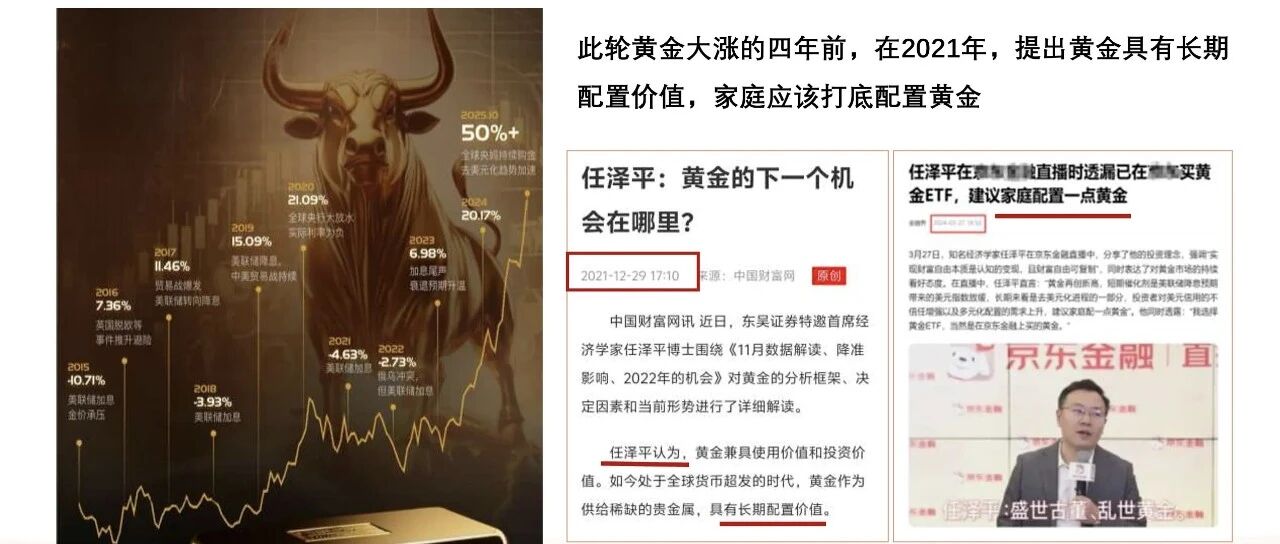
对股市、房市和黄金白银的看法:万物皆周期,周期即宿命
泽平宏观· 2026-01-27 16:06
Group 1 - The stock market and real estate market are influenced by the Kondratiev wave cycle, with a focus on long-term trends rather than short-term fluctuations [3][5][7] - The current bull market is characterized by a combination of policy support, technological advancements, and liquidity, leading to a strong consensus on market growth [10][11] - The real estate market is expected to stabilize and develop new infrastructure and productivity, with a long-term focus on demographics and land [6][7][8] Group 2 - Gold and silver are experiencing a historic bull market, with gold prices increasing over 60% and silver nearly 150% in 2025, and further gains in 2026 [13][14] - The rise in precious metals is driven by global geopolitical tensions, de-dollarization, and significant monetary expansion by the Federal Reserve [14][15] - Silver's industrial demand is expected to grow due to its applications in renewable energy and technology, with a projected supply gap of over 100 million ounces in 2026 [15] Group 3 - The AI revolution is seen as a transformative force, with advancements in robotics and autonomous driving expected to address urban challenges and reshape industries [17][29] - Major trends include breakthroughs in life sciences, the rise of AI applications, and the emergence of a new energy system focused on green electricity and storage [29][34] - The real estate market is predicted to undergo significant differentiation, with core areas experiencing price stability while outlying regions face prolonged declines [37]
德媒:大乱之世,中国都自建金库了,德国还要把黄金存在美国吗?
Sou Hu Cai Jing· 2026-01-27 15:45
面对迈入第二个年头的特朗普2.0时代,德国人的焦虑,从未像现在这样真实。 《柏林日报》提到,在香港赤鱲角机场的一角,一项低调但战略意义巨大的工程,正在不动声色地推进之中。 看到各国央行都在抛售美元美债,德国媒体很焦虑:中国都开始自建金库了,我们还敢把黄金继续存在美国吗? 有关注国际黄金走势的投资者应该都知道,在过去短短一年时间里,国际金价已经疯狂飙升70%。 这一年,全球央行都在做同一件事:抛美债,买黄金。 但在这一轮"去美元化"的狂潮中,德媒《柏林日报》注意到,中国正在香港紧锣密鼓地建设世界级的黄金金库和清算中心,将贵重金属紧握在自己手中。 而与此同时,作为全球第二大黄金储备国的德国,却有超过1200吨的黄金储备,依然躺在纽约的地下金库里。 中国工行正在这里建设一个庞大的贵金属储藏中心。根据最新的规划,这个金库将在几个月内正式投入运营。 但这仅仅是第一步。 香港特区政府已经计划,在2026年启动一个中央黄金清算系统的试运行。香港财政司司长陈茂波已经放出风声,他们将邀请上海黄金交易所参与其中。 长期以来,全球黄金交易的定价权和清算权,都高度集中在两个西方城市:伦敦和纽约。 但现在,通过建立自己的实物金库和清算 ...
杨德龙:2026年做好大类资产配置至关重要 | 立方大家谈
Sou Hu Cai Jing· 2026-01-27 15:36
Group 1: Gold Market Dynamics - The fundamental logic behind the continuous rise in gold prices reflects a wave of de-dollarization, with the U.S. government debt reaching $38 trillion and annual bond interest payments exceeding $1 trillion, accounting for over 20% of government revenue [1] - Many central banks are selling U.S. Treasury bonds and increasing their physical gold holdings, indicating a lack of trust in the dollar's credit [1] - International gold prices have surpassed $5,100 per ounce, with a potential long-term target of $10,000 per ounce, despite short-term fluctuations [1] Group 2: Investment Strategies - Investors are advised to allocate about 20% of their portfolios to gold assets, including physical gold, paper gold, gold ETFs, gold-themed funds, or gold stocks, to effectively hedge against inflation and dollar depreciation risks [1] - The contrasting trends of rising gold prices and declining U.S. dollar index are expected to continue, with the Federal Reserve likely to cut interest rates more than twice this year, further accelerating the decline of the dollar [2] - A significant portion of international capital is expected to flow into A-shares and Hong Kong stocks, as these markets remain undervalued compared to U.S. stocks [2] Group 3: Market Outlook - The stock market is anticipated to experience a slow bull market, with a notable increase in equity investments as investors seek opportunities amidst changing economic conditions [3] - Approximately 50 trillion RMB in fixed deposits will mature in 2026, leading to a potential shift in investment preferences towards stocks or bonds based on risk tolerance [3] - The current market environment suggests that high-quality stocks and funds may become key drivers of wealth differentiation, as the real estate investment phase has ended [5]
美联储或许并不重要
CAITONG SECURITIES· 2026-01-27 13:22
Group 1: Economic Insights - The focus on the new Federal Reserve chair and interest rate cuts reflects a desire to lower global financing costs and stimulate capital expenditure and demand recovery, but the key factor is the long-term U.S. Treasury yield rather than the policy rate[5] - The expansion of the real economy is more closely related to medium- to long-term risk-free rates than to the central bank's benchmark rate[5] - Despite three rate cuts totaling 75 basis points in 2025, the 10-year Treasury yield only decreased by 36 basis points, indicating limited responsiveness of long-term rates to Fed actions[12][19] Group 2: Fiscal Challenges - The pricing logic of long-term U.S. Treasuries has shifted, now anchored by U.S. fiscal sustainability and the credibility of the dollar, rather than Fed policy[5][11] - The U.S. fiscal situation is under increasing strain, with interest payments on debt rising as a share of total expenditures, which could exacerbate fiscal contradictions[18][25] - The "impossible trinity" of fiscal balance, inflation, and monetary easing presents significant challenges for U.S. economic policy, especially in light of electoral pressures[18] Group 3: Market Implications - A weak dollar and high interest rates are likely to remain key macroeconomic assumptions in 2026, raising questions about the sustainability of capital expenditure growth[25] - If long-term Treasury yields remain high, it could hinder global capital expenditure expansion and create uncertainty in asset repricing[27] - The reliance on debt financing for AI investments may be challenged in a high-rate environment, questioning the viability of current growth trajectories[26]
中国加速减持美债,美国4招试救市,西方专家:干预对中国无效
Sou Hu Cai Jing· 2026-01-27 12:41
连续14个月的减持,中方的动作让美国撑不住了。 2026年1月的最新数据却是让华盛顿沸腾了:中国持有的美国国债规模已降至6826亿美元,创下自2008 年金融危机以来的最低水平。这已经是中国连续第14个月减持美国国债。 与这一趋势相呼应的是中国黄金储备的持续增加,截至2025年12月末,中国黄金储备达到7415万盎司, 实现了连续第14个月的增持。 中国持有美国国债的金额从14个月前的逾9000亿美元一路下滑,至今已减少了近10%。这种"逐步但不 均匀"的减持趋势,与全球其他国家形成了鲜明对比。 而就在中国减持的同时,2025年11月份,美国国债的外资持有总量却增加了1128亿美元,达到了创纪录 的9.36万亿美元。日本、英国、加拿大、挪威和沙特等国都在当月增加了美债持仓。 不过,虽然看似中国的减持动作明显,但实际并非简单的投资调整,而是一项战略决策。简单来说,美 国巨额债务积累类似于庞氏骗局,用更大规模的新债替换旧债。而中国不想再玩这个游戏了。 那中国为何选择在此时行动? 实际上,这一决策与特朗普政府可能将美联储政治化的前景密切相关。特朗普可能很快宣布下一任美联 储主席人选,而他的任命者"无疑会对他更顺从" ...

美元指数破位下跌,新兴市场与大宗商品“弱美元”红利还能走多远?
Xin Lang Cai Jing· 2026-01-27 11:36
来源:钛媒体 上周,美元资产交易员亲历了一场典型的"特朗普式"市场震荡。这场波动的导火索,源于特朗普就格陵 兰岛相关问题向欧洲盟友发出关税威胁——这一举措被市场解读为将贸易工具推向极度"武器化"的边 缘,且直接触及"国家安全与主权"这一敏感议题。受此影响,美股、美债与美元一度同步走低,而黄 金、白银等避险资产顺势走强,分析师将这一市场反应定义为"美元信用破裂交易"的再度上演。 几乎在同一时期,日本政坛的动荡为其带来了另一记重创。日本首相高市早苗宣布提前解散众议院,并 提出包含消费税减免在内的扩张性财政方案,这一举措引发市场对日本财政可持续性以及日债供需结构 的深度担忧,日本长端国债随即遭遇大规模抛售。 业内人士表示:一方面,特朗普的对欧政策动摇了全球市场对美元资产赖以支撑的"美国信用"与"政策 可预测性"的根基;另一方面,日本政坛动荡与财政政策调整,冲击了以日元为核心融资货币的全球套 息交易链条,进而引发市场对全球流动性紧缩的广泛担忧。 "抛售美国"与多元化配置成主流 美元信用与流动性的双重疑虑,直接触发了全球资产配置的新一轮再平衡。去年4月特朗普宣布"解放 日"关税后,曾引发广泛讨论的"抛售美国"交易再度升 ...
1月狂涨69.8%,显著跑赢所有板块
Ge Long Hui· 2026-01-27 11:29
Group 1: Precious Metals Surge - The global silver market has experienced an "epic" short squeeze, with the main silver contract in Shanghai soaring by 14% on January 26, reaching over 30 yuan per gram, while gold surpassed 1150 yuan per gram, both hitting historical highs [1][4] - Since the beginning of 2026, the A-share precious metals sector has risen by 69.8%, significantly outperforming other sectors, while the non-ferrous metals sector has increased by 30.85% [1][3] - In the first 17 trading days of the year, the gold stock ETF (517400) rose by 38.06%, and the mining ETF (561330) increased by 26.89% [1] Group 2: Underlying Logic of Precious Metals Rally - The surge in precious metals is driven by heightened international geopolitical tensions, particularly actions taken by the Trump administration, including military actions and withdrawal from international organizations [4][6] - The ongoing geopolitical instability has led to increased global demand for gold as a safe-haven asset, with many countries significantly increasing their gold purchases since the onset of the Russia-Ukraine conflict [6][7] - Countries are planning to repatriate gold reserves from the U.S. due to concerns over geopolitical safety, with Germany and several African nations planning to return over 400 tons of gold [7][10] Group 3: Super Cycle in Non-Ferrous Metals - The non-ferrous metals sector has also seen significant price increases, with the mining ETF (561330) showing a 106.11% rise in 2025, making it the top performer among all non-ferrous ETFs [16] - Prices of various non-ferrous metals, including tin, nickel, and lithium, have shown substantial weekly increases, indicating strong demand and supply constraints [18][19] - The ongoing geopolitical tensions have made non-ferrous resources strategic assets, leading to increased control and demand for these materials globally [20][21] Group 4: Institutional Outlook - Major investment banks are bullish on gold prices, with Goldman Sachs raising its 12-month gold price target from $4800 to $5500, citing geopolitical risks and the ongoing demand from central banks [23] - Morgan Stanley has also increased its gold price forecast for the end of 2026 from $4600 to $5300, emphasizing the beginning of a global reserve asset restructuring [23] - The demand for non-ferrous metals is expected to grow due to macroeconomic factors and industry-specific needs, with institutions favoring copper, aluminum, cobalt, and rare earths as key investment areas [23][26]

黄金价格大涨又大跌,是走还是留?
Sou Hu Cai Jing· 2026-01-27 11:15
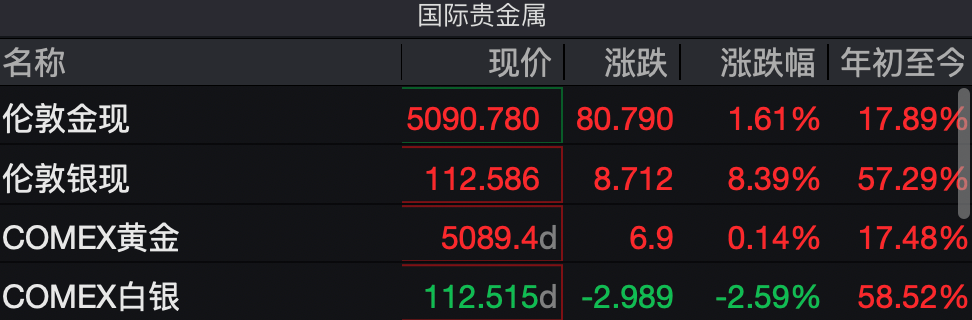
Core Viewpoint - The recent surge in gold prices, reaching historical highs, is driven by geopolitical risks and expectations of monetary policy changes, with potential for further increases in the future [1][4][5]. Price Movements - On January 26, London spot gold hit a record high of $5111.17 per ounce, briefly surpassing the psychological barrier of $5000 before experiencing volatility [1]. - As of January 27, gold was trading around $5090.78 per ounce, reflecting a year-to-date increase of over 17% [1][2]. - COMEX gold also reported a similar year-to-date increase of over 17%, trading at $5089.4 per ounce [1][2]. Geopolitical Factors - Geopolitical risks, particularly related to U.S.-Korea trade tensions and other international conflicts, have significantly heightened market demand for gold as a safe-haven asset [5][6]. - Analysts noted that events such as the Greenland sovereignty dispute and escalating U.S.-Iran tensions have contributed to increased demand for gold [5][6]. Monetary Policy and Economic Factors - Expectations of a dovish shift in U.S. Federal Reserve policy are seen as a key driver for rising gold prices, with analysts predicting continued monetary easing [6][9]. - Global fiscal expansion plans from multiple countries are expected to support inflation expectations, further enhancing gold's appeal as an inflation hedge [6][9]. Central Bank Activity - Central banks are projected to continue increasing gold reserves, with predictions of a rise in purchases to 950 metric tons by 2026 [9]. - The trend of central banks diversifying away from the U.S. dollar is expected to provide structural support for gold prices [9][10]. Future Price Predictions - Market analysts are optimistic about gold's future, with some predicting prices could reach $6000 per ounce by the end of 2026 under bullish scenarios [10][11]. - Various investment banks have raised their gold price forecasts, with Goldman Sachs projecting a target of $5400 per ounce by 2026 [11]. Short-term Volatility - Despite the bullish outlook, short-term volatility is acknowledged, with potential price corrections expected due to speculative positioning and market reactions to geopolitical developments [11][12]. - Analysts suggest that gold prices may fluctuate between $4800 and $5200 per ounce leading up to the Chinese New Year, influenced by Federal Reserve meetings and ongoing geopolitical risks [12].
现货黄金突破5100美元!黄金、白银还能狂飙多久?
Sou Hu Cai Jing· 2026-01-27 11:12
Group 1 - The core point of the article highlights the contrasting movements in the dollar and precious metals markets, with the dollar index dropping nearly 2% and gold achieving its best weekly performance in nearly six years, rising by 8.4% [1] - Gold prices have reached a historical high, surpassing $5,100 per ounce, with a daily increase of over 2%, showcasing the classic "see-saw" effect between the dollar and gold [1] - Silver prices also saw significant gains, reaching a peak of $109 per ounce, with both gold and silver experiencing increases of over 18% and 51% respectively within a month [1] Group 2 - The surge in the precious metals market is attributed to multiple factors, including geopolitical instability, shifts in monetary policy, and a decline in the dollar's credibility, signaling a deep transformation in the international monetary system [2] - By 2025, gold is expected to account for a larger share of global central bank foreign exchange reserves than U.S. Treasury bonds for the first time since 1996, with central banks projected to purchase an average of 60 tons of gold monthly this year, compared to about 17 tons before 2022 [2] - The ongoing high-level purchases of gold by central banks provide strong support for gold prices, as countries redefine asset safety boundaries and increase gold holdings to optimize reserve structures and hedge against systemic risks [2] Group 3 - The rising gold prices are quickly transmitting to consumer markets, with gold jewelry prices exceeding 1,575 yuan per gram, indicating a shift from traditional consumption to investment attributes in gold jewelry [3][4] - The high gold prices have suppressed some physical gold consumption demand, leading to increased interest in gold-related financial products such as structured deposits, gold ETFs, and paper gold [4] - There is a growing demand for secure storage of high-value physical gold, highlighting the preference of high-net-worth individuals for physical gold in asset allocation, driven by concerns over asset safety [5] Group 4 - The future of the gold market is uncertain, with long-term price influences stemming from changes in economic growth expectations and monetary policy, where any shifts in macroeconomic conditions or geopolitical factors could lead to significant price volatility [7] - Investors are advised to maintain sensitivity to macroeconomic environments when allocating gold assets and to diversify their portfolios, treating gold as a long-term strategic asset [7] - There is a trend among nations, institutions, and households to invest in gold as a relatively stable asset in an uncertain world, reflecting a collective vote of confidence in gold [8]