期限溢价

Search documents
美国这场220亿“借钱大戏”,突然成了本周最大悬念
Jin Shi Shu Ju· 2025-06-09 03:02
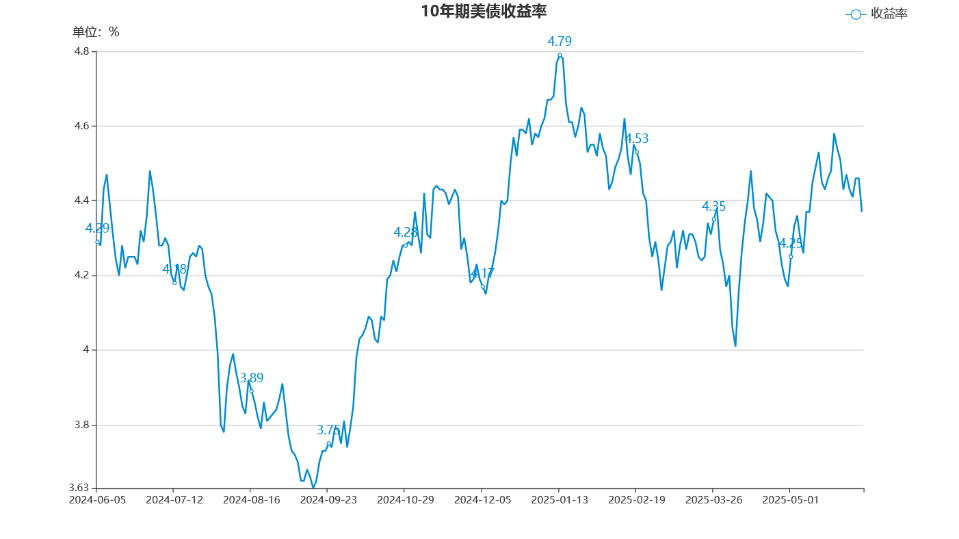
Core Viewpoint - Global investor aversion to long-term government bonds is turning the upcoming U.S. Treasury auction into a highly anticipated event on Wall Street, particularly focusing on the sale of $22 billion in 30-year bonds, which will serve as a gauge for market appetite amid declining demand for such securities [1][2] Group 1: Market Sentiment and Auction Details - The upcoming auction results will be closely monitored as they will reflect market sentiment, with the 30-year U.S. Treasury bonds currently viewed as undesirable by investors [1][2] - Key metrics such as the auction "tail" (the difference between final yield and pre-issue trading levels) and the bid-to-cover ratio will provide insights into market demand [2] - The participation of foreign investors will also be a focal point, as poor auction results could indicate deeper issues in market confidence [2] Group 2: Yield Trends and Economic Implications - Long-term bond yields have recently surged due to rising concerns over debt spirals and worsening fiscal deficits, with the 30-year yield reaching a near 20-year high of 5.15% before settling at 4.94% [1][3] - The increase in yields signifies heightened financing pressures as the U.S. government continues to expand its borrowing amid uncontrolled spending [1][4] - The yield curve is steepening, with the 10-year term premium indicator rising to nearly 0.75 percentage points, reflecting increased compensation demanded by investors for long-term borrowing [4] Group 3: Political and Economic Factors - Long-term yields are increasingly influenced by political factors rather than monetary policy, leading to a disconnect from fundamental economic indicators [3][4] - The potential for a tax on foreign investors, as proposed in the Trump administration's tax reform, raises concerns about foreign investment in U.S. Treasuries, despite clarifications that it would not apply to bond investments [4] - Upcoming economic data releases, including inflation metrics, are expected to further impact the yield curve, with a likely outcome of continued steepening [4]
美联储褐皮书惊现80次“不确定” 避险情绪带动美债久违大涨
Xin Hua Cai Jing· 2025-06-05 13:45
Core Viewpoint - The recent decline in U.S. economic activity and unexpected macro data in May have led to increased uncertainty, as reflected in the Federal Reserve's latest Beige Book, which used the term "uncertainty" 80 times, impacting the bond market positively with a notable rise in bond prices [1] Group 1: Economic Indicators - The Beige Book indicates a decline in U.S. economic activity, suggesting that tariffs and high uncertainty are causing a chain reaction in the economy [1] - ADP's report shows that private sector job growth in May was nearly stagnant, with only 37,000 jobs added, significantly below the expected 110,000, marking the lowest level in over two years [1] Group 2: Bond Market Trends - The yields on U.S. Treasury bonds have dropped to their lowest levels since May 9, with the 2-year yield down 8.25 basis points to 3.862% and the 10-year yield down 9.85 basis points to 4.355% [2] - Short-term bond ETFs have gained popularity, with significant inflows, including over $25 billion into iShares 0-3 Month U.S. Treasury Bond ETF (SGOV) and SPDR Bloomberg 1-3 Month U.S. Treasury Bond ETF (BIL) [4] Group 3: Investment Strategies - Many fixed-income investors are avoiding long-term U.S. Treasuries, shifting focus to short-term bonds as a substitute, reflecting a cautious market sentiment [4] - Current conditions are expected to lead to a supply-demand imbalance in the bond market, with potential upward pressure on term premiums, keeping medium to long-term Treasury yields elevated [5]

5%的10年期美债收益率,一定会击沉美股吗?
Hua Er Jie Jian Wen· 2025-06-04 01:41
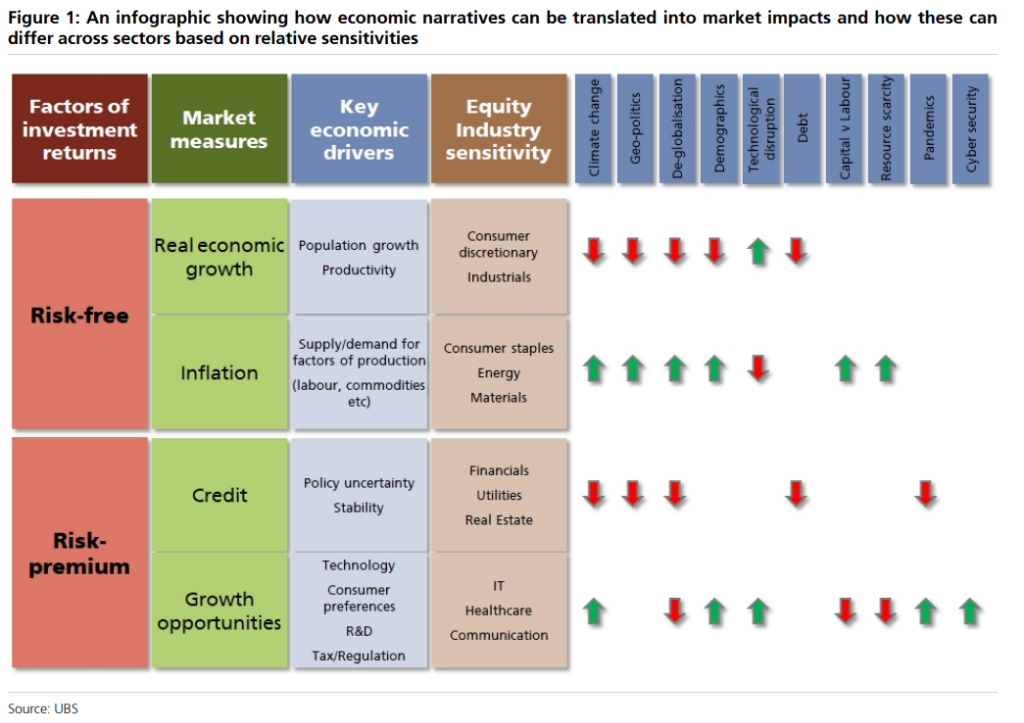
美债收益率若升至5%,美股是否必然承压? 据追风交易台消息,瑞银(UBS)最新报告指出,关键不在于美债收益率本身,而在于它如何上涨。"收益率上行的路径"是由经济增长驱动还是 由风险溢价(term premium)推动,其对股市的影响截然不同。 报告强调,若由经济增长和企业盈利预期改善推动,标普500有望上行至6200点;若由风险溢价上升(如财政赤字、政策不确定性)驱动,则对美 股尤其是防御板块构成压力。 收益率的变动路径比最终数值更重要 如果谈论美国债券收益率升至5%或更高,那么达到目标的过程将至关重要。 瑞银报告称,10年期美债收益率是全球无风险利率的重要锚,也是股市现金流折现的核心参数。当这一利率上升时,未来现金流的现值下降,从 而对股票估值构成压力。然而,市场并非静态调整,收益率的变化通常与其他变量同步发生,例如企业盈利预期、风险溢价和宏观经济环境。 "收益率从来不是孤岛",瑞银策略师团队强调。10年期美债收益率的变动通常与股票估值的两大核心要素——风险溢价和盈利预期——同步波 动。真正决定股市走向的,是推动收益率上行的主导因素。 | Factors of investment returns | Ma ...

“能做空就做空”,30年期美债惨成弃儿,明星机构唯恐避之不及
华尔街见闻· 2025-06-03 03:12
Core Viewpoint - The article discusses the shift in investment strategies among major financial institutions, led by DoubleLine Capital, towards short-term bonds due to concerns over the expanding U.S. federal budget deficit and debt burden, while long-term U.S. Treasury bonds are being avoided due to rising yield risks [1][2][5]. Group 1: Investment Strategies - DoubleLine Capital and other institutions are avoiding long-term U.S. Treasury bonds, opting instead for short-term bonds which present lower interest rate risks and decent yields [1]. - The investment strategy includes "steepening" trades, focusing on bonds in the mid-yield curve rather than long-term bonds [4]. - PIMCO has maintained a cautious stance on 30-year bonds since late last year, favoring bonds in the 5 to 10-year range [11][12]. Group 2: Market Trends - The 30-year U.S. Treasury bond has shown particularly weak performance this year, with yields rising while shorter-term bonds (2-year, 5-year, and 10-year) have seen declining yields [2]. - The yield on the 30-year bond reached 5.15%, close to its highest point since 2007, with a yield spread between the 30-year and 5-year bonds exceeding 1 percentage point for the first time since 2021 [9]. - Recent auction results indicate a preference for shorter-term bonds, with 2-year, 5-year, and 7-year bonds performing well, while the 30-year bond auction slightly underperformed expectations [13]. Group 3: Government Debt Issuance - Discussions about potentially reducing or pausing the issuance of 30-year bonds have emerged, which is unusual given the Treasury's efforts to maintain a stable debt issuance plan [5][6]. - The U.S. Treasury has committed to maintaining its auction scale, including long-term bonds, despite market pressures [7]. - The upcoming auction of 30-year bonds on June 12 is viewed as a critical test for market demand [7]. Group 4: Economic Concerns - Concerns over inflation due to tariff policies and the potential for increased government borrowing to cover deficits have contributed to the negative sentiment surrounding long-term bonds [8]. - The Congressional Budget Office projects that by 2035, the U.S. debt-to-GDP ratio could rise to 118%, surpassing historical highs, which raises further concerns about long-term bond investments [13].

长期美债持续承压!20年期美债收益率罕见低于30年期美债收益率
智通财经网· 2025-06-03 01:49
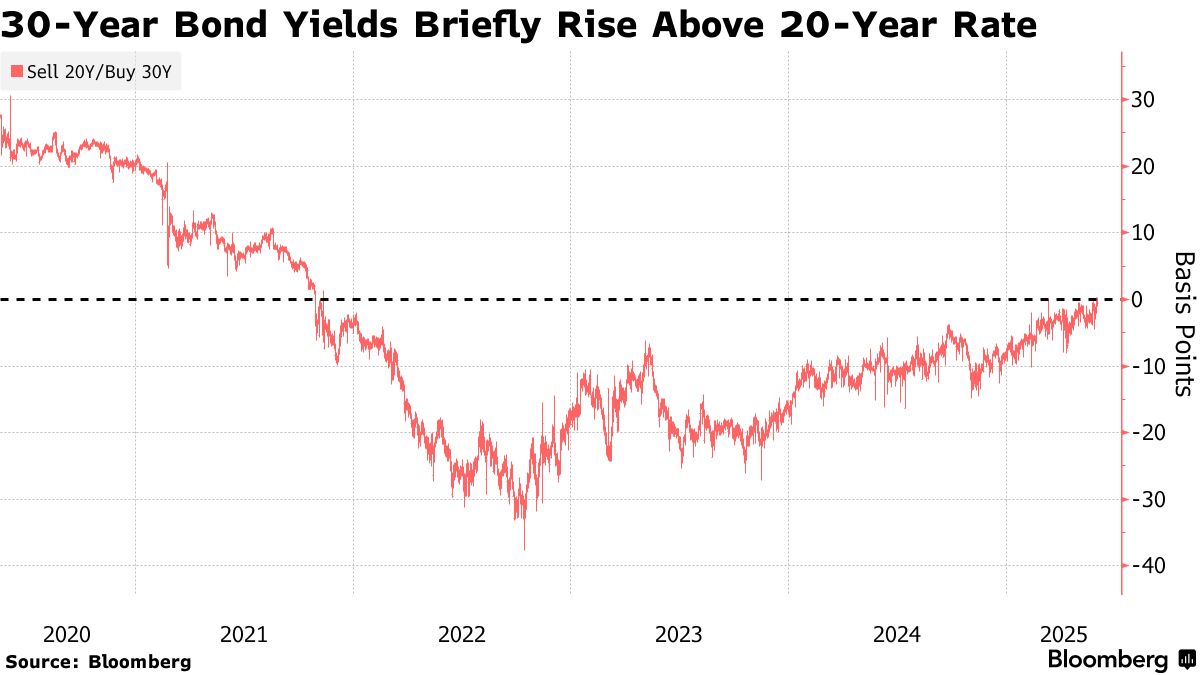
Group 1 - The 20-year U.S. Treasury yield briefly fell below the 30-year yield, nearing a four-year high, indicating a significant shift in the yield curve [1][3] - The recent trend shows an overall steepening of the U.S. Treasury yield curve, as traders demand higher returns for holding long-term bonds, making the 20-year bond more attractive [3] - Concerns over potential tax cuts and increasing deficits under Trump's policies are putting pressure on long-term Treasury bonds [3] Group 2 - Historically, the 20-year Treasury bond has been less favored by investors, trailing behind other Treasury securities since its reintroduction five years ago [3] - The U.S. Treasury has reduced the quarterly issuance of 20-year bonds from a peak of $75 billion in 2021 to $42 billion currently, aiming to rebalance supply and demand [3] - There is ongoing debate about the continuation of 20-year bond issuance, with former Treasury Secretary Mnuchin suggesting it should be halted to save taxpayer money due to its relatively high issuance costs [3][4]
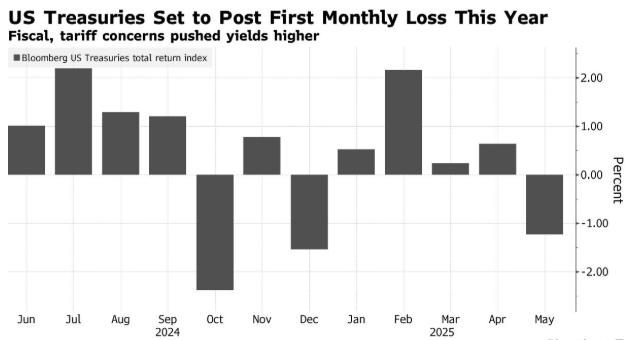
关税与财政赤字问题缠身 美债预计将出现今年来首次月度亏损
智通财经网· 2025-05-30 12:57
智通财经APP获悉,美国国债将出现今年的首次月度亏损,原因是关税政策的不确定性再度加剧,同时 人们对不断攀升的美国政府债务水平也愈发感到担忧。彭博社的一项追踪债券的指数在 5 月份下跌了超 过 1.2%。由于所有到期债券均受到压力影响,该指数出现下跌。美国30 年期国债收益率连续第三个月 上涨,这是自 2023 年以来持续下跌时间最长的一次;而美国 2 年期和 10 年期国债的收益率则出现了今 年来的首次月度上涨。 这种糟糕的月度表现反映出美国国债正面临越来越严峻的形势,因为美国政府不可预测的政策动摇了投 资者的信心。5月份,人们对美国预算赤字的担忧再度加剧,因为特朗普正与国会就一项旨在削减税收 的法案进行谈判。 伦敦道富市场公司欧洲、中东和非洲地区宏观策略主管Timothy Graf说道:"我认为债券市场目前不存在 失衡现象,但确实需要将财政赤字因素考虑在内进行定价。我们仍认为美国 10 年期国债的收益率目标 应为 5%。"周五,美国10 年期国债的收益率稳定在 4.42%。 可以肯定的是,本周美国国债价格上涨,原因是投资者纷纷锁定较高的收益率,而低于预期的经济数据 也进一步刺激了需求。如果周五晚些时候公布 ...
专访德银全球首席策略师:对美欧达成贸易协议乐观,黄金和优质债券仍是对冲风险核心资产
Di Yi Cai Jing· 2025-05-30 09:01
Core Viewpoint - The main victims of the trade conflict are likely to be the U.S. economy, with both businesses and consumers bearing the burden of higher tariffs, which is not the desired outcome for the U.S. government [1][4]. Group 1: Trade Agreement Outlook - There is optimism regarding a potential trade agreement between the U.S. and the EU, with expectations that the trade conflict will be resolved in a pragmatic manner, allowing businesses to continue trading and promoting economic growth [1][4]. - The upcoming talks between EU Trade Commissioner Maroš Šefčovič and U.S. counterparts are scheduled to take place during the OECD ministerial meeting in Paris [1]. Group 2: Economic Impact of Tariffs - The imposition of tariffs is expected to lead to higher inflation and maintain elevated prices, while also causing economic growth to slow down [5][6]. - The scale and duration of the tariffs will significantly influence the extent of their economic impact, with businesses likely to adjust over time to mitigate these shocks [6]. Group 3: Investment Strategies - In response to market volatility caused by tariffs, the focus has shifted to hedging strategies, with gold and high-quality bonds being core assets for risk mitigation [1][8]. - There is a recommendation to pay attention to U.S. technology companies' earnings and opportunities arising from Germany's fiscal stimulus plans [1][8]. Group 4: European Economic Resilience - The EU has experience in handling trade relations, particularly since the Brexit negotiations began in 2016, and the establishment of the single market has taken decades [7]. - The EU's internal non-tariff barriers present opportunities for market potential, and the focus will be on developments in U.S.-EU trade relations, especially after the "90-day suspension period" [7]. Group 5: German Fiscal Policy - The German government's decision to abandon the "debt brake" is seen as a significant event, allowing for substantial infrastructure investments over the next decade, particularly in 2026 and 2027 [9]. - This fiscal policy is expected to lead to notable economic growth in Germany, which will also positively impact the Eurozone economy [9]. Group 6: Emerging Markets Perspective - Emerging markets, particularly in Asia, will be affected by the changing global trade landscape, but companies have shown resilience in adapting to macroeconomic and regulatory changes [10]. - India is viewed positively, especially in the financial sector, while large internet and IT companies in China are also seen as having strong earnings potential [10]. Group 7: Gold as a Hedge - Gold is recommended as a high-quality hedging tool, with its structural upward trend recognized by many investors [11]. - Active asset allocation is emphasized as crucial in uncertain market conditions, allowing for adjustments in equity asset proportions [11]. Group 8: Bond Market Insights - There is a growing scarcity of high-quality bonds, with German government bonds still considered a safe haven, contributing to the rising yields in Germany and the Eurozone [12]. - Flexibility in managing duration and credit risk is advised, particularly in a moderately high inflation environment [12]. Group 9: Central Bank Strategies - The protectionist policies of the U.S. may lead to divergent strategies among central banks, with the European Central Bank expected to have room for further rate cuts [13]. - The Fed may also implement several rate cuts, although the timing remains uncertain [13]. Group 10: Currency Predictions - The euro is expected to strengthen against the dollar, albeit at a slower pace than in the previous months, driven by the "whatever it takes" policy and anticipated economic growth by 2027 [14]. Group 11: Underestimated Risks - The bond market, particularly long-term bonds, is highlighted as a potential source of risk, with the U.S. 30-year Treasury yield reaching 5% [15]. - High tariff levels pose a risk of obstructing trade, which could be detrimental to the market [15]. Group 12: Common Investor Mistakes - Investors are advised to conduct thorough analysis before trading, as overreacting to market signals can lead to unnecessary sell-offs [16].


策略日报:情绪重回乐观-20250529
Tai Ping Yang Zheng Quan· 2025-05-29 14:18
Group 1: Major Asset Tracking - The bond market experienced a decline, with long-term bonds falling more than short-term ones. The outlook suggests that market risk appetite is increasing following a court ruling against Trump's global tariff policy, indicating a potential shift to a volatile mode for treasury futures [16][5]. - The A-share market saw a significant increase, with the ChiNext index rising by 1.37%. The total trading volume reached 1.21 trillion, an increase of 0.18 trillion from the previous day, with over 4,400 stocks rising. The market is expected to enter a volatile phase with rotation among technology, dividend, and consumer sectors [19][21]. - The U.S. stock market indices experienced a decline, with the Dow Jones down by 0.58%, Nasdaq by 0.51%, and S&P 500 by 0.56%. The rising U.S. Treasury yields are a concern, and the narrative of recession may become a focal point for market trading in the future [24][25]. Group 2: Currency Market - The onshore RMB against the USD was reported at 7.1888, a decrease of 25 basis points from the previous close. The RMB appreciated significantly due to favorable impacts from U.S.-China trade relations. The offshore RMB shows signs of strengthening, with expectations of reaching around 7.1 [28][29]. Group 3: Commodity Market - The Wenhua Commodity Index increased by 0.13%, with mixed performance across sectors. Oil, polyester, and steel saw slight increases, while coal, building materials, and precious metals led the declines. The overall technical structure of the commodity market remains bearish, suggesting a cautious approach [31][32].
安联研究:结构性不确定性驱动期限溢价全球范围内攀升
news flash· 2025-05-28 12:20
Core Insights - The report from Allianz Research indicates that the term premium, which is the additional yield investors seek for holding long-term bonds over short-term bonds, is rising globally due to structural uncertainties [1] Group 1: Term Premium Dynamics - The term premium is increasing as a result of synchronized pricing of structural uncertainties such as rising inflation risks, geopolitical tensions, and escalating fiscal risks [1] - The global bond market has significantly steepened, driven by the long end of the yield curve [1] Group 2: Yield Movements - Year-to-date, the yield on 30-year government bonds has surged by 30-80 basis points, while the spread between 10-30 year bonds has widened by 20-30 basis points [1] - The dominance of U.S. Treasuries in the ultra-long bond segment has amplified this trend [1]

全球财政“火药桶”引信未除:美日长债联袂反弹或是暴风雨前宁静
智通财经网· 2025-05-28 00:11
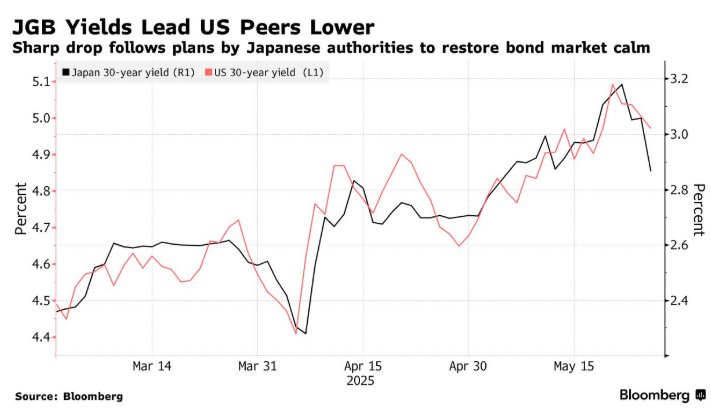
Group 1 - The core viewpoint of the articles highlights a temporary relief in the U.S. long-term treasury bond market, driven by a significant drop in the yields of 10-year and 30-year U.S. Treasury bonds, attributed to potential adjustments in Japan's debt issuance strategy [1][3][4] - The recent rebound in the global bond market is seen as a response to strong demand for U.S. Treasury bonds, particularly a $690 billion two-year bond auction, following news of Japan's possible reduction in bond sales [3][4][6] - Despite the temporary easing of the bond sell-off, concerns regarding the fiscal health of developed nations, especially the growing U.S. fiscal deficit and rising debt service costs, are expected to exert continued pressure on long-term bond investors [3][7][8] Group 2 - The 30-year U.S. Treasury bond yield experienced its largest single-day drop since March, reflecting a shift in investor sentiment towards long-term bonds, even if this trend is seen as short-lived [3][4][6] - The market is closely monitoring upcoming U.S. Treasury auctions and Federal Reserve meeting minutes, as the Biden administration's significant debt issuance has raised the national debt to $36 trillion, contributing to high budget deficits and interest payments [10][12] - The concept of "term premium," which refers to the additional yield investors require for holding long-term bonds, is nearing its highest level since 2014, indicating heightened concerns over the sustainability of U.S. government debt [9][13]