
反内卷

Search documents
利率债年度复盘:2025:非典型震荡市
CAITONG SECURITIES· 2025-12-30 07:54
Report Industry Investment Rating No relevant content provided. Core Viewpoints of the Report - 2025 is an atypical volatile bond market. From the perspective of fund product net value and interest - rate bond yield changes, it is a bear market, while from the perspective of credit bonds, it is a bull market [3][6]. - There are four direct reasons for the poor experience in the bond market in 2025: the overdraft effect at the end of last year, less - than - expected monetary easing, intensified supervision, and increased risk appetite [3][9]. - There are four underlying macro - logical reasons: the after - effect of the "924" policy and broad fiscal support for economic stability, repeated Sino - US trade frictions but resilient exports, the continuation of Fed rate cuts and de - dollarization along with policies boosting the risk appetite of the stock and commodity markets, and profound changes in institutional behavior in a low - interest - rate environment [3][14]. - The bond market in 2025 is divided into four stages, with different driving factors and yield changes in each stage [3]. Summary According to the Directory 1. Four Direct Reasons and Macro - logical Reasons for the Atypical Volatile Market Direct Reasons - **Overdraft effect at the end of last year**: At the end of 2025, the expectation of broad monetary policy and the pre - emptive allocation before the New Year led to a "fast - bull" market. In late November 2025, the market's expectation of a reserve requirement ratio cut increased, and the bond yield dropped rapidly after the Politburo meeting and the Central Economic Work Conference [9]. - **Less - than - expected monetary easing**: The market expected significant interest rate cuts and reserve requirement ratio cuts at the beginning of the year, but only one round of cuts occurred in May, and other tools were used to maintain liquidity [9][10]. - **Intensified supervision**: In early August, the government announced the resumption of VAT on new government and financial bonds, and in September, a draft of new regulations on public funds was released, increasing the redemption fee and causing concerns in the market [10]. - **Increased risk appetite and the stock - bond seesaw**: After the reciprocal tariffs, expectations of domestic policy stimulus, tariff cuts, a weakening US dollar, and other factors led to an increase in risk assets. The implementation of anti - involution policies also boosted the commodity market [10]. Macro - logical Reasons - **Policy support for economic stability**: The "924" policy in 2024 and broad fiscal measures supported economic stability, with the GDP in the first half of 2025 growing by 5.3% year - on - year [14]. - **Resilient exports despite trade frictions**: Sino - US trade frictions had two unexpected turns, but China's exports remained resilient, and the bond market's reaction to trade frictions gradually became dull [14]. - **Boosted risk appetite**: Fed rate cuts, de - dollarization, and domestic policies such as the anti - involution policy and the development of the AI industry increased the risk appetite in the stock and commodity markets [19]. - **Changed institutional behavior**: In a low - interest - rate environment, the enthusiasm of institutional investors for bond investment decreased, and the market's cautious attitude restricted the downward space for interest rates [22]. 2. Four - stage Review of the 2025 Bond Market Stage One (January 1 - March 17) - The 10 - year Treasury yield rose from 1.6% to 1.9%. The market mainly traded around the correction of the broad - money expectation, with many negative factors such as Sino - US trade issues, a tech boom, and tightened liquidity [28]. Stage Two (March 18 - June 30) - The 10 - year Treasury yield first dropped significantly and then fluctuated, ranging from 1.6% to 1.9%. The market focused on the loosening of liquidity and Sino - US trade frictions, and the impact of trade frictions gradually weakened [34]. Stage Three (July 1 - September 30) - The 10 - year Treasury yield rose from 1.6% to around 1.9%. The market was mainly affected by the anti - involution policy, a booming equity market, and strict regulations [42]. Stage Four (October 1 - Present) - The 10 - year Treasury yield fluctuated weakly in the range of 1.8% - 1.85%. The bond market was insensitive to trade frictions, and the expectation of monetary easing was not strong [48].
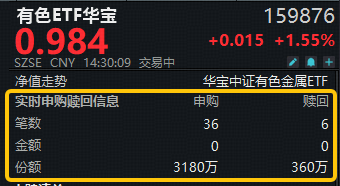
ETF盘中资讯|云铝股份、天山铝业齐创新高!电解铝概念震荡走强,有色ETF华宝(159876)盘中拉升2.2%,获净申购2820万份
Jin Rong Jie· 2025-12-30 07:02
Core Viewpoint - The recent performance of the Huabao ETF (159876) indicates strong investor confidence in the non-ferrous metals sector, with significant net subscriptions and positive price movements, suggesting a bullish outlook for the industry [1][5]. Group 1: ETF Performance - The Huabao ETF saw an intraday increase of 2.27%, currently up by 1.55%, with a real-time net subscription of 28.2 million units and an additional 15.36 million yuan attracted yesterday, reflecting strong market interest [1]. - Key constituent stocks such as Yun Aluminum and Tianshan Aluminum reached new highs, while Hai Liang, China Aluminum, and Huayou Cobalt rose over 4% [1]. Group 2: Stock Performance - Notable stock performances include: - Yun Aluminum: +5.67%, market cap of 108.6 billion yuan, trading volume of 1.625 billion yuan [2]. - Tianshan Aluminum: +4.86%, market cap of 75.3 billion yuan, trading volume of 1.023 billion yuan [2]. - Hai Liang: +4.85%, market cap of 30.2 billion yuan, trading volume of 393 million yuan [2]. - China Aluminum: +4.54%, market cap of 201.7 billion yuan, trading volume of 4.406 billion yuan [2]. - Huayou Cobalt: +4.42%, market cap of 129 billion yuan, trading volume of 4.911 billion yuan [2]. Group 3: Industry Insights - The National Development and Reform Commission emphasizes the need for large-scale mergers and restructuring in the aluminum and copper industries to enhance competitiveness and scale [2]. - The aluminum market is undergoing a transformation, shifting from a traditional commodity to a core energy value carrier, with potential for independent price increases driven by the copper-aluminum ratio and rising demand for aluminum [3]. - The current phase of the industry is characterized by a reversal in fundamentals, a "de-involution" policy, and opportunities arising from AI developments, which are expected to lead to more stable returns and a focus on investment efficiency [4].


国投证券国际:2026光伏行业“反内卷”进入攻坚期 建议投资者逢低布局
智通财经网· 2025-12-30 06:55
Core Viewpoint - The photovoltaic industry is moving towards high-quality development with a focus on "anti-involution," as indicated by the recent industry conference and the consensus among major enterprises in the sector [1][2][3]. Group 1: Industry Conference Insights - The 2025 Photovoltaic Industry Annual Conference was held in Xi'an, focusing on "breaking the involution dilemma and promoting high-quality sustainable development" [2]. - Key representatives from the National Energy Administration, Ministry of Industry and Information Technology, and Ministry of Commerce participated, discussing the development path for the photovoltaic industry during the critical transition from the 14th to the 15th Five-Year Plan [2]. Group 2: Regulatory Focus for 2026 - The industry governance will enter a critical phase in 2026, with six key areas of focus including capacity regulation, price monitoring, innovation promotion, standard system improvement, industry self-discipline, and international cooperation [3]. - The regulatory bodies emphasized the need for a shift from quantity expansion to quality improvement, signaling a strong commitment to high-quality development [3]. Group 3: Industry Consensus and Actions - Major enterprises in the photovoltaic sector are responding positively to policy calls, achieving a consensus on "anti-involution" and strictly controlling production [4]. - From January to October, the production of polysilicon and silicon wafers saw significant declines, with polysilicon production down 29.6% year-on-year to approximately 1.113 million tons, marking the first decline since 2013 [4]. Group 4: Initial Effects of "Anti-Involution" - The initial effects of the "anti-involution" actions are becoming evident, with prices stabilizing despite a decline in demand; in November, the price of photovoltaic modules increased by 1.3% year-on-year, and the average factory price of polysilicon rose by 34.4% [5]. - The revenue of 31 listed companies in the photovoltaic sector decreased by 17% year-on-year in the first three quarters of 2025, but the decline is narrowing, indicating a positive shift in market sentiment [5]. - The total market capitalization of these companies increased by 37% from the end of May to the end of November, reflecting a change in external pessimistic expectations [5]. Group 5: Investment Recommendations - Investment opportunities are suggested in companies like GCL-Poly Energy and Junda Co., which have competitive advantages in their respective segments [5]. - GCL-Poly's unique granular silicon technology offers significant cost advantages in the polysilicon segment, while Junda Co. leads in TOPCON technology and is expanding into perovskite tandem cells and space photovoltaics [5].


化工ETF(159870)涨超2.2%,机构继续看好2026年板块景气度反转
Xin Lang Cai Jing· 2025-12-30 05:33
Group 1 - The core viewpoint is that the chemical sector is expected to reverse next year after four years of bottoming out, driven by anticipated demand recovery following the Federal Reserve's preemptive interest rate cuts [1] - The most significant impact of the anti-involution trend is on PTA and long silk, with a positive outlook for PTA due to major refining companies leading the charge, despite some opposition [1] - Future capacity additions in the PX chain are limited, with recent price increases attributed to maintenance by some companies and production cuts in Indian refineries, ultimately depending on next year's demand recovery [1] Group 2 - Currently, there is a liquidity bull market, with the market seeking outlets for investment, and the chemical sector is one of the areas being positioned for potential opportunities at the bottom [1] - As of December 30, 2025, the CSI Sub-Industry Chemical Theme Index (000813) rose by 2.09%, with significant gains in constituent stocks such as Xin Feng Ming (603225) up 8.56% and Hengli Petrochemical (600346) up 8.52% [1] - The Chemical ETF (159870) increased by 2.22%, with the latest price reported at 0.83 yuan [1] Group 3 - The Chemical ETF closely tracks the CSI Sub-Industry Chemical Theme Index, which consists of seven sub-indices reflecting the overall performance of listed companies in related sectors [2] - As of November 28, 2025, the top ten weighted stocks in the CSI Sub-Industry Chemical Theme Index accounted for 45.41% of the index, including companies like Wanhua Chemical (600309) and Yanhua Co. (000792) [2]
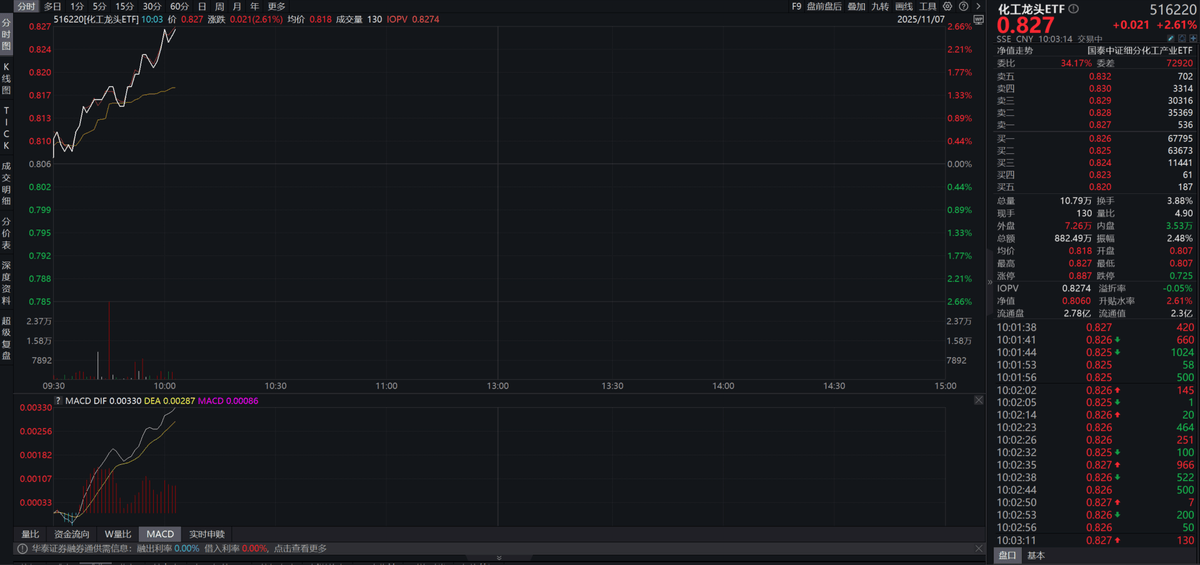
“周期反转+新兴需求拉动”催化,化工龙头ETF(516220)午后领涨超2%
Sou Hu Cai Jing· 2025-12-30 05:30
Group 1 - The core investment logic for the chemical industry in 2026 focuses on the dual resonance of "cyclical reversal + emerging demand stimulation" [3] - The chemical industry has been in a down cycle for approximately 3.5 years, but with a continuous decline in capital investment and the accelerated exit of outdated overseas capacities, the industry is expected to enter a low growth phase [3] - Recent price increases in chemical products are driven by multiple factors, including tightening supply due to reduced production capacity in Europe and domestic maintenance of large production facilities [3] Group 2 - The chemical sector is experiencing a structural optimization on the supply side, with domestic policies emphasizing "anti-involution" and overseas production cuts due to rising raw material costs [4] - The chemical industry is at the bottom of the down cycle and is gradually moving towards an up cycle, with "anti-involution" policies expected to accelerate this transition [4] - The chemical leader ETF (516220) is recommended for capturing investment opportunities in the chemical sector, covering 50 leading chemical stocks and including both traditional cyclical sectors and emerging growth areas [4]
大幅低开后,迅速翻红涨逾1%!有色ETF华宝(159876)实时资金净申购近3000万份
Mei Ri Jing Ji Xin Wen· 2025-12-30 03:37
Group 1 - The core viewpoint of the article highlights the strong performance of the non-ferrous metal sector, particularly the Huabao Non-Ferrous Metal ETF (159876), which has seen a significant increase in net subscriptions and is expected to continue its upward trend [1][2] - The Huabao Non-Ferrous Metal ETF (159876) experienced a price drop of 2% at the opening but quickly rebounded, currently showing a gain of 0.52%, indicating resilience in the market [1] - The macroeconomic outlook suggests that by 2026, three main themes (green inflation, anti-involution, and interest rate cuts) will continue to drive commodity price fluctuations, with a positive outlook for basic metals like copper and aluminum due to emerging industries [1] Group 2 - The Huabao Non-Ferrous Metal ETF (159876) and its linked fund (017140) cover a wide range of metals including copper, aluminum, gold, rare earths, and lithium, providing a diversified investment option compared to single metal investments [2] - As of December 29, the Huabao Non-Ferrous Metal ETF (159876) has a total size of 794 million yuan, making it the largest ETF among three products tracking the same index in the market [2]
大国博弈,科技领航——2026年中国经济展望
李迅雷金融与投资· 2025-12-30 02:41
Core Viewpoint - The GDP growth target for 2026 is expected to remain around 5%, with macro policies focusing on promoting consumption and expanding investment to ensure a good start for the 14th Five-Year Plan [3] Export Performance - China's export performance in 2025 was better than expected, with nominal exports increasing by 5.4% in USD and 6.2% in RMB in the first 11 months. After adjusting for price factors, actual export growth was 7.9% in USD and 9.0% in RMB [4][5] - The strong external demand contributed significantly to China's economic growth, with net exports boosting GDP growth by 1.5 percentage points in the first three quarters of 2025, accounting for 29.0% of the cumulative GDP growth [4] - The expected growth rate for China's exports in 2026 is projected at 3.4% in USD terms, supported by stable US-China tariffs and China's cost advantages [9][28][30] Manufacturing Investment - Manufacturing investment is expected to recover slightly in 2026, from around 1% growth in 2025 to approximately 2% in 2026, driven by resilient exports and policy support for advanced manufacturing [31][46] - The decline in manufacturing investment in 2025 was attributed to "strong supply and weak demand" and trade friction, but the outlook for 2026 suggests a recovery due to improved export expectations and continued policy support [36][46] Real Estate Sector - The direct drag of the real estate sector on the economy is expected to weaken in 2026, with a projected decline in commodity housing sales area of about 5% and a narrowing of the decline in real estate investment to around -11% [55][58] - The real estate sector's recovery will depend on improved consumer confidence and the successful resolution of credit risks among property developers [56][57] Consumption and Investment - Expanding domestic demand is crucial for achieving the 5% GDP growth target in 2026, with a focus on promoting consumption and investment [64] - The government is expected to maintain support for consumption through long-term special bonds, with a funding scale at least equal to the 300 billion RMB allocated in 2025 [66][68] - Infrastructure investment is projected to rebound to 8% growth in 2026, supported by previously announced policies [64]

反内卷与贸易壁垒下,有色金属供给难放量、价格难回落
Sou Hu Cai Jing· 2025-12-30 02:28
Core Insights - The non-ferrous metals industry is facing a structural contradiction between supply contraction and demand expansion due to the dual backdrop of global economic restructuring and industrial upgrading [1] Group 1: Domestic "Anti-Competition" Policies - The domestic "anti-competition" policy aims to actively reduce ineffective supply and upgrade the industry structure rather than merely shrinking capacity [1] - Since the initiation of supply-side reforms in 2015, policies have been implemented to reshape the industry ecology through a combination of prohibiting new capacity, clearing illegal operations, and enforcing environmental regulations [2] - The optimization of the supply structure for core products like copper and aluminum has reduced supply elasticity, laying a foundation for price stability [2] Group 2: Overseas Trade Barriers - Global trade protectionism and geopolitical conflicts have increased the difficulty of resource acquisition in the non-ferrous metals sector [3] - Policies in the U.S. and Europe have raised cross-border trade costs, with shipping costs for copper from Chile to China increasing by nearly 40% over five years, leading to a more than 15% increase in end-user prices [3] - Resource-rich countries are tightening supply, with Indonesia banning nickel ore exports and Mexico nationalizing lithium mines, contributing to a 25% increase in the global cobalt supply gap and a 37% monthly rise in cobalt prices [3] Group 3: Inventory and Supply Dynamics - LME copper inventory in Europe has significantly decreased from nearly 70,000 tons in April 2025 to 14,475 tons by December 17, 2025, indicating tight supply conditions [3] - In contrast, COMEX copper inventory has risen from under 100,000 short tons to 456,900 short tons during the same period, highlighting a shift in global copper liquidity towards the U.S. [3] - Domestic copper inventory has also dropped to around 110,000 tons by the end of 2025, reflecting reduced supply elasticity under the "anti-competition" policy and increased difficulty in acquiring overseas resources [4] Group 4: Resilient Demand and Emerging Fields - The demand for non-ferrous metals remains robust, supported by both traditional and emerging sectors [5] - The traditional power sector benefits from ongoing investments in the power grid, maintaining stable demand for metals like copper and aluminum [5] - Emerging sectors such as new energy vehicles and renewable energy are driving significant demand growth for non-ferrous metals, while high-end fields like semiconductors and military applications are experiencing rigid demand increases [5] Group 5: Investment Opportunities - The pricing logic for non-ferrous metals is being reshaped due to ongoing supply constraints, with prices expected to maintain solid support [5] - The non-ferrous ETF (159980.SZ) tracks the non-ferrous metals index and has reached a new high in scale at 4.399 billion yuan and 2.172 billion shares, reflecting strong investor interest [6] - The non-ferrous ETF has seen continuous net inflows totaling 1.385 billion yuan over the past 23 days, indicating a growing appetite for investment in this sector [6]
“申”度解盘 | 沪指八连阳,跨年行情启动了吗?
申万宏源证券上海北京西路营业部· 2025-12-30 01:58
编者荐语: 摘要 上证指数收获八连阳,再叠加放量,跨年行情似乎正在蓄势待发; 2026 年关注反内卷和科技创新两大主线。 转载自申万宏源上海分公司,仅供参考。本周市场强势上涨,上证指数涨1.88%,从风格来看,科技成长表现优异,中小盘风格活跃。板块来看,海南板 块、有色金属及电池、商业航天、谷歌链等均涨幅较高,形成了范围较广的赚钱效应。 以下文章来源于申万宏源证券上海分公司 ,作者司伟杰 申万宏源证券上海分公司 . 申万宏源证券上海分公司官微,能为您提供账户开立、软件下载、研究所及投顾资讯等综合服务,为您的财富保驾护航。 市场回顾 本周市场强势上涨,上证指数涨 1.88% ,创业板涨 3.90% ,科创 50 涨幅 2.85% ,从风格来看,科技成长表现优异,中小盘风格活 跃。板块来看,海南板块、有色金属及电池、商业航天、谷歌链等均涨幅较高,形成了范围较广的赚钱效应,在此带动下,成交量也摆脱 了 1.8 万亿附近的震荡区间,周五全市场成交量突破 2.1 万亿。上证指数收获八连阳再叠加放量,跨年行情似乎正在蓄势待发。 行业复盘:有色金属为何那么强? 从今年申万一级行业来看,有色金属涨幅超过 80% ,排名第一, ...

综合整治“内卷式”竞争政策引导市场理性
Zheng Quan Shi Bao· 2025-12-30 01:38
Group 1 - The core viewpoint of the article emphasizes the ongoing efforts to address "involution" competition in various industries, particularly highlighted by the central economic work conference in 2024 and its implications for 2025 [1] - A series of policies aimed at rationalizing the market have been implemented, ranging from legal revisions to industry self-regulation, indicating a comprehensive approach to tackle "involution" competition [1] - In the photovoltaic industry, the price of the main continuous contract for polysilicon futures has increased significantly from slightly above 30,000 yuan/ton in June 2025 to over 58,000 yuan/ton currently, reflecting market adjustments [1]