智能驾驶

Search documents
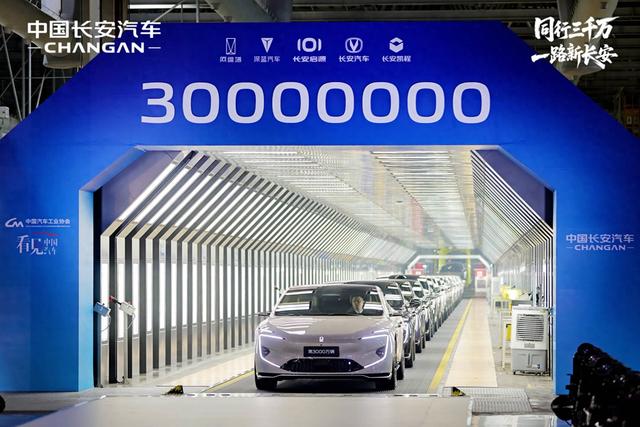
中国长安正式迎来第3000万辆中国品牌汽车下线
Bei Jing Ri Bao Ke Hu Duan· 2025-12-12 01:39
Core Insights - China Changan Automobile has achieved a significant milestone with the production of its 30 millionth vehicle, marking a historic moment for Chinese automotive brands [1][3]. Group 1: Production and Sales Goals - Changan aims to reach an annual production and sales target of 5 million vehicles by 2030, with over 60% being new energy vehicles and over 30% for overseas markets [3]. - The company has demonstrated rapid growth, achieving its first 10 million vehicles in 30 years, the second 10 million in just 7 years, and the third 10 million in 4.5 years, showcasing a "three-year tiered leap" in production speed [5]. Group 2: Safety and Technology - Safety is a core principle for Changan, with extensive testing and validation processes in place, including a CA-TVS testing system that covers extreme conditions [5]. - The company plans to launch the "Tianshu Intelligent" brand by 2025, expanding safety measures to include driving, health, psychological, and privacy aspects through advanced technologies [6]. Group 3: Research and Development - Changan has established a global R&D network with an annual R&D investment of 5%, and has filed over 14,000 patent applications in the last three years [8]. - The company collaborates with over 50 enterprises and 40 universities, forming a robust industrial chain network to enhance its competitive edge [8]. Group 4: Brand Performance - Changan's five brand matrix is performing well, with Avita achieving over 10,000 sales for nine consecutive months, and the Deep Blue brand accumulating over 700,000 users [8]. - The Changan Qiyuan brand has surpassed 46,000 sales in a single month, while the CS75 series has sold over 2.8 million units, and Changan's Kacheng brand leads the new energy microbus market for ten consecutive months [8].


中信证券:智驾行业还有两个重要事项值得投资人高度关注
Xin Lang Cai Jing· 2025-12-12 00:33
Group 1 - The core viewpoint of the article emphasizes two significant matters in the intelligent driving industry that investors should closely monitor: regulatory changes and the commercialization of L4 autonomous driving [1] Group 2 - Regulatory changes include the new L2 intelligent driving strong standard set to be implemented on January 1, 2027, which is expected to favor hardware with strong safety attributes and leading players in the intelligent driving sector, accelerating industry concentration [1] - The commercialization of L4 autonomous driving is progressing rapidly, following a sequence of first closing off areas, then transitioning from cargo to passenger transport. The industry anticipates significant commercialization growth for Robotaxi, Robovan, and mining autonomous driving by 2026 [1]

11月车市基本符合预期,英伟达开源VLA模型
CAITONG SECURITIES· 2025-12-11 13:00
Group 1: Automotive Market Overview - In November, the national retail sales of passenger cars reached 2.225 million units, a year-on-year decrease of 8.1% and a month-on-month decrease of 1.1%, aligning with the initial forecast of a "low start, medium growth, and stable end" trend for the year [5][11][20] - Cumulative retail sales for the year reached 21.483 million units, reflecting a year-on-year growth of 6.1%. The growth rate fluctuated throughout the year, with a notable slowdown in the fourth quarter due to high base effects from the previous year [5][11][20] - The "old-for-new" subsidy policy has been a significant driver for growth, with over 11.2 million applications for subsidies by the end of October, although the average daily subsidy scale dropped to 30,000 units in November due to the suspension of subsidies in various regions [5][11][20] Group 2: Intelligent Driving Developments - NVIDIA has officially open-sourced its new Vision-Language-Action (VLA) model, Alpamayo-R1, marking a significant shift in autonomous driving technology from mere behavior imitation to deeper causal reasoning [6][33] - The model's dataset, approximately 100TB in size, has been uploaded to the open-source community, indicating a move towards more accessible high-end autonomous driving models [6][33] Group 3: Investment Recommendations - The report suggests focusing on companies with strong positions in automotive intelligence and leading software capabilities, including Rui Ming Technology, Dao Tong Technology, Hei Zhi Ma Intelligent, Horizon Robotics, and others [8][39]

地平线:智驾“国产平替芯”,能扳倒英伟达吗?
3 6 Ke· 2025-12-11 11:51
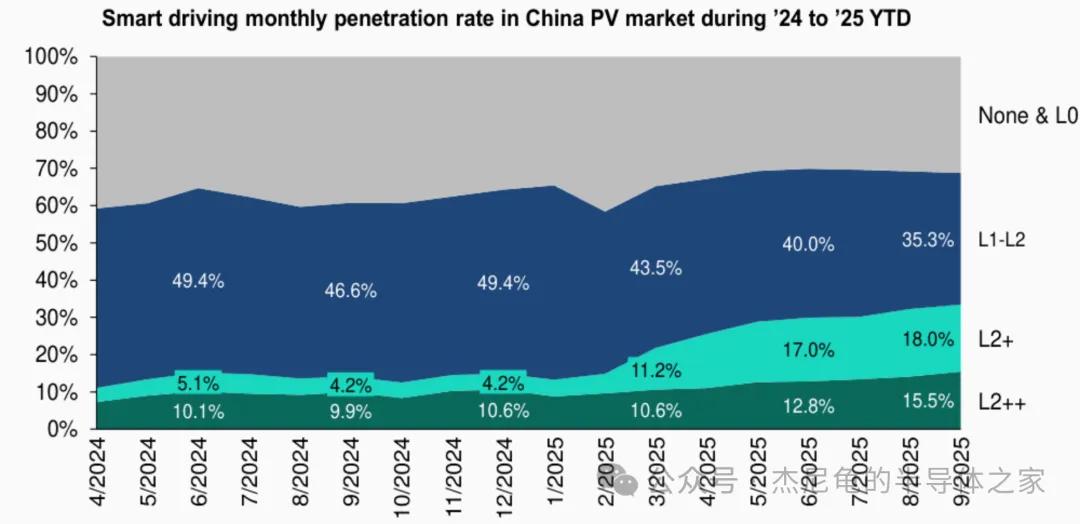
Core Insights - The electric vehicle (EV) industry is facing overcapacity and declining net profit margins as it transitions from electric vehicles to smart vehicles, with user experience upgrades driving the shift towards intelligent driving technology [1] - Horizon Robotics, a key player in the domestic intelligent driving chip market, is set to launch its high-end J6P chip in 2025, aiming to compete with Nvidia [1][2] Market Space for Intelligent Driving Chips - The penetration rate of intelligent driving features in new energy vehicles is accelerating, with only 11% of new cars in China equipped with L2+ level ADAS in 2024, but expected to rise significantly by 2025 [3][4] - The demand for higher computing power in advanced intelligent driving systems is increasing, with current mainstream solutions requiring nearly 500 TOPS, which is 4-5 times that of high-speed NOA [5][9] Competitive Landscape - The intelligent driving chip market is characterized by low domestic production rates, with significant room for domestic replacement [25] - Major competitors include traditional automotive chip companies, consumer electronics chip companies, startup intelligent driving firms like Horizon Robotics, and automakers developing their own chips [25][27] Horizon Robotics' Position - Horizon Robotics is positioned as a leading domestic player in the intelligent driving chip market, with a market share of 30-40% in 2024 [1][36] - The company is focusing on a cost-effective approach with its J6P chip, which is expected to be priced significantly lower than Nvidia's offerings, enhancing its appeal to mass-market automakers [50][53] Future Market Projections - The market for intelligent driving chips is projected to grow at a CAGR of 36% from 2025 to 2030, reaching a market size of 79.3 billion yuan [17] - The average value of chips per vehicle is expected to increase from approximately 716 yuan in 2024 to nearly 3000 yuan by 2030, driven by the rising share of high-performance chips [19][21]
希迪智驾(03881):IPO申购指南
Guoyuan Securities2· 2025-12-11 11:22
Investment Rating - The report suggests a cautious subscription for the company, Xidi Zhijia (3881.HK) [4] Core Insights - The company is a supplier of intelligent driving products and solutions for commercial vehicles in China, focusing on autonomous trucks for mining and logistics in closed environments, V2X technology, and intelligent perception solutions. It ranks sixth among all intelligent driving commercial vehicle companies in China, with a market share of approximately 5.2% [2] - The global market for intelligent driving commercial vehicles is projected to reach RMB 100 billion by 2024 and significantly increase to RMB 16,144 billion by 2030, with a compound annual growth rate (CAGR) of 133.3% from 2024 to 2030. The closed environment segment is expected to reach RMB 51 billion in 2024, with China accounting for RMB 26 billion, representing 50.8% and 53.8% of the global market, respectively [3] - The company's revenue for 2022, 2023, and 2024 is projected to be RMB 31.06 million, RMB 132.6 million, and RMB 410.04 million, respectively, with net losses of RMB -263 million, RMB -255.08 million, and RMB -580.71 million [3] Summary by Sections IPO Details - The company plans to raise HKD 1.309 billion through its IPO, with a share price of HKD 263 and a total of 5,407,980 shares available for subscription [1] Market Position - The company is positioned as a key player in the intelligent driving market, particularly in closed environments, and is expected to benefit from the rapid growth of the sector [4]
资本热话 | 港股上市潮遇“赶工”质疑,监管直指质量欠佳
Sou Hu Cai Jing· 2025-12-11 10:20
Core Insights - The Hong Kong Securities and Futures Commission (SFC) and the Hong Kong Stock Exchange (HKEX) have expressed concerns over the declining quality of new IPO applications and non-compliance with regulatory guidelines, particularly in the context of a surge in IPO activity [1][3][6] Group 1: Regulatory Concerns - The joint letter from the SFC and HKEX highlights three main issues: poor quality of listing documents, inadequate responses from sponsors and applicants to regulatory feedback, and failures in the execution of the issuance process [1][6] - The surge in IPOs has led to a significant increase in the workload for market participants, particularly sponsors, resulting in a decline in the quality of submitted documents [3][4] - As of December 9, 2025, there have been 97 IPOs in Hong Kong, raising a net amount of 231.9 billion HKD, a 237% increase year-on-year [3] Group 2: Talent Supply and Industry Dynamics - The rapid expansion of IPO activity contrasts sharply with the lag in the supply of experienced professionals in the investment banking sector, leading to increased workloads for existing staff [4] - The industry is experiencing a talent war due to the surge in new listings, with many firms relying heavily on less experienced employees for foundational work [4][5] - Despite the pressure on work quality, compensation levels in the industry remain high, with average salaries for some Chinese brokers in Hong Kong showing significant increases [5] Group 3: Compliance and Process Execution - The regulatory letter also pointed out that sponsors and applicants have not adequately addressed regulatory comments, leading to unnecessary consumption of regulatory resources [6][7] - Issues in the issuance process include delays in communication and the assignment of inexperienced personnel to key roles, which have hindered compliance with critical timelines [7] - HKEX has implemented a new IPO settlement platform that reduces the time from pricing to trading from five working days to two, increasing the demands on sponsors and applicants [7]
AD智驾的2025年:监管刹车、技术狂飙,“地大华魔”四雄争霸
3 6 Ke· 2025-12-11 09:55
Core Insights - The automotive industry in 2025 has seen a significant shift towards safety and responsibility, moving away from exaggerated claims about autonomous driving technology [1][3] - The Chinese Ministry of Industry and Information Technology has banned the term "autonomous driving," leading to a more realistic portrayal of the technology by car manufacturers [3][5] Industry Developments - The narrative around autonomous driving has changed, with companies now focusing on "assisted driving" and "intelligent driving assistance" instead of "autonomous driving" [3][5] - The industry is characterized by two main trends: advancement in technology and democratization of intelligent driving [5][11] Key Players and Innovations - Xiaopeng Motors has introduced a second-generation VLA model that eliminates the "middleman" in the translation process, allowing for direct machine understanding of physical environments [6][7] - BYD launched the "Tian Shen Zhi Yan" high-level intelligent driving system, targeting the 100,000 yuan market with various versions, including features like highway NOA and automatic parking [11][13] - Geely has also entered the market with its own intelligent driving system, offering multiple versions with varying capabilities [11][13] Competitive Landscape - Tesla's role has evolved, with Chinese companies no longer viewing it as the sole leader in intelligent driving technology [13][14] - Horizon Robotics has gained traction with its end-to-end architecture and aims to make urban NOA widely available, achieving significant market share in the autonomous driving sector [19][21] - DJI's subsidiary, Zhuoyue Technology, has focused on practical applications and has made strides in the European market, showcasing its capabilities in urban NOA [22][24] Strategic Collaborations - Huawei has formed numerous partnerships across the automotive industry, providing comprehensive intelligent driving solutions to various manufacturers [25][28] - Momenta has expanded its collaboration network significantly, working with multiple brands to implement its driving assistance solutions [29][31] Challenges and Future Outlook - Despite advancements, the industry faces challenges related to user trust and the potential for misuse of autonomous driving systems [33][34] - The ongoing evolution of intelligent driving technology is expected to continue, with a focus on making it accessible to a broader market while addressing safety and ethical concerns [35][36]
降息落地后的布局窗口:算力龙头工业富联的价值机遇
Sou Hu Cai Jing· 2025-12-11 09:20
Core Viewpoint - The stock price of Industrial Fulian is experiencing volatility despite strong fundamentals and increasing demand for computing power, raising questions about whether this is a risk signal or an investment opportunity as the Federal Reserve's interest rate decisions unfold [1] Group 1: Industry Dynamics - The computing power industry is currently benefiting from a confluence of favorable policies, technological advancements, and surging demand, marking a significant growth phase [2] - Major global economies are prioritizing AI computing infrastructure, with initiatives like China's "East Data West Computing" project and various subsidies for enterprise-level AI deployments bolstering hardware demand [2] - The demand explosion is evident as leading cloud service providers engage in a "computing power arms race," with companies like Microsoft and Google expanding their AI infrastructure to support new applications [2] Group 2: Company Performance - Industrial Fulian has a leading market share of over 40% in high-end AI server manufacturing, with its GB300 server production exceeding market expectations [3] - Recent reports suggest that orders for the NVL72 cabinets have been secured until 2027, aligning with industry forecasts of extended order visibility for top ODM manufacturers [3] - The company's rising inventory levels and strong order visibility serve as key indicators for sustained future performance [3] Group 3: Market Sentiment and Valuation - Despite positive fundamentals, Industrial Fulian's stock has faced recent fluctuations due to external factors, including the Federal Reserve's monetary policy and overall market conditions [4] - The current market volatility is seen as a temporary emotional disturbance rather than a reflection of the company's performance, with signs of stabilization in the semiconductor and computing sectors [4] - The company's stock valuation has adjusted to a reasonable range, significantly below institutional target prices, enhancing its margin of safety for long-term investors [4]

2025年,那些跨界机器人的造车势力
Tai Mei Ti A P P· 2025-12-11 08:38
Core Viewpoint - The automotive industry is increasingly focusing on humanoid robots, with companies like Xpeng and Xiaomi announcing significant investments and developments in this area, driven by the need for new market narratives and productivity enhancements [1][2][3]. Group 1: Market Dynamics - The recent surge in automotive companies developing humanoid robots is partly due to the need for new valuation stories, as seen with Xpeng's stock price increase following the unveiling of its humanoid robot IRON [2]. - Tesla's CEO Elon Musk's compensation plan is closely tied to the company's future valuation, further emphasizing the financial incentives for automakers to explore the robotics sector [2]. - The trend of automakers entering the robotics space is perceived as a strategy to escape the homogenization of the automotive market [2]. Group 2: Productivity and Technological Advancements - Automakers are motivated by the potential for significant productivity improvements through robotics, as highlighted by Xiaomi's CEO, who noted that AI and X-ray technology can enhance inspection efficiency by tenfold compared to human workers [3]. - The emergence of AI models is expected to enable robots to perform tasks with greater precision and decision-making capabilities than traditional manufacturing methods [3]. - The ability to repurpose existing automotive technologies, such as sensors and algorithms from autonomous driving, is seen as a key advantage for automakers venturing into robotics [4]. Group 3: Industry Trends and Policy Support - The evolving economic landscape and supportive policies are reshaping the manufacturing sector, with a renewed focus on AI and smart technologies, positioning the automotive industry for a transition towards intelligent manufacturing [5]. - The automotive sector is expected to shift from electric vehicle development to a focus on smart driving and robotics, creating a new wave of industry opportunities [5]. Group 4: Challenges and Barriers - Financial constraints remain a significant challenge for companies in the robotics sector, as evidenced by the recent failures of startups like K-Scale Labs and others in the commercialization phase [7]. - The technical barriers and the need for extensive data accumulation in diverse applications pose additional challenges for automakers entering the robotics field [8]. Group 5: Standardization and Industry Recognition - The establishment of the "Humanoid Robot Standardization Technical Committee" by the Ministry of Industry and Information Technology in China indicates the growing importance of automotive companies in the robotics sector [9]. - Companies like Chery and Xpeng are recognized for their contributions to the robotics industry, reflecting their commitment and progress in this emerging field [10]. Group 6: Future Implications - The involvement of automotive companies in the robotics sector is expected to accelerate the development of industry standards and enhance the overall ecosystem, benefiting from their manufacturing expertise and existing user bases [11][12]. - The integration of humanoid robots into existing infrastructures and their potential as mobile intelligent terminals could play a crucial role in shaping future digital societies [13].


机构:2026年看好出口占比高、国内高端化卓有成效的车企
Zheng Quan Shi Bao Wang· 2025-12-11 06:45
Group 1 - In November, China's automobile exports reached 728,000 units, marking a month-on-month increase of 9.3% and a year-on-year increase of 48.5%, with the total exports for January to November at 6.343 million units, up 18.7% year-on-year [1] - The importance of exports is highlighted, with expectations for a 12% growth in automobile export sales by 2026, while wholesale sales are projected to see a slight increase [1] - Companies recommended for investment include Great Wall Motors, Chery Automobile, Horizon Robotics, Seres, Xiaomi Group, Li Auto, Xpeng Motors, Geely Automobile, Yutong Bus, and Fuyao Glass, focusing on those with high export ratios and effective domestic high-end strategies [1] Group 2 - Dongguan Securities suggests that exports may become a new growth driver for capacity digestion and maintaining growth, with leading automakers expected to transition from merely exporting products to exporting production capacity through localized overseas production [2] - Recommended companies include BYD and Seres for their active overseas market expansion, as well as Fuyao Glass and Junsheng Electronics for their potential performance growth driven by increased penetration of intelligent driving configurations [2] - Yutong Bus is identified as a beneficiary of the "old-for-new" policy in the new energy bus sector [2]