去美元化

Search documents
美国和中国,终于把牌摊开了。不是一时的气话,而是一种冰冷的对视,双方都看懂了对方的底牌。美国那 38.5 万亿美元的债务窟窿正越撕越大,美联储的印钞机都快转得发烫,可就在这自顾不暇的当口,它居然还主动找上门来,要跟中国摊牌叫板。2025年下半年,双方通过一系列谈判达成了"脆弱的休战...
Sou Hu Cai Jing· 2026-01-26 01:53
Group 1 - The core viewpoint of the article highlights the escalating tensions between the US and China, with both countries revealing their strategies in a high-stakes economic confrontation [1][7] - The US is attempting to isolate China through trade agreements that include "poison pill clauses," which aim to restrict China's trade partnerships and impose severe penalties for non-compliance [2][6] - The US is facing a significant debt crisis, with a debt of $38.5 trillion, leading to reliance on dollar printing to manage its financial issues, which is increasingly ineffective against China's stable economic strategies [3][5] Group 2 - China is responding to external pressures by strengthening its internal economy, focusing on its vast domestic market and industrial capabilities to mitigate the impact of external shocks [4][6] - The country is actively reducing its holdings of US debt and increasing its gold reserves, while also expanding its cross-border payment systems to bypass US-controlled financial channels [5][6] - China is investing in key industries such as artificial intelligence and advanced manufacturing, aiming for self-sufficiency and resilience against external technological pressures [6][7] Group 3 - The article emphasizes that China's exports, particularly in sectors like electric vehicles and solar products, are increasingly directed towards emerging markets in Latin America, Africa, and Southeast Asia, indicating a shift in global trade dynamics [7] - The ongoing US-China rivalry is characterized by a struggle for long-term economic stability and resource control, with both nations adapting their strategies in response to each other's moves [7]
贵金属延续强势,化工板块集体大涨
Dong Zheng Qi Huo· 2026-01-26 01:31
1. Report Industry Investment Ratings Not provided in the given content. 2. Core Views of the Report - The dollar index is expected to weaken in the short - term due to increased domestic conflicts over illegal immigration in the US [11][12]. - US stocks are expected to maintain high - level volatility during the earnings season, with increased volatility [16][17]. - Precious metals are likely to see increased short - term volatility, and investors should be aware of the risk of a pullback after a continuous sharp rise [20]. - The bond market is experiencing a short - term rebound, and it is more cost - effective to short after the upward momentum fades [21][22]. - The stock index long - position strategy should be continued [23][24]. - Coking coal is expected to be weak and volatile in the short - term as supply is at a high level and downstream restocking has ended [25][26]. - Steel prices are expected to be volatile before the Spring Festival, and it is recommended to hedge inventory at high prices if there is a price rebound [31]. - Palm oil is likely to be easy to rise and difficult to fall in the short - term, and the price of soybean oil is expected to be supported before the US biofuel policy is released [35]. - The outlook for soybean meal exports is not optimistic, and the 5 - month contract is likely to be weak if there are no major abnormalities in South American production [37][38]. - The domestic sugar market is expected to be weakly volatile in the short - term due to seasonal supply pressure and limited demand [42]. - Zhengzhou cotton is expected to be adjusted in a volatile manner before the Spring Festival, with long - term bullish views unchanged [47]. - Copper prices are likely to be volatile in the short - term, and it is recommended to wait and see in the short - term and look for opportunities to go long at low prices in the medium - term [51]. - Lead prices are expected to be in low - level volatility, and it is recommended to wait and see both unilaterally and in arbitrage [53][54]. - Zinc prices are expected to remain in high - level volatility, and it is recommended to wait and see unilaterally, pay attention to long - position opportunities in the far - month contracts for arbitrage, and wait and see in the domestic - foreign arbitrage [57]. - Lithium carbonate prices are likely to be easy to rise and difficult to fall, and a bullish strategy is recommended with attention to position control and risk management [60][61]. - Tin prices are expected to be in wide - range volatility in the short - term, and attention should be paid to the implementation of supply recovery expectations and consumption recovery [65]. - Nickel prices are expected to be easy to rise and difficult to fall, and it is recommended to look for opportunities to go long at low prices [66][67]. - EU carbon prices are expected to be strong in the short - term [68][69]. - Oil prices are expected to be supported by short - term geopolitical conflicts and supply disruptions [71][72]. - The bottle - chip market is expected to see a mild recovery in processing fees around the Spring Festival [76]. - The container shipping index is expected to be weakly volatile in the short - term [78]. 3. Summary by Directory 3.1 Financial News and Comments 3.1.1 Macro Strategy (Foreign Exchange Futures - US Dollar Index) - Europe is estimated to need $1 trillion to restructure its defense industry. The shooting of a US citizen by ICE has intensified domestic conflicts over illegal immigration, causing the dollar index to weaken. The Trump administration is expected to maintain a tough stance on illegal immigration, and market volatility will remain high. The dollar index is expected to weaken in the short - term [9][11][12]. 3.1.2 Macro Strategy (US Stock Index Futures) - The final value of the University of Michigan Consumer Sentiment Index in the US in January was 56.4, reaching a five - month high. The preliminary value of the US S&P Global Manufacturing PMI in January was 51.9. The US economy shows resilience, and the Fed is unlikely to cut interest rates in the short - term. The market is worried about the Fed's independence, and US stocks are expected to maintain high - level volatility during the earnings season [13][14][16]. 3.1.3 Macro Strategy (Gold) - The US is expected to obtain "sovereignty" over the area where the US military base on Greenland is located. The preliminary value of the US S&P Global Manufacturing PMI in January was 51.9. The New York Federal Reserve Bank conducted a "rate check" on the US dollar/yen exchange rate. Precious metals continued to rise strongly on Friday, reaching a new high. The market is trading on the safe - haven and de - dollarization needs caused by the tense situation between the US and Europe. The sharp rise of the yen and the fall of the dollar after the US and Japan jointly signaled to intervene in the foreign exchange market boosted the precious metals. However, the short - term market is dominated by sentiment and funds, and the risk is increasing. Precious metals are likely to see increased short - term volatility, and investors should be aware of the risk of a pullback [18][19][20]. 3.1.4 Macro Strategy (Treasury Bond Futures) - The central bank conducted a 7 - day reverse repurchase operation of 125 billion yuan, with a net investment of 38.3 billion yuan. The bond market continued to strengthen, mainly due to the alleviation of previous concerns. However, there are still long - term negative factors, and it is more cost - effective to short after the upward momentum fades [21][22]. 3.1.5 Macro Strategy (Stock Index Futures) - The CSRC issued a guidance on the performance comparison benchmark for public funds. Due to strong bullish expectations, funds flowed into small - cap stocks, causing market differentiation. The regulatory authorities are expected to take stricter and more precise measures to limit excessive speculation, and the market is likely to remain in high - level volatility. It is recommended to continue to hold the long - position strategy for the stock index [23][24]. 3.2 Commodity News and Comments 3.2.1 Black Metals (Coking Coal/Coke) - The coking coal price in the Changzhi market remained stable. The supply in some areas increased slightly, while the downstream restocking ended, and the market sentiment declined. Coking coal is expected to be weak and volatile in the short - term [25][26]. 3.2.2 Black Metals (Rebar/Hot - Rolled Coil) - The global crude steel output in 2025 was 1.849 billion tons. In mid - January 2026, the daily output of key steel enterprises decreased slightly, and the inventory increased. Before the Spring Festival, steel prices are expected to be volatile and may rebound slightly. It is recommended to hedge inventory at high prices if there is a price rebound [27][29][31]. 3.2.3 Agricultural Products (Soybean Oil/Rapeseed Oil/Palm Oil) - The EU plans to gradually phase out soybean biofuels. The establishment of the Southeast Asian Sustainable Aviation Fuel Council. The actual soybean crushing volume of domestic oil mills increased, and the estimated volume for the next week is higher. The palm oil market is supported by inventory reduction and Ramadan expectations, and the price of soybean oil is expected to be supported before the US biofuel policy is released [32][34][35]. 3.2.4 Agricultural Products (Soybean Meal) - The US weekly soybean export sales reached the highest level of the year. The domestic oil mill soybean crushing volume increased, and it is expected to remain high. The outlook for soybean meal exports is not optimistic, and the 5 - month contract is likely to be weak if there are no major abnormalities in South American production [36][37][38]. 3.2.5 Agricultural Products (Sugar) - The amount of sugar waiting to be shipped at Brazilian ports increased. The sugar production in the central and southern regions of Brazil decreased in the second half of December. The domestic sugar market is under seasonal supply pressure, and the demand is limited. It is expected to be weakly volatile in the short - term [39][41][42]. 3.2.6 Agricultural Products (Cotton) - The import of Indian cotton yarn decreased, while the import of polyester - cotton blended yarn increased. The EU's clothing import rebounded in November 2025, and the import from China increased. The US cotton export signing reached a new high, but the export progress is still behind. Zhengzhou cotton is expected to be adjusted in a volatile manner before the Spring Festival, with long - term bullish views unchanged [43][44][47]. 3.2.7 Non - ferrous Metals (Copper) - Chilean contractor protests blocked access to mines. Tibet Julong Copper's second - phase project was put into operation. The Chilean Mining Association warned that it will take several years for copper supply to increase. The short - term macro factors support copper prices, but the fundamental factors may suppress price increases. Copper prices are likely to be volatile, and it is recommended to wait and see in the short - term and look for opportunities to go long at low prices in the medium - term [48][50][51]. 3.2.8 Non - ferrous Metals (Lead) - The LME lead spread was at a discount. The production of primary lead was stable, the profit of secondary lead refineries narrowed, and the consumption of lead batteries was weak. The social inventory increased, and lead prices are expected to be in low - level volatility. It is recommended to wait and see both unilaterally and in arbitrage [52][53][54]. 3.2.9 Non - ferrous Metals (Zinc) - A gold mine in Mexico was temporarily shut down. The LME zinc spread was at a discount, and MMG's zinc ore output in the fourth quarter of 2025 increased. The zinc concentrate port inventory increased, the smelting profit improved slightly, and the demand was affected by multiple factors. Zinc prices are expected to remain in high - level volatility. It is recommended to wait and see unilaterally, pay attention to long - position opportunities in the far - month contracts for arbitrage, and wait and see in the domestic - foreign arbitrage [55][56][57]. 3.2.10 Non - ferrous Metals (Lithium Carbonate) - The retail and wholesale volume of new - energy passenger vehicles in the first 18 days of January 2026 decreased year - on - year. Lithium carbonate prices rose sharply last week. The demand is strong, and the inventory is low. It is recommended to take a bullish strategy with attention to position control and risk management [58][60][61]. 3.2.11 Non - ferrous Metals (Tin) - The first domestic satellite computing power module was launched. The LME tin spread was at a discount, and the inventory increased. The import of tin concentrate in December increased year - on - year. The supply is expected to increase in 2026, but there are uncertainties. The demand is weak, and tin prices are expected to be in wide - range volatility in the short - term [62][63][65]. 3.2.12 Non - ferrous Metals (Nickel) - The port logistics of the Indonesian Qing Shan Industrial Park was suspected of monopoly. The nickel ore production quota in Indonesia is expected to be adjusted, and the global primary nickel gap is expected to be more than 100,000 metric tons. The raw material price rose, and the demand for nickel salt increased. Nickel prices are expected to be easy to rise and difficult to fall, and it is recommended to look for opportunities to go long at low prices [66][67]. 3.2.13 Energy Chemicals (Carbon Emissions) - The closing price of the EUA main contract decreased. The EU carbon price remained high and volatile last week. The CoT data helped boost the market. The carbon price is expected to be strong in the short - term [68][69]. 3.2.14 Energy Chemicals (Crude Oil) - The production of a Kazakhstani oil field was delayed due to a power failure and export problems. The number of US oil rigs increased. The oil price rose on Friday, supported by the risk of supply disruptions and the increase in diesel cracking spreads [70][71][72]. 3.2.15 Energy Chemicals (Bottle Chips) - The export quotation of bottle - chip factories continued to rise. The polyester raw material price rose strongly, and the bottle - chip factory quotation increased. The market trading atmosphere was fair, and the downstream was cautious. The industry operating rate decreased, and the inventory pressure was transferred smoothly. The processing fee is expected to recover mildly around the Spring Festival [73][75][76]. 3.2.16 Shipping Index (Container Freight Rates) - Wildfires and rough seas restricted the operation of some ports in Chile. The short - term market is weak, and the European - line futures are expected to be weakly volatile. Attention should be paid to whether the index will be higher due to container dumping and late ship departures [77][78].
中信建投期货:1月26日工业品早报
Xin Lang Cai Jing· 2026-01-26 01:12
Group 1: Copper Market - The main copper futures in Shanghai rose over 2% to 102,830 yuan, while London copper increased to approximately 13,134 USD [4][17] - The macroeconomic environment is neutral, with the US threatening to cut dollar supplies to Iraq, leading to a decline in the dollar to 97, which boosted copper prices [4][17] - Global copper inventories increased to 1.015 million tons, with domestic copper stocks rising by about 14,400 tons to 330,000 tons [4][17] - Short-term copper prices are expected to remain high due to tight supply expectations, but high inventory levels may limit price increases [4][17] Group 2: Nickel and Stainless Steel - The nickel and stainless steel market is experiencing short-term high-level fluctuations, influenced by tight policy expectations from Indonesia [18][19] - The supply of nickel from the Philippines is hindered by weather conditions, while Indonesian wet method nickel is relatively abundant [18][19] - Short-term nickel and stainless steel prices are expected to remain high until Indonesian policies are relaxed [18][19] Group 3: Aluminum Market - The aluminum market is seeing weak fluctuations in spot prices, with futures prices rebounding slightly after a decline [20][21] - The supply side is affected by high-cost producers adjusting production, while the production capacity of alumina remains high at 96.55 million tons [20][21] - The expected operational range for alumina futures is between 2,500 and 2,800 yuan per ton, with a bearish outlook on price rebounds [20][21] Group 4: Zinc Market - Zinc prices showed strong fluctuations, supported by improved macroeconomic sentiment and easing trade tensions between the US and Europe [23][24] - The overall supply remains limited despite some production plans being maintained, while demand from the black metal sector is weak [23][24] - The operational range for zinc futures is expected to be between 24,000 and 25,000 yuan per ton [23][24] Group 5: Lead Market - Lead prices are experiencing strong fluctuations, with supply-demand imbalances persisting due to limited domestic ore and insufficient imports [24][25] - The operational range for lead futures is expected to be between 16,800 and 17,800 yuan per ton [24][25] Group 6: Precious Metals - Precious metals are steadily rising, driven by geopolitical tensions and increased demand for safe-haven assets [27][28] - The operational ranges for gold, silver, platinum, and palladium futures are set at 1,120-1,170 yuan per gram, 25,500-27,500 yuan per kilogram, 690-750 yuan per gram, and 510-550 yuan per gram, respectively [27][28]



黄金站上5000美元
Sou Hu Cai Jing· 2026-01-26 01:12
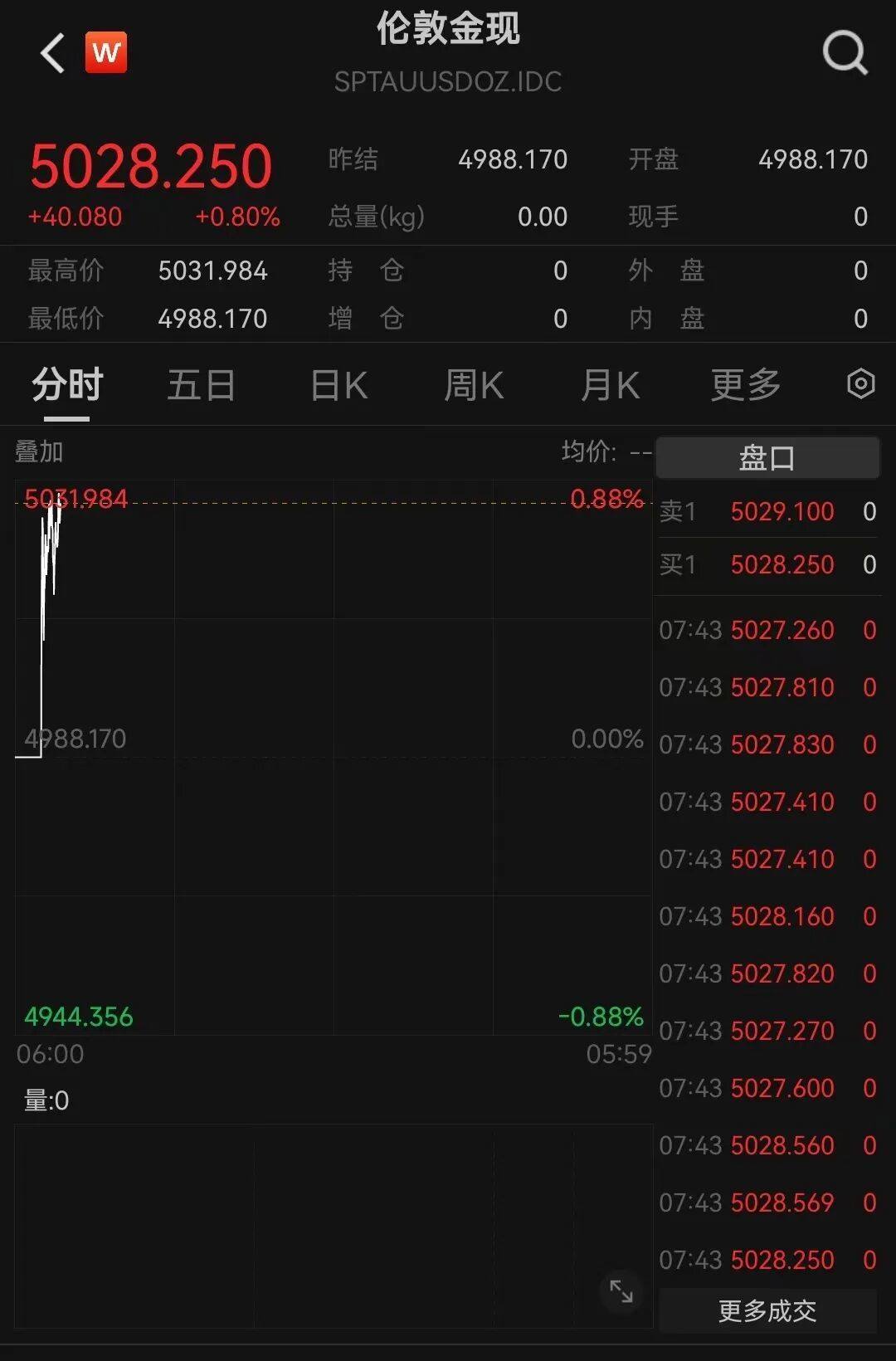
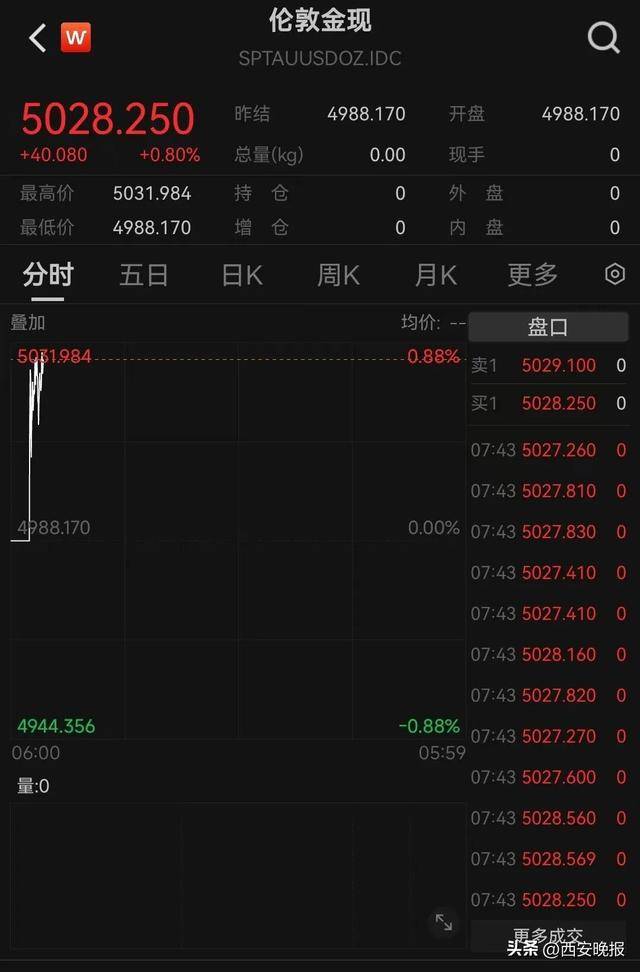
2026年伊始,全球金融市场见证了一项历史性纪录的诞生。现货黄金首次突破5000美元/盎司,最高涨 至5031美元/盎司。截至发稿,现报5028.25美元/盎司,日内涨幅达0.8%。现货白银盘初再创新高,现报 104.76美元/盎司,涨幅超1%。 公开信息显示,包括顶级投资顾问、多家养老基金及行业机构在内的市场参与者普遍认为,美国资产的 风险溢价正在抬升,这一信号意味着投资者或正逐步从这一全球最大金融市场撤出资金。近期,瑞典养 老基金Alecta、丹麦养老基金AkademikerPension确认,已出售或正在出售所持的美国国债。 展望后市,黄金长期上涨趋势获机构普遍看好。 高盛在最新报告中,将黄金今年底目标价从每盎司4900美元上调至5400美元,理由是私人部门投资者和 中央银行对黄金的需求不断增长。高盛分析师预计,各国央行今年每月将购买60吨黄金,同时随着美联 储降息,黄金ETF的持有量也将增加。各国央行已开始通过传统的ETF,与私人部门投资者争夺有限的 黄金。 | < W | 伦敦金现 | | | | | | --- | --- | --- | --- | --- | --- | | | SPTAUUS ...
刚刚!见证历史,再创新高!
天天基金网· 2026-01-26 00:58
Core Viewpoint - The article highlights a significant milestone in the financial market with spot gold prices surpassing $5000 per ounce for the first time, reaching a peak of $5031 per ounce, driven by geopolitical uncertainties and a declining US dollar [2][4]. Group 1: Gold and Silver Market Performance - Spot gold has reached $5028.25 per ounce with a daily increase of 0.8%, while spot silver has also hit a new high at $104.76 per ounce, showing a rise of over 1% [2]. - In the past week, the US dollar index experienced its worst performance since June 2025, dropping nearly 2%, while gold recorded its best weekly performance in nearly six years with an increase of 8.4%, and silver surged by 14.4% [3][4]. Group 2: Geopolitical and Economic Factors - The decline of the US dollar is attributed to rising political risk concerns regarding American assets, particularly following the Greenland crisis, prompting discussions in Germany about repatriating gold reserves stored in the US [4][5]. - European institutional investors are increasingly wary of US assets, leading to a "passive de-risking" process, with significant capital movements away from the US market [5]. Group 3: Future Outlook for Gold Prices - Goldman Sachs has raised its year-end gold price target from $4900 to $5400 per ounce, citing increasing demand from private investors and central banks [6]. - Analysts predict that gold prices may rise further in 2026 due to expectations of Federal Reserve rate cuts, instability in the US dollar, and ongoing geopolitical uncertainties [6][7]. - UBS maintains a $5000 per ounce annual target for gold, suggesting that prices could reach $5400 if geopolitical conflicts escalate [8].

基本金属行业周报:地缘扰动叠加央行购金,贵金属价格持续突破历史新高
HUAXI Securities· 2026-01-26 00:45
证券研究报告|行业研究周报 周四,美国至 1 月 17 日当周初请失业金人数 20 万人,预 期 21 万人,前值由 19.8 万人修正为 19.9 万人。美国第三季度 实际 GDP 年化季率终值 4.4%,预期 4.30%,前值 4.30%。美 国第三季度实际个人消费支出季率终值 3.5%,前值 3.5%。美 国第三季度核心 PCE 物价指数年化季率终值 2.9%,预期 2.9% ,前值 2.90% 。美国 11 月核心 PCE 物价指数月率 0.2%,预期 0.20%。美国 11 月个人支出月率 0.5%,预期 0.50%。 [Table_Summary] 报告摘要: ►贵金属:地缘扰动叠加央行购金,贵金属价格持续 突破历史新高 本周 COMEX 黄金上涨 8.30%至 4,983.10 美元/盎司, COMEX 白银上涨 14.80%至 103.26 美元/盎司。SHFE 黄金上 涨 8.07% 至 1,115.64 元 / 克 ,SHFE 白银上涨 11.04% 至 24,965.00 元/千克。 本周金银比下跌 5.66%至 48.26。本周 SPDR 黄金 ETF 持 仓增加 27,574.43 ...





中金:若“乱象”事态超出预期 利多避险资产、资源品 科技逢低介入
智通财经网· 2026-01-26 00:27
Group 1 - The core viewpoint of the report emphasizes the need to monitor key events related to Trump's policies, including potential tariffs and judicial rulings that could impact market stability [1][2] - The report indicates that the uncertainty surrounding U.S. policies has led to increased volatility in both the stock and bond markets, with a notable "triple hit" in the markets [2][4] - Trump's approach to challenging the existing international order is identified as a significant source of market volatility, with a focus on understanding the underlying intentions behind his policies [6][7] Group 2 - Trump's macro objectives are summarized as "increasing revenue," "reducing costs," and "bringing back manufacturing and capital" [7][41] - The strategy of increasing revenue through tariffs has shown significant short-term effects, with a reported 24.6% reduction in trade deficits from April to October 2025, and tariff revenues reaching $287 billion [8][10][9] - The report highlights that the actual effective tax rate from tariffs is 11.1%, which is below the theoretical rate, indicating that the impact on inflation has been manageable so far [14][22] Group 3 - The report discusses the limited effectiveness and significant backlash of Trump's cost-reduction strategies, particularly regarding the independence of the Federal Reserve [32][35] - It notes that the cost of servicing U.S. debt has approached $1 trillion, which is over 3.1% of GDP, despite attempts to influence interest rates through non-market methods [35][37] - The potential appointment of a new Federal Reserve chair is seen as a crucial factor in shaping market expectations and influencing cost reduction [38] Group 4 - The report indicates that manufacturing and capital are returning to the U.S. due to various incentives, including tax breaks and tariffs that compel foreign companies to invest domestically [41][42] - The share of U.S. manufacturing imports has decreased from 13.3% to 8.0%, reflecting a growing importance of domestic manufacturing [43] - Corporate investment has also increased, with fixed investment rising from 0.9% to 3.9% year-on-year, driven by equipment and intangible assets [45][47] Group 5 - The report warns of potential risks to foreign direct investment and U.S. Treasury securities due to ongoing challenges to the international order, which could lead to a "de-dollarization" trend [49][50] - Despite concerns, the narrative of de-dollarization has not yet materialized into significant actions, as foreign holdings of U.S. debt reached a new high of nearly $9.4 trillion [50] - The report emphasizes the importance of monitoring these trends closely, as instability in the Treasury market could have severe implications for the U.S. financial system [50]
【中金外汇 · 周报】地缘风险如何影响美元汇率?
Xin Lang Cai Jing· 2026-01-26 00:26
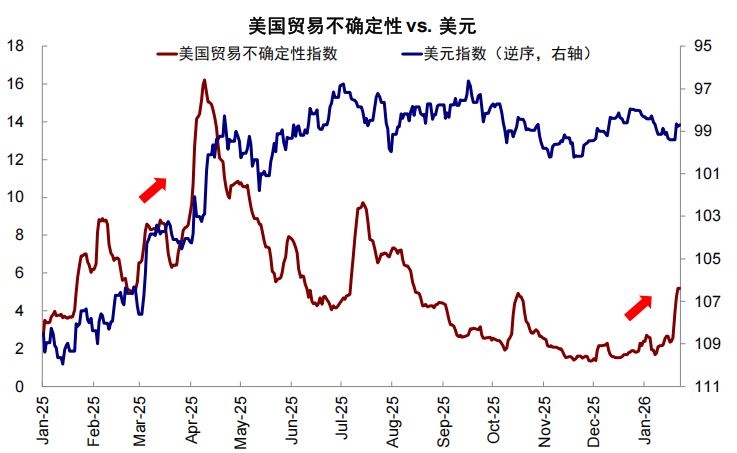
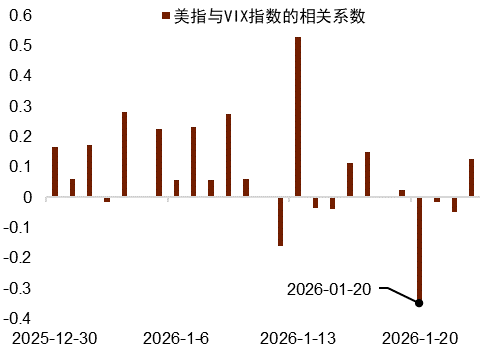
Core Viewpoint - The geopolitical risks have led to a significant decline in the US market, experiencing a "triple kill" in stocks, bonds, and currencies, primarily triggered by Trump's tariff threats against several European countries regarding Greenland [1][2][3]. Group 1: Market Reactions - On January 20, the S&P 500, Nasdaq, and Dow Jones indices fell by 2.1%, 2.4%, and 1.8% respectively, while the 10-year Treasury yield rose by approximately 7 basis points, and the dollar index weakened by 0.8% [1]. - The divergence between interest rates and exchange rates indicates that the rise in rates reflects a risk premium rather than economic fundamentals [1][2]. Group 2: Geopolitical Context - Trump's longstanding interest in acquiring Greenland has resurfaced, with threats of imposing tariffs on goods from Denmark and other European nations, escalating tensions [2][3]. - The situation peaked on January 17, when Trump announced a 10% tariff on goods from several European countries, set to increase to 25% until a Greenland purchase agreement is reached [2][3]. Group 3: Short-term Developments - Following Trump's softened stance, the immediate impact on the market has lessened, but the Greenland issue is seen as a reflection of broader US national security strategy adjustments, which may lead to ongoing geopolitical tensions [3][4]. - The report indicates that Europe is heavily reliant on the US in key areas such as defense and finance, making unified counteractions against the US challenging [3][4]. Group 4: Long-term Implications - The geopolitical disputes over Greenland are viewed as part of a larger trend of the US government adopting an "America First" approach, which may lead to increased tensions with other nations and affect global risk sentiment [4][5]. - The Trump administration's policies may challenge the status of the dollar as a reserve currency, potentially leading to a weaker dollar environment and increased demand for currency hedging [5][12]. Group 5: Currency Market Dynamics - The recent geopolitical tensions have prompted a "sell America" sentiment in the market, with investors potentially reducing dollar positions or increasing forex hedging, which could further weaken the dollar [5][6]. - Historical data from the "Liberation Day" event in April 2025 suggests that the recent Greenland incident may have a similar one-time impact on the dollar, with expectations of a gradual return to levels implied by US fundamentals as risks subside [7][12]. Group 6: Future Outlook - The upcoming FOMC meeting is anticipated to provide insights into the Fed's views on the labor market and inflation, which could influence future rate cut expectations [20][31]. - The dollar is expected to continue facing downward pressure in the medium to long term, particularly if the labor market weakens further [20][31].
经济日报:大宗商品市场贵金属支撑性强
Sou Hu Cai Jing· 2026-01-26 00:20
市场趋于分化 作为"十五五"规划的开局之年,2026年,投资市场的结构性特征日益显现。钱往哪里流,又该往哪里 投?关注版今天起推出"2026年钱往哪儿投"系列报道,展望市场前景,探寻市场机会。 2026年,大宗商品市场站在新一轮周期的关键节点。传统的"经济复苏—需求回升—价格上涨"线性模式 被打破,一个由地缘政治、产业转型、金融属性与政策博弈交织驱动的复杂体系正在形成。在全球经济 深度调整的背景下,大宗商品市场正在用价格语言,注释一场关于发展模式、资源配置与未来竞争力的 深刻变革,大宗商品市场正在从"宏观风向标",进一步变成"安全温度计""产业晴雨表""金融放大器"。 代",而是"并行",新旧能源在较长时期内共存,任何一端的短板都会引发价格波动。对企业而言,能 源成本管理的重心正在从"低价采购"转向"稳定供给",更重视中长期合同、跨区域采购、多能源替代与 用能效率。 金属市场再定价 长期以来,大宗商品往往呈现出较强的同涨同跌特征:全球增长预期上行,工业品普涨;衰退担忧升 温,商品普跌。但进入2026年,这种"宏观共振"正在退潮,"品种逻辑"成为主导。所谓品种逻辑,就是 每一种商品的价格更取决于自身产业链结构、 ...
见证历史,现货黄金首次突破5000美元
Mei Ri Jing Ji Xin Wen· 2026-01-26 00:11
2026年伊始,全球金融市场见证了一项历史性纪录的诞生。现货黄金首次突破5000美元/盎司,最高涨至5031美元/盎司。截止发稿,现报5028.25美元/盎 司,日内涨幅达0.8%。现货白银盘初再创新高,现报104.76美元/盎司,涨幅超1%。 公开信息显示,包括顶级投资顾问、多家养老基金及行业机构在内的市场参与者普遍认为,美国资产的风险溢价正在抬升,这一信号意味着投资者或正逐 步从这一全球最大金融市场撤出资金。近期,瑞典养老基金Alecta、丹麦养老基金AkademikerPension确认,已出售或正在出售所持的美国国债。 展望后市,黄金长期上涨趋势获机构普遍看好。 高盛在最新报告中,将黄金今年底目标价从每盎司4900美元上调至5400美元,理由是私人部门投资者和中央银行对黄金的需求不断增长。高盛分析师预 计,各国央行今年每月将购买60吨黄金,同时随着美联储降息,黄金ETF的持有量也将增加。各国央行已开始通过传统的ETF,与私人部门投资者争夺有 限的黄金。 | < W | 伦敦金现 | | | | | | --- | --- | --- | --- | --- | --- | | | SPTAUUSDOZ ...