
弱美元预期

Search documents
中信建投期货:2月26日工业品早报
Xin Lang Cai Jing· 2026-02-26 01:36
Group 1: Copper Market - The main copper futures in Shanghai closed at 103,040 yuan, while London copper was around 13,350 USD [4][18] - The macroeconomic environment is neutral, with Trump's State of the Union address providing weak guidance and a slight improvement in market risk appetite, leading to a mild depreciation of the dollar which supports copper prices [5][19] - On the fundamental side, copper warehouse receipts increased by 10,717 tons to 287,000 tons, and domestic spot copper prices fell to around -200 yuan due to pressure [6][20] - Overall, domestic downstream recovery and policy expectations are expected to support copper prices, but geopolitical tensions and tariff frictions remain, leading to expectations of high volatility in copper prices in the short term [6][20] - The reference range for today's main copper futures is set between 102,000 and 104,000 yuan per ton, with a strategy of buying on dips for long-term positions [6][20] Group 2: Aluminum Market - Overnight, alumina futures saw a slight increase, with recent bids for 10,000 tons of spot alumina from Xinjiang aluminum plants at around 2,970 yuan per ton, up 40 yuan from before the holiday [21][22] - The supply of alumina is expected to be tight in the short term due to production cuts and repairs at alumina production facilities, along with delayed new capacity in Guangxi [21][22] - The operational range for the 05 alumina contract is set between 2,750 and 2,950 yuan per ton, with a short-term bullish outlook [22] - The main aluminum futures in Shanghai are expected to trade between 23,500 and 24,500 yuan per ton, with a strategy of buying on dips [23][22] Group 3: Zinc Market - The zinc market in Shanghai showed a strong oscillation, supported by a decent performance in the US equity market, which boosted overall non-ferrous metal performance [24] - According to statistics, the weekly finished product inventory at smelters increased by 130% to 76,200 tons, indicating supply-side disturbances supporting prices [24] - The operational range for the main zinc futures is set between 24,000 and 25,500 yuan per ton, with a strategy of buying on dips [24] Group 4: Lead Market - The lead market in Shanghai showed a strong oscillation, with tight supply of lead concentrate and reduced production at smelters [25] - The operational range for the main lead futures is set between 16,500 and 17,500 yuan per ton, with a strategy of range trading [25] Group 5: Precious Metals Market - Precious metals experienced a slight pullback after a rise, influenced by Trump's State of the Union address and cautious hawkish statements from Federal Reserve officials [27] - The operational ranges for precious metals are as follows: gold at 1,110-1,190 yuan per gram, silver at 21,000-23,500 yuan per kilogram, platinum at 550-600 yuan per gram, and palladium at 430-480 yuan per gram [27]



有色恐慌杀跌,关注下游买盘
Zhong Xin Qi Huo· 2026-02-03 01:21
Group 1: Investment Rating - No investment rating for the industry is provided in the report. Group 2: Core Views - The overall sentiment in the non - ferrous metals market has been affected by macro factors such as the Fed's interest rate decision, the nomination of the next Fed chair, and changes in the US dollar index. There was a panic sell - off in non - ferrous metals, but short - term panic has been released. If precious metals stop falling or base metals stabilize, there may be opportunities to go long on copper, aluminum, tin, and nickel. In the medium term, due to the expected weak US dollar and supply - side disturbances, copper, aluminum, and tin are expected to maintain a volatile and upward trend. In the long term, the potential incremental stimulus policies in China and supply - related issues still support the prices of copper, aluminum, and tin [1]. - Different non - ferrous metal varieties have their own characteristics. For example, copper prices have dropped significantly due to the rebound of the US dollar index, but the medium - and long - term supply - demand outlook is positive; alumina prices are expected to fluctuate as the expectation of production cuts competes with the reality of oversupply; aluminum prices have corrected significantly due to fluctuating capital sentiment, but are expected to be volatile and upward in the short - to medium - term [1][2][7]. Group 3: Summary by Variety Copper - **Current situation**: In December 2025, China's electrolytic copper production was 1155300 tons, a month - on - month increase of 14800 tons and a year - on - year increase of 11.68%. On February 2, 2026, the spot price of Shanghai 1 electrolytic copper was at a discount of - 160 yuan/ton, a month - on - month increase of 15 yuan/ton. The social copper inventory was 335900 tons, a month - on - month decrease of 5500 tons. The spot TC of 25% copper concentrate was - 50.2 dollars/dry ton, unchanged from the previous period [7]. - **Logic**: Trump's nomination of Kevin Warsh for Fed chair led to a rapid rise in the US dollar index and a large adjustment in copper prices. The supply of copper ore is increasingly disturbed, and the spot TC of copper concentrate continues to decline. The long - term processing fee for copper mines in 2026 is at a record low, strengthening the expectation of a contraction in refined copper supply. Terminal demand is weak during the off - season, but the long - term supply - demand is expected to be tight [8]. - **Outlook**: The copper price is expected to be volatile and upward in the medium - and long - term [8]. Alumina - **Current situation**: On January 29, 2026, the national weighted index of alumina spot was 2610.4 yuan/ton (unchanged), and the alumina warehouse receipts were 161521 tons, a month - on - month increase of 2402 tons [8][9]. - **Logic**: Macro sentiment amplifies price fluctuations. The current average spot price is much lower than at the end of last year, and high - cost inland production capacity faces losses, leading to an intensified expectation of supply contraction. However, the supply contraction is insufficient in reality, and the prices of raw materials such as bauxite and caustic soda are also weak, weakening the price support. The futures price is stronger than the spot price, but there is also pressure above [9]. - **Outlook**: The alumina price is expected to be volatile [9]. Aluminum - **Current situation**: On February 2, 2026, the average spot price of domestic electrolytic aluminum was 23723 yuan/ton, a month - on - month decrease of 922 yuan/ton; the spot premium was - 220 yuan/ton, a month - on - month decrease of 10 yuan/ton. The inventory of aluminum ingots in major domestic consumption areas was 829000 tons, a month - on - month increase of 29000 tons; the inventory of aluminum rods was 267000 tons, a month - on - month increase of 14000 tons. The warehouse receipts of electrolytic aluminum on the Shanghai Futures Exchange were 150459 tons, a month - on - month increase of 5388 tons [10][12][13]. - **Logic**: The US January interest rate meeting was neutral, and Trump's nomination of Warsh as the next Fed chair reduced short - term risk appetite, but the macro expectation is expected to remain positive. The domestic production capacity is stable, and the smelting profit is high. Overseas, the Indonesian project is in line with expectations, but there are still constraints on medium - term supply expansion. The weekly initial operating rate has decreased, and high prices suppress demand. The exchange's aluminum ingot delivery has expanded, and the weekly social inventory has continued to accumulate [13]. - **Outlook**: The aluminum price is expected to be volatile and upward in the short - to medium - term, and the price center is expected to rise in the medium - term [13]. Aluminum Alloy - **Current situation**: On February 2, 2026, the price of ADC12 was 23300 yuan/ton, a month - on - month decrease of 400 yuan/ton [14]. - **Logic**: The price of scrap aluminum follows the price of aluminum ingots, and the supply is tight in the short - term, providing strong cost support. Some manufacturers have started the Spring Festival holiday in advance, and the medium - term tax return policy and tax transfer may still constrain supply. The policy of trading in old cars for new ones continues, but the subsidy has decreased. High prices suppress downstream demand in the short - term, and the inventory has accumulated [15]. - **Outlook**: The price is expected to be volatile and upward in the short - to medium - term [15]. Zinc - **Current situation**: On February 2, 2026, the premium of Shanghai 0 zinc to the main contract was 15 yuan/ton, Guangdong 0 zinc was - 15 yuan/ton, and Tianjin 0 zinc was - 50 yuan/ton. As of February 2, the total inventory of zinc ingots in seven places was 111200 tons, a month - on - month increase of 3800 tons [16]. - **Logic**: The Fed's January interest rate decision was in line with expectations, but Trump's nomination of the next Fed chair led to a change in the macro expectation. The decline in zinc ore processing fees has slowed down, but the supply of zinc ore is still tight in the short - term, and the smelter's profit has declined. The domestic consumption is entering the off - season, and the demand expectation is average [17]. - **Outlook**: The zinc price is expected to be volatile in the short - term and may decline in the long - term [17]. Lead - **Current situation**: On February 2, 2026, the price of waste electric vehicle batteries was 10025 yuan/ton (a decrease of 25 yuan/ton), and the price difference between primary and secondary lead was 125 yuan/ton (unchanged). The price of 1 lead ingots was 16575 - 16675 yuan/ton, with an average price of 16625 yuan/ton, a month - on - month decrease of 100 yuan/ton. The spot premium of Henan lead ingots was - 225 yuan/ton, a month - on - month decrease of 35 yuan/ton. The social inventory of lead ingots in major domestic markets was 39000 tons, a month - on - month increase of 60 tons; the latest warehouse receipts of Shanghai lead were 29418 tons, unchanged from the previous period [19]. - **Logic**: The spot premium has decreased, and the price difference between primary and secondary lead has remained stable. The price of waste batteries has decreased slightly, and the profit of secondary lead smelting has narrowed, resulting in a slight decrease in production. The orders for electric bicycles have weakened slightly, while the orders for automobile batteries have improved. The operating rate of lead - acid battery enterprises has declined from the previous high, but it is still at a relatively high level compared to the same period in previous years [19]. - **Outlook**: The lead price is expected to be volatile [19]. Nickel - **Current situation**: On February 2, 2026, the warehouse receipts of Shanghai nickel were 46574 tons, a month - on - month decrease of 302 tons; the LME nickel inventory was 285528 tons, a month - on - month decrease of 756 tons. The price of high - nickel iron in the Chinese market was 1045 - 1075 yuan/nickel (including tax at the factory), unchanged from the 30th [20]. - **Logic**: The supply of nickel is still under pressure as the domestic electrolytic nickel production increased in December, and the production of MIHP, ferronickel, and nickel ice in Indonesia remained high. The demand has entered the traditional off - season. The stainless steel production has increased slightly due to profit repair, but the electroplating and alloy sectors are expected to decline. Indonesia plans to revise the domestic trade pricing method of nickel ore and lower the nickel ore quota in 2026, which has significantly adjusted the market's cost and balance expectations [20]. - **Outlook**: The nickel price is expected to be volatile and upward, and continuous tracking of Indonesia's policy changes is needed [20]. Stainless Steel - **Current situation**: On February 2, 2026, the inventory of stainless steel futures warehouse receipts was 43758 tons, a month - on - month increase of 239 tons. The spot price of Foshan Hongwang 304 was at a premium of 830 yuan/ton to the stainless steel main contract. The price of high - nickel iron in the Chinese market was 1045 - 1075 yuan/nickel (including tax at the factory), unchanged from the 30th [21]. - **Logic**: The price of nickel iron has recovered, and the cost of stainless steel still has some support. The stainless steel production decreased in December, and the production schedule in January may increase slightly due to profit repair, but the terminal demand remains cautious. The social inventory has slightly accumulated, and there may still be pressure on inventory during the off - season [21]. - **Outlook**: The stainless steel price is expected to be volatile and upward, and continuous tracking of Indonesia's policy changes is needed [22]. Tin - **Current situation**: On February 2, 2026, the LME tin warehouse receipt inventory remained unchanged at 7095 tons, the Shanghai tin warehouse receipt inventory increased by 30 tons to 8524 tons, and the Shanghai tin positions decreased by 3262 lots to 92297 lots. The average spot price of Yangtze River Non - Ferrous 1 tin ingots was 428550 yuan/ton, a month - on - month decrease of 10150 yuan/ton [22]. - **Logic**: The supply of tin is the key factor affecting the price. The supply problem in Wa State may be alleviated, but the supply in Indonesia is still restricted in the short - term, and the situation in the Democratic Republic of the Congo exacerbates supply concerns. In the future, the supply of tin ore is tightening, and the production of refined tin is difficult to increase. The processing fee of tin concentrate has increased, reflecting the increased financial pressure of some smelters. The demand for tin in the semiconductor, photovoltaic, and new - energy vehicle industries continues to rise, and the inventory needs to be rebuilt [22]. - **Outlook**: The tin price is expected to be volatile and upward in the medium - and long - term, but short - term price fluctuations need to be watched out for [23]. Market Monitoring - On February 2, 2026, the comprehensive index of CITICS Futures commodities, the specialty index (including the commodity 20 - index and the industrial products index), and the sector index (non - ferrous metals index) all showed different degrees of decline. The non - ferrous metals index had a daily decline of - 5.11%, a 5 - day decline of - 4.88%, and a 1 - month increase of + 0.88% and the same increase since the beginning of the year [150][152].
有色板块跌幅居前 山东黄金跌超13% 江西铜业股份跌超10%
Zhi Tong Cai Jing· 2026-02-02 07:27
Group 1 - The non-ferrous metal sector is experiencing significant declines, with companies like Shandong Gold, Chifeng Jilong Gold, and Jiangxi Copper seeing drops of 13.38%, 12.63%, and 10.16% respectively [1] - International precious metal markets continue to face severe sell-offs, with spot gold dropping below $4,450 per ounce, marking a new low since January 8, and spot silver erasing all gains for the year, falling to $71.31 per ounce [1] - Domestic commodity futures markets are also seeing widespread declines, with major contracts for silver, palladium, platinum, nickel, tin, copper, and aluminum hitting limit downs [1] Group 2 - Short-term market evaluations of the non-ferrous sector are reassessing the balance between "trend" and "volatility" following previous rapid increases [2] - The nomination process of Waller and the clarity of his policy positions are expected to be key factors influencing commodity prices and the non-ferrous industry [2] - A strengthened "hawkish" stance could potentially reverse "weak dollar" expectations, increasing price volatility for all non-ferrous metals, while the long-term industry logic remains unchanged due to ongoing interest rate cuts and new demand dynamics [2]



特朗普提名“最帅”美联储新主席!但A股玩家更关心:他听谁的?
Sou Hu Cai Jing· 2026-01-30 16:18
Group 1 - The core point of the news is the appointment of Kevin Warsh as the new Chairman of the Federal Reserve, which signifies a potential shift in monetary policy and power dynamics within the financial system [1][3]. - Warsh, previously known as a hawkish figure against inflation, has shifted his stance to support Trump's tariffs and quicker interest rate cuts, raising questions about the independence of the Federal Reserve [3][4]. - The market is expected to react positively to the anticipation of earlier rate cuts, which could lead to increased global liquidity, benefiting sectors sensitive to liquidity, particularly technology stocks [4]. Group 2 - The potential for a more accommodating Federal Reserve under Warsh could lead to a weaker dollar, easing pressure on the Chinese yuan and improving the environment for foreign capital inflows [4]. - However, there are risks associated with the loss of credibility in Federal Reserve policies, which could trigger global market volatility, and the possibility of rising inflation due to rapid rate cuts could disrupt global economic stability [4]. - The strategy for investors should focus on core assets that benefit from global liquidity while remaining cautious of market volatility and avoiding blind chasing of high prices [4].

市场关注点重回弱美元预期和供应扰动,基本金属加速走高
Zhong Xin Qi Huo· 2026-01-30 00:46
Report Industry Investment Rating No relevant information provided. Core Viewpoints of the Report - The market's focus has returned to the weak US dollar expectation and supply disruptions, causing base metals to rise rapidly. In the short - to - medium term, with the return of the weak US dollar expectation and supply disruption concerns, and the breakdown of the US dollar index, base metals are rising rapidly. Long - term, there are still expectations of potential incremental stimulus policies in China, and supply disruptions in copper, aluminum, and tin remain, so their prices are expected to rise [1]. - The prices of copper, aluminum, tin, nickel, and other metals are expected to show different trends. For example, copper prices are expected to be volatile and strong; alumina prices are likely to fluctuate; aluminum prices are expected to remain volatile and strong in the short - term and the price center may rise in the long - term [1][7][9]. Summary by Relevant Catalogs 1.行情观点 Copper - **Viewpoint**: The US dollar index has declined significantly, and copper prices are trending strongly. In December 2025, China's electrolytic copper production was 1.1553 million tons, a month - on - month increase of 14,800 tons and a year - on - year increase of 11.68%. On January 29, 2026, the spot price of Shanghai 1 electrolytic copper was at a discount of - 175 yuan/ton, a month - on - month increase of 75 yuan/ton. The copper social inventory was 335,900 tons, a month - on - month decrease of 5,500 tons. The 25% copper concentrate spot TC was - 50.2 US dollars/dry ton, with no month - on - month change. The US Southern Copper Corporation expects its copper production to decline to 91,140 tons in 2026. - **Main Logic**: Macroscopically, the recent weakening of the US dollar index has boosted the prices of commodities with strong monetary attributes. In terms of supply and demand, copper mine supply disruptions are increasing, and the decline of copper concentrate spot TC continues. The 2026 copper mine long - term processing fee has reached a record low, strengthening the expectation of a contraction in refined copper supply. Although the terminal demand is weak and the inventory is high, the long - term supply - demand situation is expected to be optimistic. - **Outlook**: Volatile and strong [7]. Alumina - **Viewpoint**: The expectation of production cuts is competing with the reality of oversupply, causing alumina prices to fluctuate. On January 29, 2026, the national weighted average price of alumina spot was 2,610.4 yuan/ton (unchanged), and the alumina warehouse receipts were 161,521 tons, a month - on - month increase of 2,402 tons. - **Main Logic**: Recently, the macro - sentiment has amplified the market fluctuations. Fundamentally, the average spot price has dropped significantly compared to the end of last year. Inland high - cost production capacity is facing losses, increasing the expectation of supply contraction. However, the supply contraction is still insufficient, and the domestic market maintains a strong inventory accumulation trend. The prices of raw materials such as bauxite and caustic soda are also weak, weakening the support for alumina prices. - **Outlook**: Volatile [7]. Aluminum - **Viewpoint**: The capital sentiment is optimistic, and aluminum prices continue to trend strongly. On January 29, 2026, the domestic average spot price of electrolytic aluminum was 24,822 yuan/ton, a month - on - month increase of 578 yuan/ton; the spot premium was - 195 yuan/ton, a month - on - month decrease of 20 yuan/ton. The domestic mainstream consumption area aluminum ingot inventory was 800,000 tons, a month - on - month increase of 4,000 tons, and the aluminum bar inventory was 253,000 tons, a month - on - month increase of 12,000 tons. The Shanghai Futures Exchange electrolytic aluminum warehouse receipts were 142,705 tons, a month - on - month decrease of 124 tons. - **Main Logic**: Macroscopically, the statement of the interest - rate cut meeting was neutral, and China's new infrastructure and new energy policies continued to be implemented, with the expectation of continued loose liquidity. On the supply side, the domestic operating capacity and operating rate are at a high level, and there is a risk of power shortage overseas, and the progress of new project commissioning needs further observation. On the demand side, the high aluminum prices have suppressed demand to some extent, and the weekly inventory has accumulated. In general, in the short - term, the positive macro - expectation and the tight supply - demand expectation are expected to keep aluminum prices volatile and strong. - **Outlook**: In the short - term, aluminum prices are expected to remain volatile and strong. In the medium - term, the supply is expected to be tight, and demand will maintain a resilient growth, and the aluminum price center is expected to rise [8][9][10]. Aluminum Alloy - **Viewpoint**: The market follows the price of aluminum ingots and has increased. - **Main Logic**: On the cost side, the tight supply of scrap aluminum is difficult to change in the short - term, providing strong cost support. On the supply side, the weekly operating rate has increased month - on - month, but the tax refund policy and tax burden transfer may still restrict supply in the medium - term. On the demand side, in the short - term, purchases are mainly for刚需 at high prices, and in the medium - term, the automobile trade - in policy will support the improvement of domestic demand. The weekly social inventory has accumulated. - **Outlook**: In the short - term, prices are expected to be volatile and strong. In the medium - term, the cost - support logic will be strengthened, and the supply - demand will remain in a tight balance, with prices expected to be volatile and strong [11]. Zinc - **Viewpoint**: The rise in overseas natural gas prices has led to a volatile upward trend in zinc prices. On January 29, 2026, the premium of Shanghai 0 zinc to the main contract was 55 yuan/ton, Guangdong 0 zinc was 30 yuan/ton, and Tianjin 0 zinc was - 10 yuan/ton. As of January 29, the total inventory of zinc ingots in seven regions was 107,400 tons, a month - on - month decrease of 2,000 tons. - **Main Logic**: Although the recently announced US economic data is positive, the expectation of a weak US dollar still exists. On the supply side, the decline rate of zinc ore processing fees has slowed down, but the short - term supply of zinc ore is still tight, and smelter profits have declined. In the short - term, the previously locked - price zinc ingots will continue to be imported, and the supply pressure is not significant. On the demand side, domestic consumption has entered the off - season, and the demand expectation is average. In the short - term, zinc ingot exports will continue, and the domestic zinc ingot social inventory has room to decline, so zinc prices may continue to be volatile at a high level. In the long - term, zinc ingot supply is expected to increase, while demand growth is limited, and zinc prices may decline. - **Outlook**: In January, zinc ingot production has increased month - on - month, and downstream demand has entered the off - season. However, short - term domestic zinc ingot exports will continue, and the domestic zinc ingot social inventory is difficult to accumulate significantly. Considering the overall strength of the non - ferrous metal sector, zinc prices are expected to be volatile [12][13]. Lead - **Viewpoint**: The social inventory of lead has accumulated, but the sentiment in the non - ferrous metal sector is positive, causing lead prices to rise in a volatile manner. On January 29, 2026, the price of waste electric vehicle batteries was 10,050 yuan/ton (unchanged), and the price difference between primary and secondary lead was 125 yuan/ton (unchanged). The price of 1 lead ingots was 16,750 - 16,850 yuan/ton, with an average price of 16,800 yuan/ton (unchanged), and the spot premium of Henan lead ingots was - 200 yuan/ton, a month - on - month decrease of 10 yuan/ton. The domestic main market lead ingot social inventory was 38,400 tons, a month - on - month increase of 3,500 tons; the latest Shanghai lead warehouse receipts were 29,418 tons (unchanged). - **Main Logic**: On the spot side, the spot premium has slightly decreased, and the price difference between primary and secondary lead and the futures warehouse receipts have remained stable. On the supply side, the price of waste batteries has remained stable, and the profit of secondary lead smelting has remained stable. The previously shut - down secondary lead smelters in Anhui have resumed production, and the weekly lead ingot output has increased slightly. On the demand side, the orders for electric bicycles have weakened slightly, and the orders for automobile batteries have improved. The operating rate of lead - acid battery enterprises has declined from the previous high but is still at a relatively high level compared to the same period in previous years. - **Outlook**: As primary and secondary lead smelters resume production, lead ingot output remains high. The demand for lead ingots has weakened marginally, and the lead ingot import window has opened. However, the cost of waste batteries remains high, so lead prices are expected to be volatile [15]. Nickel - **Viewpoint**: The expected policy is competing with the weak reality, causing the nickel price to rise in the market. On January 29, 2026, the Shanghai nickel warehouse receipts were 46,854 tons, a month - on - month increase of 2,032 tons; the LME nickel inventory was 286,470 tons, a month - on - month increase of 132 tons. The price of high - nickel iron in the Chinese market was 1,045 - 1,075 yuan/nickel (delivered to the factory, including tax), with no month - on - month change. - **Main Logic**: On the supply side, the domestic electrolytic nickel output increased again month - on - month in December 2025, and the overall output of MIHP, ferronickel, and nickel matte in Indonesia remained at a high level in December, so the overall supply pressure of nickel still exists. On the demand side, it has entered the traditional consumption off - season. Although the stainless - steel production schedule has increased month - on - month due to profit repair, the electroplating and alloy sectors are expected to decline, and the overall fundamentals remain in surplus. In terms of policy, Indonesia plans to revise the domestic trade pricing method of nickel ore and lower the nickel ore quota for 2026, which has significantly adjusted the market's expectations for next year's nickel cost and balance. - **Outlook**: The current fundamentals of nickel have not improved significantly. It is expected that the supply - demand will remain loose in January, and the high LME inventory will suppress prices. However, due to the potential policy changes in Indonesia, nickel prices are expected to be volatile and strong [16]. Stainless Steel - **Viewpoint**: The firm price of nickel iron has led to an upward trend in the stainless - steel market. On January 29, 2026, the stainless - steel futures warehouse receipt inventory was 43,519 tons, a month - on - month increase of 3,925 tons. The spot price of Foshan Hongwang 304 stainless steel was at a discount of - 185 yuan/ton to the main stainless - steel contract. The price of high - nickel iron in the Chinese market was 1,045 - 1,075 yuan/nickel (delivered to the factory, including tax), with no month - on - month change. - **Main Logic**: The price of nickel iron has recovered month - on - month, and the chromium price has remained stable, providing some support to the stainless - steel cost. The stainless - steel output decreased month - on - month in December 2025, and the production schedule in January may increase slightly due to profit repair, but the terminal demand remains cautious. Currently, the social inventory has not shown obvious accumulation, but there may be some inventory pressure during the off - season, and the warehouse receipts remain at a low level. - **Outlook**: The production schedule in January may increase slightly due to profit repair, but the downstream demand is expected to be weak in the traditional off - season, which will suppress prices. However, considering the long - term suppression of industrial chain profits and the support from the mine end, stainless - steel prices are expected to be volatile and strong [17][19]. Tin - **Viewpoint**: The supply shortage continues, and tin prices are trending strongly. On January 29, 2026, the LME tin warehouse receipt inventory decreased by 25 tons month - on - month to 7,060 tons; the Shanghai tin warehouse receipt inventory decreased by 163 tons month - on - month to 8,494 tons; the Shanghai tin open interest decreased by 3,821 lots month - on - month to 106,892 lots. The average spot price of Yangtze River Non - Ferrous 1 tin ingots was 438,700 yuan/ton, a month - on - month increase of 2,000 yuan/ton. - **Main Logic**: The tin supply problem is the key factor affecting prices. The explosive approval issue in Wa State is expected to be resolved soon, which may ease the local supply shortage. Indonesia's tin production quota this year may be set at 60,000 tons, but short - term supply will still be restricted due to the RKAB approval. The landslide in the Walikale area of North Kivu Province in the Democratic Republic of the Congo has increased supply concerns. In the future, the mine supply will continue to tighten, and the refined tin output will be difficult to increase. The recent increase in tin concentrate processing fees reflects the increasing financial pressure on some smelters. On the demand side, the US and Europe are in an interest - rate cut cycle, and the expansion of the fiscal side is expected to have a positive effect on the global economy. The semiconductor industry maintains high growth, and the consumption in the photovoltaic and new - energy vehicle sectors continues to rise. Considering the need to rebuild the industrial chain inventory, the demand for tin ingots will continue to grow. - **Outlook**: With high supply risks, tin prices are expected to be volatile and strong [20]. 2.行情监测 Copper No specific monitoring content provided. Alumina No specific monitoring content provided. Aluminum No specific monitoring content provided. Aluminum Alloy No specific monitoring content provided. Zinc No specific monitoring content provided. Lead No specific monitoring content provided. Nickel No specific monitoring content provided. Stainless Steel No specific monitoring content provided. Tin No specific monitoring content provided. 3.中信期货商品指数 (January 29, 2026) - **Comprehensive Index**: The commodity 20 index was 2,995.74, an increase of 2.61%; the industrial products index was 2,422.72, an increase of 1.88%; the PPI commodity index was 1,509.62, an increase of 2.38%. - **Plate Index**: The non - ferrous metal index on January 29, 2026 was 2,977.78, with a daily increase of 3.02%, a 5 - day increase of 5.29%, a 1 - month increase of 11.30%, and a year - to - date increase of 10.86% [146][147].
美元指数破位下行,基本金属再获提振
Zhong Xin Qi Huo· 2026-01-27 00:59
Group 1: Report's Overall Investment Rating and Core View - The overall view of the non-ferrous metals industry is that the breakdown of the US dollar index provides a boost to base metals. In the short and medium term, high inventories put pressure on prices, but the logic of a weak US dollar and supply disruption concerns remains. In the long term, there are expectations of potential incremental stimulus policies in China, and supply disruptions in copper, aluminum, and tin are expected to lead to tighter supply - demand conditions. The report suggests paying attention to opportunities for low - absorption and long - position in copper, aluminum, tin, and nickel. [1] Group 2: Analysis of Each Metal Copper - **View**: Inventory continues to accumulate, and copper prices fluctuate at a high level, with a medium - term outlook of being volatile and bullish. [2][6] - **Logic**: In 2026, the Fed may continue to be loose, providing support to copper prices. The supply of copper ore is tightening, and the processing fees for long - term contracts in 2026 are at a record low, strengthening the expectation of supply contraction in refined copper. Although terminal demand is weak during the off - season and inventory is accumulating, the future supply - demand is expected to be tighter. [6] Alumina - **View**: The fundamentals are weak, and alumina prices are under pressure and fluctuate, with a medium - term outlook of oscillation. [2][7] - **Logic**: High - cost production capacity has some fluctuations, but the supply contraction is insufficient. China is still in a strong inventory - building trend. The prices of raw materials such as bauxite and caustic soda are weak, and the cost support is limited. However, as the valuation enters a low - level range, price fluctuations may increase. [7] Aluminum - **View**: Inventory continues to accumulate, and aluminum prices fluctuate at a high level, with a short - term outlook of being volatile and bullish, and a medium - term outlook of the price center rising. [2][9] - **Logic**: The macro - environment is positive, with expectations of US interest rate cuts and the implementation of China's "Two New" policies. The domestic production capacity and operating rate are high, but there are supply constraints overseas. High aluminum prices suppress demand in the short term, but overall, the short - term supply - demand is expected to be tight. [10] Aluminum Alloy - **View**: Cost support continues, and the market fluctuates at a high level, with a short - and medium - term outlook of being volatile and bullish. [2][11] - **Logic**: The supply of scrap aluminum is tight, providing strong cost support. The weekly operating rate has increased, but there may be supply constraints from policies. Demand is mainly for rigid needs in the short term, and the "old - for - new" policy for cars is expected to support demand in the medium term. [11] Zinc - **View**: The sentiment in the non - ferrous metal sector has improved, and zinc prices have stabilized and rebounded, with an overall outlook of oscillation. [2][12] - **Logic**: Although US economic data has pushed up the US dollar, the expectation of a weak US dollar remains. Zinc ore supply is tight in the short term, and refinery profits are declining. Domestic consumption is in the off - season, but zinc exports are expected to continue, and the social inventory of zinc ingots has room to decline. In the long term, zinc supply is expected to increase while demand growth is limited. [13] Lead - **View**: Social inventory is accumulating, but the sentiment in the non - ferrous metal sector is good, and lead prices fluctuate, with an outlook of oscillation. [2][17] - **Logic**: The spot premium has decreased, and the production of lead ingots has increased slightly. The demand for electric bicycles is weak, but the demand for automotive batteries is improving. The operating rate of lead - acid battery enterprises is still at a relatively high level compared to previous years. [17] Nickel - **View**: Policy expectations compete with the weak reality, and nickel prices fluctuate, with an outlook of being volatile and bullish. [2][18] - **Logic**: The supply of nickel is under pressure, and demand is in the traditional off - season, with an overall oversupply in the fundamentals. Indonesia's potential policy changes regarding nickel ore pricing and quotas have adjusted market expectations, and continuous follow - up is needed. [19] Stainless Steel - **View**: Nickel - iron prices are firm, and the stainless - steel market fluctuates, with an outlook of being volatile and bullish. [2][20] - **Logic**: The cost of stainless steel is supported by the recovery of nickel - iron prices. The production in December decreased, and the production schedule in January may increase slightly. Terminal demand is cautious, and there is pressure on inventory accumulation in the off - season. [21] Tin - **View**: Supply - demand tension continues, and tin prices are bullish, with an outlook of being volatile and bullish. [2][21] - **Logic**: Supply issues are the key factors. Although the supply situation in Wa State may improve, short - term supply in Indonesia is restricted, and the landslide in Congo (Kinshasa) has increased supply concerns. On the demand side, the global economy is expected to improve, and the demand for tin in semiconductor, photovoltaic, and new - energy vehicle industries is increasing. [22] Group 3: Market Index Monitoring - **Comprehensive Index**: The commodity index is 2503.03, up 1.13%; the commodity 20 index is 2879.55, up 1.44%; the industrial product index is 2369.84, up 0.40%. [148] - **Non - ferrous Metal Index**: On January 26, 2026, the non - ferrous metal index is 2830.27, with a daily increase of 0.07%, a 5 - day increase of 1.31%, a 1 - month increase of 7.62%, and a year - to - date increase of 5.37%. [150]
【中金外汇 · 周报】地缘风险如何影响美元汇率?
Xin Lang Cai Jing· 2026-01-26 00:26
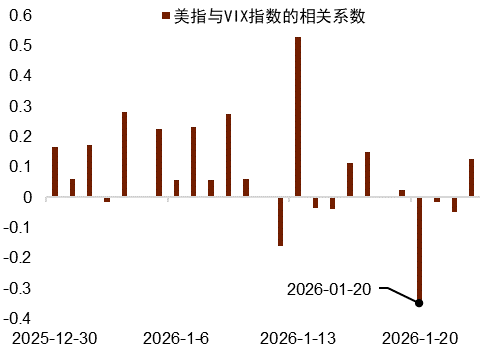
Core Viewpoint - The geopolitical risks have led to a significant decline in the US market, experiencing a "triple kill" in stocks, bonds, and currencies, primarily triggered by Trump's tariff threats against several European countries regarding Greenland [1][2][3]. Group 1: Market Reactions - On January 20, the S&P 500, Nasdaq, and Dow Jones indices fell by 2.1%, 2.4%, and 1.8% respectively, while the 10-year Treasury yield rose by approximately 7 basis points, and the dollar index weakened by 0.8% [1]. - The divergence between interest rates and exchange rates indicates that the rise in rates reflects a risk premium rather than economic fundamentals [1][2]. Group 2: Geopolitical Context - Trump's longstanding interest in acquiring Greenland has resurfaced, with threats of imposing tariffs on goods from Denmark and other European nations, escalating tensions [2][3]. - The situation peaked on January 17, when Trump announced a 10% tariff on goods from several European countries, set to increase to 25% until a Greenland purchase agreement is reached [2][3]. Group 3: Short-term Developments - Following Trump's softened stance, the immediate impact on the market has lessened, but the Greenland issue is seen as a reflection of broader US national security strategy adjustments, which may lead to ongoing geopolitical tensions [3][4]. - The report indicates that Europe is heavily reliant on the US in key areas such as defense and finance, making unified counteractions against the US challenging [3][4]. Group 4: Long-term Implications - The geopolitical disputes over Greenland are viewed as part of a larger trend of the US government adopting an "America First" approach, which may lead to increased tensions with other nations and affect global risk sentiment [4][5]. - The Trump administration's policies may challenge the status of the dollar as a reserve currency, potentially leading to a weaker dollar environment and increased demand for currency hedging [5][12]. Group 5: Currency Market Dynamics - The recent geopolitical tensions have prompted a "sell America" sentiment in the market, with investors potentially reducing dollar positions or increasing forex hedging, which could further weaken the dollar [5][6]. - Historical data from the "Liberation Day" event in April 2025 suggests that the recent Greenland incident may have a similar one-time impact on the dollar, with expectations of a gradual return to levels implied by US fundamentals as risks subside [7][12]. Group 6: Future Outlook - The upcoming FOMC meeting is anticipated to provide insights into the Fed's views on the labor market and inflation, which could influence future rate cut expectations [20][31]. - The dollar is expected to continue facing downward pressure in the medium to long term, particularly if the labor market weakens further [20][31].
现实供需偏弱压制盘面,关注春节前下游备货动态
Zhong Xin Qi Huo· 2026-01-20 00:41
1. Report Industry Investment Rating - Not provided in the given content. 2. Core Viewpoints of the Report - The macro - face expectation is repeated but relatively stable. The raw material supply is tight, and the smelting end has disturbance expectations, with strong support on the supply side. Terminal consumption may improve, but the current supply - demand is weak, and domestic inventory is accumulating rapidly. In the short - to - medium term, after the rapid price increase, consumption is inhibited, and prices may experience a significant correction. However, the logic of weak US dollar expectation and supply disturbance concerns remains unchanged. After the market sentiment stabilizes, opportunities for low - buying and long - holding of copper, aluminum, tin, and nickel can be considered. In the long - term, there is still an expectation of potential incremental stimulus policies in China, and the supply of copper, aluminum, and tin is still subject to disturbances, with an expectation of tightening supply - demand, and the prices of copper, aluminum, and tin are optimistic [1]. 3. Summary by Relevant Catalogs 3.1行情观点 3.1.1 Copper - **Viewpoint**: Inventory continues to accumulate, and copper prices fluctuate at a high level. - **Information Analysis**: The US December CPI data is in line with expectations; China's copper smelter has set the 2026 copper concentrate long - term processing fee at 0; China's electrolytic copper production in December increased both month - on - month and year - on - year; the spot price of 1 electrolytic copper on January 19 showed a slight improvement; a Chilean copper mine will go on strike, and a copper mine in Ecuador has postponed its production. - **Main Logic**: The Fed may continue to be loose, providing support for copper prices. The supply of copper ore is tightening, and the supply of refined copper is expected to shrink. Although the terminal demand is weak and inventory is increasing, the long - term supply - demand is expected to be optimistic. - **Outlook**: Oscillating upward [7][8]. 3.1.2 Alumina - **Viewpoint**: The fundamentals are weak, and alumina prices are under pressure and fluctuate. - **Information Analysis**: On January 19, the spot prices in different regions showed different trends, and the alumina warehouse receipts increased. - **Main Logic**: The macro sentiment amplifies the price fluctuations. The supply contraction is insufficient, the cost support is weak, but the price may fluctuate more due to more capital attention. - **Outlook**: Oscillating [8][9]. 3.1.3 Aluminum - **Viewpoint**: Inventory continues to accumulate, and aluminum prices fluctuate at a high level. - **Information Analysis**: On January 19, the average price of SMM AOO decreased, the inventory of aluminum ingots and aluminum rods increased, the warehouse receipts of electrolytic aluminum increased, the Japanese port aluminum ingot premium increased, and the export volume of unforged aluminum and aluminum products decreased month - on - month in December 2025. - **Main Logic**: The macro expectation is positive. The domestic production capacity is high, and the overseas new project progress is uncertain. The high price suppresses demand, but overall, the short - term price is expected to be oscillating upward. - **Outlook**: Short - term: oscillating upward; medium - term: the price center is expected to rise [12][13]. 3.1.4 Aluminum Alloy - **Viewpoint**: Cost support continues, and the market fluctuates at a high level. - **Information Analysis**: On January 19, the price of ADC12 was flat, the average price of SMM AOO decreased, the warehouse receipts decreased, and an Indonesian electrolytic aluminum project started production. - **Main Logic**: The cost support is strong. The supply is restricted by raw materials and policies, and the demand is expected to improve. The inventory shows different trends. The short - term price is expected to be oscillating upward. - **Outlook**: Short - term and medium - term: oscillating upward [14][15]. 3.1.5 Zinc - **Viewpoint**: The sentiment in the non - ferrous sector cools down, and zinc prices fall from a high level. - **Information Analysis**: On January 19, the premium of zinc in different regions varied; the inventory of zinc ingots increased; LME no longer accepts the delivery of certain zinc brands. - **Main Logic**: The macro expectation is stable. The supply of zinc ore is still tight in the short term, and the demand is in the off - season. The short - term price may oscillate at a high level, but there is a downward pressure in the long - term. - **Outlook**: Oscillating [17][18]. 3.1.6 Lead - **Viewpoint**: The sentiment in the non - ferrous sector cools down and the social inventory increases, so lead prices are under pressure. - **Information Analysis**: On January 19, the price of waste electric vehicle batteries increased, the price of lead ingots decreased, the social inventory increased, and LME no longer accepts the delivery of a certain lead brand. - **Main Logic**: The spot premium is stable, the supply is increasing, and the demand is weakening. The price is expected to oscillate. - **Outlook**: Oscillating [19][20]. 3.1.7 Nickel - **Viewpoint**: The expected policy competes with the weak reality, and nickel prices fluctuate. - **Information Analysis**: On January 19, the warehouse receipts of Shanghai nickel decreased, and the LME nickel inventory decreased; an Indonesian nickel company resumed production, and Indonesia may approve a certain amount of nickel ore production quota. - **Main Logic**: The supply pressure is high, the demand is in the off - season, and the policy on nickel ore quota is uncertain. The price is expected to be oscillating upward. - **Outlook**: Oscillating upward [20][22][23]. 3.1.8 Stainless Steel - **Viewpoint**: The price of nickel iron continues to rise, and the stainless - steel market fluctuates. - **Information Analysis**: The warehouse receipts of stainless - steel futures are unchanged, the spot price has a certain premium, the price of high - nickel pig iron increases, and the price of Indonesian domestic trade ore is expected to rise. - **Main Logic**: The cost support exists, the production may increase slightly, the demand is cautious, and the inventory may accumulate. The price is expected to be oscillating upward. - **Outlook**: Oscillating upward [24][25]. 3.1.9 Tin - **Viewpoint**: The market competition intensifies, and tin prices adjust. - **Information Analysis**: On January 19, the LME tin warehouse receipts increased, the Shanghai tin warehouse receipts decreased, and the position decreased; the spot price of tin decreased. - **Main Logic**: The supply of tin is disturbed, the production is difficult to increase, and the demand is growing. The price is expected to be oscillating upward. - **Outlook**: Oscillating upward [25][26][27]. 3.2行情监测 3.2.1 Commodity Indexes - The comprehensive index of CITIC Futures commodities on January 19, 2026: The commodity index is 2417.77, up 0.01%; the commodity 20 index is 2779.78, up 0.20%; the industrial products index is 2316.27, down 0.28%. - The non - ferrous metal index on January 19, 2026 is 2799.05, with a daily increase of 0.04%, a 5 - day decrease of 0.36%, a monthly increase of 9.69%, and a year - to - date increase of 4.21% [152][153][155].
资金获利减仓,锡锭领跌基本金属
Zhong Xin Qi Huo· 2026-01-16 00:47
1. Report's Industry Investment Rating No specific industry investment rating is provided in the report. 2. Core Viewpoints of the Report - In the short - and medium - term, the supply - demand of tin ingots is expected to improve, and nickel and zinc have supply - related speculations. After a rapid price increase, profit - taking by funds led to an adjustment. However, the logic of a weak US dollar expectation and supply - disruption concerns remains unchanged. Opportunities to buy copper, aluminum, tin, and nickel at low prices should be watched for, and downstream industrial customers should pay attention to restocking opportunities during the adjustment. In the long - term, there are still expectations of potential incremental stimulus policies in China, and supply - disruption issues for copper, aluminum, and tin persist, leading to an expected tightening of supply - demand and a positive outlook for their prices [2]. - For each metal: - Copper: Supply disruptions continue to increase, and the copper price is expected to remain high and fluctuate strongly [3][7]. - Alumina: The fundamentals are weak, and the alumina price is under pressure and expected to fluctuate [3][8]. - Aluminum: Inventory continues to accumulate, the aluminum price has declined, but in the short - term, it is expected to remain strong with fluctuations due to positive macro - expectations and a tight supply - demand outlook [3][12]. - Aluminum alloy: Cost support persists, and the price is expected to fluctuate strongly at a high level [3][14]. - Zinc: The LME has suspended the delivery of KZ and YP zinc, and the SHFE zinc price has broken through 25,000 yuan/ton. It is expected to fluctuate in the short - term and may decline in the long - term [3][17]. - Lead: Social inventory has significantly increased, limiting the upside potential of the lead price, and it is expected to fluctuate [3][22]. - Nickel: Policy expectations are in a game with the weak reality, and the nickel price is expected to fluctuate [3][23]. - Stainless steel: The nickel - iron price continues to rise, and the stainless - steel price is expected to fluctuate [3][26]. - Tin: Supply remains in short - supply, and the tin price is expected to fluctuate strongly at a high level [3][27]. 3. Summary by Relevant Catalogs Copper - **Information analysis**: The US December CPI data was in line with expectations. The 2026 copper concentrate long - term processing fee was set at 0 dollars/ton. December SMM China's electrolytic copper production increased both month - on - month and year - on - year. The spot price of 1 electrolytic copper on January 15 had a higher average premium than the previous trading day. A Chilean copper mine's union will start a strike, and the production of a mine in Ecuador has been postponed [7]. - **Main logic**: Macroscopically, the Fed may continue to be loose, supporting the copper price. On the supply - demand side, copper - mine supply disruptions are increasing, and the supply of refined copper is expected to shrink. Although the terminal demand is weak and inventory is accumulating, the long - term supply - demand is expected to be tight [8]. - **Outlook**: The copper price is expected to fluctuate strongly due to supply constraints and increasing disruptions [8]. Alumina - **Information analysis**: On January 15, the spot prices of alumina in various regions declined, and the alumina warehouse receipts remained unchanged [8]. - **Main logic**: Macroeconomic sentiment amplifies price fluctuations. Fundamentally, high - cost capacity has some fluctuations, but the supply contraction is insufficient, and the cost support is weak. However, as the valuation is in a low range, price fluctuations may increase [9]. - **Outlook**: The alumina price is expected to fluctuate due to an oversupply in reality and a low - range valuation [9]. Aluminum - **Information analysis**: On January 15, the SMM AOO average price and the premium/discount of aluminum decreased. The inventory of aluminum ingots and aluminum bars in major domestic consumption areas increased, and the SHFE electrolytic aluminum warehouse receipts also increased. The Q1 2026 aluminum - ingot premium in Japanese ports increased significantly, and the December 2025 export of unforged aluminum and aluminum products decreased month - on - month but increased year - on - year [12]. - **Main logic**: Macroscopically, the US interest - rate cut expectation and China's new - infrastructure policies are positive. On the supply side, domestic production capacity is high, and overseas new - project progress is uncertain. On the demand side, high prices have suppressed demand, and inventory has accumulated. Overall, the short - term price is expected to remain strong with fluctuations [12]. - **Outlook**: In the short - term, the aluminum price is expected to remain strong with fluctuations. In the medium - term, the supply is expected to be tight, and the price center is expected to rise [13]. Aluminum Alloy - **Information analysis**: On January 15, the prices of some aluminum - alloy products decreased, and the warehouse receipts increased. An Indonesian electrolytic - aluminum project has started production [14]. - **Main logic**: The cost is supported by a tight supply of scrap aluminum. The supply is restricted by raw - material shortages and profit issues, and policies may also affect supply. The demand is mainly for刚需 in the short - term and is expected to improve marginally in the medium - term. The social inventory has decreased slightly, but the warehouse - receipt inventory has increased. Overall, the price is expected to fluctuate strongly [16]. - **Outlook**: In the short - and medium - term, the aluminum - alloy price is expected to fluctuate strongly due to cost support and a tight supply - demand balance [16]. Zinc - **Information analysis**: On January 15, the spot premiums of 0 zinc in different regions varied. The SMM seven - region zinc - ingot inventory decreased slightly. The LME has suspended the further delivery of certain zinc brands since January 14, 2026 [19]. - **Main logic**: The macro - outlook is relatively stable. The zinc - ore supply is tight, and the smelter's profit has declined. The domestic zinc - ingot supply pressure is not significant in the short - term. The demand is in the off - season, and the overall demand expectation is average. In the short - term, the zinc price may remain high and fluctuate, and in the long - term, it may decline [20]. - **Outlook**: In January, the zinc price is expected to fluctuate as the production has increased slightly, the demand is in the off - season, but exports and the overall strength of the non - ferrous sector support the price [21]. Lead - **Information analysis**: On January 15, the price of waste electric - vehicle batteries remained unchanged, and the price of SMM1 lead ingots increased. The social inventory of lead ingots and the SHFE lead warehouse receipts increased. The LME has suspended the further delivery of a certain lead brand since January 14, 2026 [22]. - **Main logic**: The spot premium and the original - recycled lead price difference have increased, and the futures warehouse receipts have increased. The supply has increased as some smelters have resumed production, and the demand is mixed, with a decline in electric - bicycle orders but an improvement in automobile - battery orders. Overall, the lead price is expected to fluctuate [23]. - **Outlook**: As the lead - ingot production recovers and the demand weakens marginally, but the waste - battery cost remains high, the lead price is expected to fluctuate [23]. Nickel - **Information analysis**: On January 15, the SHFE nickel warehouse receipts and the LME nickel inventory increased. An Indonesian nickel - mining company has fully resumed operations, and Indonesia may approve a certain amount of nickel - ore production quota in 2026. The SMM expects a significant increase in the Indonesian domestic - trade nickel - ore price in the second half of January 2026 [24]. - **Main logic**: The supply of nickel is under pressure as domestic and Indonesian production remains high. The demand is in the off - season, and the overall fundamentals are in surplus. The Indonesian nickel - ore quota is uncertain, and its actual implementation needs to be monitored [25]. - **Outlook**: In January, the nickel price is expected to fluctuate as the fundamentals are not significantly improved, but the Indonesian policy may affect the supply - demand balance [25]. Stainless Steel - **Information analysis**: The stainless - steel futures warehouse receipts decreased. On January 15, the spot price of stainless steel in Foshan had a certain discount compared to the futures contract. The average price of high - nickel pig iron increased, and the SMM expects a significant increase in the Indonesian domestic - trade nickel - ore price in the second half of January 2026 [26]. - **Main logic**: The cost of stainless steel is supported by the increase in nickel - iron price. The production in December decreased, and there may be a slight increase in January. The terminal demand is cautious. The inventory may accumulate in the off - season, and the warehouse receipts are at a low level [26]. - **Outlook**: In January, the stainless - steel price is expected to fluctuate as the production may increase slightly, the demand is weak in the off - season, but the cost is supported [26]. Tin - **Information analysis**: On January 15, the LME tin warehouse receipts remained unchanged, the SHFE tin warehouse receipts increased, and the SHFE tin positions decreased. The average price of 1 tin ingots increased [27]. - **Main logic**: The supply of tin is a major concern. Supply disruptions in Myanmar, Indonesia, and Africa are expected to limit production. The demand is expected to increase due to the global economic situation and the growth of industries such as semiconductors, photovoltaics, and new - energy vehicles. Overall, the tin price is expected to be strong [28]. - **Outlook**: The tin price is expected to fluctuate strongly due to high supply risks and low inventory in the industry chain [28]. Market Monitoring - **Commodity Index**: On January 15, 2026, the comprehensive index, the commodity 20 index, and the industrial - product index of CITIC Futures all decreased. The non - ferrous metal index increased by 0.09% on the day, 2.13% in the past 5 days, 12.72% in the past month, and 6.27% since the beginning of the year [156][158].
LME暂停KZ及YP锌交割,沪锌突破25000元
Zhong Xin Qi Huo· 2026-01-15 11:14
1. Report Industry Investment Rating - Not provided 2. Core View of the Report - In the short term, there is upward room for zinc ingot prices, and the overall base metal sector is strong. With the potential fermentation of the Fed's policy damage and weak - dollar expectations, it will provide support for zinc prices. However, in the medium - to - long term, global zinc production is still increasing, and the supply of zinc ingots at home and abroad is expected to be excessive in 2026. The short - term zinc price may fluctuate at a high level, and shorting should be cautious. The recommended price range is adjusted to 22,000 - 26,000 yuan/ton [2][4] 3. Summary by Relevant Catalogs Latest Dynamics and Reasons - The Shanghai zinc price has broken through 25,000 yuan/ton, and the LME zinc price has broken through $3,000/ton. The driving factors include: the long - opened Chinese zinc export window from early October to mid - December 2025, the slow recovery of domestic zinc ingot supply after the LME price settlement, the significant rise of other base metals attracting capital attention to zinc, and the LME's suspension of KZ and YP zinc交割 from April 14, 2026. In 2024, Korea Zinc and Young Poong's zinc production was 1.03 million tons and 0.21 million tons respectively, accounting for 9% of the global total. If the suspension is long - term and overseas zinc smelters have production problems in 2026, LME zinc inventory will not significantly recover. But the LME plans to limit members with large positions in near - month contracts, so the squeeze - out pressure on LME zinc is expected to be low [2] Fundamental Situation - Macro - wise, the Fed's policy and weak - dollar expectations are still fermenting, and the central economic work conference set a positive tone. Overall, the macro - expectation is stable. Supply - side, after the LME price settlement, the Shanghai - LME ratio has risen, the zinc concentrate import window has opened, the decline of imported zinc concentrate has slowed, and domestic zinc concentrate production has stabilized. Zinc smelters' raw material inventory and zinc concentrate port inventory are okay, so the decline in zinc ingot production may ease. The domestic zinc ingot export window has closed, but previously locked - price zinc ingots will still be exported, and it takes time for zinc concentrate imports to significantly increase. So, the domestic zinc ingot supply cannot be significantly loosened in the short term. Demand - side, with the arrival of the downstream consumption off - season, terminal demand remains weak, but some enterprises have pre - holiday stocking needs, so the decline in zinc ingot demand may not be obvious. In short, the domestic zinc ingot social inventory is still decreasing [3] Summary and Strategy - Short - term: Zinc prices may fluctuate at a high level, and shorting should be cautious. The price reference range is adjusted to 22,000 - 26,000 yuan/ton. It is recommended to buy copper and aluminum and short zinc in far - month contracts, and close the cross - period and cross - market arbitrage positions when domestic zinc ingot exports basically end. - Long - term: After overseas zinc smelters increase production smoothly and the US dollar index stabilizes, the cross - market long - arbitrage strategy can be re - entered [4]