
中美关系

Search documents
特朗普称“中俄只能在美方控制下购买委内瑞拉石油”,外交部回应
Zhong Guo Ji Jin Bao· 2026-01-12 08:25
Core Viewpoint - The article discusses the geopolitical dynamics surrounding Venezuela's oil industry, particularly the implications of U.S. actions and statements regarding China's and Russia's involvement in Venezuelan oil purchases [1]. Group 1: U.S. Position on Venezuela's Oil - U.S. President Trump indicated that China and Russia can only purchase Venezuelan oil under U.S. control, suggesting a strategic move to limit their influence in the region [1]. - The U.S. aims to send a message to China, urging it to distance itself from Latin America and weaken energy cooperation with Venezuela [1]. Group 2: China's Response - China maintains that Latin American countries are sovereign and have the right to choose their partners for cooperation [1]. - China will continue to deepen practical cooperation with Latin American countries, including Venezuela, regardless of changing circumstances [1].
新加坡又发声了,李显龙高调预测,美国没胆量和中国翻脸
Sou Hu Cai Jing· 2026-01-11 23:50
Core Insights - Singapore's Senior Minister Lee Hsien Loong delivered a thought-provoking speech at the "2026 Regional Outlook Forum," highlighting the underlying dilemmas in the U.S.'s seemingly tough stance towards China [1] - Lee predicts that neither the U.S. nor China will want to bear significant economic costs or engage in conflict in the next two to three years, indicating a reluctance from the U.S. to fully sever ties with China [1][9] Economic Context - The U.S.-China economic relationship faced unprecedented "stress tests" in 2025, with the U.S. attempting to impose "reciprocal tariffs" to force a decoupling from China [3] - Contrary to expectations, high tariffs did not cripple Chinese manufacturing but instead led to severe inflation and supply chain disruptions in the U.S., negatively impacting American consumers [5] - The U.S. economy, accounting for about one-fifth of the global economy, is closely tied to China, making complete decoupling impractical and economically damaging [7] Geopolitical Dynamics - Lee's insights suggest that the U.S. cannot afford a full-scale confrontation with China due to its massive national debt and fiscal deficits, which complicate its ability to engage in a cold war [9] - Singapore's unique position as a nation with a majority Chinese population yet influenced by Western political systems allows it to understand both U.S. and Chinese perspectives [15] - The U.S. military advantage in the Western Pacific is diminishing, and its allies are increasingly skeptical, making a confrontation over Taiwan unlikely [16] Strategic Positioning - Singapore is advocating for the U.S. to rejoin the Comprehensive and Progressive Agreement for Trans-Pacific Partnership (CPTPP) to mitigate bilateral tensions and promote multilateralism [17] - Lee emphasizes the importance of recognizing the determination of the Chinese people in pursuing development, which is a force that external powers cannot suppress [17] Observational Perspective - Lee's analysis provides a valuable lens for understanding global dynamics, urging observers not to be swayed by sensational headlines or overreact to U.S. provocations [22] - The essence of great power competition lies in endurance and adapting to historical trends, rather than mere confrontational posturing [22]

黄仁勋接受《时代周刊》专访谈AI泡沫、特朗普和中美AI竞赛
美股IPO· 2026-01-11 01:23
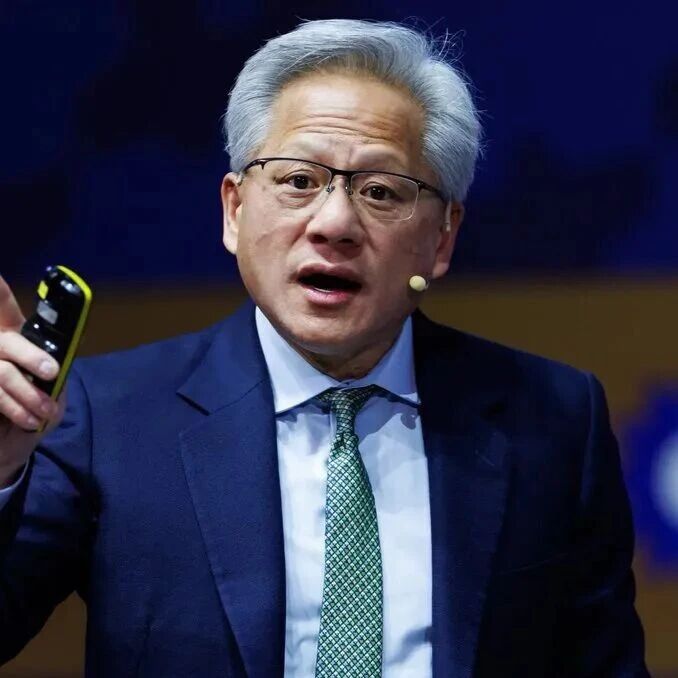
Group 1: Impressions of Trump - Trump is an extremely attentive listener, remembering almost every detail of conversations [1] - His work ethic is remarkable, often working late into the night and showing no signs of taking time off [1] Group 2: Chip Export Controls - There is a contradiction in wanting to limit U.S. technology exports to China while also seeking access to the Chinese market [1] - Both the U.S. and China have conflicting interests regarding technology access and market protection [1] Group 3: U.S.-China Relations - The interdependence between the U.S. and China is deeper than many realize, making the idea of "decoupling" untenable [1] - Current U.S. government officials have shown wisdom in engaging with China, which could lead to significant long-term benefits [1] Group 4: Semiconductor Manufacturing Decoupling - The U.S. will continue to rely on Taiwan for chip and electronic product manufacturing due to its unique talent pool and efficient ecosystem [1] - Replicating Taiwan's semiconductor industry would take decades [1] Group 5: Investment and Market Dynamics - The current investment in AI and related technologies is still relatively conservative compared to the market opportunities available [4] - The company’s investment strategy focuses on expanding industry ecosystems and forming partnerships with influential firms [6] Group 6: AI and Economic Growth - AI has the potential to significantly increase global GDP, with estimates suggesting it could grow to $200 trillion, $300 trillion, or even $500 trillion [26] - The development of AI will change job landscapes, creating new roles while eliminating some existing ones [26]

特朗普突然谈到台湾,一句话让人意想不到,美国不能替中国做决定
Sou Hu Cai Jing· 2026-01-10 04:12
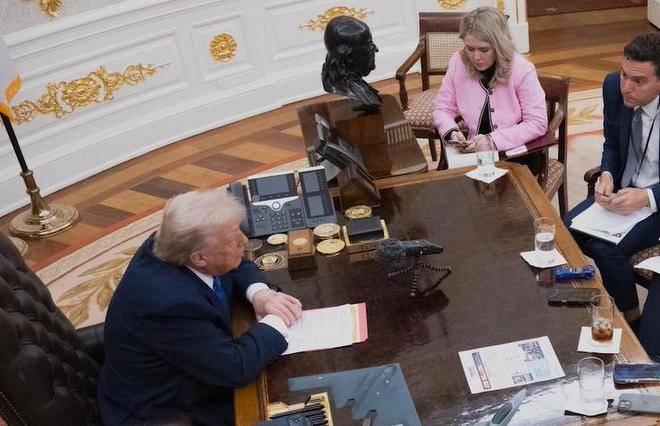
首先,我们必须清楚,当前特朗普正处于第二次总统任期,2026年是美国迎接中期选举和建国250周年 的特殊年份。国内政治的极化愈演愈烈,两党斗争不断加剧,这在一定程度上影响了他内外政策的推 进。而在经济领域,特朗普近期的核心目标是推动美联储降息,甚至已经决定了新的美联储主席人选, 等着1月正式宣布。 为了实现这一目标,特朗普需要稳定外部环境,避免不必要的冲突分散精力。然而,这次他的表态依旧 让人感到意外,因为它打破了近年来美国政客在台湾问题上的常规模式。无论是前总统拜登的多次出兵 保台言论,还是美国国会通过的各种涉台法案,都在试图将台湾问题国际化,并干涉中国内政。 不能替中国做决定。特朗普再次提到中国时,言辞有所收敛。然而,如果大陆轻易相信,便如同自愿上 当受骗。 2026年1月9日,特朗普在接受《纽约时报》专访时,提出了一句令人意外的话:中方认为台湾是中国的 一部分,因此最终如何处理台湾问题,将由中方决定。熟悉特朗普风格的人知道,他在处理敏感的领土 主权问题时很少做出如此看似让步的表态,尤其是关于台湾问题。此前,他通常通过保护费、军售等方 式对中国施压,这番话显得非常不同。于是,人们不禁疑惑:特朗普为什么突然 ...
吴心伯:美国对华博弈在双边层面越来越难以占优
Xin Lang Cai Jing· 2026-01-08 14:51
Group 1 - The core viewpoint of the report emphasizes that the U.S. will increasingly apply pressure on China through third parties as bilateral competition becomes more challenging [1][3] - The report highlights that the U.S.-China competition continues with Trump’s return, where the U.S. employs traditional tactics while China adopts new strategies, effectively countering U.S. tariffs and disrupting U.S. plans [1][3] - China is focusing on strengthening relationships with Southeast Asia, the Middle East, Africa, and Latin America, enhancing cooperation in trade, investment, finance, infrastructure, energy, and green transition, which enriches its resources and strategies in the U.S. competition [3][4] Group 2 - The report suggests that the stability of U.S.-China relations in 2026 will depend on mutual efforts to create a positive atmosphere, increase interactions, manage differences, and expand cooperation [3][4] - It notes that the current stability in U.S.-China relations is fragile and primarily based on U.S. tactical needs rather than significant consensus between the two nations [3][4] - The experience gained from the 2025 U.S.-China competition has bolstered confidence, presenting both opportunities and challenges for 2026, where China aims to push for adjustments in U.S. policy while remaining prepared for potential conflicts [4]

大越期货油脂早报-20260108
Da Yue Qi Huo· 2026-01-08 02:05
Report Information - Report Title: Grease Morning Report - Date: 2026-01-08 - Analyst: Wang Mingwei - Qualification Number: F0283029 - Investment Consulting Number: Z0010442 - Contact: 0575 - 85226759 [1] Report Industry Investment Rating - Not provided in the content Core Viewpoints - The prices of oils and fats are fluctuating and consolidating. The domestic fundamentals are loose, and the domestic supply of oils and fats is stable. Sino-US relations are deadlocked, the export of new US soybeans is frustrated, and prices are under pressure. Malaysian palm oil inventories are neutral, demand has improved, Indonesia's B40 policy promotes domestic consumption, and the B50 plan is expected to be implemented in 2026. The domestic fundamentals of oils and fats are neutral, and import inventories are stable [2][3][4] Summary by Category Daily Views Soybean Oil - Fundamental: The MPOB report shows that Malaysian palm oil production in August decreased by 9.8% month - on - month to 1.62 million tons, exports decreased by 14.74% month - on - month to 1.49 million tons, and end - of - month inventory decreased by 2.6% month - on - month to 1.83 million tons. The report is neutral, and the production cut is less than expected. Currently, shipping survey agencies show that the export data of Malaysian palm oil this month has increased by 4% month - on - month. Later, it will enter the production - reduction season, and the supply pressure of palm oil will decrease. [2] - Basis: The spot price of soybean oil is 8404, the basis is 446, and the spot price is at a premium to the futures price [2] - Inventory: On September 22, the commercial inventory of soybean oil was 1.18 million tons, compared with 1.16 million tons previously, a month - on - month increase of 20,000 tons and a year - on - year increase of 11.7% [2] - Market: The futures price is running below the 20 - day moving average, and the 20 - day moving average is downward [2] - Main Position: The long positions of the main soybean oil contract have increased [2] - Expectation: Soybean oil Y2605 will fluctuate in the range of 7800 - 8200 [2] Palm Oil - Fundamental: Similar to soybean oil, but later it will enter the production - increase season, and the supply of palm oil will increase [3] - Basis: The spot price of palm oil is 8530, the basis is 32, and the spot price is at a premium to the futures price [3] - Inventory: On September 22, the port inventory of palm oil was 580,000 tons, compared with 570,000 tons previously, a month - on - month increase of 10,000 tons and a year - on - year decrease of 34.1% [3] - Market: The futures price is running below the 20 - day moving average, and the 20 - day moving average is downward [3] - Main Position: The short positions of the main palm oil contract have decreased [3] - Expectation: Palm oil P2605 will fluctuate in the range of 8400 - 8800 [3] Rapeseed Oil - Fundamental: Similar to soybean oil and palm oil [4] - Basis: The spot price of rapeseed oil is 10032, the basis is 937, and the spot price is at a premium to the futures price [4] - Inventory: On September 22, the commercial inventory of rapeseed oil was 560,000 tons, compared with 550,000 tons previously, a month - on - month increase of 10,000 tons and a year - on - year increase of 3.2% [4] - Market: The futures price is running below the 20 - day moving average, and the 20 - day moving average is downward [4] - Main Position: The long positions of the main rapeseed oil contract have decreased [4] - Expectation: Rapeseed oil OI2605 will fluctuate in the range of 8800 - 9200 [4] Recent利多利空Analysis - Bullish: The inventory - to - sales ratio of US soybeans remains around 4%, and the supply is tight. Palm oil tremor season [5] - Bearish: The prices of oils and fats are at a relatively high historical level, and domestic inventories of oils and fats are continuously increasing. The macro - economy is weak, and the expected production of related oils and fats is high [5] - Main Logic: The global fundamentals of oils and fats are relatively loose [5] Supply - Related - Imported soybean inventory [6] - Soybean oil inventory [7] - Soybean meal inventory [9] - Oil mill soybean crushing [11] - Palm oil inventory [17] - Rapeseed oil inventory [19] - Rapeseed inventory [21] - Total domestic inventory of oils and fats [23] Demand - Related - Apparent consumption of soybean oil [13] - Apparent consumption of soybean meal [15]
特斯拉马斯克:中国AI算力将远超其他国家,而且会解决芯片问题
Sou Hu Cai Jing· 2026-01-07 15:12
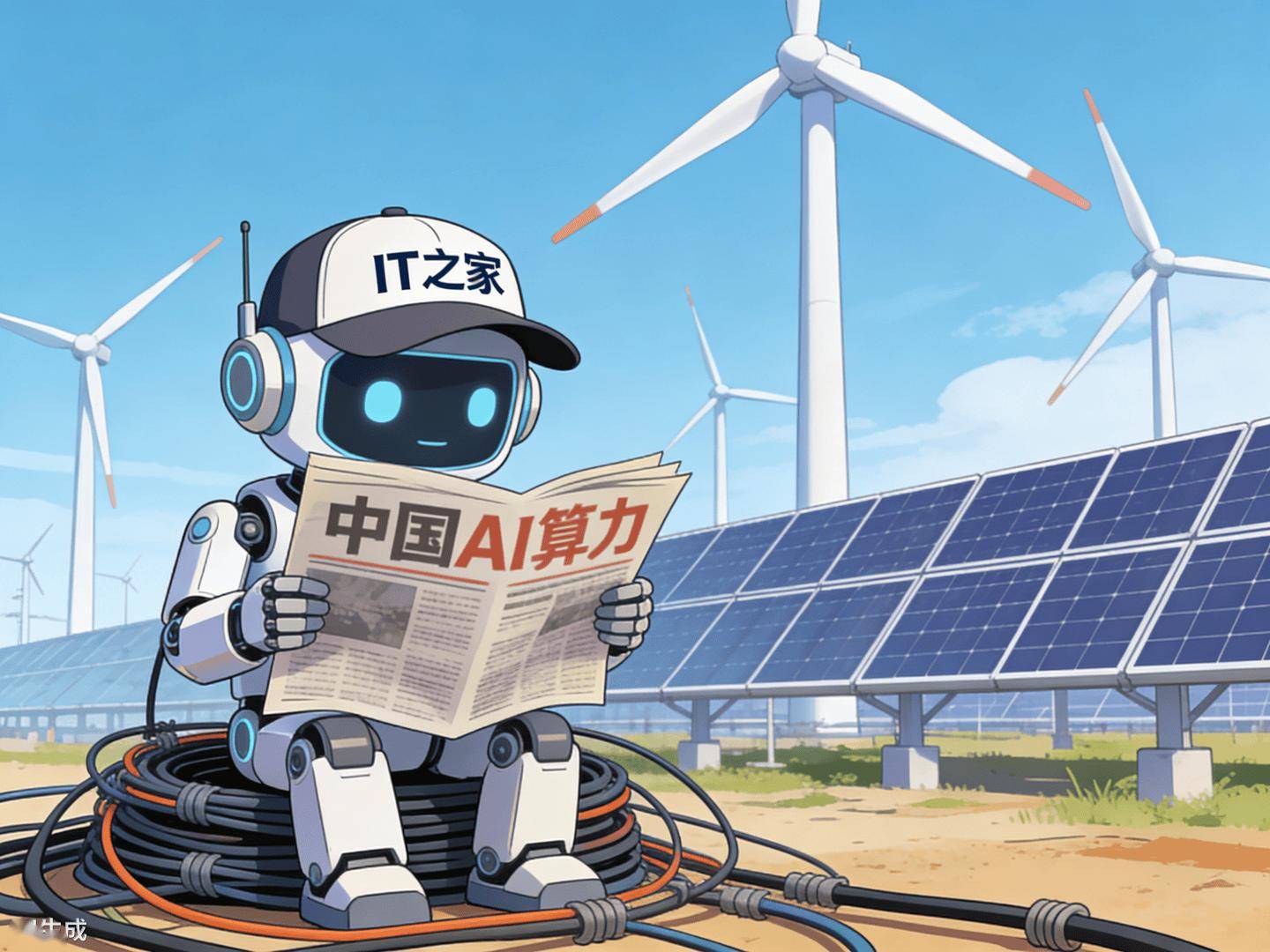
Core Viewpoint - Tesla CEO Elon Musk emphasizes that China is poised to surpass other countries in AI computing power and electricity generation, which he believes will provide a significant advantage in the AI race [1][3]. Group 1: AI and Computing Power - Musk states that according to current trends, China will have far more AI computing power than any other country [1]. - He estimates that China's electricity generation this year could reach three times that of the United States, which will support the operation of AI data centers that consume large amounts of electricity [1]. Group 2: Electricity as a Bottleneck - Musk identifies electricity as the true bottleneck for expanding AI capabilities, noting that the difficulty of connecting and utilizing electricity is often underestimated [3]. - He believes that China will find ways to address its chip supply issues, suggesting that the current U.S. restrictions on advanced semiconductor access may become less significant over time [3]. Group 3: Chip Technology and Marginal Returns - Musk points out that the marginal returns on advanced process chips are decreasing, which may allow China to catch up even if it cannot access the most advanced chips [3]. Group 4: Learning from China - Musk expresses interest in learning from China's approach in areas beyond AI, specifically mentioning his desire to develop the X platform into a "WeChat++" [3]. - He appreciates the concept of a unified app or website that allows users to perform a wide range of activities, similar to what WeChat has achieved in China [3].

利率|继续跌吗?一个神奇的历史规律
CAITONG SECURITIES· 2026-01-07 06:41
Report Industry Investment Rating No relevant content provided. Core Viewpoints - The bond market has been continuously adjusting at the beginning of the year, with the 10-year and 30-year Treasury bond yields breaking through key levels. Historically, bond market yields usually choose a direction around mid-January. The probability of a unilateral upward movement in yields at the turn of the year is extremely low. Over the past 10 years, yields have shown a V-shaped pattern in 5 years, an inverted V-shaped pattern in 2 years, a unilateral downward movement in 2 years, and a unilateral upward movement in 1 year [2]. - The direction of yields after mid-January depends on the verification of expectations after the end of the information vacuum period. If the verification falls short of expectations, yields usually return to pre-expectation levels. Currently, market concerns focus on factors such as ultra-long bond supply, the spring rally in equities, and less-than-expected monetary easing. However, since the third quarter of last year, the bond market has already priced in these negative factors, and the likelihood of these factors further exceeding expectations seems low [2]. - The effective upper limits for the 10-year and 30-year Treasury bond yields are 1.85% and 2.3% respectively. Short-term deviations do not represent a sustained breakthrough. The bond market requires patience, and investors should wait for opportunities around mid-January [2]. Summary by Directory How to Evaluate the Indicators at the Beginning of the Year? How to View the Market Expectations and Actual Trends Since the Beginning of 2022? - In early 2022, the expectation gap was between the verification of loose monetary policy and strong credit growth. Interest rates first declined due to expectations of monetary easing after a mid-January interest rate cut, but then rebounded as the strong start of the year became more apparent [10]. - In early 2023, the expectation gap was the actual strength of the post-pandemic economic recovery. Despite a tightening of the money supply, bond yields declined as the economic recovery fell short of expectations and the government set a relatively modest economic growth target [11]. - In early 2024, the expectation gap was the disappointment in incremental policies and the strong start of the year. After initial expectations for further growth-stabilizing policies faded, bond yields entered a second phase of decline as property and fiscal policies underperformed and government bond issuance was slow [12]. - In early 2025, the expectation gap was a significant reversal in expectations of monetary easing. Rooted in factors such as the strong start of the year, Sino-US relations, and technological narratives, risk appetite increased, leading to a tightening of funds by the central bank [13]. How Much Impact Do the Quality of the Strong Start and Supply Have? - The final verification of the strong start will come in March or April. In the short term, the market focuses on financial data and the PMI. Over the past 4 years, the net financing increment of government bonds from January to February has been most correlated with yield changes. If the year-on-year increase exceeds 50 billion yuan, the bond market may face pressure. Credit, PMI, and yield changes have a weak correlation, and the relationship between social financing and yields depends on market expectations [18]. Does the Stock-Bond跷跷板 Relationship Hold at the Beginning of the Year? - Since 2022, the short-term performance of stocks and bonds has shown some correlation, but the relationship may weaken after mid-January [19]. How to View Sino-US Disturbances? - Sino-US relations are a key factor. The impact on the bond market depends on the comparison between actual situations and market expectations [23][24]. How Much Impact Does the Money Supply Have? - The money supply is affected by various factors such as the economic situation, Sino-US relations, and the stock market. At the beginning of the year, the money supply is crucial. Before the Spring Festival, interest rates tend to rise seasonally, and whether this leads to a tight money supply depends on the central bank's attitude. A tight money supply can impede yield declines [26]. Is There a Final Decline? What Experience Can We Learn from History? - Regarding social financing and government bond supply, it is expected that the social financing growth rate from January to February will remain flat or increase slightly by 0.1 percentage points, and the net financing of government bonds will increase by more than 70 billion yuan compared to the same period last year. However, the central bank's bond purchases may offset the impact of supply [28]. - Regarding the stock-bond relationship, the stock market's spring rally may disrupt the bond market, but the stock market's ability to continuously rise and the potential decoupling of stock and bond trends after mid-January suggest that the stock market may not pose a long-term negative impact on the bond market [29][30]. - Regarding Sino-US relations, the market has been optimistic about Sino-US relations since the third quarter of last year. The likelihood of further unexpected improvement in Sino-US relations is lower than the possibility of negative changes, which is relatively favorable for the bond market [31][32]. - Regarding the money supply, the money supply has been improving since December. With the early issuance of government bonds and the central bank's view that interest rates have returned to a reasonable level, the central bank is likely to maintain a supportive stance, at least avoiding a repeat of last year's first-quarter situation [34]. A Magical Market Rule - Observing bond yields from November of the previous year to March of the following year, a pattern has emerged. Since 2016, a phased reversal has been the most common, with a V-shaped pattern in 5 years, an inverted V-shaped pattern in 2 years, a unilateral downward movement in 2 years, and a unilateral upward movement in 1 year. The probability of a unilateral upward movement is extremely low [35]. How Has the Market Performed in the First Quarter in Recent Years? - In the first quarter of 2022, yields first declined and then rose. Interest rate cuts and the COVID-19 situation initially pushed yields down, but expectations of strong credit growth and local property policies led to an increase in yields [46]. - In the first quarter of 2023, yields first rose and then fell. A tightening of funds and expectations of post-pandemic economic recovery pushed yields up at the beginning of the year, but unmet expectations, a lower economic growth target, the Silicon Valley Bank collapse, and a reserve requirement ratio cut led to a decline in yields [47][49]. - In the first quarter of 2024, yields declined steadily. Weak fundamentals, a poor stock market performance, a reserve requirement ratio cut, disappointing incremental policies, and a reduction in deposit rates contributed to the decline. Regulatory concerns about interest rate risk in March provided some resistance to the downward trend [52]. - In the first quarter of 2025, yields rose steadily. The central bank's suspension of bond purchases, a rise in the stock market driven by Deepseek, a structural stabilization of the economy, and better-than-expected US tariff policies led to an increase in yields [54].
关于2026年的四个猜想和三十八张图
虎嗅APP· 2026-01-07 00:56
Core Viewpoint - The article discusses the investment landscape in 2025, highlighting a year of significant growth across various asset classes, with exceptions in digital currencies, government bonds, and oil. The author reflects on the unpredictability of market movements and the challenges in making accurate predictions in such a dynamic environment [4][5]. Group 1: Economic and Market Trends - The Chinese government aims to reduce local government hidden debt from 14.3 trillion RMB to 7 trillion RMB by the end of 2025, indicating progress in debt management [6]. - China achieved a trade surplus of 1 trillion USD in 2025, a significant increase compared to previous years, where a quarterly surplus now matches the annual surplus of a decade ago [10]. - The prices of major commodities, excluding oil, have risen, alleviating the "no profit prosperity" situation for upstream and midstream manufacturing sectors [13]. Group 2: Geopolitical Influences - The external environment has shifted dramatically, with the U.S. under Trump's administration becoming more aggressive in foreign policy, impacting China's focus on external challenges [7][8]. - The article notes a divergence in industrial strategies between China and the U.S., particularly in sectors like semiconductors and AI, with China rapidly advancing in domestic production capabilities [15][16]. Group 3: AI and Employment Concerns - A significant prediction is made regarding a potential backlash against AI in the U.S., driven by concerns over job losses and the concentration of wealth among tech oligarchs [22][23]. - The article references a report by Bernie Sanders, highlighting the potential for AI to displace nearly 100 million jobs in the U.S. over the next decade, raising ethical and economic concerns about the future of work [24][25]. Group 4: Private Equity and Credit Markets - The private equity and private credit markets in the U.S. have grown significantly, with 72% of non-financial corporate loans now sourced from private markets, indicating a shift away from traditional public financing [46][54]. - The article warns of potential bubbles forming in private credit markets, where valuation practices may obscure true risks, similar to conditions leading up to the 2008 financial crisis [66][76]. Group 5: Chinese Household Savings and Stock Market Dynamics - Chinese households have accumulated 48.7 trillion RMB in excess savings from 2022 to 2024, driven by a decline in real estate investment and low returns on traditional savings [81][82]. - There is a growing possibility that these savings will flow into the stock market, particularly through insurance companies, as they seek better returns amid low interest rates [88][90]. Group 6: Foreign Investment and Perceptions of China - The article highlights a disconnect between Western investors and the current realities of the Chinese market, with many foreign entities lacking a nuanced understanding of China's economic landscape [109][110]. - It suggests that a shift in perception may occur in 2026, potentially driven by improved economic indicators or a favorable shift in the global investment climate [119][120].

大越期货油脂早报-20260106
Da Yue Qi Huo· 2026-01-06 01:49
Report Summary 1. Report Industry Investment Rating - Not provided in the given content. 2. Core View of the Report - The prices of oils and fats are expected to fluctuate and consolidate. The domestic fundamentals are loose, and the domestic supply of oils and fats is stable. Sino-US relations remain tense, putting pressure on the prices of new US soybeans due to受挫 exports. The inventory of Malaysian palm oil is neutral, and demand has improved. Indonesia's B40 policy promotes domestic consumption, and the B50 plan is expected to be implemented in 2026. The domestic fundamentals of oils and fats are neutral, and import inventories are stable. [2][3][4] 3. Summary by Related Catalogs Daily View - Soybean Oil - **Fundamentals**: The MPOB report shows that Malaysian palm oil production in August decreased by 9.8% month-on-month to 1.62 million tons, exports decreased by 14.74% to 1.49 million tons, and the end-of-month inventory decreased by 2.6% to 1.83 million tons. The report is neutral, with less-than-expected production cuts. Currently, shipping survey agencies show that the export data of Malaysian palm oil this month has increased by 4% month-on-month. Subsequently, as it enters the production reduction season, the supply pressure of palm oil will decrease. [2] - **Basis**: The spot price of soybean oil is 8,254, with a basis of 398, indicating that the spot price is at a premium to the futures price. [2] - **Inventory**: On September 22, the commercial inventory of soybean oil was 1.18 million tons, up 20,000 tons from the previous period and 11.7% higher year-on-year. [2] - **Market**: The futures price is running below the 20-day moving average, and the 20-day moving average is downward-sloping. [2] - **Main Position**: The long positions of the main soybean oil contract have increased. [2] - **Expectation**: The soybean oil Y2605 contract is expected to fluctuate in the range of 7,700 - 8,100. [2] Daily View - Palm Oil - **Fundamentals**: Similar to soybean oil in terms of the MPOB report. However, palm oil is entering the production increase season, so the supply will increase. [3] - **Basis**: The spot price of palm oil is 8,480, with a basis of 8, showing a slight spot premium over futures. [3] - **Inventory**: On September 22, the port inventory of palm oil was 580,000 tons, up 10,000 tons from the previous period and 34.1% lower year-on-year. [3] - **Market**: The futures price is below the 20-day moving average, and the 20-day moving average is downward. [3] - **Main Position**: The short positions of the main palm oil contract have decreased. [3] - **Expectation**: The palm oil P2605 contract is expected to fluctuate in the range of 8,300 - 8,700. [3] Daily View - Rapeseed Oil - **Fundamentals**: Same MPOB report situation as above, and entering the production increase season with increased supply. [4] - **Basis**: The spot price of rapeseed oil is 9,926, with a basis of 882, indicating a significant spot premium over futures. [4] - **Inventory**: On September 22, the commercial inventory of rapeseed oil was 560,000 tons, up 10,000 tons from the previous period and 3.2% higher year-on-year. [4] - **Market**: The futures price is below the 20-day moving average, and the 20-day moving average is downward. [4] - **Main Position**: The long positions of the main rapeseed oil contract have decreased. [4] - **Expectation**: The rapeseed oil OI2605 contract is expected to fluctuate in the range of 8,900 - 9,300. [4] Recent利多利空Analysis - **利多**: The US soybean stock-to-use ratio remains around 4%, indicating tight supply. There is also the palm oil tremor season factor. [5] - **利空**: The prices of oils and fats are at a relatively high historical level, and domestic inventories of oils and fats are continuously accumulating. The macroeconomy is weak, and the expected production of related oils and fats is high. [5] - **Main Logic**: The global fundamentals of oils and fats are relatively loose. [5]