
消费复苏

Search documents
食品饮料行业研究:飞天茅台动销逐步起势,关注子版块春节备货催化
SINOLINK SECURITIES· 2026-01-25 07:50
Investment Rating - The report maintains a cautious outlook on the liquor industry, particularly on high-end liquor such as Moutai, with expectations of gradual recovery in sales and pricing stability post-Spring Festival [10][11][12]. Core Insights - The high-end liquor segment, especially Moutai, is experiencing a sales boost as the Spring Festival approaches, with expectations of price recovery due to increased demand driven by wealth effects [10][11]. - The report suggests that the market's concerns about post-festival price drops for Moutai are likely to be unfounded, predicting only minor seasonal fluctuations [10][12]. - The overall sentiment in the liquor industry is shifting from a pessimistic outlook to a more stable one, with expectations of improved sales dynamics as external constraints on consumption ease [11][12]. Summary by Sections Liquor Industry - The report highlights that Moutai's sales are performing better than previously cautious expectations, leading to a price recovery for both Moutai and newer Moutai products [10]. - It is noted that the market is still wary of potential price declines after the Spring Festival, but historical patterns suggest only minor adjustments are likely [10][11]. - The report emphasizes the importance of brand strength and market positioning for high-end liquor companies, recommending investments in brands with strong market presence and growth potential [12]. Beer Industry - The beer sector is seeing a steady recovery in on-premise consumption, with companies diversifying into non-drink channels and soft drinks [12]. - The report suggests that the beer industry's performance is expected to stabilize, with a focus on maintaining competitive pricing and improving dividend yields [12]. Snack Industry - The snack sector is benefiting from pre-Spring Festival stocking and product innovation, with companies like Qiaqia and Ganyuan expected to show significant profit elasticity due to low comparative bases [14]. - The report recommends focusing on leading snack companies that are expanding their store presence and adapting their product offerings [14]. Beverage Industry - The soft drink sector is currently facing challenges due to seasonal demand fluctuations and competition from ready-to-drink tea brands, leading to a slight decline in overall sales growth [14]. - Despite these challenges, leading brands like Dongpeng and Nongfu are expected to maintain double-digit growth through brand strength and market share consolidation [14]. Seasoning Industry - The seasoning sector is stabilizing as restaurant demand begins to recover, with expectations of improved performance in 2026 driven by seasonal effects [15]. - The report highlights companies like Angel Yeast and Qianhe Condiments as having strong growth potential due to favorable market conditions and dividend yields [15].




消费复苏需要一场差异化创新
Sou Hu Cai Jing· 2026-01-25 01:32
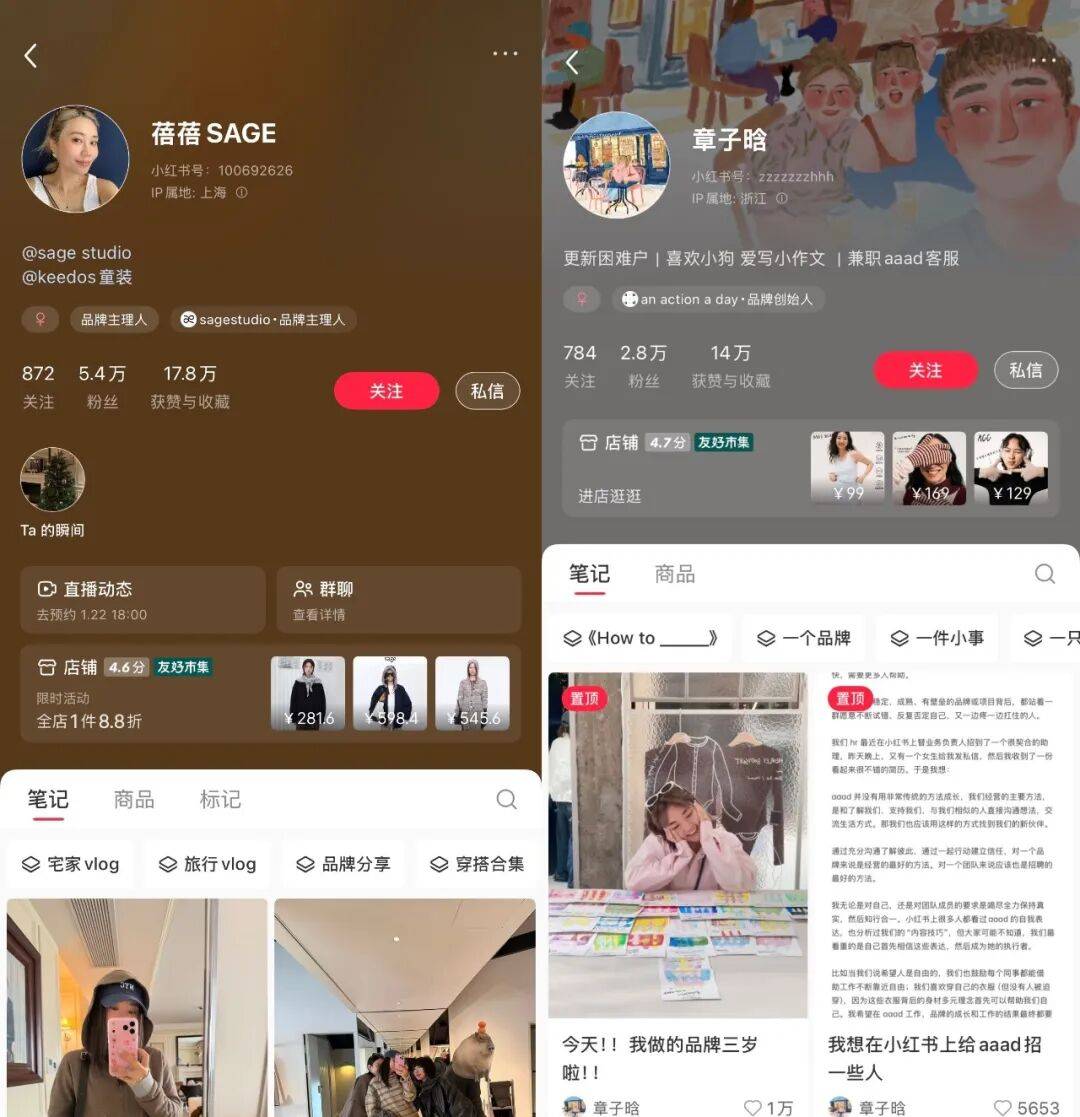
Core Insights - The article discusses the evolving consumer sentiment towards authenticity and emotional value in the market, highlighting a shift from superficial branding to genuine, relatable experiences [1][2][3] Group 1: Brand Expression and Authenticity - The trend of "humanized" brand expression is emerging, where real dialogue replaces scripted marketing, with founders and employees becoming vital carriers of brand values [1][4][5] - Consumers are increasingly discerning, able to differentiate between brands that genuinely believe in their values and those that merely use them for marketing purposes, as illustrated by the backlash against brands like "始祖鸟" [4][5] - The rise of social media platforms allows founders to engage directly with consumers, fostering a sense of community and trust [5][7] Group 2: Local Cultural Renaissance - There is a resurgence of local flavors and cultural heritage, with consumers seeking experiential tourism and local products, as evidenced by a 1493% increase in searches for "贵州深度游" [11][14] - The concept of "bistro" has been localized in China, leading to the emergence of various regional bistros that cater to consumer preferences for local cuisine [12][14] - Local cultural elements are being integrated into mainstream commercial settings, enhancing the value of local products and crafts [16] Group 3: Return to Offline Experiences - The trend of returning to offline experiences is driven by a desire for social interaction and immersive experiences, with events like concerts and pop-up activities gaining popularity [17][18] - Brands are increasingly opening flagship stores that offer unique experiences, moving beyond traditional retail to create engaging environments [18][20] - The shift back to offline is also a response to the saturation of online content and the need for differentiated experiences that cannot be replicated online [22] Group 4: Non-standard Commercialization and Community Business - The non-standard commercial sector is facing challenges, with discussions around its sustainability and the need for unique, engaging experiences to attract consumers [23][24] - Successful non-standard commercial ventures often rely on tourism and local cultural appeal, as seen in cities like Bangkok [24][26] - Community-oriented businesses are emerging as a bright spot in the market, focusing on stable user bases and localized offerings [30][31] Group 5: Opportunities for Small Brands - The current market environment presents opportunities for small and medium-sized brands to thrive by focusing on differentiation and emotional value [31] - The rise of niche brands that cater to specific consumer interests and preferences is expected, as consumers increasingly seek personalized and authentic experiences [31]

宏观经济周报:经济结构优化接力赛-20260124
Guoxin Securities· 2026-01-24 14:46
Economic Performance - In 2025, China's GDP grew by 5.0% year-on-year, achieving the target of around 5%[1] - The GDP growth rate in Q4 2025 fell to 4.5%, marking a new low in recent years[1] - Monthly GDP growth rates for October to December were approximately 4.5%, 4.3%, and 4.7% respectively, indicating signs of recovery in December[1] Structural Changes - A notable shift occurred in the economic structure: the secondary industry (industrial and construction sectors) saw a decline, while the tertiary industry (services) experienced growth[1] - The acceleration of the service sector is expected to create more jobs and increase income, providing sustainable support for domestic demand[1] Policy Outlook for 2026 - The newly announced fiscal and financial policies focus on stimulating private investment, with four out of six specific policies aimed at supporting private investment[2] - The emphasis on private investment over government-led infrastructure projects signals a shift towards "investing in people" rather than "investing in things"[2] Risks and Challenges - The report highlights potential risks from overseas market volatility, which could introduce uncertainties into the economic outlook[2] - Domestic consumption remains weak, with significant declines in key indicators such as movie ticket sales (down 26.9%) and automobile sales (down 32.0%) compared to the previous year[21] Trade and External Factors - Port cargo throughput increased by 6.23% year-on-year, influenced by the timing of the Spring Festival[24] - Geopolitical risks are rising, potentially affecting global trade dynamics and pricing systems[25]
一场两极分化的消费复苏正在发生
雪球· 2026-01-24 03:50
Core Viewpoint - The article discusses the recovery of luxury goods consumption in China, highlighting a rebound in demand and the differentiation between high-end and mass-market segments [5][11][31]. Group 1: Luxury Goods Market Recovery - In Q3 2025, LVMH reported total revenue of €18.2 billion, marking the first sales rebound of the year, with a 7% growth in the Greater China region [5][14]. - The consumer confidence index in China has been steadily rising since reaching a low in September 2024, indicating a gradual recovery in consumer spending [5][9]. - The luxury goods sector is experiencing a notable recovery, with many brands reporting their first positive growth since the pandemic, suggesting a restoration of industry confidence [12][18]. Group 2: Market Segmentation - The recovery in consumption is characterized by polarization, where high-end markets are recovering faster than lower-tier markets, which remain cautious and price-sensitive [11][21]. - High-end brands are benefiting from increased consumer confidence, while mass-market brands are pressured to lower prices and offer promotions, impacting their profit margins [21][29]. - The demand for high-end gold jewelry has surged, with companies like Chow Tai Fook reporting significant growth, contrasting with a 33% decline in overall gold jewelry consumption [23][31]. Group 3: Performance of Key Brands - Prada achieved a 10% growth in Q3 2025, driven by a 41% increase in its Miu Miu brand, appealing to a younger consumer demographic [18]. - The performance of luxury brands such as LVMH, Prada, and Hermès in Q3 2025 indicates a positive trend, with many brands returning to growth [13][19]. - The retail performance of high-end shopping malls, such as the Shanghai Taikoo Hui, showed a 41.9% increase in sales, further supporting the recovery narrative [20]. Group 4: Future Outlook - The article suggests that the recovery of high-end consumption may eventually extend to broader consumer segments, leading to a more sustained recovery in the luxury goods market [35]. - Investment opportunities in 2026 may arise from focusing on high-end segments while remaining cautious about the pressures facing mass-market brands [31].

中小商业企业协会调查数据:消费复苏的关键瓶颈在于稳预期
Nan Fang Du Shi Bao· 2026-01-23 08:57
南都讯 记者杨文君 发自北京 1月23日,由中国中小商业企业协会和立信数据研究院联合组织开展的中 国消费者消费意愿调查2025年四季度调查结果在重庆曙光数字经济产业园发布。 调查结果显示,2025年四季度中国消费者消费意愿指数(以下简称"消费意愿指数")为119.8,高于景 气临界值100。与上季度相比,消费意愿指数微降0.8点;其中代表当前消费意愿的即期消费意愿指数为 112.6,下降0.3点;代表未来消费意愿的预期消费意愿指数为127.0,下降1.4点。与去年同期相比,消费 1月20日,顾客在海口日月广场免税店购物。受益于封关带来的人气和政策红利,离岛免税消费持续升 温。 新华社记者 郭程 摄 《报告》还指出,综合来看,当前我国消费市场呈现"意愿筑底、预期审慎、结构分化"的特征。消费复 苏的核心瓶颈在于预期偏弱,消费者期盼收入增长、就业稳定及社保改善,同时对消费品和服务价格高 度敏感。 据悉,该调查为全国性调查,覆盖一线至四线城市以及农村地区,样本量为5000个消费者,旨在动态把 握消费者消费信心、消费行为、消费意愿的变化趋势,了解消费者对消费环境、消费政策的意见建议, 为政府部门和企业的相关决策提供参考 ...
港股消费热,今年要从鸣鸣很忙(01768.HK)开始了?
Ge Long Hui· 2026-01-23 02:17
Core Viewpoint - 2026 is a critical year for China's consumption recovery, with a convergence of policy incentives and economic fundamentals driving growth in the consumer market [1] Group 1: Market Dynamics - The focus on boosting consumption and expanding domestic demand is a key policy direction, with initiatives like trade-in subsidies enhancing consumer spending [1] - In 2025, China's total retail sales of consumer goods exceeded 50 trillion yuan, growing by 3.7% year-on-year, contributing 52% to economic growth, an increase of 5 percentage points from the previous year [1] - The recent IPO of "Mingming Hen Mang," the leading snack retail chain in Hong Kong, aims to raise between 3.238 billion and 3.336 billion HKD, reflecting strong market interest [1] Group 2: Consumer Trends - There is a significant shift in consumer preferences towards "rational value for money," with high-quality, affordable products gaining popularity [2] - The retail landscape in Hong Kong currently lacks high-growth targets that align with the "high-quality, affordable" consumer trend, creating a gap between market demand and available offerings [2] - The snack retail sector, particularly the bulk snack model, aligns well with consumer demands for quality and price, representing a key growth area [2] Group 3: Company Overview - Mingming Hen Mang's IPO fills a gap in the high-growth snack retail sector in Hong Kong, showcasing a business model that resonates with current consumer trends [3] - The company achieved a GMV of 55.5 billion yuan in 2024, leading the Chinese snack retail market, and demonstrates the market value of the bulk snack model [3] - The timing of the IPO coincides with a critical phase for the Hong Kong consumer sector, which is seeking quality listings to boost investor confidence [3] Group 4: Financial Performance - For the first nine months of 2025, Mingming Hen Mang reported a GMV of 66.1 billion yuan, a 74.5% increase year-on-year, with store numbers exceeding 19,500 across 28 provinces [3][4] Group 5: Institutional Support - The company has attracted significant investment from top-tier institutions, including Sequoia Capital and Tencent, which reinforces confidence in its business model and growth potential [5][6] - During the global offering phase, eight international institutions, including Temasek and BlackRock, subscribed for a total of 195 million USD, indicating strong market confidence in the company's prospects [6] Group 6: Competitive Advantages - Mingming Hen Mang has established a competitive moat through scale, supply chain efficiency, and digital capabilities, creating a unique advantage in the retail sector [7] - The company has penetrated lower-tier markets effectively, with approximately 59% of its stores located in county and town areas, capitalizing on the growth of the snack market in these regions [8] - The direct sourcing model allows the company to offer products at prices approximately 25% lower than traditional supermarkets, enhancing its value proposition [9] Group 7: Digital and Franchise Ecosystem - The company has developed a comprehensive digital system that supports operations across nearly 20,000 stores, ensuring efficient management and coordination [10] - A robust franchise model empowers local operators while maintaining a standardized consumer experience, facilitating rapid expansion [11] Group 8: Implications for the Market - The IPO of Mingming Hen Mang is not just a milestone for the company but also a significant event for the Hong Kong consumer sector, providing a much-needed high-growth listing [12] - The company's successful listing addresses the supply-demand mismatch in the Hong Kong consumer market, particularly in the bulk snack segment [13] - The sustainable growth model of Mingming Hen Mang is supported by favorable industry trends and a strong operational framework, positioning it well for future market share gains [14] Group 9: Capital Market Recognition - The ongoing interest from top-tier institutions throughout the company's development reflects a long-term confidence in its growth trajectory [15] - The diverse shareholder structure, including both financial and strategic investors, enhances the company's operational capabilities and market position [15] Conclusion - The listing of Mingming Hen Mang marks a pivotal moment for the bulk snack sector and the Hong Kong consumer market, signaling a shift towards high-quality growth opportunities [16]
公募基金四季报风云:基金经理激战AI泡沫论,半数基金年底减仓
Jing Ji Guan Cha Wang· 2026-01-22 11:45
Core Viewpoint - The 2025 Q4 public fund reports reveal a complex landscape characterized by "the strong getting stronger and the obscure emerging" [3] Group 1: Fund Performance - Over 40% of active equity products achieved positive quarterly returns, yet the overall fund profits still incurred losses exceeding 10 billion [4] - The top-performing fund, Yongying High-end Equipment Select A, reported a quarterly return of 56.42%, while some healthcare-themed funds experienced losses exceeding 23% [4] - Mini funds like Zhongou Cycle Select saw their scale surge from 0.36 billion to 15.75 billion, marking an increase of over 42 times [4] Group 2: Fund Manager Strategies - More than half of active equity funds opted to reduce stock positions, with over 10 products decreasing their positions by more than 20% [5] - The champion fund Yongying Technology Select A reduced its stock position from 94.41% to 80.34%, a decrease of over 14 percentage points [5] - Fund managers are showing caution towards AI hardware valuations, seeking relatively undervalued segments within the industry [9] Group 3: AI Bubble Debate - The debate over whether the AI sector has entered a bubble has intensified, with differing views among fund managers [10] - Some managers believe the AI industry is in the early stages of bubble formation, while others argue that valuations have returned to reasonable levels [11] - The core of the bubble debate revolves around the timing of technological advancements and the pace of commercial application [12] Group 4: Investment Opportunities - Fund managers are shifting their focus from beta to alpha, emphasizing the importance of stock selection [17] - In the innovative drug sector, opportunities are identified in the overseas expansion of the industry chain and domestic substitution of equipment [18] - The overall return levels in the equity market may decline, but significant structural excess return opportunities still exist [18]

机构看好零食乳业弹性,白酒估值修复可期,消费ETF嘉实(512600)布局消费复苏行情
Xin Lang Cai Jing· 2026-01-22 03:32
Group 1 - The core viewpoint of the articles highlights the performance of the consumer sector in China, particularly the growth of brand value for Kweichow Moutai, which increased by 2.2% to reach $59.63 billion, ranking first in the global liquor industry [1] - The China Securities Index shows that the major consumer index has risen by 0.20%, with significant gains from stocks such as Hainan Rubber (+2.15%), Yanjing Beer (+1.64%), and Dongpeng Beverage (+1.53%) [1] - The market is currently favoring sectors like snacks and dairy, which are experiencing clear growth and higher elasticity, driven by policy support and improving monthly data, while the liquor sector is in a "bottoming out" phase [1] Group 2 - The major consumer index includes leading A-share consumer stocks across various categories, with liquor being the largest sector, accounting for over 38% of the index [2] - The top ten weighted stocks in the major consumer index, which include Yili, Kweichow Moutai, and Wuliangye, collectively account for 68.63% of the index [1] - Investors can also access the consumer recovery trend through the Consumption ETF linked fund (009180) [3]



瑞银:消费出现复苏迹象,行业估值仍有吸引力
IPO早知道· 2026-01-21 01:31
Group 1: Consumer Confidence and Market Trends - UBS believes that consumer confidence is improving, with a notable shift in preferences among consumers [3] - The firm conducted discussions with approximately 35 consumer companies and observed a recovery in consumer sentiment despite a short-term downturn in the real estate market [3] - UBS indicates that the valuation of the consumer sector remains attractive, being about one standard deviation below the 10-year average, and has not yet reflected the recovery in consumption [3] Group 2: Sector-Specific Insights - The snack industry is expected to benefit from category expansion and channel restructuring, presenting structural growth opportunities [6] - In the liquor sector, private consumption and potential easing of drinking bans for government institutions may support mid-range liquor demand, with companies accelerating channel transformation for sustainable long-term earnings growth [5] - The ready-to-drink beverage (FMB) segment is projected to capture market share from bottled beverages, driven by rapid store expansion and more efficient business models [5] Group 3: Dairy and Other Beverages - Despite resilience in fresh milk, liquid milk sales are expected to remain weak in 2025, with a slight recovery anticipated in 2026 due to improved raw milk supply and demand, alongside marketing and innovation efforts [5] - The beer segment is experiencing short-term consumption fatigue, but product diversification and home consumption channel expansion continue to drive premiumization [5] Group 4: Other Consumer Goods - The pet food sector shows confidence in domestic market growth despite varying overseas growth prospects [7] - The home appliance industry is expected to see higher growth overseas compared to the domestic market, with strategies to cope with rising material costs differing among companies [9] - In the jewelry sector, brands with differentiated product designs and craftsmanship may pursue consolidation following VAT reforms [10]

新财观|财信证券首席经济学家袁闯:经济完美收官,结构向新向优
Xin Hua Cai Jing· 2026-01-20 17:21
作者:袁闯,财信证券首席经济学家 1月19日,国家统计局发布数据显示,初步核算,2025年国内生产总值1401879亿元,按不变价格计算, 比上年增长5.0%。从环比增速来看,一季度GDP环比增长1.2%,二季度增长1.0%,三季度增长1.1%, 四季度增长1.2%。整体来看,全年经济运行节奏大体平稳,经济社会发展主要目标任务圆满实现,"十 四五"胜利收官,结构上继续向新向优。 内需方面,经济自发复苏动能仍待巩固。拆分投资因素来看,鉴于"反内卷"政策可能拖累部分制造业投 资、房价偏弱仍将制约房地产投资、财政政策继续支撑基建投资,预计2026年固定资产投资增速可能有 限回升。拆分消费因素来看,2026年预计"股市财富效应"对消费仍将发挥一定贡献,"收入效应"对消费 仍有一定制约作用,但伴随着切实改善民生、提升民众福祉,使消费行为从政策驱动转为自觉、可持续 的内生性增长,2026年消费将延续温和复苏态势。 外需方面,虽然2025年"抢出口"行为可能对2026年实际出口有一定"透支效应",但在光伏等产品出口退 税政策调整、中美关税摩擦"烈度"降级、全球经济仍有韧性、中国出口企业竞争力提升等共同支撑下, 预计2026 ...