
全国统一大市场

Search documents
A股盘前市场要闻速递(2025-09-16)
Jin Shi Shu Ju· 2025-09-16 01:45
Group 1: National Market Development - Xi Jinping's article emphasizes the need to address issues in the national unified market, focusing on eliminating low-price competition, government procurement irregularities, and local investment attraction problems [1] - The article calls for promoting the integration of domestic and foreign trade, improving regulatory frameworks, and correcting performance evaluation biases [1] Group 2: International Trade Relations - Chinese officials reached a consensus on resolving TikTok-related issues through cooperation, aiming to reduce investment barriers and enhance economic cooperation [2] - Mexico's president announced discussions on imposing tariffs up to 50% on Chinese goods, with China opposing unilateral and protectionist measures [2] Group 3: Investment Trends - Emerging market ETFs saw a fifth consecutive week of inflows, with a total of $2.17 billion in the week ending September 12, 2023, and a year-to-date total of $19.8 billion [3] - China led the inflows with $653.9 million, while Argentina experienced the largest outflow of $6.99 million [3] Group 4: Corporate Developments - CATL's sodium-ion battery has received national standard certification, becoming the world's first certified sodium-ion battery [4] - Longpan Technology signed a procurement agreement with CATL for lithium iron phosphate cathode materials, with a total sales amount exceeding 6 billion yuan [4] - Tianyang Technology collaborates with Oracle and IBM to provide financial technology services [4] Group 5: Stock Market Activities - Shanghai Construction Engineering clarified that recent news regarding the Koka gold mine was based on previously disclosed information and does not impact current operations significantly [5] - Loongson Technology announced the completion of its first GPGPU chip, the 9A1000, with plans for delivery within the third quarter [6] - Purun Co. is planning to acquire controlling stakes in a high-performance 2D NAND storage chip company [7] Group 6: Shareholder Changes - China Pacific Insurance announced a transfer of state-owned shares without affecting its controlling shareholder status [8] - Fourhui Fushi reported a reduction in shareholding by its major shareholders, decreasing their combined stake from 65.74% to 64.80% [9] Group 7: New Projects and Investments - Junsheng Electronics secured a global automotive intelligence project with an estimated total order value of approximately 15 billion yuan, set to begin production in 2027 [10] - Xinda Zheng plans to acquire at least 51% of Jiaxin Liheng Facility Management, leading to a significant asset restructuring [10] - Dingtong Technology intends to invest up to $15 million to establish a wholly-owned subsidiary in Vietnam for developing and producing communication connectors and cooling products [11]
中原证券晨会聚焦-20250916
Zhongyuan Securities· 2025-09-16 01:03
Group 1: Macro Economic Insights - China's industrial value-added in August increased by 5.2% year-on-year, while retail sales of consumer goods grew by 3.4% year-on-year, and fixed asset investment (excluding rural households) rose by 0.5% from January to August [4][7] - The A-share market experienced slight fluctuations, with the Shanghai Composite Index closing at 3,860.50, down 0.26%, and the Shenzhen Component Index at 13,005.77, up 0.63% [3][4] - The market is supported by multiple favorable policies aimed at stabilizing the economy, with a focus on promoting consumption and stabilizing the real estate sector [4][8] Group 2: Semiconductor Industry - The semiconductor industry showed strong performance in August, with a 23.84% increase in the index, significantly outperforming the Shanghai Composite Index, which rose by 10.33% [14][15] - The revenue for the semiconductor industry in Q2 2025 was 188.43 billion yuan, a year-on-year increase of 13.87%, with a net profit of 14.76 billion yuan, up 23.99% year-on-year [14][15] - Domestic AI computing chip manufacturers are experiencing rapid growth, with companies like Cambrian achieving a revenue increase of 4425.01% year-on-year in Q2 2025 [14][16] Group 3: Lithium Battery Sector - In August 2025, the lithium battery sector index rose by 13.23%, outperforming the Shanghai Composite Index, with 1.395 million new energy vehicles sold, a year-on-year increase of 26.82% [12][27] - The installed capacity of power batteries reached 52.50 GWh in August, marking a 32.42% year-on-year increase [12][27] - The sector is expected to continue its growth trajectory, with a focus on investment opportunities in the supply chain and solid-state battery technologies [27][28] Group 4: Media and Entertainment Industry - The media sector's revenue for H1 2025 reached 272.89 billion yuan, a year-on-year increase of 2.91%, with net profit rising significantly by 38.08% [19][20] - The gaming sector is highlighted for its strong market demand and favorable policy environment, while the film sector is expected to stabilize in Q3 2025 [19][20] - Investment opportunities are recommended in companies with strong product lines and performance certainty, particularly in the gaming and film sectors [20][21] Group 5: Chemical Industry - The basic chemical industry index rose by 10.21% in August, with sub-sectors like fluorine chemicals and carbon fiber performing well [26] - The overall price decline of chemical products has slowed, indicating potential for improved supply-demand dynamics [26] - Investment strategies should focus on sectors with significant profit elasticity and cost advantages, such as pesticides and organic silicon [26]
A股盘前播报 | 统一大市场迎重磅催化 中美就妥善解决TikTok问题达成基本框架共识
智通财经网· 2025-09-16 00:27
Company Insights - Nvidia is under further investigation by the State Administration for Market Regulation for violating the Anti-Monopoly Law of the People's Republic of China, related to its acquisition of Mellanox Technologies six years ago, which may lead to increased transparency in Nvidia's market strategies and provide more growth opportunities for domestic GPU manufacturers [4] Industry Insights - The medical device sector is expected to improve in the second half of the year, with companies beginning to show positive performance based on their operational trends, and the current valuation of the sector is considered reasonable, indicating potential for valuation switching [10] - The low-altitude economy is gaining attention as various regions implement development policies, with significant orders for eVTOL manufacturers and a clear trend towards large-scale development of the industry chain [11]
【早报】英伟达被进一步调查;中方已邀请特朗普访华?外交部回应
财联社· 2025-09-16 00:26
Macro News - The article highlights a consensus reached between China and the U.S. regarding the resolution of TikTok-related issues, aiming to reduce investment barriers and promote economic cooperation [1][3] - A significant article by Xi Jinping in the latest issue of "Qiushi" emphasizes the need to address chaotic low-price competition among enterprises, particularly in areas suffering from "involution" [3] - The National Bureau of Statistics reported a 0.1% month-on-month decrease in new residential sales prices in first-tier cities in August, with second-hand residential prices also declining by 1.0% [3] Industry News - The State Council issued a notice to enhance comprehensive regulation of the tourism market, focusing on protecting personal information and preventing unfair practices by online travel platforms [5] - The China Automobile Industry Association announced a payment initiative for suppliers, with 17 major automotive companies, including BYD and NIO, committing to adhere to these payment norms [6] - The launch of Hunan's first low-altitude economy internet platform allows users to book drone services similarly to ride-hailing apps, indicating growth in the low-altitude economy sector [8] Company News - BGI Pharma announced that its BGM0504 tablets have been approved for clinical trials in overweight/obese adults, marking a significant milestone as no similar oral formulations have been approved globally [10] - China Pacific Insurance announced a plan for the free transfer of state-owned equity by Shanghai International Group [11] - Longpan Technology signed a procurement agreement with CATL for lithium iron phosphate cathode materials, indicating a strategic partnership in the battery supply chain [13] Global Market - U.S. stock indices closed higher, with the S&P 500 and Nasdaq reaching new closing highs, driven by strong performances from major tech stocks [12] - International gold prices reached a new record high, with spot gold surpassing $3,685 per ounce, reflecting ongoing market trends [14] Investment Opportunities - Texas Instruments anticipates a 50% growth in its data center business, indicating a recovery in demand for analog chips [18] - The Ministry of Industry and Information Technology plans to support the development of automotive chips and related technologies, highlighting opportunities in the electric and intelligent vehicle sectors [18][19]



每日债市速递 | 特朗普预计美联储将 “大幅降息”
Wind万得· 2025-09-15 23:32
1. 公开市场操作 央行公告称,9月15日以固定利率、数量招标方式开展了2800亿元7天期逆回购操作,操作利率1.40%,投标量2800亿元,中标量2800亿元。Wind数据显 示,当日1915亿元逆回购到期,据此计算,单日净投放885亿元。 (*数据来源:Wind-央行动态PBOC) 2. 资金面 资金面方面,税期之际,银行间市场周一资金面略显收敛,存款类机构隔夜回购加权利率上行近5个bp至1.41%上方;匿名点击(X-repo)系统隔夜报价亦 升至1.40%上方,且供给偏少;非银机构以存单和信用债为抵押拆借隔夜资金,报价在1.46%-1.48%左右,较上个交易日走高。 海外方面,最新美国隔夜融资担保利率为4.41%。 (IMM) // 债市综述 // 3. 同业存单 全国和主要股份制银行一年期同业存单最新成交在1.68%附近,较上日基本持平。 6. 国债期货收盘 集体上涨 30年期主力合约涨0.21% 10年期主力合约涨0.12% 5年期主力合约涨0.07% 2年期主力合约涨0.01% (*数据来源:Wind-同业存单-发行结果) 4. 银行间主要利率债收益率 涨跌不一 (*数据来源:Wind-国际货币资 ...

陆家嘴财经早餐2025年9月16日星期二
Wind万得· 2025-09-15 23:32
3 、继中国商务部对美国模拟芯片等启动反倾销调查后, 市场监管总局公告宣布,因违反反垄断法及此前收购迈络思时设定的限制性条件,依法决定对英 伟达实施进一步调查。 4 、 中国 8 月经济 " 成绩单 " 公布。 8 月份,全国规模以上工业增加值同比增长 5.2% 、环比增长 0.37% ,服务业生产指数同比增长 5.6% ,社会消费品 零售总额同比增长 3.4% 、环比增长 0.17% 。 1-8 月份,全国固定资产投资同比增长 0.5% ,其中制造业投资增长 5.1% ,房地产开发投资下降 12.9% 。 1 、 《求是》杂志发表习近平总书记重要文章《纵深推进全国统一大市场建设》。 文章强调,我国作为全球第二大消费市场,必须把全国统一大市场建 设好,增强我们从容应对风险挑战的底气。文章指出,要着力整治企业低价无序竞争乱象。 2 、美方要求七国集团及北约以中国购买俄罗斯石油为由,对中国征收 50%-100% 关税。 商务部对此回应称,美方此举是典型的单边霸凌和经济胁迫行 径,中方对此坚决反对。如果任何方面损害中方利益,中方将采取一切必要措施维护自身合法权益。 3 、墨西哥总统称本周将与中国讨论对华征收 50% ...

经济运行呈现多方面积极特点(锐财经)
Ren Min Ri Bao Hai Wai Ban· 2025-09-15 22:38
Core Viewpoint - The economic data for August indicates a stable and improving trend in China's economy, with significant growth in industrial output and service sectors, driven by effective macroeconomic policies and expanding domestic demand [4][5][7]. Economic Performance - The industrial added value for large-scale enterprises increased by 5.2% year-on-year in August, maintaining a rapid growth rate [5][6]. - The service sector production index grew by 5.6% year-on-year, outperforming the industrial sector [5][6]. - The total retail sales of consumer goods rose by 3.4% year-on-year, with significant growth in the sales of home appliances and furniture [5][7]. Investment Trends - Fixed asset investment increased by 0.5% year-on-year from January to August, with manufacturing investment growing by 5.1%, indicating strong support for manufacturing upgrades [5][6]. - Equipment and tool investment rose by 14.4% year-on-year, contributing to a 2.1 percentage point increase in fixed asset investment [7]. Foreign Trade and Reserves - The total goods import and export value increased by 3.5% year-on-year in August, with both exports and imports achieving three consecutive months of growth [6][9]. - The export value of electromechanical products grew by 9.2% year-on-year from January to August [6]. Employment and Inflation - The urban surveyed unemployment rate was 5.3% in August, reflecting a slight increase due to the influx of new graduates into the labor market [9][10]. - The core Consumer Price Index (CPI), excluding food and energy, rose by 0.9% year-on-year, marking a continuous expansion in the inflation rate over four months [6][9]. Policy Impact - The government's policies aimed at boosting consumption and investment are showing positive effects, contributing to a virtuous cycle of stable demand and production [7][8]. - The third batch of consumption upgrade policies has been implemented, further stimulating consumer demand and related sales [7][8]. Long-term Outlook - The long-term supportive conditions for China's economy remain intact, with effective macroeconomic policies and ongoing reforms expected to sustain stable growth [9][11].
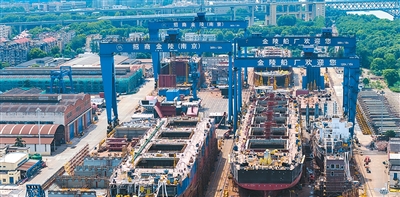
新一轮“反内卷”显效 行业产品价格开始温和回升
Bei Jing Qing Nian Bao· 2025-09-15 18:41
Core Insights - The article discusses the increasing concern over "involutionary" competition in emerging industries such as photovoltaics, lithium batteries, new energy vehicles, and e-commerce platforms, prompting multiple government departments to emphasize the need for regulation to restore healthy market dynamics [2][3] - Recent economic data indicates that the Producer Price Index (PPI) has shown signs of stabilization, with a month-on-month change from a decline to flat in August, marking the first halt in decline this year [2][4] - The article highlights the detrimental effects of "involutionary" competition, which leads to low-quality, repetitive competition that does not enhance efficiency or technological advancement, ultimately harming industry profitability and hindering innovation [2][3] Industry Analysis - The "involution" phenomenon is not new, having previously affected traditional industries like steel and cement, but it has now permeated emerging sectors, particularly the new energy vehicle industry, where price wars have become prevalent [3][4] - In the new energy vehicle sector, a significant number of models have seen price reductions ranging from thousands to tens of thousands of yuan, with some reductions exceeding 30% [3] - The photovoltaic industry, recognized for its international competitive advantage, is experiencing severe price declines across all production stages due to irrational low-price competition and supply-demand mismatches [3][4] Policy and Regulatory Response - The central government has acknowledged the issue of "involutionary" competition, with recent meetings emphasizing the need for industry self-regulation and the elimination of low-price, disorderly competition [3][4] - Various government departments and industry associations are actively promoting "anti-involution" measures, aiming to shift industries from disorderly competition to high-quality development [3][4] - New regulatory frameworks are being developed to standardize market pricing behavior and prevent predatory pricing practices that disrupt normal business operations [4] Economic Impact - The recent stabilization of the PPI and improvements in supply-demand relationships in certain industries suggest that "anti-involution" policies are beginning to yield positive effects [4] - The article notes that the core Consumer Price Index (CPI) has shown an upward trend, particularly in sectors previously affected by "involution," indicating a potential recovery in consumer confidence and spending [4] - Experts suggest that while the initial effects of "anti-involution" policies are visible, the sustainability of these improvements will depend on restoring consumer confidence and stabilizing income expectations [4]

唯一被“点名”都市圈,为何是它?
Mei Ri Jing Ji Xin Wen· 2025-09-15 15:27
Core Viewpoint - The construction of a national unified market is accelerating, with a focus on "five unifications and one openness" to enhance resource allocation efficiency and reduce waste [1][2]. Group 1: Key Points on Pilot Areas - The State Council has approved ten pilot areas for market-oriented resource allocation reforms within two years, including major urban clusters and metropolitan areas [1][2]. - The ten pilot regions are strategically located across key economic zones, representing over 25% of the national economy and serving as models for reform [1][2]. Group 2: Focus on Hefei Metropolitan Area - Hefei is uniquely designated as a "metropolitan area" pilot, covering various cities in Anhui province, and is seen as a significant player in the Yangtze River Delta region [2][4]. - Hefei's GDP reached 1.66 trillion yuan in 2024, contributing 33% of Anhui's economic output despite having only 17.8% of the province's land area [6]. Group 3: Innovation and Development - Hefei is recognized for its strong innovation capabilities, housing national scientific centers and excelling in emerging industries like AI and new energy [7][11]. - The city aims to enhance its production factor allocation structure to support new productivity development, focusing on sectors like AI, new energy, and smart transportation [8][10]. Group 4: Challenges and Opportunities - Hefei faces challenges such as insufficient industrial collaboration and significant regional development disparities, which may hinder its growth compared to more developed metropolitan areas [12][15]. - Recent initiatives indicate a push for integrated development within the Hefei metropolitan area, enhancing collaborative efforts in key industries like new energy and high-end manufacturing [15][16].

每日复盘-20250915
Guoyuan Securities· 2025-09-15 13:51
Market Performance - On September 15, 2025, the Shanghai Composite Index fell by 0.26%, while the Shenzhen Component Index rose by 0.63% and the ChiNext Index increased by 1.51%[3] - The total market turnover was 23,031.45 billion yuan, a decrease of 2,451.68 billion yuan from the previous trading day[3] - Out of 5,292 stocks, 1,916 rose and 3,376 fell[3] Sector and Style Analysis - The top-performing sectors included Electric Equipment and New Energy (up 2.25%), Automotive (up 1.80%), and Agriculture, Forestry, Animal Husbandry, and Fishery (up 1.76%)[3] - The worst-performing sectors were Communication (down 1.32%), National Defense and Military Industry (down 1.08%), and Comprehensive (down 1.02%)[3] - Growth stocks outperformed value stocks across various market caps, with the ranking being Growth > Cycle > Consumption > Stability > Financial[21] Capital Flow - On September 15, 2025, the net outflow of main funds was 597.54 billion yuan, with large orders seeing a net outflow of 215.02 billion yuan and small orders continuing to see a net inflow of 543.08 billion yuan[26] - Southbound funds recorded a net inflow of 144.73 billion HKD, with the Shanghai-Hong Kong Stock Connect contributing 69.68 billion HKD and the Shenzhen-Hong Kong Stock Connect contributing 75.05 billion HKD[28] ETF Trading Activity - Major ETFs such as the Huaxia SSE 50 ETF and the Huatai-PB CSI 300 ETF saw significant decreases in trading volume, with changes of -4.84 billion yuan and -9.05 billion yuan respectively[30] - The net inflow into the ChiNext ETF on September 12 was 50.71 billion yuan, indicating a preference for growth-oriented investments[30] Global Market Overview - On September 15, 2025, the Hang Seng Index rose by 0.22% to 26,388.16 points, while the Hang Seng Tech Index increased by 0.91% to 5,989.27 points[34] - In the U.S. market, the Dow Jones Industrial Average fell by 0.59% to 45,834.22 points, while the Nasdaq Composite rose by 0.44% to 22,141.10 points[34]