货币政策

Search documents
自1月19日起下调再贷款、再贴现利率0.25个百分点 央行:今年降准降息还有一定空间
Zhong Guo Zheng Quan Bao· 2026-01-15 21:07
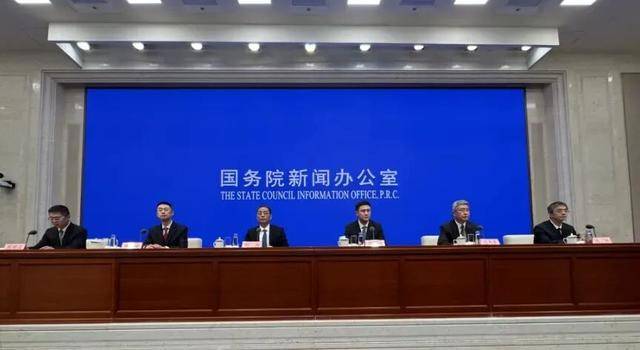
在1月15日国新办举行的新闻发布会上,中国人民银行副行长邹澜释放了今年降准降息有一定空间的信 号。他表示,2026年人民银行将继续实施适度宽松的货币政策,发挥存量政策和增量政策的集成效应, 加大逆周期和跨周期调节力度,为经济稳定增长和高质量发展创造适宜的货币金融环境。 同时,邹澜宣布,人民银行将先行推出两方面政策措施:一方面,是下调各类结构性货币政策工具利 率,提高银行重点领域信贷投放的积极性;另一方面,是完善结构性工具并加大支持力度,进一步助力 经济结构转型优化。 ● 本报记者 彭扬 欧阳剑环 对于备受市场关注的降准降息问题,邹澜表示,从今年看还有一定的空间。从法定存款准备金率看,目 前金融机构的法定存款准备金率平均为6.3%,降准仍然有空间。 促进社会综合融资成本低位运行 加快落地民企再贷款等支持举措 作为先行推出的两项政策举措之一,下调各类结构性货币政策工具利率的安排已明确。邹澜表示,下调 各类结构性货币政策工具利率0.25个百分点。各类再贷款一年期利率从目前的1.5%下调到1.25%,其他 期限档次利率同步调整。 当日,人民银行宣布,自1月19日起下调再贷款、再贴现利率0.25个百分点。下调后,3个月 ...
美联储官员Schmid:为抑制通胀 政策应保持一定程度紧缩性
Xin Lang Cai Jing· 2026-01-15 19:35
Core Viewpoint - Kansas City Federal Reserve Bank President Jeff Schmid advocates for maintaining interest rates at a level that continues to exert pressure on the economy to further cool inflation [1][5]. Group 1: Monetary Policy - Schmid emphasizes the need for a moderately restrictive monetary policy due to persistent inflationary pressures [1][5]. - He suggests that a degree of cooling in the labor market may be necessary to prevent a deterioration in inflation outlook [3][7]. - The current target range for the federal funds rate is between 3.5% and 3.75%, which is near the so-called neutral level [3][7]. Group 2: Economic Outlook - Schmid expresses concern that further rate cuts may not stimulate hiring, as the labor market is expected to show weakness in 2025, driven by structural factors [3][7]. - He warns that strong economic growth could elevate inflation, and doubts about achieving the 2% inflation target could lead to more lasting impacts from rate cuts [3][7]. Group 3: Federal Reserve Structure - Schmid discusses the independence and decentralized structure of the Federal Reserve, which allows for diverse perspectives on monetary policy [4][8]. - He notes that the Federal Reserve has faced increasing scrutiny from the Trump administration, with some officials advocating for a reassessment of certain elements of the Federal Reserve Bank system [3][7].


中国人民银行明确2026年七大重点工作
Xin Lang Cai Jing· 2026-01-15 19:28
Core Viewpoint - The People's Bank of China (PBOC) has outlined its work for 2026, emphasizing the need for continued monetary policy support and financial stability amid complex economic conditions [1] Group 1: 2025 Work Summary - The PBOC has implemented a new set of monetary policy measures to support stable growth in the real economy and maintain smooth financial market operations since 2025 [1] - The bank has focused on deepening structural reforms in the financial supply side and managing financial risks in key areas [1] - The PBOC has also actively promoted reforms in global financial governance and strengthened party discipline [1] Group 2: Key Focus Areas for 2026 - The PBOC will prioritize seven key areas in 2026, including: - Continuing to promote strict party governance [1] - Implementing a moderately loose monetary policy [1] - Enhancing financial services for high-quality development of the real economy [1] - Safely resolving financial risks in key areas [1] - Continuing financial reform and opening up [1] - Actively promoting global financial governance reform [1] - Improving financial management and service capabilities [1] Group 3: Financial Risk Management - The PBOC aims to support the resolution of debt risks associated with financing platforms and to facilitate their orderly exit [1] - The bank will focus on risk management in key regions and institutions, enhancing risk identification and early correction for small and medium-sized financial institutions [1] - The PBOC plans to improve its macro-prudential management and financial stability tools, including establishing mechanisms for providing liquidity to non-bank institutions under specific scenarios [1] - Strengthening regulatory enforcement in financial markets and combating illegal activities will also be a priority [1]
将近10分钟!人民银行副行长邹澜解读物价走势与人民币汇率政策
Sou Hu Cai Jing· 2026-01-15 16:55
Core Viewpoint - The People's Bank of China (PBOC) is focused on supporting economic stability and promoting a reasonable recovery in prices through a supportive monetary policy, while maintaining the stability of the RMB exchange rate against the backdrop of complex global economic conditions [3][4][5]. Economic Indicators - As of December 2025, China's CPI increased by 0.8% year-on-year, reaching the highest level since March 2023, while the core CPI (excluding food and energy) rose by 1.2% [3]. - The Producer Price Index (PPI) saw a reduction in its year-on-year decline, narrowing by 1.7 percentage points from the low in July, with a month-on-month increase for three consecutive months [3]. - Notable price declines were observed in pork (down 30%) and transportation tools (down 11.7%), influenced by cyclical factors and market supply-demand dynamics [3]. Monetary Policy - The PBOC has maintained a supportive monetary policy stance, ensuring ample liquidity and a significant growth in financial totals that outpace nominal GDP growth [4]. - The central bank plans to implement a moderately loose monetary policy to create a conducive financial environment for price recovery [4]. Exchange Rate Management - The PBOC emphasizes a clear and consistent exchange rate policy, allowing market forces to play a decisive role in the formation of the RMB exchange rate, aiming for basic stability at a reasonable and balanced level [4][7]. - Since 2020, the RMB faced depreciation pressure, but the PBOC and the State Administration of Foreign Exchange have strengthened expectation management to mitigate risks of excessive exchange rate fluctuations [5][6]. Future Outlook - The RMB is expected to continue fluctuating within a flexible range, influenced by various factors including economic growth, monetary policy, and geopolitical events [7]. - Approximately 30% of cross-border trade is conducted in RMB, which minimizes the impact of exchange rate fluctuations on foreign trade enterprises [7].
2025年社融规模新增35.6万亿元
Bei Jing Shang Bao· 2026-01-15 16:32
Core Viewpoint - The People's Bank of China reported strong financial statistics for 2025, with significant increases in social financing and new loans, indicating effective financial reforms, although there are notable weaknesses in household credit demand [1][6]. Group 1: Financial Performance - In 2025, new social financing reached 35.6 trillion yuan, and new loans totaled 16.27 trillion yuan, reflecting a robust financial environment [1][6]. - By the end of December 2025, the balance of RMB loans was 271.91 trillion yuan, showing a year-on-year growth of 6.4% [3][6]. - The total social financing stock at the end of 2025 was 442.12 trillion yuan, with an annual growth of 8.3% [6][7]. Group 2: Loan Structure - Corporate loans were the main driver of loan growth, with a significant increase of 15.47 trillion yuan in 2025, while household loans only increased by 441.7 billion yuan [3][7]. - The structure of loans improved, with manufacturing and infrastructure sectors seeing notable growth in medium to long-term loans, at 6.6% and 6.9% respectively [7][8]. - The financing costs decreased, with new loan rates in November 2025 being 0.42 percentage points lower than the previous year [7][8]. Group 3: Economic Outlook - Analysts expect that in 2026, there will be room for both interest rate cuts and reserve requirement ratio reductions, with new RMB loans projected to increase by approximately 1.2 trillion yuan compared to 2025 [11][12]. - The anticipated new social financing for 2026 is expected to reach 38.6 trillion yuan, driven by continued government bond financing and an acceleration in fixed asset investment [11][12]. - The overall economic environment is expected to remain supportive, with policies aimed at enhancing credit availability and reducing financing costs [9][10].

2025年12月末M2余额同比增长8.5%
Qi Huo Ri Bao Wang· 2026-01-15 16:12
Group 1 - The central bank reported that by the end of 2025, the total social financing scale reached 442.12 trillion yuan, an increase of 8.3% year-on-year, with a cumulative increase of 35.6 trillion yuan, which is 3.34 trillion yuan more than the previous year [1] - By the end of December 2025, the broad money (M2) balance was 340.29 trillion yuan, growing by 8.5% year-on-year, while the narrow money (M1) balance was 115.51 trillion yuan, up by 3.8% year-on-year [1] - The total loans in both domestic and foreign currencies reached 275.74 trillion yuan by the end of December, with a year-on-year growth of 6.2%, and the total deposits in both currencies were 336.14 trillion yuan, increasing by 9% year-on-year [1] Group 2 - The analysis indicates that the support from monetary policy to the real economy is continuously strengthening, with government bonds contributing significantly to the social financing structure [2] - In December 2025, there was a notable improvement in corporate loans, indicating a recovery in business expectations and financing demand, despite a slowdown in residential loan growth due to declining real estate sales [2] - The M2 growth rate of 8.5% in December 2025 reflects a more relaxed liquidity environment, which is conducive to the recovery of the real economy [2]
2025年金融数据出炉
Di Yi Cai Jing Zi Xun· 2026-01-15 15:13
Core Viewpoint - The central theme of the articles is the analysis of China's financial data for 2025, highlighting the growth in M2 and social financing, which supports the economic recovery and indicates a favorable monetary environment for the economy [2][10]. Group 1: Social Financing and M2 Growth - By the end of 2025, the total social financing stock reached 442.12 trillion yuan, with a year-on-year growth of 8.3%, and the total social financing increment for the year was 35.6 trillion yuan, an increase of 3.34 trillion yuan compared to the previous year [2][3]. - The M2 balance at the end of 2025 was 340.29 trillion yuan, with a year-on-year growth of 8.5%, which is 0.5 percentage points higher than the previous month and 1.2 percentage points higher than the same period last year [2][10]. - The M2 and M1 (narrow money) growth rates indicate a widening gap, with M2 growing at 8.5% and M1 at 3.8%, suggesting a need for macroeconomic policies to significantly boost domestic demand [2][9]. Group 2: Financing Structure and Direct Financing - Government bond financing and corporate bond financing were the main drivers of the significant year-on-year increase in social financing, with direct financing accounting for 46.9% of the total social financing increment, reaching 16.7 trillion yuan [3][4]. - The net financing from government bonds was 13.84 trillion yuan, an increase of 2.54 trillion yuan from the previous year, while non-financial corporate bond financing reached 2.39 trillion yuan, up by 482.5 billion yuan [3][4]. - The financial institutions provided 15.91 trillion yuan in new loans to the real economy, indicating a reasonable growth in lending [3]. Group 3: Credit Market Dynamics - In December 2025, new RMB loans amounted to 910 billion yuan, a year-on-year decrease of 800 billion yuan, reflecting a structural differentiation in credit demand, with stronger corporate loans and weaker household loans [6][7]. - The total new RMB loans for the year were 16.27 trillion yuan, down by 1.82 trillion yuan compared to the previous year, indicating a decline in internal loan demand due to a sluggish real estate market and weak investment and consumption momentum [6][7]. - The year-end loan balance was 271.91 trillion yuan, with a year-on-year growth of 6.4%, and the overall credit support for the real economy remained at a high level [7]. Group 4: Policy Outlook and Future Projections - The central bank plans to implement two main policy measures: lowering interest rates on various structural monetary policy tools and enhancing support for economic structural transformation [10]. - The expected social financing scale for 2026 is projected to reach around 38 trillion yuan, with government bond financing continuing to grow rapidly and new RMB loans estimated at approximately 18 trillion yuan [10].
如何提高货币政策效力?
Sou Hu Cai Jing· 2026-01-15 14:43
Group 1 - The central bank of China is expected to continue implementing a loose monetary policy to eliminate negative output gaps and promote reasonable price recovery, with expectations of further rate cuts and reserve requirement ratio reductions in 2026 [2][3] - The current economic environment shows that while liquidity is not lacking, there is a deficiency in loan demand, making the necessity for interest rate cuts higher than for reserve requirement reductions [3][4] - The Consumer Price Index (CPI) for 2025 is projected to remain flat compared to 2024, significantly below the target inflation rate of around 2%, indicating that the current economic growth rate is below its potential level [2][3] Group 2 - The effectiveness of monetary policy is influenced by the economic cycle, with expansionary fiscal policy often proving more effective during economic downturns, as it can directly create new demand [4][5] - The transmission efficiency of monetary policy is also affected by the balance sheets of households and enterprises; if these are damaged, the effectiveness of expansionary monetary policy declines [5][6] - The quality of collateral available to commercial banks is crucial for credit availability; a decline in real estate prices has negatively impacted the quality of collateral, leading to reduced credit growth [6][7] Group 3 - To enhance the effectiveness of monetary policy, it is recommended to strengthen the coordination between fiscal and monetary policies, with a focus on more active fiscal measures to stimulate domestic demand [7][8] - Efforts should be made to stabilize the real estate market, as falling property prices are a significant factor affecting the balance sheets of households and enterprises [7][8] - The central government should increase the issuance of government bonds of various maturities to provide funding for expansionary fiscal policies and to supplement the quality of collateral in the banking system [8][9]

2025年12月金融数据及国新办新闻发布会解读:发布会后期待什么?
Yin He Zheng Quan· 2026-01-15 14:19
Financial Data Insights - In December 2025, M1 growth rate was 3.8%, while M2 growth rate increased to 8.5%[2] - The significant rise in M2 was primarily driven by a substantial reduction in non-bank deposits[11] - The overall social financing growth rate declined, mainly due to government bond financing[13] Monetary Policy Outlook - The central bank introduced eight monetary policy measures focusing on structural tools to support domestic demand, technological innovation, and financing for small and micro enterprises[33] - A 50 basis point (BP) reserve requirement ratio cut is expected in the first quarter of 2026, while comprehensive interest rate cuts will require further observation[35] - The central bank emphasized that the RMB exchange rate will continue to exhibit "two-way fluctuations and maintain flexibility" with expectations of a gradual appreciation towards 6.9 by the end of 2026[34] Investment Implications - Investment in the Chinese stock market is anticipated to yield excess returns, particularly during the "spring rally" investment opportunity[36] - Bond market dynamics are expected to oscillate between upward and downward pressures, with yields projected between 1.6% and 1.9%[36] - Structural opportunities in commodities are identified as certain, indicating potential for investment[36]
新增社融35.6万亿元!2025年金融数据收官,居民信贷仍待政策加码
Bei Jing Shang Bao· 2026-01-15 13:56
Core Viewpoint - The People's Bank of China reported strong financial statistics for 2025, with significant increases in social financing and new loans, indicating effective financial reforms, although there are notable weaknesses in household credit demand [1][5]. Group 1: Financial Performance - In 2025, new social financing reached 35.6 trillion yuan, and new loans totaled 16.27 trillion yuan, reflecting a robust financial environment [1][5]. - By the end of December 2025, the balance of RMB loans was 271.91 trillion yuan, showing a year-on-year growth of 6.4% [3][5]. - The total social financing stock at the end of 2025 was 442.12 trillion yuan, with an annual growth of 8.3% [5]. Group 2: Loan Structure - Household loans increased by 441.7 billion yuan, but short-term loans decreased by 835.1 billion yuan, while medium- to long-term loans rose by 1.28 trillion yuan [3][5]. - Corporate loans surged by 15.47 trillion yuan, with short-term loans up by 4.81 trillion yuan and medium- to long-term loans increasing by 8.82 trillion yuan [3][5]. - The structure of loans has improved, with significant growth in medium- to long-term loans for manufacturing (6.6% growth) and infrastructure (6.9% growth) [6]. Group 3: Economic Outlook - Analysts predict that in 2026, there will be room for both reserve requirement ratio cuts and interest rate reductions, with expectations for new RMB loans to increase by approximately 1.2 trillion yuan compared to 2025 [10]. - The anticipated new social financing scale for 2026 is expected to reach 38.6 trillion yuan, driven by continued government bond financing [10]. - The overall economic environment is expected to improve, with a focus on boosting domestic demand and investment [9][10].