
反内卷政策

Search documents
友发集团预盈超6亿投资收益1.1亿 瞄准千亿产值目标加快扩产步伐
Chang Jiang Shang Bao· 2026-02-03 00:29
Core Viewpoint - The company, Youfa Group, expects significant growth in net profit for 2025, driven by improved operational performance and investment gains [1][2]. Financial Performance - The company anticipates a net profit attributable to shareholders of 646 million to 706 million yuan for 2025, representing a year-on-year increase of 52.11% to 66.23% [1][2]. - The expected net profit after deducting non-recurring items is projected to be between 433 million and 493 million yuan, reflecting a growth of 35.24% to 53.98% year-on-year [1][2]. - In 2023, despite a 9.56% decline in revenue, the net profit increased by 91.85% to 570 million yuan [3]. Market Position - Youfa Group is the largest manufacturer of welded steel pipes in China, maintaining the top position in production and sales for 19 consecutive years [1][4]. - The company has a production capacity of 654.77 million tons of various steel pipes in the first half of 2025, marking a 4.18% increase year-on-year [4]. Strategic Initiatives - The company is enhancing its domestic production base and accelerating overseas capacity expansion to improve market share and brand influence [1]. - Youfa Group is actively pursuing global expansion, focusing on Southeast Asia, the Middle East, and Central Asia, and has established subsidiaries for direct export trade [5][6]. Investment and Assets - The company holds 341,700 shares of Muxi Co., with an estimated fair value change gain of approximately 110 million yuan [1][2]. - As of September 2025, Youfa Group has cash and cash equivalents of 11.62 billion yuan and trading financial assets of 172 million yuan, indicating strong short-term liquidity [3].

三维股份:聚酯化纤板块有望扭亏为盈
Zheng Quan Ri Bao Wang· 2026-02-02 13:47
Group 1 - The core viewpoint of the article indicates that the polyester industrial filament industry is expected to show an upward trend in prosperity by 2025, driven by national policy guidance, industry association leadership, and corporate self-discipline through measures like "production limits to maintain prices" and "coordinated operating rates" [1] - The company has reported a significant reduction in losses in its polyester industrial yarn business, suggesting an improvement in financial performance [1] - Future profitability is anticipated to improve further as the company shifts towards high-threshold, high-tech, and high-value-added automotive yarn sectors, alongside the ongoing implementation of anti-involution policies and improvements in supply-demand dynamics [1]

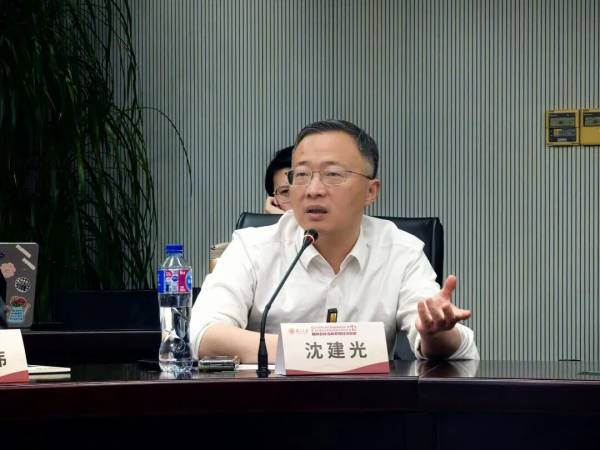
京东首席经济学家沈建光:与“十四五”相比,“十五五”规划有六大关键调整
Sou Hu Cai Jing· 2026-02-02 12:42
Group 1: Economic Outlook and Policy Direction - The 2026 macroeconomic outlook emphasizes the importance of the "15th Five-Year Plan," which marks a shift in policy focus towards economic construction, consumption, and technological development [1][6][17] - Key adjustments in the "15th Five-Year Plan" include a renewed emphasis on balancing economic growth with safety, promoting urban-rural integration, and reforming the fiscal and tax system [1][6][8] - China's economic growth rate has decreased to around 5%, but it remains competitive compared to emerging markets like Vietnam and India, highlighting the need for a focus on maintaining reasonable growth [1][7] Group 2: Monetary and Fiscal Policy Changes - Significant changes in monetary policy now include promoting stable economic development and reasonable price recovery as key considerations, moving away from a sole focus on inflation [2][10] - Fiscal policy is expected to maintain a deficit rate of around 4%, with an emphasis on necessary debt levels and total expenditure [2][10] - The policy aims to optimize existing demand through measures like "trade-in" programs and removing unreasonable restrictions to stimulate consumption [2][11] Group 3: Global Economic Context - The U.S. economy shows signs of weakness, with a cooling job market and a decline in the dollar's reserve status, while the European economy faces multiple challenges, including energy crises [4][15] - Despite a 35% drop in real estate prices over five years, China's economy has shown resilience, supported by advancements in semiconductor equipment, digital economy, and artificial intelligence [4][12] - China's trade surplus is projected to reach $1.2 trillion by 2025, indicating a balanced trade relationship with the U.S. despite ongoing trade tensions [12][16] Group 4: Consumer and Investment Dynamics - The core policy direction for 2026 is to boost consumption, with a significant gap between service consumption in China (18% of GDP) compared to the U.S. (46%), primarily due to urban-rural disparities [4][17] - Investment pressures are evident, with fixed asset investment declining by 12%, although this figure may not accurately reflect the actual investment situation [11][12] - The "15th Five-Year Plan" aims to enhance consumer spending through urban-rural integration and regulatory relaxation, such as in the automotive and yacht sectors [17]

公募基金指数跟踪周报(2026.01.26-2026.01.30):全球流动性巨震,盈利修复值得期待-20260202
HWABAO SECURITIES· 2026-02-02 12:04
Report Investment Rating - No specific investment rating for the industry is provided in the report Core Viewpoints - Last week (2026.01.26 - 2026.01.30), the A - share market was volatile and differentiated, with high trading volume, extreme differentiation, and rapid rotation. The market's driving logic shifted from macro - cycle trading to micro - performance verification, and it's advisable to focus on mid - stream industries with profitability repair and ROE improvement [2][3][11][12][13] - The bond market was volatile last week, and the current environment is favorable for the bond market. The 10 - year Treasury yield is expected to gradually decline towards 1.80%. In the context of increased volatility in the equity market, the relative value of bond coupon allocation has increased [4][14] - The China Securities Regulatory Commission released a draft for public comments on amending the information disclosure rules for public funds, aiming to guide the industry to focus on the concepts of "long - term investment and value investment" [5][17] Weekly Market Observation 1.1 Equity Market Review and Observation - Last week, the Shanghai - Shenzhen 300 rose 0.1%, the CSI 500 fell 2.6%, and the ChiNext fell 0.1%. The market was characterized by extreme differentiation and rapid rotation under high trading volume, with more stocks falling than rising [2][11] - Market funds were in a fierce game between inflation trading and the technology growth theme. "Price trends" were the guiding principle in the first half of the week, and later, policies and performance became the main drivers of style switching. The annual performance forecast disclosure was a key factor for individual stock trends [3][12] - The market's driving logic shifted from macro - cycle trading to micro - performance verification. Funds tended to seek more balanced and performance - supported allocations, and it's recommended to focus on mid - stream industries [13] 1.2 Pan - Fixed - Income Market Review and Observation - Last week, the bond market was volatile. The 1 - year Treasury yield rose 1.80BP to 1.30%, the 10 - year yield declined 1.86BP to 1.81%, and the 30 - year yield rose 0.19BP to 2.29%. The 10 - year yield is expected to gradually decline towards 1.80% [4][14] - The current environment is favorable for the bond market. The central bank maintains stable liquidity, and the cautious economic growth targets in many places ease the market's expectations of strong fiscal stimulus. The bond market sentiment is gradually improving [4][14] - Last week, the U.S. Treasury yield curve steepened. The 1 - year yield declined 5BP to 3.48%, the 2 - year yield declined 8BP to 3.52%, and the 10 - year yield rose 2BP to 4.26%. The appointment of Kevin Warsh as the Fed Chairman affected the U.S. Treasury yield curve [15] - The CSI REITs Total Return Index rose 0.47% last week, with municipal environmental protection and highways leading the gains. Ten new public REITs made progress in the primary market [15] 1.3 Public Fund Market Dynamics - On January 30, 2026, the China Securities Regulatory Commission released a draft for public comments on amending the information disclosure rules for public funds. The new rules require adding the medium - to - long - term performance of the past 7 and 10 years, no longer disclosing the past 1 - month performance, and adding disclosure requirements such as fair trading, employee fund - holding, and trading unit leasing [5][17] Fund Index Performance Tracking 2.1 Equity Strategy Theme - Based Index - **Active Stock Fund Selection**: The index selects 15 funds each period, with equal - weight allocation. The core positions select active equity funds based on performance competitiveness and style stability, and balance the style according to the CSI Equity - Oriented Fund Index. The performance benchmark is the CSI Equity - Oriented Fund Index [21][22] 2.2 Investment Style - Based Index - **Value Stock Fund Selection**: It selects 10 funds of deep - value, quality - value, and balanced - value styles. The performance benchmark is the CSI 800 Value Index [25] - **Balanced Stock Fund Selection**: It selects 10 relatively balanced and value - growth style funds. The performance benchmark is the CSI 800 [25][26] - **Growth Stock Fund Selection**: It selects 10 funds of active - growth, quality - growth, and balanced - growth styles. The performance benchmark is the 800 Growth Index [29] 2.3 Industry Theme - Based Index - **Pharmaceutical Stock Fund Selection**: It selects 15 funds with an average purity of no less than 60% in the pharmaceutical industry. The performance benchmark is the pharmaceutical theme fund index [32][33] - **Consumer Stock Fund Selection**: It selects 10 funds with an average purity of no less than 50% in the consumer industry. The performance benchmark is the consumer theme fund index [33][34] - **Technology Stock Fund Selection**: It selects 10 funds with an average purity of no less than 60% in the technology industry. The performance benchmark is the technology theme fund index [37] - **High - End Manufacturing Stock Fund Selection**: It selects 10 funds with an average purity of no less than 50% in the high - end manufacturing industry. The performance benchmark is the high - end manufacturing theme fund index [42][43] - **Cyclical Stock Fund Selection**: It selects 5 funds with an average purity of no less than 50% in the cyclical industry. The performance benchmark is the cyclical theme fund index [45][46] 2.4 Money - Market Enhancement Index - **Money - Market Enhancement Strategy**: The index aims for liquidity management, pursues a curve that exceeds money - market funds and is smoothly upward. It mainly allocates money - market funds and inter - bank certificate of deposit index funds. The performance benchmark is the CSI Money - Market Fund Index [48] 2.5 Pure Bond Index - **Short - Term Bond Fund Selection**: It selects 5 funds with stable long - term returns, strict drawdown control, and significant absolute - return ability. The performance benchmark is 50% * Short - Term Pure Bond Fund Index + 50% * Ordinary Money - Market Fund Index [52] - **Medium - and Long - Term Bond Fund Selection**: It selects 5 medium - and long - term pure bond funds with both return and drawdown control, and adjusts the duration and the ratio of credit bond and interest - rate bond funds according to the market [54] 2.6 Fixed - Income + Index - **Low - Volatility Fixed - Income + Selection**: The equity center is 10%. It selects 10 funds with an equity center of less than 15%. The performance benchmark is 10% CSI 800 Index+90% ChinaBond New Composite Full - Price Index [57] - **Medium - Volatility Fixed - Income + Selection**: The equity center is 20%. It selects 5 funds with an equity center between 15% - 25%. The performance benchmark is 20% CSI 800 Index+80% ChinaBond New Composite Full - Price Index [60] - **High - Volatility Fixed - Income + Selection**: The equity center is 30%. It selects 5 funds with an equity center between 25% - 35%. The performance benchmark is 30% CSI 800 Index+70% ChinaBond New Composite Full - Price Index [63] 2.7 Other Pan - Fixed - Income Index - **Convertible Bond Fund Selection**: It selects 5 convertible bond funds based on an evaluation system from multiple dimensions. The sample space requires a high proportion of convertible bond investment [66] - **QDII Bond Fund Selection**: It selects 6 QDII bond funds with stable returns and good risk control based on credit and duration [69] - **REITs Fund Selection**: It selects 10 REITs funds with stable operation, reasonable valuation, and certain elasticity based on the underlying asset type [70]
黑色金属日报-20260202
Guo Tou Qi Huo· 2026-02-02 11:17
| | | | 11/11/11/2 | SDIC FUTURE | | | --- | --- | --- | | | 操作评级 | 2026年02月02日 | | 螺纹 | 女女女 | 曹颖 首席分析师 | | 热卷 | ☆☆☆ | F3003925 Z0012043 | | 铁矿 | ☆☆☆ | 何建辉 高级分析师 | | 焦炭 | ★☆★ | F0242190 Z0000586 | | 焦煤 | ★☆★ | | | 證硅 | ★☆☆ | 韩惊 高级分析师 | | 硅铁 | ★☆★ | F03086835 Z0016553 | | | | 李啸尘 高级分析师 | | | | F3054140 Z0016022 | | | | 010-58747784 | | | | gtaxinstitute@essence.com.cn | 【钢材】 今日盘面继续回落。淡季螺纹表需环比下滑,产量短期趋稳,库存继续累积。热卷需求、产量均小幅上升,库存继续下降,压 力逐步缓解。钢厂利润欠佳,下游承接能力不足,高炉复产放缓,铁水产量趋稳。从下游行业看,地产投资降幅继续扩大,基 建、制造业投资增速持续回落,1月PMI回落至4 ...
里昂:内地工业板块出现新推动力 三一国际(00631)等获“跑赢大市”评级
智通财经网· 2026-02-02 03:36
Core Insights - The report from Credit Lyonnais highlights three key drivers in the Chinese industrial sector amid ongoing anti-involution policies: rising demand for mining equipment, maturity of humanoid robot supply chains, and consolidation in the express delivery industry [1] Group 1: Industrial Sector Drivers - Demand for mining equipment is expected to rise, driven by a sustained equipment replacement cycle and record investments in power grids and renewable energy, leading to an estimated 10% growth in excavator sales [1] - The supply chain for humanoid robots is maturing, with first-tier suppliers ready to commence mass production in the second half of the year [1] - Automation demand is projected to recover by approximately 5% year-on-year, fueled by strong performance and price increases in lithium-related sectors [1] Group 2: Preferred Stocks - The company favors firms with stable or recovering core businesses that can benefit from emerging drivers, with top picks including Hengli Hydraulic (601100.SH), Sany Heavy Industry (600031.SH), Sany International (00631), and Jitu Express-W (01519) [1] - Hengli Hydraulic is rated with "high confidence to outperform the market," while the other stocks are rated as "outperform the market" [1]


鹏华基金祝松:把握“固收+”权益结构性机会,聚焦“周期+消费细分+新能源”三大方向
Zhong Guo Jing Ji Wang· 2026-02-02 02:03
Group 1 - The core viewpoint is that in 2026, the "Fixed Income +" sector presents more opportunities than challenges, with a focus on structural opportunities in equity assets, particularly in sectors with limited downside risk and significant upside potential, such as finance, construction, building materials, chemicals, certain consumer segments, and renewable energy supported by "anti-involution" policies [1][4] Group 2 - The domestic macroeconomic growth in 2026 is expected to be driven by consumer growth and stabilized investment, supported by ongoing policies aimed at stimulating domestic demand, with retail sales growth projected to remain at a relatively high level [2] - Central investment projects are well-prepared for 2026, and infrastructure investment growth is anticipated to stabilize and rebound, aided by proactive fiscal policies and moderately loose monetary policies [2] - External trade environment and real estate market trends are identified as significant variables that need continuous monitoring due to uncertainties [2] Group 3 - The equity market is expected to benefit from supportive policies, particularly in cyclical and domestic demand sectors, which are likely to present good opportunities [3] - The bond market is predicted to experience slight fluctuations, with low likelihood of significant increases in bond yields, although the space for policy rate cuts is limited [3] Group 4 - The "Fixed Income +" strategy is expected to outperform challenges, with equity (including convertible bonds) likely to perform better than bonds, providing enhanced return potential [4] - Current A-share PB valuations are at historically low levels, presenting a clear valuation advantage over overseas markets [4] - There is room for optimization in residents' asset allocation, with a shift expected towards equity assets as the market shows profitability [4] Group 5 - The "Fixed Income +" product line is designed to cater to different risk-return profiles, focusing on stable low-volatility strategies for investors seeking long-term steady returns [5] - The Penghua Industrial Bond fund exemplifies a strategy of "fixed income foundation, convertible bond enhancement," maintaining a neutral duration and a focus on high-rated credit bonds [5] Group 6 - In the challenging environment of the "14th Five-Year Plan" start year, "Fixed Income +" products demonstrate significant allocation value due to their flexible stock-bond configuration, aiming to provide defensive and growth potential for investors [6]
【石油化工】地缘政治不确定性驱动油价上行,坚定看好石化板块景气度——行业周报第438期(20260126—260201)(赵乃迪/蔡嘉豪/王礼沫)
光大证券研究· 2026-02-01 23:03
Group 1 - The geopolitical tensions have increased oil prices, with Brent and WTI crude oil futures reported at $69.83 and $65.74 per barrel respectively, reflecting increases of 6.7% and 7.3% from the previous week [4] - The oil price is expected to fluctuate between $60 and $80 per barrel until 2026, supported by high marginal costs of U.S. shale oil and OPEC+'s decision to pause production increases [4] - The International Energy Agency (IEA) forecasts a global oil demand growth of 930,000 barrels per day in 2026, which is higher than the 850,000 barrels per day expected in 2025 [4] Group 2 - The strategic value of deep-sea resources is becoming more prominent, with major oil companies expected to maintain high capital expenditures and expand their natural gas markets [5] - The domestic upstream capital expenditure will support the growth of oil service companies, which are expected to benefit from improved operational quality and increased international competitiveness [5] - The oil service sector is anticipated to see a performance boost as overseas operations begin to contribute positively to earnings [5] Group 3 - The petrochemical industry is transitioning from a simple "reduce oil, increase chemicals" approach to focusing on high-value transformation, indicating a new policy phase [6] - The refining sector is nearing the end of capacity expansion, and supply-demand dynamics are expected to improve due to regulatory constraints [6] - The chemical fiber sector is experiencing structural optimization with limited new polyester filament capacity, favoring leading enterprises [6][7]

备受资金青睐 化工主题ETF总规模突破500亿元
Shang Hai Zheng Quan Bao· 2026-02-01 18:28
Core Viewpoint - Chemical-themed ETFs are becoming a significant direction for capital inflow, with over 26 billion yuan net inflow this year, leading to a total scale exceeding 50 billion yuan [1][2]. Group 1: Fund Inflows and ETF Growth - As of January 29, 2026, the net inflow into chemical-themed ETFs reached 26.189 billion yuan, with notable contributions from Penghua Chemical ETF (14.42 billion yuan), Fortune Chemical 50 ETF (5.702 billion yuan), Huabao Chemical ETF (3.452 billion yuan), and Tianhong Chemical ETF (1.424 billion yuan) [2]. - The total scale of chemical-themed ETFs has increased over 20 times in the past year, growing from 2.159 billion yuan on January 1, 2025, to 53.957 billion yuan by January 29, 2026 [2]. - The number of listed chemical-themed ETFs has risen from 5 to 7 within the same period [2]. Group 2: Performance of Major ETFs - The largest chemical-themed ETF, Penghua Chemical ETF, saw its scale increase from 1.449 billion yuan at the beginning of last year to 33.967 billion yuan [2]. - Other ETFs also experienced significant growth, with Fortune Chemical 50 ETF rising from 0.174 billion yuan to 7.641 billion yuan, and Huabao Chemical ETF from 0.408 billion yuan to 7.815 billion yuan [2]. - Multiple chemical-themed ETFs have reached new highs in share volume, with Penghua Chemical ETF at 36.718 billion shares, Fortune Chemical 50 ETF at 7.604 billion shares, and Huabao Chemical ETF at 7.953 billion shares [2]. Group 3: Institutional Interest and Market Trends - Public funds have increased their allocation to the chemical sector, with the allocation ratio rising to 4.7% by the end of Q4 2025, reflecting a trend of bottom reversal [4]. - Key areas of focus include lithium battery materials, potassium fertilizers, polyurethane, and fluorochemical sectors, with significant stocks being Tianqi Lithium, Cangge Mining, and Yanhua Chemical [4]. - Analysts suggest that the chemical sector is expected to see improved profitability due to the end of the expansion cycle and favorable valuation and positioning [4]. Group 4: Fund Managers' Perspectives - Fund managers have expressed a positive outlook on the chemical sector, maintaining high allocations to cyclical chemical stocks, particularly in phosphorous and potassium fields [5]. - There is an emphasis on the potential for significant profit increases driven by sustained demand and supply-side disruptions [5]. - Future strategies include focusing on sectors with improving supply-demand dynamics and profitability recovery, particularly in refrigerants, coal chemicals, and potassium fertilizers [5].

化工和农业,涨价乘风起
Orient Securities· 2026-02-01 12:42
Group 1 - The report emphasizes the importance of the chemical and agricultural sectors, highlighting their potential for price increases driven by geopolitical tensions and industrial transformation [2][5][12] - The macroeconomic logic behind the current commodity price increases is characterized by external factors rather than internal dynamics, with non-energy commodities benefiting the most [13][30] - The report identifies two main lines of price increase: the industrialization of emerging economies and the geopolitical turmoil affecting import prices [48][49] Group 2 - In agriculture, the report notes that upstream price transmission is expected to lead to a comprehensive upward trend in agricultural products, particularly in pigs, rubber, sugar, corn, and oilseeds [5][3][20] - The chemical sector is anticipated to undergo a transformation in supply expectations, with new export opportunities emerging, particularly due to the decline of chemical industries in Europe and Japan [5][4][20] - The report suggests that the current low allocation of funds to the agricultural sector presents a significant investment opportunity, with selected active equity funds and passive ETFs recommended for investors [5][22][36] Group 3 - The report outlines a shift in the investment landscape, with a focus on mid-cap blue-chip stocks as a key area of interest, particularly in the cyclical sectors of chemicals and agriculture [58][5][48] - It highlights that the current market environment favors a risk preference shift towards mid-risk characteristics, which aligns with the performance of mid-cap blue-chip stocks [58][5][48] - The report indicates that the cyclical nature of the chemical and agricultural sectors positions them well for future investment opportunities [5][58][48]