
K型经济

Search documents
2026美国经济展望:要股票还是要选票?(国金宏观钟天)
雪涛宏观笔记· 2025-12-02 05:00
2026年美国经济最大的风险是"再通胀",这源自于经济持续走弱后联储超预期的持续降息,和特朗 普"全力拼中选"所推行的更宽松的财政政策;进而引发对AI叙事的进一步怀疑,以及更大的预期波 动。 通胀是明年中选的硬约束,特朗普会在明年11月中选前尽量避免明显的再通胀,但融资条件(金融环 境)又是AI叙事的硬约束。特朗普需要平衡好选票(中期选举)与股票(AI叙事)之间的关系:既要维 持美国K型经济的下层基础,又要避免造成AI泡沫破裂,导致经济滑向深层次的衰退。 2026年的美国经济将在失衡中围绕股票与选票的平衡展开。 文:国金宏观宋雪涛/联系人钟天 前言: 当下的美国经济正处在全面放缓的过程中:就业——消费链条放缓、失业率的上行趋势正在持 续。即便2026年美国的财政和货币双宽,经济结构的分化仍将延续,AI相关领域的火热与实体经济的 疲软形成"冷热缺口"将继续扩大而非弥合。 过去15个月,美国经济经历了150bp降息后并未得到明显提振,而将"AI叙事进行到底"则需要更加宽 松的货币政策。同时,为了赢得中选,2026年美国将采取更加宽松的财政政策,在《大美丽法案》逐 步落地的基础上,赤字率水平将回到6%,乃至更高水平 ...


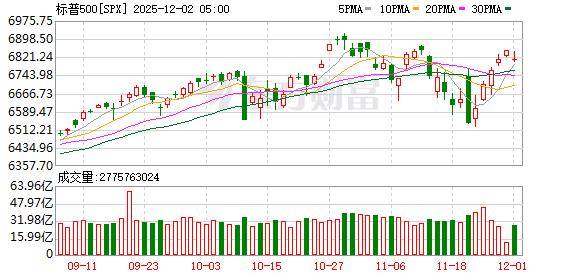
最高8000点!华尔街“2026美股预测”陆续出炉 一个比一个乐观
Sou Hu Cai Jing· 2025-12-02 00:44
Core Viewpoint - Wall Street is increasingly optimistic about the U.S. stock market's performance in 2026, with predictions for the S&P 500 index reaching as high as 8000 points, driven by the ongoing AI boom reshaping the economy and financial markets [2][3]. Group 1: Predictions and Targets - Deutsche Bank sets a target of 8000 points for the S&P 500 by the end of 2026, anticipating a return of around 15% due to stronger capital inflows, buybacks, and sustained earnings growth [3]. - FactSet reports a 13.4% earnings growth for S&P 500 companies in Q3, with expectations of continued strong earnings and high stock valuations by 2026 [4]. - HSBC forecasts a target of 7500 points for 2026, while JPMorgan suggests that if the Federal Reserve continues to cut rates, the index could reach 7500 points, with an upside potential of 8000 points [4]. Group 2: Market Dynamics - Morgan Stanley predicts a strong year ahead, estimating the S&P 500 will close at 7800 points in 2026, labeling it a "new bull market" driven by policy support and robust earnings [5]. - Wells Fargo anticipates a double-digit market increase over the next 12 months, with a target of 7800 points by the end of 2026, driven by inflation expectations and AI advancements [6]. - JPMorgan's chief strategist notes that despite concerns over AI bubbles and valuation issues, current high P/E ratios reflect expectations for above-trend earnings growth and increased capital expenditures in AI [8]. Group 3: Economic Context - The economic landscape is characterized by a K-shaped recovery, where the stock market's performance is increasingly tied to household wealth, raising concerns about potential economic downturns [7][9]. - HSBC emphasizes that the 2026 target of 7500 points indicates a potential for double-digit gains, reminiscent of the late 1990s stock market boom, despite challenges faced by low-income consumers [9].
美国“黑五”线上消费创新高 火爆数据背后“冰火两重天”
2 1 Shi Ji Jing Ji Bao Dao· 2025-12-01 23:13
Group 1: Core Insights - The U.S. consumer market is experiencing a dichotomy during the holiday shopping season, with record online spending on Black Friday reaching $11.8 billion, a 9.1% increase year-over-year, despite a decrease in the number of items purchased due to rising prices [1] - Retail sales (excluding automobiles) on Black Friday grew by 4.1% year-over-year, surpassing last year's 3.4%, with in-store sales increasing by 1.7% and online sales rising by 10.4%, although the latter's growth rate is lower than the previous year [1] - The average selling price has risen by 7%, leading to a 1% decline in order volume and a 2% decrease in the number of items purchased per transaction, indicating that spending growth is primarily driven by price increases rather than volume [2][5] Group 2: Consumer Behavior and Trends - High-income consumers are showing stronger spending power, driven by stock market wealth effects, while middle and low-income households are facing pressures from inflation, a weak job market, and high interest rates [2][5] - The use of AI-driven shopping tools has surged, with a reported 805% increase in AI-driven visits to retail websites compared to last year, as consumers increasingly rely on these tools for price comparison and discount tracking [3] - The holiday shopping season reflects a K-shaped economic recovery, where high-income consumers continue to spend on luxury goods and travel, while lower-income consumers are cutting back on discretionary spending [2][5] Group 3: Economic Indicators and Future Outlook - The U.S. labor market is showing signs of cooling, with the unemployment rate rising to 4.4%, the highest level since October 2021, which may further suppress consumer spending [6] - Despite short-term resilience in consumer spending, long-term growth momentum may weaken due to declining purchasing power among the general population and the ongoing high interest rate environment [6][7] - The Federal Reserve faces challenges balancing inflation control and employment stability, with recent comments from officials indicating a potential for interest rate cuts, which could influence future consumer spending patterns [7][8]
AI比价刺激消费 美国“黑五”主打线上
Bei Jing Shang Bao· 2025-12-01 15:23
Group 1: Sales Performance - The "Black Friday" shopping event in the U.S. saw retail sales increase by 4.1% compared to last year, with online sales growing by 10.4% and in-store sales by 1.7% [1][2] - Adobe Analytics reported that online spending reached $11.8 billion on "Black Friday," marking a $1 billion increase from the previous year, with a year-over-year growth of 9.1% [1][2] - Salesforce indicated that total consumer spending on "Black Friday" was $18 billion, reflecting a 3% increase from last year, with luxury apparel and accessories being the most popular categories [1] Group 2: Consumer Behavior - Consumers are increasingly using AI tools to find the best deals, with AI-driven traffic to retail websites surging by 805% this year [3] - Economic uncertainty and rising prices have led consumers to be more cautious in their spending, emphasizing value for money during the holiday shopping season [5][7] - A Deloitte survey revealed that consumers in Los Angeles expect to spend 14% less this holiday season compared to last year, driven by pessimism about the economic outlook [5] Group 3: Economic Context - The actual growth rate of "Black Friday" sales may only be around 1% when adjusted for inflation, which currently stands at 3% [4] - The spending patterns indicate a K-shaped economic recovery, where lower-income consumers are cutting back while higher-income consumers continue to spend on luxury goods [4][5] - The U.S. retail federation forecasts a slowdown in holiday sales growth to between 3.7% and 4.2%, down from 4.3% in 2024 [5] Group 4: Impact of Tariffs - Increased tariffs on Chinese goods have led to price hikes on essential holiday items, with toy prices rising significantly due to tariffs [6][7] - Many retailers are adjusting prices back to previous levels, making discounts appear less substantial than in prior years [6] - A significant portion of consumers reported that they are reducing holiday spending due to rising prices and tariff impacts [7]

美国“黑五”线上消费创新高,火爆数据背后“冰火两重天”
2 1 Shi Ji Jing Ji Bao Dao· 2025-12-01 13:05
Group 1: Consumer Spending Trends - U.S. online spending on Black Friday reached a record $11.8 billion, a year-on-year increase of 9.1% [1] - Retail sales (excluding automobiles) on Black Friday grew by 4.1% year-on-year, surpassing last year's growth of 3.4% [1] - In-store sales increased by only 1.7%, while online sales grew by 10.4%, which is lower than last year's growth rate [1] Group 2: Consumer Behavior Insights - Spending growth is primarily driven by price increases rather than volume, with consumers prioritizing essential goods and downgrading their purchases [2] - The average sale price rose by 7%, while the number of items purchased per transaction decreased by 2% year-on-year [5] - High-income consumers are showing stronger spending power, particularly in luxury goods, while middle and low-income households are facing multiple pressures from inflation and a weak job market [2][3] Group 3: Impact of Economic Factors - The U.S. economy is experiencing a K-shaped recovery, where high-income consumers are increasing their spending on luxury items, while middle and low-income consumers are seeing a decline in spending [3] - Inflation and tariffs are contributing to rising prices, particularly affecting non-essential goods, which is impacting middle and low-income households [5] - The labor market is showing signs of cooling, with unemployment rates rising to 4.4%, the highest level since October 2021 [5] Group 4: Technological Influence on Shopping - The use of AI-driven shopping tools has surged, with visits to retail websites powered by AI increasing by 805% compared to last year [3] - Approximately 50% of surveyed consumers and 71% of Gen Z plan to use AI during the shopping season for price comparison and tracking discounts [3] - AI is helping consumers find products more efficiently, reducing the stress associated with gift selection [3] Group 5: Future Economic Outlook - Despite short-term resilience in consumer spending, long-term growth momentum may weaken due to declining purchasing power and high interest rates [6] - The actual growth rate of Black Friday sales, when adjusted for inflation, may only be around 1% [6] - The Federal Reserve faces challenges in balancing inflation control and employment stability, leading to uncertainty in future monetary policy [7][8]
美国就业市场“冰火两重天”:强劲数据背后的三重隐忧与希望之光
Sou Hu Cai Jing· 2025-12-01 10:33
Wangdaizi(wangdaizi@sohu.com) 然而,三个关键指标敲响警钟: 第一,职位空缺持续缩水。过去一两年,美国职位空缺数缓慢但稳步下降,失业率悄然攀升。历史经验 表明,就业增长往往缓慢,而崩溃可能迅速——一旦突破某个临界点,将陷入难以逆转的恶性循环。 第二,企业裁员潮暗涌。亚马逊、Verizon等巨头宣布裁员数万人,私营部门裁员数飙升至十年新高。 高盛研究发现,裁员公告通常比实际失业救济申请提前两个月,其模型预测未来六个月失业率上升0.5 个百分点的概率达25%,较春季显著上升。 第三,消费者信心跌入谷底。通胀飙升后,消费者信心持续低迷,纽约联储调查显示,民众认为未来三 个月找到新工作的概率不足50%,甚至低于疫情期间水平。 英国《经济学人》11月30日报道,当前美国就业市场正上演"矛盾叙事"——表面强劲的劳动力数据与投 资者、政策制定者的深层焦虑形成鲜明对比。这场"冰火博弈"中,低失业率与工资增长能否抵消"K型 经济"、企业裁员潮和消费者信心崩塌的风险? 表面繁荣:工人的"黄金时代" 近十年来,除疫情短暂冲击外,美国失业率持续徘徊在50年低位附近。更令人瞩目的是收入分配的改 善:自201 ...
所长早读-20251201
Guo Tai Jun An Qi Huo· 2025-12-01 03:37
Group 1: Report Industry Investment Rating - Not provided in the report Group 2: Core Views of the Report - The economic sentiment level in China is generally stable. In November, the manufacturing PMI rose to 49.2%, up 0.2 percentage points from the previous month, but has been below the boom - bust line for 8 consecutive months. The non - manufacturing business activity index decreased by 0.6 percentage points, and the composite PMI output index decreased by 0.3 percentage points. Some sub - indicators show initial signs of economic recovery, but policy support is still needed to boost demand [8]. - For LPG, the short - term supply is tight, but the medium - to - long - term trend is under pressure. For propylene, the supply - demand pattern remains loose [12]. - It is recommended to grasp the opportunity to allocate precious metals on dips, especially silver with a tight spot structure [13]. Group 3: Summaries by Related Catalogs 1. Manufacturing PMI - In November, the manufacturing PMI was 49.2%, up 0.2 percentage points from the previous month. The production index was 50.0% (up 0.3 percentage points), the new orders index was 49.2% (up 0.4 percentage points), the raw material inventory index was 47.3% (unchanged), the employment index was 48.4% (up 0.1 percentage points), and the supplier delivery time index was 50.1% (up 0.1 percentage points). The non - manufacturing business activity index was 49.5% (down 0.6 percentage points), and the composite PMI output index was 49.7% (down 0.3 percentage points) [8]. 2. LPG and Propylene - **LPG**: The short - term price increase of the PG main contract was due to factors such as increased civilian demand in winter, supply reduction from Middle - East maintenance, strong external paper - cargo prices, and unexpectedly strong chemical demand. However, the chemical demand is expected to weaken, North American supply may increase, and the long - term trend is under pressure due to slower downstream chemical production growth and increased supply from the Middle East and the US in 2026 [12]. - **Propylene**: The Shandong spot price first rose and then fell last week. After the cost - side propane strengthened, it broke away from the restriction of PP. But now the positive factors have been fully digested, the downstream is in serious losses, and the supply - demand pattern is loose [12]. 3. Silver - The long - term allocation logic of precious metals remains unchanged. One should seize the opportunity to allocate silver when the risk sentiment improves marginally, taking advantage of its high elasticity. Although the silver spot contradiction is normal, the current overseas macro - liquidity improvement logic is stronger than the economic demand side [13]. 4. Other Commodities - **Gold**: The expectation of interest - rate cuts has rebounded [16]. - **Copper**: The spot price has strengthened, pulling up the price. The global copper market is expected to face a supply shortage of 150,000 tons in 2026 [24][26]. - **Zinc**: There is support at the bottom [16]. - **Lead**: The reduction in inventory supports the price [16]. - **Tin**: There are new disturbances in supply [16]. - **Aluminum**: It is running strongly, while the fundamental contradiction of alumina remains unresolved, and cast aluminum alloy follows electrolytic aluminum [16][37]. - **Nickel**: The fundamentals limit the upside elasticity, and it is oscillating at a low level. Stainless steel has high inventory, weak supply and demand, and cost limits the downside space [41]. - **Lithium Carbonate**: It is oscillating at a high level, and attention should be paid to the registration of warehouse receipts [46]. - **Industrial Silicon**: It is in a range - bound market. For polysilicon, attention should be paid to the registration of warehouse receipts [50]. - **Iron Ore**: The downstream demand space is limited, and the valuation is high [16][53]. - **Rebar and Hot - Rolled Coil**: They are oscillating at a low level [16][55]. - **Silicon Ferrosilicon and Manganese Silicide**: Silicon ferrosilicon is affected by market sentiment and oscillating at a low level, while manganese silicide has a firm ore - end price and is also oscillating at a low level [59]. - **Coke and Coking Coal**: They are in a wide - range oscillation [16][63].
黄金:降息预期回升白银:加速冲刺,再创新高
Guo Tai Jun An Qi Huo· 2025-12-01 01:32
1. Report Industry Investment Ratings No industry investment ratings are provided in the report. 2. Core Views of the Report - Gold: Expectations of interest rate cuts are rising [2][4]. - Silver: Accelerating upward and reaching a new high [2][4]. - Copper: Stronger spot prices are driving up the overall price [2][8]. - Zinc: There is support at the lower level [2][11]. - Lead: Reduced inventory is supporting the price [2][14]. - Tin: Supply is facing new disruptions [2][17]. - Aluminum: Showing a relatively strong performance [2][21]. - Alumina: Fundamental contradictions remain unresolved [2][21]. - Cast aluminum alloy: Following the trend of electrolytic aluminum [2][21]. - Nickel: Fundamental factors limit its upward potential, and it is trading in a low - level range [2][25]. - Stainless steel: High inventory, weak supply and demand, and cost factors limit the downside [2][25]. 3. Summary by Relevant Catalogs Gold and Silver - **Price Data**: For gold, the closing price of Shanghai Gold 2512 was 949.66 with a daily increase of 0.65%, and the night - session closing price was 959.82 with a night - session increase of 0.97%. For silver, the closing price of Shanghai Silver 2512 was 12724 with a daily increase of 1.74%, and the night - session closing price was 13191.00 with a night - session increase of 5.17% [4]. - **Trading Volume and Open Interest**: The trading volume of Shanghai Gold 2512 decreased by 20,962 compared to the previous day, and the open interest decreased by 5,967. The trading volume of Shanghai Silver 2512 increased by 11,774, and the open interest increased by 9,710 [4]. - **Inventory**: Shanghai Gold inventory increased by 450 kilograms, and Shanghai Silver inventory increased by 11,906 kilograms [4]. - **Spread**: The spread between Gold T + D and AU2512 remained unchanged at - 2.25. The spread between Silver T + D and AG2510 decreased from 11 to - 34 [4]. - **Trend Intensity**: Both gold and silver have a trend intensity of 1 [6]. Copper - **Price Data**: The closing price of the Shanghai Copper main contract was 87,430 with a daily increase of 0.51%, and the night - session closing price was 88,740 with a night - session increase of 1.50%. The closing price of LME Copper 3M was 11,176 with a daily increase of 2.25% [8]. - **Trading Volume and Open Interest**: The trading volume of the Shanghai Copper index increased by 10,795, and the open interest increased by 7,940. The trading volume of LME Copper 3M increased by 12,031, and the open interest increased by 3,311 [8]. - **Inventory**: Shanghai Copper inventory decreased by 629 tons, and LME Copper inventory increased by 2,250 tons [8]. - **Spread**: The LME copper cash - 3M spread increased from 16.56 to 44.69 [8]. - **Trend Intensity**: Copper has a trend intensity of 1 [10]. Zinc - **Price Data**: The closing price of the Shanghai Zinc main contract was 22,425 with a daily increase of 0.04%, and the closing price of LME Zinc 3M was 3,051 with a daily increase of 0.96% [11]. - **Trading Volume and Open Interest**: The trading volume of the Shanghai Zinc main contract decreased by 20,489, and the open interest decreased by 207. The trading volume of LME Zinc increased by 669, and the open interest decreased by 2,655 [11]. - **Inventory**: Shanghai Zinc inventory decreased by 1,501 tons, and LME Zinc inventory increased by 950 tons [11]. - **Trend Intensity**: Zinc has a trend intensity of 0 [13]. Lead - **Price Data**: The closing price of the Shanghai Lead main contract was 17,090 with a daily increase of 0.80%, and the closing price of LME Lead 3M was 1,981 with a daily decrease of 0.13% [14]. - **Trading Volume and Open Interest**: The trading volume of the Shanghai Lead main contract decreased by 13,886, and the open interest decreased by 207. The trading volume of LME Lead increased by 85, and the open interest increased by 1,812 [14]. - **Inventory**: Shanghai Lead inventory decreased by 1,235 tons, and LME Lead inventory decreased by 1,000 tons [14]. - **Trend Intensity**: Lead has a trend intensity of 0 [15]. Tin - **Price Data**: The closing price of the Shanghai Tin main contract was 305,040 with a daily increase of 0.94%, and the night - session closing price was 305,980 with a night - session increase of 1.49%. The closing price of LME Tin 3M was 39,300 with a daily increase of 3.63% [17]. - **Trading Volume and Open Interest**: The trading volume of the Shanghai Tin main contract decreased by 7,592, and the open interest increased by 1,513. The trading volume of LME Tin 3M decreased by 9, and the open interest increased by 53 [17]. - **Inventory**: Shanghai Tin inventory increased by 44 tons, and LME Tin inventory increased by 35 tons [17]. - **Trend Intensity**: Tin has a trend intensity of 0 [20]. Aluminum, Alumina, and Cast Aluminum Alloy - **Price Data**: The closing price of the Shanghai Aluminum main contract was 21,610, and the night - session closing price was 21,780. The closing price of LME Aluminum 3M was 2,832. The closing price of the Shanghai Alumina main contract was 2,707 [21]. - **Trading Volume and Open Interest**: The trading volume of the Shanghai Aluminum main contract decreased by 22,895, and the open interest increased by 3,532. The trading volume of the Shanghai Alumina main contract decreased by 31,965, and the open interest increased by 5,038 [21]. - **Inventory**: Domestic aluminum ingot social inventory remained unchanged at 590,000 tons, and LME aluminum ingot inventory decreased by 2,000 tons [21]. - **Trend Intensity**: Aluminum has a trend intensity of 1, alumina has a trend intensity of - 1, and cast aluminum alloy has a trend intensity of 1 [23]. Nickel and Stainless Steel - **Price Data**: The closing price of the Shanghai Nickel main contract was 117,080, and the closing price of the stainless - steel main contract was 12,365 [25]. - **Trading Volume and Open Interest**: The trading volume of the Shanghai Nickel main contract decreased by 11,292, and the trading volume of the stainless - steel main contract increased by 2,067 [25]. - **Industry News**: There are multiple industry news items affecting nickel and stainless - steel supply and demand, such as Indonesia's policies and production disruptions [25][26][28]. - **Trend Intensity**: Both nickel and stainless steel have a trend intensity of 0 [29].
黄金:降息预期回升,白银:加速冲刺,再创新高
Guo Tai Jun An Qi Huo· 2025-12-01 01:24
商 品 研 究 2025 年 12 月 1 日 黄金:降息预期回升 白银:加速冲刺,再创新高 刘雨萱 投资咨询从业资格号:Z0020476 liuyuxuan023982@gtjas.com 【基本面跟踪】 贵金属基本面数据 | 贵金属基本面数据 | | | | | | | --- | --- | --- | --- | --- | --- | | | | 昨日收盘价 | 日涨幅 | 昨日夜盘收盘价 | 夜盘涨幅 | | | 沪金2512 | 949.66 | 0.65% | 959.82 | 0.97% | | | 黄金T+D | 947.41 | 0.45% | 954.00 | 0.71% | | | Comex黄金2512 | 4256.40 | #N/A | - | | | | 伦敦金现货 | 4218.55 | 1.50% | - | - | | | 沪银2512 | 12724 | 1.74% | 13191.00 | 5.17% | | 价 格 | 白银T+D | 12669 | 1.02% | 13145 | 4.59% | | | Comex白银2512 | 57.085 | #N/A | ...
最高8000点,华尔街“2026美股预测”陆续出炉,一个比一个乐观……
Feng Huang Wang· 2025-12-01 01:04
Core Viewpoint - Wall Street is optimistic about the U.S. stock market's performance in 2026, with Deutsche Bank predicting the S&P 500 index could reach 8000 points, driven by strong capital inflows, buybacks, and continued earnings growth [1][2] Group 1: Predictions and Targets - Deutsche Bank sets a target of 8000 points for the S&P 500 by the end of 2026, expecting around a 15% return due to robust earnings growth and capital inflows [1][2] - HSBC forecasts a target of 7500 points for 2026, while JPMorgan also anticipates a rise to 7500 points, with potential for 8000 points if the Federal Reserve continues to cut interest rates [2][3] - Morgan Stanley predicts a closing value of 7800 points for the S&P 500 in 2026, labeling it a "new bull market" [2] Group 2: Economic Context and Influences - Wells Fargo expects a double-digit increase in the stock market over the next 12 months, with a target of 7800 points by the end of 2026, driven by inflation expectations and AI advancements [3] - The economic backdrop is characterized by a K-shaped recovery, where wealth effects may lead to economic downturns, posing challenges for the Federal Reserve and government [3][4] - JPMorgan highlights that the current high P/E ratios reflect expectations of above-trend earnings growth and increased AI-related capital expenditures [4] Group 3: Market Dynamics and Risks - The market anticipates an 87.4% probability of a Federal Reserve rate cut in December, significantly higher than the previous week's 30% [4] - HSBC notes that while the AI investment cycle will support earnings, low-income consumers may still face challenges due to rising policy uncertainties [5] - The economic landscape is expected to show dual-speed growth, with significant disparities between different income groups [5]

