商业航天

Search documents
流动性充裕的环境下,后续还有哪些催化值得期待?
Xin Lang Cai Jing· 2026-01-25 09:58
Core Viewpoint - The current liquidity-rich environment continues to support the upward trend of the spring market, with expectations for further catalysts in the near future [1] Group 1: Liquidity and Market Dynamics - The abundant liquidity is a core driver for the current spring market rally, supported by strong insurance premium inflows and the maturity of resident deposits, alongside the appreciation of the RMB attracting foreign capital [5][7] - Insurance companies have reported significant growth in individual insurance premiums, with many companies exceeding a 30% growth rate, contributing to a substantial influx of new capital into the market [5] - The peak maturity of resident deposits is expected in the first half of the year, providing an opportunity for residents to increase their allocation to equity assets, particularly in the first quarter [5] Group 2: Performance Expectations and Earnings Reports - The upcoming earnings reports from North American tech giants are anticipated to influence the domestic market, particularly in sectors related to AI and computing power [10][12] - As of January 23, 2025, 889 A-share companies have released earnings forecasts, with 304 companies expecting a net profit growth rate exceeding 50%, primarily in sectors such as computing power, chemicals, new energy, and pharmaceuticals [15][18] - The current earnings forecasts indicate that sectors with high growth and exceeding expectations include storage, battery storage, grid equipment, chemicals, and innovative pharmaceuticals [18] Group 3: Sector Focus and Investment Opportunities - Industries with high growth potential and relatively low price increases include AI hardware, batteries, and pharmaceuticals, which are expected to attract investor attention [22][25] - The sectors with significant upward revisions in profit forecasts since November include pharmaceuticals, steel, and non-bank financials, indicating a positive trend for these industries [25][26] - February is projected to be a key period for market activity, with a focus on high-growth sectors such as AI applications, commercial aerospace, and energy narratives, suggesting renewed interest in these themes [29][32]

市场选择了阻力最小的方向!两大主线王者归来?
Mei Ri Jing Ji Xin Wen· 2026-01-25 09:42
Group 1 - The mysterious funds continue to control the market rhythm and sentiment, while small-cap stocks have attracted significant capital, with the Micro-cap and CSI 500 indices rising over 4% this week, and the National 2000 and CSI 1000 indices increasing by around 3% [1][17] - The market liquidity is abundant, leading to a search for opportunities, particularly in small-cap stocks, as large-cap stocks face pressure from mysterious funds [1][18] - The speculative sentiment in the market has been significantly suppressed, particularly in the commercial aerospace and AI application sectors, which have returned to normal levels [3][19] Group 2 - The mysterious funds' control over the market rhythm is expected to gradually diminish, as their selling of broad-based ETFs has lasted for 8 trading days, indicating that the intensity of control may not remain as strong [2][18] - Historical patterns suggest that the intervention of mysterious funds does not last long, with previous instances showing a maximum of 16 trading days of influence [3][19] - The CSI 500, CSI 1000, and National 2000 indices have all reached new highs, indicating a favorable environment for small-cap stocks, which supports the notion that a "spring" for small-cap stocks is likely [6][22] Group 3 - The commercial aerospace and AI application sectors are identified as the two main investment themes, with the commercial aerospace index showing signs of a potential second wave of growth [9][25] - The AI hardware supply chain has shown positive signals, with leading companies exceeding market expectations in their performance, and several sub-sectors experiencing stock price increases [11][27] - Recent reports indicate that Samsung Electronics plans to raise NAND flash supply prices by over 100% in Q1, significantly exceeding market expectations, highlighting price increases across various segments in the electronics industry [29]
策略周报:“春躁”行情分化,聚焦金属科技双主线-20260125
Bank of China Securities· 2026-01-25 09:41
Group 1 - The report highlights a "spring excitement" market entering a phase of high volatility and structural differentiation, focusing on the dual main lines of metals and technology (AI applications and commercial aerospace) [2][12] - The non-ferrous metals industry is expected to benefit from both industrial trends and financial attributes in 2026, driven by Fed rate cut expectations and geopolitical tensions, particularly in rare earths and strategic metals [12][21] - The report notes a significant decline in the allocation of active equity funds to Hong Kong stocks, dropping to 15.9% in Q4 2025 from an average of 19.3% in the previous three quarters, indicating a weakening of overall pricing power [22][28] Group 2 - The AI application market is not finished but is expected to become more differentiated and focused, particularly on clear business models and rapid implementation in AI marketing, healthcare, and programming [33][34] - Major companies are accelerating their entry into the AI healthcare sector, which shows strong commercial potential due to its essential consumption characteristics and high payment willingness from both consumers and enterprises [36] - The report indicates that the global satellite launch and low-orbit constellation construction are accelerating, leading to an upward expectation for space photovoltaics, with potential for customized development in the materials sector [12][38]

中美,新消息!商业航天,利好来袭!芯片巨头,直线大跳水!周末影响一周市场的十大消息
Zheng Quan Shi Bao Wang· 2026-01-25 09:38
Group 1: US-China Relations - US President Trump is expected to visit China in April, with Chinese leaders planning to visit the US by the end of the year, highlighting the importance of high-level diplomacy in stabilizing US-China relations [2][3] Group 2: Commercial Space Industry - SpaceX aims to achieve fully reusable rocket technology with its Starship, potentially reducing space access costs by 99% to below $100 per pound [2] - Beijing's measures to promote the development and utilization of commercial satellite remote sensing data from 2026 to 2030 include optimizing financial support and encouraging investment in quality projects [3] - The commercial space economy is projected to reach $1.8 trillion by 2035, driven by new infrastructure and applications in the space sector [4] Group 3: Stock Market and IPOs - Recent rumors about tightening regulations for companies seeking to list in Hong Kong have been denied, confirming that current overseas listing policies remain unchanged [3] - The China Securities Regulatory Commission (CSRC) has approved IPO registrations for three companies, indicating ongoing market activity [11] - A total of 28 companies are set to unlock 796 million shares this week, with a total market value of approximately 40.97 billion yuan [12][13]




蜂助手:公司在AI应用方面的布局已全面展开
Zheng Quan Ri Bao Wang· 2026-01-25 09:12
Group 1 - The company has fully launched its AI application layout by 2026, achieving significant progress in certain business areas [1] - In the AI toy sector, the company has signed multiple cooperation agreements to enhance user experience through content services like audiobooks and music [1] - The company has completed adaptation and integration testing of models with its cloud OS platform for AI cloud phones, enhancing market competitiveness and application diversity [1] - The company is actively planning smart living service agents covering audio-video content, food ordering, and delivery services, while developing an AI capability platform in the large model field [1] - The company has trained over 50 intent classifications and integrated capabilities such as ASR, TTS, and voiceprint recognition to support various application scenarios [1] Group 2 - The company has identified commercial aerospace as a future growth curve, planning to innovate a network capability connecting airborne base stations with satellites and ground communication networks [2] - The company aims to develop services for cabin entertainment, business office applications, and "cloud + AI" applications in collaboration with operators and airlines [2] - A memorandum of cooperation has been signed with Starlink Interconnect (Beijing) Technology Co., Ltd., focusing on building an aviation internet service ecosystem [2]
负债行为跟踪:咬紧科技不放松
ZHONGTAI SECURITIES· 2026-01-25 08:53
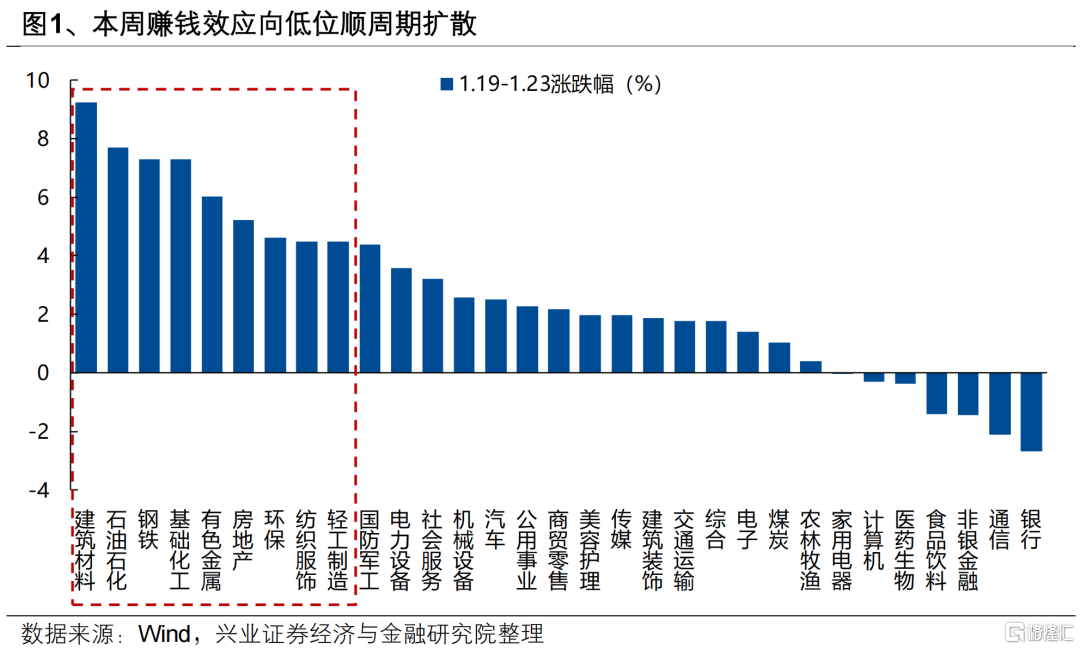
Report Industry Investment Rating - No information provided in the report Core Viewpoints of the Report - This week, the performance of broad - based indexes was differentiated. The science and technology sector generally rose, with more declines on Monday and Tuesday and most sectors rising with heavy trading volume from Wednesday to Friday. The main line of science and technology is more focused and clear, and it is the sector where the consensus of funds on the liability side is concentrated and the best elastic offensive variety [4][11]. - Although broad - based ETFs continued to have net outflows this week, industry ETFs were in a net - buying state. The science and technology sector still had substantial net buying, and the inflow of funds into the non - ferrous sector was significant [5]. - The margin trading and short - selling transaction volume decreased significantly, and the margin trading and short - selling balance first decreased and then increased. The demand for hedging reflected by stock index futures weakened after Wednesday [6][9]. - Foreign capital actively participated as a right - side force in the New Year's opening market, and its participation degree even exceeded that of margin trading and short - selling. It has become a more active incremental force in the short - term market [10]. Summary by Relevant Catalogs A - share Market - **Index Performance**: This week, the performance of broad - based indexes was differentiated. The CSI 300 fell by 0.6%, while the Shanghai and Shenzhen indexes rose by 0.8% and 1.1% respectively. The CSI 500 and the micro - cap index performed well, rising by 4.3% and 5.2% respectively. The performance of technology stocks was also differentiated, with the ChiNext Index falling by 0.3%, the STAR 50 rising by 2.6%, and the CSI 1000 rising by 2.9% [14]. - **Trading Volume**: The trading volume of broad - based indexes decreased significantly. The average daily trading volume decreased from 3.5 trillion to 2.8 trillion. Specifically, the trading volume of the entire A - share market decreased from over 3 trillion from Monday to Thursday to about 2.7 trillion, and rebounded to over 3 trillion on Friday [19]. A - share Industry - **Industry Performance**: This week, the top five rising industries were building materials (8.82%), basic chemicals (6.76%), steel (5.78%), petroleum and petrochemicals (5.76%), and non - ferrous metals (4.92%). The top five falling industries were banks (- 4.07%), media (- 2.96%), communications (- 2.77%), non - bank finance (- 2.57%), and computers (- 2.52%) [26]. - **Science and Technology Sub - sectors**: Since 2026, areas such as storage, semiconductors, and HBM have had relatively large excess returns compared to the Wind All - A Index. The excess returns of commercial aerospace and optical modules, which performed well in December, have declined or even turned negative. This week, the science and technology sector generally rose, with more declines on Monday and Tuesday and most sectors rising with heavy trading volume from Wednesday to Friday [28][32]. ETF Funds - **Broad - based ETFs**: Index ETF funds continued to have large - scale net outflows, with large - cap index ETFs having more outflows. The average daily net outflow of the CSI 300 ETF was over 14 billion, the average daily net outflow of the SSE 50 ETF was 7.3 billion, and the average daily net outflow of the CSI 1000 ETF was 6.2 billion. The SSE Composite Index ETF had a slight net inflow [37]. - **Industry ETFs**: Although broad - based ETFs still had net outflows this week, industry ETFs were in a net - buying state. The non - ferrous sector had a significant pulsed inflow of funds, and the science and technology sector still had substantial net buying. Science and technology sub - sectors represented by software and satellites continued to rank high in terms of net inflow [44]. Leveraged Funds - **Margin Trading and Short - Selling Transaction Volume and Balance**: After the implementation of the new margin trading and short - selling regulations on January 19, the proportion of margin trading and short - selling transactions decreased from 11.2% to 9.9%. The margin trading and short - selling balance first decreased and then increased, with the average balance this week being about 2.72 trillion, slightly higher than last week's 2.70 trillion [49]. - **Broad - based Index Margin Trading and Short - Selling**: From Monday to Tuesday this week, except for the SSE 50 and the STAR 50, the leveraged funds of most broad - based index components had net outflows; from Wednesday to Thursday, the leveraged funds of the CSI 300, SSE Composite Index, SSE 50, and CSI 1000 index components turned into net inflows. Overall, the net inflow of index margin trading and short - selling this week was less than that of last week [54]. - **Industry Margin Trading and Short - Selling**: On Monday and Tuesday this week, most industries de - leveraged, while on Wednesday and Thursday, most industries re - leveraged. Non - bank finance, communications, transportation, and comprehensive industries had relatively large increases in the proportion of margin trading net buying to trading volume [59]. - **Stock Market Value and Margin Trading and Short - Selling**: This week, stocks of all market - value gradients added leverage, with stocks with a market value of over 500 billion adding leverage to a greater extent [61]. - **Popular Stocks and Margin Trading and Short - Selling**: Popular stocks in electronics, power equipment, national defense and military industry, and non - ferrous metals mostly added leverage, while popular stocks in the media mostly de - leveraged. The proportion of leveraged funds in the trading volume of the top 35 popular stocks decreased this week [64][68]. Quantitative Funds - **Quantitative Index Enhancement Excess Returns**: Since January, the excess returns of the CSI 500 and CSI 1000 quantitative index enhancement have fallen to negative values, with the medians being - 1.14% and - 0.07% respectively [72]. - **Stock Index Futures Basis**: This week, the basis of stock index futures declined compared to last week but still remained at a relatively high level. From Wednesday to Friday, the basis of near - month stock index futures turned into a premium, indicating a weakening of hedging demand after Wednesday [78]. Main Funds - **Broad - based Index Main Funds**: The main funds of the CSI 300, ChiNext, and STAR Market continued to have net outflows this week, but the outflow slowed down significantly compared to last week. The CSI 300 had a large - scale net outflow from Monday to Tuesday and then turned into a net inflow on Wednesday and Thursday [83]. - **Industry Main Funds**: This week, the main funds flowed out of most industries, with the largest outflows in electronics, followed by computers, communications, and power equipment. The outflows were relatively large on Monday and Tuesday. The main funds flowed into banks, building materials, and coal [91]. North - bound Funds - **Participation Degree**: Foreign capital actively participated as a right - side force in the New Year's opening market, and its participation degree even exceeded that of margin trading and short - selling. The trading volume proportion of north - bound funds increased from 11.0% before the New Year's Day to 11.8%, an increase of 0.8 percentage points, while the proportion of margin trading and short - selling only increased from 10.6% to 11.0%, an increase of 0.4 percentage points [93]. - **Trading Volume and Proportion**: This week, the total trading volume of north - bound funds decreased, with the average daily trading volume decreasing from 401.1 billion to 338.5 billion, and the proportion of A - share trading volume increasing from 11.61% to 12.10%. Since late December, the trading activity of north - bound funds has significantly rebounded [102].
固收专题报告:追风不如乘风
ZHONGTAI SECURITIES· 2026-01-25 08:53
Report Industry Investment Rating - The industry rating is "Overweight", expecting a gain of more than 10% relative to the benchmark index in the next 6 - 12 months [19] Core Viewpoints of the Report - Since the beginning of 2026, the A - share market style has changed from unilateral upward movement to high - frequency rotation. It is better to hold the core main line firmly than to chase the market in high - frequency rotation. The AI industry chain remains the market consensus, and the current market cooling is a "slope adjustment" rather than a "trend end" [3] - The acceleration of industry rotation is a benign spread of funds from "point" to "surface". The market is seeking a pricing balance between technology and prosperous industries [3] - The net inflow of industry ETFs has increased, showing a configuration pattern of "cycles as shields and technology as spears". It is recommended to adopt a "dumbbell - shaped" configuration strategy [3] Summary by Directory Market Focus Always on the Main Line, AI Industry Chain Remains the Consensus - From the perspective of trading volume proportion, industries such as electronics, computers, and national defense and military industry have always been at the core of the market. Even with short - term disturbances, the electronics sector's trading volume proportion remains at a high level of 17% - 20%, and that of national defense and military industry has gradually recovered, indicating strong capital stickiness [3][8] - The current market cooling is a "slope adjustment" rather than a "trend end". The high concentration of the chip structure proves that the AI industry chain is an investment main line with in - depth consensus, and high activity provides strong resilience and upward elasticity [3][8] Liquidity Spillover, the Advantage of "Technology + Prosperity" Portfolio Highlights - As the market enters the adjustment period, liquidity begins to spread from high - consensus varieties to prosperous industries with catch - up logic. When the technology main line adjusts, funds flow to industries such as chemicals, non - ferrous metals, and banks [10] - This shows that it is not the ebb of the main line but the natural spread of liquidity from "point" to "surface". The market is seeking a pricing balance between technology and prosperous industries [11] - Since the beginning of the year, some sectors have shown high weekly and year - to - date excess returns. The strategy of holding the AI bottom position and combining bull - market varieties has a higher winning rate than blind rotation [12] ETF Fund Flows: Driven by the Resilience of Prosperity and Technology - Although the broad - based ETFs are still experiencing net outflows (the weekly outflow of CSI 300ETF is 724.2 billion yuan), the industry ETFs are in a state of net buying, with a cumulative net inflow of 78.82 billion yuan [13] - There has been a significant pulsed inflow of funds into the non - ferrous sector without siphoning other sectors. The technology sector also has a large net inflow, especially software and satellite sub - industries, showing a configuration pattern of "cycles as shields and technology as spears" [14] It's Better to Be Part of the Wind Than to Chase It - The main line of this bull market is clear, with technology being the best offensive variety. It is recommended to adopt a "dumbbell - shaped" configuration and hold firmly [3][17] - One end of the "dumbbell" is the technology main line, including storage, equipment, advanced packaging, AI applications, commercial aerospace, and robots. The other end is the prosperous cyclical sectors such as non - ferrous metals and chemicals, and also pay attention to stable sectors like home appliances and transportation [3][17]
商业航天强势行情持续演绎,全面看多国产大飞机产业链
ZHONGTAI SECURITIES· 2026-01-25 08:53
Investment Rating - Maintain "Buy" rating for the industry [6] Core Viewpoints - The commercial aerospace sector is experiencing strong momentum, with short-term fluctuations providing investment opportunities. The industry is expected to enter a period of explosive growth over the next two years, driven by technological advancements and increasing demand for launch services, satellite networking, and space computing [9][30] - The domestic large aircraft industry is expected to see a dual increase in delivery and localization rates, with key milestones in certification and international cooperation becoming critical in 2026 [15][34] Summary by Sections 1. Policy Developments - The "14th Five-Year Plan" emphasizes the development of strategic emerging industries, including aerospace, and the establishment of a dedicated regulatory body for commercial aerospace [10][28] - New measures have been introduced to promote the development and utilization of satellite remote sensing data, encouraging mergers and acquisitions in the satellite data industry [10][28] 2. Technological Advancements - The successful maiden flight of the "Zhuque-3" rocket and the Long March 12 rocket marks significant progress in China's launch capabilities, with the latter achieving its mission of placing 19 low-orbit satellites into orbit [11][29][50] - The CJ-1000A engine is nearing certification, with expectations for small-scale production to begin soon [18][36] 3. Market Dynamics - The commercial aerospace sector is projected to grow significantly, with the integration of artificial intelligence and space computing driving demand for satellite manufacturing and launch services [12][32] - The upcoming Beijing International Commercial Aerospace Exhibition is expected to generate substantial procurement demand, showcasing advancements across the aerospace industry [13][32] 4. Key Companies to Watch - In the missile and military electronics sector, companies such as Hongyuan Electronics, Torch Electronics, and Huada Electronics are highlighted [24][37] - For aircraft manufacturing, focus on domestic large aircraft manufacturers like AVIC Xi'an Aircraft Industry Group and Guanglian Aviation [38][39] 5. International Competition - The global competition for space resources is intensifying, with significant developments from both China and the U.S. in satellite constellations and launch capabilities [14][33]
兴证策略张启尧团队:后续还有哪些催化值得期待?
Xin Lang Cai Jing· 2026-01-25 08:52
Group 1 - The core logic supporting the upward trend of the spring market remains unchanged despite a slowdown in market rhythm, indicating that the current spring market is still in progress [1][34] - The abundant liquidity environment is driven by insurance funds' strong performance, concentrated maturity of residents' deposits, and the appreciation of the RMB attracting foreign capital back to the market [3][36] - The insurance sector has seen a significant increase in individual insurance premium growth, with many companies reporting over 30% growth, contributing to substantial new capital entering the market [3][36] Group 2 - The peak of residents' deposit maturities is expected in the first half of the year, providing an important window for residents to increase their allocation to equity assets [3][36] - The continuous appreciation of the RMB has led to a record high in foreign capital inflow, with a bank surplus of $99.9 billion in December 2025, including a securities investment surplus of $11.5 billion [5][39] - The favorable macroeconomic environment, supported by improved domestic macro data and coordinated policy efforts in real estate, consumption, and monetary policy, is expected to enhance market risk appetite [6][40] Group 3 - Upcoming weeks will feature a series of significant industry catalysts, particularly the earnings reports from major North American tech companies, which may influence the domestic market [9][41] - The earnings preview period is approaching its peak, with a disclosure rate expected to reach around 55%, which will significantly impact market structure [10][44] - High growth and exceeding profit expectations are concentrated in sectors such as computing power, chemicals, new energy, pharmaceuticals, and non-ferrous metals, with 304 companies forecasting over 50% profit growth [12][45] Group 4 - The sectors with notable profit surprises include storage, battery storage, grid equipment, chemicals, and innovative pharmaceuticals, indicating strong performance potential [15][47] - The upcoming month of February is anticipated to be a core window for market activity, driven by abundant liquidity and a focus on high-growth sectors [26][29] - Historical data suggests that February is one of the months with the highest success rates for major indices, with a focus on small-cap and growth sectors expected to perform well [26][28]




申万宏源:春季行情仍沿着既定路径前进
Ge Long Hui· 2026-01-25 07:47
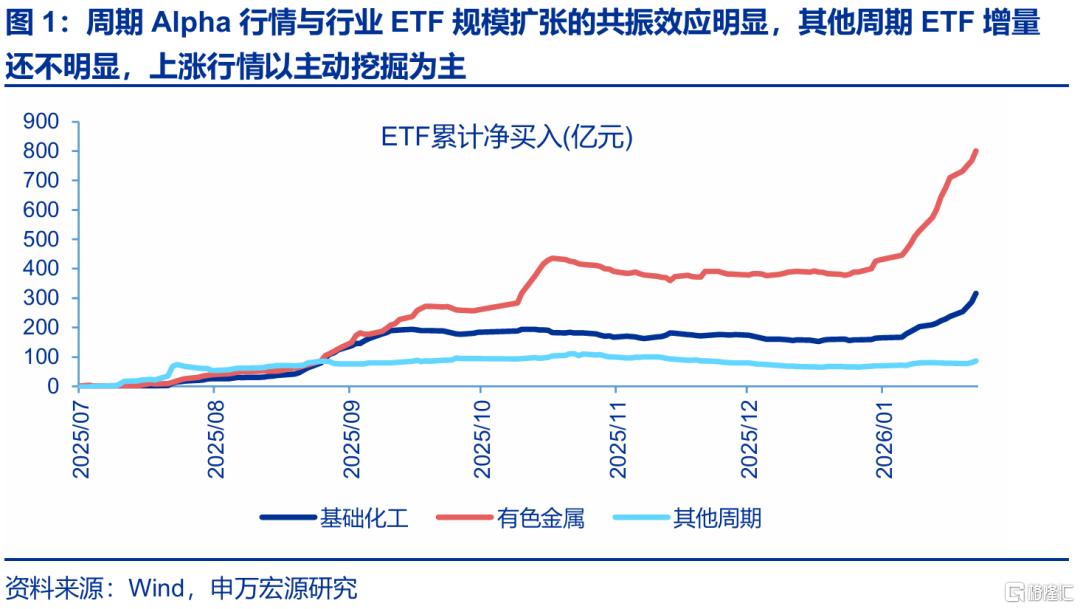
Group 1 - The core viewpoint emphasizes that the "steady and far-reaching" strategy is facilitating the transition of the spring market into subsequent phases without disrupting the established path of the spring market [1][2] - The spring market is characterized by incremental games and favorable conditions for long positions, supported by factors such as increased equity allocation by residents and active trading funds [2][3] - Short-term, the focus is on discovering bottom assets, with cyclical Alpha investments expanding towards more cyclical turning points, while the overall profit effect is nearing a high [1][4] Group 2 - The spring market is positioned as an extension and expansion phase of the high valuation area of the 2025 technology structural market, with expectations of a consolidation phase following the spring market [3] - Short-term, cyclical Alpha is becoming a key focus for market participants looking to exploit low positions, with notable sectors including commercial aerospace and AI applications showing rebound opportunities [4][7] - The long-term outlook remains positive for sectors such as technology and cyclical Alpha, with a focus on areas like overseas computing chains and AI applications [7][12]