反内卷

Search documents
申万宏源晨会报告-20251218
Shenwan Hongyuan Securities· 2025-12-18 01:58
Core Insights - The report highlights that the construction industry is expected to stabilize in 2026, supported by local government debt management and the implementation of central projects, despite current pressures in infrastructure, manufacturing, and real estate investments [1][2] - The company has shown marginal improvement in new contract signings, with a robust backlog ensuring steady long-term growth. The cumulative new contracts from 2021 to 2025 Q1-3 show a mixed trend, with a notable improvement in the first three quarters of 2025 [1][2] - The company's balance sheet is undergoing continuous repair, with improved cash flow and optimized accounts receivable aging structure, despite revenue and profit pressures due to external economic factors [2][3] Summary by Sections Industry Overview - The fixed asset investment growth has slowed down in 2025, but the outlook for 2026 is optimistic due to government initiatives aimed at stabilizing investments [1] - The construction sector is expected to receive support from the implementation of key projects, which may lead to higher investment elasticity in certain sub-sectors [1] Company Performance - The company reported a total revenue of 728.4 billion RMB in 2025 Q1-3, a decrease of 3.9% year-on-year, with a net profit of 14.8 billion RMB, down 5.6% year-on-year [2] - New contract signings for 2025 Q1-3 showed a marginal improvement, with a total of 8.1 trillion RMB in backlog, ensuring long-term growth [1][2] Financial Health - The company has implemented a three-year plan to control financial metrics, resulting in a reduction of cash outflow by 9.26 billion RMB in 2025 Q1-3 [2] - The aging structure of accounts receivable has improved, with the proportion of long-term receivables decreasing, indicating better cash management [2] Valuation and Investment Recommendation - The report assigns an "Outperform" rating, projecting net profits of 21.4 billion RMB, 21.7 billion RMB, and 22.3 billion RMB for 2025-2027, with corresponding PE ratios of 3X [3] - The valuation comparison with peers indicates a significant discount for H-shares compared to A-shares, with a potential upside of 14.7% based on 2026 earnings estimates [3]

恒逸石化(000703):恒业蓄势,逸待东风
Guotou Securities· 2025-12-18 01:11
Investment Rating - The report assigns a "Buy-A" investment rating to the company with a target price of 11.96 CNY per share, based on a projected PE of 25 times for 2026 [4][12]. Core Insights - The company is a global leader in the integrated "refining-chemical-fiber" industry, focusing on polyester and chemical fiber production while expanding upstream through international projects [2][20]. - The company benefits from the expansion of overseas cracking margins, particularly from its Brunei refinery, which is expected to enhance profitability in the refining segment [3][54]. - Multiple product lines are undergoing a "de-involution" process, which is anticipated to improve industry dynamics and profitability [4][65]. Summary by Sections 1. Global Leader in "Refining-Chemical-Fiber" Integration - The company has evolved from its origins in textile manufacturing to focus on chemical fiber and polyester, establishing a unique dual business model in China [2][17]. - Current capacities include 8 million tons of refining, 21.5 million tons of PTA, and 13.25 million tons of polymerization, positioning the company competitively on a global scale [2][20]. 2. Expansion of Overseas Cracking Margins - The company’s Brunei refinery, with a processing capacity of 8 million tons, is benefiting from increased global product margins due to reduced Russian refining capacity [3][54]. - The refinery's strategic location and the ongoing second phase of the project are expected to further enhance production efficiency and profitability [55][62]. 3. Multiple Products Initiating "De-Involution" - The company is actively participating in industry-wide initiatives to stabilize and improve profitability across various product lines, including PTA and polyester [4][65]. - The expected supply-demand balance improvements in PTA and other products are projected to enhance the company's profit margins [8][10]. 4. Commitment to Green Transformation - The company is advancing a circular materials project aimed at recycling textile waste into chemical raw materials, promoting resource utilization and reducing reliance on traditional petrochemical inputs [11][62]. 5. Profit Forecast - Revenue growth is projected to be -13.7% in 2025, followed by 5.9% in 2026 and 2.3% in 2027, with net profit growth expected to be significantly higher in the following years [12][13].

山西证券研究早观点-20251218
Shanxi Securities· 2025-12-18 01:10
Core Insights - The report emphasizes the importance of the recent Central Economic Work Conference in guiding capital market reforms and highlights investment opportunities in the sector [4][10] - The coal industry shows a mixed performance with a month-on-month increase in coal prices, but overall supply and demand dynamics indicate a need for cautious optimism [9][11] Market Trends - Major indices displayed varied performance during the period from December 8 to December 14, with the Shanghai Composite Index decreasing by 0.34% and the ChiNext Index increasing by 2.74% [10] - The average daily trading volume in A-shares reached 1.95 trillion yuan, reflecting a 15.14% increase compared to the previous period [10] Industry Commentary - In November, coal supply showed a marginal decrease, with cumulative production reaching 4.402 billion tons, a year-on-year increase of 1.4%, but a month-on-month decrease of 0.5% [11] - Demand for coal remains weak, with fixed asset investment declining by 2.6% year-on-year, particularly in the real estate sector, which saw a significant drop of 15.9% [12] - Coal prices in November experienced an unexpected increase, with various types of coal showing different degrees of price rise compared to previous months [12] Investment Recommendations - The report suggests focusing on companies that may benefit from a recovery in profitability, particularly in the coal sector, as winter demand is expected to support prices [12] - Specific companies to watch include Shanxi Coal International, Jinko Coal Industry, and Huayang Co., among others, for potential investment opportunities [12]
申万宏源研究晨会报告-20251218
Shenwan Hongyuan Securities· 2025-12-18 00:30
Core Insights - The report highlights that the investment in the industry is expected to stabilize in 2026, supported by the orderly debt resolution by local governments and the implementation of central "dual heavy" projects [1][15] - The company has shown marginal improvement in new contract signings, with a robust backlog ensuring long-term stable growth. The cumulative new contracts from 2021 to 2025Q1-3 show a mixed trend, with a notable improvement in the first three quarters of 2025 [2][15] - The company's balance sheet is continuously improving, with enhanced cash flow and optimized accounts receivable aging structure. Despite revenue and profit pressures, the company has implemented a three-year plan to control financial metrics, resulting in a significant reduction in cash outflow [3][15] Summary by Sections Industry Overview - The fixed asset investment growth has slowed down this year, affecting infrastructure, manufacturing, and real estate sectors. However, the outlook for 2026 suggests stabilization due to government initiatives [1][15] Company Performance - The company’s new contract amounts from 2021 to 2025Q1-3 are as follows: +10.39% in 2021, +15.09% in 2022, +1.51% in 2023, -7.80% in 2024, and +3.08% in 2025. The first three quarters of 2025 show a marginal improvement in new orders [2][15] - As of Q3 2025, the company has a backlog of contracts amounting to 8.10 trillion RMB, which is sufficient to support long-term growth [2][15] Financial Health - The company reported total revenue of 728.4 billion RMB in 2025Q1-3, a decrease of 3.9% year-on-year, and a net profit of 14.8 billion RMB, down 5.6% year-on-year. The company is focusing on financial recovery through a three-year plan [3][15] - The aging structure of accounts receivable has improved, with the proportion of long-term receivables decreasing, indicating better cash flow management [3][15] Valuation and Investment Recommendation - The report notes a significant discount for H-shares compared to A-shares, with H-share PE (TTM) at 3.6X and PB at 0.25X, making it more attractive for dividends, with H-share dividend yield at 5.93% [3][15] - The report initiates coverage with an "Outperform" rating, projecting net profits for 2025-2027 at 21.4 billion, 21.7 billion, and 22.3 billion RMB respectively, with a target market cap of 779 billion RMB based on a PE of 3.6X for 2026 [4][15]
大摩闭门会:金融、原材料、交运行业更新
2025-12-17 15:50
Summary of Conference Call Company and Industry Overview - The conference call primarily discussed the financial outlook for various sectors, including banking, insurance, and commodities, with a focus on the Chinese market and the Thai e-commerce and logistics sector [1][9][15]. Key Points and Arguments Financial Sector Insights - The central economic work conference highlighted expectations for the financial sector, indicating a shift towards maintaining reasonable interest rates rather than further reductions [2][4]. - Loan growth is stabilizing at around 6%, reflecting a rational approach to lending and a focus on managing financial risks [3][5]. - The manufacturing investment has slowed down significantly, with November showing a growth rate of only 1.7%, which is below the overall demand growth of over 4% [4][5]. - The financial environment is expected to remain supportive, with stable loan rates and a gradual rebound in bank profit margins anticipated for the next year [5][9]. Insurance Sector Outlook - The insurance industry is viewed positively, with a strong growth potential underestimated by investors. The growth rate of household financial assets is around 12% [7][8]. - The competitive landscape for insurance products is robust, with a significant opportunity for valuation increases as the market stabilizes [8][9]. Commodities and Mining Sector - The macroeconomic environment is expected to support commodity prices, with a forecast of a weaker dollar in the first half of the year [10][11]. - Demand for copper and aluminum is projected to increase significantly, driven by energy storage needs, with estimates suggesting a 50% increase in demand for initial energy [10][11]. - Supply constraints are anticipated for both copper and aluminum due to production cuts and reduced output from smelting facilities [12][13]. Thai E-commerce and Logistics Market - G2 is projected to become the largest player in Thailand's logistics market, surpassing competitors in market share and achieving profitability [15][17]. - The Thai e-commerce market is experiencing rapid growth, with a compound annual growth rate of nearly 30% over the past three years, driven by platforms like TikTok [15][16]. - The competitive landscape in Thailand's logistics sector is intense, with significant cost advantages for established players like G2 [16][17]. Airline Industry Performance - The airline sector is witnessing a healthy recovery in business demand, with significant growth in passenger turnover reported for major airlines [18][19]. - The increasing load factors and recovery in business travel are expected to enhance pricing power for airlines, indicating a positive outlook for the sector [19]. Additional Important Insights - The discussion emphasized the importance of managing financial risks, particularly concerning hidden debts and real estate sector challenges [6]. - The overall sentiment in the financial and commodities sectors is cautiously optimistic, with a focus on sustainable growth and risk management strategies [5][6][10].
反内卷不是商量着“不卷” | 反内卷系列评论
经济观察报· 2025-12-17 13:28
Core Viewpoint - The article emphasizes the risks associated with industry self-discipline and price coordination, warning that such actions can lead to potential antitrust violations and market inefficiencies [1][4][5]. Group 1: Industry Competition Dynamics - In many industries, including solar energy, home appliances, automotive manufacturing, and internet services, companies are engaged in "involutionary competition," characterized by price wars, subsidies, and resource depletion, which ultimately harms profitability and innovation [2][3]. - The root cause of involution is an imbalance in competitive mechanisms, where companies sacrifice long-term benefits for short-term market share, leading to excessive competition and potential violations of antitrust laws [2][4]. Group 2: Risks of Price Coordination - As the industry consensus shifts towards anti-involution, some companies are beginning to form price alliances and production coordination under the guise of self-discipline, which poses risks of collusion and antitrust violations [3][4]. - The recent establishment of a platform company for silicon material acquisition in the photovoltaic industry illustrates the potential for coordinated actions that could violate antitrust laws by limiting production and sales [3][5]. Group 3: Legal and Compliance Considerations - The legal framework presents challenges for companies attempting to justify coordinated actions as necessary for economic downturns, as meeting the criteria for exemptions under antitrust laws is complex and difficult [5][6]. - Regulatory bodies have already noted the trend of companies using anti-involution as a cover for collusion, emphasizing that self-discipline should not lead to price-fixing or production limits [5][6]. Group 4: Recommendations for Companies - Companies, especially leading firms, should be cautious of leading price alliances or production agreements under the pretext of market stability, as this could lead to accountability issues [1][6]. - Establishing an antitrust compliance system and internalizing compliance culture is essential for companies to navigate the competitive landscape effectively and avoid regulatory pitfalls [7][8].


反内卷不是商量着“不卷” | 反内卷系列评论
Jing Ji Guan Cha Bao· 2025-12-17 12:47
Core Viewpoint - The article discusses the phenomenon of "involution" in various industries, highlighting the need for a shift towards rational competition rather than price wars and resource monopolization, which can lead to long-term inefficiencies and potential violations of antitrust laws [1][2]. Group 1: Involution and Its Consequences - Involution has become a common issue across industries such as photovoltaics, home appliances, automotive manufacturing, and internet services, where companies engage in price competition and subsidies, sacrificing long-term profits and innovation [1]. - The root cause of involution is an imbalance in competitive mechanisms, where companies prioritize short-term market share over sustainable practices, leading to excessive competition and resource waste [1][2]. Group 2: Industry Response and Risks - As the consensus against involution grows, some companies are forming price alliances and industry coordination under the guise of self-discipline, which poses risks of collusion and potential violations of antitrust laws [2][3]. - The silicon material storage incident illustrates the challenges faced by the photovoltaic industry, where overcapacity has led to significant price fluctuations and a crisis of losses, prompting major companies to adopt production cuts and self-regulatory strategies [2][3]. Group 3: Antitrust Concerns - The establishment of a silicon material storage platform by competing companies to manage overcapacity may inadvertently lead to price increases, raising concerns about potential violations of antitrust laws regarding horizontal agreements to limit production or sales [3][4]. - Regulatory bodies have noted the trend of companies using the pretext of anti-involution to engage in collusion, emphasizing that industry self-regulation should not lead to price-fixing or production limitation agreements [4][5]. Group 4: Compliance and Future Directions - Companies must be cautious of leading price alliances or production agreements under the banner of industry self-discipline, as this could expose them to legal repercussions [5][6]. - To genuinely escape the trap of involution, companies should focus on building a compliance culture that integrates antitrust considerations into their strategic and operational frameworks, shifting the competitive focus from price to service and value [6].
黑色金属日报-20251217
Guo Tou Qi Huo· 2025-12-17 12:47
今日盘面震荡为主。 淡季螺纹表需环比下滑,产量同步下降,库存延续去化态势。热卷供需双降,库存缓慢下降,压力仍有待 缓解。铁水产量继续回落,供应压力逐步缓解,下游承接能力不足,钢厂利润依然欠佳,后期高炉继续减产可能性较大,关注 唐山等地环保限产持续性。从下游行业看,地产投资降幅继续扩大,基建、制造业投资增速持续回落,内需整体依然偏弱,钢 材出口维持高位,许可证管理的实际影响有待观察、宏观情绪回暖, "反内卷"反复发酵,盘面逐步企稳,需求偏弱仍制约反 弹空间,关注宏观政策变化。 【铁矿】 铁矿 今日盘面上涨。 供应端,全球发运环比增加并强于去年同期水平,国内到港量反弹,港口库存保持累库趋势,供应过剩压 力渐增。需求端,淡季终端需求处于低位,钢厂盈利情况较差,铁水近期持续减产,未来存在进一步季节性走弱的空间。海外 降息落地,国内重要会议召开,宏观表达未超预期,市场情绪仍有反复。铁矿石基本面较为宽松,短期结构性扰动不改中长期 供应宽松趋势,我们预计盘面走势以震荡下行为主。 【焦炭】 日内价格震荡上行。焦化利润一般,日产略微提升。焦炭库存小幅下降,目前下游少量按需采购,库存变动不大,贸易商采购 意愿一般。整体来看,碳元 ...
反内卷不是商量着“不卷”
Jing Ji Guan Cha Wang· 2025-12-17 12:19
Core Viewpoint - The phenomenon of "involution" in various industries, such as photovoltaic, home appliances, automotive manufacturing, and internet services, leads to irrational competition characterized by price wars, subsidies, and resource consumption, ultimately harming long-term innovation and profitability [1][2]. Group 1: Involution and Its Consequences - Involution arises from an imbalanced competitive mechanism where companies sacrifice long-term benefits for short-term market share, leading to excessive competition and potential violations of antitrust laws [1][3]. - The coordination among companies to stabilize prices and prevent involution may lead to collusion risks, as discussions around pricing and production can breach antitrust regulations [2][4]. Group 2: Industry Responses and Risks - The photovoltaic industry has seen significant price fluctuations due to overcapacity, prompting leading companies to adopt self-regulatory strategies such as production cuts and the establishment of a platform for capacity consolidation [2][3]. - The formation of a platform for purchasing excess polysilicon capacity may inadvertently lead to price increases, raising concerns about potential violations of antitrust laws regarding horizontal agreements [3][4]. Group 3: Regulatory Environment and Compliance - Current legal frameworks present challenges for polysilicon companies attempting to justify capacity reductions under antitrust exemptions, as proving compliance with exemption conditions is complex [4][5]. - Regulatory authorities have highlighted the need for companies to avoid using "industry self-discipline" as a cover for collusion, emphasizing the importance of establishing robust antitrust compliance systems within organizations [4][6]. Group 4: Future Directions - To escape the involution trap, companies must shift focus from price competition to service and value, fostering a culture of compliance and innovation supported by national policies [6][7]. - Companies that proactively build compliance frameworks will gain competitive advantages, while those relying on low-price strategies may face significant risks of market exit under regulatory pressures [6][7].
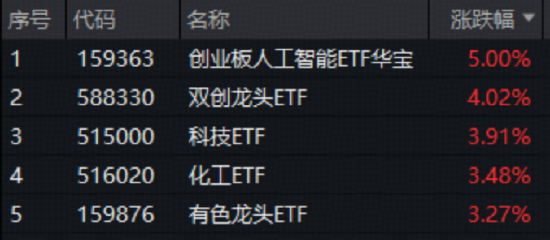
A股大反攻!光模块强势爆发,创业板人工智能ETF(159363)放量猛涨5%!机构:AI、反内卷或是两大主线!
Xin Lang Ji Jin· 2025-12-17 12:02
Market Overview - The A-share market saw a collective rise in major indices, with the Shanghai Composite Index up over 1% and the ChiNext Index up more than 3%, with a trading volume of 1.81 trillion yuan, an increase of 870 billion yuan from the previous day [1][2] - The surge in the market is attributed to three main factors: the strong performance of brokerage stocks, significant movements in broad-based ETFs, and comments from a former Japanese central bank deputy governor easing concerns about global liquidity tightening [1][3] Sector Performance - The optical module sector experienced a strong breakout, with companies like NewEase and Zhongji Xuchuang leading in capital absorption, while the ChiNext AI ETF saw a price increase of 5% and net subscriptions of 162 million units [1][6] - The "anti-involution" theme also performed well, with lithium carbonate futures surging, leading to gains of 3.48% and 3.27% in the chemical and non-ferrous metal ETFs, respectively [1][6] Investment Strategies - Investment institutions are optimistic about a transition from a structural bull market to a more comprehensive bull market by 2026, with a focus on technology and "anti-involution" themes [2][3] - The overall net profit growth for non-financial A-shares is expected to reach 16.5% in 2026, driven by a recovery in profitability across high-growth sectors [3][11] Key Stocks and ETFs - The top-performing ETFs included the ChiNext AI ETF (159363) with a 5% increase, the Double Innovation Leader ETF (588330) with a 4.02% rise, and the Chemical ETF (516020) with a 3.48% gain [2][4] - Notable stocks in the optical module sector included LianTe Technology, which hit a 20% limit up, and NewEase, which rose over 9% to a new closing high [4][6] Future Outlook - The global optical module market is projected to exceed $37 billion by 2029, with significant demand for 800G and 1.6T optical modules expected to peak in 2025 [6][7] - The chemical sector is anticipated to benefit from a recovery in manufacturing demand and rising raw material prices, with a focus on lithium carbonate as a key growth driver in the energy storage industry [11][12]