
美国关税政策

Search documents
盛诺集团跌超14% 预计上半年溢利同比减少至不低于3000万港元
Zhi Tong Cai Jing· 2025-08-05 06:45
Core Viewpoint - Shengnuo Group (01418) has issued a profit warning, expecting a profit of no less than 30 million HKD for the six months ending June 30, 2025, compared to approximately 74.2 million HKD for the six months ending June 30, 2024, primarily due to the impact of U.S. tariff policies on global trade [1] Group 1 - Shengnuo Group's stock has dropped over 14%, currently down 14.52% at 0.265 HKD, with a trading volume of 1.2788 million HKD [1] - The profit warning indicates a significant decrease in expected earnings, highlighting a reduction in revenue due to global trade fluctuations caused by U.S. tariffs [1] - The tariffs have severely disrupted Sino-U.S. trade and affected global supply chains, leading to increased uncertainty in production and logistics, as well as operational interruptions [1]
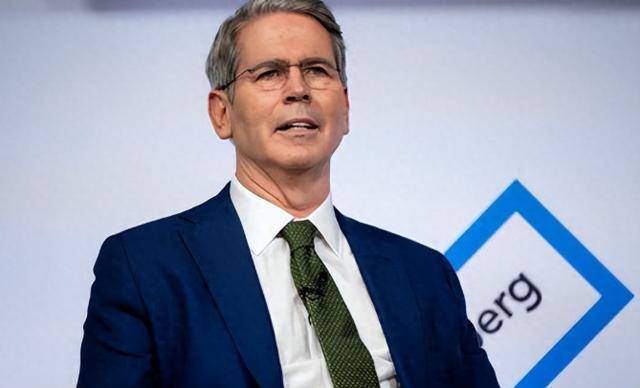
全球超级资管巨头首席中国经济学家最新发声!
Zhong Guo Ji Jin Bao· 2025-08-04 15:17
Group 1: Global Economic Landscape - The world is evolving towards a diversified structure, with the potential for the RMB to be less pressured if the USD enters a long-term weakening phase [4] - The dominance of the USD is seen as a product of historical circumstances, and its status is being challenged by geopolitical events and changing global dynamics [4][5] - The RMB's exchange rate mechanism should be more flexible and less influenced by external factors, allowing for adjustments based on domestic conditions [5] Group 2: Investment Trends in China - There is a long-term trend of increasing global asset allocation towards Chinese assets, driven by policy shifts that support economic growth and private enterprise [6][7] - The current high proportion of US assets in global allocations does not align with the emerging multipolar world, but international capital is beginning to adjust [7] - The recent Central Political Bureau meeting indicated a balanced policy approach, which could stabilize market expectations and support long-term development [8] Group 3: Monetary Policy and Economic Outlook - The Central Political Bureau meeting did not explicitly mention interest rate cuts, focusing instead on maintaining liquidity and managing local government debt [9] - The real estate market remains under pressure, and without strong policy intervention, downward pressure may increase [8][9] Group 4: Trade and Tariff Implications - The impact of US tariffs is diminishing, with recent agreements between the US, Japan, and the EU potentially leading to reduced trade costs and lower market uncertainty [15] - The evolving tariff agreements may serve as a model for other countries, suggesting a trend towards more flexible trade negotiations [15] Group 5: Investment in Gold - Caution is advised regarding excessive investment in gold as a safe-haven asset, as current valuations are high and could lead to risks [12][13] - Geopolitical tensions may support gold prices, but potential ceasefires could create downward pressure [13]



全球超级资管巨头首席中国经济学家最新发声!
中国基金报· 2025-08-04 15:12
Core Viewpoint - The global trend is shifting towards a diversified asset allocation, with an increasing emphasis on Chinese assets as a long-term strategy for international investors [2][8]. Group 1: Global Economic Landscape - The world is evolving towards a diversified structure, with the dominance of the US dollar being challenged due to geopolitical events and changing economic dynamics [6][7]. - The US dollar's long-term stability is uncertain, and its role as a global anchor currency is diminishing, suggesting a need for the Chinese yuan to be more flexible and not solely tied to the dollar [7][9]. Group 2: Chinese Asset Allocation - There is a significant policy shift in China towards supporting economic growth and private enterprises, which has led to a positive turning point in the stock market [9]. - The proportion of global asset allocation towards Chinese assets is expected to increase if China maintains growth and regulatory stability, marking a long-term trend [9][10]. Group 3: Policy and Economic Outlook - The recent Central Political Bureau meeting indicated a balanced policy approach, with a focus on stabilizing the capital market and addressing real estate pressures without immediate strong interventions [10][11]. - The meeting emphasized maintaining liquidity and promoting lower financing costs, while also tightening regulations on local government debt [10][11]. Group 4: Investment Strategies - Caution is advised regarding excessive investment in gold, as its status as a safe-haven asset may be compromised if valuations remain high [14][15]. - The recent trade agreements between the US and its allies have reduced tariff concerns, which may stabilize market conditions and support long-term strategic planning for businesses [16][17].

时事观察|美国经济前景充满不确定性
Sou Hu Cai Jing· 2025-08-04 01:34
上述一系列数据的发布,再次引发市场对美国就业市场疲软、增长正在放缓的担忧。美国金融市场也随 之发生波动。 就在7月底,美国商务部发布的预估数据显示,今年第二季度美国经济环比增长3%。这一数字不仅相比 第一季度环比萎缩0.5%的表现大幅反弹,且似乎证明美国经济仍然保持强劲增长。不过,从具体数据 来看,第二季度个人消费对经济增长的贡献比较有限,进口大幅下降才是拉动增长的重要数据,而二季 度进口下降与一季度进口大幅增长有关。 有媒体分析指出,在3%的数字背后,暗含美国个人消费不振、企业投资下滑、青年失业率上升、政府 拉动增长有限等隐忧。从长期来看,美国经济仍面临很大不确定性,而这与美国的关税政策有很大关 系。 美国对进口商品加征高额关税,导致美国国内商品物价上涨,通胀持续。数据显示,美国6月个人消费 支出价格指数(PCE)同比上涨2.8%,环比上涨0.3%。从物价方面来看,6月的家具、汽车、家电等价 格等都出现明显上涨,显示关税效应正传导至消费端。 毕振山 美国劳工部近日公布的数据显示,美国失业率环比出现上升。与此同时,美国7月制造业景气指数等数 据也低于预期。有分析人士认为,美国的关税政策变化不定对美国经济造成" ...
亚太股市转跌,东南亚经济受美关税影响分化多国下调预期
2 1 Shi Ji Jing Ji Bao Dao· 2025-08-03 23:52
亚太股市出现回调 21世纪经济报道记者胡慧茵 上周,亚太股市多个股指扭转多周涨势转跌。其中,越南、韩国和新加坡股市周内均跌超2%。 据央视新闻报道,当地时间7月31日,美国总统特朗普签署行政令,确定了对多个国家和地区征收的"对 等关税"税率,具体税率从10%至41%不等。投资者的紧张情绪再次被挑起,受此消息影响,上周亚太 股市多数下跌。 市场分析认为,上周亚太股市下跌,主要出于对美国关税政策的持续担忧以及持续上涨后的回调。 东南亚股市下跌为主。泰国SET指数周涨0.1%,报1218.33点;越南胡志明指数下跌2.23%或34.17点,报 1496.96点;印尼雅加达综合指数(JKSE)周跌0.08%,报7537.77点;新加坡海峡指数周跌2.52%,报 4153.83点;马来西亚吉隆坡综合指数周跌0.03%,报1533.35点;菲律宾马尼拉指数周跌1.67%或107.05 点,报6306.13点。 中国社会科学院世界经济与政治研究所国际金融研究室助理研究员倪淑慧向21世纪经济报道记者表示, 以越南股市为例,美越达成贸易协议,再加上二季度较高的经济增速,越南股市已经持续多周上涨,较 4月初已经累计上涨超过40% ...
综述|朝着“丛林法则”大幅倒退——美关税及贸易政策招致广泛批评
Xin Hua She· 2025-08-03 13:28
Core Viewpoint - The recent increase in tariffs by the Trump administration has sparked widespread criticism both domestically and internationally, with concerns about its impact on U.S. competitiveness and consumer costs [1][2]. Group 1: Tariff Increases and Economic Impact - The Trump administration has announced higher tariffs on products from Canada and Brazil, as well as copper products, which is expected to erode trust among trade partners [1]. - The U.S. tariff levels are at their highest in over a century, leading to potential costs of hundreds of billions of dollars for U.S. businesses and consumers [1][2]. - Economic reports suggest that the elevated tariff levels could pose upward risks to inflation and downward risks to economic growth in the U.S. [1]. Group 2: Consumer and Business Reactions - The high tariffs are anticipated to significantly increase production and living costs for U.S. businesses and consumers, leading to reduced purchasing behavior among consumers [2]. - Manufacturers are facing considerable uncertainty due to the potential for further changes in U.S. tariff policy, prompting cautious investment and planning strategies [2].
乌克兰:中国买石油只能2选1!特朗普亮关税新招,要和中国硬碰硬
Sou Hu Cai Jing· 2025-08-03 03:58
Group 1 - The core viewpoint of the article highlights the ongoing tensions in U.S.-China relations, particularly in the context of trade negotiations and energy imports from Russia, with the U.S. acknowledging its limited leverage over China [1][3][5] - The article discusses the implications of the U.S. Treasury Secretary's admission that the U.S. lacks sufficient leverage to pressure China into abandoning Russian oil, indicating a shift in the dynamics of global trade and energy markets [3][5][11] - It emphasizes that the U.S. has previously had to make concessions in trade negotiations, as evidenced by the outcome of the tariff disputes, which suggests that the notion of a hard decoupling between the U.S. and China is overstated [3][5][11] Group 2 - The article outlines Trump's recent actions to impose new tariffs on several countries, excluding China, which may indicate a strategic approach to isolate China by treating its allies differently [7][9] - It notes the contrasting tariff rates imposed on Pakistan and India, suggesting a shift in U.S. foreign policy aimed at pressuring India to choose sides in the geopolitical landscape [9][11] - The article also highlights the relatively low tariff imposed on Brazil, indicating a calculated decision by the U.S. to avoid escalating tensions with a key member of the BRICS group while focusing on China as the primary target [9][11]
美关税“割肉”阿迪达斯数千万欧元;耐克更惨:净利暴跌86%!
Sou Hu Cai Jing· 2025-08-02 23:49
Core Viewpoint - Adidas reported a challenging outlook in its Q2 2025 financial results, primarily impacted by U.S. tariff policies, which are expected to increase costs by approximately €200 million in the second half of the year [1] Group 1: Financial Performance - Adidas achieved Q2 revenue of €5.95 billion, reflecting a year-on-year growth of 2.2%, with a gross margin increase of 0.9 percentage points [1] - The revenue growth was largely attributed to reduced product discounts, lower shipping costs, and a strategic move to ship a significant amount of goods to the U.S. before the tariffs took effect [1] - As of the end of June, Adidas's inventory surged by 16%, reaching €5.26 billion [1] Group 2: Impact of Tariffs - The U.S. has established new trade agreements with Vietnam and Indonesia, imposing tariffs of 20% and 19% on imports from these countries, which are key manufacturing locations for Adidas [1] - Adidas CEO Bjorn Gulden expressed concerns that these tariffs could lead to broader inflation, making it difficult to predict the subsequent impact on consumer demand [1] - Other major sports brands, including Nike and Puma, have also reported significant impacts from U.S. tariff policies, with Nike experiencing an 86% year-on-year drop in net profit [2] - Nike executives indicated that U.S. tariffs could increase their costs by approximately $1 billion, highlighting that the sports consumer goods sector may be one of the most affected areas by these policies [2]


美国关税税率创1934年以来最高,美股或承压
Zheng Quan Shi Bao· 2025-08-02 23:26
Core Insights - The average effective tariff rate imposed by the U.S. on imported goods has reached 18.3%, the highest level since 1934, as of July 31 [1][4][3] - Short-term consumer price increases are expected, with shoe prices potentially rising by 40% and clothing prices by 38% [1][4] - The U.S. economy may experience a slowdown, with GDP growth rates projected to decrease by 0.5 percentage points annually in 2025 and 2026 due to tariff policies [4] Tariff Impact - The new tariffs will lead to an increase in average household spending by $2,400 by 2025, significantly affecting clothing items [4] - The unemployment rate is expected to rise by 0.3 percentage points by the end of 2025 and by 0.7 percentage points by the end of 2026 due to the tariffs [4] Market Reactions - U.S. stock markets have already seen a significant decline, with a total market value loss exceeding $1 trillion in a single day [2][6] - Gold prices surged, with spot gold increasing by 2.22% to surpass $3,360, and COMEX gold futures rising over 2% to exceed $3,400 [2] Export License Delays - There is a significant backlog of thousands of export license applications due to internal chaos within the approval agencies, marking the worst delays in over 30 years [8] - Delays in license approvals are putting U.S. companies at a competitive disadvantage globally [8] International Trade Relations - The U.S. has imposed "reciprocal tariffs" ranging from 10% to 41% on products from 69 trade partners, with specific rates for different countries [5][9] - Despite threats from the U.S. administration, India continues to import cheap oil from Russia, indicating ongoing tensions in trade relations [9]
美民主党人猛批关税政策“从美国民众口袋里掏钱”
Yang Shi Xin Wen· 2025-08-02 13:03
Group 1 - The U.S. tariff policy is causing significant backlash both globally and domestically, with criticism from Democratic leaders in the Senate [1][2] - Senator Chuck Schumer highlighted that the trade war initiated by Trump is detrimental to American citizens, leading to a 3% decline in business investment in tangible goods due to uncertainty over tariff rates [1] - Price increases on various goods have been noted, with leather prices rising by 40%, fresh agricultural products by 7%, automobiles by 12%, and computers and electronics by 18%, resulting in an estimated additional annual cost of $2,400 for the average American household [1] Group 2 - Senator Maria Cantwell emphasized that the revenue generated from tariffs comes directly from American citizens, warning against being misled by government claims [2] - There are legal challenges regarding the Trump administration's authority to unilaterally raise import taxes without congressional approval, indicating potential constitutional violations [2] - The public has the right to be informed about the implications of these tariffs and the government's actions regarding tax collection [2]