消费升级

Search documents
老铺黄金上半年净利润同比涨超290%;泡泡玛特将布局中东、南亚等新兴市场丨消费早参
Mei Ri Jing Ji Xin Wen· 2025-08-20 23:32
Group 1: Lao Pu Gold - Lao Pu Gold reported a net profit of 2.35 billion yuan for the first half of 2025, with revenue reaching 12.354 billion yuan, a year-on-year increase of 251% [1] - The adjusted net profit grew by 290.6% compared to the previous year [1] - The company has established 29 stores in top commercial centers and has a loyal membership base of approximately 480,000, an increase of 130,000 members since the end of last year [1] Group 2: iQIYI - iQIYI's total revenue for the second quarter of 2025 was 6.63 billion yuan, reflecting an 11% year-on-year decline [2] - Membership service revenue accounted for 4.09 billion yuan, while online advertising service revenue was 1.27 billion yuan [2] - The decline in revenue may indicate a shift in the online video industry towards a more competitive landscape [2] Group 3: Pop Mart - Pop Mart plans to expand into emerging markets such as the Middle East and South Asia, while continuing to develop flagship stores in major cities like Paris, Sydney, Milan, and New York [3] - The company expects to have over 200 overseas stores by the end of the year [3] - This strategy reflects Pop Mart's accelerated global expansion and aims to enhance brand exposure and high transaction value conversion [3] Group 4: Amer Sports - Amer Sports reported a 23% year-on-year revenue increase for the second quarter, reaching 1.236 billion USD (approximately 8.878 billion yuan) [4] - Revenue in the Greater China region surged by 42% to 410 million USD [4] - The growth in the Greater China market highlights the strong demand for sports consumption, positioning it as a key growth driver for the company [4]



需求升级重塑粮食市场格局
Jing Ji Ri Bao· 2025-08-20 23:11
Core Insights - The grain market is undergoing structural changes driven by consumption upgrades, accelerated urbanization, health demands, and changes in family structure [1][3][4] Group 1: Market Trends - The grain consumption market is evolving into a diverse and personalized landscape, with a shift towards multi-dimensional, individualized, and quality-focused products [2][4] - There is a growing preference for diverse staple foods, including oats, quinoa, and purple rice, with specific products catering to different consumer segments such as diabetics and the elderly [2][3] Group 2: Consumer Behavior - Higher living standards lead to increased willingness among middle and high-income groups to pay a premium for quality grain products [3][4] - The younger generation (Z generation) favors convenient products like instant grain meals, while older consumers prefer easily digestible options [2][3] Group 3: Product Development - The industry is seeing innovations in grain varieties, with research focusing on high-value and functional crops, such as strong gluten wheat and selenium-rich millet [4] - Packaging and marketing strategies are evolving, with a focus on appealing aesthetics and emotional connections through social media engagement [4] Group 4: Pricing and Value - Premium grain products can command a price premium of 30%-50% over standard products, with high-end gift packaging and specialty items achieving even higher premiums [4]
21社论丨破除消费堵点 释放内需潜能
2 1 Shi Ji Jing Ji Bao Dao· 2025-08-20 23:09
Group 1 - The State Council's ninth plenary session emphasizes strengthening domestic circulation by removing restrictive measures in the consumption sector to stimulate consumer potential and promote high-quality economic development [1][2] - Systematic removal of restrictions will empower consumers with more autonomy, enhance their quality of life, and stimulate demand, while also breaking market barriers to attract more participants and foster competition [1][2] - Optimizing policies in the automotive sector is crucial as it is a pillar industry that encompasses various segments, and normalizing consumption will benefit both production and supply chains [1][3] Group 2 - Adjusting real estate market policies is essential to release potential demand for improved housing, which is interconnected with multiple industries such as construction and furniture [2][3] - Accelerating the growth of service consumption and new consumption models, such as online education and shared economy, is necessary to meet the evolving needs of consumers and represents a significant growth opportunity [2][4] - The execution of removing consumption restrictions should follow a scientific and orderly approach, ensuring that local governments do not implement one-size-fits-all measures and instead tailor actions to specific market conditions [3][4] Group 3 - In the automotive sector, transitioning from purchase management to usage management can alleviate traffic pressure and lower policy execution costs, thereby meeting consumer demand [3][4] - The real estate sector requires a comprehensive cancellation of purchase, sale, and price restrictions to establish a new mechanism that links various market elements [3][4] - In the service consumption area, breaking down hidden market entry barriers and enhancing the supply of high-quality services can create job opportunities and stimulate economic growth [4]
破除消费堵点,释放内需潜能
2 1 Shi Ji Jing Ji Bao Dao· 2025-08-20 22:31
Group 1 - The State Council's ninth plenary session emphasizes strengthening domestic circulation by removing restrictive measures in the consumption sector to stimulate consumer potential and promote high-quality economic development [1][2] - Systematic removal of restrictions will empower consumers with more autonomy, enhance their quality of life, and stimulate demand [1][3] - Optimizing policies in the automotive sector is crucial as it is a pillar industry that supports various supply chain segments, leading to overall industry development and transformation [1][2] Group 2 - Adjusting real estate market policies is essential to release potential demand for improved housing, which is interconnected with multiple industries such as construction and furniture [2][3] - Accelerating the growth of service consumption and new consumption models, such as online education and shared economy, is necessary to meet the evolving needs of consumers [2][4] - The execution of removing consumption restrictions should follow a scientific and orderly approach, avoiding a one-size-fits-all strategy while optimizing the business environment [3][4] Group 3 - In the automotive sector, transitioning from purchase management to usage management can alleviate traffic pressure and meet consumer needs more effectively [3][4] - The real estate sector requires a comprehensive cancellation of purchase, sale, and price restrictions to promote healthy market development [3][4] - In the service consumption area, breaking down invisible market entry barriers and enhancing the supply of high-quality services can create job opportunities and drive economic growth [4]
从新职业看中国经济活力(评论员观察)
Ren Min Ri Bao· 2025-08-20 22:31
Core Insights - The emergence of new professions reflects deep adjustments in economic structure and a dynamic reassessment of human capital value [1][2][4] - The rapid development and application of digital technologies have led to new employment forms and job roles, such as AI system application operators and digital human trainers [2][3] - Consumer demand is shifting towards high-quality, personalized, and diverse offerings, resulting in the growth of new professions like health care workers and travel guides [3][4] Group 1: New Professions and Economic Changes - The recent release of the seventh batch of new professions in China includes 17 new roles, highlighting the evolving nature of job classifications [1][2] - Since the restart of the new profession publication, a total of 110 new professions have been added, indicating a significant change in the job market [2] - The emergence of new professions is a reflection of the vitality of the Chinese economy, driven by structural adjustments and technological advancements [2][4] Group 2: Challenges and Opportunities - The rapid growth of new industries often leads to structural employment contradictions, necessitating high-quality vocational education to align job supply with talent availability [4] - There is a need for a regulatory environment that supports the healthy development of new industries while addressing issues like unregulated training programs [3][4] - Embracing new changes and fostering new growth points in employment is essential for adapting to economic and social development trends [4]
深度专题 | 出口会否持续“超预期”?(申万宏观·赵伟团队)
赵伟宏观探索· 2025-08-20 14:03
Core Viewpoint - The article discusses the driving forces behind China's export growth, highlighting that exports to emerging economies are primarily driven by the export of production materials, while exports to non-US developed economies are mainly focused on consumer goods [2][3][4]. Group 1: Export Performance Overview - In the first half of 2025, China's overall exports showed a steady increase, with emerging economies being the core growth engine, contributing 4.7 percentage points to the overall export growth [9][134]. - Exports to non-US developed economies (EU, Japan, UK) provided moderate support, contributing 1.4 percentage points [9][134]. - The export of electronic devices, machinery, and certain consumer goods (toys, mobile phones, jewelry) performed well [9][134]. Group 2: Emerging Economies vs. Non-US Developed Economies - Exports to emerging economies increased by 1.5 percentage points year-on-year to 9.6%, with intermediate goods contributing 2.4 percentage points and capital goods 1.0 percentage points, while consumer goods detracted 3.7 percentage points from overall growth [21][28][135]. - For non-US developed economies, exports rose significantly by 5.5 percentage points to 6.7%, primarily driven by consumer goods, which contributed 2.7 percentage points [28][135]. Group 3: Understanding Export Growth Drivers - The article suggests that about 30% of the current export growth may be attributed to "export grabbing," while 70% is due to changes in external demand and market share [4][68][136]. - The increase in US imports, which surged over 30%, is seen as a potential overestimation of "import grabbing," as the structure of imports does not fully support this narrative [4][68][136]. - China's exports to non-US markets are not merely a result of "transshipment" but are more about supply chain collaboration, where ASEAN countries import production materials from China for further processing [4][46][62][136]. Group 4: Future Export Outlook - The potential for continued export growth remains, as US imports have not yet reached a balance point with demand, indicating room for further increases [76][81]. - Short-term impacts from tariffs may affect exports to ASEAN, potentially dragging down overall export growth by 2 percentage points [90][91]. - Long-term prospects are bolstered by rising investment demand in emerging economies and the ongoing urbanization process, suggesting resilience in exports to these markets [94][107][120].


3年少卖40亿包,方便面行业遇冷!康师傅增利不增收,经销商半年关店3409家!
Jin Rong Jie· 2025-08-20 10:21
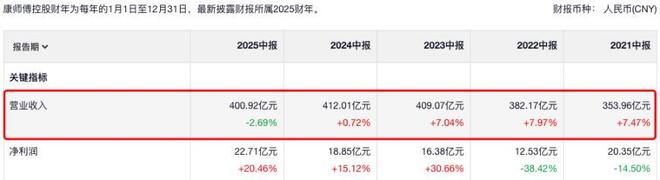
Core Viewpoint - Master Kong's revenue declined by 2.7% in the first half of 2025, indicating a situation of "profit growth without revenue growth," with both instant noodle and beverage businesses experiencing a downturn, prompting the company and competitors to seek innovation, with health-oriented products becoming a new direction [1][2]. Financial Performance - In the first half of 2025, Master Kong reported revenue of 40.092 billion yuan, a decrease of 1.109 billion yuan compared to the same period last year, marking a 2.7% decline, the first revenue drop in five years [2][3]. - Instant noodle revenue was 13.465 billion yuan, down 2.5% year-on-year, selling 349 million yuan less than in 2024 [2][4]. - Beverage revenue was 26.359 billion yuan, a decrease of 2.6%, accounting for 65.7% of total revenue [4]. - Net profit for the first half of 2025 was 2.271 billion yuan, an increase of 20.46% year-on-year, but this was partly due to non-recurring income, which, if excluded, would reduce the net profit growth rate to around 17% [3][4]. Market Trends - The instant noodle market is experiencing its coldest winter in 20 years, with consumption dropping by 4 billion packs from 2020 to 2023, and expected to fall to 43.8 billion packs in 2024 [2]. - The rise of new consumer preferences for healthier and more convenient food options is impacting traditional instant noodle sales, with a significant increase in pre-prepared meals and self-heating hot pot products [5][6]. Competitive Landscape - Master Kong's performance is lagging behind its competitor, Uni-President, which achieved double-digit growth in both revenue and profit in the same period [4]. - The company has adjusted its pricing strategy, increasing the suggested retail price of its instant noodles, which has led to a rise in gross margin by 0.7 percentage points to 27.8% [7][8]. Distribution Network - Master Kong's distribution network has contracted, with a reduction of 12.6% in the number of distributors by the end of 2024, and a further decrease in the first half of 2025 [7][8]. - The company is focusing on optimizing its distribution strategy to enhance profitability, targeting higher-quality distributors [8]. Innovation and Future Direction - To adapt to changing consumer preferences, Master Kong is introducing healthier product lines, including non-fried noodles and premium offerings [9]. - The rise of health-conscious consumers presents an opportunity for innovation in the instant noodle sector, with a growing market for health-oriented instant noodle products [9][10].

无糖茶再火,还是打不过这国民饮料
3 6 Ke· 2025-08-20 09:17
Core Insights - The article discusses the enduring popularity of iced black tea in China, highlighting its affordability and mass appeal despite the rise of healthier beverage options [1][3][8] - The market for sweetened iced tea remains robust, with sales expected to reach 350 billion yuan by 2025, significantly outpacing unsweetened varieties [6][14] Market Dynamics - The sweetened iced tea market maintains a 60:40 share over unsweetened tea, with brands like 康师傅 (Kang Shifu) and 统一 (Uni-President) leading the segment [1][6] - New entrants like 元气森林 (Yuanqi Forest) and 农夫山泉 (Nongfu Spring) are innovating within the iced tea space, with Yuanqi Forest reporting a 150% year-on-year growth in market share [1][6] Consumer Behavior - Iced black tea is perceived as a "common man's drink," appealing to budget-conscious consumers who prioritize value over brand prestige [3][15] - The recent price increase from 康师傅 has sparked consumer backlash, indicating a strong sensitivity to price changes among its core demographic [11][13] Competitive Landscape - 康师傅's price hikes have led to a decline in sales, with a reported 6.3% drop in tea beverage sales, while competitors like 统一 have seen growth [13][14] - The article notes that the iced tea market is shifting towards larger packaging sizes, reflecting consumer preferences for cost-effective options [13][14] Brand Positioning - Iced black tea brands have not attempted to position themselves as status symbols, instead focusing on the refreshing and enjoyable aspects of their products [17][18] - Despite health trends favoring low-sugar options, traditional iced black tea remains favored for its taste and affordability, with consumers expressing a preference for the original sweetened versions [17][18]

第二季度“全球品牌中国线上500强”出炉 消费者真实行为驱动品牌排名变化
Zheng Quan Ri Bao· 2025-08-20 08:07
Group 1 - The "China Online Consumption Brand Index" (CBI) and "Global Brand China Online Top 500" (CBI500) show a growth in online consumer brand index from 63.38 in Q1 2025 to 65.17 in Q2 2025, indicating a trend towards purchasing quality brand products among Chinese consumers [1][2] - The index reflects that during major shopping events like the 618 and Double 11 festivals, consumers tend to choose quality brands over low-priced private labels, highlighting the importance of online promotional activities for brand management and quality consumption [1][2] - The CBI500 list sees significant changes with Apple, Midea, Xiaomi, Haier, and Huawei occupying the top five positions, while traditional brands like Six God and Diamond Fan also make it to the top 500 due to increased sales and search volume in summer categories [1][2] Group 2 - The newly introduced "Fast-Moving Consumer Goods (FMCG) New Brands List" indicates a recovery trend and growth potential in China's FMCG sector, with 48 out of 50 listed brands being emerging brands from mainland China [2] - Key factors for new brands transitioning from "internet celebrity" to sustainable success include understanding high-value consumer preferences and repeat purchase behavior [2][3] - The research emphasizes the need for new brands to shift from a "traffic mindset" to "user lifecycle management" to effectively engage high-value users through product innovation and service experience [3]
精彩回顾· 消费+金融篇|国泰海通2025研究框架培训“洞察价值,共创未来”
国泰海通证券研究· 2025-08-20 05:24
Group 1 - The article discusses the evolution of retail channels in China, highlighting the rise of new retail models and the impact of e-commerce on consumer behavior [4][5]. - It notes that e-commerce revenue has increased by 70% year-on-year, now accounting for 5% of total consumer goods revenue [4]. - The article emphasizes the importance of brand strength and user acquisition strategies for companies looking to expand internationally [5]. Group 2 - Historical context is provided, mentioning the establishment of key companies such as Yonghui Supermarket in 2001 and the listing of the company on the Shanghai Stock Exchange in 2010 [3]. - The article outlines the factors contributing to the fragmented supply and demand in Japan, which may serve as a comparative analysis for China's retail landscape [3]. - It highlights the iterative speed of new retail models in China compared to slower developments in overseas markets [5].