人民币国际化

Search documents
央行连续15个月增持黄金,释放重要信号
2 1 Shi Ji Jing Ji Bao Dao· 2026-02-07 07:39
央行连续15个月增持黄金,释放重要信号 2月7日,国家外汇管理局统计数据显示,截至2026年1月末,我国外汇储备规模为33991亿美元,较2025 年12月末上升412亿美元,升幅为1.23%。这是我国外汇储备连续第六个月站上3.3万亿美元大关,续创 2015年12月以来新高。 国家外汇局表示,2026年1月,受主要经济体财政政策、货币政策及预期等因素影响,美元指数下跌, 全球主要金融资产价格总体上涨。汇率折算和资产价格变化等因素综合作用,当月外汇储备规模上升。 我国经济运行稳中有进,发展韧性进一步彰显,为外汇储备规模保持基本稳定提供支撑。 中银证券全球首席经济学家管涛告诉记者,这主要反映了主要经济体货币政策及预期、宏观经济数据等 因素影响下,汇率折算和资产价格变化带来的正估值效应。当月,受美国经济基本面变化、地缘政治风 险演变,叠加美联储主席提名等因素影响,美元走势一波三折,连续第三个月走弱,累计下跌1.4%至 97.0。同期,全球主要金融资产价格总体上涨。 黄金储备方面,央行连续第15个月增持黄金。同日,央行公布数据显示,2026年1月末黄金储备报7419 万盎司,2025年12月末为7415万盎司,环比 ...
央行连续15个月增持黄金,释放重要信号
21世纪经济报道· 2026-02-07 07:07
Group 1 - As of January 2026, China's foreign exchange reserves reached $3.3991 trillion, an increase of $41.2 billion from December 2025, marking a 1.23% rise and the highest level since December 2015 [1] - The increase in foreign exchange reserves is attributed to the depreciation of the US dollar and the overall rise in global financial asset prices, supported by China's stable economic performance [1][4] - The US dollar index fell 1.4% to 97.0 in January, influenced by geopolitical risks and changes in US monetary policy, leading to a positive valuation effect on non-USD assets [4][6] Group 2 - The People's Bank of China (PBOC) increased its gold reserves for the 15th consecutive month, reaching 7.419 million ounces by the end of January 2026, a slight increase of 40,000 ounces from December 2025 [2][9] - The increase in gold reserves reflects a strategic shift towards enhancing the proportion of "non-credit assets" in foreign reserves, amid a global trend of central banks increasing gold holdings to hedge against dollar volatility and geopolitical risks [2][11] - The global gold price surged over 13% in January, reaching historical highs, which underscores the importance of gold as a strategic asset in the current uncertain global environment [9][10]


人民币的机会来了?美元、欧元、卢布战正酣,我们会乱中取胜吗?
Sou Hu Cai Jing· 2026-02-07 06:19
长期以来,美元一直是全球货币体系的主导力量,尽管日本在二战后凭借经济复苏取得了显著成就,其 外汇储备地位逐步上升。然而,随着日本经济泡沫的崩溃,日元未能真正取代美元的地位,始终未能撼 动其霸主地位。 进入21世纪,中国经济崛起的速度之快,令世界瞩目。中国如今已成为全球第二大经 济体,人民币的国际地位也日益上升。然而,最近的国际局势变化,对美元霸权体系形成了不小的冲 击。美元、欧元、卢布的激烈角逐,让人不禁思考,在这场乱局中,人民币是否能脱颖而出,赢得最后 的胜利? 20世纪70年代末,第4次中东战争爆发,石油输出国组织(OPEC)通过统一减产及大幅提价,直接让西方 工业国家陷入经济困境,也让世界认识到石油在全球经济中的重要性。此时,美元不再依赖黄金,而是 与石油建立了紧密联系,逐渐与沙特等石油输出国达成一致,石油交易以美元结算。这一安排为美元再 次加固了霸权地位。 掌控石油的交易体系,意味着掌控了全球经济的命脉。在石油美元体系下,美元 的霸主地位得到了进一步巩固,这一体系依然是全球经济运行的重要支柱。 **三、美元的特权与挑战** 对于美国来说,拥有美元霸权不仅仅意味着全球经济的主导地位,更意味 着巨额的铸币 ...
外汇储备连续六个月站上3.3万亿美元大关
2 1 Shi Ji Jing Ji Bao Dao· 2026-02-07 05:19
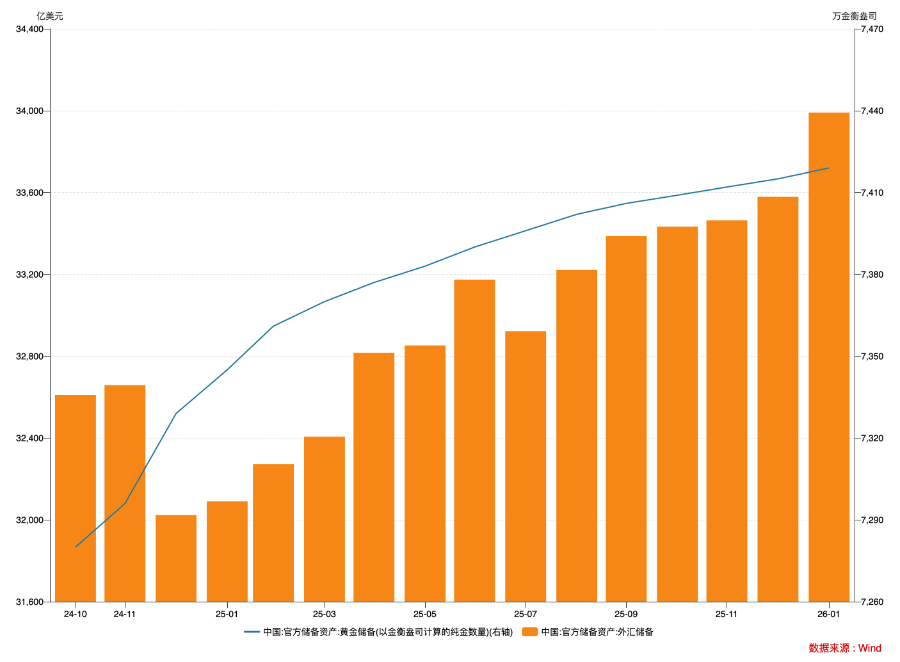
21世纪经济报道记者 唐婧 1月份,受多重因素叠加影响,美元延续弱势:一是特朗普在委内瑞拉、伊朗、格陵兰岛等多地开展或威胁军事打击加剧了地缘 政治风险,美元信用风险高企; 2月7日,国家外汇管理局统计数据显示,截至2026年1月末,我国外汇储备规模为33991亿美元,较2025年12月末上升412亿美 元,升幅为1.23%。这是我国外汇储备连续第六个月站上3.3万亿美元大关,续创2015年12月以来新高。 国家外汇局表示,2026年1月,受主要经济体财政政策、货币政策及预期等因素影响,美元指数下跌,全球主要金融资产价格总 体上涨。汇率折算和资产价格变化等因素综合作用,当月外汇储备规模上升。我国经济运行稳中有进,发展韧性进一步彰显, 为外汇储备规模保持基本稳定提供支撑。 中银证券全球首席经济学家管涛告诉记者,这主要反映了主要经济体货币政策及预期、宏观经济数据等因素影响下,汇率折算 和资产价格变化带来的正估值效应。当月,受美国经济基本面变化、地缘政治风险演变,叠加美联储主席提名等因素影响,美 元走势一波三折,连续第三个月走弱,累计下跌1.4%至97.0。同期,全球主要金融资产价格总体上涨。 黄金储备方面,央行连续 ...
国家外汇局,公布重要数据
Xin Lang Cai Jing· 2026-02-07 05:15
Group 1 - The core viewpoint of the articles highlights that China's foreign exchange reserves reached $339.91 billion by the end of January 2026, marking an increase of $41.2 billion or 1.23% from December 2025, and this is the highest level since December 2015 [1] - The increase in foreign exchange reserves is attributed to factors such as the decline in the US dollar index, rising global financial asset prices, and changes in exchange rates and asset prices [1] - The foreign exchange reserves have increased for six consecutive months, with the growth rate in January being the highest since January 2024, reflecting a stable economic performance in China [1] Group 2 - China's foreign exchange reserves are currently considered to be in a moderately sufficient state, providing important support for maintaining the RMB exchange rate at a reasonable equilibrium level amid external fluctuations [2] - As of the end of January, China's gold reserves stood at 7.419 million ounces, with an increase of 40,000 ounces, marking the 15th consecutive month of gold accumulation by the central bank [2] - The central bank's strategy to diversify international reserves and increase gold holdings is expected to continue, driven by the need to optimize reserve structure and respond to changes in the international environment [2]
央行连续15个月增持黄金,专家:未来需持续增持黄金储备,适度减持美债
Sou Hu Cai Jing· 2026-02-07 04:54
Group 1 - The People's Bank of China (PBOC) has increased its gold reserves to 74.19 million ounces as of January 2026, marking a rise of 40,000 ounces and continuing a streak of 15 consecutive months of gold accumulation [1] - The increase in gold reserves has been at a low level for the 11th consecutive month, aligning with market expectations amid ongoing global geopolitical risks and the Federal Reserve's continued interest rate cuts [1] - Analysts suggest that the PBOC's ongoing gold purchases are driven by the need to optimize international reserve structures, as the proportion of gold reserves in total official international reserves is approximately 9.7%, significantly below the global average of around 15% [1] Group 2 - As of January 2026, China's foreign exchange reserves stood at $339.91 billion, reflecting an increase of $4.12 billion or 1.23% from December 2025 [2] - The rise in foreign exchange reserves is attributed to factors such as fiscal and monetary policies of major economies, leading to a decline in the US dollar index and an overall increase in global financial asset prices [2] - China's foreign trade demonstrated strong resilience in 2025, with exports reaching a historical high, particularly in the machinery and equipment sectors, contributing to a more balanced international market layout [2]
1月末外储规模环升1.23%,黄金储备连增15个月
Sou Hu Cai Jing· 2026-02-07 04:43
2月7日,国家外汇管理局统计公布数据显示,截至2026年1月末,我国外汇储备规模为33991亿美元,较 2025年12月末上升412亿美元,升幅为1.23%。同期央行数据显示,1月末黄金储备为7419万盎司,较上 月末增加4万盎司。 黄金储备方面,2026年1月末官方黄金储备连续第十五个月增加,但增量连续第十一个月处于低位,符 合市场预期。伴随全球地缘政治风险居高不下,以及美联储持续降息,1月国际金价延续快速上涨势 头,这是当月央行增持黄金规模继续处于偏低水平的一个原因。 王青认为,近期央行在国际金价持续大幅上涨、屡创历史新高过程中持续小幅增持黄金,释放了优化国 际储备的信号。从优化国际储备结构、稳慎扎实推进人民币国际化以及应对当前国际环境变化等角度出 发,接下来央行增持黄金仍是大方向,近期国际金价大幅波动对央行增持黄金的影响有限。 图片来源:视觉中国 来源:北京日报客户端 记者:潘福达 2026年1月末外储规模上升,环比上升幅度为2024年1月以来最高。东方金诚首席宏观分析师王青对此解 读表示,这主要受当月美元指数下跌和全球金融资产价格总体上涨双重驱动。受美国司法部对美联储主 席鲍威尔发起刑事调查,美国政府 ...
经济“数”语|央行连续15个月增持黄金,什么信号?
Sou Hu Cai Jing· 2026-02-07 04:40
Group 1 - The People's Bank of China (PBOC) has increased its gold reserves for 15 consecutive months, with reserves reaching 7.419 million ounces by the end of January 2026, up from 7.415 million ounces at the end of December 2025 [1] - The increase in gold reserves began in November 2024, after a pause in May 2024, and in 2025, the total increase was 860,000 ounces [1][3] - Despite the continuous increase, the monthly increment has been low for 11 consecutive months, attributed to high geopolitical risks and expectations of interest rate cuts by the Federal Reserve [3] Group 2 - Analysts suggest that the PBOC's continued gold purchases are driven by changes in the global political and economic landscape, indicating a reduced necessity to pause gold accumulation from a cost-control perspective [3][4] - The current gold reserve proportion of approximately 9.7% is significantly below the global average of around 15%, suggesting a need for further accumulation of gold reserves to optimize international reserve structure [3][4] - The PBOC's strategy to increase gold reserves is also seen as a means to enhance the credibility of the sovereign currency and support the internationalization of the Renminbi [4] Group 3 - The foreign exchange reserves of China stood at $3.3991 trillion by the end of January 2026, reflecting an increase of $41.2 billion or 1.23% from December 2025 [8] - The increase in foreign exchange reserves is attributed to the overall rise in global financial asset prices and the depreciation of the US dollar index, supported by China's resilient economic performance [8] - The strong export performance in 2025, particularly in the machinery and equipment sectors, along with stable foreign direct investment, has contributed to the stability of foreign exchange reserves [8]

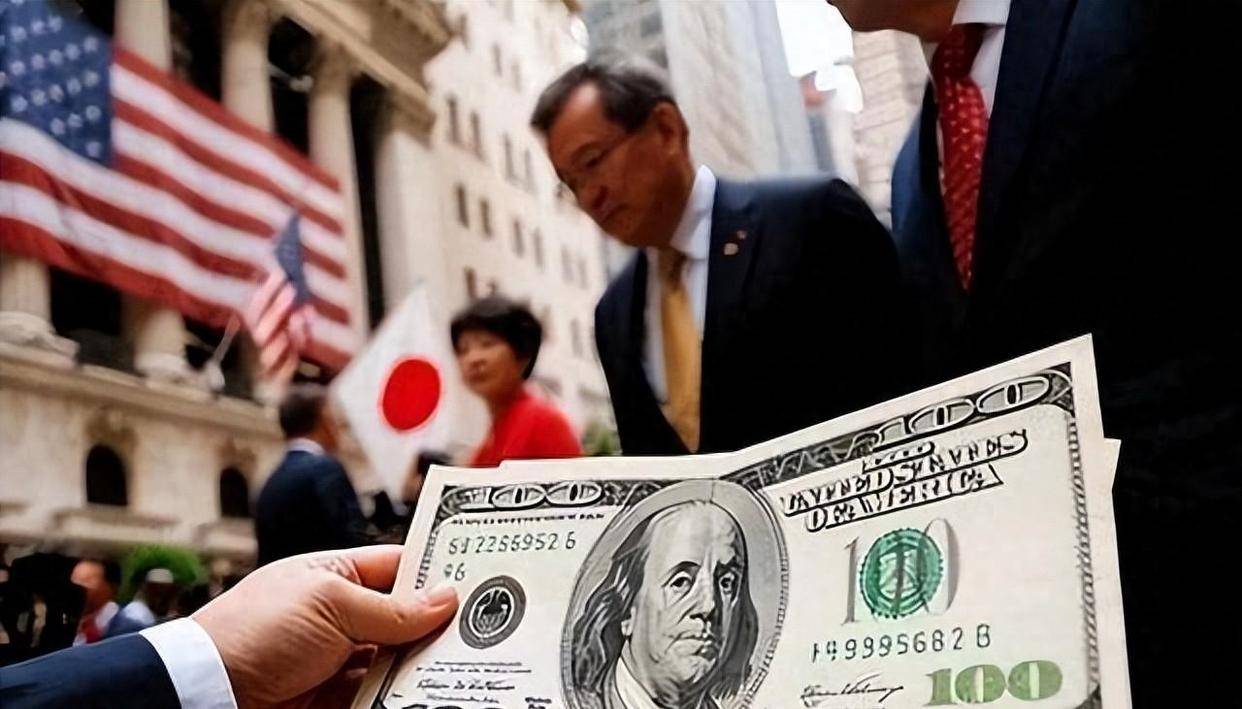
美元霸权收割全球,多国转用人民币反击!美元垄断正被打破
Sou Hu Cai Jing· 2026-02-07 01:32
Core Insights - The dominance of the US dollar in global trade is being challenged, particularly after the freezing of Russian assets in 2022, which highlighted the risks of relying solely on the dollar [1][12][25] - Countries are actively seeking alternatives to the dollar for trade settlements, with significant movements towards using local currencies, particularly the Chinese yuan and Indian rupee [1][4][8][30] Group 1: Shift in Currency Preferences - Russia has shifted its gas trade with China to settle in rubles and yuan, with over 95% of bilateral trade expected to be in local currencies by 2024 [1][18] - Australia has begun accepting yuan for iron ore, with the proportion of yuan settlements expected to rise from over 5% in 2023 to 25% by 2025 and potentially over 40% by 2026 [5][28] - India's introduction of a rupee settlement mechanism in 2022 reflects a broader trend among emerging markets to reduce dependence on the dollar [8][30] Group 2: Market Dynamics and Supply Chain Changes - The diversification of supply sources for commodities, such as iron ore from Brazil and Africa, has strengthened the bargaining power of Chinese buyers, leading to increased yuan transactions [6][28] - The rise in non-dollar settlements is driven by market forces rather than political mandates, indicating a shift towards more flexible payment methods [23][30] - The CIPS system has seen significant growth, processing 175.49 trillion yuan in 2024, marking a 42.6% increase year-on-year, with over 30,000 daily transactions [18][32] Group 3: Global Financial Landscape Transformation - The trend towards de-dollarization is not a sudden shift but a gradual process influenced by geopolitical tensions and the need for financial sovereignty [12][30] - Countries are increasingly adopting a multi-currency approach to mitigate risks associated with dollar dependency, with central banks diversifying their reserves [16][30] - The ongoing adjustments in payment systems and trade practices are reshaping the global financial architecture, moving towards a multi-polar currency system [25][34]
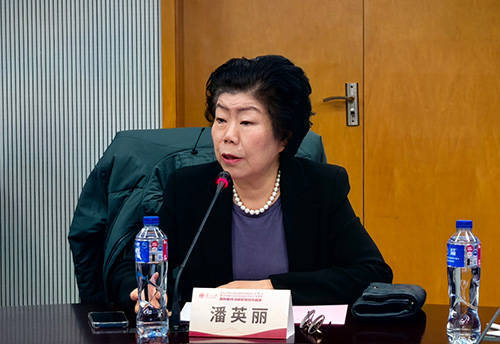
上海交大潘英丽:内需不足的原因及应对之策
Sou Hu Cai Jing· 2026-02-06 09:48
Group 1: Current Economic Challenges - The trade surplus in China is fundamentally a result of overcapacity, stemming from a long-term "capacity expansion strategy" [1][4] - The dual urban-rural structure, welfare deficits for migrant workers, and land finance prepayment for young families contribute to insufficient domestic demand [1][5] - The current economic model is heavily reliant on manufacturing, with policies favoring cost reduction for enterprises, leading to structural issues [10][12] Group 2: Policy Recommendations - To address the challenges, it is suggested to raise labor costs, eliminate export tax rebates, and impose carbon taxes as "anti-involution" measures to increase export costs and promote domestic circulation [1][10] - Implementing a "Chinese-style quantitative easing" policy is recommended, focusing on fiscal and monetary coordination to support social welfare improvements [2][22] - The government should prioritize investments in areas like fertility encouragement, educational equity, and the urbanization of migrant workers [2][23] Group 3: Currency and Capital Flow - A moderate appreciation of the RMB is advocated to optimize the import structure and correct structural distortions caused by a long-term undervaluation [1][12] - The capital account should maintain "limited and controlled openness" to prevent excessive volatility in the exchange rate [12][16] - There is a need to increase the supply of high-quality RMB-denominated assets in offshore markets to attract foreign investment [1][18] Group 4: Structural Adjustments - The current economic model needs to shift from investment-driven growth to consumption-driven growth, necessitating structural adjustments in the economy [2][24] - The real estate market's structural issues, including oversupply and demographic changes, require innovative solutions such as reverse auctions for affordable housing [22][24] - The government should unify the funding for basic public services like education and healthcare to ensure equitable access and support for the population [23][24]