
关税博弈

Search documents
大类资产双周报:资产配置与金融工程市场消化关税情绪缓和,静待宏观政策发力-20250427
Guoyuan Securities· 2025-04-27 11:42
Macro Economic Insights - The first quarter of 2025 showed a strong economic performance, with retail sales exceeding expectations and stable growth in passenger car sales[4] - However, the sales data for commercial housing in 30 major cities showed a month-on-month decline, indicating potential weaknesses in the investment sector[4] - Export pressures are expected to increase in the second quarter due to external uncertainties, necessitating counter-cyclical policy support[4] Fixed Income Market Outlook - The recommendation is to seek structural opportunities while maintaining a defensive stance, particularly in short-duration bonds due to stable funding conditions[5] - It is advised to avoid ultra-long-term bonds due to supply pressures, while considering 10-year government bonds for potential entry points after policy-driven fluctuations[5] - Focus on high-grade municipal bonds and central enterprise bonds in the credit sector, with caution regarding liquidity risks from increased supply in the second quarter[5] Equity Market Analysis - The equity market is experiencing a rebound, with the CSI 300 index rising by 1.32% and the Hang Seng Index increasing by 5.94%[12] - Despite a 16.1% decrease in average daily trading volume to 1.15 trillion yuan, there is a recovery in short-term risk appetite supported by passive and bottom-fishing funds[6] - A cautious optimism is recommended, focusing on policy-driven consumption sectors and undervalued blue-chip stocks while being wary of external tariff disruptions[6] Overseas Market Perspective - Concerns over U.S. fiscal sustainability and policy uncertainty are leading to increased risk aversion in dollar assets, with a potential rebound in U.S. Treasury yields expected to face challenges[7] - The 10-year U.S. Treasury yield is anticipated to remain volatile, with a potential range of 4.6%-4.8% if market panic escalates[7] - The dollar index is under pressure amid weak market confidence and uncertain trade negotiations[7] Overall Asset Allocation Strategy - Current asset allocation should balance defensive positioning with structural opportunities, focusing on short-term government bonds as a defensive base[8] - In equities, three main themes are highlighted: consumption driven by marginal policy easing, export-oriented industries affected by tariff negotiations, and technology trends in AI and semiconductor sectors[8] - Caution is advised in overseas allocations, particularly in dollar assets, while emphasizing stable cash flow assets in Europe to hedge against policy uncertainties[8]
债市蓄力,提前布局
Minsheng Securities· 2025-04-27 10:58
固收周度点评 20250427 债市蓄力,提前布局 2025 年 04 月 27 日 [Table_Author] 分析师:谭逸鸣 研究助理:何楠飞 执业证号:S0100522030001 执业证号:S0100123070014 邮箱:tanyiming@mszq.com 邮箱:henanfei@mszq.com ➢ 债市盘整期,蓄力破局 本周(4/21-4/25)债市震荡特征较为明显,上半周多空交织,关税政策反 复放大债市波动,周初税期走款压力下资金面有所收敛,市场处于 MLF 续作、 特别国债发行及降准落地的期待中,情绪较为纠结。进入后半周,债市震荡走强, 特别国债发行结果尚可,叠加当日公告的 MLF 续作 6000 亿元,资金价格有所 回落,提振债市表现,周五政治局会议落地,再提"适时降准降息",但影响或边 际减弱,债市延续震荡格局。 4/21,债市震荡走弱,早盘 LPR 报价维持不变,税期走款扰动下,资金面 边际收敛,叠加股市低开高走,债市利率开盘后震荡上行,午后随着市场情绪有 所改善,转为震荡行情。当日 1Y、5Y、10Y、30Y 国债收益率分别变动 1.8、2.6、 1.7、1.9BP 至 1.4 ...
一季度货币政策与利率债回顾与下阶段展望:全面降准或率先落地,关税博弈下收益率高波动或延续
Zhong Cheng Xin Guo Ji· 2025-04-27 04:09
1. Report Industry Investment Rating No relevant content provided. 2. Core Viewpoints of the Report - The "moderately loose" tone of monetary policy continues, and a comprehensive reserve requirement ratio cut may be implemented first. Monetary policy will strengthen counter - cyclical adjustment and cooperate with fiscal policy. A comprehensive reserve requirement ratio cut may land in the first half of the year, and a comprehensive interest rate cut may be launched if necessary. Structural tools will support key areas and new tools may be created to promote consumption and stabilize foreign trade [4][34][36]. - The supply pressure of interest - rate bonds may increase. The annual issuance of interest - rate bonds may exceed 31 trillion yuan, with supply peaks in the second and third quarters. The yield will remain highly volatile under the game between the fundamentals and incremental policies, and the yield center may decline in the second half of the year. Attention can be paid to local bond trading opportunities [4][37][44]. 3. Summary According to Relevant Catalogs 3.1 Fundamental and Liquidity Monitoring - In the first quarter, the economy started well with GDP growing by 5.4% year - on - year. The industrial added value increased by 6.5% year - on - year, and high - tech manufacturing grew rapidly. Investment and social retail sales increased, but there were still issues such as negative real estate investment growth. CPI and PPI showed different trends, and PMI data indicated overall weak performance [6]. - The MLF policy interest rate attribute was diluted, and the money market was tight with the central money rate rising. The central bank mainly used repurchase operations for net capital injection, and did not cut interest rates or the reserve requirement ratio. Banks faced high liability pressure, and non - bank deposits decreased significantly [9][12]. 3.2 Interest - rate Bond Market Operation - The issuance scale of interest - rate bonds increased year - on - year. In the first quarter, the total issuance scale reached 7.87 trillion yuan, with increases in all types of bonds. Special refinancing bonds for local debt increased significantly, while the issuance progress of new special bonds was still slow compared with 2022 - 2023 [15]. - The yield of interest - rate bonds first rose and then fell, with high volatility. The 10 - year treasury bond yield was 1.8129% at the end of March, up 13.77BP from the end of last year. The yield can be divided into three stages in the first quarter: interval fluctuation, upward fluctuation, and downward fluctuation [17][18][19]. - The trading volume of interest - rate bonds increased, mainly driven by the increase in policy - financial bond trading. The 10Y - 1Y spread of treasury bonds narrowed, and the local bond trading spread widened [24][25]. 3.3 Monetary Policy Outlook - The "moderately loose" tone of monetary policy continues. Considering overseas uncertainties and domestic economic challenges, the central bank will choose the timing to cut the reserve requirement ratio and interest rates. A comprehensive reserve requirement ratio cut may be implemented first, and the use of structural tools will be increased [34][36]. 3.4 Interest - rate Bond Outlook - The annual issuance of interest - rate bonds may exceed 31 trillion yuan. The issuance of government bonds will accelerate, and the second and third quarters may see supply peaks. If the US maintains high tariffs, it may drag down China's GDP growth, and incremental fiscal policies may be introduced, increasing the supply of interest - rate bonds [37][40]. - The yield will remain highly volatile under the game between the fundamentals and incremental policies. In the second quarter, the yield may fluctuate within a range, and may face upward pressure if the tariff negotiation eases. In the second half of the year, the yield center may decline if the economic repair pressure increases [43][44].
美国降税至35%,中方会跟吗?中国外交部的回应,已经给出了答案
Sou Hu Cai Jing· 2025-04-27 02:52
美国终于扛不住了吗?一连几天,特朗普政府都在对外释想要大幅降低对华关税的信号,为了展现诚意,美国还专门推出了两种"降税"方案。 特朗普 据相关美媒曝料,第一种方案是"统一降税",美国可能把对华关税降低至50%-65%,另一种则是所谓的"分级方案"。 图片来源于网络 至于特朗普政府所谓的"分级方案",就是把那些对美国不构成威胁的中国商品的关税降低至35%,至于那些对美国具有战略意义的中国商品,则是至少要征 收100%的关税。 图片来源于央视网 如果特朗普真的把部分对华关税,下调至最低35%的水平,那么中国会不会也跟随美国的脚步,相应的下调对美关税呢? 外交部发言人郭嘉昆 其实对于这个问题,我国外交部早已在回应中给出了明确的答案。 那么,面对主动释放下调对华关税的美国,中国外交部究竟作出了何种回应呢? 图片来源于央视网 4月23日,《华尔街日报》一则重磅消息震动国际舆论场:特朗普政府正酝酿两种对华关税调整方案,第一种是"统一降税",计划将当前对华平均145%的关 税税率降至50%-65%。 特朗普 第二种则是更具争议的"分级方案",特朗普政府的这一反常举动,被市场普遍解读为"中美贸易战降温"的信号。 莱维特 然而 ...

基础化学品亚洲价格急剧下跌
日经中文网· 2025-04-24 02:50
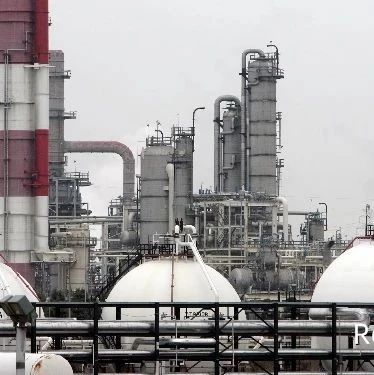
Core Viewpoint - The prices of benzene and butadiene, essential raw materials for automotive and apparel industries, have dropped by approximately 20% over the past month and a half, raising concerns about declining global automotive demand due to economic downturns and tariff impacts [1][4]. Group 1: Benzene Market - The price of benzene in East Asia fell to $750 per ton as of April 14, a decrease of $85 (10%) from the previous week, and down $175 (19%) compared to the last week of February [3]. - Benzene is a key raw material for various products, including polystyrene, styrene-butadiene rubber (SBR), and ABS resin, as well as nylon fibers for apparel [3]. - The decline in benzene prices is attributed to a slowdown in exports to the U.S. and a sluggish Chinese economy, compounded by tariff disputes affecting global economic outlooks [3][4]. - ENEOS's April contract price for benzene dropped by $90 (10%) to $835 per ton, marking a new low since July 2023 [3]. Group 2: Butadiene Market - Butadiene prices in Asia fell to $1,145 per ton as of April 11, down $170 (13%) from the previous week and $320 (22%) from February's peak [4]. - The weakening demand for butadiene is linked to the broader economic decline and reduced automotive demand, which is increasingly recognized in the market [4]. - The apparel sector may also face challenges, as platforms like SHEIN could see production slow due to changing tariff conditions in the U.S. [4]. Group 3: Naphtha Market - The price of naphtha, a feedstock for benzene and butadiene, has also weakened, dropping below $600 per ton in early April [4]. - There are mixed views on the future of naphtha prices, with some suggesting that reduced imports of liquefied petroleum gas (LPG) and ethane by China to avoid high tariffs could lead to increased naphtha procurement, potentially supporting prices [5].
乙二醇日报:原油估值修复引发化工板块情绪好转,乙二醇跟随震荡偏强-20250423
Tong Hui Qi Huo· 2025-04-23 11:05
能源化工 乙二醇日报 从业编号:F03115367 投资咨询:Z0019145 手机:18516056442 liyingjie@thqh.com.cn www.thqh.com.cn 昨日,乙二醇华东现货价格 4200 元/吨,较前一日下跌 55 元/ 吨。主力合约收盘 4180 元/吨,较前一交易上涨 0.59%。基差为 30 元/吨。 成本端,特朗普称对中国关税将会大幅下降,市场担忧情绪缓 解。WTI原油主力收64.39美元/桶,布油收67.22美元/桶。供给端, 内蒙古中化学30万吨装置重启推迟至4月中旬,此前该装置于3月23 日附近停车。上海石化38万吨装置预计4月底重启,此前主产环氧。 新疆一套40万吨装置因故于3月20日停车,初步预计7月份重启。沙 特一套55万吨装置近期重启,此前于2月份停车检修。沙特一套70 万吨装置计划于4月中前后开始停车检修,预计检修两个月左右。 上海石化38万吨产能预计4月份重启,镇海炼化原计划3月底重启, 现推迟至年底,内蒙兖矿40万吨计划3月下旬停车1个月,陕西榆林 化学有两条线计划4月份检修。乐天美国70万吨产能计划4月份检修, 马来西亚石油75万吨产能计划4-5 ...
关税风暴下,这个省份最受冲击
盐财经· 2025-04-22 09:40
Core Viewpoint - The article discusses the resurgence of a trade war initiated by former President Trump, who has imposed significant tariffs on imports, particularly targeting China, which has led to volatility in global trade and significant impacts on various provinces in China [2][3][5][6]. Group 1: Tariff Imposition and Market Impact - On April 2, 2025, Trump signed an executive order imposing a minimum 10% tariff on all imports, with additional tariffs on over 60 countries, including a 34% tariff on China [5][6]. - Following the announcement, U.S. stock markets reacted negatively, with the S&P 500 and Nasdaq experiencing declines of 4.85% and 5.99%, respectively [2]. - By April 9, the tariffs on China escalated to 125%, indicating a rapidly changing trade environment [5][6]. Group 2: Export Dependency of Chinese Provinces - In 2024, China's total exports to the U.S. reached $524.7 billion, with significant contributions from provinces like Guangdong ($133.4 billion), Zhejiang ($88.8 billion), and Jiangsu ($83 billion), each holding a 16% share of their respective total exports [9][10][11]. - Zhejiang province has the highest dependency on U.S. exports at 7.0% of its GDP, followed closely by Guangdong at 6.7% [12][13]. - The article highlights that while Guangdong leads in total export volume, Zhejiang and Jiangsu have a similar share of exports to the U.S. [10][11]. Group 3: City-Level Analysis - At the city level, Shenzhen, Suzhou, and Shanghai are among the top exporters to the U.S., but cities like Jinhua and Xiamen have higher export dependency rates, indicating a need for closer monitoring [14]. - Jinhua's exports are heavily focused on light industrial goods, which are more susceptible to tariff impacts [14][26]. Group 4: Industry-Specific Impacts - The article identifies that machinery and electronics account for 40.4% of total exports to the U.S., followed by textiles and furniture, which are more vulnerable to tariff increases [22][23]. - The U.S. has targeted light industrial products for tariffs, suggesting that provinces with significant exports in these categories, like Zhejiang, will face greater challenges [24][26]. Group 5: Adaptation and Resilience - Despite the challenges posed by the trade war, provinces like Jiangsu and Zhejiang are actively implementing support policies for affected industries [15][16]. - The 137th Canton Fair, held in April 2025, reported a significant increase in international participation, indicating resilience in China's foreign trade sector [18]. Group 6: Long-term Economic Outlook - China's reliance on the U.S. market has decreased from 19.2% in 2018 to 14.7% in 2024, suggesting a shift towards diversifying trade partnerships [31]. - The trade war is expected to drive Chinese enterprises towards higher technological advancements and improvements in supply chain management [31].

关税博弈阶段,锌价低位震荡
Tong Guan Jin Yuan Qi Huo· 2025-04-21 04:40
1. Report Industry Investment Rating - No relevant content provided 2. Core Viewpoints of the Report - Last week, the main contract of Shanghai zinc futures rebounded but was blocked. The US is in trade negotiations with other countries, and the Fed's hawkish remarks have weakened expectations of a bailout, leading to low market risk appetite. China's Q1 export and economic indicators exceeded expectations due to pre - tariff exports and policy support. The large - scale delivery of LME zinc inventory has raised concerns about overseas consumption, pressuring zinc prices at home and abroad. Domestic downstream buyers purchased at low prices, reducing social inventory to 100,000 tons, which provides support. The supply pressure is expected to increase as smelters have a mix of production cuts and restarts. Zinc ingot imports opened and then closed, with limited inflow of imported goods, resulting in a short - term supply - demand mismatch. The galvanizing industry's operating rate increased slightly due to strong tower orders and some companies' pre - tariff exports, while the operating rates of die - casting zinc alloy and zinc oxide industries declined. Overall, as the US enters the tariff negotiation stage and China is expected to introduce policies to hedge against overseas risks, market sentiment is expected to improve but may be volatile. Fundamentals are weak, but strong downstream purchases and inventory reduction provide support. In the short term, there is no clear single - sided driver, and zinc prices are expected to fluctuate widely at a low level [3][10][11] 3. Summary by Relevant Catalogs 3.1 Transaction Data | Contract | April 11 | April 18 | Change | Unit | | --- | --- | --- | --- | --- | | SHFE Zinc | 22,660 | 22,050 | - 610 | Yuan/ton | | LME Zinc | 2,661 | 2,595 | - 66 | US dollars/ton | | Shanghai - London Ratio | 8.52 | 8.50 | - 0.02 | | | SHFE Inventory | 63,857 | 58,585 | - 5,272 | Tons | | LME Inventory | 119,350 | 195,350 | 76,000 | Tons | | Social Inventory | 102,100 | 100,000 | - 2,100 | Tons | | Spot Premium | 120 | 160 | 40 | Yuan/ton | [4] 3.2 Market Review - The main contract of Shanghai zinc futures, ZN2506, rebounded but then fell back. With tariffs in the negotiation stage and macro - trading being volatile, along with a large - scale delivery of LME inventory, zinc prices closed at 22,050 yuan/ton, a weekly decline of 1.58%. On Friday night, the oscillation center moved slightly higher. LME zinc oscillated downward, closing at 2,595 US dollars/ton, a weekly decline of 2.48% due to inventory increases and concerns about demand prospects [5] - In the spot market, as of April 18, the mainstream transaction price of Shanghai 0 zinc was 22,410 - 22,510 yuan/ton. Downstream buyers' inventory from previous purchases had not decreased, so their inquiry enthusiasm weakened, and traders lowered their quotes, causing the spot premium to continue to decline [6] - In terms of inventory, as of April 17, LME zinc inventory increased by 76,000 tons to 195,350 tons, SHFE inventory decreased by 5,272 tons to 58,585 tons, and social inventory decreased to 100,000 tons. Due to lower zinc prices during the week, downstream buyers purchased more at low prices, with significant inventory reductions in Shanghai and Tianjin, while inventory in Guangdong changed little [7] - In the macro - aspect, Fed Chairman Powell warned about the inflationary effects of Trump's trade policies. Trump criticized Powell for being slow to act and said that a US - Ukraine mineral agreement would be signed on the 24th. The US government initiated a 232 national security investigation on semiconductor and pharmaceutical imports. Trump mentioned measures to help automakers adjust their supply chains. He was confident about reaching a trade agreement with the EU but was not in a hurry. The EU might impose export restrictions on the US if negotiations broke down. Trump said that US - Japan negotiations had made significant progress but no substantial documents had been signed. The European Central Bank cut interest rates. Chinese Premier Li Qiang emphasized early and rapid policy implementation [7][8] - China's March export in US dollars increased by 12.4% year - on - year, with a trade surplus of 102.64 billion US dollars, a 75.2% year - on - year increase. Q1 GDP increased by 5.4% year - on - year and 1.2% quarter - on - quarter. March industrial added value increased by 7.7% year - on - year, and social retail sales increased by 5.9% year - on - year [9] 3.3 Industry News - As of the week ending April 18, the average weekly domestic TC of SMM Zn50 was flat at 3,450 yuan/metal ton, and the average weekly imported TC was flat at 35 US dollars/dry ton [13] - An East China smelter plans to conduct maintenance on its zinc production line from May 5 to May 31, affecting about 4,000 tons of zinc ingot output. A Southwest smelter postponed its April maintenance to May. New maintenance was added in East and Central China, but with new capacity release and restart after maintenance, supply pressure is expected to increase. Some smelters plan to increase production, while others postpone maintenance due to high sulfuric acid prices [13][14] - A large die - casting zinc alloy factory in East China has suspended raw material procurement due to high inventory and plans to stop production for inventory consumption. If inventory consumption is not good, it may extend the holiday or resume production after the May Day holiday [13] 3.4 Relevant Charts - The report provides charts on the price trends of Shanghai and LME zinc, the ratio between domestic and foreign markets, spot premiums, LME premiums, inventory levels of SHFE, LME, social and bonded areas, domestic and foreign zinc ore processing fees, zinc ore import profit and loss, domestic refined zinc production, smelter profits, refined zinc net imports, and the operating rates of downstream primary enterprises [16][21]
LPR连续6个月“按兵不动” 专家称“择机降准降息”要考虑三个方面
Sou Hu Cai Jing· 2025-04-21 02:19
21世纪经济报道记者 唐婧 北京报道 刚刚,央行公布4月一年期、五年期LPR利率市场报价。其中一年期LPR利率3.10%,五年期LPR利率 3.60%。维持不变。LPR利率自去年10月调整之后,目前已维持6个月不变。 LPR由各报价行按公开市场操作利率加点形成的方式报价,由全国银行间同业拆借中心计算得出,为银 行贷款提供定价参考。 综合业内分析来看,4月LPR报价保持不变主要有两点原因,一方面,作为LPR的定价锚,7天期逆回购 利率保持稳定;另一方面,银行净息差仍处在低位,商业银行缺乏下调LPR报价加点的动力。 LPR报价行目前包括20家银行,每月20日(遇节假日顺延)9时前,各报价行以0.05个百分点为步长, 向全国银行间同业拆借中心提交报价,全国银行间同业拆借中心按去掉最高和最低报价后算术平均,并 向0.05%的整数倍就近取整计算得出LPR,于当日9时公布。 招联首席研究员、上海金融与发展实验室副主任董希淼表示,从近期公布的一季度经济、金融数据看, 一季度国内生产总值(GDP)同比增长5.4%,环比增长1.2%,经济加快恢复回升;金融数据方面,无 论是社会融资规模还是人民币贷款新增,都超过预期,这表明金融 ...
中国资产价格彰显定力!| 周度量化观察
申万宏源证券上海北京西路营业部· 2025-04-21 02:17
中美关税博弈持续,受益政策呵护,A股市场走出上涨行情,但全周成交金额有所萎缩。宽 基指数维度,上证50表现最佳,上证50、沪深300、中证500、中证1000表现呈递减趋 势,小盘股整体表现不如大盘。从行业表现看,银行表现最佳,与政策呵护和市场状态相对 应。 02 债市方面,本周资金面均衡偏松,债券市场整体震荡为主,利率债表现稍好于信用债。本周 消息面较多,包括小作文传稳地产和消费补贴的政策等,比较重要的是特别国债发行时间安 排出炉,长债发行早于市场预期,对债券市场形成扰动。基本面方面本周公布一季度经济数 据,数据整体较好,但债市已提前有预期,未过度反应。 03 商品方面,本周黄金价格再度创新高,美国关税政策不断反复,市场担忧情绪浓厚, COMEX黄金周三强势拉升,超3300美元/盎司。 04 中中国国资资产产价价格格彰彰显显定定力力 22002255年年44月月1144日日--22002255年年44月月1188日日基基金金投投顾顾观观点点 关税对全球市场造成巨大冲击后本周趋于缓和, A股、港股走出上涨行情,债市平稳,资产价 格彰显定力,黄金持续创新高。具体来看,本周市场有以下几个重要方面: 01 海外方面 ...