
反内卷政策

Search documents
【公募基金】“春季躁动”行情分化,逐步切换至绩优方向——公募基金指数跟踪周报(2026.01.19-2026.01.23)
华宝财富魔方· 2026-01-26 10:17
Key Points - The article discusses the recent performance of the equity market, highlighting a significant divergence in market trends due to regulatory policies and liquidity conditions. Major sectors like consumption, pharmaceuticals, and finance saw declines, while growth sectors, particularly commercial aerospace, gained attention after adjustments [3][7][9] - The earnings season is beginning, and the market may shift towards profit recovery and valuation repair. The ongoing anti-involution policies are leading to negative investment growth across various industries, indicating future supply contraction, while demand stabilizes under fiscal stimulus and economic recovery, benefiting leading companies in sectors like non-ferrous metals and chemicals [3][9] - The bond market experienced a rise in short-term yields and a decline in long-term yields, with the 1-year government bond yield increasing by 3.95 basis points to 1.28%, while the 10-year and 30-year yields decreased by 1.26 and 1.65 basis points, respectively. This shift is attributed to a "cooling" stock market prompting funds to seek refuge in bonds [4][10] - The China Securities Regulatory Commission released guidelines for public fund performance benchmarks, maintaining consistency with previous drafts and introducing specific adjustments regarding benchmark changes and reporting requirements [12] Equity Market Review - The Shanghai Composite Index rose by 0.84%, while the CSI 300 and ChiNext indices fell by 0.62% and 0.34%, respectively. The average daily trading volume in the A-share market decreased to 27.972 trillion yuan, indicating a reduction in market activity [7] - ETF funds experienced a net outflow, with the CSI 300 ETF seeing a reduction of 49.603 billion units. Other ETFs also faced significant outflows, reflecting a shift in investor sentiment and the effectiveness of regulatory measures aimed at attracting long-term capital [7][8] Bond Market Review - The bond market saw a narrowing of yield spreads, with the short-term funding environment remaining favorable. The People's Bank of China indicated potential for further monetary easing, which could support market sentiment [4][10] Public Fund Market Dynamics - The recent release of performance benchmark guidelines for public funds aims to standardize evaluation criteria and ensure consistency in fund management practices, reflecting a regulatory push towards greater transparency and accountability in the fund industry [12]


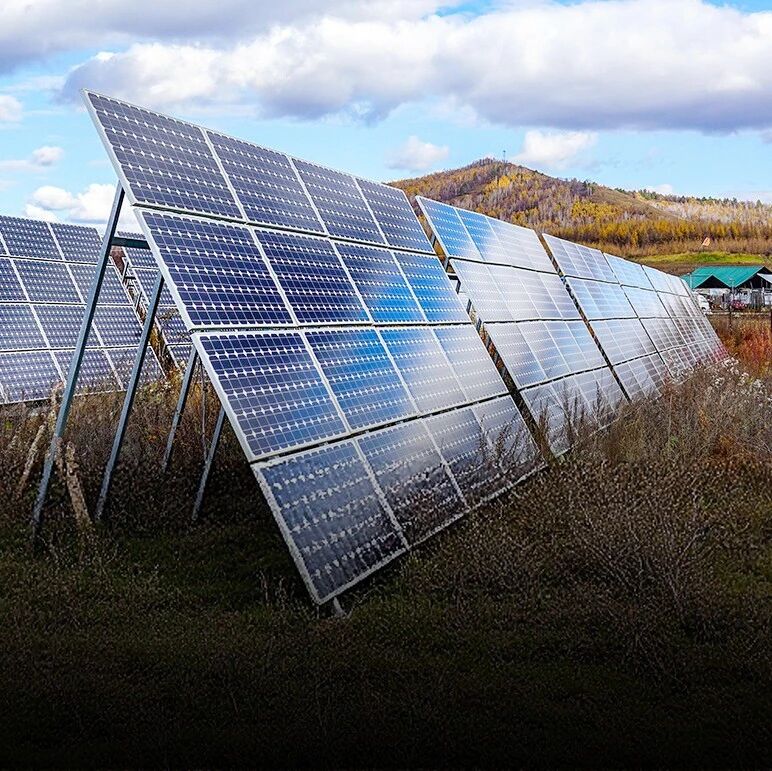
价格触底,长夜未尽:光伏产业在过剩与希望之间跋涉
市值风云· 2026-01-26 10:15
Core Viewpoint - The photovoltaic industry is navigating a complex landscape characterized by growing installation demand and severe supply chain overcapacity, leading to a collapse in prices and a historical low in valuations [3][6]. Supply Side: Severe Overcapacity and Industry Losses - The photovoltaic industry is facing a critical issue of severe overcapacity, with global production capacities for silicon materials, wafers, cells, and modules expected to reach 1337GW, 1088GW, 1157GW, and 1343GW respectively by 2025, while global installation demand is only around 560-650GW, resulting in overcapacity exceeding two times [6]. - China dominates global photovoltaic manufacturing, with over 85% market share in polysilicon, wafers, cells, and modules, but utilization rates across all segments are generally low [6]. - This overcapacity has led to significant industry losses, with gross margins reported as negative across all segments: polysilicon at -0.01 yuan/W, wafers at -0.03 yuan/W, cells at -0.03 yuan/W, and modules at -0.02 yuan/W, resulting in an overall industry gross margin of -0.08 yuan/W [6][7]. - Major companies are experiencing severe losses, with Longi Green Energy forecasting a loss of 6-6.5 billion yuan for 2025 and Tongwei expecting losses of 9-10 billion yuan [7][9]. - The competitive landscape is characterized by large companies engaging in a "prisoner's dilemma," continuing production and expansion despite losses, with the top five companies expected to incur losses exceeding 28 billion yuan [9][10]. Demand Side: Global Installation Growth and Price Recovery - Global photovoltaic demand is projected to continue growing, with new installations expected to reach 570-630GW in 2025, and domestic installations in China reaching approximately 274.9GW from January to November 2025 [10]. - The overseas market is a significant driver of demand growth, with China exporting around 233GW of photovoltaic modules, particularly to emerging markets like Pakistan, which became the second-largest export destination [10][13]. - The current downturn in the photovoltaic industry is attributed not to insufficient demand but to severe overcapacity, with policy upgrades aimed at avoiding destructive price competition expected to continue [10][14]. Price Trends and Market Dynamics - Silicon prices have shown volatility, with a recent increase from a low of 35,000 yuan/ton to around 54,000 yuan/ton, indicating a potential stabilization and recovery in the industry [15][19]. - The price of components is expected to remain stable, with the production cost of integrated N-type M10 double-glass photovoltaic modules estimated at 0.68 yuan/W, and future pricing likely to reference a cost standard of 0.746 yuan/W [18]. - Positive signals indicating a bottoming out of the industry are emerging, with prices stabilizing and a new platform for capacity consolidation being established [19]. Future Outlook and Challenges - The photovoltaic industry may face its first negative growth in domestic installations in recent years in 2026, with global installation growth also at risk of slowing [20]. - Risks include international trade tensions, as countries like the U.S. and India enhance their domestic production capabilities, potentially creating barriers for foreign products [22]. - Technological risks persist, with advancements in new technologies like perovskite solar cells remaining uncertain, and the issue of grid capacity for renewable energy consumption becoming increasingly prominent [22].
建筑材料行业周报:防水发布涨价函,关注内需弹性品种
China Post Securities· 2026-01-26 05:24
证券研究报告:建筑材料|行业周报 发布时间:2026-01-26 行业投资评级 强于大市|维持 | 行业基本情况 | | | | --- | --- | --- | | 收盘点位 | | 6032.51 | | 52 | 周最高 | 6032.51 | | 52 | 周最低 | 4167.51 | 行业相对指数表现 研究所 分析师:赵洋 SAC 登记编号:S1340524050002 Email:zhaoyang@cnpsec.com 近期研究报告 《年末需求进入淡季,关注供给改善品 种》 - 2026.01.19 建材行业报告 (2026.01.19-2026.01.25) 防水发布涨价函,关注内需弹性品种 投资要点 本周受防水涨价及风格切换因素影响,建材板块表现较好,尤其 内需涨价逻辑相关标的涨幅居前。展望 26 年,我们认为消费建材弹 性明显,防水、涂料、石膏板等行业均有持续涨价预期,目前行业需 求处于淡季,我们判断在竞争格局改善及反内卷大环境下,行业将持 续延续涨价逻辑,建议关注:东方雨虹、科顺股份、三棵树、兔宝宝、 北新建材。 水泥:年末全国市场逐步进入淡季,整体来看,全国需求仍呈现 下滑态势,房建 ...
防水发布涨价函,关注内需弹性品种
China Post Securities· 2026-01-26 03:09
Investment Rating - The industry investment rating is "Outperform the Market" and is maintained [1]. Core Views - The construction materials sector has shown good performance recently, driven by price increases in waterproof materials and a shift in market style. There is a strong expectation for continued price increases in consumer building materials such as waterproofing, coatings, and gypsum boards in 2026, despite the current off-season demand [3][4]. - The cement market is entering a seasonal downturn, with national demand showing a downward trend. However, the cement industry's capacity is expected to decline under policies limiting overproduction, which will enhance profit elasticity [3][4]. - The glass industry is facing sustained demand pressure due to the real estate sector, with traditional peak season orders showing limited improvement. Supply-side adjustments are ongoing, but overall supply-demand pressures remain [4][14]. - The fiber glass sector is experiencing a mixed demand environment, with AI-driven demand in specific segments showing potential for growth [4]. Summary by Sections Cement - The national cement market is entering a seasonal downturn, with demand expected to decrease significantly as the New Year approaches. December 2025 cement production was 144 million tons, down 6.6% year-on-year [8]. - The civil market shows relatively rigid demand, while the construction market remains weak. Future price trends are expected to be stable but weak [8]. Glass - The glass industry is under pressure, with traditional peak season demand not showing significant improvement. High inventory levels among intermediaries are a concern. Recent supply-side adjustments have occurred, but overall supply-demand pressures persist [14]. Fiber Glass - The fiber glass sector is seeing a mixed demand landscape, with AI-related products experiencing growth. The industry is expected to see a trend of increasing volume and price due to this demand [4]. Consumer Building Materials - The profitability of the consumer building materials sector has reached a bottom, with strong calls for price increases due to competitive pressures. Major categories like waterproofing and coatings are expected to see continued price hikes in 2026 [4]. Market Performance - The construction materials sector index increased by 9.23% over the past week, outperforming other major indices [5].
国盛证券:新能源周报:2023年8月-20260125
GOLDEN SUN SECURITIES· 2026-01-25 08:18
Investment Rating - The report maintains a "Buy" rating for the steel sector, indicating a positive outlook for selected companies within the industry [4][11]. Core Insights - The steel industry is experiencing a slight increase in daily molten iron production, with an average of 228.2 thousand tons, reflecting a 0.2 thousand ton increase [14]. - Total steel inventory has shifted from a decrease to an increase, with a week-on-week rise of 0.8%, indicating a change in market dynamics [26]. - Apparent steel consumption has weakened on a week-on-week basis, with a notable decline in rebar demand, which decreased by 15.3% [40]. - The report highlights a decrease in steel prices and immediate profit margins, suggesting a challenging pricing environment for steel products [71]. Summary by Sections Supply - Daily molten iron production has slightly increased, with long-process production rising [14]. - The capacity utilization rate of 247 steel mills is at 85.5%, showing a 0.1 percentage point increase [20]. Inventory - Total steel inventory has increased, with social inventory at 8.685 million tons, up 0.2% week-on-week [28]. - Steel mill inventory has also risen significantly, indicating a potential oversupply situation [26]. Demand - Apparent consumption of five major steel products has decreased by 2.0% week-on-week, with rebar consumption down by 2.5% [50]. - The average weekly transaction volume for construction steel has dropped to 78 thousand tons [42]. Raw Materials - Iron ore prices have weakened, with a decrease in shipments from Australia and Brazil, leading to a rise in port inventories [49]. - The report notes that the current "anti-involution" policy may influence future production rhythms and pricing [49]. Prices and Profits - The comprehensive steel price index has decreased by 0.7% week-on-week, with specific prices for rebar and hot-rolled sheets also declining [71]. - Immediate profit margins for long-process steel products have decreased, indicating pressure on profitability [71]. Key Companies - The report recommends several companies for investment, including Hualing Steel, Nanjing Steel, and Baosteel, highlighting their potential benefits from the current market conditions [7].


国投期货黑色金属日报-20260123
Guo Tou Qi Huo· 2026-01-23 11:27
Report Industry Investment Ratings - Thread steel: ☆☆☆ [1] - Hot-rolled steel: ☆☆☆ [1] - Iron ore: ☆☆☆ [1] - Coke: ★☆☆ [1] - Coking coal: ★☆☆ [1] - Silicon manganese: ☆☆☆ [1] - Silicon iron: ☆☆☆ [1] Core Viewpoints - The overall sentiment of commodities has warmed up, and the steel, iron ore, coke, coking coal, silicon manganese, and silicon iron markets have all shown varying degrees of rebound, but the market sentiment remains cautious, and the sustainability of the rebound remains to be seen [1][2][3][5][6][7] - The fundamentals of the iron ore market are relatively loose, and it is expected to fluctuate in the short term [2] - The carbon element supply is abundant, and the downstream molten iron remains at a low level. The coke and coking coal markets are expected to fluctuate within a range [3][5] - For silicon manganese and silicon iron, it is recommended to short on rebounds [6][7] Summary by Category Steel - The steel market continues to rebound. This week, the apparent demand for thread steel has slightly declined, production has increased, and inventory has accumulated again. The demand and production of hot-rolled steel have both slightly declined, and inventory has continued to decrease. The profits of steel mills are poor, the downstream carrying capacity is insufficient, the resumption of blast furnace production has slowed down, and molten iron production has stabilized [1] - From the December data, the decline in real estate investment has continued to widen, the growth rates of infrastructure and manufacturing investment have continued to decline, domestic demand remains weak overall, and steel exports remain high [1] Iron Ore - The global shipping volume of iron ore has seasonally declined but remains at a high level year-on-year. The inventory at domestic ports has increased significantly this week and continues to accumulate. The structural contradiction remains to be resolved [2] - On the demand side, the terminal demand in the off-season fluctuates at a low level, the resumption of production of steel mills has been disturbed, and molten iron production has remained basically flat this week, with little significant increase expected in the short term [2] - Steel mills' imported ore inventory is at a relatively low level, and there is still an expectation of winter storage replenishment demand [2] Coke - The price of coke has continued to rebound during the day. The first round of price increase for coke has been shelved, the coking profit is average, and daily production has slightly decreased. Coke inventory has increased slightly, and the purchasing意愿 of traders is average [3] - Overall, the carbon element supply is abundant, the downstream molten iron remains at a low level in the off-season. It remains to be seen whether winter storage will continue. The profit level of steel is average, and there is still a strong sentiment to suppress raw material prices [3] Coking Coal - The price of coking coal has slightly rebounded during the day. Yesterday, the customs clearance volume of Mongolian coal was 1,046 vehicles. The production of coking coal mines has slightly increased, and the spot auction transactions have maintained a relatively high level. Driven by the increase in the futures price, the transaction prices have varied. Terminal inventory has increased significantly [5] - The total inventory of coking coal has slightly increased, and the production-side inventory has slightly increased. The winter storage demand continues to be strong [5] - Overall, the carbon element supply is abundant, the downstream molten iron remains at a low level in the off-season. It remains to be seen whether winter storage will continue. The profit level of steel is average, and there is still a strong sentiment to suppress raw material prices [5] Silicon Manganese - The price of silicon manganese has slightly rebounded during the day. Driven by the rebound in the futures market, the spot price of manganese ore has increased [6] - There is a structural problem with the current manganese ore port inventory, and the balance is relatively fragile. The silicon manganese smelting end pursues the most cost-effective option and changes the formula of the manganese ore charged into the furnace. If the reduction of oxidized ore is large, the demand for cheaper semi-carbonate ore is likely to increase [6] - On the demand side, molten iron production has seasonally decreased. The weekly production of silicon manganese has slightly decreased, and the inventory of silicon manganese has slightly decreased [6] Silicon Iron - The price of silicon iron has slightly rebounded during the day. Affected by relevant policy documents, the price is relatively strong [7] - The market's expectation of coal mine supply guarantee has increased, and there is a certain expectation of a decline in electricity costs and blue carbon prices [7] - On the demand side, molten iron production has rebounded to a high level. Export demand has decreased to above 20,000 tons, with little marginal impact. The production of magnesium metal has increased month-on-month, and the secondary demand has increased marginally. Overall, demand still has resilience [7] - The supply of silicon iron has decreased significantly, and inventory has slightly decreased [7]
富国基金朱少醒旗下基金四季报出炉!宁德时代(300750.SZ)获进一步加仓
智通财经网· 2026-01-23 06:26
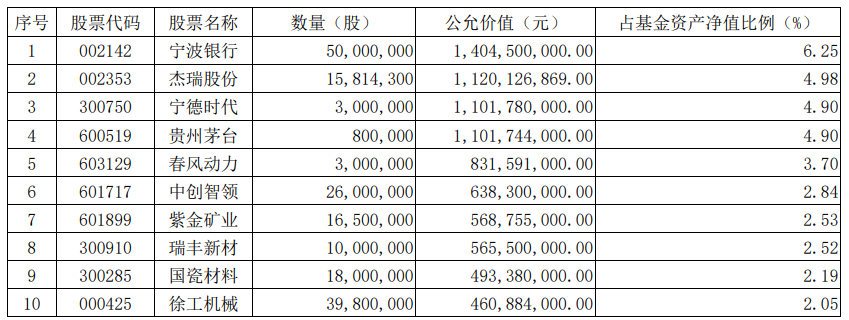
Group 1 - The core viewpoint of the article highlights the performance and adjustments of the fund managed by Zhu Shaoxing, with a net asset value of 22.484 billion yuan as of Q4 2025 [1] - The fund's performance during the reporting period shows a return of 1.12% for both the A/B and D classes, while the C class returned 0.91%, compared to a benchmark return of -0.09% across all classes [1][2] - The top ten holdings of the fund include notable companies such as Ningbo Bank, Jerry Holdings, CATL, and Kweichow Moutai, indicating a diversified investment strategy [1][2] Group 2 - Zhu Shaoxing's recent adjustments in the portfolio include a reversal on Zijin Mining, which was sold off in the first half of 2025 and repurchased in the second half, now ranking as the seventh largest holding [2] - The fund has reduced its exposure to the new energy vehicle sector, with companies like Luxshare Precision exiting the top ten holdings, while increasing its stake in CATL [2] - The analysis indicates that the current monetary policy remains accommodative, and the fiscal policy is actively supporting the market, leading to improved investor risk appetite [3] Group 3 - The A-share market is noted to have seen a significant increase in overall valuations, yet it remains within a reasonable range in a long-term cycle, suggesting continued attractiveness of equity assets [3] - The focus on selecting stocks with strong corporate governance and management is emphasized as a strategy for future value creation, aligning with the fund's growth-oriented investment approach [3]





富国基金朱少醒旗下基金四季报出炉!宁德时代获进一步加仓
Zhi Tong Cai Jing· 2026-01-23 06:23
Core Viewpoint - The report highlights the performance and asset allocation of the fund managed by Zhu Shaoxing, indicating a strategic shift in investment focus and a positive outlook on certain sectors amid a changing economic environment [1][3]. Fund Performance - As of the end of Q4 2025, the net asset value of the fund managed by Zhu Shaoxing is 22.484 billion yuan [1]. - The performance of various fund classes during the reporting period shows: - Fund Class A/B: 1.12% return, benchmark return: -0.09% - Fund Class C: 0.91% return, benchmark return: -0.09% - Fund Class D: 1.12% return, benchmark return: -0.09% [1]. Top Holdings - The top ten holdings of the fund include: 1. Ningbo Bank (002142.SZ) - 6.25% of net asset value 2. Jerry Holdings (002353.SZ) - 4.98% 3. CATL (300750.SZ) - 4.90% 4. Kweichow Moutai (600519.SH) - 4.90% 5. Chuanfeng Power (603129.SH) - 3.70% 6. Zhongchuang Zhiling (601717.SH) - 2.84% 7. Zijin Mining (601899.SH) - 2.53% 8. Ruifeng New Materials (300910.SZ) - 2.52% 9. Guocer Materials (300285.SZ) - 2.19% 10. Xugong Machinery (000425.SZ) - 2.05% [2]. Investment Strategy - Zhu Shaoxing indicates a clear adjustment in investment strategy, with a notable reversal in the position of Zijin Mining, which was sold off in the first half of 2025 and repurchased in the second half [2]. - The fund has reduced its holdings in the new energy sector, with companies like Luxshare Precision exiting the top ten holdings, while increasing its position in CATL during Q4 2025 [2]. - The report emphasizes a favorable economic outlook, with a focus on sectors such as communications, electronics, and non-ferrous metals, which are expected to perform well [3]. Market Outlook - The current A-share market is described as having risen in valuation but still within a reasonable range for long-term investment [3]. - The report suggests that equities remain attractive compared to other asset classes, and emphasizes the importance of selecting individual stocks with strong corporate governance and management to maximize future value creation [3].


【财经分析】板块轮番大涨,合成橡胶强势涨停 化工品的牛市要来了吗?
Xin Hua Cai Jing· 2026-01-23 01:51
Group 1 - The core viewpoint of the articles indicates a significant recovery in the chemical sector, with a notable increase in investment and market activity, particularly in synthetic rubber and PTA, which saw inflows of nearly 1.7 billion yuan [1][2] - The chemical industry has been experiencing a structural downturn due to supply-demand imbalances, but recent policies aimed at controlling production and reducing excess capacity are expected to accelerate a turnaround [2][3] - The recent cold weather in North America has led to increased prices for natural gas, which in turn supports chemical product prices, reminiscent of past events where extreme weather significantly impacted supply and prices [4][6] Group 2 - Certain chemical products are experiencing structural supply-demand mismatches, with PX and PTA showing strength due to optimistic long-term supply expectations, despite recent price corrections [5][6] - The price of synthetic rubber is closely linked to the price of its core raw material, butane, which is influenced by crude oil prices, indicating a strong correlation that affects market dynamics [6][7] - Analysts suggest that the recent strength in chemical products may be partially driven by speculative demand in the market, raising concerns about potential profit-taking risks following rapid price increases [7][8]
25日又一股冷空气来袭!或强化“供暖季”煤炭需求,刺激煤价反弹
Jin Rong Jie· 2026-01-23 00:45
Core Viewpoint - The coal market is expected to experience a rebound in prices due to increased demand during the heating season, coupled with supply constraints and regulatory policies aimed at reducing excess capacity [1][2] Group 1: Supply and Demand Dynamics - The anticipated coal production for 2025 is approximately 4.71 billion tons, reflecting a year-on-year decrease of 1.1% due to stringent safety inspections and the implementation of "anti-involution" policies [1] - The daily coal consumption by power plants is expected to gradually increase as winter heating demands rise, while chemical coal demand remains high [1] - As of January 19, the ex-mine price for Shanxi Datong Q5500 thermal coal was between 565-580 RMB per ton, marking an increase of 12.5 RMB per ton or 2.23% since early January [1] Group 2: Future Price Expectations - Coal prices are projected to stabilize and potentially rise in 2026 due to improved supply-demand dynamics and the stabilizing effect of long-term contract prices [1] - The "anti-involution" policy is expected to promote industry self-discipline and stricter capacity checks, leading to a shift from "scale expansion" to "quality improvement" within the industry [1] Group 3: Market Outlook and Investment Opportunities - The coal market is anticipated to perform better in 2026 compared to 2025, supported by energy supply guarantees and seasonal demand [2] - The scarcity of coal power assets is likely to increase, emphasizing their critical role in ensuring grid safety and stability [2] - In the A-share market, the coal industry is expected to see improved profitability and dividend expectations due to favorable weather and policy conditions, with a shift towards "dividend value reassessment" attracting long-term capital [2]