
货币政策

Search documents
Mhmarkets迈汇:经济韧性与压力并存 金银企稳攀升
Xin Lang Cai Jing· 2025-12-17 10:34
12月17日,周二美国交易时段内,受最新公布的复杂经济数据影响,黄金与白银市场呈现出较强的韧 性。Mhmarkets迈汇观察到,尽管金银在隔夜市场及数据发布前一度表现疲软,但随着报告显示美国经 济正处于一种既不过热也不急剧冷却的平衡状态,避险资产随即抹去跌幅。这种微妙的经济节奏为贵金 属提供了支撑,2月黄金期货价格攀升至4350.70美元上方,而3月白银也维持在63.67美元附近的稳定水 平。 美国近期劳动力市场表现极度不稳定,Mhmarkets迈汇表示,11月非农就业人数虽然增加6.4万人,但相 比10月大幅下降105万人的基数,整体复苏力度仍显乏力。失业率小幅升至4.6%,超出了市场原本预期 的4.5%,这反映出求职者在当前环境下的困境。此外,零售销售数据受汽车及能源支出拖累表现平 淡,叠加12月业务活动增速降至半年低点,种种迹象表明经济增长动力正在减弱。与此同时,投入成本 的大幅跳升也令通胀阴霾未散,Mhmarkets迈汇认为,这些矛盾的信号使得投资者在判断未来货币政策 方向时表现得更加谨慎。 在外部关联市场方面,美元指数的微跌以及原油价格触及八个月低位,为黄金反弹创造了条件。目前原 油在55.25美元 ...


IC平台:数据喜忧参半+停摆延迟披露,美国劳动力市场已现松动?
Sou Hu Cai Jing· 2025-12-17 10:29
Economic Indicators - The US non-farm payroll report for November showed an increase of 64,000 jobs, exceeding market expectations of 50,000, but the October data was revised down to a decrease of 105,000 jobs, primarily due to significant cuts in government employment [3] - The US unemployment rate rose to 4.6%, higher than the expected 4.4% and above the Federal Reserve's forecast of 4.5% for the year [3] - The market currently anticipates a 6 basis point rate cut in January and a 50% probability of a 13 basis point cut in March [3] Market Reactions - The US stock market exhibited mixed reactions, with the S&P 500 and Dow Jones Industrial Average declining by 0.2% and 0.6% respectively, while the Nasdaq 100 rose by 0.3%, supported by strong performances from major tech stocks [1] - The US dollar index increased by 0.3% during European trading hours, particularly against the Japanese yen [1] - US Treasury yields rose, with the 10-year yield increasing by over 2 basis points to 4.17% [1] Commodity Market - The commodity market saw a boost, with WTI crude oil prices rising by 1.4% due to a directive from the Trump administration to block Venezuelan oil tanker transport, potentially ending a four-day decline [1] - Precious metals continued their strong performance, with gold prices nearing a historical high of $4,381 and silver prices reaching a record peak of approximately $66, reflecting a year-to-date increase of 130% [1] UK Economic Outlook - The Bank of England is expected to lower the benchmark interest rate by 25 basis points from 4.00% to 3.75%, with a high probability of a 92% for this cut [4] - The UK's unemployment rate rose to 5.1%, the highest level since early 2021, and the October wage growth also showed signs of cooling [5] - The November CPI inflation data in the UK was significantly below expectations, likely solidifying the case for a rate cut in the upcoming decision [5] European Central Bank - The European Central Bank is not expected to provide significant new signals in its upcoming meeting, with President Lagarde likely to reiterate that current monetary policy is appropriate and will not commit to a specific rate path [6]

NCE外汇:解读金属牛市 就业超预期但内需疲软
Xin Lang Cai Jing· 2025-12-17 10:28
Economic Overview - The current economic fundamentals are at a delicate turning point, with the latest non-farm payroll data showing an increase of 64,000, surpassing the market expectation of 51,000, but underlying signals indicate a cooling trend [1][3] - The unemployment rate unexpectedly rose to 4.6%, suggesting a loosening of the previously tight labor market, adding significant uncertainty to future monetary policy directions [1][3] Employment Structure Analysis - Recent revisions of employment data indicate that growth momentum has been overestimated, with August's figures revised down to -26,000 and September's to 108,000 [4] - The average hourly wage growth in November was only 0.1%, falling short of expectations, which may erode residents' real purchasing power amid inflation [4][5] Business Activity and PMI - The S&P Global Composite PMI index fell from 54.2 to 53, with the services PMI dropping to 52.9, reflecting a loss of momentum in business activity expansion [5] - Although all sectors remain above the 50 mark, the downward trajectory raises widespread concerns about the sustainability of growth [5] Commodity Market Insights - The commodity market is experiencing significant structural differentiation, with platinum emerging as a leading asset, surging 3.22% to $1,874.30, indicating its safe-haven asset characteristics and expectations of supply-demand gaps in industrial manufacturing [5] - Silver has slightly retreated to $63.795, but its substantial gains since August suggest that the current consolidation may represent a high-level bottoming process [5] Gold Market Dynamics - Gold prices are hovering around $4,331.20, reflecting a cautious investor sentiment as they digest conflicting information [6] - The rise in unemployment provides support for safe-haven assets, while the better-than-expected job growth suppresses bullish momentum [6] - The strong breakout of platinum and the high-level consolidation of gold create a market landscape driven by both safe-haven and industrial demand, with the metal sector's independent trends likely to be a focus in the near term [6]
英国11月CPI“降温”幅度超预期,英央行周四降息迎“最后助攻”
智通财经网· 2025-12-17 09:27
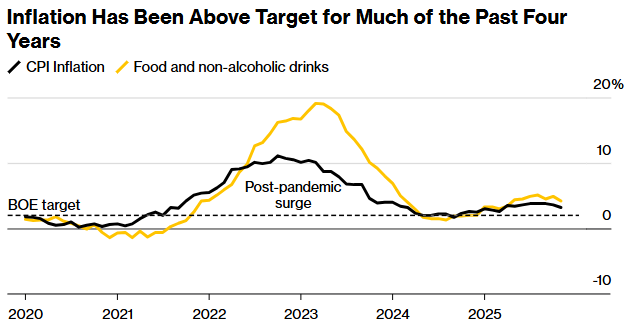
智通财经APP获悉,英国通胀率跌至八个月来的最低水平,降幅超出预期,交易员认为这几乎可以确定 英国央行将在周四降息。英国国家统计局周三表示, 11月CPI同比上涨3.2%,低于上月的3.6%,这主 要是由于蛋糕、饼干和早餐麦片等一些食品价格下跌所致,低于经济学家预期的3.5%和英国央行预测 的3.4%。 与此同时,11月核心CPI同比上涨3.2%,低于前值和预期的3.4%。而作为衡量国内经济状况的重要指 标,服务价格上涨了 4.4%,略好于英国央行此前预期的 4.5% 的涨幅。 数据公布后,英镑兑美元下跌0.7%至1.3322,投资者纷纷押注未来几个月借贷成本将下降,市场目前已 充分定价到明年4月底前将有两次降息。 凯投宏观英国首席经济学家Paul Dales表示,通胀"消退的速度远超所有人的预期"。他补充说,这种降 温"肯定足以促使英国央行行长明天掏出他的'大礼包',提前给借款人送上一份圣诞礼物——降息"。 这些数据让英国央行在明天做出决定前,对通胀压力有了最新的了解。预计英国央行行长安德鲁·贝利 将在本周的会议上投下决定性的一票,而目前货币政策委员会的其他成员则势均力敌,鹰派和鸽派各占 四席。 尽管货币政 ...
谁做下一任美联储主席,华尔街亮态度!摩根大通CEO戴蒙支持沃什
Sou Hu Cai Jing· 2025-12-17 07:31
文┃小夏 两强对决,独立派VS忠诚派 特朗普对现任美联储主席鲍威尔很不满意,就因为鲍威尔没跟着他的节奏降息,还搞加息。 特朗普选人就看两点,忠诚度和降息意愿,这两位候选人刚好站在了对立面。 哈赛特是博彩市场的头号热门,以前在白宫待过,公开支持特朗普的激进降息想法,甚至建议降息幅度 翻倍。 虽然他最近说会维护央行独立性,但华尔街都觉得他是"白宫执行者",标签太难撕了。 编辑┃叙言 美联储要换掌门了,全球金融圈都在盯着。 前美联储理事沃什和前白宫顾问哈赛特成了热门候选人,一边是华尔街力挺的独立派,一边是白宫青睐 的忠诚派。 作为常年关注财经动态的博主,我得跟大家掰扯掰扯,这场争夺战背后,藏着怎样的货币政策走向。 但美联储只能管短期利率,长期利率是市场说了算的。 市场已经用脚投票了,自从11月下旬哈赛特成领跑者的消息出来,10年期美债收益率从4.0%涨到了 4.2%。 沃什是前美联储理事,还有胡佛研究所经济学家的身份。 他在美联储时期有点"鹰派",2008年之前还担心通胀问题,但现在得到了摩根大通CEO戴蒙这样的大 佬背书。 特朗普已经面试过他,这场对决越来越有看头。 市场预警,激进降息或适得其反 摩根大通CEO戴 ...
铜年报:2026 铜价可能宽幅震荡
Hong Ye Qi Huo· 2025-12-17 06:49
年报 2025 年 12 月 摘要: 展望 2026 中国经济,投资方面,政府财政规模严格受限,货币宽松有度, 投资总额可能延续 25 年温和增长的态势;外贸方面,国际形势更加复杂,2026 年可能小幅增长;消费可能成为未来中国最重要的经济支撑和政策抓手。 中美贸易协议持续至 2026 年 11 月,因此美国关税政策可能不会出现更多 变化。美联储现任主席鲍威尔任期持续至 5 月 15 日,新任主席为哈塞特或沃 尔什,预计两者都会顺应特朗普大幅宽松和持续降息的想法,2026 年下半年 可能再次迎来降息周期。 现货方面重点关注美国铜库存情况。目前美铜库存已经累积至 55 万吨左 右,足够扭转全球铜现货供需格局,所以导致全球铜现货供应紧张,成为 12 月铜价大涨的主导因素之一。 研究员: 张天骜 南京大学理学学士 爱尔兰都柏林大学数理金融学 硕士 从业资格证:F3002734 投资咨询证:TZ0012680 电话:025-52278450 邮箱: zhangtianao@ftol.com.cn 年报 2025-12 总体而言,2026 铜价首要决定性因素仍是中美货币政策和财政政策;次 要影响因素是全球经济数据和就业 ...
11月澳大利亚经济活动领先指数增长率下滑,表明增长势头有所放缓
Xin Hua Cai Jing· 2025-12-17 06:43
威尔斯表示,澳大利亚央行将于明年2月2日至3日举行下次货币政策会议。近期通胀风险偏向上行,尽 管澳央行已指出其中部分因素具有暂时性,但显然仍从中获取了一定信号。西太平洋银行预测,通胀将 在2026年有所回落,但澳央行董事会已经持更为鹰派的立场,因此进一步放松货币政策的时间可能会在 2027年。 他补充说,这一判断面临双向风险。如果通胀持续大幅高于预期,那么澳央行加息的可能性将上升;但 如果劳动力市场弱于预期,更早降息就可能重新被提上议程。 资讯编辑:刘佳惠 021-26093916 资讯监督:乐卫扬 021-26093827 资讯投诉:陈跃进 021-26093100 免责声明:Mysteel发布的原创及转载内容,仅供客户参考,不作为决策建议。原创内容版权归Mysteel所有,转载需取得Mysteel书面授 权,且Mysteel保留对任何侵权行为和有悖原创内容原意的引用行为进行追究的权利。转载内容来源于网络,目的在于传递更多信息,方 便学习与交流,并不代表Mysteel赞同其观点及对其真实性、完整性负责。 西太平洋银行和墨尔本研究院17日发布的报告指出,2025年11月澳大利亚西太平洋银行/墨尔本研究院 经济 ...
波兰货币政策委员会将参考利率下调25个基点至4.00%
Shang Wu Bu Wang Zhan· 2025-12-17 06:31
波通社12月3日报道,波兰货币政策委员会(MPC)在当日议息会议后,将波兰央行(NBP)的利率下调25个 基点,参考利率下调至4.00%。该决定与市场预期一致。 这是MPC连续第五次降息,也是2025年全年的第六次降息。今年5月降息50个基点,7月、9月、10月、 11月每次降息25个基点;8月不举行决策会议。2025年全年,MPC累计降息175个基点。 ...
2026年中国货币政策展望:如何理解适度宽松
Zhong Xin Qi Huo· 2025-12-17 06:28
Investment consulting business qualification:CSRC License [2012] No. 669 投资咨询业务资格:证监许可【2012】669 号 中信期货国际化研究 | CITIC Futures International Research 2025-12-17 China Monetary Policy Outlook: Moderate Easing 2026 年中国货币政策展望:如何理解适度宽松 | 张 陆 | Zhang Lu | | 从业资格号 Qualification No:F03105230 | 投资咨询号 Consulting No.:Z0021341 | | --- | --- | --- | --- | --- | | 程小庆 | | Cheng Xiaoqing | 从业资格号 Qualification No:F3083989 | 投资咨询号 Consulting No.:Z0018635 | | 张菁 | Zhang Jing | | 从业资格号 Qualification No:F3022617 | 投资咨询号 Consulti ...
2026年全国金融系统工作会议召开,资金面整体充沛,主要期限国债收益率全线上行
Dong Fang Jin Cheng· 2025-12-17 06:25
Report Summary 1. Core Views - The National Financial System Work Conference emphasized the need to effectively carry out key financial tasks in 2026, including risk prevention, regulatory strengthening, and promotion of high - quality development [3]. - The central bank will continue to implement a moderately loose monetary policy, using various tools like reserve requirement ratio cuts and interest rate cuts, and focus on promoting economic growth and price stability [5]. - The Fed officials have different views on interest rate cuts, with some opposing due to concerns about inflation [9]. 2. Domestic News 2.1 Policy - related - At the National Financial System Work Conference, measures were proposed to prevent and resolve risks in local small and medium - sized financial institutions, real estate enterprises, and local government financing platforms, and to strengthen financial supervision and promote high - quality development [3]. - The National Development and Reform Work Conference summarized 2025 work and set nine key tasks for 2026 [4]. - The central bank will continue the moderately loose monetary policy, using the integrated effect of existing and new policies and multiple monetary policy tools [5]. - The National Financial Supervision and Administration总局 issued the "Interim Measures for the Supervision and Administration of Commercial Bank Custody Business" to standardize the custody business of commercial banks [7]. - Three departments jointly issued a notice to boost consumption by strengthening financial support [7]. 2.2 Economic Data - As of the end of November 2025, the stock of social financing scale was 440.07 trillion yuan, with a year - on - year increase of 8.5%. The cumulative increase in social financing scale in the first 11 months was 33.39 trillion yuan, 3.99 trillion yuan more than the same period last year [6]. - China's economic aggregate is expected to reach about 140 trillion yuan this year [8]. 3. International News - Fed officials debated whether interest rate cuts would harm inflation, and there were differences among next year's voting members on policy [9]. 4. Commodities - On December 12, WTI January crude futures fell 0.28% to $57.44 per barrel, down about 4.4% for the week; Brent February crude futures fell 0.26% to $61.12 per barrel, down about 4.1% for the week. COMEX February gold futures rose 0.35% to $4328.3 per ounce, up 2% for the week. NYMEX natural gas prices fell 3.14% to $4.101234 per ounce [10]. 5. Fundamentals 5.1 Open - market Operations - On December 12, the central bank conducted 1205 billion yuan of 7 - day reverse repurchase operations, with an operating rate of 1.40%. With 1398 billion yuan of reverse repurchases maturing, the net withdrawal was 193 billion yuan [12]. 5.2 Fund Rates - On December 12, DR001 decreased by 0.21bp to 1.275%, and DR007 increased by 1.75bp to 1.469%. Other rates also showed different changes [13][14]. 6. Bond Market Dynamics 6.1 Interest - rate Bonds - On December 12, the bond market weakened. The yield of the 10 - year treasury bond active bond 250016 rose 2.75bp to 1.8425%, and the yield of the 10 - year CDB bond active bond 250215 rose 3.35bp to 1.9165%. There were also auctions of 2 - year and 10 - year treasury bonds [15][17]. 6.2 Credit Bonds - On December 12, 5 bonds had a trading price deviation of more than 10%. "21 Vanke 02" fell more than 17%, while some bonds of Shimao and Baolong rose significantly. There were also credit - related events such as Zheng Rong being listed as a dishonest executor [17][18]. 6.3 Convertible Bonds - On December 12, the A - share market rose, and the convertible bond market also followed. The CSI Convertible Bond, Shanghai Stock Exchange Convertible Bond, and Shenzhen Stock Exchange Convertible Bond indices rose 0.35%, 0.38%, and 0.30% respectively. There were new listings, price increases and decreases of individual bonds, and various events such as proposed price adjustments and early redemptions [19][20][26]. 6.4 Overseas Bond Markets - In the US bond market on December 12, the yield of the 2 - year US Treasury remained unchanged at 3.52%, while other maturities generally rose. The 10 - year TIPS break - even inflation rate rose 1bp to 2.26%. In the European bond market, the 10 - year government bond yields of major European economies generally rose [23][27][28].


