
权益资产

Search documents
投资进化论丨养老投资中,我们为什么要重视权益资产?
Sou Hu Cai Jing· 2025-12-09 10:13
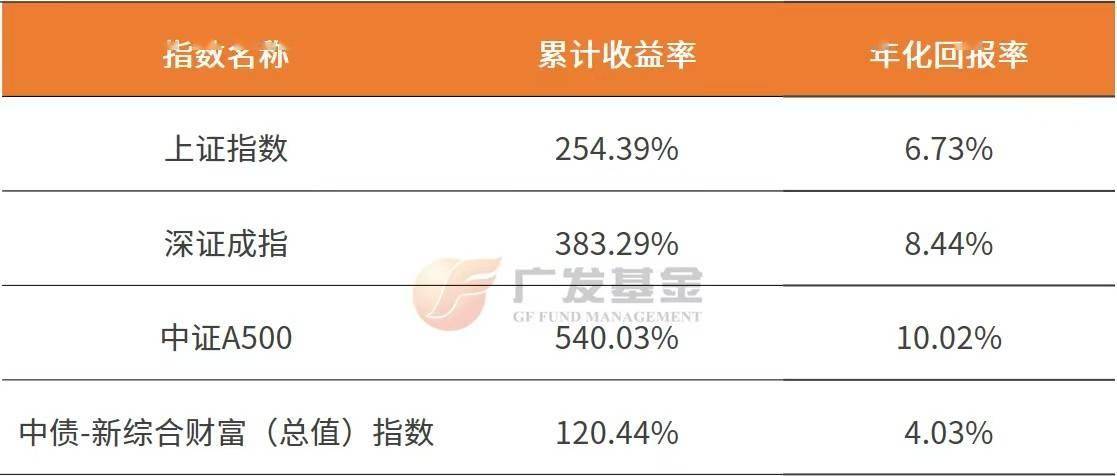
Core Viewpoint - The article emphasizes the importance of increasing the allocation of equity assets in personal pension investments to counter the challenges posed by a low-interest-rate environment [2][3]. Group 1: Low-Interest Rate Environment - The global low-interest-rate environment is a persistent issue, with major economies experiencing a downward trend in interest rates, including China's ten-year government bond yield at approximately 1.85% [2]. - Traditional fixed-income products, such as bank deposits and money market funds, are yielding significantly lower returns, with some one-year fixed deposits falling below 1% and money market funds entering the "1 era" for annualized returns [2]. - Relying solely on fixed-income assets with annual returns below 2% could lead to a decrease in purchasing power over decades due to inflation [2]. Group 2: Importance of Equity Investments - Increasing the weight of equity assets is a crucial strategy to navigate the low-interest-rate environment [3]. - Internationally, pension funds predominantly allocate assets to equities and bonds, with equities often comprising over 50% of financial assets in U.S. pension funds and 60% to 70% in Norway's sovereign wealth fund [4]. - The core value of equity assets lies in their ability to share in economic growth and corporate profit increases, typically yielding higher returns than fixed-income assets over the long term [4]. Group 3: Historical Performance of Equity vs. Fixed Income - Historical data shows significant cumulative returns for equity indices over the past 20 years, with the CSI 500 index achieving a cumulative return of 540.03% and an annualized return of 10.02%, compared to the China Bond Index's 120.44% cumulative return and 4.03% annualized return [5]. Group 4: Investment Strategies for Personal Pensions - Investors are encouraged to diversify their personal pension investments across various risk levels, utilizing the annual tax-advantaged quota of 12,000 yuan to invest in a mix of stable products and equity-focused funds [7]. - Asset allocation strategies such as the "core-satellite" approach can be employed, where 60% to 70% of funds are allocated to stable core assets and 30% to 40% to more volatile satellite assets for higher potential returns [8]. - The growing range of investable products in China's personal pension system includes various equity index funds, providing low-cost and efficient tools for investors to enhance long-term returns [6].

中信证券:大类资产将从相对模糊混沌的状态转向更明确的趋势,迎来破局时点
Sou Hu Cai Jing· 2025-12-07 05:35
Core Viewpoint - The overall market is experiencing volatility due to a policy vacuum, with expectations for a positive policy direction emerging from upcoming meetings in December [1][2]. Macro and Policy - Economic fundamentals have shown relative weakness in the second half of the year, yet risk assets have outperformed safe-haven assets, indicating that asset pricing is driven more by long-term expectations than short-term economic performance [2]. - Optimism regarding the Producer Price Index (PPI) and the anticipated policy strength for 2026 is fueling this positive outlook [2]. - The December Politburo meeting and the Central Economic Work Conference are critical for setting the policy tone for 2026 and could serve as a turning point for major asset classes [2]. Overseas Factors - The U.S. labor market remains under pressure, necessitating potential interest rate cuts by the Federal Reserve in December, although the long-term impact of the labor market on monetary policy is diminishing [3]. - China's international competitiveness in exports has improved, and the country has mitigated some negative impacts from tariffs through re-export trade, suggesting a better-than-expected foreign trade outlook [3]. Asset Allocation Strategy - Following the December meetings, major assets are expected to transition from a state of ambiguity to clearer trends, marking a pivotal moment for asset allocation [4]. - Bond yields are reasonable but lack attractiveness, while stock market valuations have slightly declined, maintaining a high-risk appetite in the market [4]. - There is optimism regarding fiscal policy strength, which may enhance the attractiveness of equity assets [4]. - In terms of bond investments, a focus on medium- to short-term bonds is recommended due to a generally accommodative monetary policy, despite market sentiment being fragile [4]. - For commodities, attention should be given to non-ferrous metals, which are expected to show a clear contraction trend in supply [4].

增量资金来了!激增30%
Sou Hu Cai Jing· 2025-12-07 02:45
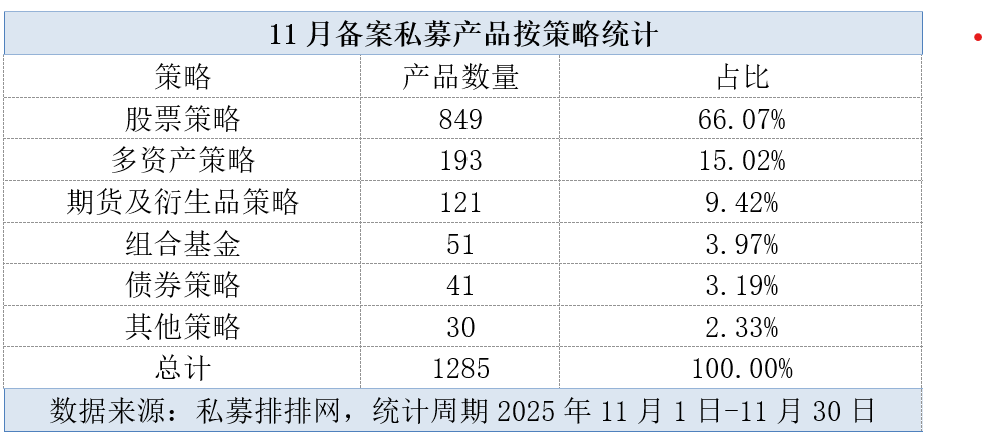
Group 1 - The core viewpoint of the articles indicates that despite market fluctuations, both existing and new funds are optimistic about the medium to long-term performance of equity assets, as evidenced by a significant increase in private equity fund registrations and high stock positions [1][2][4]. - In November, over 1200 private equity securities investment funds were registered, marking a nearly 30% increase from October, with stock strategy funds accounting for 66.07% of new registrations [2][3]. - The stock private equity position index reached 82.97% as of November 21, reflecting a 1.84 percentage point increase from the previous week, indicating a strong commitment from existing funds [4][6]. Group 2 - The number of newly registered private equity funds in November was 1285, which is close to the year's highest monthly registration of 1302, showing a robust market activity [2][3]. - The majority of new registrations were in stock strategies, with 849 funds, while multi-asset and futures strategies also saw significant activity, with 193 and 121 new funds respectively [2][3]. - The average stock position for large private equity firms (over 10 billion) was reported at 89.23%, indicating a more aggressive stance among larger players [7]. Group 3 - The increase in private equity positions is attributed to two main factors: positive policy signals and the belief in the long-term value of A-shares, with recent market fluctuations providing good entry points [8]. - Investment focus is shifting towards technology and cyclical sectors, with firms expressing confidence in the recovery of corporate earnings, particularly in technology and advanced manufacturing sectors [9]. - Companies are expected to maintain high positions in sectors aligned with industrial trends, such as electronics, telecommunications, pharmaceuticals, and materials, as well as gold [9].
兴华基金黄生鹏:权益资产性价比提升 当前小微盘股具有较好的安全边际
Zhong Zheng Wang· 2025-11-25 13:00
Core Viewpoint - The equity market's confidence has gradually improved throughout the year, characterized by distinct structural trends in different phases, including AI-led trends, innovative drug sectors, and the recent strength in low-volatility dividend assets [1] Market Trends - The market has experienced significant sector rotation, with notable phases including AI dominance at the beginning of the year, innovative pharmaceuticals after April, and technology growth led by semiconductors and AI in August and September [1] - Following October, low-volatility dividend assets have shown a phase of strength, indicating a shift in investor focus [1] Investment Insights - With the decline in risk-free rates, the cost of capital has decreased, enhancing the attractiveness of equity assets and increasing investor risk appetite [1] - The effectiveness of market pricing is improving, yet small-cap stocks remain under-researched, presenting more opportunities for value discovery [1] - Current market liquidity favors small and micro-cap stocks, providing numerous trading opportunities [1] - The valuation structure indicates that small and micro-cap stocks, primarily assessed by price-to-book (PB) ratios, still offer a good margin of safety compared to large-cap stocks, making them appealing from a defensive standpoint [1]
“到鱼多的地方去” 险资与信托推进权益资产布局
Jing Ji Guan Cha Wang· 2025-11-24 03:44
Core Insights - Institutional funds are increasingly entering the market, with Sunshine Insurance announcing a significant investment of 20 billion yuan in a pilot fund project, marking a substantial step forward for the initiative [2][3] - The trend of insurance capital accelerating its allocation to equity assets is supported by the ongoing long-term investment pilot and the decline in risk-free interest rates, prompting a reallocation of institutional assets [3][5] Group 1: Institutional Investment Trends - Sunshine Insurance's subsidiary, Sunshine Hengyi Private Fund Management Co., has completed its registration and signed a fund contract with Sunshine Life and China Merchants Bank, indicating progress in establishing a private fund [3] - Multiple insurance companies have established private fund management firms this year, including those under Taikang Insurance, China Pacific Insurance, Ping An Insurance, and China Life Insurance [3] - Data from Yuny Trust shows that the issuance of equity trust products increased by over 50% month-on-month in October, while fixed-income products saw a decline [4] Group 2: Market Dynamics and Asset Allocation - The attractiveness of equity assets has increased due to the ongoing structural market conditions in A-shares, leading trust companies to focus more on equity products [5] - Trust companies are prioritizing "fixed income plus" products, diversifying into REITs, convertible bonds, and gold ETFs as risk-free yields decline [5] - Fund managers are optimistic about the medium to long-term outlook for equity markets, driven by institutional and retail asset reallocation, alongside favorable policy signals and the rapid development of key industries in China [6]

申万宏源策略:降息预期波动加大,美元走强使全球权益回调
Xin Lang Cai Jing· 2025-11-23 13:48
Global Capital Market Overview - The U.S. added 119,000 non-farm jobs in September, significantly exceeding the expected 51,000, but the unemployment rate rose to 4.4%, increasing market volatility regarding the Federal Reserve's interest rate cuts [1][5] - The U.S. dollar index increased by 0.87%, reaching a current level of 100.2, indicating the end of a weak dollar phase [1][5] - Global risk assets mostly declined, with equity markets experiencing significant drops, particularly in A-shares, Northbound 50, and Hang Seng Technology indices [1][5] Fund Flows - As of November 19, 2025, both domestic and foreign capital flowed into the Chinese stock market, with foreign capital inflows of $318 million and domestic inflows of $3.677 billion [2][10] - Overseas active funds saw an outflow of $301 million, while passive funds experienced an inflow of $619 million [2][10] - The U.S. equity market saw substantial inflows, particularly in technology and healthcare sectors, with a total of $11.8 billion entering the equity market [2][10] Valuation Metrics - As of November 21, 2025, the Shanghai Composite Index's valuation is at the 81.9 percentile over the past decade, second only to the S&P 500 and France's CAC40, but remains significantly lower than U.S. stocks in absolute terms [3][10] - The risk-adjusted return percentile for the S&P 500 decreased from 47% to 39%, while the Nasdaq's dropped from 46% to 35% [3][10] Market Sentiment Indicators - The S&P 500 closed at 6602.99, below the 20-day moving average, with an increase in implied volatility [4][10] - The put-call ratio for the S&P 500 decreased to 1.03 from 1.14, indicating a marginally more optimistic sentiment among investors [4][10] - In the A-share market, there was a significant increase in the open interest for call options on the CSI 300 index, reflecting high optimism for future market performance [4][10] Economic Data - The U.S. non-farm payrolls and unemployment rate data suggest a robust labor market, which may influence the Federal Reserve's interest rate decisions [5][10] - The probability of a 25 basis point rate cut in December rose to 71% from 44.4% the previous week, indicating increasing market expectations for monetary easing [5][10] - China's economic indicators show a weakening investment trend, but CPI and PPI are showing signs of marginal recovery, confirming further recovery signals [5][10]

浙商早知道-20251120
ZHESHANG SECURITIES· 2025-11-19 23:30
Market Overview - On November 19, the Shanghai Composite Index rose by 0.18%, the CSI 300 increased by 0.44%, the STAR Market 50 fell by 0.97%, the CSI 1000 decreased by 0.82%, the ChiNext Index rose by 0.25%, and the Hang Seng Index dropped by 0.38% [3][4] - The best-performing sectors on November 19 were non-ferrous metals (+2.39%), oil and petrochemicals (+1.67%), defense and military (+1.11%), beauty and personal care (+1.09%), and banking (+0.92%). The worst-performing sectors were comprehensive (-3.08%), real estate (-2.09%), media (-1.72%), building materials (-1.71%), and retail (-1.7%) [3][4] - The total trading volume for the A-share market on November 19 was 17,426.66 billion yuan, with a net inflow of 6.591 billion Hong Kong dollars from southbound funds [3][4] Important Insights Macroeconomic Analysis - In October 2025, the growth rate of fiscal expenditure slowed down due to a combination of factors: a phase of retreat following a preemptive fiscal push earlier in the year and a high base effect from the previous year [5] - The Ministry of Finance reported that fiscal policy implementation fell short of expectations, with hidden debts increasing beyond expectations [5] Strategic Research - The market outlook suggests a "systematic slow bull" phase, indicating a slower and more systematic market movement [6] - Inflation is expected to return, with a focus on cyclical sectors before consumer sectors in 2026 [6] - The market remains neutrally optimistic, considering various factors such as international conditions, economic cycles, domestic policies, capital flows, market sentiment, and broad valuations [6] - The Shanghai Composite Index is anticipated to experience a gradual upward trend, with fluctuations expected between the high point in February 2021 and the 0.809 quantile of the range from 5,178 to 2,440 [6]
浙商证券:董事长吴承根到龄退休,钱文海正式接棒;公募港股持仓破1.3万亿元 | 券商基金早参
Mei Ri Jing Ji Xin Wen· 2025-11-11 01:22
Group 1: Management Changes in Securities Firms - Wu Chenggen, the chairman of Zheshang Securities, has retired due to age, and Qian Wenhai has officially taken over as chairman and president, marking a new management cycle for the company [1] - This leadership change may accelerate the implementation of the company's strategy, with market attention on its business integration and innovation capabilities [1] - The governance structure optimization at Zheshang Securities could lead to a reevaluation of management efficiency within the brokerage sector, potentially altering the competitive landscape [1] Group 2: Public Fund Holdings in Hong Kong Stocks - The market value of public funds' holdings in Hong Kong stocks has surpassed 1.3 trillion yuan, with passive funds now accounting for 52.8% of the total, marking a significant shift from active funds [2] - This change indicates a deep transformation in the investment ecosystem of Hong Kong stocks, with a growing preference for low-cost, transparent investment tools like ETFs [2] - The influx of funds into ETFs may increase volatility in key sectors such as technology and consumer goods, while also enhancing overall market liquidity [2] Group 3: New Fund Issuance Trends - A total of 39 new public funds are expected to launch this week, with equity products dominating, comprising over 70% of the new offerings [3] - The average fundraising period for new funds has decreased to less than 17 days, reflecting increased investor interest and willingness to enter the market [3] - The concentration of new equity funds may boost the performance of sectors like brokerage and asset management, as well as high-growth areas such as technology and consumer [3] Group 4: Bond Issuance by Guotai Junan - Guotai Junan's Hong Kong subsidiary successfully issued a zero-coupon exchangeable bond worth approximately 5 billion USD, aimed at refinancing maturing offshore debt [4] - This bond issuance is expected to optimize the company's debt structure and reduce financing costs, providing support for future business expansion [4] - The successful issuance reflects international investors' confidence in Chinese brokerage firms, potentially enhancing market liquidity and overall industry valuation expectations [4]

浙商证券:董事长吴承根到龄退休,钱文海正式接棒;公募港股持仓破1.3万亿元
Mei Ri Jing Ji Xin Wen· 2025-11-11 01:19
Group 1 - The chairman of Zhejiang Securities, Wu Chenggen, has retired due to age, and Qian Wenhai has officially taken over as chairman and president, marking a new management cycle for the company [1] - This leadership change may accelerate the implementation of the company's strategy, with market attention on its business integration and innovation capabilities [1] - As a representative of mid-sized brokerages, the optimization of Zhejiang Securities' governance structure may lead to a reevaluation of management efficiency within the industry, potentially altering the competitive landscape among brokerages [1] Group 2 - The market value of public funds' holdings in Hong Kong stocks has surpassed 1.3 trillion yuan, with passive public funds now exceeding active funds for the first time since 2017 [2] - The significant increase in passive fund investments highlights a trend of accelerated capital flow into the Hong Kong market through ETF products, reflecting a growing demand for low-cost and transparent investment tools [2] - The shift towards passive investment may lead to increased volatility in key sectors like technology and consumer goods, while also enhancing overall market liquidity [2] Group 3 - A total of 39 new public funds are expected to be launched this week, with equity products dominating the offerings, accounting for over 70% of the new funds [3] - The average fundraising period for new funds has decreased to less than 17 days, indicating a growing investor interest and willingness to enter the market [3] - The concentration of new equity funds is likely to boost the performance of sectors such as brokerage and asset management, as well as high-growth areas like technology and consumer [3] Group 4 - Guotai Junan Financial Holdings successfully issued a 5 billion USD zero-coupon convertible bond, optimizing its debt structure and reducing financing costs [4] - The bond issuance, backed by Guotai Junan International Holdings, is expected to enhance liquidity and attract market attention to its stock price [4] - This successful issuance reflects international investors' confidence in Chinese brokerages and is likely to bring positive signals to the Hong Kong stock market, enhancing overall market vitality [4]
10月调研超5000次 私募瞄准科技与医药板块
Shang Hai Zheng Quan Bao· 2025-11-09 23:05
Core Insights - Institutional research remains active in October, with private equity firms focusing on technology and pharmaceutical sectors as key investment areas [1][2][4] Group 1: Research Activity - In October, 1,072 private equity firms participated in A-share listed company research, covering 549 companies across 29 industries, with a total of 5,242 research instances, marking an 87.95% increase from September's 2,789 instances [2] - The technology sector, particularly electronics, was the most favored by private equity, with 74 companies receiving 815 research instances, while the pharmaceutical sector followed closely with 772 instances across 75 companies [2] Group 2: Market Trends - The private equity issuance market remained active in October, with an acceleration in new product registrations, indicating sustained interest in equity assets despite recent market fluctuations [3] - The trend of reallocating funds towards equity assets is evident, with private equity firms expecting an influx of new capital as registration processes speed up, suggesting ongoing structural opportunities in A-shares and Hong Kong stocks [3] Group 3: Investment Focus - Industry experts emphasize the importance of focusing on growth sectors such as technology and innovative pharmaceuticals, particularly after recent market adjustments [4] - The Chinese innovative pharmaceutical industry is gaining global competitiveness, with specific attention on domestic companies in niche areas like small nucleic acids and dual antibodies, which are seen as having significant competitive advantages due to efficient R&D and clinical resources [4]