
预期差

Search documents
淡水泉赵军:2026年最核心机会在“预期差”,中国AI产业链竞争优势需要更广泛挖掘
券商中国· 2026-01-17 02:09
Core Viewpoint - The core opportunity for 2026 lies in capturing the "expectation gap" in various industries, as market logic shifts from valuation recovery to profit-driven strategies [2][3]. Group 1: Market Outlook - Liquidity is identified as the most certain friendly factor for the stock market in 2026, with potential for increased stock allocation from both domestic and foreign investors [2][3]. - Investor sentiment towards Chinese assets is expected to warm up, particularly as the market becomes desensitized to macroeconomic and geopolitical tensions [2][3]. - The market logic is anticipated to shift focus from valuation recovery to profitability, necessitating a more detailed analysis of different industries [2][3]. Group 2: AI Market Opportunities - The AI sector is viewed as a critical area for investment, with a focus on identifying segments where supply is tight and market recognition is insufficient [4][5]. - China is seen to have competitive advantages in AI applications, particularly in domestic markets, with strengths in power, manufacturing, and human resources [4][5]. - Key application areas for AI include autonomous driving and robotics, with significant potential for deep integration across various industries [5][6]. Group 3: Innovation in Pharmaceuticals - The innovative pharmaceutical sector is expected to continue presenting strong opportunities in 2026, driven by China's talent pool and efficiency in drug development and clinical trials [6][7]. - China's competitive advantages in this field are leading to increased global collaborations and business development opportunities [6][7]. Group 4: New Consumption Trends - The consumption sector is shifting towards structural opportunities rather than total volume logic, with a focus on sustainable consumption trends [7]. - "Self-indulgent" consumption is identified as a long-term trend, with higher potential for growth and investment [7]. - The importance of understanding underlying data and company capabilities is emphasized to identify opportunities beyond market recognition [7].


淡水泉投资创始人赵军:今年投资逻辑或从估值修复转向盈利驱动
Zheng Quan Ri Bao Wang· 2026-01-16 12:43
Group 1 - The core viewpoint of the article is that the investment sentiment towards Chinese assets is warming up, indicating a new consensus in the global capital markets for 2026 [1][2] - In 2025, the investment process was challenging, but the company's research team demonstrated adequate decision-making skills, achieving a performance score of 80 out of 100, while the ability to seize market opportunities was rated at 70 due to missed chances in A-shares and Hong Kong stocks [1] - For 2026, the market is expected to shift from valuation recovery to a focus on profit-driven growth, necessitating a more detailed analysis of different industries [1] Group 2 - The liquidity environment for 2026 is anticipated to be a significant positive factor for the stock market, with both institutional and individual investors showing potential for increased allocation to stock assets [2] - There is an optimistic outlook from global and emerging market funds towards the Chinese capital market, suggesting further room for increased allocation [2] - The appreciation of the Renminbi is expected to enhance the attractiveness of Chinese assets to foreign investors [2] Group 3 - The key investment opportunities for the next 6 to 12 months revolve around identifying "expectation gaps" in low-attention assets across various industries [2] - Recent research into AI applications revealed potential "expectation gaps" in traditional industrial automation companies serving cyclical industries, which are currently under pressure but may benefit from optimistic capital expenditure forecasts [2]
淡水泉赵军展望2026:市场逻辑转向盈利驱动,捕捉“预期差”是核心机会
Xin Lang Cai Jing· 2026-01-16 09:31
Group 1: Market Outlook for 2026 - The market logic for 2026 is expected to shift from valuation recovery to profit-driven strategies, with capturing the "expectation gap" being the core opportunity for the year [1][5][20] - Investor sentiment is generally more optimistic, with three anticipated characteristics: increased preference for Chinese assets, a new narrative forming around "Chinese assets," and a focus on profit-driven logic rather than valuation recovery [5][21][22] Group 2: Liquidity and Policy Environment - Liquidity is identified as the most certain favorable factor for the stock market in 2026, with potential for increased stock allocation from both domestic and foreign investors [7][24] - The "anti-involution" policy is showing initial positive effects, with companies exhibiting a mindset change towards reduced competition, which could lead to operational improvements for leading firms [7][24] Group 3: Investment Opportunities - In the short to medium term (6-12 months), the focus should be on identifying "expectation gaps" in low-attention assets across various industries [8][25] - Over a longer horizon (three to five years), key opportunities are expected to arise from technological innovation empowering various sectors and the globalization of Chinese enterprises [8][25] Group 4: Technology Sector Insights - AI is viewed as a long-term positive technology rather than a bubble, with a focus on tracking capital expenditure from leading cloud vendors as a key variable [10][27] - China has advantages in the AI supply chain, particularly in power, manufacturing, and human resources, with significant opportunities in AI applications and integration across industries [10][27][28] Group 5: Consumer and Commodity Strategies - The approach to the "commodity bull market" is to focus on material substitution opportunities and post-cycle investments in mining and exploration, highlighting the competitiveness of Chinese firms [12][29] - In the consumer sector, "new consumption" represents structural opportunities, with a focus on demographic changes and the evolution of channels, emphasizing the need to identify sustainable structural opportunities [12][29] Group 6: Risk Management and Investment Evolution - Key risk management strategies include being cautious of crowded trades and adapting to new market pricing dynamics [15][31] - The company emphasizes the importance of proactive scenario planning to manage uncertainties and improve investment success rates through strategic timing and collaboration among teams [15][33]
【笔记20251230— 债农:抢跑开始了吗?】
债券笔记· 2025-12-30 12:18
Core Viewpoint - The article emphasizes that "expectation differences" are the basis for trading decisions, as without these differences, there are no discrepancies or volatility in the market [1]. Market Overview - The market is experiencing mixed movements with expectations of a better PMI and a balanced, slightly loose funding environment [3]. - The central bank conducted a 3,125 billion yuan reverse repurchase operation, with 593 billion yuan maturing today, resulting in a net injection of 2,532 billion yuan [3]. - Funding rates remain stable, with DR001 around 1.24% and DR007 slightly increasing to approximately 1.69% due to year-end factors [3]. - The stock market showed fluctuations but ultimately closed flat, while the bond market anticipates a better PMI, leading to an overall rise in interest rates [3]. Bond Market Insights - The 10-year government bond yield opened slightly higher at 1.86% and fluctuated within a narrow range, with the lowest point reaching 1.85% before rising again in the afternoon due to concerns over upcoming PMI data [3]. - The article notes that the recent surge in lithium carbonate futures prices, which increased over 66%, has led to losses for industrial companies, highlighting the disconnect between futures hedging and spot market prices [3]. Trading Sentiment - The article discusses the sentiment among bond traders, suggesting that the "running ahead" may refer to preemptively exiting positions, indicating a potential miscalculation regarding the expected decline in interest rates in December [3]. - The stock market is also mentioned to be engaging in speculative activities, with references to seasonal trading patterns [3].
建材建筑新材料结构性亮点,高质量转型 | 投研报告
Zhong Guo Neng Yuan Wang· 2025-12-30 02:04
Core Viewpoint - The construction materials and new materials industry is expected to maintain high investment attractiveness in 2025, despite continued pressure from traditional domestic demand in real estate and infrastructure [2]. Group 1: Cement Industry - Cement demand is projected to be under pressure, with structural adjustments expected. The anticipated demand distribution for 2025 is 30% from real estate, 50% from infrastructure, and 20% from rural areas [2][3]. - The industry is expected to experience a low point around April-May 2024, with a gradual improvement in supply-demand relationships as supply exits in an orderly manner [2][3]. Group 2: Glass Fiber Industry - The glass fiber sector is expected to benefit from the release of profits in AI electronic cloth by 2026, with a focus on high-end fabric price elasticity [3]. - The industry has undergone domestic substitution, establishing China as a global supplier, making both domestic and international demand crucial [3]. Group 3: Glass Industry - The glass sector is facing demand pressure and a slowdown in cold repairs, with a net reduction of approximately 4,000 tons per day as of December 21, 2025, which is a deceleration compared to 2024 [4]. - The overall glass prices are under pressure due to weak downstream demand, with a projected decline in construction completions by 18% year-on-year from January to November 2025 [4]. Group 4: Consumer Building Materials - The consumer building materials sector has shown signs of stabilization since Q3 2025, with narrowing revenue declines and reduced price competition, indicating that the most challenging phase has passed [5]. - Despite ongoing pressures in new housing demand, the release of second-hand housing and renovation projects is expected to provide strong support, leading to structural opportunities [5].
AI巨头上市在即,散户却集体踏空?
Sou Hu Cai Jing· 2025-12-27 23:17
Group 1 - MiniMax, a domestic AI company, is set to go public and has served 212 million users across over 200 countries in just four years [1] - The stock market reacted positively to the news, with related concept stocks experiencing significant movements [1] Group 2 - There is a notable phenomenon where some AI concept stocks have doubled in value while others remain stagnant, highlighting the "expectation gap" between institutional and retail investors [2] - Institutional investors often have an information advantage and can price in good news before it is publicly available, leading to a disconnect in stock performance post-announcement [2][12] Group 3 - The performance of stocks like Cuiwei Co. and Neusoft Group illustrates the importance of institutional activity prior to market movements, with Cuiwei seeing significant gains while Neusoft lagged [5][6] - The contrasting trajectories of Runhe Software and Zhongke Jiangnan further emphasize the role of institutional investment in stock performance [10] Group 4 - The rise of AI necessitates a quantitative approach to investing, as retail investors often react too late to news [12] - Emphasizing the importance of data, the article suggests that understanding fund flows and maintaining a data-driven mindset can provide a competitive edge in the market [14]
债市策略:防守反击下的十年国债ETF(511260)投资机遇
Sou Hu Cai Jing· 2025-12-26 01:07
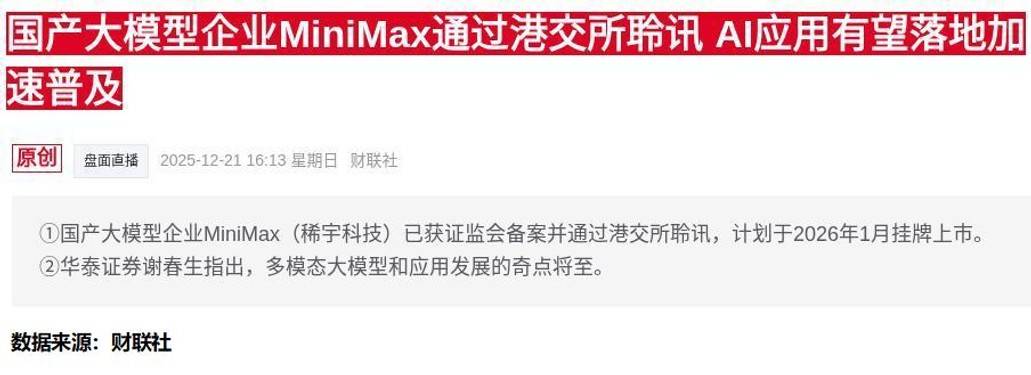
Group 1 - The core viewpoint of the article emphasizes that the market will continue to exhibit characteristics of stock game under a low interest rate environment, with a focus on tracking the indicators and position changes of allocation and trading accounts to better understand market congestion and short-term direction [1] - The analysis highlights that institutional behavior, particularly from allocation institutions, has significantly impacted market volatility this year, with a noted lack of willingness to hold long-term bonds due to interest rate risks [1][2] - The article suggests that the demand for long-term bonds will likely remain weak next year, influenced by the insurance institutions' lower willingness to allocate to long-term government bonds and the overall supply-demand dynamics in the market [2] Group 2 - The expected core strategy for interest rate bonds next year is described as "defensive counterattack," with a forecast that the ten-year government bond yield will fluctuate between 1.5% and 2.0%, and the yield curve is likely to steepen [3] - Key trading opportunities are identified based on three expected discrepancies: narrative consensus, policy expectations, and liability tracking, which will influence the performance of related bond products [3] - The article recommends focusing on the ten-year government bond ETF (511260) as it offers both allocation and trading value, with expectations of good returns for investors by 2026 [4]
机构早已布局!散户还在猜涨跌?
Sou Hu Cai Jing· 2025-12-12 12:07
引子 华尔街又炸锅了。那个在2008年金融危机前就精准做空抵押贷款支持证券的"大空头"迈克尔·伯里,最近又放了个重磅炸弹。他说美联储重启短期国债购买 计划,暴露了美国金融体系的严重问题。这话一出,市场立刻骚动起来。 伯里的观点很尖锐:"如果没有美联储3万亿美元以上的储备金支撑,美国银行体系就无法运转。"他认为这不是强健的标志,而是脆弱的标志。这话让我想 起股市里一个永恒的话题:预期与现实之间的鸿沟。 一、预期差才是市场的本质 股市炒得从来不是现实差,而是预期差。现实再烂,只要预期反转,市场就会给予正反馈。这就是著名的"困境反转"现象。所谓预期差就是:我知道你不知 道,我会你不会,我敢你不敢。 本质上,这就是信息不对称导致的游戏。而解决信息不对称的核心在于透过现象看到交易的真相。显然,只有数据可以还原这个真相。 诡异的是2025年情况大变。同样是金价上涨,同样是菜百股份,这次表现却是一路上涨。主营没变、题材没变,唯一的变化就是橙色"机构库存"数据在不断 活跃。 这个案例生动地说明了一个道理:同样的基本面条件下,机构资金的态度决定了股价走向。没有机构参与的利好不是真利好。 伯里的警告之所以重要,不是因为他预测了什 ...
【笔记20251127— 万科也挂科,学生问题还是学校问题?】
债券笔记· 2025-11-27 14:51
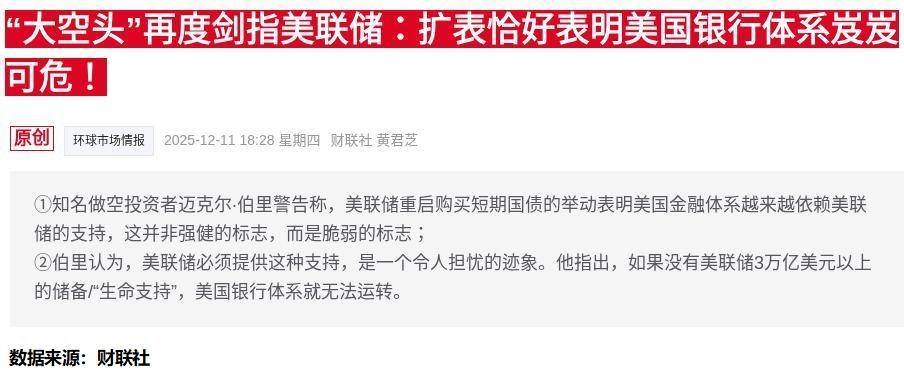
"预期差"才是做多做空的依据,没有预期差就没有落差、没有波动。 ——笔记哥《应对》 -------------------------- 彭博消息:万科尝试获得贷款,但已被两家中资银行回绝。 想当年银行求着给万科贷款,现如今银行已把万科抛弃。如今做信评的债农们大多已转去利率债市场搬砖(现在这块砖也快搬不动了),但看到万科公开 债券展期还是很感慨: 当"优等生"都开始"挂科",那说明是地产这个"学校"的问题,真不只是个别同学偷懒了。 【笔记20251127— 万科也挂科,学生问题还是学校问题?(-股市小幅上涨-基金赎回担忧+资金面均衡偏松=小上)】 资金面均衡偏松,长债收益率小幅上行。 央行公开市场开展3564亿元7天期逆回购操作,今日有3000亿元逆回购到期,净投放564亿元。 资金面均衡偏松,资金利率平稳,DR001在1.31%附近,DR007在1.45%附近。 | | | | 银行间资金 | (2025. 11. 27) | | | | | | --- | --- | --- | --- | --- | --- | --- | --- | --- | | 回购代码 | 加权利率 | 变化 | 利率走势 | ...

市场回调释放压力,双创板块配置价值备受关注
Sou Hu Cai Jing· 2025-11-20 07:07
Group 1 - The market opened high but experienced a decline, with the Sci-Tech Innovation Board down 0.84% and the ChiNext Index down 0.60% as of 14:00 [1] - Volatility in the growth sector has increased since Q4, with high momentum reversal effects and core asset accumulation leading to significant fluctuations [1] - Despite the market volatility, the fundamentals of the dual innovation sector remain unchanged, particularly in AI-related areas where China's semiconductor upstream equipment, materials, and chip manufacturing still show attractive PEG levels compared to U.S. peers [1] Group 2 - From a mid-term perspective, growth stocks are stabilizing after previous emotional releases, while the ChiNext still holds high allocation value due to reasonable valuations and improving fundamentals [2] - As of November 19, the scale of the Sci-Tech Innovation Board 50 ETF (588080) is 69.34 billion yuan, and the ChiNext ETF (159915) is 100.69 billion yuan, both ranking among the top in their category [2] - The combined management and custody fee rate for these ETFs is only 20 basis points, making them excellent tools for investors to capture the investment value of the dual innovation sector [2]