
去产能

Search documents
财说| 九大行业“反内卷”成绩单,谁的盈利能力强?
Xin Lang Cai Jing· 2025-05-07 23:16
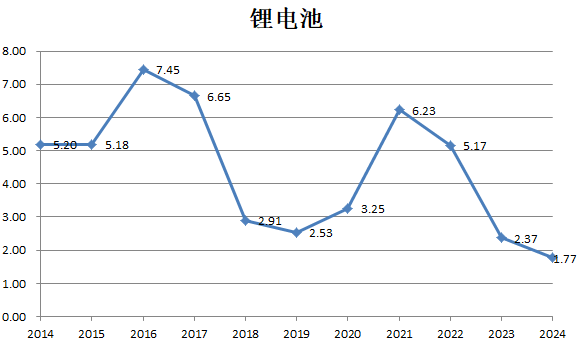
Core Viewpoint - The article discusses the trend of "anti-involution" in various industries as reflected in the capital expenditure to depreciation ratio, indicating a shift towards more conservative investment strategies in response to market conditions [1]. Group 1: Lithium Battery Industry - The lithium battery industry has seen a significant reduction in the capital expenditure to depreciation ratio, dropping from 5.17 in 2022 to 2.37 in 2023, and further to a historical low of 1.77 in 2024, indicating a controlled expansion of capacity [1][2]. - In Q1 2025, major companies like CATL reported a 6.19% revenue growth, while EVE Energy experienced a 37.34% increase, confirming the industry's recovery [2]. Group 2: Silicon Material and Wafer Industry - The silicon material and wafer industry has drastically reduced its capital expenditure to depreciation ratio from 4.1 in 2023 to 1.94 in 2024, marking a historical low due to significant losses [4][5]. - Leading company Tongwei Co. reported an 18.58% revenue decline in Q1 2025, with a negative gross margin of -2.88%, indicating ongoing challenges in the industry [5]. Group 3: Special Steel Industry - The special steel industry saw its capital expenditure to depreciation ratio decrease from 0.93 in 2023 to 0.57 in 2024, suggesting a contraction in capacity but still maintaining profitability among major players [7]. - In 2024, China imported 2.555 million tons of special steel, valued at $5.248 billion, highlighting ongoing demand in high-end steel products [7]. Group 4: Organic Silicon Industry - The organic silicon industry experienced a decline in its capital expenditure to depreciation ratio from 6.98 in 2023 to 1.76 in 2024, indicating a slowdown in capacity expansion [10]. - In Q1 2025, leading company Hoshine Silicon reported a gross margin drop to 14.62%, the lowest in its history, reflecting the industry's ongoing struggles [10]. Group 5: Titanium Dioxide Industry - The titanium dioxide industry faced low prices in 2024, with a capital expenditure to depreciation ratio of 0.78, indicating a contraction in capacity [12]. - Leading company Longbai Group showed signs of stabilization in Q1 2025, with a slight recovery in gross margin, although demand remains uncertain due to external factors [12]. Group 6: Coking Industry - The coking industry is experiencing significant challenges, with a capital expenditure to depreciation ratio of 1.18 in 2024, despite being at a historical low price point [16]. - Leading company Shanxi Coking has reported negative gross margins for ten consecutive quarters, indicating persistent difficulties in the sector [16]. Group 7: Glass Fiber Industry - The glass fiber industry reported a capital expenditure to depreciation ratio of 1.45 in 2024, down from 2.3 in the previous year, suggesting a nearing of historical lows [17]. - Major player China Jushi saw a substantial increase in revenue and net profit in Q1 2025, indicating a clear recovery trend [17]. Group 8: Inorganic Salt Industry - The inorganic salt industry faced continuous price declines, with a capital expenditure to depreciation ratio of 1.06 in 2024, indicating a contraction in capacity [21]. - Leading company Sinochem International reported a gross margin of 9.48% in Q1 2025, the lowest since its listing, reflecting ongoing challenges [21]. Group 9: Inverter Industry - The inverter industry has seen a significant drop in its capital expenditure to depreciation ratio from previous years, now at 4.43 in 2024, indicating a slowdown in expansion [23]. - The industry is experiencing a divergence, with leading companies like Sungrow continuing to perform well, while smaller firms face losses [23].

深度 | 关税冲击下,各行业的“喜”与“悲”—— “特朗普经济学”系列之十五【陈兴团队·财通宏观】
陈兴宏观研究· 2025-04-28 05:15
核 心 观 点 行业比较:电子和机械设备对美敞口更大。 我国对美国电子商品出口最多,而 交运设备关税税率最高 ,加 征后高达 168% 。从中观行业来看,具体到我国对美出口一级行业,电子、轻工、机械与纺织出口依赖度及 份额均较高。从美国进口来看,电子与轻工对我国进口依赖度与进口份额均较高。综合来看, 电子和机械设 备对美敞口更大 。 上游原材料、制造业受冲击严重,后续去产能对冲。 ① 电 子行业的营收对美敞口较大, 若对美出口全部 消失,对行业总营收的影响约为 3.2% 左右,成本传导为主要机制,后续国内产业政策或将推动国产替代,政 策补贴提振消费电子。 ②机械设备行业的营收对美敞口也较大, 如果对美出口全部消失,对行业总营收的影 响为 4.2% 左右,或将加速行业重组。当前国内设备更新政策已经前置推出,同时城市更新等稳增长政策也有 利于扩大机械设备总需求。往后看,产业升级或将加速。 ③交运设备行业的营收对美敞口较小, 即便对美出 口全部消失,对行业总营收的影响也仅为 1.9% 左右,不过行业利润空间或将被挤压。当前国内促进汽车消费 的相关政策也已经前置落地,后续促内需仍有空间,扩外需方面,"一带一路"共建国 ...
国金证券:给予润丰股份买入评级
Zheng Quan Zhi Xing· 2025-04-25 04:33
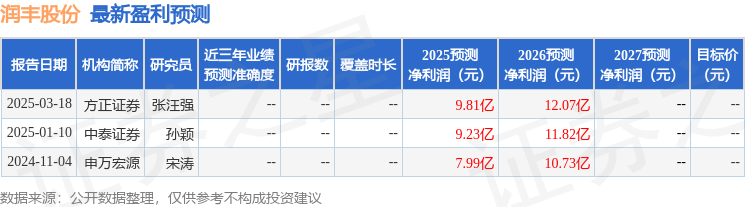
Core Viewpoint - The company, Runfeng Co., Ltd. (301035), has reported its performance in line with expectations, showing a positive outlook for growth and maintaining a "Buy" rating from Guojin Securities [1] Financial Performance - In 2024, the company achieved a revenue of 13.296 billion yuan, representing a year-on-year increase of 15.77% - The net profit attributable to shareholders was 450 million yuan, a decrease of 41.63% year-on-year - For Q1 2025, the company reported a revenue of 2.686 billion yuan, a slight decline of 0.26% year-on-year, while the net profit attributable to shareholders increased by 67.98% to 257 million yuan [2] Operational Analysis - Revenue breakdown by product shows herbicides generated 9.732 billion yuan (73.19% of total revenue) with a gross margin of 17.76%, insecticides contributed 2.105 billion yuan (15.83%) with a gross margin of 26.91%, and fungicides accounted for 1.313 billion yuan (9.88%) with a gross margin of 22.05% - The sales model indicates that TOA and TOB business segments accounted for 62.35% of revenue with a gross margin of 14.23%, while TOC business contributed 37.65% of revenue with a gross margin of 28.99% - The company is expected to see continued improvement in operations in 2025, despite the crop protection industry being at a cyclical low with significant oversupply in domestic and Indian markets - The market is anticipated to shift from "de-stocking" to "capacity reduction" in 2025, leading to intensified competition - Trade protectionism and various market factors are expected to increase operational uncertainties, but the overall operating gross margin is projected to improve as the company expands its TOC business and enhances its global operational capabilities [3] Profit Forecast and Valuation - The company forecasts net profits of 1.004 billion yuan, 1.215 billion yuan, and 1.491 billion yuan for 2025, 2026, and 2027 respectively, with corresponding EPS of 3.575 yuan, 4.326 yuan, and 5.309 yuan - The current stock price corresponds to PE ratios of 16.78, 13.87, and 11.30 for the years 2025, 2026, and 2027, respectively, maintaining a "Buy" rating [4] Analyst Ratings - In the last 90 days, five institutions have provided ratings for the stock, all of which are "Buy" ratings [7]

宏观深度报告20250419:贸易摩擦如何影响我国就业?政策如何应对?
Soochow Securities· 2025-04-19 06:50
宏观深度报告 20250419 贸易摩擦如何影响我国就业?政策如何应 对? [Table_Summary] ◼ 贸易摩擦或对我国就业市场造成扰动 ◼ 出口就业人数的两种定量测算 ◼ 对等关税对就业影响的估算 2025 年 04 月 19 日 证券研究报告·宏观报告·宏观深度报告 证券分析师 芦哲 执业证书:S0600524110003 luzhe@dwzq.com.cn 证券分析师 李昌萌 执业证书:S0600524120007 lichm@dwzq.com.cn 证券分析师 占烁 执业证书:S0600524120005 zhansh@dwzq.com.cn 相关研究 《中国科技产业为全球资产注入稳定 性》 2025-04-14 《美债抛售潮的原因:去美元化、流 动性冲击与中期财政扩张》 2025-04-13 东吴证券研究所 1 / 13 请务必阅读正文之后的免责声明部分 每百万元增加值吸纳的就业人数。关税冲击主要是制造业出口,制造业 有更多的资本和技术投入作为劳动要素的代替,因此每百万元增加值吸 纳的就业只有 4.7 人。相比之下,建筑业和部分服务业吸纳就业的能力 更强。每百万元增加值吸纳的就业人数较多的行 ...
专家访谈汇总:市场寻求“风格轮动”,消费板块将复苏?
阿尔法工场研究院· 2025-04-01 03:07
Group 1: AI Industry and Ecosystem - The AI industry chain covers multiple levels, including infrastructure, model, platform, application, and service layers, with key areas such as chips, computing, storage, networking, and software [1] - DeepSeek has achieved significant performance improvements in model training and inference through innovative training methods and architectures, resulting in lower training costs compared to industry averages [1] - OpenAI's GPT series, including GPT-4, has driven the development of the AI industry, particularly in utilizing pre-training principles like Scaling Law [1] - The rapid growth in AI computing power demand will benefit related industries such as semiconductors, storage, servers, optical modules, PCBs, and power supplies [1] Group 2: Home Appliance Sector Investment Opportunities - The home appliance sector, particularly the three major white goods (air conditioners, refrigerators, washing machines), is characterized by low valuations, high dividends, and stable growth, making it an attractive investment area [2] - The second-hand housing market has shown a rapid recovery, with a 92.2% week-on-week increase in transaction area in key cities from February 8 to 14, indicating strong market resilience [2] - Air conditioner domestic sales growth reached 11.4%, reflecting positive effects from seasonal stocking and national subsidy policies [2] - The kitchen appliance sector is expected to benefit from the recovery in the second-hand housing market, suggesting a focus on undervalued kitchen appliance stocks [2] Group 3: Economic Policies and Inflation - The effectiveness of "capacity reduction" and "consumption promotion" policies is debated, with a greater emphasis on expanding consumer demand to stimulate economic recovery [3] - Service prices have reached historical lows, and a significant increase in service prices could positively impact the GDP deflator index [3] - A dual approach of "capacity reduction" and "consumption promotion" is necessary, but prioritizing consumption promotion is deemed more effective [3] Group 4: Commercial Aerospace Development - The number of global commercial space launches has doubled in the past three years, surpassing non-commercial launches, with commercial launches accounting for 56% of the total [4] - The construction of commercial space launch facilities and satellite manufacturing capabilities in Hainan is accelerating, with expectations of significant increases in launch capacity by 2026 [4] - The market potential for China's commercial aerospace upstream satellite manufacturing is estimated to be between 368.8 billion to 463.7 billion yuan from 2024 to 2030 [4] Group 5: AI and Consumer Trends - Technology is driving consumption upgrades, with the consumer sector expected to become a new growth driver for the economy as macroeconomic conditions stabilize [5] - AI technology is anticipated to revolutionize the home appliance industry, particularly in products like robotic vacuum cleaners, which have substantial market potential [6] - The application of AI in education (2C AI) presents significant market opportunities, especially in scenarios with large user bases and essential needs [7] - Emerging e-commerce brands have rapidly developed by leveraging online platforms, contributing to the consumer stock market boom post-2016 [8]
海螺水泥(600585):供求新平衡,经营有弹性
HTSC· 2025-03-31 11:20
Investment Rating - The investment rating for the company is "Buy" [8] Core Insights - The company is expected to benefit from a recovery in cement prices in the eastern region, which is anticipated to support profit growth due to improved pricing dynamics [19][24] - The company has maintained a strong financial position with a net debt ratio of -22% as of the end of 2024, indicating robust operational resilience [4] - The company plans to maintain a dividend payout ratio of no less than 50% from 2025 to 2027, reflecting a commitment to shareholder returns [4] Revenue and Profit Forecast - The company is projected to achieve revenues of RMB 91,030 million in 2024, with a decline of 35.4% year-on-year, and a net profit of RMB 7,696 million, down 26.2% year-on-year [7] - For 2025, the expected earnings per share (EPS) is RMB 1.88, with a gradual increase to RMB 2.29 by 2027 [5] Market Dynamics - The eastern and central regions account for over 50% of the company's main revenue, and the recovery in these areas is crucial for profit generation [2] - The company has seen a significant increase in cement prices, with a 15% year-on-year rise in the price of PO42.5 bulk cement in the eastern region as of March 28, 2025 [24] Operational Efficiency - The company has successfully reduced capital expenditures, with planned reductions of 18% and 20% for 2023 and 2024, respectively, and a further 23% reduction planned for 2025 [4] - The company has achieved a comprehensive cost of RMB 187.25 per ton for self-produced cement clinker, which is lower than its domestic peers [61] International Expansion - The company has expanded its overseas production capacity, with 11 operational clinker production lines generating approximately 16.5 million tons annually, representing 6% of its total global capacity [3][39] - The overseas business has shown stable profitability, with a significant increase in profit from RMB 1.1 billion in 2023 to RMB 2.3 billion in 2024 [42] Aggregate Business Development - The company has increased its aggregate production capacity to 163 million tons by the end of 2024, with plans for further expansion in 2025 [48] - The aggregate business has generated revenue of RMB 4.69 billion in 2024, reflecting a year-on-year growth of 21.4% [51]
东吴证券晨会纪要-2025-03-27
Soochow Securities· 2025-03-27 01:22
Macro Strategy - The report emphasizes that expanding consumer demand is more effective than capacity reduction policies in addressing low inflation, as service prices have dropped to historical lows, which is the core issue of the current price cycle [1][10] - If consumption policies are strengthened, service prices could rise by 2 percentage points, leading to a GDP deflator increase from -0.7% to +0.39%, which would be more beneficial than the effects of capacity reduction [1][10] - Historical comparisons indicate that the current price pressure is primarily demand-driven, with the second industry contributing only 48% to the current low inflation, significantly lower than previous years [1][10] Fixed Income Strategy - The report discusses the introduction of buying and selling government bonds as a new monetary policy tool in China, aimed at managing interest rate risks amid a declining yield environment [2][12] - It highlights that the People's Bank of China has primarily focused on buying government bonds to release liquidity, given the current low inflation environment [2][12] - The effectiveness of these operations will depend on the central bank's ability to provide clear forward guidance to shape market expectations [2][12] Company Analysis: Zhengfan Convertible Bonds - Zhengfan Convertible Bonds are expected to list at a price between 115.63 and 128.82 yuan, with a subscription rate of 0.0048% [3][15] - The bonds have a solid debt protection feature, with a conversion premium rate of approximately 25% anticipated on the first day of listing [3][15] - Zhengfan Technology has shown steady revenue growth, with a compound annual growth rate of 34.10% from 2019 to 2023, and a revenue of 38.35 billion yuan in 2023, reflecting a 41.78% year-on-year increase [3][15] Company Analysis: Kelun-Botai - Kelun-Botai's revenue for 2024 is projected at 19.3 billion yuan, a 25.5% increase year-on-year, with a gross profit of 12.74 billion yuan, up 67.8% [5][16] - The company is expected to see rapid growth in multiple products as they commercialize, with significant clinical data supporting their efficacy [5][16] - Revenue forecasts for 2025 and 2026 have been raised to 17.8 billion and 35.6 billion yuan, respectively, with an expected revenue of 58.9 billion yuan in 2027 [5][16] Company Analysis: China National Materials - China National Materials reported a total revenue of 461.27 billion yuan for 2024, a 0.7% increase, and a net profit of 29.83 billion yuan, up 2.3% [6][19] - The company has shown resilience in its Q4 performance, with overseas engineering and operation maintenance businesses performing well [6][19] - The company plans to distribute a cash dividend of 4.5 yuan per 10 shares, reflecting its commitment to shareholder returns [6][19]


库存拐点已现,继续看好电解铝板块机会
2025-03-09 13:19
Summary of Conference Call Notes Industry Overview - The conference call primarily discusses the **non-ferrous metals industry**, with a focus on the **electrolytic aluminum** and **steel** sectors [1][2][11]. Key Points on Electrolytic Aluminum Sector - **Market Performance**: The electrolytic aluminum sector is expected to perform well, with a confirmed inventory turning point. Social inventories of aluminum ingots and bars have decreased, with aluminum ingots down by 0.2 thousand tons and aluminum bars down by 0.86 thousand tons [3][4]. - **Price Trends**: Aluminum prices have started to rise, reaching 2,835 RMB/ton, marking a 1% increase this week. This aligns with expectations of improved demand [4]. - **Cost Improvements**: The cost structure for electrolytic aluminum is improving due to declining alumina prices and increased upstream supply. Additionally, lower coal prices are reducing electricity costs for self-supplied power plants, benefiting profitability [5][6]. - **Profitability**: Companies in the Xinjiang region, such as Shenhuo, have seen significant improvements in profitability, with net profit per ton of aluminum around 4,000 RMB. However, these improvements may reflect in financial statements with a delay of one to two months [6]. - **Future Outlook**: The overall market logic for electrolytic aluminum is gradually being realized, with expectations for continued price increases driven by cost reductions, tightening supply, and improving demand [8]. Key Points on Steel Sector - **Market Dynamics**: The steel sector is experiencing a positive sentiment due to expectations of capacity reduction and improved demand from the real estate sector. The government has indicated a focus on reducing crude steel production [2][9]. - **Profitability Outlook**: The steel industry's profitability is expected to improve as coal and ore prices decline, providing a safety margin for the sector [9]. - **Investment Recommendations**: Companies with strong cost control and good regional competitive positions, such as New Steel and Hualian Steel, are recommended for investment [9]. Key Points on Copper Market - **Supply and Demand**: The copper market is showing signs of a supply constraint due to a lack of new capacity in recent years. Current inventory levels are relatively healthy, and demand is expected to improve as the traditional consumption peak approaches [7][10]. - **Price Drivers**: Factors such as the U.S. imposing a 25% tariff on copper imports and a declining U.S. dollar index are likely to support copper price increases [10]. - **Investment Opportunities**: Companies like Zijin Mining, Luoyang Molybdenum, and China Nonferrous Metal Mining are highlighted as potential investment opportunities in the copper sector [10]. Additional Insights - The overall non-ferrous metals sector is gaining attention, with aluminum and steel showing sustained performance. The copper market is also beginning to show clearer turning points, suggesting potential investment opportunities in leading companies [11].


宏观点评:学习政府工作报告精神-宏观政策要“投资于人”
Soochow Securities· 2025-03-05 07:48
Economic Growth - The government has set a GDP growth target of around 5%, indicating a need for increased policy efforts to achieve this goal[7] - The implied nominal GDP growth rate has been adjusted down to 4.9%, with a fiscal deficit of 5.66 trillion and a deficit rate of 4%[8] - In 2024, final consumption and capital formation contributed only 3.5 percentage points to GDP growth, highlighting weak domestic demand[7] Price Stability - The CPI target has been lowered from 3% to 2%, reflecting a shift in focus from preventing inflation to promoting price recovery[9] - This adjustment indicates a stronger emphasis on price stability within the macroeconomic policy framework[18] Fiscal Policy - The total incremental fiscal funds for this year are projected to reach 2.9 trillion, second only to the 3.6 trillion in 2020[25] - The combined fiscal measures (deficit, special bonds, and long-term bonds) amount to 11.86 trillion, an increase of 2.9 trillion compared to last year[25] Monetary Policy - A moderately loose monetary policy is expected to be the main theme for 2025, with potential for timely adjustments in interest rates and reserve requirements[31] - Structural monetary policies will focus on supporting real estate, stock markets, and private enterprises[32] Consumption Promotion - Three key areas for consumption policy include subsidies for replacing old products, income support through social security, and improving the consumption environment[33] - The central government has allocated approximately 3,800 billion for consumption incentives, doubling last year's funding[26] Real Estate Policy - The government aims to stabilize the real estate market through measures such as lifting purchase restrictions and adjusting mortgage rates[34] - Attention will be given to the progress of land and housing stock acquisition through special bonds[36] Industrial Policy - Discussions on potential new rounds of capacity reduction are ongoing, but any measures are expected to be moderate and market-driven[37] - The focus will be on addressing structural issues in industries facing overcapacity, particularly in emerging sectors[38] Technology and Private Enterprises - The government emphasizes the need for institutional support for private enterprises in national technology innovation projects[45] - There is a stronger commitment to resolving issues related to overdue payments to private enterprises, with funding sources identified for this purpose[45] Energy Consumption - The energy consumption target has been raised to a reduction of 3% per unit of GDP, indicating stricter energy policies moving forward[46] - The actual reduction achieved last year was 3.8%, exceeding the previous target of 2.5%[46] Capital Market - The report highlights the need for comprehensive reforms in the capital market to enhance the balance between investment and financing functions[51] - There is a focus on increasing the entry of medium- and long-term funds into the market to stabilize investor confidence[51]