
美国关税政策

Search documents
【期货热点追踪】市场为何未完全相信美国50%的关税会如期实施?COMEX铜与LME铜价差仍维持在27%的较高水平,分析指出伦铜和沪铜的强支撑位于……点击了解。
news flash· 2025-07-11 03:17
Core Viewpoint - The market remains skeptical about the implementation of the 50% tariffs in the U.S., as indicated by the persistent high price differential between COMEX and LME copper, which stands at 27% [1] Group 1 - The price differential between COMEX copper and LME copper is currently at a high level of 27% [1] - Analysts suggest that strong support levels for London copper and Shanghai copper are located at specific price points, which are not detailed in the provided content [1]
韧性与弹性——家电行业2025年度中期投资策略
2025-07-11 01:05
Summary of Key Points from the Conference Call on the Home Appliance Industry Industry Overview - The home appliance sector is influenced by both U.S. tariff policies and domestic subsidy policies, with a positive impact from the easing of tariffs in May 2025 and a subsequent pullback due to the suspension of subsidies in some regions in June 2025 [1][4] - The sector's various subfields, including white goods, kitchen appliances, black goods, lighting equipment, and components, are generally undervalued, with public fund holdings in the home appliance sector at 6.28%, a slight increase of 0.14 percentage points [1][5][6] Core Insights and Arguments - Domestic demand has been significantly stimulated by subsidy policies, particularly for high-priced small appliances, with notable growth in categories such as photography equipment, which saw a year-on-year increase of 38.8% in April 2025 [1][7] - The two-wheeler market has also benefited from subsidy policies, with over 600,000 new vehicles sold by May 20, 2025, generating sales of 17.8 billion yuan [1][8] - The air conditioning market has experienced a notable decline in average prices, with a controlled year-on-year decrease, indicating rational demand [1][9][10] Subsector Performance - In the first half of 2025, the home appliance sector performed well overall, with positive returns in all subfields except for black goods. The home appliance index rose by 1.2 percentage points, outperforming the CSI 300 index [2] - The air conditioning market is undergoing structural adjustments, with an increase in the proportion of low-priced models and more promotional activities [3][12] - The refrigerator, washing machine, and television markets are trending towards high-end specifications, with increased demand for multi-door refrigerators and large-capacity washing machines [3][14] Export and International Market Dynamics - The U.S. tariffs on Chinese home appliances remain high, with most categories exceeding 40%, leading to a decline in exports to the U.S. [15][21] - The overseas market significantly contributes to China's home appliance exports, with air conditioning exports nearing 60% and refrigerators over 40% [17] - The sales scale in overseas markets is approximately 50% of that in China, with potential for higher domestic growth driven by international demand [18] Future Outlook - The home appliance sector may face risks of a downturn in the second half of 2025, but strong domestic demand supported by subsidies is expected to provide resilience [19][22] - Companies like Gree and Midea are recommended for investment due to their stable dividend yields and potential for recovery in the face of tariff impacts [21][22]



A股市场2025年中期投资策略报告:从"山重水复”到"柳暗花明”-20250710
CHINA DRAGON SECURITIES· 2025-07-10 07:53
Group 1 - The report highlights that the U.S. tariff policy has disrupted the global economy, with multiple international organizations downgrading global economic growth forecasts for 2025 to 2.3% due to trade policy uncertainties [10][12][31] - The U.S. trade deficit with its major trading partners has shown a noticeable decline following the implementation of tariffs, with the trade deficit in April 2025 reported at $87.4 billion, down from $162.6 billion in March [15][31] - The report indicates that the U.S. economy is showing resilience despite tariff impacts, with the services PMI returning to expansion territory and manufacturing orders showing signs of recovery [31][36] Group 2 - The report notes that the trade friction between China and the U.S. has shifted from escalation to dialogue, with significant negotiations taking place in Geneva and London leading to a framework agreement for tariff reductions [50][52] - China's exports to Africa and Europe have shown strong growth, with exports to Africa increasing by 33.33% year-on-year in May 2025, indicating a diversification of trade relationships [68] - The report emphasizes the importance of new economic drivers, with high-tech sectors experiencing price increases, particularly in integrated circuits and wearable technology, reflecting a shift towards innovation-led growth [75][79] Group 3 - The report suggests that long-term growth remains intact, with A-share market earnings expected to recover significantly in 2025 compared to 2024, indicating a potential for a sustained bull market [10][31] - It highlights the importance of policy support in stabilizing market performance, with insurance funds expected to continue increasing their holdings in A-shares through early 2025 [10][31] - The report identifies key sectors for investment, including defense, low-altitude economy, stablecoins, AI, and autonomous robotics, which are expected to benefit from favorable policies and high growth potential [10][75]
机械设备行业周报:美越达成贸易协议,关注美国关税政策变化下出口链走向-20250709
BOHAI SECURITIES· 2025-07-09 11:00
Investment Rating - The industry is rated as "Positive" [4] - The specific companies recommended for "Increase" rating are Sany Heavy Industry (600031), Zoomlion (000157), Hengli Hydraulic (601100), and CRRC (601766) [4] Core Viewpoints - The recent trade agreement between the US and Vietnam includes a 20% tariff on goods imported from Vietnam and a 40% tariff on goods transiting through Vietnam to the US, which is expected to influence export chains [3][36] - The average working hours for major construction machinery products in June 2025 were 77.2 hours, a year-on-year decrease of 9.11% [13] - Sales of various excavators in June 2025 reached 18,804 units, a year-on-year increase of 13.3% [14] - Sales of various loaders in June 2025 reached 12,014 units, a year-on-year increase of 11.3% [15] Industry Data - As of July 4, 2025, the steel composite price index (CSPI) was 90.53 [16] - As of July 8, 2025, the WTI and Brent crude oil prices were $67.93 per barrel and $69.58 per barrel, respectively [17] Company Announcements - Zhonghe Technology plans to establish an aerospace venture capital fund with professional investment institutions, with a total fund size of 50.05 million yuan [23] - Hangcha Group's subsidiary, Hangcha Intelligent, intends to acquire 99.23% of Guozhi Robot through a capital increase and share expansion [24] - Shandong Molong announced a forecast for its half-year performance in 2025, with a year-on-year decline in net profit of 92.36%-94.12% [25] Market Review - From July 2 to July 8, 2025, the CSI 300 index rose by 1.41%, while the Shenwan Machinery Equipment Industry increased by 0.42%, underperforming the CSI 300 by 0.99 percentage points [26] - As of July 8, 2025, the price-to-earnings ratio (TTM) for the Shenwan Machinery Equipment Industry was 26.93, with a valuation premium of 114.94% relative to the CSI 300 [27]




家电行业2025年中期投资策略:内外兼修,稳健行远
Southwest Securities· 2025-07-08 10:06
Core Insights - The household appliance industry experienced a decline of 1.2% in the Shenwan household appliance index from the beginning of 2025 until June 29, ranking 26th among Shenwan industries [4][13] - The overall performance of the household appliance industry in 2024 and Q1 2025 was good, but the index showed weakness compared to the strong performance in 2024 [4][6] - Factors contributing to the weak index performance include reduced demand elasticity from national subsidies, uncertainty from U.S. tariff policies, low real market demand, and a shift in market style towards new consumption trends [4][6][12] Outlook for H2 2025 - The implementation of more proactive fiscal policies and moderately loose monetary policies is expected to stimulate household appliance consumption, which remains a crucial part of domestic demand [6] - China, as the largest global manufacturer and exporter of household appliances, holds significant production capacities, with 81.3% for air conditioners, 57.6% for refrigerators, and 52% for washing machines in 2023 [6] - Emerging markets in Asia, Africa, and Latin America may present important opportunities for growth, while global leading companies are expected to enhance industry concentration through their advantages in design, manufacturing, and supply chains [6][8] Investment Recommendations - Focus on sectors that still have demand under normalized national subsidy policies, such as air conditioning and kitchen small appliances [8] - Pay attention to export-oriented companies targeting emerging markets or those with overseas production capabilities to mitigate U.S. exposure [8] - Consider companies that are diversifying into new industries such as electric vehicles and robotics [8] - Look for significantly undervalued high-dividend stocks, as a shift in funding styles or rising risk aversion may create favorable market conditions [8] H1 2025 Review - The household appliance index's performance was weak, with the appliance parts sector leading with a 16.3% increase, while the white goods sector saw a decline of 4.7% [15][19] - The average price-to-earnings (PE) ratio for the household appliance industry is currently at 14.3X, ranking 28th among 31 Shenwan primary industries, indicating a relatively low valuation level [19][25] - The dividend yield for the household appliance industry stands at 3.7%, ranking 4th among 31 Shenwan primary industries, supported by strong cash flow [25][26] Sales and Production Trends - In the first five months of 2025, air conditioner domestic sales reached 54.236 million units, a year-on-year increase of 7.8%, while external sales were 49.25 million units, up 11.4% [31] - Refrigerator domestic sales for the first four months of 2025 were 14.414 million units, down 1.4% year-on-year, while external sales were 17.362 million units, up 9.2% [36] - Washing machine domestic sales for the first four months of 2025 were 14.925 million units, up 8.4% year-on-year, with external sales at 15.198 million units, also up 8.5% [41] - Television domestic sales for the first four months of 2025 were 11.62 million units, a slight increase of 0.2%, while external sales reached 32.35 million units, up 2% [46] Cost and Pricing Pressures - From January to July 2025, LME copper and aluminum prices increased by 4.4% and 7.1%, respectively, indicating ongoing cost pressures for appliance manufacturers [48] - The average exchange rate of the U.S. dollar to the Chinese yuan remained stable at 7.17, presenting a neutral impact on companies engaged in overseas business [54] - High shipping costs continue to compress profit margins for exports, with ongoing geopolitical tensions and tariff policies contributing to this pressure [58]
日本经济评估近5年来首次转为“恶化”
日经中文网· 2025-07-08 03:03
根据指数的3个月平均动向等做出的机械性总体评估由截至上月的"止跌"转为"恶化"。此次是 消费税增税及新冠疫情时期重叠的2019年8月至2020年7月以来首次做出"恶化"评估。 版权声明:日本经济新闻社版权所有,未经授权不得转载或部分复制,违者必究。 日经中文网 https://cn.nikkei.com 此次是消费税增税及新冠疫情时期重叠的2019年8月至2020年7月以来首次做出"恶化"评估。出口及批发 销售额是主要负面因素。美国关税政策可能导致日本经济下行压力进一步加大…… 7月7日,日本内阁府公布的5月景气动向指数显示,对经济形势的总体评估自2020年7月以来 首次转为"恶化"。从定义上来说,这表明经济处于衰退局面的可能性很高。出口及批发销售 额是主要负面因素。美国特朗普政府的关税政策可能会导致日本经济下行压力进一步加大。 反映当前经济状况的一致指数(2020年=100)为115.9,环比下降0.1个百分点。这是两个 月以来再次下降。在构成该指数的10个项目中,有5个项目是负面因素。 ...


70岁的默克尔,微妙时刻,亲自给欧盟留下一条忠告:美国不可怕!
Sou Hu Cai Jing· 2025-07-07 11:10
Core Viewpoint - Former German Chancellor Merkel suggests that the EU should not fear US tariffs, providing a new perspective for the EU under pressure from US trade policies [1][3]. Group 1: US Tariff Policies - The US has imposed tariffs of 50% on EU steel and aluminum products, 25% on automobiles, and a baseline tariff of 10% on nearly all other goods, causing panic within the EU [1][3]. - Merkel argues that the ultimate burden of US tariffs will fall on American consumers, as the US economy relies heavily on consumption [3]. - The high costs of US manufacturing and the long-standing hollowing out of its manufacturing sector make it unlikely that tariffs will successfully bring manufacturing back to the US [3]. Group 2: EU's Response and Internal Dynamics - The EU possesses significant market power, with an annual import scale exceeding €2.3 trillion, making it difficult for US companies to ignore this market [5]. - The EU has successfully retaliated against US tariffs in the past, indicating its capability to respond effectively to US trade measures [5]. - However, internal divisions within the EU hinder a unified response, as different countries prioritize their own interests, complicating collective action against US tariffs [5][7]. Group 3: Economic Implications and Future Outlook - EU exports to the US account for about 3% of its GDP, while internal consumption constitutes over 70%, suggesting that the US market is not critical for the EU's economy [7]. - The European Commission estimates that the EU could fill over 40% of potential export gaps in the next five years by collaborating on green energy, high-end manufacturing, and digital regulations [7]. - Merkel emphasizes the importance of EU unity in facing external pressures, advocating for a strong stance against US tariffs to protect economic interests and international standing [7].
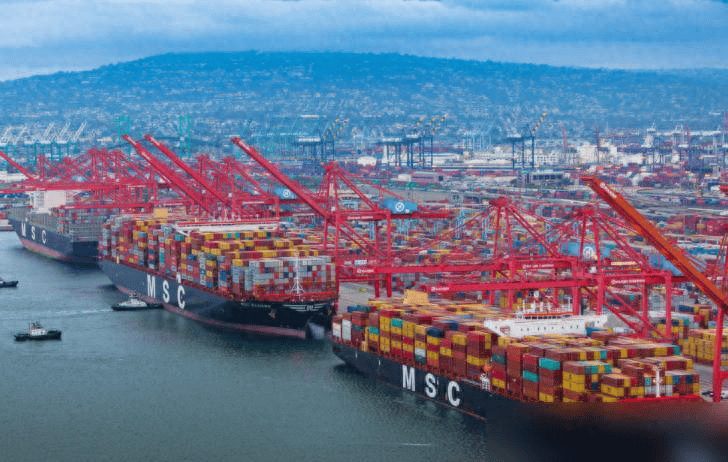
美国关税政策如何影响全球经济金融
Jin Rong Shi Bao· 2025-07-07 03:42
Core Insights - The U.S. tariff policy since 2025 has been characterized by broad scope, significant magnitude, and high uncertainty, impacting the global economy profoundly [1] Group 1: Impact on Global Trade and Capital Flow - The U.S. tariff increases have raised import prices, suppressing global trade vitality and leading to a decline in trade volume [2] - The World Bank forecasts global trade growth rates of 1.8% and 2.4% for 2025 and 2026, respectively, down by 1.3 and 0.8 percentage points from earlier predictions [2] - Capital flows have become more diversified due to the turbulence caused by U.S. tariff policies, with Japan's exports to the U.S. dropping by 11.1% year-on-year in May 2025 [2] Group 2: Impact on Global Economic Growth - The U.S. tariff policy has a significant negative effect on global economic growth, with the World Bank predicting a growth rate of only 2.3% for 2025, down from a previous estimate of 2.7% [2] - Rising import prices due to tariffs reduce consumer purchasing power, leading to decreased demand [2] - Trade uncertainties have made businesses more cautious in their investment decisions, resulting in many potential projects being shelved or canceled [2] Group 3: Reshaping International Trade Rules - The U.S. tariff policy challenges existing international trade rules, aiming to reconstruct a trade order favorable to itself under the "America First" principle [3] - Other economies are strengthening existing agreements or exploring new regional trade agreements to protect their interests, leading to a more multipolar development of global trade rules [3] Group 4: Challenges and Opportunities for China - Major challenges for China include rising costs, profit compression, loss of orders, and increased pressure for supply chain relocation [4] - Opportunities for China involve accelerated domestic substitution, innovation-driven development, expansion of the domestic market, and optimization of global market layout [4] Group 5: China's Response to U.S. Tariff Policies - China has demonstrated a firm stance and multi-faceted response strategies against U.S. tariff policies, quickly opposing unreasonable tariffs and implementing countermeasures [5] - Strengthening communication and cooperation with other economies has been a priority, with trade shares in Southeast Asia, Central Asia, and Africa increasing [6] - China has actively called for the role of multilateral mechanisms, opposing protectionism and maintaining the authority and fairness of the multilateral trade system [6] - Overall, China's efforts have significantly enhanced global confidence in addressing U.S. tariff policies and have provided a stabilizing effect on both the Chinese and global economies [6]
美国关税政策对全球经济金融的影响与走向研判
Jin Rong Shi Bao· 2025-07-07 03:23
Group 1: Characteristics of US Tariff Policy - The US tariff policy since 2025 has shown a broad coverage and significant expansion, imposing a 10% basic tariff on nearly all imported goods, impacting various industries including electronics, machinery, chemicals, and textiles [2][3] - The tariff rates are differentiated based on trade deficit and competitive relationships, with complex exemption processes for even "friendly" countries, indicating a strategic use of tariffs for economic and political goals [3] - The policy exhibits high uncertainty, with frequent adjustments causing confusion among global trade participants, complicating long-term business planning [3] Group 2: Impact on the US Economy - The tariff policy aims to protect domestic industries and reduce trade deficits, but it has led to rising inflation pressures, with the Federal Reserve adjusting GDP growth forecasts down by 0.3 percentage points to 1.4% for 2025 [4] - US companies, including local and foreign firms, face increased import costs disrupting supply chains, with small furniture manufacturers and farmers in the Midwest experiencing severe financial difficulties due to tariff impacts [5] - The US's international credibility is damaged due to erratic policy changes, leading to decreased confidence among global investors and trade partners, reflected in the reduced attractiveness of US Treasury bonds [6] Group 3: Global Economic and Financial Impact - The US tariff policy disrupts global trade and capital flows, raising import prices and suppressing trade activity, with the World Bank predicting a decline in global trade growth rates for 2025 and 2026 [7][8] - The policy negatively affects global economic growth, with rising import prices reducing consumer purchasing power and investment uncertainty leading to cautious business decisions [8] - The tariffs challenge existing international trade rules, prompting a shift towards new regional trade agreements and increasing the influence of emerging economies in global trade rule-making [8] Group 4: Challenges and Opportunities for China - China's export costs rise due to US tariffs, particularly in the automotive sector, where exports to the US reached $17.15 billion in 2024, leading to profit compression and increased logistics costs [9][10] - The demand for Chinese exports in machinery, textiles, and apparel declines as US tariffs diminish price competitiveness, with a potential 20-30% drop in textile exports anticipated with a 10% tariff increase [10] - The pressure to relocate supply chains increases as multinational companies consider moving production to regions with lower tariffs, impacting China's position in global supply chains [11] Group 5: China's Response to US Tariff Policy - China has taken a firm stance against US tariffs, implementing reciprocal measures and engaging in trade talks to maintain economic relations [13] - The country is enhancing trade ties with other economies through initiatives like the Belt and Road, reducing reliance on the US market and expanding its global trade footprint [13][14] - China is advocating for multilateral mechanisms to address US violations of trade rules, strengthening its position in global trade discussions and enhancing its economic resilience [14]
棉花:关注美国关税政策及影响
Guo Tai Jun An Qi Huo· 2025-07-07 02:29
Group 1: Report's Core View - The report focuses on the cotton market, including domestic and international cotton prices, trading volumes, and the impact of US tariff policies. It also analyzes the current situation of the cotton spot and textile markets [1][2]. Group 2: Cotton Market Data Futures Market - CF2509 closed at 13,780 yuan/ton yesterday with a -0.04% daily increase and 13,850 yuan/ton in the night session with a 0.51% increase. CY2509 closed at 20,000 yuan/ton yesterday with a -0.17% daily increase and 20,070 yuan/ton in the night session with a 0.35% increase. ICE US Cotton 12 was at 68.43 cents/pound [1]. - The trading volume of CF2509 was 170,707 lots yesterday, a decrease of 20,256 lots from the previous day, and the open interest was 836,329 lots, a decrease of 5,890 lots. The trading volume of CY2509 was 7,668 lots yesterday, a decrease of 1,999 lots from the previous day, and the open interest was 22,872 lots, an increase of 1,045 lots [1]. Warehouse Receipts - The number of Zhengzhou cotton warehouse receipts was 10,067 yesterday, a decrease of 73, and the effective forecast was 262, a decrease of 4. The number of cotton yarn warehouse receipts was 2, unchanged, and the effective forecast was 6, a decrease of 4 [1]. Spot Market - The price of Beijiang 3128 machine - picked cotton was 15,120 yuan/ton, unchanged from the previous day. The price of Nanjiang 3128 machine - picked cotton was 14,810 yuan/ton, unchanged from the previous day. The price in Shandong was 15,171 yuan/ton, a decrease of 5 yuan from the previous day, and the price in Hebei was 15,130 yuan/ton, a decrease of 10 yuan from the previous day [1]. - The 3128B index was 15,200 yuan/ton, a decrease of 3 yuan from the previous day. The international cotton index M: CNCottonM was 75.96 cents/pound, a decrease of 0.25% from the previous day [1]. Price Spreads - The CF9 - 1 spread was 0, unchanged from the previous day. The spread between Beijiang 3128 machine - picked cotton and CF509 was 1,340 yuan/ton, an increase of 10 yuan from the previous day [1]. Group 3: Market Situation Domestic Cotton Spot - Cotton spot trading was sluggish, with weak downstream purchasing willingness, and the overall basis remained stable. Different regions and qualities of cotton had different basis quotes relative to CF09 [2]. Domestic Cotton Textile Enterprises - The pure cotton yarn market changed little, with still - low demand. The previous increase in cotton yarn prices did not drive speculative restocking, and spinning mill inventories continued to rise. The overall sales of the cotton greige fabric market were weak, with poor sales by weavers and high inventory pressure, and greige fabrics were sold at discounted prices depending on the quantity [2]. US Cotton - ICE cotton futures were closed on Friday due to a US holiday. This week, the market mainly focuses on the impact of US tariff policies on ICE cotton [2]. Group 4: Trend Intensity - The trend intensity of cotton is 0, indicating a neutral outlook, with the value ranging from - 2 (most bearish) to 2 (most bullish) [5].