
美国经济

Search documents
标普新高背后的隐忧:曾精准预测08危机的经济学家揭秘美国经济“暴风雨前的平静”
智通财经网· 2025-07-24 22:34
Core Viewpoint - Raghuram Rajan warns that while the U.S. economy appears stable in the short term, multiple shocks will eventually manifest, necessitating careful observation to foresee upcoming impacts [1] Group 1: Economic Indicators and Policies - Rajan highlights that the current economic data and stock market performance, including the S&P 500 reaching a historical high, may provide the Trump administration with more leeway to implement aggressive policies such as increasing tariffs and expanding fiscal deficits [1] - The average actual tariff level in the U.S. has reportedly reached 20%, which is ten times higher than at the beginning of the year, indicating significant trade policy shifts [1][2] Group 2: Trade and Monetary Policy Concerns - The delayed impact of tariffs on economic data is attributed to the government's repeated extensions of negotiation deadlines and companies' proactive measures such as stockpiling and adjusting supply chains [2] - Rajan expresses concern over the Trump administration's interference in monetary policy, citing recent pressures on Federal Reserve Chairman Jerome Powell, which could undermine the Fed's independence [2] Group 3: Broader Economic Principles - Rajan criticizes the government's rejection of traditional economic principles such as central bank independence, low tariffs, and open markets, warning that these changes could lead to significant economic downturns [3] - He draws parallels between the current U.S. situation and the Brexit scenario, suggesting that the potential negative consequences of current policies may only become apparent over time, similar to the delayed effects seen in the U.K. post-Brexit [3]
纳斯达克CEO:尽管宏观经济的不确定性依然存在,但美国经济继续展现出稳固的基本面。
news flash· 2025-07-24 12:07
Core Viewpoint - Despite ongoing macroeconomic uncertainties, the U.S. economy continues to demonstrate solid fundamentals [1] Group 1 - The CEO of Nasdaq emphasizes the resilience of the U.S. economy amid uncertainties [1]
21社论丨巩固经济优势,持续增强中国资产吸引力
21世纪经济报道· 2025-07-24 03:53
Group 1 - The core viewpoint of the article highlights the increasing confidence of global investors in Chinese assets, driven by the resilience of the Chinese economy and significant progress in economic transformation and upgrading [1][2][3] - Foreign investment in domestic RMB bonds has exceeded 600 billion USD, indicating a historical high level of foreign capital interest in China [1] - In the first half of the year, foreign net purchases of domestic stocks and funds reached 10.1 billion USD, with a notable increase in May and June to 18.8 billion USD, reflecting a growing willingness to allocate capital to RMB assets [1] Group 2 - The article emphasizes that China's economic resilience and high growth potential are based on long-term stable growth, requiring a balance between maintaining growth, structural adjustment, risk prevention, and reform [3] - It is crucial to expand domestic demand to ensure the economy remains resilient against external shocks, thereby boosting market confidence [4] - The narrative of "American exceptionalism" is fading, with global investors increasingly viewing China as a reliable choice amid global uncertainties, particularly in undervalued technology sectors [2]


关税冲击叠加税改法案 美国经济忧虑加剧
Yang Shi Wang· 2025-07-23 07:47
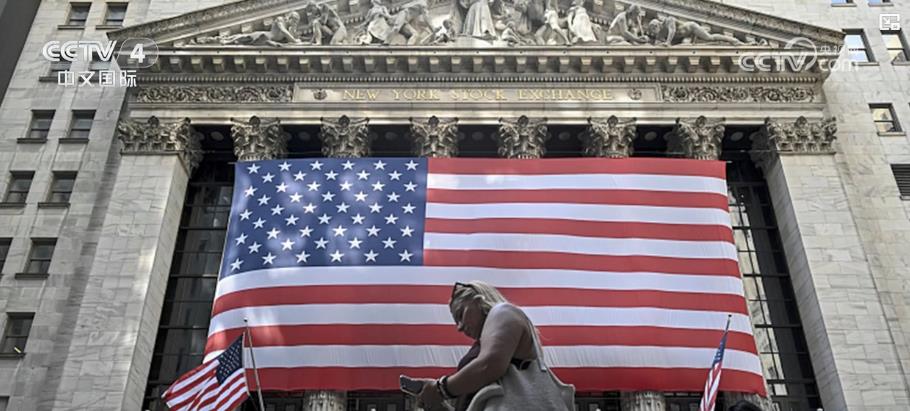
央视网消息:关税冲击叠加税改法案,金融机构警告美国经济风险。企业和消费者承受哪些压力?不确定性风险究竟意味着什 么? 英国《金融时报》:美国经济比表面看起来更脆弱 经济放缓的信号叠加通胀反弹的忧虑,令美联储的利率决策十分艰难。政府官员向美联储加大施压力度,批评美联储耗资25亿 美元的办公楼翻修项目。美联储主席面临被解雇的风险。内部博弈正在对经济和市场造成冲击。美联储独立性是市场信心的基石。 白宫与美联储在货币政策上的根本性分歧加剧,将影响美国整个金融市场的平稳运行。 美国 《财富》杂志:美国制造业回流困难重重 美国总统坚持"关税正在使国家'繁荣'的论调"。经济学家普遍认为,关税措施的影响尚未完全显现,因为许多企业提前囤积了库 存,以缓解成本上涨的影响。但政策不确定性正在抑制商业活动。消费者承担的关税成本比例也在上升。随着库存耗尽,成本转嫁 将更普遍,并进一步推高通胀、抑制投资。关税累积效应使经济容错空间变小。 美国《华尔街日报》:美联储承受巨大压力 美国经济远比表面数据显示的要脆弱,就业、消费都濒临不利的转折点。劳动力市场面临的现状是,雇主在很大程度上通过关 闭职位空缺来应对高不确定性和高利率环境。任何需求的 ...
美国贸易谈判进展跟踪【宏观视界第17期】
一瑜中的· 2025-07-22 13:44
Core Viewpoint - The article discusses the current macroeconomic environment and its implications for investment strategies, emphasizing the importance of understanding both domestic and international factors affecting market dynamics [3][4]. Group 1: Domestic Fundamentals - The report highlights the resilience of the domestic economy, noting that key indicators such as industrial profits and consumer spending remain robust despite external uncertainties [3][4]. - It points out the dual mission of consumption in driving economic growth while also addressing structural challenges within the economy [3][4]. Group 2: Financial Insights - The analysis indicates a trend of increasing financial support from the government to stabilize market expectations, particularly in the real estate sector [4]. - It discusses the implications of monetary policy adjustments and the need for careful monitoring of financial indicators to gauge future economic performance [3][4]. Group 3: Policy Tracking - The article reviews recent policy measures aimed at fostering economic growth and stability, emphasizing the ongoing commitment to reform and opening up [4]. - It notes the significance of fiscal policies in supporting key sectors and the potential for new policies to emerge in response to evolving economic conditions [4]. Group 4: International Context - The report examines the impact of global economic trends, including U.S. monetary policy and trade dynamics, on the domestic market [3][4]. - It highlights the importance of understanding international economic signals to make informed investment decisions [3][4].

如何看待当前美国经济数据?
2025-07-21 00:32
Summary of Key Points from Conference Call Records Industry Overview - The current economic situation in the United States is characterized by a gradual decline, with inflation and retail data showing signs of weakness. The CPI is expected to rise to around 3% in September-October and potentially reach 3.3%-3.5% by year-end, influenced by geopolitical factors and tariffs [1][2][3]. Core Insights and Arguments - **Inflation and Retail Sales**: In June, retail sales increased by 0.6%, but the actual growth rate was only 0.3%, indicating insufficient consumer market resilience. The impact of tariffs is causing a dampening effect on consumer expectations, which may lead to further pressure on consumer sentiment [1][2]. - **Economic Stagnation**: The U.S. economy is showing signs of stagflation, with slight inflation increases and poor retail performance. Despite decent non-farm payroll data in June, the structure of employment remains weak, suggesting significant room for interest rate cuts by the Federal Reserve in the second half of the year [2][3]. - **Market Optimism**: There is a prevailing optimism in the market, with expectations of breaking through a peak in the second half of 2024. Investors believe the most challenging phase has passed, and domestic policies will remain supportive to counter external uncertainties [4][5]. - **Consumer Subsidy Policies**: The effectiveness of domestic subsidy policies, particularly in the home appliance and automotive sectors, has led to a notable recovery in retail growth, indicating that demand has not been exhausted. These policies are expected to continue, with a gradual tapering process [6][10]. - **Emerging Industries**: Emerging sectors such as artificial intelligence and robotics are receiving significant policy support and technological advancements, positioning them as potential new growth points for the economy [8][10]. Additional Important Content - **Investment Recommendations**: Three key sectors are recommended for investment: 1. **Consumer Sector**: Focus on domestic subsidy-related areas, offline service consumption, and new consumption trends. 2. **Technology Sector**: Emphasis on AI, robotics, and the semiconductor supply chain. 3. **Dividend Sector**: High dividend, stable cash flow, and low valuation stocks are suggested for long-term positioning [10][11]. - **Market Liquidity**: The market has seen a good effect from liquidity and inflow of incremental funds, with a solid foundation for individual investors to enter the market [7]. - **Future Market Trends**: The market is expected to transition from policy-driven to fundamentals and liquidity-driven growth, with potential for a new upward trend in the second half of the year [9][11]. This summary encapsulates the key points from the conference call records, highlighting the current economic landscape, core insights, and investment opportunities within the U.S. market.
请回答2025系列报告(二):美联储能保住自己的独立性吗?
Minsheng Securities· 2025-07-18 08:02
Group 1: Economic Outlook - The expectation is that U.S. inflation will rebound in Q3 2025, while the economy continues to weaken[2] - The Federal Reserve's difficulty in lowering interest rates is increasing despite economic downturns[3] - The dollar index is projected to break 100 in Q2 and Q3 2025, with gold identified as a key asset below $3000 per ounce[3] Group 2: Federal Reserve Independence - The Federal Reserve's independence has been historically challenged, particularly during the World War II and Korean War periods, leading to inflation pressures[4] - The 1951 Treasury-Fed Accord marked a significant shift, establishing the Fed's independence in monetary policy[5] - Recent attempts by President Trump to influence the Fed's independence echo past governmental pressures, raising concerns about potential market impacts[7][12] Group 3: Historical Context - The Fed's establishment in 1913 did not prevent bank failures during the Great Depression, with one-third of banks closing by 1933[4] - The Fed's role evolved post-World War II, initially supporting government financing through low interest rates, which later contributed to inflation exceeding 20%[8][17] - The appointment of William McChesney Martin as Fed Chairman in 1951 was pivotal in asserting the Fed's independence against governmental pressures[10] Group 4: Risks and Implications - If the Fed loses its independence, the U.S. could face severe market repercussions, including stock, bond, and currency declines[12] - The potential for uncontrolled inflation could arise from aggressive monetary policy changes, leading to significant asset volatility[14]
提醒:美联储理事库克并没有在讲稿中置评美国经济或FOMC货币政策前景。
news flash· 2025-07-17 17:34
Core Viewpoint - Federal Reserve Governor Cook did not comment on the U.S. economy or the outlook for FOMC monetary policy in the speech [1] Group 1 - The absence of commentary on the U.S. economy suggests a cautious approach from the Federal Reserve [1] - The lack of insights into FOMC monetary policy may indicate a wait-and-see strategy among policymakers [1]
美联储前高级经济学家胡捷:高利率的抑制作用开始显现
第一财经· 2025-07-16 13:20
Core Viewpoint - The article discusses the current state of the U.S. economy amidst ongoing uncertainties due to tariff policies, highlighting a slowdown in economic growth and mixed signals from various economic indicators [1][4]. Economic Growth and Indicators - The U.S. GDP growth rate for 2025 has been revised down from 2.2% to 1.6% by OECD, and from 1.8% to 1.5% by IMF for 2026 [1]. - Current expectations suggest a decline in U.S. economic growth to around 1.4% this year, primarily due to the waning effects of fiscal stimulus and the impact of high interest rates [1][5]. - The unemployment rate decreased slightly to 4.1% in June, with non-farm payrolls increasing by 147,000, surpassing expectations [5][6]. Labor Market Dynamics - Despite a robust unemployment rate, signs of weakness in the labor market are emerging, particularly in the slowdown of job growth in the private sector compared to the public sector [6]. - The labor market is influenced by the overall economic slowdown and structural adjustments within industries, indicating a gradual weakening trend [6]. Inflation and Tariff Impact - The Consumer Price Index (CPI) rose by 2.7% year-on-year in June, the highest since February, but the impact of tariffs on inflation is mitigated by falling global energy prices and the limited scope of tariff implementation [1][8]. - The decline in oil prices from around $80 to approximately $65 per barrel has significantly contributed to controlling inflation [8]. - The actual impact of tariffs is less than initially expected due to delays in implementation and lower-than-anticipated tariff rates [9][10]. Monetary Policy Outlook - There is a high probability (over 90%) that the Federal Reserve will initiate interest rate cuts in September, as inflation indicators are trending downward and economic growth is slowing [11][12]. - The long-term outlook suggests that the federal funds rate may eventually decrease to around 2% or lower, although this will be a gradual process [11]. Currency and Trade Dynamics - The recent decline in the U.S. dollar index is attributed to expectations of Fed rate cuts and a slowdown in global trade growth, which reduces demand for the dollar [13]. - Despite some supportive factors for the dollar, such as stable capital inflows, the prevailing negative factors are expected to dominate in the short term, leading to a continued weak and volatile dollar index [13].

中美通话,资产空间待打开 港股&海外周论
2025-07-16 06:13
Summary of Conference Call Notes Industry or Company Involved - The discussion primarily revolves around the **U.S. stock market**, **Hong Kong stock market**, and **global asset markets**. Core Points and Arguments 1. **Market Sentiment and Trends** - The U.S. stock market is showing a clear rebound trend compared to the volatile nature of the Hong Kong market, with the potential to reach historical highs soon [1][2][3] - Global assets, excluding Chinese assets, have returned to pre-tariff levels, indicating a different external environment [2] 2. **U.S. Stock Market Drivers** - The U.S. stock market's recent gains are attributed to improved policy, events, and fundamental data, with the S&P 500 and Dow Jones increasing by 1.5% and 1.2% respectively [3] - Key factors for the rise include the easing of U.S.-China trade tensions, a stable unemployment rate, and a reduction in geopolitical conflicts [4] 3. **Economic Indicators** - The upcoming U.S. inflation data is crucial; a further slowdown could support the bullish sentiment in the stock market [5] - The job market remains resilient, with the U6 unemployment rate unchanged, indicating overall employment strength [4] 4. **Debt and Interest Rates** - The long-term U.S. Treasury yields have risen by 10 basis points due to better-than-expected employment data, with a higher risk of further increases in the near term [6] - Concerns about debt sustainability are overstated, as 80% of U.S. debt is short-term, reducing refinancing risks [7] 5. **Gold Market Insights** - There has been an increase in gold ETF holdings, particularly in the U.S., indicating a growing interest in gold as a safe-haven asset [8] 6. **Hong Kong Market Observations** - The Hong Kong market has seen cautious optimism, with investors lacking momentum due to insufficient incremental capital and policy support [9][10] - The market is characterized by a rotation towards undervalued stocks, with small-cap stocks gaining attention [11][12] 7. **Investment Strategies** - The focus remains on large-cap technology stocks and dividend-paying stocks, which are seen as attractive given the current liquidity conditions [13][14] - The overall sentiment towards Hong Kong stocks is cautious, with expectations that the current volatility will persist until significant news emerges [14][21] 8. **Future Outlook** - The market is expected to remain in a state of fluctuation, with potential catalysts being U.S.-China trade negotiations and upcoming economic data releases [22][23] - The long-term view suggests that the U.S. dollar may experience a period of volatility rather than a significant decline [19] Other Important but Possibly Overlooked Content - The discussion highlights the importance of distinguishing between emotional trading and fundamental analysis, emphasizing a return to basic economic indicators for investment decisions [15][16] - The potential for a shift in the U.S. fiscal landscape due to the upcoming debt ceiling discussions and the implications for market stability [18][19]