
股债跷跷板

Search documents
中金 • REITs | 从公募REITs中报看当前市场格局
中金点睛· 2025-09-04 23:42
Core Viewpoint - The article emphasizes the ongoing differentiation in the fundamentals of public REITs, highlighting the need for patience in improvement, with various sectors showing distinct performance trends [2][3][4]. Fundamental Outlook - The fundamentals of the REIT sector remain divided, with resilient performance in consumer and rental housing sectors, while industrial parks and logistics face short-term pressures [7][8][10]. - The consumer REITs benefit from government policies aimed at boosting consumption, showing improved foot traffic and sales [10]. - The rental housing sector maintains stability, with some market-oriented projects exploring diversified income streams [9][10]. - Industrial parks are under significant operational challenges due to increased supply and weakened leasing demand, with no immediate signs of improvement [7][8]. - Logistics REITs show manageable operational pressures, with regional performance varying significantly [8][9]. - Municipal environmental projects exhibit relative stability, but competition and cash flow recovery need monitoring [12]. - Energy projects, particularly hydropower and offshore wind, performed better than peers, but the impact of new energy market transactions remains to be seen [13]. Market Strategy - The market is expected to maintain a phase of fluctuation, with several concerns including the "stock-bond seesaw," valuation, fundamentals, and lock-up expirations [14][15]. - The current market valuation of public REITs is high, with a P/NAV ratio of 1.28, indicating a need for careful evaluation of investment opportunities [15][16]. - The article suggests that potential catalysts for market recovery include declining long-term interest rates, improved macroeconomic expectations, and favorable policy changes [17]. Distribution Performance - The distribution performance across sectors is increasingly divergent, with most projects experiencing a year-on-year decline in available distribution amounts [19][20]. - Consumer REITs showed an average year-on-year increase of 4.0% in available distribution amounts, while industrial parks and logistics faced declines of 9.5% and 4.3%, respectively [19]. - The article breaks down the adjustments from EBITDA to available distributions into five key components, highlighting the importance of cash adjustments and the sustainability of certain adjustments [20].


【广发宏观陈礼清】宽度下降后的叙事流转:大类资产配置月度展望
郭磊宏观茶座· 2025-09-04 14:56
Core Viewpoint - The macroeconomic environment since August 2025 has been characterized by a strong performance in high-growth sectors, particularly in China's technology stocks, alongside a backdrop of rising global bond yields and shifting currency dynamics [1][3][4]. Group 1: Asset Performance - In August 2025, major asset performances ranked as follows: Sci-Tech 50 > ChiNext Index > CSI 300 > Gold > Hang Seng Tech > Dow Jones > LME Copper > European Stocks > NASDAQ > Hang Seng Index > RMB > 0 > China Bond > Nanhua Composite > USD > Crude Oil > Long VIX [1][14]. - Risk assets generally rose in August, with notable performance in Chinese assets, a concurrent appreciation of the RMB, and pressure on government bonds [2][14]. - The domestic equity market saw a broad increase, with the Wind All A Index rising by 10.9% in August, while the 10-year government bond yield increased by 13.4 basis points to 1.84% [2][27]. Group 2: Macro Trading Themes - The primary macro trading themes since August 2025 include a "high-growth narrative" led by the Sci-Tech 50 and ChiNext Index, a "rate cut trade" in the U.S. following downward revisions in employment data, and a rise in "risk aversion" reflected in increasing global bond yields [3][57]. - The U.S. employment data revision has opened a window for potential Fed rate cuts, influencing various asset classes to align with this "rate cut trade" [3][57]. Group 3: Economic Indicators - The macroeconomic indicators show that the U.S. hard data has remained stable while soft data has slightly improved since August, contrasting with Europe and Japan, where economic outlooks are mixed [4][70]. - China's economic indicators suggest a slowdown, with an estimated actual GDP growth of approximately 4.76% for August, aligning with seasonal economic characteristics [4][70]. Group 4: Real Estate Market - The real estate market in China has shown a narrowing year-on-year decline in sales, with second-hand housing performing better than new homes, indicating a trend of "price for volume" [2][42]. - The rental yield in major cities has remained above the 30-year government bond yield, although the leading margin has narrowed compared to previous periods [2][42]. Group 5: Market Volatility and Sentiment - The volatility in the market has seen a decrease in August, with the number of daily ranking changes among 19 asset classes dropping from 124 to 114 [15][62]. - The VIX index has shown signs of recovery, indicating increased market uncertainty and potential adjustments in global risk assets [15][63].

超长期利率债交易受热捧 “换券”行情成为债市新热点
Xin Hua Cai Jing· 2025-09-04 14:47
Group 1 - The bond market has shown resilience in September, but some ultra-long bond yields have slightly increased against the trend, with "bond switching" becoming a key factor driving market movements [1][2] - As of September 4, the yield on the 10-year government bond (active bond 250011) rose by 0.75 basis points to 1.755%, while the 30-year government bond (active bond 2500002) increased by 1.15 basis points to 2.0085% [1] - The trading volume of the ultra-long government bond "25 Ultra Long Special Government Bond 06" has surged, with nearly 900 trades over three consecutive days, indicating a shift in market focus towards new bonds [2][3] Group 2 - The process of "bond switching" typically involves a shift in market pricing towards newly issued bonds due to their interest rate advantages and improved liquidity, leading to a decline in trading volume of older bonds [3] - The issuance schedule for the 30-year ultra-long special government bonds is relatively fast, with three more issuances planned in September and October, suggesting a potential for higher cost-effectiveness in pre-switch configurations [3] - The trading behavior indicates that the main sellers of ultra-long bonds are insurance funds and mutual funds, while banks and brokerages are the primary buyers, reflecting a strategic shift in market participation [3][6] Group 3 - Market sentiment appears to be at a short-term turning point, influenced by the "stock-bond seesaw" effect, with overall bond market performance being strong despite the rapid rise in long-end bond yields at the end of the trading day [6] - Future fluctuations in ultra-long bond rates may require stronger consensus expectations, potentially driven by a systemic weakening of market risk appetite or additional monetary easing from the central bank [6] - If the stock market continues its consolidation phase, the bond market is expected to remain within a volatile range, while a stock market recovery could test the upper limits of current bond market fluctuations [6]
债市日报:9月4日
Xin Hua Cai Jing· 2025-09-04 09:17
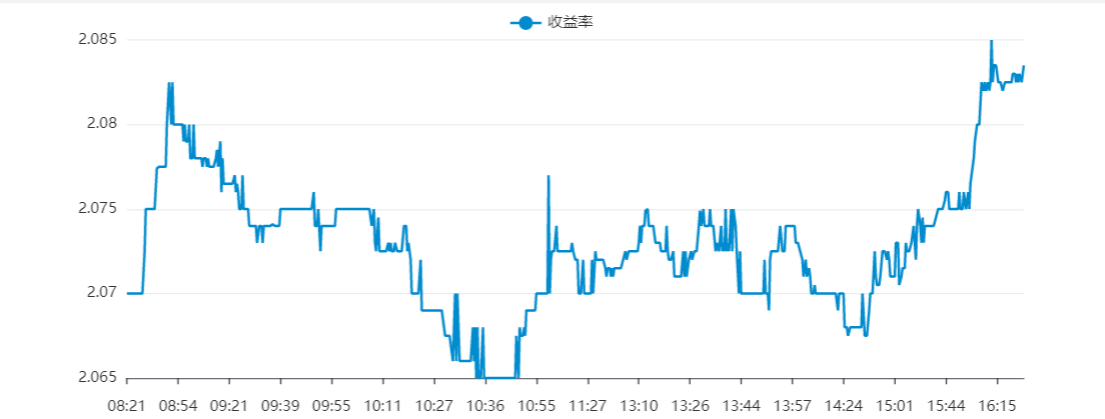
Market Performance - The bond market showed mixed performance on September 4, with interbank cash bonds initially strong but yields rising in the afternoon, while government bond futures mostly closed higher [1] - The 30-year main contract rose by 0.26% to 117.330, the 10-year main contract increased by 0.13% to 108.260, and the 5-year main contract went up by 0.06% to 105.755, while the 2-year main contract fell by 0.01% to 102.432 [2] Yield Movements - The yield on the 10-year China Development Bank bond rose by 1.1 basis points to 1.857%, while the 10-year government bond yield increased by 0.5 basis points to 1.7525% [2] - In the Eurozone, the 10-year French bond yield fell by 4.2 basis points to 3.538%, and the 10-year German bond yield decreased by 4.6 basis points to 2.737% [3] - In Asia, the 10-year Japanese bond yield dropped by 3.7 basis points to 1.593% [4] Primary Market - The China Development Bank's three financial bonds had winning yields mostly below the China Bond valuation, with yields of 1.3519%, 1.6702%, and 1.87% for 1-year, 5-year, and 10-year bonds respectively [5] - The bidding multiples for Hebei Province's local bonds exceeded 20 times, with a 10-year bond yield of 1.99% and a 15-year bond yield of 2.22% [5] Liquidity and Monetary Policy - The central bank conducted a 7-day reverse repurchase operation of 2126 billion yuan at a rate of 1.40%, with a net withdrawal of 2035 billion yuan for the day [6] - Short-term Shibor rates mostly rose, with the overnight rate unchanged at 1.316% and the 7-day rate up by 0.4 basis points to 1.437% [6] Institutional Insights - Citic Securities noted that the liquidity gap in September may narrow compared to August, with limited government bond supply disturbances and a supportive monetary policy [7] - Shenwan Hongyuan pointed out that the low interest rate environment has led to significant changes in asset allocation behavior, with funds seeking better alternatives due to low returns on deposits and pure bonds [8]
国债期货日报:股债跷跷板下,国债期货全线收涨-20250904
Hua Tai Qi Huo· 2025-09-04 07:04
Industry Investment Rating No information provided. Core Viewpoints - Under the stock - bond seesaw, Treasury bond futures closed higher across the board. The bullish stock market has led to a callback in risk appetite, which is beneficial to the bond market. At the same time, the expectation of the Fed's interest rate cut and the increase in global trade uncertainty have added uncertainty to foreign capital inflows. Overall, the bond market fluctuates between stable growth and easing expectations, and short - term attention should be paid to policy signals at the end of the month [1][3]. Summary by Directory 1. Interest Rate Pricing Tracking Indicators - **Price indicators**: China's CPI (monthly) had a 0.40% month - on - month increase and 0.00% year - on - year change; China's PPI (monthly) had a - 0.20% month - on - month decrease and - 3.60% year - on - year change [9]. - **Monthly economic indicators**: The social financing scale was 431.26 trillion yuan, with a month - on - month increase of 1.04 trillion yuan and a growth rate of 0.24%. M2 year - on - year was 8.80%, with a month - on - month increase of 0.50% and a growth rate of 6.02%. The manufacturing PMI was 49.40%, with a month - on - month increase of 0.10% and a growth rate of 0.20% [9]. - **Daily economic indicators**: The US dollar index was 98.16, with a month - on - month decrease of 0.16 and a decline rate of 0.16%. The US dollar against the offshore RMB was 7.1442, with a month - on - month increase of 0.004 and a growth rate of 0.06%. SHIBOR 7 - day was 1.43, with a month - on - month increase of 0.00 and a growth rate of 0.14%. DR007 was 1.44, with a month - on - month increase of 0.00 and a growth rate of 0.28%. R007 was 1.67, with a month - on - month decrease of 0.26 and a decline rate of 13.67%. The inter - bank certificate of deposit (AAA) 3M was 1.55, with a month - on - month increase of 0.00 and a decline rate of 0.03%. The AA - AAA credit spread (1Y) was 0.09, with a month - on - month increase of 0.00 and a decline rate of 0.03% [9]. 2. Overview of the Treasury Bond and Treasury Bond Futures Market - Multiple charts are used to show the situation of the Treasury bond futures market, including the closing price trend of the main continuous contracts, the price change rate of each variety, the precipitation of funds, the proportion of positions held, the net position ratio of the top 20, the long - short position ratio of the top 20, the spread between national development bonds and Treasury bonds, and the issuance of Treasury bonds [11][12][15]. 3. Overview of the Money Market Fundamentals - The charts show the trading statistics of inter - bank pledged repurchase and the issuance of local government bonds [25]. 4. Spread Overview - Multiple charts show the inter - period spread trend of Treasury bond futures and the spread between the spot bond term spread and the futures cross - variety spread [28][33][34]. 5. Two - Year Treasury Bond Futures - Charts show the implied interest rate of the main contract of two - year Treasury bond futures and the Treasury bond yield to maturity, the IRR of the TS main contract and the capital interest rate, and the three - year basis and net basis trends of the TS main contract [36][39][47]. 6. Five - Year Treasury Bond Futures - Charts show the implied interest rate of the main contract of five - year Treasury bond futures and the Treasury bond yield to maturity, the IRR of the TF main contract and the capital interest rate, and the three - year basis and net basis trends of the TF main contract [49][54]. 7. Ten - Year Treasury Bond Futures - Charts show the implied yield of the main contract of ten - year Treasury bond futures and the Treasury bond yield to maturity, the IRR of the T main contract and the capital interest rate, and the three - year basis and net basis trends of the T main contract [56][57]. 8. Thirty - Year Treasury Bond Futures - Charts show the implied yield of the main contract of thirty - year Treasury bond futures and the Treasury bond yield to maturity, the IRR of the TL main contract and the capital interest rate, and the three - year basis and net basis trends of the TL main contract [63][66][69]. Strategy - **Unilateral**: As the repurchase rate falls, the price of Treasury bond futures fluctuates [4]. - **Arbitrage**: Pay attention to the decline of the 2512 basis [4]. - **Hedging**: There is an adjustment pressure in the medium term, and short - sellers can use far - month contracts for appropriate hedging [4].
情绪退潮,股债跷跷板再度上演
Zhong Xin Qi Huo· 2025-09-04 03:19
1. Report Industry Investment Rating - The report does not provide an overall industry investment rating. However, for each financial derivative, it gives a "neutral" outlook, indicating a "hold" or "neutral" stance on trading in these markets [6]. 2. Core Viewpoints - The overall sentiment in the stock index futures market has ebbed, with the All-A Index falling for two consecutive days, a significant reduction in trading volume, and multiple signs of weakening capital. It is recommended to shift to a barbell-style allocation and consider reducing positions [1][6]. - In the stock index options market, the equity market performed weakly. It is recommended to continue holding put options for defense [1][6]. - The bond market has returned to the stock-bond seesaw logic. If the stock market continues to adjust, the bullish sentiment in the bond market may further increase; otherwise, the bond market may give back its gains. It is necessary to pay attention to the performance of the stock market [2][6]. 3. Summary by Directory 3.1 Market Views Stock Index Futures - **Market Performance**: The All-A Index fell 1.19% for two consecutive days, with military, non-bank, and software sectors leading the decline. Trading volume shrank to around 2.4 trillion, and the number of falling stocks exceeded 4,000. There are multiple signs of weakening capital, such as the breaking of the China Securities Convertible Bond and Microcap Index, the widening of the discount of IC and IM, and the decline in the proportion of margin trading purchases [1][6]. - **Operation Suggestion**: Hold long positions in IM + dividend style or hold half of the long positions in IM [6]. Stock Index Options - **Market Performance**: The equity market was weak, and the Shanghai Composite Index fell 1.16%. The trading volume of each option variety decreased, the PCR of open interest continued to decline, and the implied volatility showed mixed trends [1][6]. - **Operation Suggestion**: Continue to hold put options for defense [1][6]. Treasury Bond Futures - **Market Performance**: The bond market returned to the stock-bond seesaw logic. The stock market was weak, and the Shanghai Composite Index adjusted, which may have driven up risk aversion and bullish sentiment in the bond market. The open interest of the main contracts of each variety increased, especially the T and TL contracts [2][6]. - **Operation Suggestion**: The trend strategy is neutral. For hedging strategies, pay attention to short hedging at low basis levels. For basis strategies, pay attention to long-end arbitrage opportunities. For curve strategies, pay attention to steepening the yield curve [6][7]. 3.2 Economic Calendar - The economic calendar shows data on the EU's unemployment rate, CPI, core CPI, PPI, and the US's ISM manufacturing PMI and ADP employment data from September 1 - 4, 2025 [9]. 3.3 Important Information and News Tracking - The joint working group of the Ministry of Finance and the People's Bank of China held its second meeting, aiming to strengthen the coordination of fiscal and monetary policies and promote the stable and healthy development of the bond market [10]. - According to the China Passenger Car Association, from August 1 - 31, the retail sales of the national passenger car market reached 1.952 million units, a year-on-year increase of 3% and a month-on-month increase of 7%. The cumulative retail sales this year reached 14.698 million units, a year-on-year increase of 9%. The wholesale volume of passenger car manufacturers was 2.409 million units, a year-on-year increase of 12% and a month-on-month increase of 8%. The cumulative wholesale volume this year reached 17.934 million units, a year-on-year increase of 12% [10]. 3.4 Derivatives Market Monitoring - The report mentions data on stock index futures, stock index options, and treasury bond futures, but specific data details are not provided in the text [11][15][27].
宁证期货今日早评-20250904
Ning Zheng Qi Huo· 2025-09-04 01:18
Report Industry Investment Ratings No relevant content provided. Core Views - The Fed's Beige Book indicates rising inflation and economic downturn risks in the US, increasing stagflation risks and driving up gold prices. The market awaits US non - farm data, with gold likely to fluctuate in the short term [1]. - API data shows crude oil inventory accumulation. The market is concerned about OPEC+ potentially canceling the second - layer production cuts ahead of schedule. The short - term driving force is weak, and it's advisable to wait and see [1]. - Short - term steel demand improvement is limited. Steel prices may fluctuate narrowly, and the demand recovery will determine the later trend [3]. - For coking coal, the supply is expected to shrink, and the demand from high - level hot metal production provides support. It should be viewed with a range - bound perspective in the short term [3]. - Silicon iron cost is supported, but the market supply - demand relationship is becoming looser. The short - term price decline is limited, and the price center will move down in the long term [4]. - Bond issuance may accelerate in the third quarter, affecting long - term bonds. The stock - bond seesaw is the main logic, and long - term bonds may fluctuate bearishly [5]. - US employment data shows economic pressure, and some Fed officials signal rate cuts. The market awaits non - farm data, and the impact of gold's fluctuations on silver should be noted [5]. - Rubber supply is increasing but slower than usual, and demand is weak. It should be treated with a range - bound view [6]. - Methanol domestic production is rising, and the port inventory is accumulating. The 01 contract is expected to fluctuate in the short term [7]. - The domestic soda ash market is weakly stable and may fluctuate downward in the short term [8]. - PTA supply is expected to increase, and its price should be treated with a bearish - fluctuating view [9]. - Short - term hog prices are weak in the near term and strong in the long term, and relevant trading strategies can be considered [10]. - Domestic and imported soybeans' prices are under pressure, and the US crop growth and international relations should be monitored [12]. - The market expects a bearish MPOB report for Malaysian palm oil, and trading should be short - selling on rallies [13]. - LLDPE prices are weak, and the L2601 contract may fluctuate downward in the short term [14]. Summary by Variety Precious Metals - **Gold**: The Fed's Beige Book shows rising inflation and economic downturn risks in the US, increasing stagflation risks, which is the driving force for gold's rise. The market awaits US non - farm data, and gold may fluctuate in the short term [1]. - **Silver**: US employment data shows economic pressure, and some Fed officials signal rate cuts. The market awaits non - farm data, and the impact of gold's fluctuations on silver should be noted [5]. Energy - **Crude Oil**: API data shows crude oil inventory accumulation. The market is concerned about OPEC+ potentially canceling the second - layer production cuts ahead of schedule. The short - term driving force is weak, and it's advisable to wait and see [1]. Metals - **Steel**: Short - term demand improvement is limited. Steel prices may fluctuate narrowly, and the demand recovery will determine the later trend [3]. - **Coking Coal**: The supply is expected to shrink, and the demand from high - level hot metal production provides support. It should be viewed with a range - bound perspective in the short term, and the 2601 contract can be traded within the 1050 - 1200 range [3]. - **Silicon Iron**: Cost is supported, but the market supply - demand relationship is becoming looser. The short - term price decline is limited, and the price center will move down in the long term. It's advisable to wait for short - selling opportunities [4]. Bonds - **Long - term Treasury Bonds**: Bond issuance may accelerate in the third quarter, affecting long - term bonds. The stock - bond seesaw is the main logic, and long - term bonds may fluctuate bearishly [5]. Agricultural Products - **Soybeans**: Domestic new - season soybeans are expected to increase in production, and the continuous release of state - reserve old grains and weak downstream demand put pressure on prices. The US crop growth and international relations should be monitored [12]. - **Palm Oil**: The market expects a bearish MPOB report for Malaysian palm oil. The domestic import profit is in a deeper inversion. It's advisable to short - sell on rallies [13]. Chemicals - **Rubber**: Supply is increasing but slower than usual, and demand is weak. It should be treated with a range - bound view [6]. - **Methanol**: Domestic production is rising, and the port inventory is accumulating. The 01 contract is expected to fluctuate in the short term, with resistance at 2405. It's advisable to wait and see [7]. - **Soda Ash**: The domestic market is weakly stable and may fluctuate downward in the short term, with resistance at 1290. It's advisable to wait and see or short - sell on rallies [8]. - **PTA**: Supply is expected to increase, and its price should be treated with a bearish - fluctuating view [9]. Others - **Plastic (LLDPE)**: Prices are weak, and the L2601 contract may fluctuate downward in the short term, with resistance at 7255. It's advisable to short - sell on rallies [14]. - **Hogs**: Short - term prices are weak in the near term and strong in the long term. It's advisable to short the near - month contract and long the far - month contract or for farmers to sell - hedge according to the slaughter schedule [10].
广发早知道:汇总版-20250903
Guang Fa Qi Huo· 2025-09-03 14:15
Report Industry Investment Rating No information provided in the content. Core Viewpoints of the Report - In the financial derivatives market, A - shares are in a high - level shock pattern, and bonds are affected by multiple factors with limited adjustment expectations. Precious metals are driven by political instability in Europe and the United States and are expected to rise. The shipping market is expected to fluctuate, and the metal and agricultural product markets have different trends based on supply - demand and macro - factors [2][5][8][13][15][55] - In the commodity futures market, different metals have different trends. For example, copper prices are expected to be affected by interest - rate cut expectations, while aluminum prices are affected by macro - expectations and fundamental improvements. Agricultural products such as soymeal and pork also have their own market characteristics [15][22][55] Summary by Directory Financial Derivatives Financial Futures - **Stock Index Futures**: On Tuesday, A - shares fell, with the Shanghai Composite Index down 0.45%. The four major stock index futures contracts mostly declined. Domestic and overseas news affected the market. A - share trading volume remained high, and the central bank conducted reverse repurchase operations with a net withdrawal of funds. It is recommended to wait and see [2][3][4] - **Treasury Bond Futures**: Treasury bond futures fell across the board. The central bank's reverse repurchase operations led to a net withdrawal of funds, but the overall liquidity was stable. The bond market was weak due to multiple factors. It is recommended to observe the stock market trend and institutional behavior. The 10 - year Treasury bond interest rate is expected to fluctuate in the range of 1.75% - 1.8% [5][6][7] Precious Metals - Gold prices reached a new high due to political instability in Europe and the United States, with a 1.65% increase. Silver prices also rose slightly. In the future, the price of gold is expected to rise above $3600, and silver may rise above $42, but there are risks [8][10][12] Container Shipping on European Routes - Spot prices are falling, and shipping indices show different trends. The global container capacity has increased, and the futures market rebounded. It is expected to fluctuate, and 12 - 10 spread arbitrage can be considered [13][14] Commodity Futures Non - ferrous Metals - **Copper**: The spot price increased, and the macro - level interest - rate cut expectation improved. Supply was affected by various factors, and demand had certain resilience. The copper price is expected to be volatile, with the main contract reference range of 78500 - 81000 yuan/ton [15][17][19] - **Alumina**: The spot price decreased, supply increased, and inventory accumulated. The market is expected to be in a weak shock, with the main contract reference range of 2900 - 3200 yuan/ton [19][20][21] - **Aluminum**: The spot price increased, supply was at a high level, demand improved marginally, and inventory was at a low level year - on - year. It is expected to be in a wide - range shock, with the main contract reference range of 20400 - 21000 yuan/ton [22][23] - **Aluminum Alloy**: The spot price was stable, supply was affected by the off - season, demand was weak, and the price difference with aluminum was expected to narrow. It is expected to be in a shock - upward trend, with the main contract reference range of 20000 - 20600 yuan/ton [24][25] - **Zinc**: The spot price increased, supply was loose, demand was about to enter the peak season, and inventory showed different trends at home and abroad. It is expected to be in a shock, with the main contract reference range of 21500 - 23000 yuan/ton [26][27][28] - **Tin**: The spot price increased, supply was tight, demand was weak, and inventory showed different trends. It is expected to be in a wide - range shock, and it is recommended to wait and see [28][29][30] - **Nickel**: The spot price was stable, supply was at a high level, demand was different in different fields, and inventory was at a high level overseas and decreased at home. It is expected to be in an interval adjustment, with the main contract reference range of 118000 - 126000 yuan/ton [31][32][33] - **Stainless Steel**: The spot price increased, raw material prices were firm, supply was expected to increase, and demand was weak. It is expected to be in an interval shock, with the main contract reference range of 12600 - 13400 yuan/ton [34][35][36] - **Lithium Carbonate**: The spot price decreased, supply was in a tight balance, demand was optimistic, and inventory decreased slightly. It is expected to be in a weak wide - range shock, and it is recommended to wait and see [37][39][40] Ferrous Metals - **Steel**: The price showed signs of stabilizing. The cost support was expected to weaken, supply was at a high level, demand was in a seasonal decline and was expected to recover. It is recommended to sell out - of - the - money put options and do long on the ratio of steel to iron ore [40][41][44] - **Iron Ore**: The spot price increased, the futures price fluctuated, the supply increased, the demand was affected by steel production, and the inventory showed different trends. It is expected to be in a shock, with the reference range of 750 - 810 yuan/ton, and it is recommended to do long on iron ore and short on coking coal [47][48] - **Coking Coal**: The spot price was in a weak shock, supply was affected by mine accidents and production suspension, demand decreased due to production restrictions, and inventory was in a marginal decline. It is recommended to hold previous short positions and do long on iron ore and short on coking coal [49][50][51] - **Coke**: The seventh price increase was implemented, and the eighth one was blocked. Supply decreased due to production restrictions, demand decreased slightly, and inventory increased slightly. It is recommended to hold previous short positions and do long on iron ore and short on coke [52][53][54] Agricultural Products - **Meal**: The spot price of soybean meal decreased, and the market was affected by various news. In the long - term, it is expected to be bullish. It is recommended to go long at a low level when the price stabilizes in the range of 3000 - 3050 yuan/ton [55][56][57] - **Pig**: The spot price fluctuated, and the short - term supply contraction boosted the price. It is recommended to pay attention to the subsequent slaughter rhythm and be cautious in operation [58][59] - **Corn**: The spot price was stable in some areas and increased in ports. The inventory in Guangzhou Port showed different trends. The price rebounded and adjusted [60]
2025年9月债券市场展望:煎熬的等待期:资产配置主线下的债市新平衡
Shenwan Hongyuan Securities· 2025-09-03 13:45
Report Title - "The Arduous Waiting Period: A New Balance in the Bond Market under the Asset Allocation Mainline - Outlook for the Bond Market in September 2025" [1] Report Date - September 3, 2025 [2] Report Industry Investment Rating - Not provided Core Viewpoints - Since 2022, the transmission from broad credit to the fundamentals seems to be weakening. The stock - bond seesaw effect since 2025 may be driven by new logic: anti - involution has reversed the macro narrative since 2024, and the rise of the stock market and the improvement of expectations reinforce each other [5][108][165] - The stock - bond seesaw is just an appearance. The deeper reason is that in a low - interest - rate environment, residents' asset allocation behavior has changed substantially. Deposits and pure bonds have entered a low - return range, and funds are seeking more cost - effective alternative assets, increasing the demand for stock - bond hybrid products [8][113][165] - In 2025, the supply of long - duration government bonds has increased more significantly, leading to an imbalance between supply and demand and a steeper term spread [8][132][165] - Currently, the core issue is the lack of continuous buying power from allocation players, and trading players are mainly engaged in speculation [7][165] Summary by Directory 1. Analysis of the Bond Market Trend from January to Date and Its Macroeconomic Logic - **2025 Q1**: Tight funds and prominent bank liability pressure led to a bond market correction [16] - **2025 Q2**: Repeated tariff expectations, along with potential reserve requirement ratio and interest rate cuts, caused yields to decline rapidly to a low level and then fluctuate [18] - **2025 July - August**: Anti - involution expectations, the stock - bond seesaw effect, and fund diversion led to a bond market correction. In August, the term spread of treasury bonds expanded, and the duration strategy began to collapse. The credit spreads of secondary perpetual bonds and medium - term notes first increased and then decreased [20][22][27] - **Summary**: Since the beginning of the year, long - term interest rates have repeatedly attempted to break through previous lows but failed, and the interest rate bottom has been rising (the bond YTM has shown an arc - bottom pattern since the beginning of the year) [4][39][48] 2. Understanding the Deviation among Funds, Certificates of Deposit (CDs), and the Bond Market - **6 - 8 months**: Overall, funds were loose to support bond issuance, stabilize the economy, and hedge the impact of the stock market on the bond market. After the double cuts in May, the central bank's medium - and long - term liquidity net injection from January to August 2025 totaled 3.98 trillion yuan, significantly exceeding historical levels [52][55][100] - **September**: Both medium - and long - term liquidity and CD maturities are high. The first ten days may be an important window to observe the central bank's attitude. The central bank may conduct 3 - month outright reverse repurchases to hedge [68][98][100] - **Deviation since July**: Funds have been loose, but CD prices have remained rigid. The CD price has a seasonal pattern of bottoming out and rising in the third quarter. Rising stock market trading activity, increased net supply of government bonds, and other factors have contributed to this situation [69][88][95] - **CD Pressure Relief**: Focus on whether the central bank conducts 3 - month outright reverse repurchases in early September. Consider whether there will be another double cut around the beginning of the fourth quarter to relieve economic and bank liability pressure [98][100] 3. Revisiting Deposit Transfer and Fund Diversion Effects - **Traditional Logic of the Stock - Bond Seesaw**: In most periods, stocks and bonds show a seesaw relationship. The driving logic is the transmission from broad money to broad credit, with expectations of fundamental improvement leading to a rising stock market, rising interest rates, and narrowing credit spreads [103] - **Resident Wealth Transfer**: It is a stock logic. In a low - interest - rate environment, residents are re - allocating assets. The main destinations of deposit diversion in recent years are likely wealth management and insurance. Residents' direct entry into the stock market may still be in the early stage [109][113][120] - **Stock and Bond Financing Comparison**: In 2024, the supply and demand of stocks were weak, while in 2025, supply increased marginally, but demand increased more significantly. In 2024, the supply of bonds was large and demand was strong, but in 2025, supply continued to increase significantly while demand weakened [132][135][139] - **Role of Allocation Players**: Insurance companies have a weaker preference for the bond market and are more interested in high - dividend assets. They are waiting for better prices in the bond market. Rural commercial banks' bond - buying power has weakened, and the bond investment scale of some accounts has shrunk [140][147][154] - **Role of Trading Players**: Since July 2025, wealth management products have been the main buyers during the bond market adjustment, indicating that the liability side of wealth management may still be stable. Pure bond funds have performed poorly this year and have faced continuous redemption pressure [155][159][163] 4. How Much Risk Has the Bond Market Released? - **Adjustment since July**: The adjustment of long - term interest rates is due to the impact of anti - involution expectations on the bond market and the stock - bond re - balance caused by fund diversion. The widening of the term spread is essentially a correction of pessimistic expectations [12] - **Future Risks to Watch**: Expectations of rising inflation, instability of the liability side of wealth management and funds, and the impact of redemptions [12] - **Indicators to Monitor**: The trend of CDs, the entry strength of allocation players, and the performance of credit spreads. The bond market is still under pressure, and a cautious view is maintained. In September, the bond market may continue to be in an arduous waiting period, and attention should be paid to the structural widening pressure of credit spreads [11][12][100]
【财经分析】信用债结构性“跑赢”利率债 短端品种或为阶段“良配”
Xin Hua Cai Jing· 2025-09-03 06:21
Core Viewpoint - Despite the weak sentiment in the bond market influenced by the "stock-bond seesaw" effect, credit bonds are currently outperforming interest rate bonds, with analysts suggesting that institutions can still capture coupon assets and seek capital gains in the short term [1][2][3] Group 1: Credit Bond Performance - In August, credit bonds structurally "outperformed" interest rate bonds, with credit spreads not significantly widening [2] - The economic fundamentals remain weak, as indicated by the manufacturing PMI of 49.4 in August, which is below the growth line [2] - The "stock-bond seesaw" effect has weakened, reducing the negative feedback from a bullish stock market on the bond market [2] Group 2: Funding Support - The funding environment is expected to remain stable, with monetary policy maintaining a supportive tone [3] - The second quarter monetary policy report emphasizes a "moderately loose monetary policy" to adapt to domestic and international economic conditions [3] - There is an increasing expectation of interest rate cuts from the Federal Reserve, which could lead to more trading opportunities in the bond market [3] Group 3: Demand Side Support - As of September 2, the yields on credit bonds in the interbank market have decreased, with the 3-month AAA yield down 1 basis point to 1.59% [3] - Bank wealth management products were the main buyers of credit bonds in August, with net purchases of approximately 180 billion yuan [4] - Insurance companies also significantly increased their purchases of credit bonds, with a net buying scale of 56.2 billion yuan in August [4] Group 4: Investment Strategy - It is recommended to focus on short-duration high-yield bonds, particularly city investment bonds with maturities around 2 years [7] - Institutions are advised to selectively consider mid-to-short duration coupon assets with ratings of AA+ and above [7] - Caution is advised for long-duration credit bonds due to limited buying power in the bond market and the absence of clear stabilization in interest rates [7][8]