
自由贸易

Search documents
李强出席二十国集团领导人第二十次峰会第一阶段会议并发表讲话
证监会发布· 2025-11-23 03:14
Group 1 - The core message emphasizes the importance of unity among G20 members to address global economic challenges, highlighting that division is not a viable solution [2][3] - The article discusses the need for maintaining free trade and building an open world economy in the face of economic recovery difficulties [3] - It stresses the necessity of reforming international institutions like the World Bank and IMF to enhance the voice of developing countries and create a fairer international economic order [3] Group 2 - The G20 has become a crucial platform for international cooperation over the past 20 years, addressing challenges and sharing opportunities [3] - The article mentions initiatives such as the "Implementation of the G20 Support for Africa and Least Developed Countries Industrialization Initiative" and the establishment of a global development academy to promote collective development [3] - It calls for G20 members to take responsibility, strengthen collaboration, and uphold multilateralism to tackle ongoing global uncertainties [3]


每周海内外重要政策跟踪(25/11/21)-20251121
GUOTAI HAITONG SECURITIES· 2025-11-21 11:53
Domestic Macro - On November 14, Premier Li Qiang chaired a State Council executive meeting to discuss the implementation of the "two重" construction work [5][16] - On November 17, Vice Premier He Lifeng co-hosted the fourth high-level financial dialogue between China and Germany [5][16] - On November 18, Premier Li Qiang stated at the Shanghai Cooperation Organization meeting that increasing tariffs and trade barriers severely impact international trade order, urging all parties to embrace free trade and reduce barriers [5][16] - On November 19, Vice Premier Zhang Guoqing conducted research on the digital transformation of manufacturing and innovation development of state-owned enterprises in Guizhou and Chongqing [5][16] - The National Immigration Administration announced the expansion of ports issuing valid travel permits for Taiwan residents to 100 starting November 20 [5][16] - On November 20, the Ministry of Finance and the Ministry of Commerce officially announced a list of 50 cities proposed for new consumption models and scenarios pilot [5][16] Industry Policy - On November 14, the People's Bank of China released the "Interbank Market Brokerage Business Management Measures" [6][18] - On November 15, the State Administration for Market Regulation published a notice soliciting opinions on the "Antitrust Compliance Guidelines for Internet Platforms" [6][18] - On November 17, the Ministry of Commerce decided to conduct a final review investigation on anti-dumping and countervailing measures applicable to imported propanol from the United States [6][18] - On November 18, the Ministry of Industry and Information Technology issued the "High-Standard Digital Park Construction Guidelines" [6][18] Local Policy - On November 14, a press conference was held in Hebei regarding the "14th Five-Year" high-quality development plan [7][19] - On November 15, Jiangsu Province raised the subsidy standard for automobile consumption promotion, with a maximum subsidy of 10,000 yuan [7][19] - On November 18, Beijing introduced a financial support plan to boost and expand consumption [7][19] - On November 19, the Beijing-Tianjin-Hebei region signed a collaborative innovation action plan for the free trade pilot zone [7][19] - On November 20, the Guangdong Provincial Government issued a plan for the construction of a national digital economy innovation development pilot zone from 2025 to 2027 [7][19] Overseas Dynamics - On November 14, China and Switzerland held the third round of negotiations to upgrade the free trade agreement in Beijing [8][20] - On November 17, China expressed strong protests to Japan regarding comments made by Japanese Prime Minister Fumio Kishida on Taiwan [8][20] - On November 18, Premier Li Qiang met with Russian President Vladimir Putin in Moscow, emphasizing the commitment to enhance bilateral cooperation [8][20] - On November 19, the U.S. and Saudi Arabia officially signed a strategic partnership agreement on artificial intelligence [8][20] - On November 20, the Ministry of Foreign Affairs stated that there were no arrangements for a meeting between Chinese and Japanese leaders during the G20 [8][20]
彭斯炮轰特朗普关税政策:美国消费者才是最终买单人
Sou Hu Cai Jing· 2025-11-20 08:37
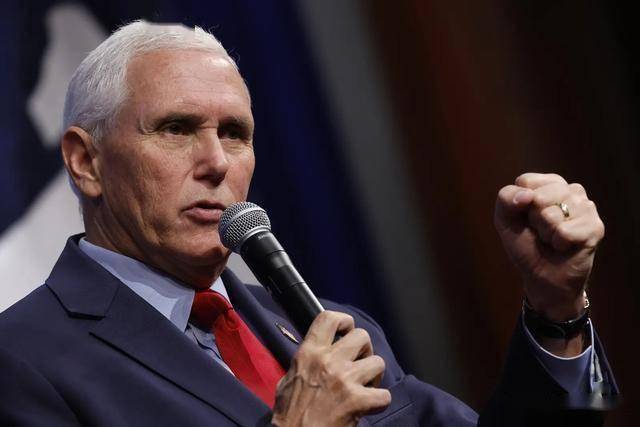
Core Viewpoint - Former Vice President Mike Pence criticized the tariff policy of the Trump administration, stating that "American consumers pay American tariffs," highlighting the impact of tariffs on inflation and the economy [1][3]. Group 1: Concerns about Tariff Policy - Pence expressed concerns about the continuation of tariffs beyond Trump's presidency, hoping they would not persist [3]. - He mentioned a key Supreme Court case evaluating the constitutionality of the president's unilateral authority to impose tariffs, arguing that such powers should reside with Congress [3]. Group 2: Economic Impact of Tariffs - Pence noted that both import and export tariffs ultimately burden American businesses and consumers, with minimal marginal effects [5]. - He referenced the recent removal of tariffs on coffee and beef to lower grocery prices as evidence of the negative impact of tariffs on inflation and the economy [5]. Group 3: Tariffs as Negotiation Tools - Pence acknowledged the role of tariffs as a negotiation tool rather than a long-term policy, recalling their use during the Trump administration to negotiate trade agreements [5][7]. - He emphasized the importance of free trade with allied nations, advocating for dialogue and negotiation to resolve trade issues [7].
A股市场大势研判:沪指震荡收涨
Dongguan Securities· 2025-11-19 23:30
Market Overview - The Shanghai Composite Index closed at 3946.74, up by 0.18% with an increase of 6.93 points [2] - The Shenzhen Component Index remained flat at 13080.09, with a change of -0.40 points [2] - The CSI 300 Index rose by 0.44%, closing at 4588.29, an increase of 20.10 points [2] - The ChiNext Index increased by 0.25%, closing at 3076.85, with an increase of 7.63 points [2] - The STAR 50 Index decreased by 0.97%, closing at 1344.80, down by 13.13 points [2] - The North Exchange 50 Index fell by 1.40%, closing at 1461.12, a decrease of 20.70 points [2] Sector Performance - The top-performing sectors included Nonferrous Metals (up 2.39%), Oil & Petrochemicals (up 1.67%), and National Defense & Military (up 1.11%) [3] - The worst-performing sectors were Real Estate (down 2.09%), Media (down 1.72%), and Building Materials (down 1.71%) [3] - Concept sectors showing strong performance included Shipbuilding System (up 4.60%) and Lead Metal (up 2.03%) [3] - Underperforming concept sectors included Hainan Free Trade Zone (down 4.52%) and Childcare Services (down 2.82%) [3] Future Outlook - The market is currently in a consolidation phase, with the Shanghai Composite Index likely to stabilize around the 4000-point mark [5] - The report suggests a "barbell strategy" for investment, focusing on high-dividend sectors for defensive positioning and selectively investing in technology sectors for growth opportunities [5] - The report highlights the importance of embracing free trade and reducing barriers as emphasized by the State Council during the Shanghai Cooperation Organization meeting [4]
新世纪期货交易提示(2025-11-19)-20251119
Xin Shi Ji Qi Huo· 2025-11-19 05:43
Report Industry Investment Ratings - Iron Ore: Oscillation [2] - Coking Coal and Coke: Oscillation [2] - Rolled Steel and Rebar: Oscillation [2] - Glass: Oscillation [2] - Shanghai Stock Exchange 50 Index Futures/Options: Oscillation [2] - CSI 300 Index Futures/Options: Oscillation [2] - CSI 500 Index Futures/Options: Rebound [4] - CSI 1000 Index Futures/Options: Rebound [4] - 2 - year Treasury Bonds: Oscillation [4] - 5 - year Treasury Bonds: Oscillation [4] - 10 - year Treasury Bonds: Upward [4] - Gold: High - level Oscillation [4] - Silver: High - level Oscillation [4] - Logs: Bottom Oscillation [5] - Pulp: Oscillation [5] - Offset Paper: Oscillation [5] - Soybean Oil: Range - bound Movement [5] - Palm Oil: Range - bound Movement [5] - Rapeseed Oil: Range - bound Movement [5] - Soybean Meal: Oscillating Weakly [5] - Rapeseed Meal: Oscillating Weakly [8] - Soybean No. 2: Oscillating Weakly [8] - Soybean No. 1: Oscillating Weakly [8] - Live Pigs: Oscillating Strongly [8] - Rubber: Oscillation [10] - PX: Oscillation [10] - PTA: Oscillation [10] - MEG: Wide - range Oscillation [10] - PR: On - hold [10] - PF: On - hold [10] Core Viewpoints - The overall market shows a complex trend with different products having various price trends due to their specific supply - demand relationships, cost factors, and external policy and geopolitical influences. For example, in the iron ore market, the supply - demand surplus pattern is difficult to reverse, and prices are mainly oscillating; in the financial market, the short - term market is consolidating, but the medium - term trend is still upward [2][4]. Summaries by Categories Ferrous Metals Industry - Iron Ore: Overseas iron ore shipments increased significantly, but domestic port arrivals continued to decline. Iron ore demand marginally recovered, but the supply - demand surplus pattern was hard to change, and steel mill profits were squeezed again. The probability of short - term negative feedback was low, and iron ore prices mainly oscillated [2]. - Coking Coal and Coke: After the heating - season supply - guarantee meeting, the upward driving force for coking coal and coke weakened. Coking plants faced high costs and low profitability, and the fourth round of coke price increases was still under negotiation. The market's divergence on the expected supply contraction of coking coal at the end of the year increased, and prices were in an adjustment state in the short term [2]. - Rolled Steel and Rebar: Downstream demand was low, and the upside was suppressed. The key factor was steel demand, and domestic demand was hard to improve. Steel prices would stop falling if production reduction of over 5% was strictly implemented in Q4 2025 and anti - "involution" policies were effectively implemented. Currently, steel prices were expected to remain at the bottom and oscillate [2]. - Glass: Spot prices were relatively weak, and some manufacturers started to cut prices. With the fermentation of the news of coal - to - gas conversion in Shahe, the market had already priced in the positive factors. Real - world demand was weak due to the decline in real - estate completion, and enterprise inventories continued to increase. Attention was paid to production line cold - repair and policies [2]. - Soda Ash: The report did not provide detailed information on soda ash other than the investment rating of "oscillation" [2]. Financial Market - Stock Index Futures/Options: The previous trading day saw declines in major stock indexes. Some sectors had capital inflows, while others had outflows. The short - term market was in consolidation, and the medium - term trend was upward. It was recommended to hold long positions in stock indexes [4]. - Treasury Bonds: The yields of ten - year Treasury bonds were flat, and the central bank conducted reverse - repurchase operations with a net injection of funds. Treasury bond spot - market interest rates were consolidating, and the market trend was slightly rebounding. It was recommended to hold long positions in Treasury bonds with a light position [4]. - Gold and Silver: In the context of high - interest rates and globalization reconstruction, the pricing mechanism of gold was changing. Central - bank gold purchases, currency credit issues, and geopolitical risks were the main driving factors. The logic of the current gold - price increase had not completely reversed, and short - term factors included the Fed's interest - rate policy and risk - aversion sentiment. The short - term market mainly traded on monetary - policy expectations [4]. Wood and Pulp - Logs: Log port shipments decreased, and downstream demand was in the off - season. The supply was under pressure, and the demand was hard to increase. The cost support weakened, and the inventory pressure was large. The spot - market prices were weak, and the ex - works prices were expected to bottom - oscillate [5]. - Pulp: The previous trading day's spot - market prices were differentiated. The cost support for pulp prices weakened, the paper - industry profitability was low, and the demand was poor. Pulp prices were expected to oscillate [5]. - Offset Paper: The previous trading day's spot - market prices were stable. The supply was stable, and the market expectation was cautious. The price was expected to oscillate [5]. Oilseeds and Oils - Oils: US soybean crushing reached a record high, and Malaysian palm - oil production was higher than expected. The supply of domestic oils was abundant, while the demand was weak. With the cost support of soybeans for soybean oil, the overall oils were expected to continue range - bound movement [5]. - Meal: The US soybean production, exports, and ending stocks were adjusted down, but the global soybean supply was still relatively loose. The domestic soybean - meal supply was abundant, and the demand was supported by high - level livestock inventories, but the high price of soybean meal suppressed restocking intentions. Soybean meal was expected to oscillate weakly in the short term [5][8]. Agricultural Products - Live Pigs: The average trading weight of live pigs fluctuated slightly. The demand for pork had recovered, and the slaughter - enterprise operating rate had increased slightly. With the temperature dropping, the terminal consumption was expected to further release, and the average price of live pigs was expected to oscillate [8]. Soft Commodities - Rubber: The raw - material supply in different regions was affected by weather conditions. The inventory was at a low level, and the demand from tire - manufacturing enterprises had recovered. The natural - rubber inventory was in the seasonal accumulation period, and the price was expected to oscillate widely [10]. - PX, PTA, MEG, PR, and PF: PX prices were driven up by factors such as the oil - price increase and market - sentiment changes, but were expected to oscillate considering the supply and demand situation. PTA prices were expected to follow the cost - side fluctuations. MEG had long - term inventory - accumulation pressure, and its price was expected to adjust widely in the short term. PR and PF markets were expected to be weak or have narrow - range adjustments due to weak demand and limited cost support [10].
专访2025诺贝尔经济学奖得主菲利普·阿吉翁:中国在多个领域展现出前沿创新能力|封面头条
Sou Hu Cai Jing· 2025-11-19 03:27
Core Insights - Philippe Aghion, Peter Howitt, and Joel Mokyr were awarded the 2025 Nobel Prize in Economic Sciences for their contributions to the theory of "innovation-driven economic growth" [2] - Aghion and Howitt were recognized for their theory of "creative destruction," which explains how innovation disrupts old orders and drives economic vitality through continuous upheaval and reconstruction [2][3] - Aghion emphasizes the importance of balancing competition and protection for those affected by "creative destruction," using examples like artificial intelligence to illustrate both job displacement and job creation [11][13] Group 1: Creative Destruction Theory - The "creative destruction" theory, initially proposed by Joseph Schumpeter, posits that new innovations replace old technologies, with economic growth driven by new firms entering the market through innovation [7] - Aghion's optimistic view contrasts with Schumpeter's more pessimistic outlook, as he believes effective competition policies can prevent established firms from creating barriers to market entry [8] - The theory's three core components include cumulative innovation, entrepreneurial drive for temporary monopoly profits, and the paradox of innovation needing monopoly profits while also potentially stifling new innovations [7][8] Group 2: China's Economic Landscape - Aghion notes that China has made significant strides in areas like blockchain, solar panels, electric vehicles, and autonomous driving, showcasing its true innovative capabilities [13] - He identifies China's large domestic market, skilled labor force, and governance that combines market competition with industrial policy as key advantages for future growth [13] - Aghion highlights the need for improvements in China's financial ecosystem, particularly in venture capital and institutional investment, to support frontier innovation [13] Group 3: Global Innovation and Protectionism - Aghion expresses concern over the rise of protectionism, particularly in the U.S., arguing that it hinders innovation by limiting global market access and competition [16][17] - He advocates for free trade as a crucial driver of innovation, enabling cross-border flow of technology and competition [16] - Aghion suggests that China should strengthen its domestic competition mechanisms and seek long-term partnerships with Europe to maintain its competitive edge amid rising protectionism [18] Group 4: Personal Insights and Future Plans - Aghion reflects on the impact of receiving the Nobel Prize, noting it has changed how he is perceived and increased the scrutiny of his statements [24][25] - He plans to continue his research in economic growth, artificial intelligence, green transition, and effective social security systems, particularly in the context of China [25] - Aghion emphasizes the importance of young people asking fundamental questions and maintaining resilience in the face of challenges [28][30]

2025/11/19:申万期货品种策略日报——股指-20251119
Shen Yin Wan Guo Qi Huo· 2025-11-19 02:21
1. Report Industry Investment Rating - No relevant content provided 2. Core View of the Report - The 15th Five - Year Plan still focuses on technological self - reliance, and the technology sector is expected to be a long - term direction. The domestic liquidity environment is expected to remain loose, residents may increase their allocation of equity assets, and with the Fed's interest rate cuts and RMB appreciation, external funds are also expected to flow into the domestic market. Although funds are relatively cautious near the end of the year and the market style is more balanced compared to the third quarter, the current market trend is still expected to maintain a long - term and slow - rising bull market [2] 3. Summary by Relevant Catalogs 3.1 Stock Index Futures Market - **IF Contracts**: The previous two - day closing prices for IF contracts (current month, next month, next quarter, and far - quarter) were 4595.80, 4581.40, 4552.40, and 4513.20 respectively, and the previous day's closing prices were 4569.60, 4555.00, 4523.00, and 4476.80. There were declines of - 20.00, - 18.80, - 23.00, and - 27.20, with corresponding percentage declines of - 0.44, - 0.41, - 0.51, and - 0.60. The trading volumes were 23964.00, 76476.00, 15119.00, and 6304.00, and the open interests were 33649.00, 158826.00, 67946.00, and 18267.00, with changes in open interest of - 3588.00, 4718.00, 3154.00, and 1683.00 [1] - **IH Contracts**: The previous two - day closing prices for IH contracts were 3072.60, 3068.80, 3064.00, and 3059.60, and the previous day's closing prices were 3034.00, 3030.40, 3025.80, and 3017.00. The declines were - 36.60, - 37.40, - 37.40, and - 39.40, with percentage declines of - 1.19, - 1.22, - 1.22, and - 1.29. The trading volumes were 9482.00, 32072.00, 5074.00, and 1605.00, and the open interests were 11938.00, 62716.00, 17381.00, and 5086.00, with changes in open interest of - 824.00, 1112.00, 452.00, and 66.00 [1] - **IC Contracts**: The previous two - day closing prices for IC contracts were 7215.80, 7143.40, 6960.40, and 6757.80, and the previous day's closing prices were 7152.80, 7079.80, 6897.00, and 6690.00. The declines were - 62.40, - 61.00, - 66.00, and - 69.60, with percentage declines of - 0.86, - 0.85, - 0.95, and - 1.03. The trading volumes were 26417.00, 83267.00, 17679.00, and 7077.00, and the open interests were 31223.00, 139697.00, 60086.00, and 23013.00, with changes in open interest of - 1529.00, 6266.00, 1185.00, and 2263.00 [1] - **IM Contracts**: The previous two - day closing prices for IM contracts were 7566.00, 7478.40, 7246.00, and 7012.00, and the previous day's closing prices were 7468.40, 7372.00, 7140.00, and 6913.40. The declines were - 81.80, - 90.80, - 91.80, and - 88.80, with percentage declines of - 1.08, - 1.22, - 1.27, and - 1.27. The trading volumes were 34335.00, 125074.00, 23113.00, and 10057.00, and the open interests were 53957.00, 182376.00, 82892.00, and 37997.00, with changes in open interest of - 1680.00, - 1368.00, 2359.00, and 1746.00 [1] - **Inter - month Spreads**: The current values of inter - month spreads for IF, IH, IC, and IM (next month - current month) were - 14.60, - 3.60, - 73.00, and - 96.40 respectively, and the previous values were - 14.40, - 3.80, - 72.40, and - 87.60 [1] 3.2 Stock Index Spot Market - **CSI 300 Index**: The previous value of the index points was 4568.19, with a trading volume of 177.71 billion lots and a total trading amount of 4201.50 billion yuan. The previous two - day value was 4598.05, with a decline of - 0.65% [1] - **SSE 50 Index**: The previous value of the index points was 3003.02, with a trading volume of 43.59 billion lots and a total trading amount of 1062.01 billion yuan. The previous two - day value was 3012.07, with a decline of - 0.30% [1] - **CSI 500 Index**: The previous value of the index points was 7151.02, with a trading volume of 202.21 billion lots and a total trading amount of 3065.40 billion yuan. The previous two - day value was 7235.35, with a decline of - 1.17% [1] - **CSI 1000 Index**: The previous value of the index points was 7502.76, with a trading volume of 271.97 billion lots and a total trading amount of 4062.93 billion yuan. The previous two - day value was 7590.58, with a decline of - 1.16% [1] - **Industry Indexes**: Different industries such as information technology, energy, raw materials, etc. showed various percentage declines. For example, the information technology industry had a decline of - 3.39% [1] 3.3 Futures - Spot Basis - **CSI 300**: The previous value of the basis was - 96.54 [1] - **SSE 50**: No relevant basis value details provided - **CSI 500**: The previous values of the basis for different contracts were 1.78, - 71.22, - 254.02, - 461.02, and the previous two - day values were - 19.55, - 91.95, - 274.95, - 477.55 [1] - **IM Contracts and CSI 1000**: The previous values of the basis for IM contracts (current month, next month, next quarter, and far - quarter) against CSI 1000 were - 34.36, - 130.76, - 362.76, - 589.36, and the previous two - day values were - 24.58, - 112.18, - 344.58, - 578.58 [1] 3.4 Other Domestic and Overseas Indexes - **Domestic Indexes**: The previous values of the Shanghai Composite Index, Shenzhen Component Index, Small and Medium - sized Board Index, and ChiNext Index were 3939.81, 13080.49, 7957.60, and 3069.22 respectively, and the previous two - day value of the Shanghai Composite Index was 3105.20, with a decline of - 1.16% [1] - **Overseas Indexes**: The previous values of the Hang Seng Index, Nikkei 225, S&P 500, and DAX Index were 25930.03, 50323.91, 6617.32, and 23153.92 respectively, and the previous two - day values were 26384.28, 50376.53, 6672.41, and 23590.52. The percentage declines were - 1.72%, - 0.10%, - 0.83%, and - 1.85% respectively [1] 3.5 Macro Information - The Chinese Foreign Ministry's Asia Department Director was dissatisfied with the results of the consultation with Japan. China maintains its stance on safeguarding core interests and international justice, and demands that Japan correct its wrong remarks [2] - The US has modified the transparency rules for patent invalidation applications, targeting some Chinese enterprises. China's Ministry of Commerce will take measures to safeguard the legitimate rights of Chinese enterprises [2] - Premier Li Qiang called for free trade and less trade barriers at the SCO meeting, and proposed strengthening cooperation in areas such as new energy [2] - Hainan Free Trade Port is ready for the full - island customs - closure operation, and more financial reform and opening - up measures will be piloted in Hainan [2] 3.6 Industry Information - Shanghai will accelerate the construction of "good houses", promote the renovation of urban villages, and expand the supply of affordable housing [2] - Jiangsu will conduct a pilot program for real - estate trust property registration in Nanjing and Suzhou [2] - Chongqing plans to reach an AI terminal industry scale of over 300 billion yuan by 2030 [2] - China will standardize the management of satellite navigation and positioning reference stations from January 1st next year [2]
2025年11月19日申万期货品种策略日报-国债-20251119
Shen Yin Wan Guo Qi Huo· 2025-11-19 02:18
Report Industry Investment Rating - Not mentioned in the provided content Core View of the Report - The current economic fundamentals are weak, and the central bank will continue to maintain a supportive monetary policy stance. Market liquidity is expected to remain reasonably ample, which provides some support for Treasury bond futures prices. With the recent start of position transfer, it is recommended to plan for position transfer [3]. Summary According to Relevant Catalogs Futures Market - Treasury bond futures prices generally rose in the previous trading day, with the T2512 contract rising 0.01% and its open interest decreasing [2]. - The IRR of the CTD bonds corresponding to the main contracts of Treasury bond futures was at a low level, and there were no arbitrage opportunities [2]. Short - term Market Interest Rates - Short - term market interest rates showed mixed trends. SHIBOR 7 - day rate rose 0.4bp, DR007 rate fell 0.27bp, and GC007 rate rose 1.1bp [2]. Spot Market - Yields of key - term Treasury bonds showed mixed trends. The 10Y Treasury bond yield fell 0.04bp to 1.81%, and the long - short (10 - 2) Treasury bond yield spread was 29.71bp [2]. Overseas Market - The 10Y US Treasury bond yield fell 1bp, the 10Y German Treasury bond yield fell 1bp, and the 10Y Japanese Treasury bond yield rose 1.4bp [2]. Macroeconomic News - On November 18, the central bank conducted 4075 billion yuan of 7 - day reverse repurchase operations, with a net investment of 37 billion yuan [3]. - The unemployment rates of different age groups in urban China in October were announced, with the 16 - 24 age group at 17.3%, the 25 - 29 age group at 7.2%, and the 30 - 59 age group at 3.8% [3]. - The scale of US Treasury bonds held overseas in September slightly declined from the record high in August. China's holdings decreased by 500 million US dollars to 700.5 billion US dollars [3]. Industry Information - Most money market interest rates rose. The weighted average interest rate of inter - bank pledged repurchase and inter - bank lending for some terms reached new highs since July [3]. - US Treasury bond yields collectively declined [3]. Comment and Strategy - Treasury bond futures prices rose slightly, and the yield of the 10 - year active Treasury bond fell to 1.801%. The central bank's net investment and other factors affected the market. With weak economic data, the central bank's policy stance supports Treasury bond futures prices, and position transfer planning is recommended [3].
终止特朗普全面关税,是谁左右了美国的贸易政策?
首席商业评论· 2025-11-18 04:07
Core Viewpoint - The recent decision by the U.S. Senate to terminate Trump's comprehensive tariff policy highlights the ongoing volatility of U.S. trade policy, which oscillates between protectionism and openness, driven by conflicting interests among various economic groups [2][3][4]. Group 1: The Eternal Struggle of Interest Groups - James Madison's insights in "The Federalist Papers" reveal that trade policy is fundamentally a conflict among different economic interest groups, including landowners, manufacturers, and financial sectors [3][4]. - The historical context shows that trade policy has been a source of intense political conflict in the U.S., as it directly impacts money and jobs, benefiting some industries while harming others [4][5]. Group 2: Historical Policy Shifts - U.S. trade policy has evolved through three distinct eras, each prioritizing different goals: revenue generation through tariffs, protection of domestic manufacturers, and reciprocal trade agreements to reduce barriers [8][9]. - Major external shocks, such as the Civil War and the Great Depression, have led to significant shifts in trade policy objectives, reflecting the political realignments of the time [9]. Group 3: Stability of Trade Policy - The stability of U.S. trade policy is influenced by the country's economic geography and political system, where different regions have specialized economic activities that shape their trade interests [11][12]. - The political structure makes it challenging to change established policies, leading to a tendency to maintain the status quo despite ongoing debates and conflicts among interest groups [11][12]. Group 4: The Interplay of Economics and Politics - Understanding U.S. trade policy requires an analysis of both economic and political factors, as historical and political contexts significantly influence policy outcomes [13][14]. - The book "The Conflict of Trade" serves as a comprehensive framework for understanding the complexities of U.S. trade policy, emphasizing the interplay of lobbying, regional interests, and political calculations [16].
外交部:希望欧盟为中国企业营造公平、可预期的市场环境
Xin Hua She· 2025-11-14 13:48
Core Viewpoint - The Chinese government emphasizes the need for the EU to adhere to commitments of market openness and fair competition, while addressing the concerns of Chinese enterprises operating in Europe [1][3]. Group 1: Business Environment Concerns - The EU-China Chamber of Commerce reported that the overall business environment rating for Chinese companies in the EU has declined for six consecutive years, with 81% of surveyed companies indicating increased uncertainty [1]. - 90% of respondents believe that the EU's "de-risking" policies and economic security strategies are harming business operations and market confidence [1]. - Over 40% of Chinese enterprises have experienced differential treatment, with "uncertainty" identified as the biggest obstacle to operations in Europe [1]. Group 2: EU's Protectionist Measures - The EU has been promoting economic competition against China and implementing a series of protectionist measures under the guise of maintaining "economic security" and "fair competition," which disrupts global supply chains [2]. - These measures are seen as detrimental not only to the competitiveness of EU industries but also as a negative signal regarding the openness of the EU market, ultimately harming the investment confidence of Chinese companies [2]. Group 3: Opportunities for Cooperation - Chinese enterprises have been actively contributing to the EU's economic growth and green transformation, and the recent "14th Five-Year Plan" outlines a blueprint for China's economic development over the next five years [3]. - The Chinese government advocates for dialogue and cooperation between China and the EU to address differences and promote free trade and fair competition, suggesting that the EU should recognize the opportunities presented by China's development plans [3].