
社会融资规模

Search documents
2025年10月国内金融数据概览
Sou Hu Cai Jing· 2025-11-17 03:36
Group 1: Monetary Supply - As of the end of October, the broad money supply (M2) reached 335.13 trillion yuan, reflecting a year-on-year growth of 8.2% [1] - The narrow money supply (M1) stood at 112 trillion yuan, with a year-on-year increase of 6.2% [1] - The currency in circulation (M0) amounted to 13.55 trillion yuan, showing a year-on-year growth of 10.6% [1] Group 2: Social Financing - The cumulative increase in social financing for the first ten months was 30.9 trillion yuan, exceeding the previous year's figure by 3.83 trillion yuan [2] - The increase in RMB loans to the real economy was 14.52 trillion yuan, which is a decrease of 1.16 trillion yuan compared to the same period last year [2] - Net financing through corporate bonds reached 1.82 trillion yuan, up by 1.36 trillion yuan year-on-year [2] Group 3: Loan and Deposit Growth - The total RMB loans increased by 14.97 trillion yuan in the first ten months, with household loans rising by 739.6 billion yuan and corporate loans increasing by 13.79 trillion yuan [4] - RMB deposits grew by 23.32 trillion yuan in the first ten months, with household deposits increasing by 11.39 trillion yuan [5] - The total balance of RMB loans was 270.61 trillion yuan, reflecting a year-on-year growth of 6.5% [4] Group 4: Interest Rates - The weighted average interbank lending rate in October was 1.39%, down by 0.2 percentage points from the same period last year [6] - The one-year loan market quoted interest rate was 3.00%, and the rate for loans over five years was 3.50%, both lower by 0.1 percentage points compared to the end of last year [7] Group 5: Exchange Rates - The CFETS RMB exchange rate index was 97.61, a decrease of 3.8% compared to the end of last year [8] - The RMB appreciated by 1.42% against the US dollar, while it depreciated by 8.38% against the euro [8]

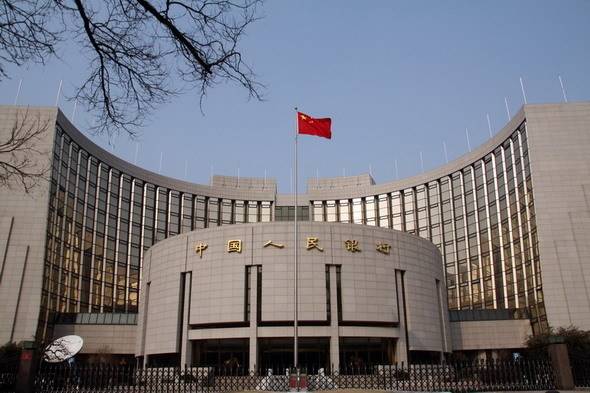
一周流动性观察 | 央行维稳资金的态度未变 税期期间隔夜资金成本或控制在1.55%以内
Xin Hua Cai Jing· 2025-11-17 03:03
Core Viewpoint - The People's Bank of China (PBOC) is actively managing liquidity through various monetary policy tools, indicating a commitment to maintaining stable financial conditions amid multiple market disturbances [1][3][4] Group 1: Monetary Policy Operations - On November 17, the PBOC conducted a 283 billion yuan 7-day reverse repurchase operation and an 800 billion yuan buyout reverse repurchase operation, resulting in a net injection of 963.1 billion yuan [1] - The total net injection from the PBOC's open market operations for the week of November 10-14 was 626.2 billion yuan, reflecting ongoing liquidity support despite earlier large-scale net withdrawals [1][2] - The PBOC's continued net injections and the announcement of an 800 billion yuan 6-month buyout reverse repurchase operation suggest a sustained effort to stabilize the funding environment [2][3] Group 2: Market Reactions and Expectations - The interbank funding rates, particularly DR001, experienced fluctuations, initially rising to 1.51% before stabilizing around 1.3% following the PBOC's interventions [1][2] - Analysts expect that the central bank's supportive stance will help mitigate the impact of tax payment periods and government bond repayments on liquidity, with overnight funding costs likely to remain below 1.55% during the tax period [3] - The average DR001 rate for November has risen to 1.37%, aligning with the central tendency observed since the third quarter, indicating a controlled approach to managing liquidity [2][3] Group 3: Broader Economic Implications - The PBOC's recent monetary policy report emphasizes the need for a coordinated approach between monetary and fiscal policies to support economic growth and maintain reasonable growth in social financing and money supply [3][4] - The report signals a strong commitment to stabilizing growth through enhanced credit support and improved interest rate transmission mechanisms, which may lead to a decrease in overall financing costs [3][4] - Analysts suggest that the PBOC's focus on maintaining liquidity and supporting growth reflects a shift towards a more proactive monetary policy stance, potentially paving the way for future easing measures [4]
中长期利率走弱
Qi Huo Ri Bao Wang· 2025-11-17 02:05
Core Viewpoint - The domestic market interest rates are showing a trend of short-term strength and long-term weakness, influenced by increased short-term funding demand and poor medium to long-term financing data [1][2] Group 1: Interest Rate Trends - As of November 14, the Shanghai Interbank Offered Rate (Shibor) for overnight, 1-week, 2-week, and 9-month periods were reported at 1.363%, 1.468%, 1.509%, and 1.64%, respectively, with increases of 3.6, 4.6, 3.9, and 0.1 basis points compared to November 7 [1] - The 1-month and 3-month rates were reported at 1.518% and 1.58%, showing decreases of 0.8 and 0.4 basis points, while the 6-month and 1-year rates remained unchanged at 1.62% and 1.65% [1] Group 2: Central Bank Actions - To stabilize market interest rates amid rising short-term funding demand, the central bank increased reverse repo operations, injecting a total of 624.2 billion yuan into the market after conducting 1.12 trillion yuan in reverse repos, with 495.8 billion yuan maturing during the same period [1] Group 3: Financing Data - In October, the domestic social financing scale was 816.1 billion yuan, reflecting a year-on-year increase of 8.5%, although the growth rate has declined [1] - The new RMB loans added in October amounted to 220 billion yuan, showing a year-on-year reduction [1][2]
透视我国前10个月金融数据
Xin Hua She· 2025-11-17 01:16
Core Insights - The People's Bank of China reported that nearly 15 trillion yuan in new RMB loans were issued in the first ten months of this year, indicating strong financial support for the real economy [1] - The total RMB loan balance reached 270.61 trillion yuan by the end of October, with a year-on-year growth of 6.5%, while the social financing scale stood at 437.72 trillion yuan, growing by 8.5% year-on-year [1] Loan Structure and Trends - Corporate loans, particularly medium to long-term loans, have seen significant growth, with corporate loans increasing by 13.79 trillion yuan in the first ten months, making them the main contributor to loan growth [1] - Medium to long-term loans accounted for over 60% of the new corporate loans, with an increase of 8.32 trillion yuan [1] - By the end of October, inclusive small and micro loans reached a balance of 35.77 trillion yuan, growing by 11.6% year-on-year, while medium to long-term loans in the manufacturing sector reached 14.97 trillion yuan, up by 7.9% [2] Monetary Policy and Interest Rates - The average interest rate for newly issued corporate loans was 3.1% in October, approximately 40 basis points lower than the same period last year, while the average interest rate for personal housing loans was also 3.1%, down by about 8 basis points [4] - The People's Bank of China has been expanding the space for counter-cyclical monetary policy and improving the market-oriented interest rate adjustment mechanism, which has contributed to maintaining low financing costs [4] Bond Financing and Social Financing Growth - In the first ten months, the incremental social financing totaled 30.9 trillion yuan, with net financing from corporate bonds at 1.82 trillion yuan, an increase of 1.36 trillion yuan year-on-year, and government bonds at 11.95 trillion yuan, up by 3.72 trillion yuan [6] - The share of government and corporate bond financing in new social financing has risen to approximately 45% [6] - The People's Bank of China plans to implement a moderately loose monetary policy to maintain relatively loose social financing conditions and support key areas of national strategy and economic development [6]

宏观量化经济指数周报20251116:需求延续降温,工业生产超季节性回落-20251116
Soochow Securities· 2025-11-16 15:18
Group 1: Economic Indicators - The weekly ECI supply index is at 49.97%, down 0.01 percentage points from last week, while the demand index is at 49.87%, down 0.02 percentage points[6] - The monthly ECI supply index for November is 49.97%, a decrease of 0.03 percentage points from October, and the demand index is at 49.88%, down 0.02 percentage points[7] - The ECI investment index is at 49.89%, down 0.02 percentage points from October, and the consumption index is at 49.69%, down 0.03 percentage points[7] Group 2: Industrial Production and Investment - Industrial production is experiencing a seasonal decline, with major industry operating rates decreasing month-on-month[17] - The operating rate for asphalt plants is at 29.00%, down 0.70 percentage points from the previous week, and the national cement dispatch rate is at 33.42%, down 3.73 percentage points[31] - The construction work volume has shown a seasonal decline since November, indicating a need for further recovery in infrastructure investment[7] Group 3: Consumer Trends - Passenger car sales averaged 46,056 units per day in the week of November 9, down 10,644 units year-on-year, with retail sales for the first nine days of November at 415,000 units, a 19.0% decrease year-on-year[25] - The average wholesale price of pork is at 18.06 yuan/kg, down 0.03 yuan/kg, while the average price of 28 monitored vegetables is at 5.77 yuan/kg, up 0.01 yuan/kg[42] Group 4: Export and Trade - The SCFI index for container shipping is at 1451.38 points, down 43.72 points, while the CCFI index is at 1094.03 points, up 35.86 points[41] - South Korea's export growth for the first ten days of November is at 6.40%, a significant recovery from the previous month[36] Group 5: Monetary Policy and Financing - The ELI index is at -0.58%, down 0.04 percentage points, indicating a continued decline in actual loan rates[12] - The net monetary injection for the week is 626.2 billion yuan, with the central bank conducting 1.122 trillion yuan in reverse repos[48]
铝:震荡偏强,氧化铝:底部震荡,铸造铝合金:跟随电解铝
Guo Tai Jun An Qi Huo· 2025-11-14 13:54
1. Report Industry Investment Ratings - Aluminum: Oscillating with an upward bias [1] - Alumina: Bottom - oscillating [1] - Cast aluminum alloy: Following the trend of electrolytic aluminum [1] 2. Core Views - The report updates the fundamental data of aluminum, alumina, and cast aluminum alloy, including futures and spot market prices, trading volumes, positions, spreads, and inventory data [1]. - It also presents relevant macro - news such as China's October social financing and loan data, and the end of the US government shutdown [3]. - The trend intensities of aluminum, alumina, and aluminum alloy are provided, with aluminum and alloy at 1 (indicating a certain upward trend), and alumina at 0 (neutral) [3]. 3. Summaries by Related Catalogs Futures Market Electrolytic Aluminum - The closing price of the Shanghai Aluminum main contract was 22,050, up 170 from T - 1, 420 from T - 5, 1320 from T - 22, and 1260 from T - 66 [1]. - The LME Aluminum 3M closing price was 2,886, unchanged from T - 1, up 43 from T - 5, 216 from T - 22, and 247 from T - 66 [1]. - The trading volume of the Shanghai Aluminum main contract was 295,292, up 71,494 from T - 1 [1]. Alumina - The closing price of the Shanghai Alumina main contract was 2,840, up 19 from T - 1 [1]. - The trading volume of the Shanghai Alumina main contract was 299,017, up 31,054 from T - 1 [1]. Aluminum Alloy - The closing price of the aluminum alloy main contract was 21,340, up 95 from T - 1 and 245 from T - 5 [1]. - The trading volume of the aluminum alloy main contract was 9,674, up 3,394 from T - 1 [1]. Spot Market Electrolytic Aluminum - The domestic social inventory of aluminum ingots was 614,000 tons, down 2,000 tons from T - 1 [1]. - The LME aluminum ingot inventory was 553,200 tons, up 9,100 tons from T - 1 [1]. Alumina - The average domestic alumina price was 2,868, unchanged from T - 1 [1]. - The CIF price of alumina in Lianyungang was 346 US dollars per ton, unchanged from T - 1 [1]. Aluminum Alloy - The theoretical profit of ADC12 was - 142, down 57 from T - 1 [1]. - The price of Baotai ADC12 was 21,100, up 100 from T - 1 [1]. Macro - news - China's new social financing in October was 810 billion yuan, and new RMB loans were 220 billion yuan. The M2 - M1 gap widened to 2.0 percentage points from 1.2 in the previous month [3]. - The US House of Representatives passed a temporary appropriation bill, ending the government shutdown. The six - week shutdown was estimated to reduce Q4 GDP by 1.5 percentage points and cause a net loss of about 1.1 billion US dollars [3]
2025年10月金融数据点评:社融信贷回落,资金活期化延续
Tebon Securities· 2025-11-14 13:13
Financing Trends - In October, net financing through corporate bonds reached CNY 246.9 billion, an increase of CNY 148.2 billion year-on-year[3] - Stock financing added CNY 69.6 billion, up CNY 41.2 billion year-on-year, marking eight consecutive months of year-on-year growth[3] - Trust loans, entrusted loans, and undiscounted bank acceptance bills collectively decreased by CNY 108.5 billion, a reduction of CNY 35.8 billion year-on-year[3] Credit and Loan Performance - New RMB loans in October were CNY 220 billion, down CNY 280 billion year-on-year, with the loan balance growth rate falling to approximately 6.5%[4] - Household loans decreased by CNY 360.4 billion, with short-term loans down CNY 286.6 billion and medium to long-term loans down CNY 70 billion[4] - Corporate loans increased by CNY 350 billion, primarily supported by bill financing, which net increased by CNY 500.6 billion, up CNY 331.2 billion year-on-year[4] Monetary Supply and Growth Rates - The stock of social financing grew by 8.5% year-on-year, a slight decrease of 0.2 percentage points from September[4] - M2 growth rate was 8.2%, down from 8.4% in September, while M1 growth rate fell to 6.2% from 7.2%[4] - The M2-M1 gap slightly increased to 2.0%, compared to 1.2% in the previous month, indicating a continued trend of liquidity preference[6] Deposit Dynamics - Total deposits increased by approximately CNY 610 billion in October, a year-on-year increase of only CNY 10 billion[6] - Household deposits decreased by CNY 1.34 trillion, while non-financial corporate deposits fell by CNY 1.09 trillion[6] - Non-bank financial institution deposits rose by CNY 1.85 trillion, indicating a "deposit migration" phenomenon[6]
10月金融总量保持合理增长 稳增长政策发力带动委托贷款走高
Zhong Guo Jing Ying Bao· 2025-11-14 10:13
Core Insights - The People's Bank of China reported a decrease in new RMB loans and social financing in October, indicating a continued decline in credit growth amid seasonal effects and policy influences [1][2] - Despite the decline in loan growth, M2 growth remains relatively high, reflecting ongoing financial support for the real economy [1][3] Group 1: Loan and Financing Data - In October, new RMB loans amounted to 220 billion, a year-on-year decrease of 280 billion [1] - The social financing scale for October was 815 billion, down 597 billion year-on-year [1] - The M2 money supply grew by 8.2% year-on-year, although the growth rate fell by 0.2 percentage points from the previous month [1] Group 2: Economic Analysis - The decline in loan demand is attributed to weak domestic demand and declining external demand, which has suppressed credit needs for both enterprises and households [1][2] - The weighted average interest rate for new corporate loans was 3.1%, down approximately 40 basis points year-on-year, indicating a decrease in financing costs [2] - The cumulative social financing scale for the first ten months of the year reached 30.9 trillion, an increase of 3.83 trillion compared to the same period last year [2] Group 3: Structural Changes and Future Outlook - The shift in credit structure is moving from traditional sectors like infrastructure and real estate to emerging sectors such as technology innovation and green low-carbon initiatives [3] - The current RMB loan balance has reached 270 trillion, with the social financing scale at 437 trillion, suggesting a natural decline in financial growth rates as the economy transitions to high-quality development [3] - Emphasis is placed on enhancing the efficiency of existing funds and optimizing the allocation of financial resources to better match supply and demand [3]
资金边际收紧,期债短弱长强
Rui Da Qi Huo· 2025-11-14 09:28
Report Industry Investment Rating No relevant information provided. Core Viewpoints of the Report - In October, the domestic economic growth continued the slowdown trend of the third quarter, with some economic indicators significantly affected by the external environment. The injection of 50 billion yuan in new policy - based financial instruments may boost investment in the fourth quarter, and the annual economic growth target of 5% is expected to be achieved. Overseas, the US government shutdown ended, but there may be a lack of some employment and inflation data in October, and the employment market's downward risk has increased. The expectation of a Fed rate cut in December has significantly decreased. - The overall fundamental data in October was weak, with indicators such as exports, social financing, and social retail sales declining to varying degrees. The inflation level rebounded slightly, but its sustainability remains to be observed. The economy is expected to continue a weak recovery in the fourth quarter. The central bank will maintain a moderately loose policy tone, with limited room for further monetary easing this year. In the short - term, interest rates may fluctuate within a narrow range [101][102]. Summary According to the Directory 1. Market Review - **Performance of Treasury Bond Futures Contracts**: The 30 - year TL2512 contract rose 0.18%, while the 10 - year T2512, 5 - year TF2512, and 2 - year TS2512 contracts fell 0.03%, 0.03%, and 0.02% respectively. The trading volume of TS and TF contracts increased, while that of T and TL contracts decreased. The open interest of TS, TF, T, and TL contracts all decreased [13][30]. - **Performance of Underlying Bonds**: The yields of 1 - 7Y treasury bonds rose by 0.25 - 1.5bp, while the 10Y and 30Y yields fell by 0.4bp and 0.6bp to 1.81% and 2.15% respectively [9]. 2. News Review and Analysis - **Domestic News**: In October, the expansion of domestic demand policies continued to show results. CPI rose 0.2% month - on - month and 0.2% year - on - year, and core CPI rose 1.2% year - on - year. PPI rose 0.1% month - on - month and fell 2.1% year - on - year. The State Council issued measures to promote private investment. The cumulative social financing scale in the first ten months increased by 3.83 trillion yuan year - on - year. From January to October, real estate investment decreased by 14.7% year - on - year. In October, industrial added value increased by 4.9% year - on - year, fixed - asset investment decreased by 1.62%, social retail sales increased by 2.9% year - on - year, and the unemployment rate decreased by 0.1 percentage points [33][34]. - **Overseas News**: From October 1 to 25, the US private sector lost 45,000 jobs. The US government shutdown ended, but there may be a lack of some employment and inflation data in October, and the economic loss caused by the shutdown was estimated at $15 billion per week [35][101]. 3. Chart Analysis - **Spread Changes** - **Yield Spread**: The spread between 10 - year and 5 - year yields, and between 10 - year and 1 - year yields narrowed. - **Contract Spread**: The spread between 2 - year and 5 - year, and between 5 - year and 10 - year contract spreads widened. - **Near - far Month Spread**: The near - far month spreads of 10 - year, 30 - year, and 5 - year contracts narrowed, while that of the 2 - year contract widened slightly [43][49][60]. - **Treasury Bond Futures Main Position Changes**: The net short position of the top 20 positions in the T contract decreased slightly [66]. - **Interest Rate Changes**: Overnight, 1 - week, and 2 - week Shibor rates rose, while the 1 - month Shibor rate fell. The DR007 weighted average rate rebounded to around 1.47%. The yields of treasury bonds weakened, with 1 - 7Y yields rising by 1.5 - 3.0bp, and 10Y and 30Y yields rising by 1.8bp and 1.4bp to 1.81% and 2.16% respectively [70]. - **Bond Issuance and Maturity**: This week, the total bond issuance was 148.1511 billion yuan, the total repayment was 99.4987 billion yuan, and the net financing was 48.6524 billion yuan [83]. - **Market Sentiment** - **Exchange Rate**: The central parity rate of the RMB against the US dollar was 7.0825, up 11 basis points this week, and the spread between offshore and on - shore RMB widened. - **US Bond Yield and VIX**: The 10 - year US bond yield fluctuated, and the VIX index rose significantly. - **A - share Risk Premium**: The 10 - year treasury bond yield declined, and the A - share risk premium declined slightly [87][93][98]. 4. Market Outlook and Strategy - **Domestic Outlook**: In October, domestic economic growth continued to slow down, with some economic indicators affected by the external environment. The injection of 50 billion yuan in new policy - based financial instruments may boost investment in the fourth quarter, and the annual economic growth target of 5% is expected to be achieved. - **Overseas Outlook**: The US government shutdown ended, but there may be a lack of some employment and inflation data in October. The employment market's downward risk increased, and the expectation of a Fed rate cut in December decreased significantly. - **Overall Outlook**: The economic data in October was weak, inflation rebounded slightly, and the economy is expected to continue a weak recovery in the fourth quarter. The central bank will maintain a moderately loose policy, with limited room for further monetary easing. In the short - term, interest rates may fluctuate within a narrow range [101][102].
10月金融数据解读:M1-M2负剪刀差缘何扩大?
ZHESHANG SECURITIES· 2025-11-14 09:28
Monetary Supply Trends - As of the end of October, M2 growth rate was 8.2%, down from 8.4%, a decrease of 0.2 percentage points[1] - M1 growth rate was 6.2%, down from 7.2%, a decline of 1 percentage point[1] - The M1-M2 gap widened to -2%, an increase of 0.8 percentage points from the previous month[1] Deposit Dynamics - Household deposits decreased by 1.34 trillion yuan, a year-on-year decline of 770 billion yuan[12] - Non-financial enterprise deposits fell by 1.09 trillion yuan, a year-on-year decrease of 355.3 billion yuan[12] - Fiscal deposits increased by 720 billion yuan, a year-on-year increase of 124.8 billion yuan[12] - Non-bank deposits rose by 1.85 trillion yuan, a year-on-year increase of 770 billion yuan[12] Credit and Financing - New RMB loans in October amounted to 220 billion yuan, a year-on-year decrease of 280 billion yuan[3] - Social financing increased by 815 billion yuan, a year-on-year decline of 432.1 billion yuan, with a month-end growth rate of 8.5%[8] - Corporate loans increased by 350 billion yuan, a year-on-year increase of 220 billion yuan[5] Economic Outlook - The central bank indicated that the most significant pressure points may have passed, suggesting a potential decrease in the likelihood of rate cuts in the fourth quarter[15] - The cumulative excess savings of households since 2020 is estimated at approximately 2.54 trillion yuan, reflecting ongoing shifts in deposit behavior[14]