
产能过剩

Search documents
聚酯数据日报-20251030
Guo Mao Qi Huo· 2025-10-30 05:10
Report Summary 1) Report Industry Investment Rating - No information provided 2) Core Viewpoints - PTA prices saw a rapid afternoon rally due to rumors of an "anti-involution" policy in the PTA industry. Despite rising crude oil prices, PTA prices had only rebounded slightly. With cost support from rising crude oil and policy expectations, PTA prices rebounded after long - term low - level operation. The downstream polyester industry's demand is slightly better than expected, and overseas demand for Chinese textile and clothing products may recover after positive signals from China - US economic and trade negotiations [2]. - For ethylene glycol, the inventory at East China ports remains low, and the arrival volume at ports is limited. However, domestic device production and the return of coal - based ethylene glycol devices are pressuring prices. As the polyester peak season is ending and the crude oil fundamentals are weakening, the polyester industry is expected to operate weakly [2]. 3) Summary by Relevant Catalogs Market Data - **INE Crude Oil**: Price dropped from 462.7 yuan/barrel on October 28, 2025, to 462.6 yuan/barrel on October 29, 2025, a decrease of 0.10 yuan/barrel [2]. - **PTA - SC**: Price increased from 1251.5 yuan/ton to 1274.2 yuan/ton, an increase of 22.73 yuan/ton [2]. - **PX**: CFR China PX price rose from 814 to 818, an increase of 4; PX - naphtha spread widened from 236 to 249, an increase of 13 [2]. - **PTA**: The main futures price rose from 4614 yuan/ton to 4636 yuan/ton, an increase of 22 yuan/ton; the spot price remained unchanged at 4535 yuan/ton; the spot processing fee decreased from 180.7 yuan/ton to 170.1 yuan/ton, a decrease of 10.6 yuan/ton; the disk processing fee increased from 259.7 yuan/ton to 261.1 yuan/ton, an increase of 1.4 yuan/ton; the main basis improved from (81) to (76), an increase of 5; the number of PTA warehouse receipts remained unchanged at 48579 [2]. - **MEG**: The main futures price rose from 4069 yuan/ton to 4100 yuan/ton, an increase of 31 yuan/ton; the MEG - naphtha spread decreased from (121.59) yuan/ton to (121.78) yuan/ton, a decrease of 0.2 yuan/ton; the MEG domestic price decreased from 4167 to 4152, a decrease of 15; the main basis decreased from 83 to 78, a decrease of 5 [2]. - **Industry Chain Operating Rates**: PX operating rate remained at 86.21%, PTA operating rate increased from 79.46% to 80.09%, an increase of 0.63%, MEG operating rate remained at 64.41%, and polyester load remained at 89.28% [2]. - **Polyester Product Data**: For polyester filament, POY150D/48F, FDY150D/96F, and DTY150D/48F prices remained unchanged; POY, FDY, and DTY cash flows increased by 5; the filament sales rate decreased from 63% to 48%, a decrease of 15%. For polyester staple fiber, the price of 1.4D direct - spun polyester staple fiber decreased from 6445 to 6440, a decrease of 5; the staple fiber cash flow remained at 272; the staple fiber sales rate remained at 43%. For polyester chips, the semi - bright chip price increased from 5560 to 5565, an increase of 5; the chip cash flow increased from (63) to (53), an increase of 10; the chip sales rate decreased from 57% to 37%, a decrease of 20% [2]. Device Maintenance - A 2.2 - million - ton PTA device in East China slightly reduced its load, and the recovery time is to be tracked [2]
经济学家王德培:中国老百姓是不容易的,已进入急剧大洗牌阶段!
Sou Hu Cai Jing· 2025-10-30 03:16
Economic Overview - The current economic environment in China is characterized by a significant restructuring phase, affecting various sectors and individuals alike [1][5][19] - Economic cycles such as the pig cycle, capacity cycle, technology cycle, and real estate cycle are all peaking simultaneously, leading to widespread financial strain among the populace [3][5] Industry Insights - The automotive industry exemplifies the current state of economic "involution," with severe overcapacity and a mismatch between production and consumer demand [7][9] - Over 400 automotive companies in China have a total design capacity exceeding 35 million vehicles, far surpassing domestic demand, resulting in many smaller firms exiting the market [7][9] - The manufacturing sector is experiencing a similar trend, with companies facing overcapacity, weak demand, and intense competition, leading to widespread layoffs across various roles [9][10] Global Expansion - In response to domestic challenges, many companies are looking to expand overseas, with significant investment growth in countries like Vietnam and Indonesia [11][13] - Successful examples include companies like CATL, which have localized their operations abroad to mitigate trade barriers and better serve local markets [13] Workforce Adaptation - The job market is evolving, with a notable increase in demand for new roles such as AI trainers and carbon neutrality managers, reflecting the need for skill upgrades among workers [15][17] - The competition among cities is intensifying, with emerging regions like the Chengdu-Chongqing economic circle attracting young talent due to their focus on industrial ecology and supportive policies [17] Policy Support - The Chinese government is implementing policies to support "specialized, refined, and innovative" enterprises, enhancing R&D tax deductions to stimulate innovation [17] - The shift in focus from resource allocation to efficiency and quality is emphasized as a critical factor for both companies and individuals to thrive in the changing economic landscape [17][19]



英国想和美欧共建“钢铁联盟”可行吗?英媒:打造“钢铁之环”恐怕根本无济于事
Huan Qiu Shi Bao· 2025-10-29 23:12
Core Viewpoint - The UK government is seeking to establish a "steel alliance" with the US and EU to protect their steel industries from the impacts of global overcapacity, reflecting the struggles of the UK economy in the post-Brexit trade environment [1][2][3] Group 1: Steel Industry Challenges - The UK steel industry is facing a crisis, with half of the steel companies effectively under state control and the remaining ones in precarious situations [3] - The EU plans to impose tariffs of up to 50% on imported steel, which poses a significant threat to the UK steel sector, as 78% of UK steel exports go to the EU, valued at approximately £3 billion annually [2][3] - The UK government announced a £2.5 billion plan to support the domestic steel industry, focusing on maintaining global competitiveness and transitioning to greener production methods [3] Group 2: Economic Implications - The proposed "steel alliance" aims to impose common tariffs on imports from outside the group while allowing zero or reduced tariffs for member countries [4] - The EU's steel tariffs are seen as a measure to protect the European steel industry and related jobs, with Germany acknowledging shared interests with the UK in addressing global steel overcapacity [5][6] - The EU steel industry is facing a dual challenge of enhancing competitiveness and reducing carbon emissions, with significant declines in revenue reported, particularly in Germany [6] Group 3: Global Context and Trade Dynamics - The global steel overcapacity reached 600 million tons last year, projected to increase to 721 million tons by 2027, with the EU importing steel from various countries including Turkey, South Korea, and China [6][7] - The US has expressed concerns over Chinese steel production capacity, indicating a need for coordinated efforts among Western nations to address this issue [6] - The EU's steel tariffs have drawn criticism from other sectors, such as the automotive industry, which fears inflationary impacts due to increased steel prices [9][10]
Clearwater Paper(CLW) - 2025 Q3 - Earnings Call Transcript
2025-10-28 22:02
Financial Data and Key Metrics Changes - Adjusted EBITDA for Q3 2025 was $18 million, at the high end of the guidance range of $10 to $20 million, with year-to-date adjusted EBITDA from continuing operations at $87 million, up from $26 million in the same period last year [4][14] - Net sales reached $399 million, a 1% increase year-over-year, driven by a 3% increase in paperboard shipment volumes, partially offset by lower market pricing [13][14] - Net loss from continuing operations was $54 million, or $3.34 per diluted share, primarily due to a $48 million non-cash goodwill impairment [13][14] - The company generated $34 million in cash from operations and approximately $3.5 million in free cash flows during the quarter [15] Business Line Data and Key Metrics Changes - The company successfully completed all three planned major maintenance outages for 2025, with costs of $24 million for the Lewiston outage and $16 million for the Augusta outage [4][5] - Fixed cost reduction initiatives are tracking to around $50 million in savings for the year, exceeding the original estimate of $30 to $40 million [5] Market Data and Key Metrics Changes - The company noted that a competitor is ramping up new SBS capacity, potentially adding up to 10% additional supply to the industry, which could lead to utilization rates dropping to the low 80% range by year-end [6][7] - Current industry oversupply is primarily limited to SBS, but it is impacting other paperboard substrates, with pricing correlations historically observed between SBS, CUK, and CRB [9][10] Company Strategy and Development Direction - The company is exploring adding CUK swing capability to one of its SBS machines, with an estimated capital requirement of approximately $50 million and a projected return of over 20% [11][12] - The company remains focused on defending its SBS market share and maintaining a strong balance sheet, with a target leverage ratio in the 1 to 2 times range and cross-cycle EBITDA margins of 13 to 14% [19] Management's Comments on Operating Environment and Future Outlook - Management expressed confidence in the long-term fundamentals of the paperboard market, emphasizing the demand for sustainable and renewable packaging solutions [19] - The company expects adjusted EBITDA for Q4 2025 to be between $13 to $23 million, anticipating slightly lower paperboard shipments due to seasonality [16][18] Other Important Information - The company repurchased $2 million of shares, bringing the total to $20 million against a $100 million authorization [15] - Initial assumptions for 2026 include revenue of around $1.45 to $1.55 billion and a capacity utilization rate in the mid-80% range [17] Q&A Session Summary Question: Decision to hold the CUK swing capacity project - The decision to hold the project is due to prioritizing a strong balance sheet and focusing on running SBS mills, with a target leverage ratio in the 1 to 2 times range [23] Question: Market outlook for SBS and import relief - Management is hopeful for a net capacity reduction of 350,000 tons in the first half of 2026, with some signs of reduced European imports [25] Question: Maintenance schedule for 2026 - The cost for maintenance in 2026 is expected to be similar to 2025 levels, with specific schedules to be finalized and communicated in February [27] Question: Incremental strength in shipments and product categories - The company saw strength in food service sales, with optimism from customers and potential import relief contributing to stronger demand [33] Question: Working capital improvements for 2026 - The target for working capital improvements of $20 million will primarily focus on inventory reductions, expected to be achieved in the second half of the year [39]

PTA:反内卷预期增强 行情上涨
Xin Lang Cai Jing· 2025-10-28 03:24
Core Viewpoint - The PTA market is experiencing a rebound due to expectations of production cuts amid low processing fees, despite a reality of ample supply [1][3]. Group 1: Market Dynamics - The PTA spot supply is currently abundant, with 2.7 million tons of new PTA capacity in East China starting trial production, leading to a fluctuation in the PTA spot basis around -80 to -85 yuan/ton [1]. - The upcoming PTA industry conference is expected to boost market sentiment, as major suppliers are anticipated to discuss potential production cuts [1][3]. - As of October 27, the average processing fee for PTA in October is 154 yuan/ton, a decrease of 15% month-on-month, indicating significant production losses for PTA companies [3]. Group 2: Supply and Demand Factors - An increase in PTA maintenance is predicted; however, the effect on the market may be limited due to the relatively sufficient supply of PTA [3][5]. - The new PTA capacity is expected to add supply pressure, especially as the demand season comes to an end, leading to a likely transition from inventory reduction to accumulation in November [5]. - The market sentiment is currently pessimistic for November, reflected in the basis for transactions being -70 yuan/ton [5]. Group 3: Production Cut Implications - The decision on production cuts will be crucial in determining whether PTA inventory accumulates in the short term [6]. - If PTA companies actively reduce production in response to low processing fees, it may prevent inventory accumulation and support PTA prices [6]. - However, if the production cuts are insufficient, the current supply surplus will likely keep the PTA spot basis weak, leading to continued registration of PTA futures [6].

甲醇聚烯烃早报-20251028
Yong An Qi Huo· 2025-10-28 02:44
Report Summary 1. Report Industry Investment Rating No relevant information provided. 2. Report Core Views - **Methanol**: The current situation remains poor, with Iranian shutdowns slower than expected. High imports are likely in November, making it difficult to resolve the contradictions in the 01 contract. The issue of port sanctions is expected to be resolved before the end of gas restrictions, and inventory depletion is difficult. Methanol has limited upside potential, and the downside space depends on the inland market. Although coal prices have strengthened recently, they do not affect profits [1]. - **Polyethylene**: The inventory of Sinopec and PetroChina is neutral year - on - year. Upstream Sinopec and PetroChina and coal - chemical enterprises are reducing inventory, while social inventory remains flat. Downstream inventory of raw materials and finished products is also neutral. Overall inventory is neutral. The 09 basis is around - 110 in North China and - 50 in East China. The import profit is around - 200 with no further increase for now. The price of non - standard HD injection molding is stable, and other price differences are fluctuating, with LD weakening. Domestic linear production has decreased recently. Attention should be paid to the LL - HD conversion and US quotations, as well as the commissioning of new plants in 2025 [6]. - **PP**: The upstream Sinopec and PetroChina and mid - stream enterprises are reducing inventory. In terms of valuation, the basis is - 60, the non - standard price difference is neutral, and the import profit is around - 700. Exports have been good this year. The non - standard price difference is neutral. The PDH profit is around - 400, propylene is fluctuating, and the powder production start - up rate is stable. The拉丝 production schedule is neutral. Future supply is expected to increase slightly, and downstream orders are average currently. Under the background of over - capacity, the 01 contract is expected to face moderate to excessive pressure. If exports continue to increase or there are many PDH plant overhauls, the supply pressure can be alleviated to a neutral level [6]. - **PVC**: The basis remains at 01 - 270, and the factory - delivery basis is - 480. Downstream operating rates are seasonally weakening, but there is a strong willingness to hold inventory at low prices. Mid - and upstream inventories are continuously accumulating. In summer, Northwest plants have seasonal overhauls, and the load center is between the spring overhaul and the high production in Q1. In Q4, attention should be paid to the commissioning of new plants and the sustainability of exports. Recent export orders have declined slightly. Coal sentiment is positive, and the cost of semi - coke is stable. The profit of calcium carbide is under pressure due to PVC overhauls. Attention should be paid to whether subsequent export orders can support the high price of caustic soda. The PVC comprehensive profit is - 100. Currently, the static inventory contradiction is accumulating slowly, the cost is stable, downstream performance is average, and the macro - environment is neutral. Attention should be paid to exports, coal prices, commercial housing sales, terminal orders, and operating rates [6]. 3. Summary by Related Catalogs Methanol - **Price Data**: From October 21 - 27, 2025, the power coal futures price remained at 801. The Jiangsu spot price decreased from 2265 to 2232, a decrease of 33. Other regional prices also showed certain fluctuations [1]. - **Profit and Basis**: The import profit remained at around 320 - 326, and the main contract basis and MTO profit also changed [1]. Polyethylene - **Price Data**: From October 21 - 27, 2025, the Northeast Asia ethylene price decreased from 780 to 765 on October 24, and then no data was provided. The prices of North China LL, East China LL, etc. showed an upward trend, with the main contract futures price increasing by 55 [6]. - **Inventory and Other Information**: The two - oil inventory decreased, and the production of domestic linear products decreased recently [6]. PP - **Price Data**: From October 21 - 27, 2025, the prices of Shandong propylene and Northeast Asia propylene remained unchanged. The prices of East China PP, North China PP, etc. fluctuated, and the main contract futures price increased by 37 [6]. - **Inventory and Other Information**: Upstream and mid - stream enterprises are reducing inventory, and the PDH profit is around - 400 [6]. PVC - **Price Data**: From October 21 - 27, 2025, the price of Northwest calcium carbide remained at 2500 on October 24 - 27, and the price of Shandong caustic soda decreased from 822 to 807. The price of calcium carbide - based PVC in East China remained at 4680 [6]. - **Profit and Other Information**: The export profit and comprehensive profit showed certain fluctuations, and the basis remained at - 90 [6].
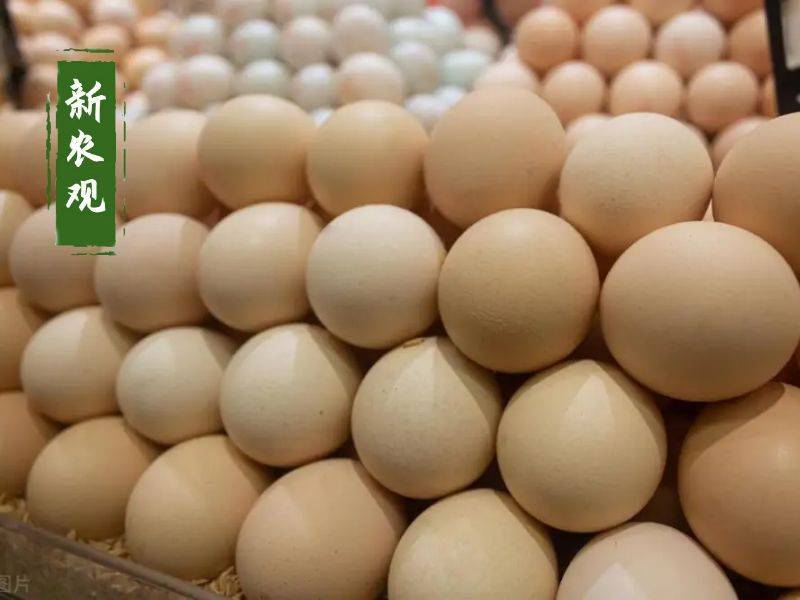
猪价已经涨起来了,蛋价啥时候涨?
Sou Hu Cai Jing· 2025-10-27 13:46
Core Insights - The prices of live pigs and eggs have both declined significantly during the recent holiday season, with pig prices hitting a four-year low and egg prices reaching near multi-year lows [2] - Pig prices have started to rise again, potentially returning to the 6 yuan per kilogram range, while egg prices remain stagnant, struggling to break through the 3 yuan per kilogram mark [2][4] Group 1: Pig Market Dynamics - The recent increase in pig prices is driven by several factors, including seasonal demand due to colder weather and upcoming traditional food preparations in southern and northern China [4] - After experiencing a price drop, pig farmers are showing a tendency to buy back into the market, contributing to the price recovery [4] - The growth cycle of pigs and the second fattening phase provide more time for market adjustments compared to the shorter egg production cycle [6] Group 2: Egg Market Challenges - Despite a slight increase in egg prices, the overall market remains under pressure due to high production capacity and slow culling rates among egg-laying hens [6][8] - The upcoming Double Eleven shopping festival is expected to have limited impact on egg sales, leading to a prolonged period of low demand post-festival [4][8] - The short production cycle of eggs means that any lack of downstream consumption quickly translates into price pressure, exacerbated by the presence of unsold inventory in cold storage [8]
瓶片短纤数据日报-20251027
Guo Mao Qi Huo· 2025-10-27 06:24
Report Summary 1. Report Industry Investment Rating No relevant information provided. 2. Core Viewpoints - PTA supply has contracted as domestic plants have adjusted due to low processing fees. The polyester industry's profit is still constrained by over - capacity from new plant commissions, but the rising crude oil price supports PTA, leading to a slight upward movement in PTA prices after hovering at low levels. [2] - The polyester downstream load remains above 87%, and high polyester load has not led to large inventory accumulation. The demand from the polyester downstream is slightly better than expected, with recent good sales in the polyester market. The market is concerned about the impact of China - US negotiations on textile and clothing demand. [2] - Later, overseas sanctions on some domestic refineries may affect PX supply, which requires continuous attention. [2] 3. Summary by Related Data Price Changes - PTA spot price increased from 4425 to 4450, with a change of 25; MEG inner - market price rose from 4173 to 4187, a change of 14; PTA closing price went up from 4508 to 4518, a change of 10; MEG closing price decreased from 4095 to 4077, a change of - 18. [2] - 1.4D direct - spun polyester staple fiber price increased from 6390 to 6400, a change of 10; short - fiber basis remained unchanged at 178; 11 - 12 spread decreased from 18 to 32, a change of - 14. [2] - Polyester bottle - chip prices in the Jiangsu and Zhejiang markets increased slightly, with the average price rising by 10 yuan/ton. The prices of various types of bottle - chips (e.g., East China water bottle - chips, hot - filling polyester bottle - chips, carbonated - grade polyester bottle - chips) increased by 7. [2] - T32S pure - polyester yarn price remained unchanged at 10300; T32S pure - polyester yarn processing fee decreased from 3910 to 3900, a change of - 10; polyester - cotton yarn 65/35 45S price remained unchanged at 16350. [2] Load and Production - Sales - The direct - spun short - fiber load (weekly) increased from 93.90% to 94.40%; the polyester short - fiber production - sales rate decreased from 77.00% to 51.00%, a change of - 26.00%. [3] - The polyester yarn startup rate (weekly) remained unchanged at 63.50%; the recycled cotton - type load index (weekly) increased slightly from 51.00% to 51.50%. [3]
宁证期货今日早评-20251027
Ning Zheng Qi Huo· 2025-10-27 02:10
Report Summary 1. Report Industry Investment Ratings No industry investment ratings are provided in the report. 2. Core Views - **Gold**: The US September CPI data led to market expectations of Fed rate - cuts. The strong US dollar is bearish for gold, but gold buying power remains strong. Gold is expected to oscillate at a high level in the medium - term [1]. - **Soda Ash**: The domestic soda ash market is weakly stable. The 01 contract is expected to oscillate in the short - term, with support at 1220. It is recommended to wait and see or do short - term long on dips [2]. - **Rebar**: The medium - long - term over - capacity in the steel industry may be alleviated, but short - term impact is limited. Rebar demand is improving but at a low level. The price is expected to oscillate at a low level in the short - term [4]. - **Iron Ore**: Supply is relatively stable, and demand is supported by high iron - water levels. However, the profit contraction of steel mills and the end of the peak season limit demand. The price is expected to oscillate in the short - term [5]. - **Coking Coal**: Supply is tightening, and demand from downstream and intermediate sectors is strong. The coal price is strong, and the futures price is expected to be supported in the short - term [6]. - **Pigs**: With increased demand due to lower temperatures and reduced slaughter pressure, the pig price may strengthen after adjustment. The futures price is expected to rebound at the bottom in the short - term [7]. - **Palm Oil**: As the traditional production - reduction season approaches in November, the futures price may recover. However, due to expected ample supply, the spot price is under pressure. The price is expected to oscillate in the short - term [7]. - **Soybeans**: Imported soybean spot market is firm, and domestic demand is strong. Bean 2 is expected to stabilize in the short - term. Domestic new - season soybeans are strong [8]. - **Medium - Long - Term Treasury Bonds**: Liquidity is loose, which supports the bond market. But with the stock market breaking through the previous range, the bond market operation is more difficult. It is expected to oscillate with a slightly bearish bias in the medium - term [9]. - **Silver**: US economic data in October is positive, which is bullish for silver. With a high probability of rate - cuts in October, the downside is limited. It is long - term bullish and short - term oscillating [9]. - **PVC**: Domestic PVC production is expected to increase, while demand is entering the off - season. The price is expected to oscillate in the short - term, with support at 4695 for the 01 contract. It is recommended to wait and see [10]. - **Methanol**: Domestic methanol production is at a high level, and downstream demand is stable. The port inventory is accumulating slightly. The 01 contract is expected to oscillate weakly in the short - term, with resistance at 2300. It is recommended to wait for further stabilization [11]. - **Crude Oil**: The crude oil market is in a game between short - term geopolitical bullish factors and long - term supply - demand bearish factors. A short - term low - level bullish approach is recommended [11]. 3. Summary by Variety Gold - US September CPI rose 3% year - on - year, lower than expected. Core CPI and service inflation slowed. The market fully priced in two 25 - basis - point Fed rate cuts [1]. - The strong US dollar is bearish for gold, but buying power remains strong. Gold may oscillate at a high level in the medium - term [1]. Soda Ash - The national mainstream price of heavy - quality soda ash is 1271 yuan/ton, with stable recent prices. Weekly production is 74.05 tons, down 3.93% week - on - week [2]. - Total inventory of soda ash manufacturers is 170.21 tons, up 0.09% week - on - week. The float glass market has stable start - up, rising inventory, and average trading [2]. Rebar - The blast - furnace start - up rate of 247 steel mills is 84.71%, up 0.44 percentage points week - on - week. The iron - making capacity utilization rate is 89.94%, down 0.39 percentage points [4]. - Steel mill profitability is 47.62%, down 7.79 percentage points week - on - week. Daily average pig - iron output is 239.9 tons, down 1.05 tons week - on - week [4]. Iron Ore - The total inventory of imported iron ore at 45 ports is 14423.59 tons, up 145.32 tons week - on - week. The daily average port clearance volume is 312.65 tons, down 3.07 tons [5]. - The number of ships at ports is 107, down 17. Supply is stable, and demand is supported by high iron - water levels, but profit contraction affects demand [5]. Coking Coal - The capacity utilization rate of independent coking enterprises is 73.47%, down 0.77%. Daily coke production is 64.61 tons, down 0.68 tons [6]. - Coke inventory is 58.64 tons, up 1.35 tons. Coking coal inventory is 1029.70 tons, up 32.33 tons. Supply is tightening, and demand is strong [6]. Pigs - As of October 24, the average slaughter weight of pigs is 123.21 kg, down 0.22 kg. The weekly slaughter start - up rate is 35.3%, down 0.34% [7]. - The profit of purchasing piglets for breeding is - 279.65 yuan/head, up 67.28 yuan/head. The self - breeding profit is - 149.54 yuan/head, up 53.28 yuan/head [7]. Palm Oil - The estimated export volume of Malaysian palm oil from October 1 - 25 is 1283814 tons, down 0.4%. The futures price may recover in November, but spot price is under pressure [7]. Soybeans - In the 43rd week (October 18 - 24), the actual soybean crushing volume of domestic oil mills is 236.74 tons, with a start - up rate of 65.13%. The 44th - week start - up rate is expected to decline slightly [8]. Medium - Long - Term Treasury Bonds - The central bank will conduct 900 billion yuan of MLF operations on October 27, with a net investment of 200 billion yuan. Liquidity is loose, but the bond market operation is difficult due to the stock market [9]. Silver - The US October manufacturing, service, and composite PMI are all better than expected. Economic data is positive for silver, and the downside is limited due to expected rate - cuts [9]. PVC - The price of East China SG - 5 type PVC is 4600 yuan/ton, down 10 yuan/ton. The capacity utilization rate is 76.57%, down 0.12% week - on - week [10]. - Social inventory is 103.52 tons, down 0.13% week - on - week. Domestic production is expected to increase, and demand is entering the off - season [10]. Methanol - The market price of methanol in Jiangsu Taicang is 2240 yuan/ton, down 10 yuan/ton. The domestic weekly capacity utilization rate is 87.4%, down 2.13% [11]. - Port inventory is 151.22 tons, up 2.08 tons week - on - week. The 01 contract is expected to oscillate weakly in the short - term [11]. Crude Oil - After the US sanctions on Russian oil companies, Reliance Industries stops buying Russian oil. The market is in a game between short - term geopolitical and long - term supply - demand factors [11].
丰林集团前三季度业绩陷亏损行业挑战持续加剧
Xin Lang Cai Jing· 2025-10-24 10:39
Core Viewpoint - The artificial board industry is facing unprecedented operational pressures, with Fenglin Group struggling amid intense market competition [1][2]. Group 1: Performance Decline - Fenglin Group's performance in the first three quarters of this year has significantly declined, with operating revenue showing a marked decrease compared to the same period last year [5]. - Notably, the company has reported a net profit loss, with the loss amount widening compared to the same period last year [6]. - This disappointing performance continues the trend of weak results observed throughout the year [7][8]. Group 2: Market Predicament - The decline in Fenglin Group's performance is not an isolated case but reflects the broader challenges faced by the entire industry [9]. - Domestic particle board production capacity continues to increase, leading to an imbalance between supply and demand, which significantly impacts business operations due to fierce market competition [10]. - In the context of an overall industry downturn, Fenglin Group's main products are experiencing downward pressure on both sales and prices [11]. - To adapt to market changes and maintain reasonable inventory levels, the company has had to adjust its production plans, resulting in increased downtime that further affects profitability [12]. Group 3: Industry Challenges - The crisis in the artificial board industry has persisted for several years, with many companies facing similar operational pressures [13]. - The deep adjustment in the real estate sector continues to suppress demand for artificial boards in the construction and decoration fields, although the custom home market shows some resilience, weakened consumer expectations still affect growth [13]. - Fluctuations in exchange rates in key export markets have weakened the price competitiveness of export products, adding extra pressure on companies primarily engaged in artificial board production [13]. - The intensifying internal competition within the industry has severely squeezed profit margins, making survival during this adjustment period a primary concern for many companies [14]. Group 4: Path Forward - In response to industry challenges, Fenglin Group is actively seeking breakthroughs [15]. - The company's management has previously stated that they will closely monitor market dynamics and flexibly adjust operational strategies [16]. - In the face of fierce market competition, the company needs to better balance capacity utilization and inventory levels to minimize downtime losses while maintaining market share and product pricing [17]. - Industry experts suggest that artificial board companies need to enhance competitiveness through product structure optimization, cost control, and technological upgrades while waiting for an improvement in industry conditions [18]. - Fenglin Group's path forward resembles rowing against the current, necessitating strategies for survival and growth during the industry's winter [19]. - In the absence of significant market demand improvement, competition among companies will increasingly focus on cost control, product differentiation, and market expansion capabilities [20]. - For Fenglin Group, establishing a firm foothold during this industry reshuffle will test the management's wisdom and determination [21].
