市场供需

Search documents
茅台增速目标下调,白酒龙头面临变局考验
Sou Hu Cai Jing· 2025-04-22 00:25
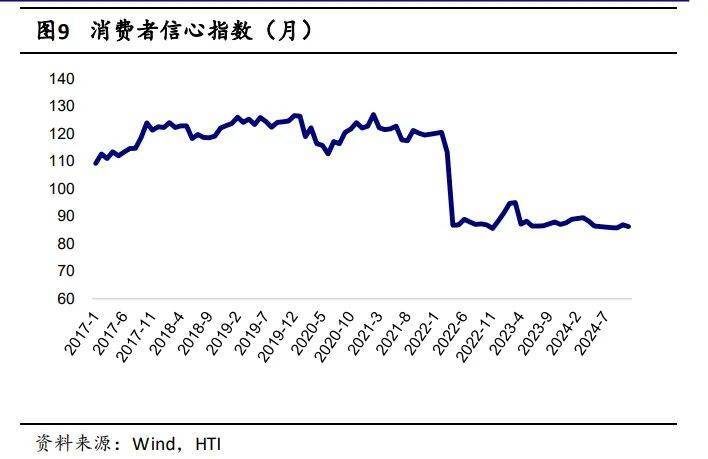
Core Viewpoint - Guizhou Moutai's 2024 financial report indicates continued growth, but the company has set a surprising revenue growth target of approximately 9% for 2025, marking the first single-digit growth expectation in eight years and the second lowest since its listing [1][2]. Group 1: Financial Performance and Growth Expectations - The revenue growth target for 2025 is a significant adjustment from the previous range of 10.5% to 15% set since 2017, reflecting the challenges faced by the industry [1]. - The decline in wholesale prices of Moutai has put the long-standing "Moutai faith" under unprecedented pressure, indicating a shift in market dynamics [1][2]. Group 2: Market Dynamics and Consumer Behavior - Changes in consumer confidence have directly impacted Moutai, as it is highly sensitive to economic conditions, with reduced demand for high-end consumption, business events, and gifting [1][2]. - The luxury and high-end consumption sectors are experiencing a shift from impulsive buying to more cautious decision-making, affecting Moutai's sales [2]. Group 3: Supply Chain and Pricing Strategy - Moutai has historically maintained a "tight balance" in the market through strict control of production and a complex distribution system, but recent increases in direct sales and supply have led to price declines amid weak demand [2][4]. - The financial attributes associated with Moutai have diminished, as the expectation of continuous price increases has proven unsustainable, leading to a reassessment of its value [2][4]. Group 4: Brand Strategy and Future Challenges - Moutai is attempting to diversify its product offerings by introducing cross-border products like ice cream and chocolate, targeting younger consumers, though the effectiveness of these strategies remains uncertain [4]. - The company faces significant challenges from changing consumer preferences, generational shifts, and increased competition within the industry [4][5].


Insteel(IIIN) - 2025 Q2 - Earnings Call Transcript
2025-04-17 14:00
Financial Data and Key Metrics Changes - Net earnings for Q2 2025 increased to $10.2 million from $6.9 million a year ago, with earnings per share rising to $0.52 from $0.35 [5] - Gross profit for the quarter rose to $24.5 million, an increase of 8.8% year-over-year, while gross margin expanded to 12.3% from 11.3% [8] - Cash flow from operations used $3.3 million in the quarter compared to providing $1.4 million last year [14] Business Line Data and Key Metrics Changes - Shipments for the quarter increased by 0.9% year-over-year and sequentially from Q1 [5] - Average selling prices declined by 2.2% year-over-year but rose by 0.1% sequentially from Q1 [6] - G&A expenses increased to $10.8 million or 10.7% of net sales, compared to $7.9 million or 7.2% of net sales in the prior year [11] Market Data and Key Metrics Changes - The supply of wire rod in the US market has become more constrained, leading to price increases of approximately $150 per ton during Q1 [7] - The architectural billing index (ABI) ratio score was 45.5%, indicating declining billings, while the Dodge Amendment Index saw a decrease of 0.9% in March [20][21] Company Strategy and Development Direction - The company is focused on securing an adequate supply of raw materials to minimize potential disruptions to operations [7] - The recent tariff strategy has been viewed positively, as it applies to imports of PC Strand, eliminating previous inequities [25] - The company has lowered its full-year capital expenditure target to $17 million from $22 million due to acquisitions and integration activities [34] Management's Comments on Operating Environment and Future Outlook - Management expressed cautious optimism about market outlook, supported by strong demand and shipment trends [17] - There are uncertainties related to US trade policies and potential economic fallout from tariff strategies [18] - The company is aware of risks related to the administration's tariff policies but is positioned to maximize shipments and optimize costs [35] Other Important Information - The company repurchased 1.1 million of its common equity, equal to approximately 40,000 shares [16] - The effective tax rate for the quarter was 23.2%, slightly up from 22.5% last year [13] Q&A Session Summary Question: How is the company viewing and managing the broader operating environment? - Management noted a distinct acceleration in business beginning in Q1, with robust conditions expected to continue [39] Question: What are the thoughts on the disconnect between macro indicators and on-the-ground conditions? - Management acknowledged the lack of objective data but emphasized solid quotation activity and customer optimism [43] Question: How is the company thinking about pricing in the current environment? - Management indicated that the extension of tariffs to PC Strand is positive, but US steel prices remain higher than world market prices [48] Question: How does the current situation compare to the disruptions seen during COVID? - Management stated that the underlying fundamentals today are much more solid than during the COVID recovery [58] Question: Will there be ASP growth year-over-year next quarter? - Management believes it would be hard to see a deterioration in ASP growth during Q3 [66]

中泰期货PVC烧碱产业链周报-2025-04-07
Zhong Tai Qi Huo· 2025-04-07 01:56
1. Report Industry Investment Rating No relevant content provided. 2. Core Views of the Report - For the PVC industry, the overall production volume is expected to increase slightly this week due to the resumption of some maintenance devices, but the planned maintenance in the later period will increase, and the production volume of the ethylene - process may be less than expected. The export volume is expected to increase slightly. The apparent demand this week is less than expected, and the inventory has decreased slightly. The profit of the chlor - alkali complex is oscillating weakly, and the export profit has improved slightly. The basis has strengthened oscillatingly, and the 5 - 9 spread can be considered for a short - position configuration. The upstream is reluctant to cut production, the middle - stream traders are cautious, and the downstream start - up is increasing but the apparent demand is poor [6][9][10]. - For the caustic soda industry, the production volume has increased slightly this week, the export volume is relatively stable, the apparent demand is better than expected, and the inventory has decreased slightly. The price of caustic soda has weakened, the profit of the chlor - alkali complex has decreased, and the export profit has strengthened. The upstream is under pressure, the middle - stream traders are cautious, and the downstream demand is poor [97][100][101]. 3. Summary by Directory 3.1 PVC Market 3.1.1 Spot Market - PVC production: This week's total production is 46.75 million tons, with ethylene - process production at 12.10 million tons and calcium - carbide process production at 34.65 million tons. Next week, the total production is expected to be 45.72 million tons, with ethylene - process production at 10.17 million tons and calcium - carbide process production at 35.54 million tons. The import volume is 1.50 million tons per week on average, and the export volume is 5.00 million tons per week on average, with a slight expected increase in exports [6]. - Apparent demand: This week's apparent demand is 43.43 million tons, less than expected. Next week, it is estimated to be 45.63 million tons [6]. - Inventory: The total inventory this week is 90.74 million tons, with a decrease of 0.18 million tons. If calculated based on the current production volume and apparent demand, it is expected to decrease slightly next week [6]. 3.1.2 Basis and Spread - Basis: The basis of East China calcium - carbide process has strengthened from - 189 to - 169 this week, and the basis of South China calcium - carbide process has strengthened from - 39 to - 19. The 05 basis has strengthened oscillatingly [9]. - Spread: The 5 - 9 spread has decreased from - 135 to - 141, and the 5 - 9 spread can be considered for a short - position configuration [9]. 3.1.3 Industry Chain Profit - Production profit: The profit of calcium - carbide production in Shaanxi has decreased from - 254 to - 258, and in Inner Mongolia, it has decreased from 268 to 264. The comprehensive profit of chlor - alkali in Shandong has decreased from - 127 to - 235. The export profit has improved slightly, with the FOB Tianjin relative export profit increasing from 5 to 12, the theoretical export profit to India increasing from 287 to 297, and the theoretical export profit to Southeast Asia increasing from 167 to 207 [9]. 3.2 Caustic Soda Market 3.2.1 Spot Market - Caustic soda production: This week's total production is 79.48 million tons, with an increase of 0.17 million tons. Next week, it is expected to be 80.66 million tons, and the week after next, it is expected to be 81.40 million tons [97]. - Apparent demand: This week's apparent demand is 75.57 million tons, better than expected. Next week, it is estimated to be about 77.5 million tons [97]. - Inventory: The total inventory (in terms of 100% purity) this week is 26.11 million tons, with a decrease of 0.67 million tons, and it is expected to continue to decrease next week [97]. 3.2.2 Basis and Spread - Basis: The 32% caustic soda basis for the 01 contract has decreased from 57 to 33, and the 05 contract basis has increased from 123 to 140. The 5 - 9 spread is recommended to be on the sidelines [100]. 3.2.3 Industry Chain Profit - Production profit: The comprehensive profit of chlor - alkali in Shandong has decreased from - 235 to - 276, and the export profit has strengthened [100].
安粮期货生猪日报-2025-04-02
An Liang Qi Huo· 2025-04-02 06:08
Group 1: General Information - The report analyzes multiple commodities, including soybean oil, soybean meal, corn, copper, lithium carbonate, steel, coking coal, iron ore, crude oil, rubber, PVC, and soda ash. [1][2][3][4][5][6][7][8][9][10][12][13][14] Group 2: Spot Market Information - **Soybean Oil**: The price of first - grade soybean oil at Zhangjiagang Donghai Grain and Oil is 8,430 yuan/ton, down 90 yuan/ton from the previous trading day. [1] - **Soybean Meal**: The spot prices of 43 soybean meal in different regions are as follows: Zhangjiagang 3,040 yuan/ton (- 10), Tianjin 3,160 yuan/ton (+30), Rizhao 3,080 yuan/ton (- 20), Dongguan 2,980 yuan/ton (- 20). [2] - **Corn**: The mainstream purchase prices include 2,085 yuan/ton in Northeast China and Inner Mongolia, 2,286 yuan/ton in North China and Huanghuai, and 2,150 - 2,155 yuan/ton at Jinzhou Port. [3] - **Copper**: The price of Shanghai 1 electrolytic copper is 79,860 - 80,030 yuan, down 660 yuan. [4] - **Lithium Carbonate**: The market price of battery - grade lithium carbonate (99.5%) is 74,100 (+50) yuan/ton, and industrial - grade is 72,200 yuan/ton. [5] - **Steel**: The price of Shanghai rebar is 3,260 yuan, with Tangshan's operating rate at 80.58%, social inventory of 628 million tons, and steel mill inventory of 225.78 million tons. [7] - **Coking Coal and Coke**: The price of main coking coal (Meng 5) is 1,270 yuan/ton, and the price of quasi - first - grade metallurgical coke at Rizhao Port is 1,370 yuan/ton. [8] - **Iron Ore**: The Platts index is 103.85, and the price of Qingdao PB (61.5) powder is 780 yuan. [9] - **Crude Oil**: WTI crude oil is based on a support level around 65 US dollars/barrel. [10] - **Rubber**: The prices of different types of rubber are: domestic whole latex 16,600 yuan/ton, Thai smoked three - piece 21,600 yuan/ton, etc. [11] - **PVC**: The mainstream price of East China 5 - type PVC is 4,900 yuan/ton, with a week - on - week increase of 10 yuan/ton. [13] - **Soda Ash**: The national mainstream price of heavy soda ash is 1,492.19 yuan/ton, down 9.37 yuan/ton week - on - week. [14] Group 3: Market Analysis International and Macro - level - For soybeans, the Brazilian 2024/25 soybean crop harvest rate is faster than last year, and the new season in South America may be in a high - yield pattern. The US - China tariff policy affects the soybean market, and the USDA's soybean planting area forecast is decreasing. [1][2] - In the corn market, the US Department of Agriculture's sowing intention report and quarterly inventory data are to be released, and the April 2 US tariff event is uncertain. [3] - For copper, the global situation is uncertain, with differences between the US and non - US regions, and the Fed's policy and tariff expectations are factors. [4] - In the crude oil market, the conflict between the US and the Houthi armed forces intensifies, OPEC+ has a new production - cut policy, the US trade war starts, and the Russia - Ukraine conflict may be approaching an end. [10] Domestic Supply - demand - **Soybean Oil**: Short - term supply and downstream demand are neutral, and short - term inventory may remain stable. [1] - **Soybean Meal**: Due to delayed soybean arrival and maintenance shutdowns, the supply may be tight in the near term but will turn loose when South American soybeans are concentrated on the market. Terminal demand is average. [2] - **Corn**: Spring selling pressure is lower than in previous years, imports have decreased, and downstream feed consumption may increase, but there are still potential suppressing factors. [3] - **Lithium Carbonate**: The cost of lithium ore is stable, inventory has increased, supply is growing but the growth rate is slowing, and demand has improved but lacks upward driving force. [5][6] - **Steel**: The steel fundamentals are improving, the cost is rising, and inventory is accumulating, showing a supply - demand dual - strong pattern. [7] - **Coking Coal and Coke**: Supply is relatively loose, demand is weak, and inventory is slightly accumulating. [8] - **Iron Ore**: The supply is increasing, demand is weak in China, and overseas demand is differentiated. There are both bearish and bullish factors. [9] - **Rubber**: Domestic supply is recovering, and downstream tire operating rates are good, but the global supply - demand is loose, and the US auto tariff may suppress demand. [12] - **PVC**: Supply is slightly decreasing, demand is mainly for rigid needs, and inventory is decreasing. [13] - **Soda Ash**: Supply is increasing as maintenance resumes, inventory is decreasing, and demand is average. [14] Group 4: Reference Views - **Soybean Oil**: The 2505 contract of soybean oil may run in a short - term shock box range. [1] - **Soybean Meal**: Soybean meal may fluctuate in a short - term range. [2] - **Corn**: The short - term corn futures price may be weak in shock, and attention should be paid to the performance at the 2,250 yuan/ton support level. [3] - **Copper**: The copper price has tested 80,000 yuan as expected, and the next step is to pay attention to the test around 79,000 yuan. [4] - **Lithium Carbonate**: The 2505 contract of lithium carbonate may be weak in shock, and short - selling on rallies is recommended. [6] - **Steel**: The market sentiment is pessimistic, and steel is in a low - level shock. [7] - **Coking Coal and Coke**: Coking coal and coke are weakly rebounding in a low - level shock, with limited space. [8] - **Iron Ore**: The 2505 contract of iron ore will be mainly in shock in the short term, and traders are reminded to be cautious. [9] - **Crude Oil**: Recently, the crude oil price should focus on market games, and the WTI main contract rebounds based on 65 US dollars/barrel. [10] - **Rubber**: Attention should be paid to the resumption of work of downstream rubber enterprises, and rubber is mainly in a weak shock, with attention to the support at the previous low of the main contract. [12] - **PVC**: In the short term, there is a lack of fundamental positive driving forces, and the futures price may operate in a low - level shock. [13] - **Soda Ash**: The 05 contract of soda ash fluctuated narrowly yesterday, and it is expected to operate in a wide - range shock in the short term. [14]
咖啡豆价格狂飙,云南豆商却在赔钱
虎嗅APP· 2025-02-27 13:21
Core Viewpoint - The coffee bean market is experiencing unprecedented volatility, driven by a significant increase in prices due to supply constraints, particularly from Brazil, which has led to a surge in coffee futures prices to historical highs [1][4][14]. Group 1: Price Dynamics - Coffee futures prices have risen dramatically, reaching a peak of 440 cents per pound, up over 62% from 270.72 cents per pound in November of the previous year [1]. - In Yunnan, the purchase price for coffee beans has soared to 64.5 yuan per kilogram, nearly doubling compared to the previous harvest season [2]. - The price of fresh coffee cherries has increased to 11 yuan per kilogram, compared to only 1.2-1.3 yuan six years ago, reflecting a broader trend of rising costs in the coffee supply chain [14]. Group 2: Market Challenges - The coffee processing trade is facing significant pressure, with farmers and processing plants raising prices while buyers are reluctant to increase their purchase prices, leading to a squeezed margin for traders [3][4]. - The market is characterized by a rapid turnover of transactions, with companies needing to adapt quickly to fluctuating prices, often resulting in losses on contracts due to rising costs [5][6][16]. - The domestic demand for coffee has outstripped supply, leading to a reduction in exports and a shift in focus towards local consumption, which has further exacerbated price increases [12][13]. Group 3: Supply Chain Issues - The coffee production cycle is affected by environmental factors, with a significant reduction in yield expected this year due to adverse weather conditions, potentially leading to a 30% decrease in output [14]. - The processing time for coffee beans has increased, with companies facing longer cash flow cycles due to the need for upfront payments and the rising costs of raw materials [19]. - The competition for sourcing coffee beans has intensified, with companies needing to actively seek out suppliers rather than relying on traditional procurement methods [19][21]. Group 4: Future Outlook - The rising prices of coffee beans are making it increasingly difficult for brands to maintain low-priced products, with estimates suggesting that a cup of coffee could cost around 1.7 yuan just for the coffee powder alone, not accounting for other costs [28]. - Companies are adjusting their procurement strategies, often reducing order sizes to mitigate risks associated with price volatility, which could lead to supply shortages in the future [23][29]. - The long-term sustainability of the coffee market may be at risk if supply begins to exceed demand in the coming years, potentially leading to a price collapse [29].